AUTHOR
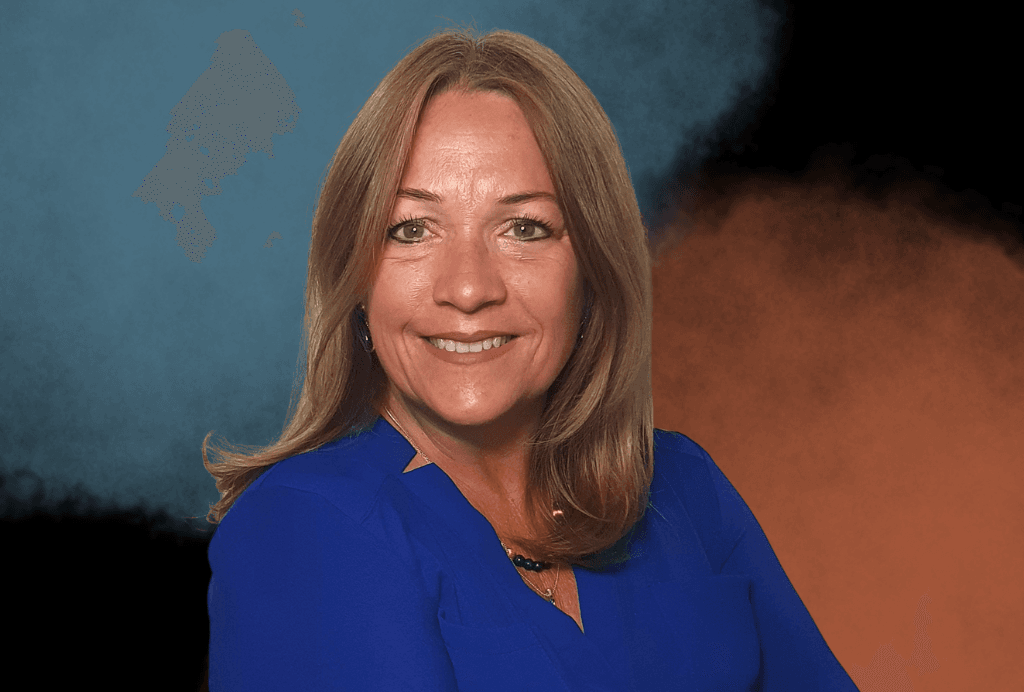
Jennifer Bryan
ABChange Consultancy
www.JenniferLBryan.com
Walk into almost any newly designed workspace and you’ll notice it immediately; the biophilic walls, the carefully curated acoustic panels, the ergonomic seating, the collaboration zones bathed in natural light. We have never been more sophisticated about how offices look, and yet, productivity in many organisations remains stubbornly elusive.
So what’s going wrong?
In my work advising organisations through complex change and in writing The Emotional Side of Organisational Change: How to Survive and Thrive, I’ve come to understand that the most underestimated force in any workplace isn’t invisible at all. The clues are everywhere. They’re sitting right in front of us; in the people we walk past every day. The problem isn’t that we can’t see them. It’s that we’ve stopped looking.
We design for the body, for posture, acoustics, air quality, light, but in our rush to measure utilisation rates and occupancy data, we’ve lost the habit of simply observing the human experience unfolding in front of us: the person who always takes the desk tucked in the corner, away from the team, the group that books the meeting room but then sits in silence, the team that seems energised on a Tuesday but hollow by Thursday. These aren’t random behaviours. They are signals, emotional and psychological data points, waiting to be read.
This is the argument at the heart of my book. Emotions don’t hide. They express themselves constantly, through behaviour, through body language, through the small daily choices people make about how and where they work. The question is whether anyone in the organisation has slowed down enough to notice.
And that’s the real challenge. Modern workplace culture glorifies busyness. Leaders are rewarded for outputs, not observations. We sprint from meeting to meeting, dashboard to dashboard, never pausing long enough to use what are arguably our most powerful diagnostic tools: both eyes and both ears.
What would it look like to actually stop: to stand in your workspace not as a manager with a task list, but as a curious, present observer? To watch how people move through a space; to listen not just to what’s said in a meeting, but to what’s conspicuously left unsaid, to notice who isn’t speaking up, who has stopped collaborating, who looks like they’re physically present but emotionally somewhere else entirely.
When organisations are in transition, and almost every organisation is navigating some form of change right now, whether a hybrid model in flux, a restructure, or a culture that hasn’t caught up with the strategy, the emotional temperature of the workplace shifts. People experiencing uncertainty don’t always announce it. They show it. They show it in where they choose to sit, in how they engage with new spaces, in whether they linger or leave the moment the clock permits. If we learn to read these signals, we gain something no utilisation software can provide: genuine insight into how people are actually doing.
In my book I talk about the importance of putting the end person in mind: approaching change from those furthest from the decision making room’s perspective because they are the ones who are living through it. That principle applies just as powerfully to workspace design. The most revealing question isn’t “is this space being used?” It’s “what is this space telling us about how people feel?”
The good news is that once you start looking, really looking, the picture becomes remarkably clear. You begin to see which environments are generating energy and which are draining it. You begin to hear where trust exists and where it’s eroded. You pick up on the informal dynamics that no survey ever captures and from that richer understanding, you can design and lead with far greater precision and empathy.
This isn’t a soft skill. It’s a strategic one. The leaders and designers who will get the most from their workspaces in the years ahead won’t just be the ones with the best briefs and the biggest budgets. They’ll be the ones who took the time to slow down, look around, and truly pay attention to the human beings in the room.
The answers are already there. We just need to start seeing them.
Jennifer Bryan specialises in helping leaders harness the power of emotion in the workplace without making it overly complicated. She is a TEDx key note speaker, 3x published author, coach and Chief Empowerment Officer of her own company for nearly 15 years, which she named after her kids. For over 25 years, she has worked with major corporations such as CBRE, JLL, Cushman & Wakefield, Microsoft, Gartner, Barclays, to name a few. For more information, visit www.JenniferLBryan.com