
Article Written by : Chris Moriarty, Co-Founder & Director of Audiem
Panel hosted by : EGM Architects
At the Amsterdam show, Chris led a conversation with workplace leaders from Magnum — currently moving toward independence from Unilever — and ASML, one of the world’s largest semiconductor manufacturers. EGM, a Dutch architecture firm known for its people-centric approach, hosted the panel and brought this theme to life. They contributed perspectives on how design can translate identity into space. Despite their differences, both organisations highlighted a central truth: workplaces are not just about desks and meeting rooms; they are active expressions of who a company is.
When Brand Becomes a Feeling
Chris observes that Magnum is redefining its brand from product to emotion — shifting from selling ice cream to creating meaningful, memorable experiences. Their workspace embodies this change, prioritising imagery and spaces that evoke joy and connection, rather than literal brand cues. In this way, design becomes a tool to help employees live the brand every day, reinforcing identity through experience.
Culture in Action
ASML, by contrast, demonstrates how culture can guide workplace decisions. Their approach focuses on collaboration, proximity to customers, and partnerships that support everyday work. Here, culture is not just values on a wall — it is embedded in behaviours, spatial layouts, and operational choices. As Chris notes, this type of culture directly informs how teams collaborate and how the organisation functions.
Bridging Brand and Culture
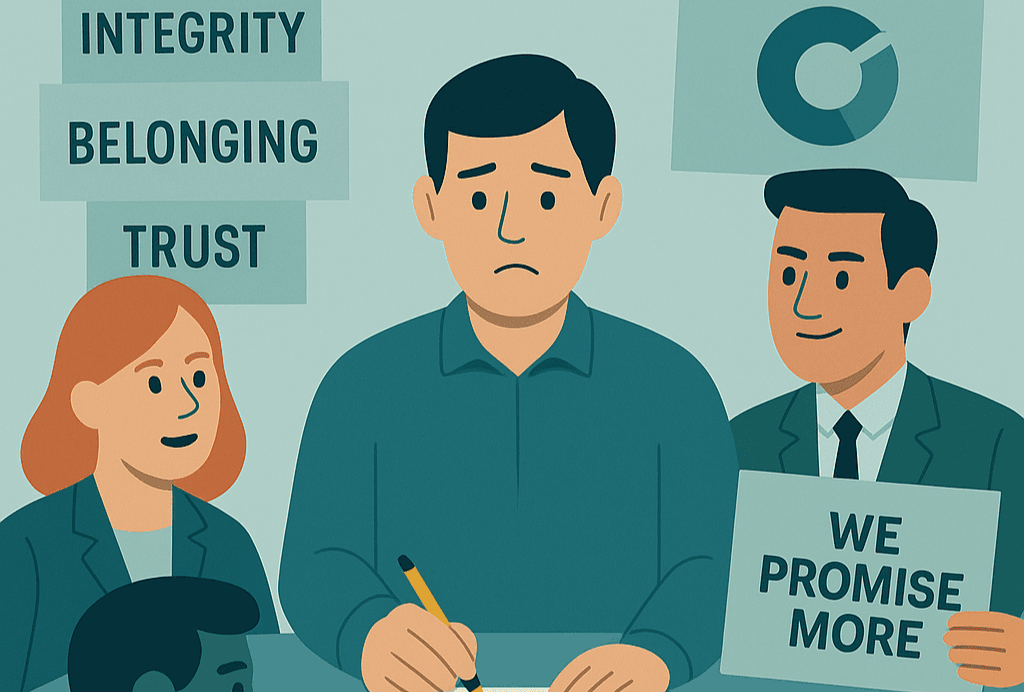
A key insight from Chris’s article is the distinction between declared culture — what an organisation says it values — and lived culture, the norms and behaviours experienced by people on the ground. Effective workplace design bridges these, helping organisations align what they promise externally with what happens internally. Thoughtful design can strengthen culture, signal ambition, sharpen brand identity, and influence the way people connect and perform.
Listening, Learning, and Designing
Chris highlights that creating these spaces requires curiosity and humility. Teams must listen actively, question assumptions, and iterate designs to reflect real needs, not just stated goals. This approach ensures that workspaces support behaviour and culture, rather than undermine them.
A Conversation Worth Having
Through his reflections, Chris Moriarty demonstrates that workplace design is a strategic tool. It can reinforce brand, embed culture, and influence how an organisation grows. The conversation he chaired at the Amsterdam show offers a blueprint for understanding these connections and shows why workplace design deserves a seat at the strategic table.
📖 Read the full article by Chris Moriarty here:
https://www.audiem.io/articles/your-brand-called-it-wants-a-seat-at-the-design-table