
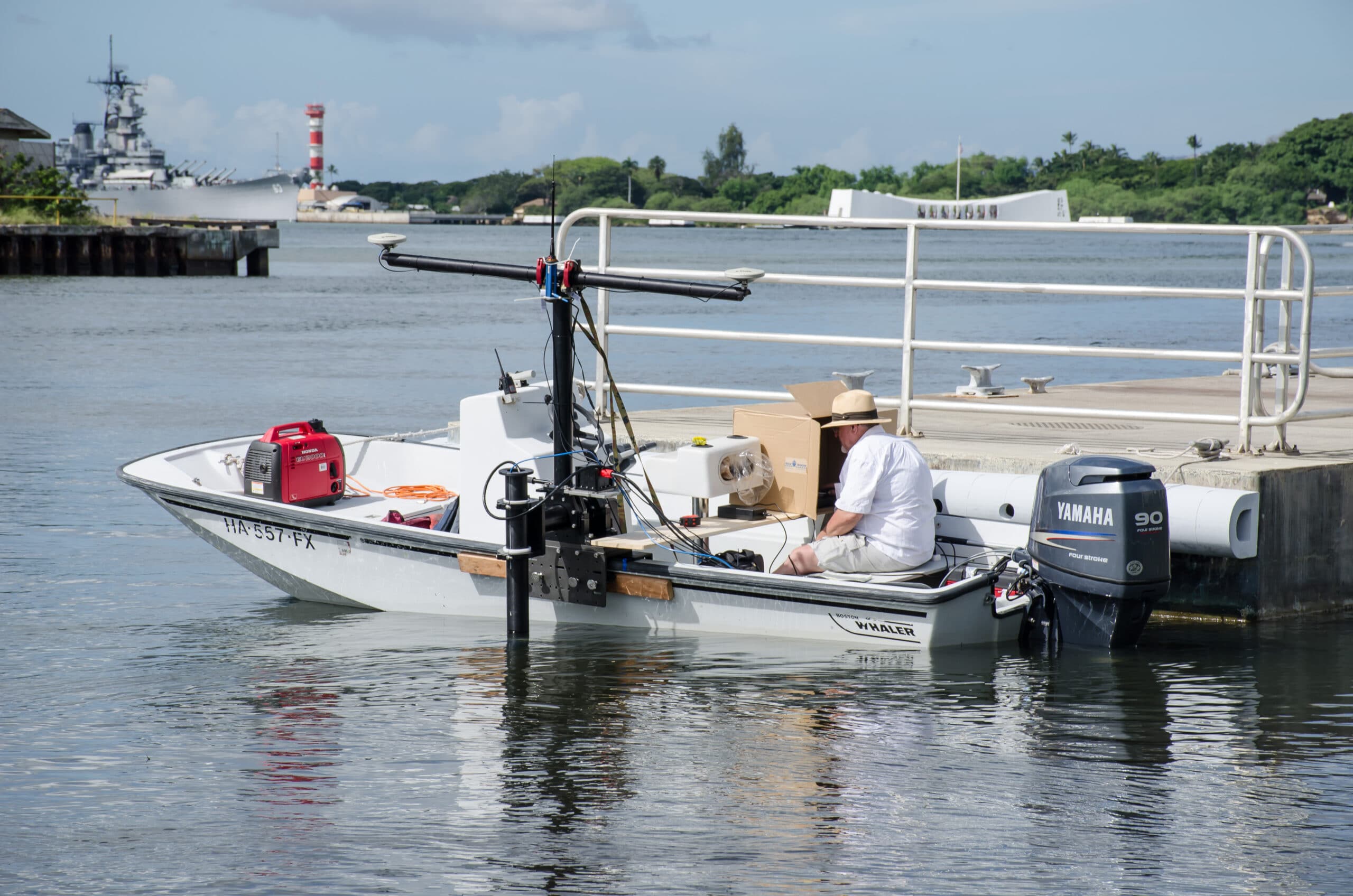
MBES cannot be IHO compliant, and here is why
MBES and the IHO SP44 Standards for Hydrographic Surveys
The International Hydrographic Organisation, based in Monaco, published the 6th edition of Special Publication No 44 Standards for Hydrographic Surveys in March 2020. SP44 sets forth the minimum standards for survey accuracy.
Multibeam echosounders have been well established as standard equipment for hydrographic surveys. In that regard, SP44 is specific to hydrographic surveying — it contains nothing specific to multibeam echosounders. Instead, SP44 is a standard developed by the IHO ‘to help improve the safety of navigation.’ SP44 concerns itself with depth accuracy. However, a multibeam echosounder does not measure depth; it measures a range and bearing to the seafloor.
‘To be fully compliant with an S-44 Order, a hydrographic survey must comply with all bathymetric and feature detection requirements for that order and with all the other requirements for the same order, where applicable.’ (IHO standard for Hydrographic Surveys (SP-44) 6th edition March 2020, pg 12, International Hydrographic Bureau., Monaco)
When a manufacturer states that a multibeam echosounder meets IHO SP44 or a client states a multibeam echosounder must meet IHO SP44 on a project, they may not understand the specifics of IHO SP44. SP44 looks at the total survey system.
What is the survey system comprised of (at a minimum)?
- Proper survey vessel
- Positioning system
- Motion sensor
a. Aligned with axes of vessel
b. Heave bandwidth adjusted properly - Heading sensor
a. Aligned with the centerline of the vessel - Multibeam echosounder
a. Properly mounted; if on a pole, there is no flexing or vibration
b. Properly calibrated (Patch test)
c. Operated properly - Sound velocity profiler
a. Calibrated
b. Sufficient casts - Tide gauge
a. Proximity to the survey area - Offset measurements
a. Surveyed in using land survey techniques preferred - Data collection and processing software
a. Software set up correctly, including timing control
b. Software tools/windows enabled for quality control - Skilled surveyors
As the list above shows, the multibeam is approximately 1/10 of the entire survey system, as used in IHO SP44. The depth computation relies on the other 9/10 of the survey system along with the multibeam echosounder. The multibeam echosounder provides a range and bearing to points on the seafloor. The data collection/processing software receives the range and bearing data along with position, heading, and motion data makes offset adjustments, and applies refraction corrections and tidal corrections to produce a depth. However, as an example, if the multibeam is mounted using a bamboo pole that wobbles, no matter how good that multibeam might be, no matter how good the other sensors are, the range and bearing data would be inaccurate due to pole wobble. Or, if the sound velocity profiler is out of calibration, the refraction corrections would be inaccurate, causing erroneous depths. These few considerations illustrate how the entire survey system must be evaluated for IHO SP44 order survey compliance.
Compliance with IHO SP44 Exclusive or Special Order (or Order 1a, 1b, or 2) can be proven for a survey system comprised of a multibeam echosounder by performing a set IHO survey for that specific vessel and that specific survey system and setup. However, changing any component would invalidate compliance.
Another aspect of the IHO SP44 standards is the horizontal uncertainty (2ẟ) that is allowed: 1 meter. If the IHO standard allows for a horizontal position error of this magnitude, how accurately is the depth positioned on the seafloor?
Feature Detection: IHO SP44 Exclusive Order calls for the system to detect a 0.5-meter cubic feature. What the IHO SP44 does not state, however, is what constitutes detection. How many soundings determine detection?
There are other survey standards that better address the modern-day multibeam survey, such as the LINZ produced Contract Specifications for Hydrographic Surveys (Version 1.3; 2016).
The main point is that there are many components in a survey system, and it is the survey system that will determine compliance with IHO SP44 survey order specifications. One component of the survey system cannot be singled out, such as the multibeam echosounder.
When installed following the instructions from the R2Sonic manual and used with the I2NS and Sound Velocity options offered by R2Sonic, the Sonic series not only meets but exceeds SP44 requirements.

MTS and SUT Launch Marine Technologist Professional Certification Programmes
WASHINGTON, DC and LONDON, UK — Beginning this month, the Marine Technology Society (MTS) and the Society for Underwater Technology (SUT) will launch three professional certification programmes for marine technologists and technicians. These programmes serve as a passport for job mobility and create new opportunities for MTS and SUT members.
The Institute of Marine Engineering, Science and Technology (IMarEST) has licensed MTS and SUT to offer their members the opportunity to apply for registration as Chartered Marine Technologist (CMarTech), Registered Marine Technologist (RMarTech), and Marine Technician (MarTech). IMarEST has a Royal Charter in the United Kingdom and can add suitably qualified and experienced applicants to these registers.
“Becoming professionally registered recognises experience and competence beyond academic qualifications and shows a commitment to integrity and a responsibility for the wider public in your work. Because ongoing reflection is central to maintaining your place on the register, the process builds a more self-aware and sophisticated workforce. Gaining Technician, Registered, or Chartered status is a universally recognised mark of expertise which places the individual within a respected circle of professionals and helps strengthen their influence. Those at this level work to high ethical standards and it gives both peers and the wider community trust and confidence in their work,” explained Gwynne Lewis, Chief Executive, Institute of Marine Engineering, Science & Technology (IMarEST).
“The CMarTech, RMarTech, and MarTech professional registers will advance the marine technology workforce which will benefit the sustainability of our ocean and the blue economy for many years to come,” said Zdenka Willis, President of MTS. “We thank SUT and the IMarEST for their partnership in these programs, and we look forward to recognizing our members who complete them.”
MTS Past President Rick Spinrad added, “The CMarTech, RMarTech, and MarTech professional registers are globally respected and provide substantial value to our industry. In achieving the registration, our members will advance the trajectory of their careers and positively impact ocean technology. The synergy of the IMarEST, MTS, and SUT along with the success of the pilot program brought us to this day, and we encourage members in all marine science positions to apply.”
SUT President, Judith Patten, said, “I wholeheartedly echo Zdenka’s and Rick’s views. This is a crucial step in the SUT’s history. As a learned society, furthering the education of scientists and technologists to maintain high standards in marine science and technology is one of the published aims of the SUT. Launching this initiative enforces our society’s commitment to helping our technologist and technician members fulfil their potential. Not only do we welcome the first tranche of programmes but, on behalf of our scientific members, we look forward to the addition of CMarSci and RMarSci registers later in the year. Working with the IMarEST and MTS like this not only helps individual members, but also ensures we fulfil another of our aims – to maintain high standards in marine science and technology.
“Equally, we are proud of what our Perth Branch has achieved working with Engineers Australia and look forward to news of Australian members successfully achieving their Chartered accreditation.”
SUT and Engineers Australia have completed the work required to make Chartered accreditation in the area of practice of subsea engineering possible at three levels: Chartered Professional Engineer, CPEng, Chartered Engineering Technologist, and CEngT, Chartered Engineering Associate, CEngA.
Application now open
Apply now through the MTS and SUT websites. Detailed information, a FAQ sheet, and applications for CMarTech, RMarTech, and MarTech are available online at www.mtsociety.org and www.sut.org.
MTS and SUT plan to launch two additional certifications, Chartered Marine Scientist (CMarSci) and Registered Marine Scientist (RMarSci), licensed by the IMarEST, in October 2021.
Learn More and Apply Today
MTS Contact:
Kathleen Herndon, [email protected]
SUT Contact:
Cheryl Burgess, [email protected]
UK Hydrographic Office announces new tender opportunity for lidar survey of The Cayman Islands
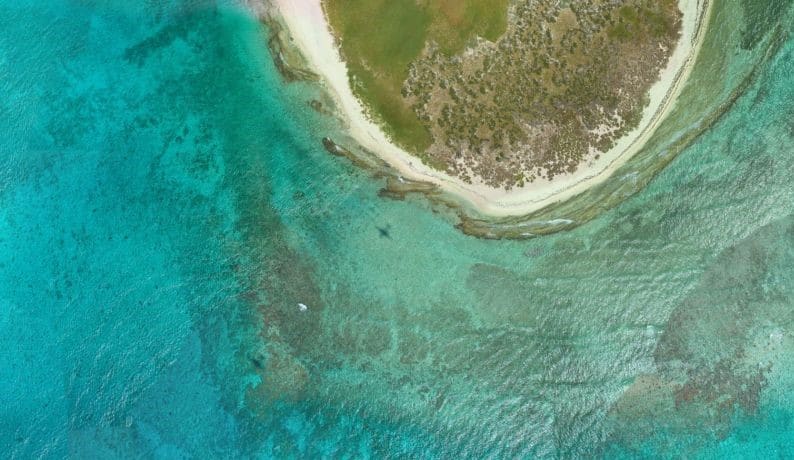
The UKHO is looking to commission a Lidar survey of the Cayman Islands and its surrounding waters. This work will form part of our Overseas Territories Seabed Mapping Programme, through which the UKHO collects valuable data to assist in updating navigational charts and publications, while supporting the management and protection of the marine environment. Through their hydrographic programmes so far, they have commissioned 28 surveys and mapped 19,000km2 of seabed to support coastal states across the globe.
For more details on the tender and details on how to register your interest, please visit: https://lnkd.in/eZZQXhu

A first for Fugro as SpaceStar™ satellite positioning service heads into space
Fugro’s SpaceStar™ GNSS Precise Point Positioning (PPP) service is providing essential high-accuracy positioning in space for the first time. Loft Orbital, which flies and operates customer payloads on its YAM series of small satellites, launched their YAM-2 satellite, the first in space to be equipped with Fugro’s SpaceStar next-generation positioning technology, on 30 June into a 525 km sun-synchronous orbit from Cape Canaveral in Florida onboard a SpaceX Falcon 9 rocket.
SpaceStar is using PPP to deliver high-accuracy sub-decimetre onboard positioning in real time during YAM-2’s low earth orbit (LEO) operations. Fugro’s proprietary positioning software is integrated into YAM-2 and employs state-of-the-art technology to receive precise GNSS real-time orbit and clock corrections from geostationary satellites. Highly accurate positioning in LEO is becoming increasingly important for earth observation applications, safe constellations management, and space debris collision avoidance.
“We’re especially excited to demonstrate this new functionality,” said Loft Orbital CTO, Pieter van Duijn. “Fugro’s SpaceStar service is something that can really help not only Loft Orbital’s missions but also be of interest to the wider application of space situational awareness and safety.”
Daan Scheer, Fugro’s Satellite Positioning Commercial Manager, said: “We are extremely proud to be providing our real-time PPP service to the YAM-2 small satellite. We’ve been able to bring this innovative product to market thanks to our close cooperation with Loft Orbital and we’re looking forward to completing a successful in-orbit demonstration mission. The accuracy of our SpaceStar position service is not only contributing to our purpose of a safe and liveable world but, by facilitating safer navigation in space, even beyond!”
End
For more information
Daan Scheer [email protected]

Planet Ocean Ltd is pleased to announce the formation of the ecoSUB Robotics Advisory Board
As the ecoSUB range of small, affordable autonomous underwater vehicles enter full production, Planet Ocean is pleased to announce the formation of an advisory board to help guide the project into the next phase and beyond. The board is comprised of acknowledged leaders in their fields to counsel the company on the opportunities for maximising the impact of its technologies globally.
“We recognise that although we have a deep understanding of the technology and the three main target user groups for ecoSUB, we are by no means expert in them all and the formation of this board of specialists will ensure that we remain focused and on the right track as well as providing industry insights into what the users groups around the World need in the future.” says Terry Sloane, founder and MD of Planet Ocean and ecoSUB Robotics.
The advisory team have long been advocates of the use of small, agile autonomous systems in their respective fields and ecoSUB in particular. Their decades of real world experience and vision is a significant asset available to the ecoSUB team. Of particular importance is an understanding of how micro AUV technology fits into the wider use of undersea autonomy in general.
The Advisory Board:
|
Professor Russell Wynn
Science |
Russell was the first Chief Scientist for Marine Autonomous and Robotic Systems (MARS) at the UK’s National Oceanography Centre, where he also served as Associate Director for Government, International and Public Engagement. He led external engagement for £30M of UK Government investment in the MARS fleet and ensured the adventures of the Autosub vehicles (aka Boaty McBoatface!) reached the wider public via TV and other media. Russell also initiated and co-ordinated the annual ‘MASSMO’ series of demonstrator missions for UK marine autonomous systems, which were sponsored by Dstl and included Royal Navy, UKHO, Met Office, CMRE and several industry and research organisations as partners; these missions involved the largest mixed fleets of marine robots (including ecoSUB) to be deployed in UK waters.
Russell was previously Head of Marine Geoscience at the NOC and published over 100 peer-reviewed science papers on topical marine matters, including novel use of marine robotics. He is currently focused on wildlife conservation and education as a Director of Wild New Forest CIC, but retains Senior Visiting Fellow status at the NOC and is an Honorary Professor at University of Southampton
|
|
| Dr Peter Collinson
Energy |
Peter is focused on delivering ‘net zero robotics solutions’ for energy and maritime industry applications. Peter has worked extensively on the strategic development and rollout of Marine Autonomous Systems for bp over the past 7 years. In that role he lead many developments of marine robotic technology, including ecoSUB and several USV and AUV solutions for subsea inspection, survey and environmental/crisis applications. He is a member of robotics committees for UKRI (Innovate UK Government) and an Industry advisor to the National Oceanography Centre, UK. Prior to his role in technology he was a Risk and Crisis Manager with extensive experience in enterprise risk management and crisis response, leading humanitarian and environmental teams during 9-11, the Asian Tsunami and the Deepwater Horizon oil spill incidents.
Peter holds a PhD in Marine Ecology from The University of Hong Kong and is a Fellow of the Institute Marine Engineering, Science and Technology (IMarEST).
|
|
| Cdre David Burton RN (rtd)
Defence |
Mr David Burton is the Director of ASW Barrier Smart Defence Initiative, a multinational initiative comprising: Australia, Denmark, France, Germany, Greece, Italy, Netherlands, Norway, Portugal, Spain, UK, and the US. The SDI is sponsored by the NATO Maritime Unmanned Systems (MUS) initiative.
Prior to this David was Strategic Advisor to the UK’s NavyX programme and before this Director Strategy for NATO’s Centre for Maritime Research and Experimentation (CMRE), an executive body of NATO’s Science and Technology where he was instrumental in the formation of the Maritime Unmanned Systems Initiative.
Before joining CMRE, Mr David Burton was the Chief Technology Officer (CTO) for the NATO Communications and Information (NCI) Agency.
Previously, Mr Burton served as a Commodore in the Royal UK Navy in the post of Director Change within the Information Systems & Service Directorate of the Defence Equipment and Support Organisation of the UK Ministry of Defence.
At the UK Ministry of Defence, Commodore Burton worked for the Chief Information Officer with responsibility for the UK Defence Information Exploitation and Enterprise Architecture Programmes. Prior to this he held the position as NATO’s Network Enabled Capability Integrated Project Team Leader based at ACT, Norfolk Virginia.
A Physics graduate of Bristol University, Mr Burton joined the Royal Navy in 1980. After a variety of operational appointments at sea and with the Royal Marines, he attended the Royal Military College of Science, where he was awarded a Masters Degree in Design of Information Systems. Project Management experience followed in a variety of strategic Information Systems and organisational change programmes, including Programme Management of major Public Private Partnerships within UK defence. In the late 1990s, he filled a key role within NATO’s Maritime Command and Control Information System (MCCIS) Programme.
Mr Burton is a Chartered Engineer, Chartered IT Practitioner, and Fellow of the British Computer Society. |
For more information please visit www.planet-ocean.co.uk
MIND Technology's Klein unit completes advanced naval technology exercise
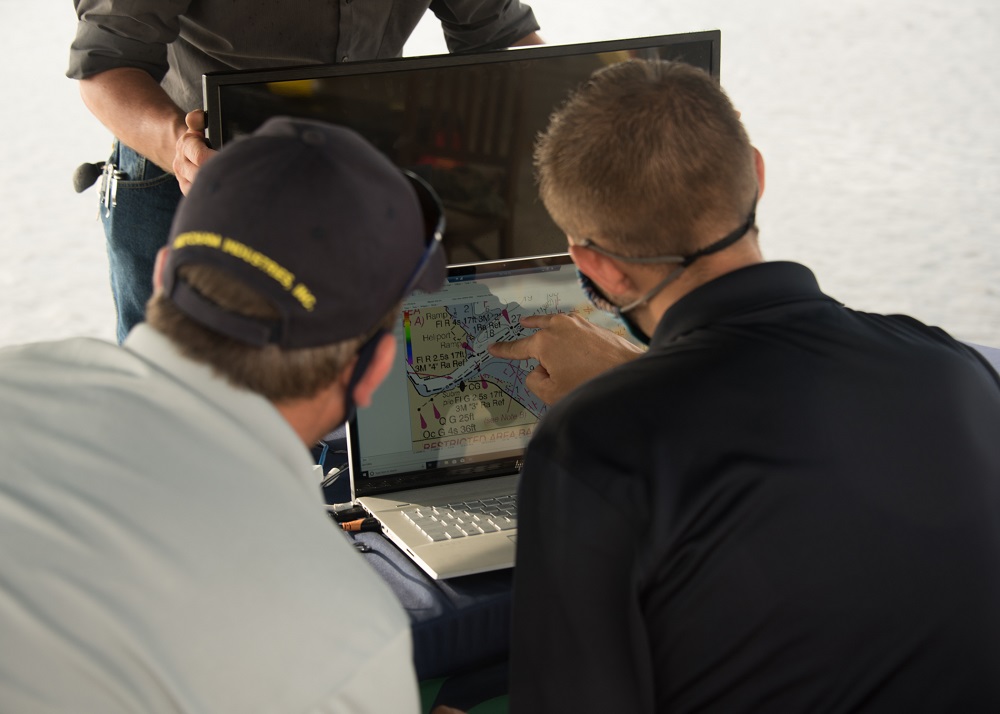
MIND Technology, Inc. (NASDAQ: MIND) and its Klein Marine Systems subsidiary successfully completed a live Advanced Naval Technology Exercise (ANTX) in a collaborative effort with the Naval Surface Warfare Center Panama City Division (NSWC PCD); Commander, Naval Meteorology and Oceanography Command (CNMOC) and in coordination with the Naval Oceanographic Office's Fleet Survey Team (FST), at NSWC PCD.
Despite COVID-19 limitations and numerous planning challenges caused by Hurricanes Laura and Marco, the collaborative team succeeded in conducting a live ANTX event. Participants travelled across the country to both Gulfport, Mississippi and Panama City, Florida to assess the operational and technical capabilities of emerging technology innovations.
Klein and a group from NSWC Panama City partnered to integrate the Klein UUV 600 and µMAX technologies into their Iver3 vehicle. In addition, Klein partnered with Seafloor Systems, Inc. to integrate the Klein MAX View 600 gap-filling side scan sonar system with their large-format, wave adaptive HydroCat-180 USV. The HC-180 has been integrated with a winch and Towfish Launch & Recovery System (T-LARS) designed and tested by Seafloor Systems. The USV is designed to be deployed by boat or from shore and be remotely piloted or programmed to conduct a pre-planned mission. The MAX View towfish was remotely deployed and recovered and the sonar data was sent back in real-time to either the mother ship or shoreside via a radio data link.
"The main benefits of ANTX are two-fold, the government gains first-hand interaction with emerging technology and the innovation providers gain warfighter feedback and insight on how to better work with government," said Todd Holland, director, mine warfare prototyping at NSWC PCD. "Our team here at Panama City Division, including our test directors, test engineers, range managers, and public affairs personnel did a great job of responding to various challenges while hosting an outstanding ANTX event in collaboration with Klein Marine Systems."
Guy Malden, Co-Chief Executive Officer and Executive Vice President Marine Systems, MIND Technology, added, "We were very pleased to have successfully demonstrated the benefits of our MA-X and µMA-X technologies despite the challenges of weather and COVID-related travel restrictions and greatly appreciate the efforts of NSWC Panama City and Seafloor Systems in this project. We believe through improved data quality and reduced time on station, MA-X provides for more than a 40% improvement in survey efficiency."
For more information, visit mind-technology.com
Registration opens for the NOC’s Marine Autonomy and Technology Showcase 2020
Registration is now open for the National Oceanography Centre’s Marine Autonomy and Technology Showcase (MATS) 2020, which will be held as a virtual event for the first time from 10–12 November.
MATS 2020 will still feature a packed three-day programme of exhibits, presentations, panel discussions and networking, offering a unique and valuable opportunity to find out about the latest developments in marine autonomous technology and how this field is set to develop in the years to come. The event also enables organisations to engage with the NOC to explore opportunities around funding, sharing ideas and getting those ideas in front of influential, high-profile users from the marine and maritime sector.
As ever, the event will welcome a broad roster of speakers from across industry, academia, and government organisations. Each day of the showcase will see leading figures from the world of marine autonomy and technology take to the virtual stage to present on innovative and disruptive technologies, as well as highlighting current developments and future priorities and challenges.
Keynote speakers
This year’s keynote speakers are Leslie-Ann McGee, Assistant Director of the Consortium For Marine Robotics at Woods Hole Oceanographic Institute, and Neil Tinmouth, Chief Operating Officer at SEA-KIT International Ltd.
As the Assistant Director for the Consortium for Marine Robotics at the Woods Hole Oceanographic Institution, Leslie-Ann is responsible for developing strategic vision and leadership, managing external relations and partnerships and retaining primary responsibility for organisational and program management of CMR.
Leslie-Ann is an expert in ocean and coastal issues in both the domestic and international arena and has a diverse background working with and for state, regional, national, business and environmental entities globally. She has successfully partnered with interest groups, industry members, private non-profits and other stakeholders to form cohesive management strategies by communicating regularly with a wide variety of stakeholders with often conflicting perspectives.
SEA-KIT International’s vision is to be a world-class provider of high technology solutions to the maritime and research industries and to open new fields and classes of technology to solve the problems of the future, today. SEA-KIT International is dedicated to working with partners and peers to create a safer and more sustainable offshore working environment.
Neil Tinmouth, Chief Operating Officer, said: “We’re delighted to have been invited to deliver the Industry keynote talk at this year’s Marine Autonomy and Technology Showcase. The Shell Ocean Discovery XPRIZE competition provided a fantastic springboard for SEA-KIT and enabled us to showcase our ground-breaking deployment of an autonomous underwater vehicle from an unmanned surface vehicle. We are looking forward to sharing our XPRIZE story, as well as the progress and achievements that have come since, with the MATS audience.”
Aidan Thorn, the NOC’s Marine Robotics Innovation Centre manager and chair of the MATS organising committee, said: “2020 is proving to be a hugely challenging and unsettling time for people around the world, and obviously it’s having a major impact on the industry events calendar here in the UK. In the light of this we have decided that moving MATS 2020 to a virtual conference format is the responsible and practical thing to do. As far as possible we will try to keep proceedings as ‘normal’ as possible, and the new format will offer opportunities to innovate and try new things.
'Pioneering work'
“MATS 2020 will still be a great showcase for the pioneering work that the NOC and its partners are delivering in the field of marine robotics, for the benefit of UK industry and the scientific community. The event has always been a celebration of emerging and existing partnerships across the industry, and a genuine catalyst for innovation in the sector, with a consistent theme of collaboration underpinning many of the discussions over the last few years. I am confident that these conversations and partnerships will continue the thrive despite the many challenges that we all face at the moment.”
Tickets are priced at £130 (including VAT) for the three-day online event, with a limited number of student places available costing £80. The full programme will be announced in the coming weeks.
Details on how to register are available at mats2020.vfairs.com
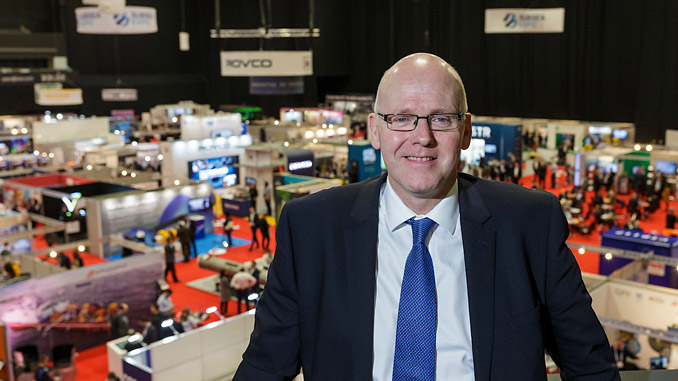
Oceans of Opportunity to be explored at Subsea Expo 2021 - How the UK’s underwater industry can capitalise on $3 trillion Blue Economy
The theme for Subsea Expo in 2021 will be Oceans of Opportunity – harnessing the Blue Economy.
The exhibition and conference will explore how the UK’s underwater engineering industry can capitalise on the global blue economy, estimated to be worth $3 trillion by 2030.
Organised by industry body, Subsea UK, the three-day event will take place at Aberdeen’s P&J Live from 23-25 February 2021.
Europe’s largest exhibition and conference focused on the underwater industry is set to be one of the first post-pandemic, large scale physical, as opposed to virtual, events back on the international calendar.
Neil Gordon, chief executive of Subsea UK, said: “The underwater engineering industry currently generates annual revenues of £7.8billion and a large slice of that still comes from the oil and gas sector. However, as the industry extends its reach into offshore wind, defence, ocean and marine science and aquaculture, there is the opportunity to grow global marketshare of what’s now known as the blue economy or ocean economy.
“Forecast to be worth around $3 trillion in the next ten years, the blue economy is the sustainable use of ocean resources for economic growth. Oil and gas, offshore and marine renewables and aquaculture account for around a third of its value.
“This is good news for the subsea industry whose underwater engineering capabilities, honed in North Sea oil and gas and increasingly in demand in offshore wind, are eminently transferrable to defence, ocean science, aquaculture and deep sea mining.”
With leading figures from all these sectors presenting at Subsea Expo 2021, the event is an ideal platform for companies to glean market intelligence, identify new opportunities and ways of exploiting these.
Approaching its 16th year, the event attracts around 200 exhibitors and almost 7,000 delegates from around the world. Over a third of the floor space has already been booked for Subsea Expo 2021.
Mr Gordon added: “Interest in next year’s event is on the increase and it’s clear there is an appetite for a return to real, rather than virtual, events. Our industry’s main sector – oil and gas – has taken a double blow with coronavirus and the collapse in commodity price but, with the race to achieve net-zero, a green recovery on the horizon, including hydrogen and CCUS, coupled with oceans of opportunity in the blue economy, we are sensing renewed optimism. This augers well for 2021 and we anticipate a more buoyant mood at next year’s Subsea Expo.”
The deadline for submitting abstracts to present at Subsea Expo is 9th October. Entries for the Subsea UK Awards will also be accepted up to this date. Details about the award categories, booking exhibition space and sponsorship opportunities are available on the Subsea Expo website: www.subseaexpo.com
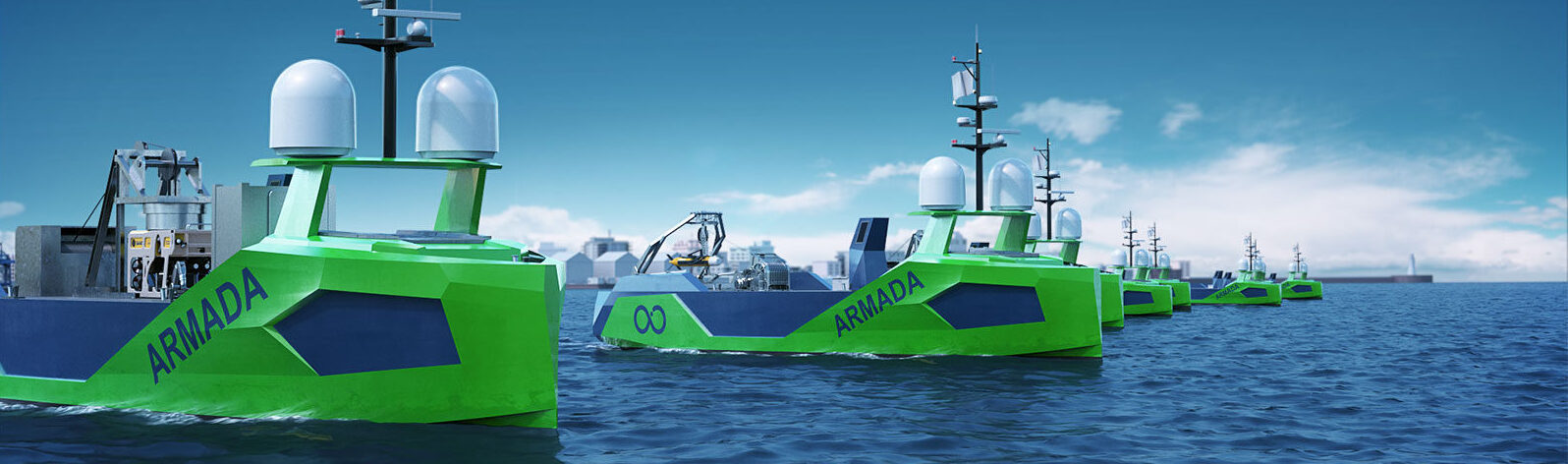
Saab Seaeye Leopards join Ocean Infinity robot fleet
Ocean Infinity have selected the Saab Seaeye Leopard to complement its pioneering 'Armada' fleet of unmanned surface robot vessels.
The Leopard work-class underwater vehicles will be deployed from Ocean Infinity’s initial 13 environmentally sustainable unmanned vessels for a variety of offshore and coastal services.
Dan Hook, Ocean Infinity, said, "The 3000 m Seaeye Leopard was chosen not only because it is well suited to USV applications but more specifically because of its comparable capabilities to a conventional hydraulic work class vehicle, but with considerably less input power, meaning materially reduced carbon emissions."
"The Leopard has ready adaptability for ‘Over the Horizon’ operations as well as a clear reputation for reliability and its suitability for remote operations – crucial for maintenance or repairs as part of an unmanned fleet," he continued.
Jon Robertson, Saab Seaeye said: "We're proud to be chosen to be part of this revolutionary unmanned fleet. The Armada Fleet complete with the Leopard vehicle will dramatically reduce the impact of offshore operations by cutting CO2 emissions and at the same time increase safety at sea by reducing manpower deployed."
Ocean Infinity’s Armada Fleet is a major advance in the global maritime industry, driving technology and sustainability to deliver a wide range of services including offshore and coastal survey data acquisition, geotechnical surveys, ROV and AUV operations, logistics and security in the safest, lowest impact and highest value way that exists today.
The fleet will be operated and monitored from onshore control centres based in Southampton UK, Austin Texas USA and a location soon to be finalised in Asia.
Construction of the fleet is underway and is expected to be operational early next year.
Find out more on the websitewww.saabseaeye.com/news
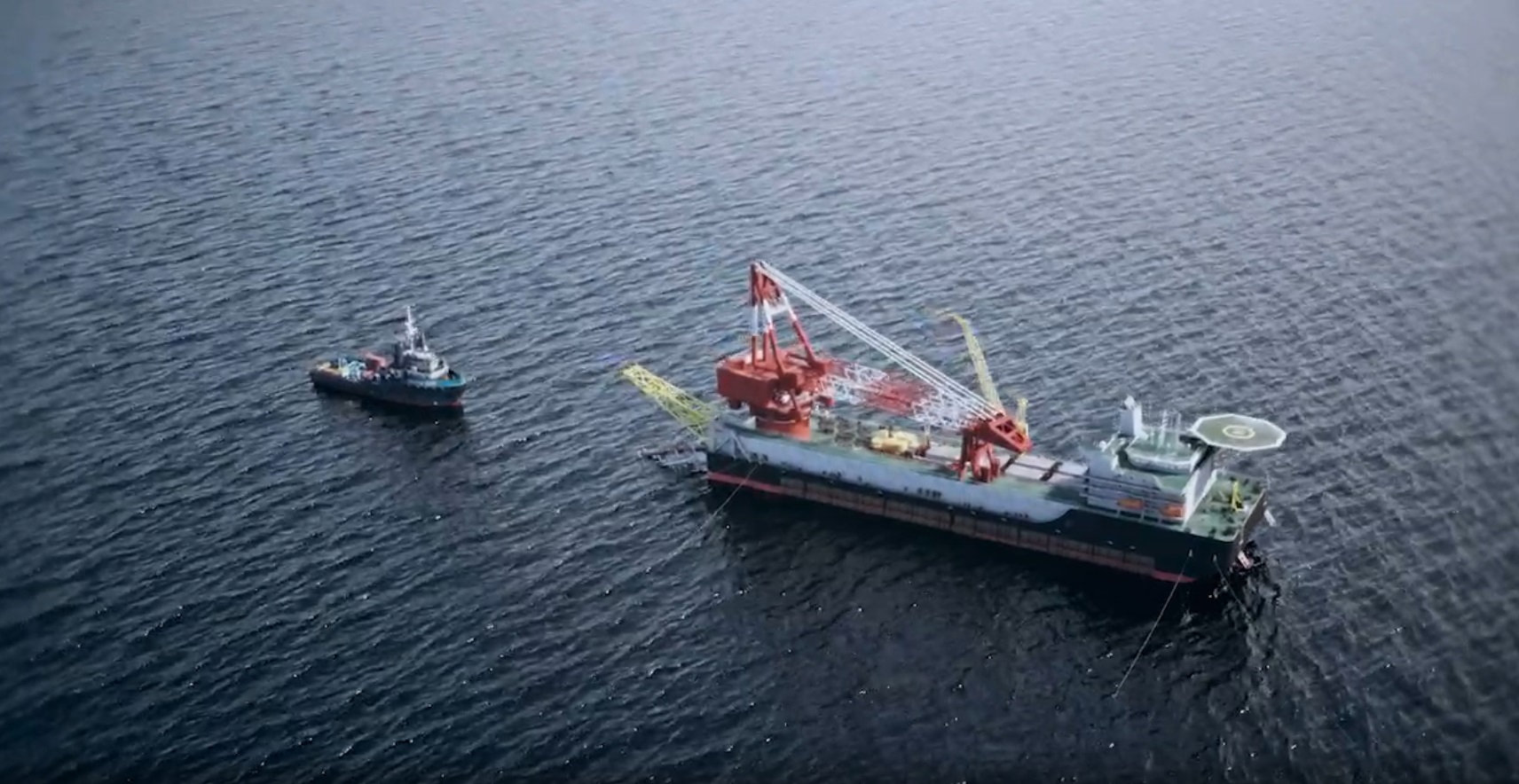
Vallourec, FORSSEA Robotics and iXblue join forces to facilitate the inspection of subsea pipelines using drones and digital technology
Vallourec, a leader in premium tubular solutions, is working with FORSSEA Robotics, a startup specializing in smart robotics and visual positioning, and iXblue, a company recognized for its expertise in inertial navigation, subsea positioning and autonomous technologies – to develop a pipeline inspection solution combining subsea drones and the use of visual markers, removing the need for surface vessels.
Traditionally, the inspection of subsea pipelines and structures requires the use of a surface vessel (manned or unmanned) with acoustic positioning used to monitor the deployment of Autonomous Underwater Vehicles (AUVs) or Remotely Operated Vehicles (ROVs). These subsea vehicles then collect the required information – such as a pipeline’s general aspect and route, anode consumption, free span, burial and crossing areas – using observation sensors.
In order to reduce pipeline inspection operational costs, Vallourec, iXblue and FORSSEA decided to develop a solution using visual markers directly integrated on subsea pipelines that enables vessel-free subsea navigation.
The project relies on barcodes placed on installed pipes, resulting in many passive positioning references logged with their own coordinates during the laying operation which will remain accessible throughout the life of the field. These markers would be used as navigation aids for subsea drones equipped with FORSEEA cameras and iXblue’s inertial navigation systems that easily relay the pipelines’ locations to the operators thus removing the need for acoustic positioning systems and costly mother vessels. To remain visible to divers and subsea drones throughout the project’s lifespan, these markers are long-term resistant to marine growth and erosion.
“This technology had already proven itself on large structures in the field”, said JeanGuillaume Besse, Vallourec R&D project leader. “Back in January of this year, we did a first sea trial on much smaller surfaces – down to pipes of 6” in diameter – in the South of France. The tests were a success, proving that these markers, combined with iXblue’s and FORSSEA’s expertise, can be used to provide accurate subsea positioning without the need of acoustic systems".
This innovative inspection technology could be further enhanced when combined with existing digital solutions from Vallourec smart’s services portfolio. For example, the Smartengo Best Fit digital solution already associates a unique tag on each pipe to ease traceability, fit-up and pipeline construction.
The advanced solution developed with FORSSEA and iXblue is a key milestone for future pipeline inspection and could be considered as a next step in the Vallourec smart offering, further facilitating operators’ asset management.
Find out more information via www.ixblue.com