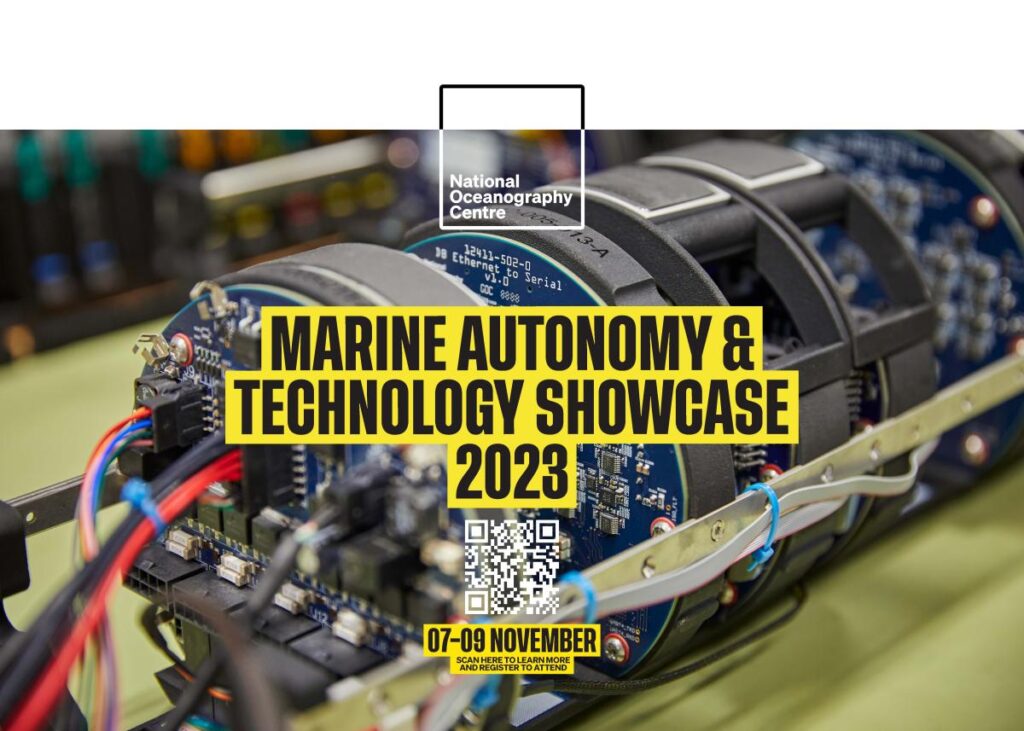
MATS 2023: Themes Announced
June 27, 2023
|In Events
The delivery committee are pleased to announce the themes for MATS 2023
During MATS 2023, our aim to explore Marine Autonomous Systems (MAS) seeks to underline the significance of MAS and to represent each key aspect of MAS through the themes outlined.
We are keen to encourage a wide range of presenters of all nationalities, genders and backgrounds including early careers or newly qualified engineers / technicians to enable the next generation to begin their journey.
This year we have a new theme: Applications of Artificial Intelligence and Machine Learning theme. We feel this will be a very exciting deep dive into this field.
- Theme 1: Sustainability and Net Zero Capability We are seeking to understand how sustainability is being implemented into organisations and their operations both now and in the future. Net Zero Capability is now a reality and exciting developments are driving this forward. How are MAS achieving this? Here we seek to understand the planning and development process already in play and how it can be advanced moving forward.
- Theme 2: Users & Applications Through this theme we are inviting presentations from Scientific, Industry, Government and Defence end-users of marine technologies. Presentations should focus on current and aspirational
- Theme 3. Applications of Artificial Intelligence and Machine Learning This new theme will explore the latest advancements and applications of Artificial Intelligence (AI) and Machine Learning (ML) in Marine Autonomous Systems (MAS) and marine data analysis. AI and ML are powerful tools increasingly used to improve the performance, efficiency, and usability of MAS, including in navigation, perception, environmental monitoring, and image analysis. While there are many benefits to integrating AI into MAS, there are also challenges. How much trust can we put in these technologies? How relevant are they to end-user applications and real-world contexts? How well do they support sustainable development? We are seeking presentations on a range of topics including autonomous navigation, planning, data collection and annotation, oceanography, and marine robotics to provide an insight into the latest trends and emerging technologies in marine autonomy, as well as the challenges and opportunities that lie ahead.
- Theme 4: Data Collection and Information Generation Sensing technologies are the eyes, ears, nose and touch of the MAS. This theme will focus on novel, innovative and emerging technologies that enable MAS to collect data for the end-user, through remote and physical sampling for chemical and biological detection. We are also seeking presentations that cover interaction with the environment and infrastructure. Data alone is of course not enough, generating information that meets end-user needs from the data collected is the ultimate goal of deploying the system. This theme will explore collected data and the novel methods of generating information products from MAS gathered data.
- Theme 5: Autonomous platforms and supporting technology Through this theme, we are seeking presentations that focus on existing and upcoming platforms within the next 12 months. Increased intelligence, operations have evolved from single platform to more of a systems approach. Operations are no longer limited to one or two vehicles deployed from a ship, but can be run by autonomous fleets utilising technologies such as digital twins, motherships etc. Presentations are sought that include, but are not limited to end to end systems, navigation, networking, collaboration and cooperation, residency, launch and recovery and novel vehicles including a forward look to future vehicle technologies. We are also encouraging presentations that look at the roles of cyber technologies and digital twins in operations. Presentations should demonstrate how step changes in MAS technology deliver improved performance through real examples of in field operation, be that with a single platform or a fleet of platforms.
To view the abstract submission guidelines and to submit an abstract please click here