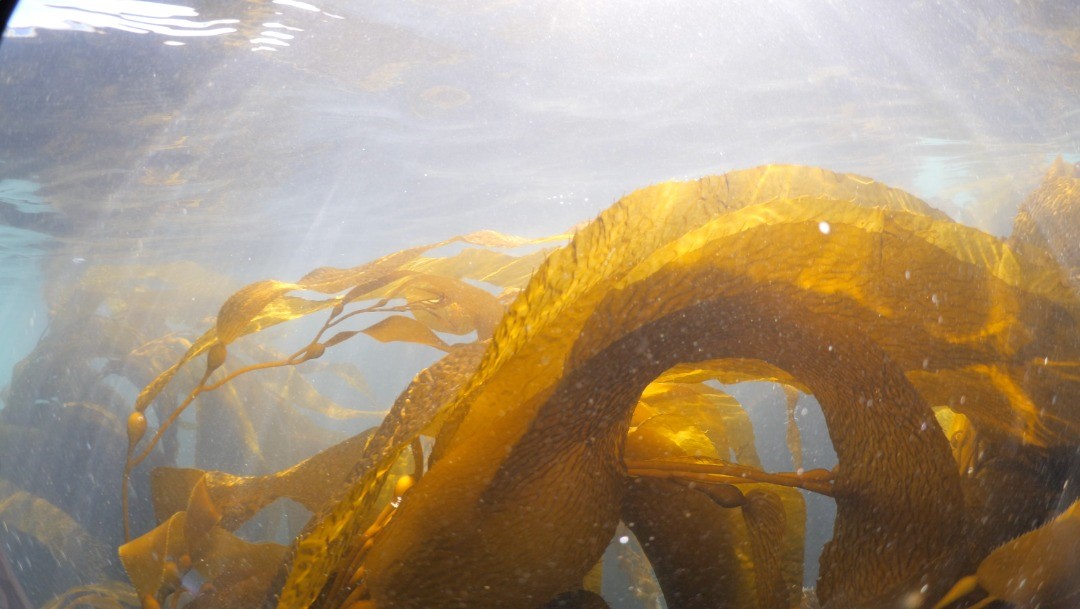
New global research initiative investigates carbon sequestration potential of kelp
Could kelp be a secret weapon in the fight against climate change? A new research project aims to answer that question by better understanding how kelp contributes to carbon sequestration in our oceans.
The international collaboration, led by New Zealand’s Cawthron Institute with partners Sequench (NZ), Kelp Forest Foundation (Netherlands), and NatureMetrics (UK), aims to revolutionize our comprehension of kelp forests’ contributions to the global carbon cycle and their potential as a tool for climate mitigation.
Nathan Geraldi, Lead Developer for Ocean Solutions at NatureMetrics, said seaweeds, particularly kelp, could be a significant source of the carbon sequestered in the ocean.
“Up until now, kelp’s contribution to the carbon cycle has remained unknown because we have not had the tools to measure it.”
Samantha Deane, Managing Director of the Kelp Forest Foundation, said traditional methods such as stable isotope, pigments, and lipid analysis have been limited in their ability to accurately detect and identify kelp-derived carbon in marine sediments.
“This project’s approach leverages the power of environmental DNA, which involves the extraction of genetic material directly from environmental samples without any obvious signs of biological source material.”
Cawthron Institute’s Dr Xavier Pochon, who will lead the project, said a core focus of the project will involve building a kelp genomic library.
“We’ll be using leading edge molecular diagnostic tools to estimate the amount of kelp-derived organic matter that is stored in marine sediments and surrounding environments.”
Anastasija Zaiko of Sequench said the central hypothesis of this research is that eDNA is a reliable and traceable marker for tracking giant kelp-derived carbon, allowing for a more accurate assessment of carbon sequestration potential in kelp forests.
“By successfully identifying and quantifying giant kelp DNA in sediment samples, this project aims to establish a direct link between source and sink habitats.”
Elif Demir-Hilton, advisor at Oceankind, said they are happy to support this strategic partnership to design and test molecular tools for species-specific carbon tracing.
“The capacity to track the fate of kelp carbon can inform restoration and conservation efforts and fill an important gap in the toolkit for carbon sequestration.”