RS Aqua invents innovative anomaly detection and acoustic data labelling software
RS Aqua is proud to announce a significant update to the MARLIN project. In collaboration with the University of Southampton, and supported by funding from Innovate UK, the MARLIN project is set to deliver several new technologies including a web application that can detect unusual underwater noise using machine learning, cloud connectivity and an intelligent network of underwater sensors.
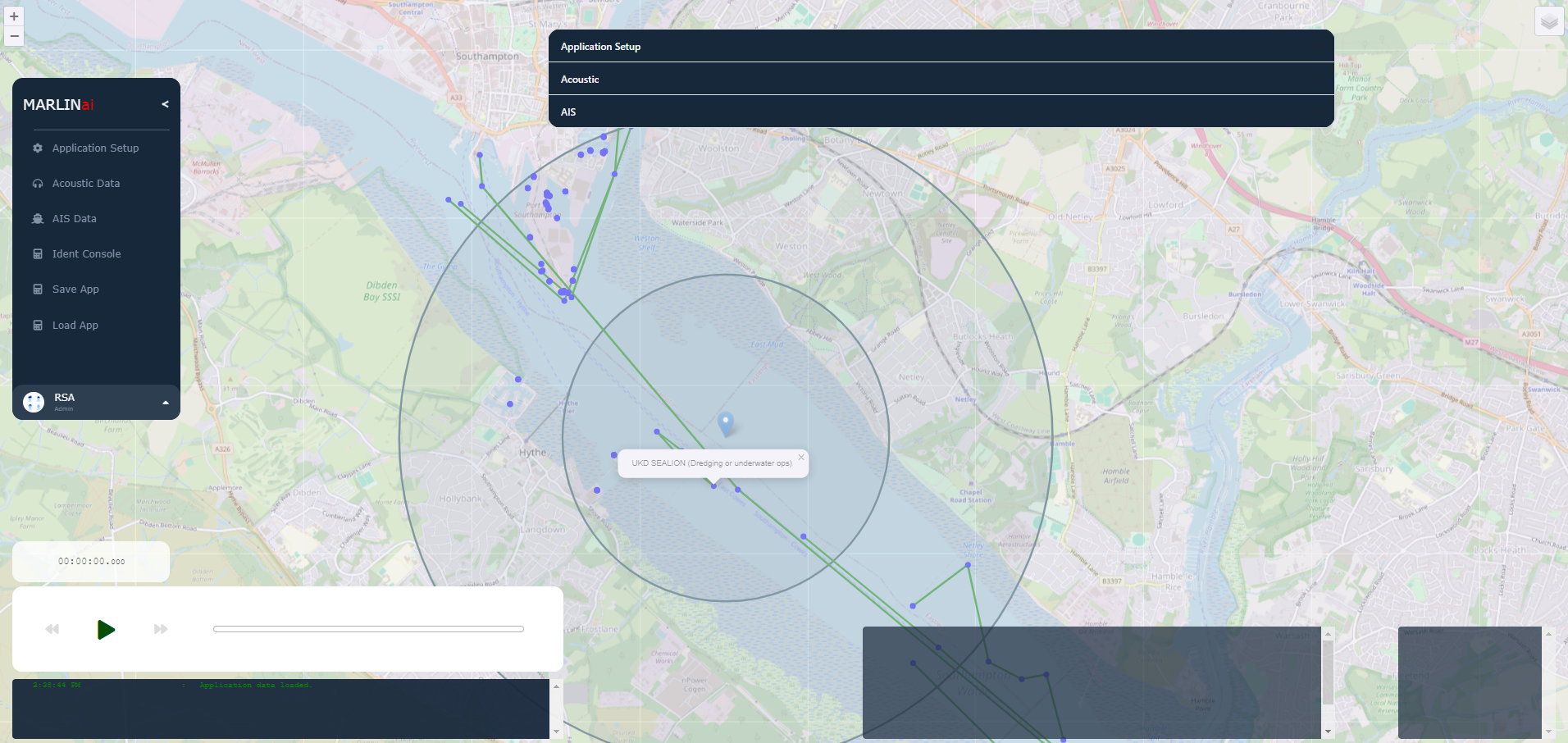
The latest development in the MARLIN project is the successful creation of a software application that allows us to correlate historical automatic identification system (AIS) data and underwater noise signatures. By automatically linking acoustic signatures to individual vessels, this innovative software enables real-time visualisation of data on a geographic information system (GIS) platform and acoustic data labelling.
Demonstrating the new technology at the Underwater Sound Forum on 18th April 2024, Dr. Ryan Mowat, Director of Innovation at RS Aqua, elaborates on the significance of this advancement: “The new MARLIN software application represents a shift in ocean monitoring technology. For the first time, we can identify potentially illegal vessel activity in real-time using underwater noise. This capability will enhance our understanding of ocean ecosystems and strengthen efforts to combat unregulated fishing.”
This classification technology in the MARLIN project marks a crucial milestone in ocean conservation efforts. By utilising labelled acoustic data from vessels, we have the potential to identify and track illegal, unreported and unregulated (IUU) fishing activity, contributing to the protection of marine biodiversity and the sustainability of our oceans. The MARLIN team are now adding Al algorithms to the software application to automate the detection of IUU fishing.
Martin Stemp, Managing Director at RS Aqua, adds: “We are thrilled to continue our collaboration with Innovate UK and the University of Southampton in driving forward the MARLIN project, and we are confident that these advancements will have a profound impact on ocean monitoring, security and conservation efforts worldwide.”