

SeaRobotics Launches Next Generation “Utility Class” ASV
SeaRobotics Corporation (SRC), a leading developer of marine robotics, today announced details of their next generation Utility Class ASV, the SR-Utility 3.0. This latest addition to the SRC portfolio is designed to extend the range and versatility of unmanned coastal marine survey operations by providing professional surveyors with a configurable platform that allows for interchangeable payloads and sensors, including the incorporation of existing instrumentation.
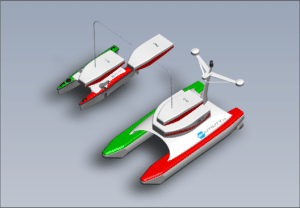
“We have been building ASVs for over twenty years now and understand that there is always a need for some degree of customization when defining form and function, but increasingly we see surveyors demand systems that they themselves are capable of modifying to fit certain applications,” according to Lou Dennis, VP of programs at SeaRobotics.
The launch of the SR-Utility 3.0 follows the successful 2019 introduction of the SR-Surveyor M1.8, a smaller, tightly integrated ASV designed specifically for the survey of shallow and hard-to-access areas. System compatibility was a key design principle for the new Utility Class ASV, and the SR-Utility 3.0 and SR-Surveyor M1.8 will share the same operator, survey and autonomy controls and unique SRC Uni-Cab architecture.
“The growing appetite for autonomous systems among commercial surveyors calls for ever more flexible and intuitive plug and play platforms like the SR-Utility 3.0, which offers a modular approach to set-up, intuitive interfacing, and—thanks to a shared common Uni-Cab architecture—the option of modular upgradeable expansion to multi-ASV deployments,” Dennis added.
One of the first confirmed contract awards is from CSA Ocean Sciences, a US-based marine environmental consultancy firm that already uses a number of other SRC ASV models on large-scale environmental, hydrographic and geospatial survey projects.
Speaking of the order, CSA CEO Kevin Peterson said:
“We are excited about the addition of the SR-Utility 3.0 to our existing fleet of SR-Surveyor M1.8s and the benefits that this breakthrough technology offers to our customers. Having a highly reliable and standardized suite of ASVs helps us maintain the same established crew training, spare parts, and support depots—it is ultimately about optimizing efficiency in the collection of precise data.”
To find out more about the SR-Utility 3.0, visit: www.searobotics.com


MacArtney Group Announces the Appointment of a New UK Managing Director
MacArtney Group can announce that it has appointed a new Managing Director for its UK operations. Phil Middleton will be joining the group from 1 December, where he will be heading up MacArtney’s UK operations based out of Aberdeen.
 Phil Middleton comes to MacArtney Group from the marine technology company Seatronics, where he has developed a wealth of experience in underwater technology over 18 years working his way up the ranks to become Group Managing Director, a post he has held for the past five years.
According to Rasmus F. Bonde, Chief Business Development Officer for MacArtney Group, Phil Middleton represents a big scoop for the company.
“I am excited about working with Phil and harnessing his ability and drive to grow our business,” states Bonde. “He has strong industry experience, a good reputation and an excellent network, as well as considerable knowledge of marine and offshore markets and the needs of our customers. He fits our profile and has a proven track record.”
Will be heading up MacArtney’s UK operations
MacArtney’s UK operations are one of the group’s largest outside of Denmark and service customers in offshore energy, ocean science and the naval sector. The UK operations employ a staff of just over 50 and offer the complete MacArtney range of underwater connectivity and technology products and solutions. This includes workshop facilities, where the focus is on the company’s core competencies, such as moulding cables and servicing the UK market with high-quality connectivity products.
MacArtney’s CEO, Claus Omann, also has high expectations for the new UK managing director.
“Phil Middleton will not only bring strong leadership into our UK operations, but will also be a strong strategic sparring partner for the global MacArtney management, where he will be a valuable asset,” he says.
Excited to build on MacArtney’s growth potential
Phil Middleton is just as thrilled to begin unleashing the rich potential of the UK market and join his new colleagues at one of the most reputable companies in underwater technology. Phil Middleton says about the new position:
“I have been aware of the MacArtney brand and heritage for many years, so I’m genuinely excited about being a part of the team and building on the great foundation and growth potential in the business. I look forward to meeting our existing client base and introducing new clients to the class leading products which MacArtney can offer across the energy sector.”
Global reach, local service
Middleton was attracted to MacArtney due to its roots as a family business combined with a global mindset. He sees it as an agile company, and MacArtney’s straight-forward approach to the tasks and challenges it encounters is particularly appealing to him.
MacArtney has significant growth plans for the UK, something Middleton is also excited about.
“I see it as an opportunity to re-energize MacArtney UK moving forward,” he says eagerly
For more information visit: www.macartney.com

Kraken Robotics MINSAS Now Available on the Teledyne Gavia AUV
Teledyne Gavia, manufacturer of Gavia, SeaRaptor and Osprey Autonomous Underwater Vehicle (AUV), announces the integration of the Kraken Robotics MINSAS Interferometric Synthetic Aperture Sonar (SAS).
The MINSAS is an off the shelf configurable Interferometric Synthetic Aperture Sonar (SAS) which replaces high end sidescan systems at an affordable price, while delivering significantly higher resolution, range, and area coverage rates (ACR). The increased range and resolution and associated higher ACR of SAS over traditional systems can significantly expand the capabilities of Teledyne Gavia AUV systems for a variety of tasks for naval, scientific and commercial applications
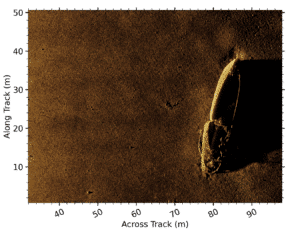 During the initial integration of the Kraken MINSAS at Teledyne Gavia facilities in Kopavogur Iceland a Gavia class vehicle was utilized. Due to the modular design of the Gavia AUV it was possible to use a Kraken MINSAS demonstration payload that was designed for a third party AUV along with a Gavia module adaptor to conduct sea trials. The ability of Gavia AUVs to carry payloads from other commercially available AUV systems further highlights the benefits of a truly plug and play modular system for unmatched versatility. The Integration and testing of the MINSAS culminated in operations with the Icelandic Coast Guard to examine targets of interest including what is believed to be the remnant of a B-24 bomber operated by the RAF for ASW patrols during WW2 and shipwrecks from the same period found in Icelandic waters.
Equipping the Gavia AUV with Synthetic Aperture Sonar enables the Gavia AUV to provide both bathymetry and high resolution / high area coverage sonar coverage which is ideally suited for a variety of applications including mine countermeasures, SAR and other operations where speed of response and actionable data are paramount. The low logistics Gavia class vehicles will utilize the MINSAS 60 system while the larger Osprey and SeaRaptor AUVs are capable of carrying the larger MINSAS 120 configuration.
For more information visit: www.teledynegavia.com

New HD-IP or HD-SDI Manta Camera Released
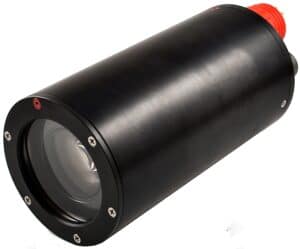
Arctic Rays, LLC has released Manta HD, a small HD-IP or HD-SDI underwater camera.
The Onvif profile S compliant Manta HD camera is capable of a resolution of 1920 x 1080 at 30 fps (1080p30 full HD), features a 30x optical zoom and on-board recording to an SD card. An additional connector is offered to provide power and control for an external pan & tilt or light.
The compact design measures 82.6mm (3.25in) diameter by 198mm (7.8in) long with connector and weighs 1.21 kg (2.67 lbs) in air and .34 kg (.75 lbs) in seawater. Housed in a 6061-T6 AHC aluminum housing with acrylic lens, it is rated to 1,000 meters (3,300 feet).
For more information, contact us at www.arcticrays.com or email us at [email protected].

Impact Subsea is recruiting a Technical Sales Engineer
Reporting Line
The Technical Sales Engineer will report directly to the Managing Director.
Location
Primarily based at Impact Subsea headquarters, Ellon, Aberdeenshire.
There will be a requirement to visit customers, conferences, exhibitions and other work locations as required globally.
Role
To apply your technical knowledge along with sales skills to generate and develop new sales leads.
Key Responsibilities
The Technical Sales Engineer will be required to:
• Prepare proposals & quotations.
• Provide pre and post-sale customer support.
• Organise sales visits to new and existing customers.
• Create sales literature (brochures, website content, social media content etc).
• Attend trade exhibitions, conferences and meetings within the UK and globally.
• Assist with the management and growth of the distributor network.
• Work with sales team to ensure sales targets are met.
Key Outcomes
• To increase sales in-line with the company sales plan.
• To assist with the day to day management of customers and enquiries.
• To assist with the growth of the company’s distributor network.
Limits of Authority
Full responsibility for all operational activities within the philosophies and constraints laid out in the job description.
The company reserves the right to change the activities listed, taking into account the job holder's qualifications and experience to enable the business needs to be met.
Qualifications & Experience
Essential:
• Degree qualification in relevant discipline.
• Experience in a customer facing role.
• Strong technical skills.
• Experience in sales.
Desirable:
• Experience in the underwater sensor and/or ROV/AUV market.
Personal Attributes & Knowledge
Essential:
• Ability to work well within a team.
• A proactive approach to dealing with challenges.
• Flexibility to travel to meet the requirements of the role.
• Excellent communication and interpersonal skills.
• Fully competent in the use of Microsoft Office suite of software.
• Experience using CRM software.
• Full driving licence.
Desirable:
• Ability to speak more than one language.
For more information visit: www.impactsubsea.co.uk
Final Call to Complete the SMI Mas Survey
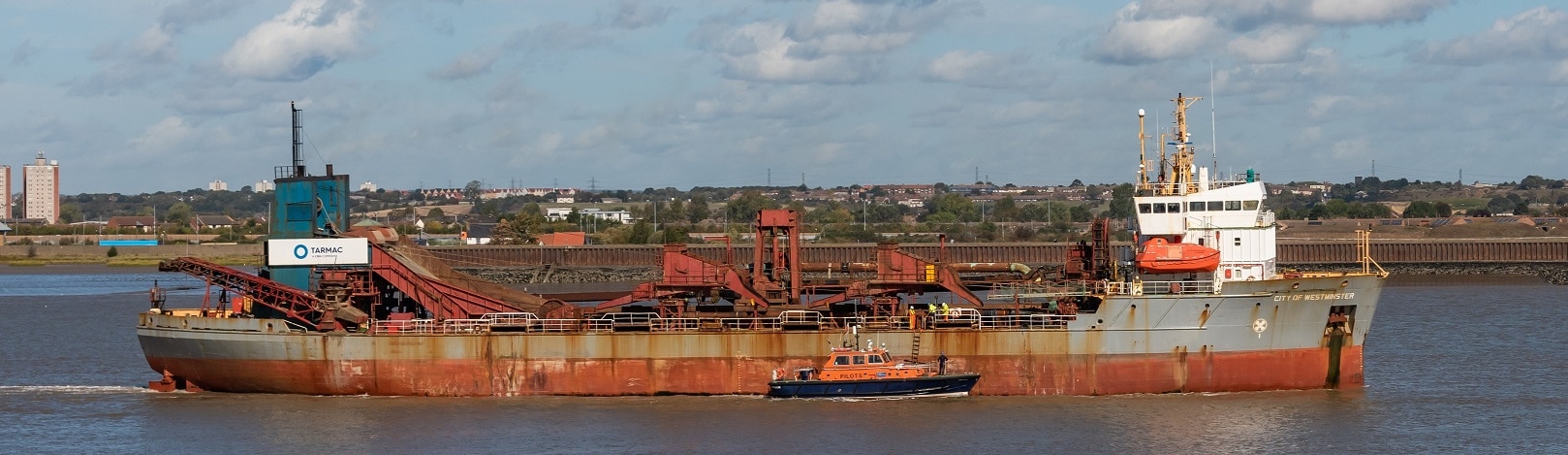
The Society of Maritime Industries is undertaking this short survey to ascertain the scope and size of Maritime Autonomous Systems (MAS) for UK business.
The aggregated data will be used by the MAS Council in SMI to engage with government stakeholders to demonstrate the economic importance of MAS to the UK and to develop business opportunities for UK enterprises in this sector.
Please complete the survey by 18th December to support the industry:
https://www.surveymonkey.co.uk/r/LPCCKB3
For more information visit: www.maritimeindustries.org
DLM 3D Prints Safety Release for Drone-Lifted Dipping Sonars
Dynamic Load Monitoring (UK) Ltd (DLM), of Southampton, UK has 3D printed a fully-functioning prototype safety release mechanism for dipping sonars manufactured by Thurn Group Ltd. The product, which is approx. 211mm high and 85mm in diameter, weighs just 466 grams.
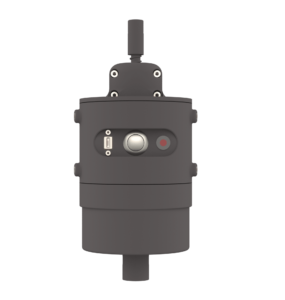 Thurn, a Norwich, UK-based manufacturer of underwater survey technology, is launching a new range of dipping sonars carried by roto-copter drones. The target market for Thurn’s innovative products are customers that are required to navigate and survey inaccessible and dangerous waterways where hidden sunken tangle hazards maybe present. The dipping sonars drag sensors through the water on a predefined route, autonomously. DLM’s attachment, which was delivered in one piece, will be fixed to the underside of the drone.
Dr. T.M. Hiller, General Manager (and founder) at Thurn Group Ltd., said: “We are hoping to supply these worldwide with dipping sonars, to many different customers and industries. This is an enabling technology that will allow safer drone operations over water wherever dipping sonars are employed, significantly reducing the risk of losing the drone. We looked at other suppliers too, but DLM’s solution was up to specification and we are looking forward to using it.”
The release can be activated in three ways: via a pull of a certain force for a length of time, for example, 2kg for four seconds; via a 3.3V signal from the drone triggered manually on the drone’s handheld controller; or via a 3.3V signal from the drone triggered by the drone control software. The drone software can be programmed to look for errors in flight behaviour, such as the payload swinging too much. The operator that is watching the drone, meanwhile, can look out for problems the software does not see. In all instances, the drone can return safely and the waterproof sonar picked up later utilising a tracking signal.
Field testing
Hiller confirmed that field tests will begin “within weeks”. The final product may also be 3D printed. DLM has not immediately designed other sizes, but the product facilitates simple change of the load spring to suit different load applications. This means that if a stronger spring is installed in the top of the mechanism its takes more pulling force before the device will release the payload. Conversely, if a weaker spring is installed it requires a smaller pulling force to release it, which would be more suitable for smaller payloads. This can be easily done by the user in the field without having to recalibrate the device.
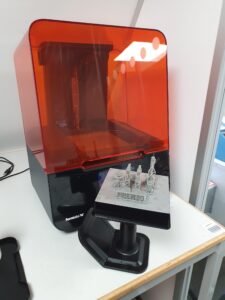
DLM’s FormLabs Form 3 3D printer, supplied by Solid Print3D Ltd., of Warwickshire, UK utilises a technology called Stereolithography (SLA), which, as James Pawsey, Mechanical Design Engineer at DLM, explained, is a more costly but more accurate method of 3D printing versus “more typical” fuse deposition modelling (FDM). Pawsey said: “FDM uses a thread of plastic that gets melted and built up in layers; SLA uses an ultraviolet laser to cure liquid resin layer by layer. It’s an interesting technological development that we’re keen to leverage.”
A 3D-printed solution aligned with Thurn’s initial expectations for the release concept, and Pawsey said it was an easy decision to utilise the machine that has been part of DLM’s printing fleet since August, from when it has been in almost constant use.
He said: “[Thurn] needed it to be lightweight and produced on a budget in a short timeframe. None of these things lend themselves too well to traditional machining or moulding techniques. We were able to print some parts on the same day as designing them, try them out and modify the design, which we really could not have done without it.”
DLM loosely based the safety release mechanism on larger, heavier products used in the cable laying industry, but they would not be suitable to use with a flying drone.
For more information visit: www.dlm-uk.com
Join RBR’s President Greg Johnson for a Special Webinar Series
During this time of remote working, RBR wants to help you continue learning about new instruments, applications, and methods. Join RBR's President, Greg Johnson, every Wednesday starting November 4, 2020, for a special webinar series. Each webinar will be presented three times to accommodate various time zones and include an interesting topic and a question and answer session.
View the webinar schedule and register: here.

Ocean Business postponed until July 2021
 Ocean Business organiser Diversified Communications UK has confirmed that the show’s next edition has been postponed due to the ongoing coronavirus pandemic. The ocean technology exhibition and training forum will now take place from 12-14 October 2021 at the National Oceanography Centre, in Southampton UK.
The magnitude and unprecedented scale of the Covid-19 outbreak and the subsequent government restrictions have affected the lives and livelihoods of people and businesses around the world.
Cheri Arvonio, event director of Ocean Business, says: “Like all businesses, we have been closely following the rapidly changing developments during these difficult times. While we are hopeful that the current tough measures on restricted social interaction will be lifted by the spring, there are still too many questions surrounding hotels, travel, social distancing measures, and individual company policies, to make it viable to run Ocean Business in April. Clearly, the best and most responsible option for everyone involved is to wait and host an even better show in July.
“We appreciate how important Ocean Business is to the industry it serves and are very sorry to disappoint the thousands of attendees that were planning on exhibiting and visiting. However, the success as well as the safety of our exhibitors, visitors, speakers and partners is our priority and we are hoping that everyone will get behind this tough but necessary decision.
“The good news is that much of the event planning is already in place, and we go into 2021 with an incredible amount of good will and support. The Diversified UK team would like to thank everyone – our exhibitors, visitors, speakers and partners – for their continued support and patience. We look forward to working together to ensure that Ocean Business continues to be the celebration and gathering the industry deserves – and can be proud of.”
Ocean Business will take place from Tuesday 6th July to Thursday 8th July 2021 at the National Oceanography Centre, in Southampton UK.
OTAQ Plc - Acquisition of ROS Technology
OTAQ, the marine technology products and solutions group for the global aquaculture and offshore oil and gas industries, is pleased to announce the acquisition of the trade and assets of ROS Technology Limited (“ROS Technology”).
OTAQ has acquired the trade and assets of ROS Technology for a consideration of up to £300,000 to be satisfied from existing cash resources (the “Acquisition”). The Acquisition consideration comprises initial consideration of £225,000 and up to a further £75,000 of deferred consideration, payable in two instalments of £37,500 over the next two years, subject to certain criteria.
Founded and managed by Dr Peter Robinson, ROS Technology is an innovative technology business which specialises in electronics and mechanical design in multiple industries including aquaculture and offshore. The Acquisition will add existing revenue generating contracts and greatly enhance OTAQ’s aquaculture R&D capability as the Company looks to broaden its product offering.
As part of the Acquisition, Peter will join the Company and have responsibility for the continued development of the acquired ROS Technology products as well as joining the existing OTAQ R&D team. A technology innovator for over 40 years and formerly a founder of OTAQ and designer of the original SealFence product, Peter is well known to the Directors of OTAQ and has recently assisted the Company in its work with the US aquaculture company, Minnowtech LLP.
For the unaudited year ended 30 June 2020, ROS Technology generated revenues of approximately £312,000 and made a profit before tax of approximately £152,000. As at 30 June 2020, its unaudited gross assets amounted to approximately £196,000.
Commenting on the Acquisition, Phil Newby, Chief Executive at OTAQ, said:
“We are very pleased to welcome Peter back to OTAQ through the acquisition of his business, ROS Technology. Peter is well known to the Directors of OTAQ and has a first-class track record for developing ground breaking technologies. At a time where OTAQ is broadening its product and service portfolio to a global client base looking for competitive advantage in its markets, this is an exciting addition to our research and development capability.”
For more information visit: