
IMarEST premieres short film on safeguarding the oceans
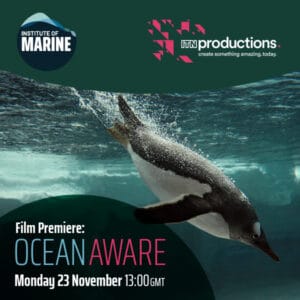
The Institute of Marine Engineering, Science and Technology (IMarEST) and ITN Productions Industry News have co-produced Ocean Aware, a short film that draws attention to the challenges facing the ocean, explaining the mechanisms we have to defend them and steward their resources. It showcases the stories of science, innovation and sustainability that are transforming the marine sector.
 Ocean Aware aims to shine a light on the web of international governmental organisations tasked with ensuring the safety of shipping, safeguarding the environment and finding ways to equitably share ocean resources. It explains the opportunities open to IMarEST members to influence discussions taking place in these bodies and shape future regulation by contributing their expertise.
In addition to interviews with IMarEST President Kevin Daffey and Jennifer Gomez-Molina, Co-Chair of the IMarEST Offshore Renewables Special Interest Group, the programme features segments from organisations that are addressing some of the key challenges facing the marine domain.
It outlines IMO’s efforts to tackle biofouling and the threat of invasive species and an initiative by the insurer AXA XL aimed at supporting the restoration of mangroves to protect communities threatened by rising sea levels.
The shipping, energy and commodities analyst S&P Global sheds light on the relationship between commercial imperatives and environmental goals. The quest to run vessels efficiently and sustainably is the subject of a piece from the fuel testing experts VPS. The final segment in cooperation with Seaflo reveals how enhanced simulator and digital technologies are set to improve the delivery of training to people working in the sector.
To celebrate the film's premiere, the IMarEST is holding a virtual event on 23 November. Former IMO secretary general Kitack Lim will set the scene for the first official screening. This will be followed by a 30-minute panel discussion led by IMarEST President Kevin Daffey on climate resilience, new frontiers in regulation and expanding ocean literacy.
These key themes will be explored from multiple angles by representatives from organisations featured in the film as well as representatives from the Commonwealth Blue Charter and senior members from the Institute's Special Interest Groups. The debate will conclude with an interactive Q&A session giving viewers the opportunity to put their own questions to the panel.
To register your place for the premiere of Ocean Aware, visit:
https://www.imarest.org/events/category/categories/imarest-event/film-premiere-ocean-aware

Kraken Completes Successful Fall OceanVision™ Campaign
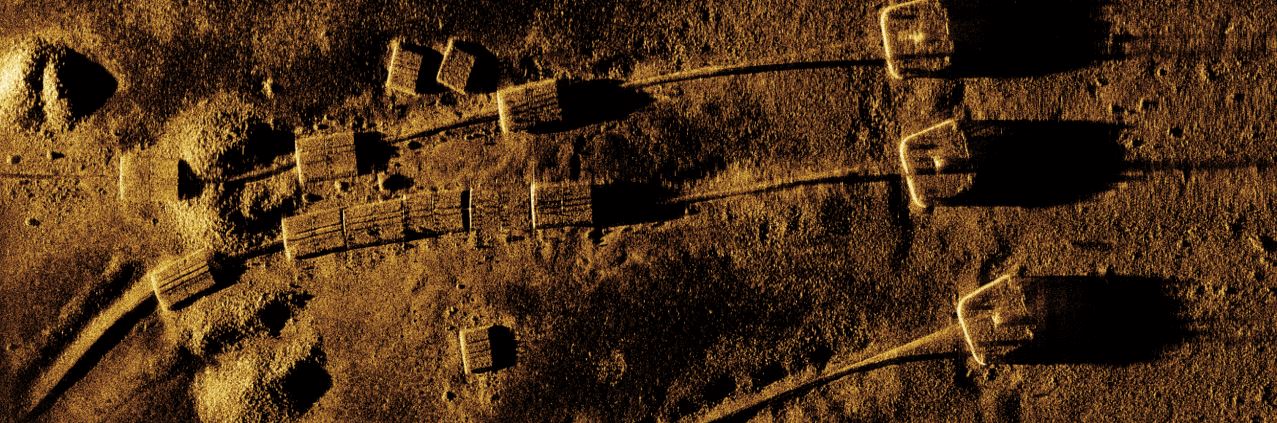
Kraken Robotics Inc. (TSX-V: PNG, OTCQB: KRKNF), Canada’s Ocean Company, is pleased to announce that it recently completed its third offshore data acquisition and technology demonstration campaign as part of the $19 million OceanVision™ project. During this campaign, Kraken deployed its new SeaScout® system which consists of Kraken’s KATFISH™ towed synthetic aperture sonar, the Tentacle® winch and Autonomous Launch and Recovery System (ALARS) to conduct ultra-high definition seabed imaging and mapping in Atlantic Canada.
The OceanVision™ campaign took place from September 21 to October 18 and included the mobilization and integration of Kraken’s KATFISH™ system onboard Atlantic Towing Limited’s Atlantic Kingfisher offshore supply vessel. This marks the 8th different vessel type that Kraken’s KATFISH™ has operated from, demonstrating the flexibility and robustness of operation on vessels ranging in length from 39 feet to 262 feet.
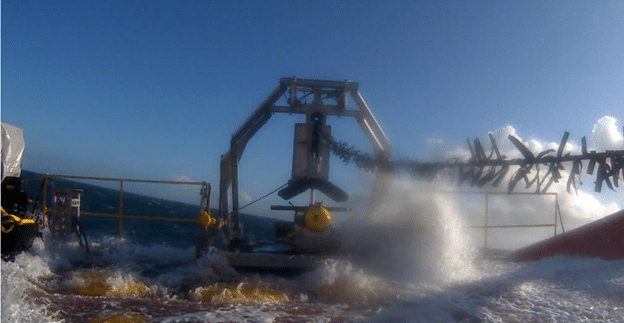 During the campaign, Kraken collected data in a variety of areas focusing on marine habitats, iceberg scours and other objects of interest, operating the KATFISH™ and ALARS in up to Sea State 6 conditions. In addition to capturing large amounts of ultra-high definition seafloor data, Kraken was very pleased with the performance of its ALARS system. The ALARS had recently completed successful sea trials in Nova Scotia on Kraken’s Ocean Seeker vessel, and the OceanVision campaign provided the first opportunity to deploy the system in real-world offshore environmental conditions. This campaign also saw the first successful offshore demonstration of Kraken’s SeaVision® laser profiler integrated in the KATFISH™. The SeaVision® laser profiler will act as an integral part of a gap filler solution, thus increasing the area coverage rate of the KATFISH™ versus other solutions without gap fillers.
Karl Kenny, Kraken’s President and CEO said, “I am very pleased to see the successful completion of yet another OceanVision™ campaign – building upon lessons learned in previous campaigns, demonstrating cutting edge technologies in challenging conditions, and imaging the seabed in and around Atlantic Canada at resolutions never before seen. The KATFISH™ system continues to produce excellent results and astounding images. I was especially pleased to see the successful real-world testing of our ALARS system. Sea conditions in October in the North Atlantic Ocean are far from ideal, and the combination of the ALARS and the Tentacle Winch allowed our team to safely and efficiently launch and recover the KATFISH™, minimizing risk to personnel and to equipment, and significantly increasing our operational envelope.”
“Kraken looks forward to future campaigns in 2021 as part of the OceanVision™ project which will see integration of new technology developments from Kraken and its partners including Multi-Spectral Synthetic Aperture Sonar, ThunderFish® XL AUV and the DIVE LD-AUV. These technologies will form a key part of our emerging Robotics as a Service business as we deploy innovative technology platforms across ocean sectors and extend the global reach and market opportunities for Kraken and our partners.”
For more information visit:
Rhonda Reidy Awarded NSERC Grant in Partnership with ASL to Measure Baleen Whale Prey in British Columbia
The University of Victoria Ph.D. candidate Rhonda Reidy has recently received funding for her project “Modifying an Acoustic Zooplankton and Fish Profiler for quantitative spatial sampling of baleen whale prey in British Columbia”, co-supervised by Dr. Laura Cowen and Dr. Stephane Gauthier. This funding comes from an NSERC Alliance grant awarded to Laura Cowen. Reidy studies baleen whale foraging dynamics. North Pacific humpback whales, in particular, are increasing in abundance and, in BC, are increasingly struck by vessels and entangled in fishing gear. New tools are required to observe their interactions including collecting data on the humpback whale diet. The goal of a partnership between Reidy and ASL Environmental Sciences (ASL) is to collaborate on a modified ASL Acoustic Zooplankton and Fish Profiler (AZFP). The AZFP is an autonomous and calibrated scientific echo sounder, designed for long-term environmental monitoring of the water column from a stationary mooring on the seafloor. In a bottom-mounted, upward-looking orientation, the AZFP monitors the presence of zooplankton and fish by measuring acoustic backscatter returns at multiple ultrasonic frequencies.
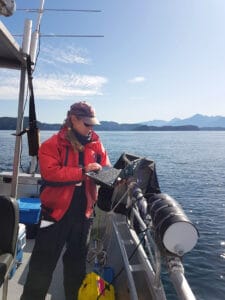 One great interest to the marine conservation community in BC is to develop reliable measurement methods for the evaluation of baleen whale diet over time. The objectives of this project are to (i) modify the AZFP for efficient use on small boats and (ii) evaluate the performance of the AZFP regarding its utility for collecting high-resolution prey data near feeding baleen whales. Reidy’s research will employ the AZFP in a vessel-mounted, downward-looking orientation from the sea surface which requires modifying the AZFP’s external hardware and developing custom software. Advantages of this modification include ruggedized portability of the instrument, expedited deployments and ease of use by non-physical oceanographers. In contrast to ship-based surveys or stationary moorings on the seafloor, portability provides high resolution data collection at low cost as well as rapid visualization and evaluation of results.
ASL will incorporate Reidy’s feedback into the modified system. Examples include a new AZFP interface unit for above-water operation on a moving platform and less complicated software for expediting system deployments. The “new” AZFP will enable enhanced spatial surveys that are economical, quantitative, and repeatable and that are conducted over a significantly shorter duration than a six or twelve-month fixed deployment on the seafloor.
ASL will contribute to this project through a cash contribution and through in-kind contributions. Engineering expertise is in collaboration with Dr. Stephane Gauthier, an acoustics scientist with Fisheries and Oceans Canada who will offer use of an AZFP purchased by DFO as well as his expertise using the AZFP data. Dr. Laura Cowen is an ecological statistician who will be providing statistical support. ASL staff will assist with the project—Jan Buermans will oversee ASL’s participation, Matt Stone will install the modified AZFP on the field boat and Rene Chave will be responsible for implementing software updates and troubleshooting. Dr. Steve Pearce, ASL’s AZFP product manager, with expertise in applied sonar systems, will be liaison between ASL and the Cowen laboratory, assisting in all aspects of the partnership.
For additional information, please visit:

NORBIT Aptomar acquires the SeaDarQ radar system for environmental monitoring
Nortek announces the sale of its SeaDarQ radar technology for environmental monitoring and oil spill detection to NORBIT Aptomar, a technology provider to global maritime markets.
NORBIT, which is headquartered in Trondheim, Norway, will integrate the SeaDarQ software with NORBIT’s existing SeaCOP environmental monitoring system. The SeaCOP system combines remote sensing technologies – like radar, infrared cameras and sonars – with state-of-the-art data fusion and artificial intelligence.
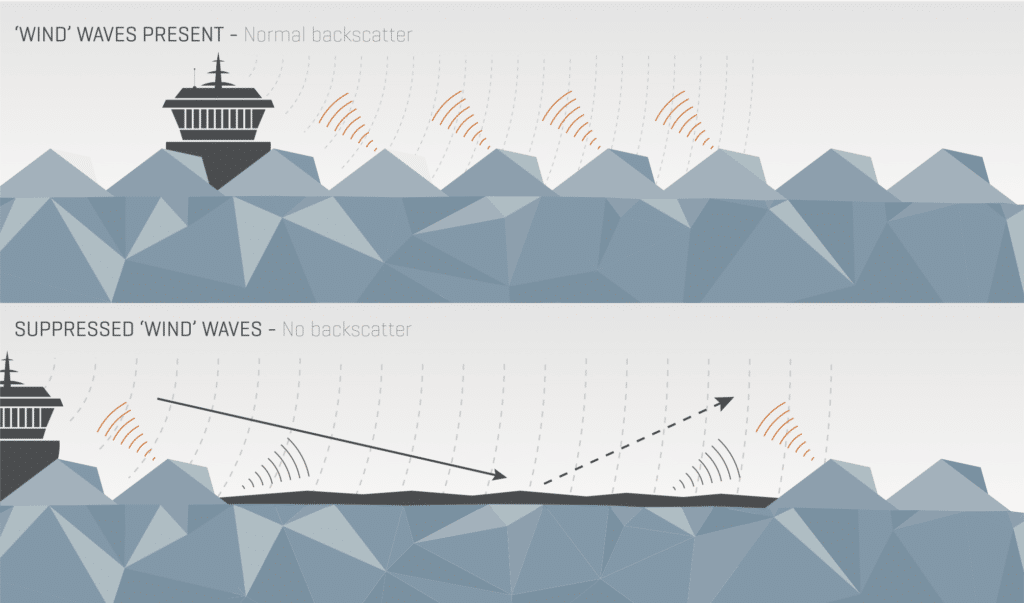
Using a high-resolution marine X-band radar, the NORBIT Aptomar SeaDarQ System can automatically detect, track and monitor oil spills on the ocean surface.
Developing and expanding the capabilities of the SeaDarQ system Nortek’s subsidiary in the Netherlands has worked to develop, renew and expand the capabilities of the SeaDarQ system since Nortek acquired it in 2011. The most important product development milestones since then were the automated detection of oil spills through improved image processing and the addition of detection and tracking algorithms. Radar acquisition and processing hardware have also been improved and simplified.
OSD radar processors monitor the presence of capillary waves, caused by the wind affecting the water surface. When an OSD radar processor detects an area with no capillary waves, it could be a possible oil spill.
Since 2011, the SeaDarQ system has been especially successful in China and Brazil, including a landmark Brazilian project comprised of radars, cameras and software on an FPSO and support vessels.
NORBIT’s acquisition of the SeaDarQ system presents an opportunity to provide a truly ground-breaking technology for environmental monitoring, adding valuable data points for port security, asset protection, vessel traffic monitoring and oil spill detection to their already extensive solution.
Nortek strengthens its strategic focus on core technologies. Selling this business activity allows Nortek’s office in the Netherlands to focus on core technologies and activities, such as its successful vessel-mounted (or moving-boat) current measurement system, the Signature VM Ocean and Coastal.
For more information visit:
Seiche wins Ørsted contract to ensure Marine Mammal Safety is of the highest priority during construction of world’s largest offshore wind farm – Hornsea Two
Seiche Ltd’s specialist team of personnel and equipment have mobilised to two key vessels on Ørsted’s Hornsea Two offshore wind farm site. Their purpose is to manage Ørsted’s commitment to ensure impacts to marine mammals during the Hornsea Two wind farm construction activities are negligible.
Specialising in marine mammal monitoring and mitigation measures, the team from Seiche has been brought on board to ensure compliance with procedures that seek to minimise the effects of construction noise on the local marine population. Key species known to occur in the project area are harbour porpoise, white-beaked dolphins, minke whales as well as grey and harbour seals.
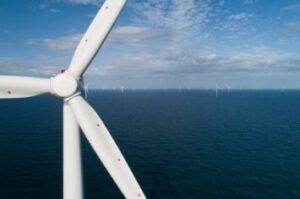 Prior to any construction activities taking place, dedicated Marine Mammal Observers (MMOs) will monitor the area for any animals that could be affected by the noise produced from pile driving.
Monitoring activities are taking place from DEME’s jack-up installation vessels during the installation of 165 monopiles as well as Heerema’s semisubmersible crane vessel Sleipnir during the construction of the 2 offshore substations. In addition to visual monitoring to ensure marine mammals are not within close proximity to piling operations, acoustic deterrent devices (ADDs) are used to deter animals from the area to protect them from harmful levels of noise.
Seiche’s team of observers and ADD Operators ensure that the Marine Mammal Mitigation Plan, which follows the government’s Joint Nature Conservation Committee’s guidance protocol, is adhered to at all times. Should a mammal be detected within the designated protection zone piling operations are delayed until the mammal leaves the area.
Based locally in East Anglia, Seiche’s Associate Director of Environmental Services Nicola Harris said: “As a company we are extremely pleased to be working with Ørsted as well as its contractors DEME and Heerema to ensure that the construction of the world’s largest wind farm can be completed without harming the marine animals off our own coast. Offshore Renewables are key to developing a greener and more sustainable future and we are proud to be working with companies like Ørsted to be a part of that achievement.”
Natalia Lopez, Senior Environment & Consents Specialist for Ørsted said: “We adhere to a strict consenting process before any construction works commence offshore and it’s imperative that outlined procedures are fully adhered to. It’s great to be able to work alongisde UK based suppliers with specialist expertise in this field so that together, we can deliver the world’s largest offshore wind farm in the most sustainable way possible.”
For more information visit:
Forum’s XT500 trenching system to support major cable maintenance project in Asia
Forum Energy Technologies has secured an order to supply specialist subsea equipment for a major cable maintenance project in South East Asia.
The contract, which was awarded through Forum’s local representatives, will see the company deploy a Perry® XT500 trenching system and Dynacon® Launch and Recovery System as well as associated surface power and control installations. The equipment will be used to support telecommunication contracts in South East Asia and the Indian Ocean.
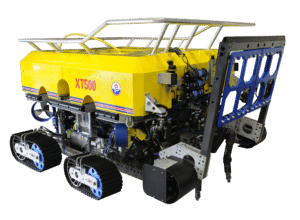
The XT500 trenching system is ideally suited to cable maintenance projects with a 3,000m depth rating and three metre ROV burial capability on the ocean floor. It utilises Forum’s proven Integrated Control Engine (ICE™) and has robust 500 HP power.
The vehicle will be manufactured at Forum’s facility at Kirkbymoorside, Yorkshire and installed onboard the client’s vessel in early 2021. As part of the workscope, Forum will also deliver operational and maintenance training for the client’s personnel and provide support during the first mobilisation onboard the vessel, including sea trials.
Kevin Taylor, Forum’s Vice President - Subsea Vehicles, said: “Forum has a strong reputation globally for manufacturing high quality, robust ROVs and associated auxiliary products for a number of industries ranging from oil and gas to renewables, defence, mining and telecommunications. We have continued to strengthen our footprint in Asia and this contract is a testament to our high-quality equipment and skilled personnel. Our local representative is a well-respected supplier in the region and our partnership has provided a strong channel to complement to our existing framework.
“This is the fifth ROV we have delivered to this client and we are thrilled the organisation continues to see the value our ROVs deliver. I am looking forward to seeing our system provide the required operational resilience, reliability and performance standards expected in such a safety-critical sector.”
The XT500 trenching system is designed to meet the demanding trenching requirements of both strong soils and deep flowline burial protection over long stretches. Capable of operating in free-fly, skid-based trenching and survey modes, the system is designed for demanding applications, providing a robust solution even in the world’s harshest environments.
For more information visit:
Sonardyne technology to underpin superyacht safety and security
Navigation and intruder detection technology from Sonardyne has been chosen by marine security systems specialist MarineGuard Systems to protect and provide safe navigation for two new-build superyachts. One of the new vessels will be fitted with Sonardyne’s Vigilant forward looking sonar (FLS), while the second will have the company’s Sentinel intruder detection sonar (IDS) system installed.
Vigilant FLS builds an easy to interpret 3D visualisation of the seafloor terrain and any navigation hazards out to 600 m ahead of the vessel in real-time, significantly reducing the likelihood of collisions and groundings and enabling safe passage in unfamiliar and unchartered areas. In open waters, Vigilant also provides configurable automated depth and collision warnings out to an industry-leading 1.5 km and down to 150 m water depth. Sentinel IDS is the most widely installed commercial off-the-shelf (COTS) security sonar on the market, providing wide-area perimeter protection. Suitable for both permanent and temporary vessel installation, Sentinel detects, tracks and classifies underwater threats at up to 1.5 km range to provide a rapidly deployed and activated perimeter intrusion capability to help safeguard large private yachts when at anchor or berthed in a marina.
MarineGuard Systems Ltd, a bespoke provider of integrated security systems and products based in Southampton England, has been working with Sonardyne for many years, working on some of the largest 100 metre-plus long yachts.
For more information please visit:
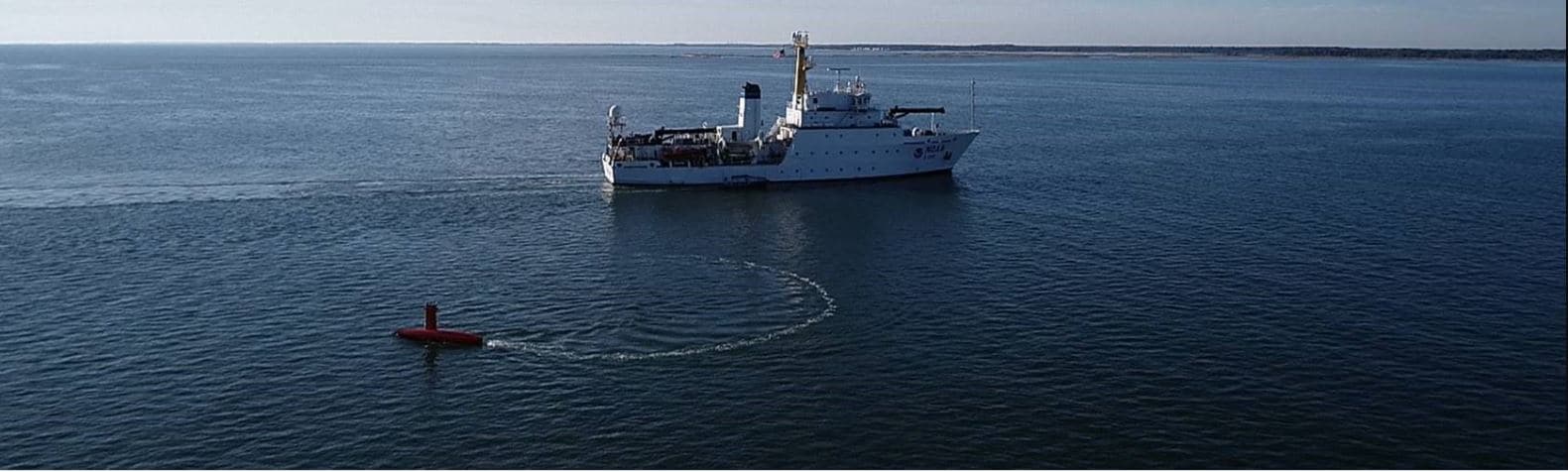
NOAA’ Ocean Exploration Cooperative Institute chooses DriX USV to help build the next generation ocean exploration system
The Ocean Exploration Cooperative Institute (OECI), funded by NOAA’s Office of Ocean Exploration and Research (OER) recently signed a purchase contract to acquire a DriX Unmanned Surface Vessel (USV) from high-tech company iXblue. Signed over the summer, this contract consists of one DriX USV along with a novel custom-designed Universal Deployment System able to launch and recover the USV as well as other AUVs. The autonomous solution is expected to be put to sea by mid-2021.
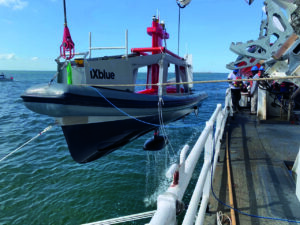 Along with the innovative Universal Deployment System, other features that led to the selection of the DriX were its mission endurance, ability to operate at high-speed and excellent offshore seakeeping ability.
“The ability to launch and recover unmanned surface vessels as well as other autonomous systems like AUV’s from the same launch and recovery system allows us to support a range of collaborative ocean exploration operations from a single research vessel, said Larry Mayer, Director of the Center of Coastal and Ocean Mapping and the University of New Hampshire’s co-PI on the Ocean Exploration Cooperative Institute. “With these collaborative, multi-vehicle operations we hope to greatly expand the footprint and efficiency of ocean exploration.”
The University of New Hampshire will operate the new DriX. The Ocean Exploration Cooperative Institute is funded by NOAA’s Office of Ocean Exploration and Research and is hosted at the University of Rhode Island in partnership with the University of New Hampshire, the University of Southern Mississippi, the Woods Hole Oceanographic Institution, and the not-for-profit Ocean Exploration Trust. This new five-year alliance is envisaged to extend NOAA’s reach and capabilities for its ocean exploration portfolio.
“We want to thank NOAA for trusting iXblue in being part of their new unmanned systems strategy,” states Marine Slingue, VP at iXblue, Inc. “We look forward to our continuous partnership and to helping them expand the development and operations of unmanned maritime systems in the U.S. coastal and world’s ocean waters.”
For more information please visit:
Feritech to open major new production facility in 2021
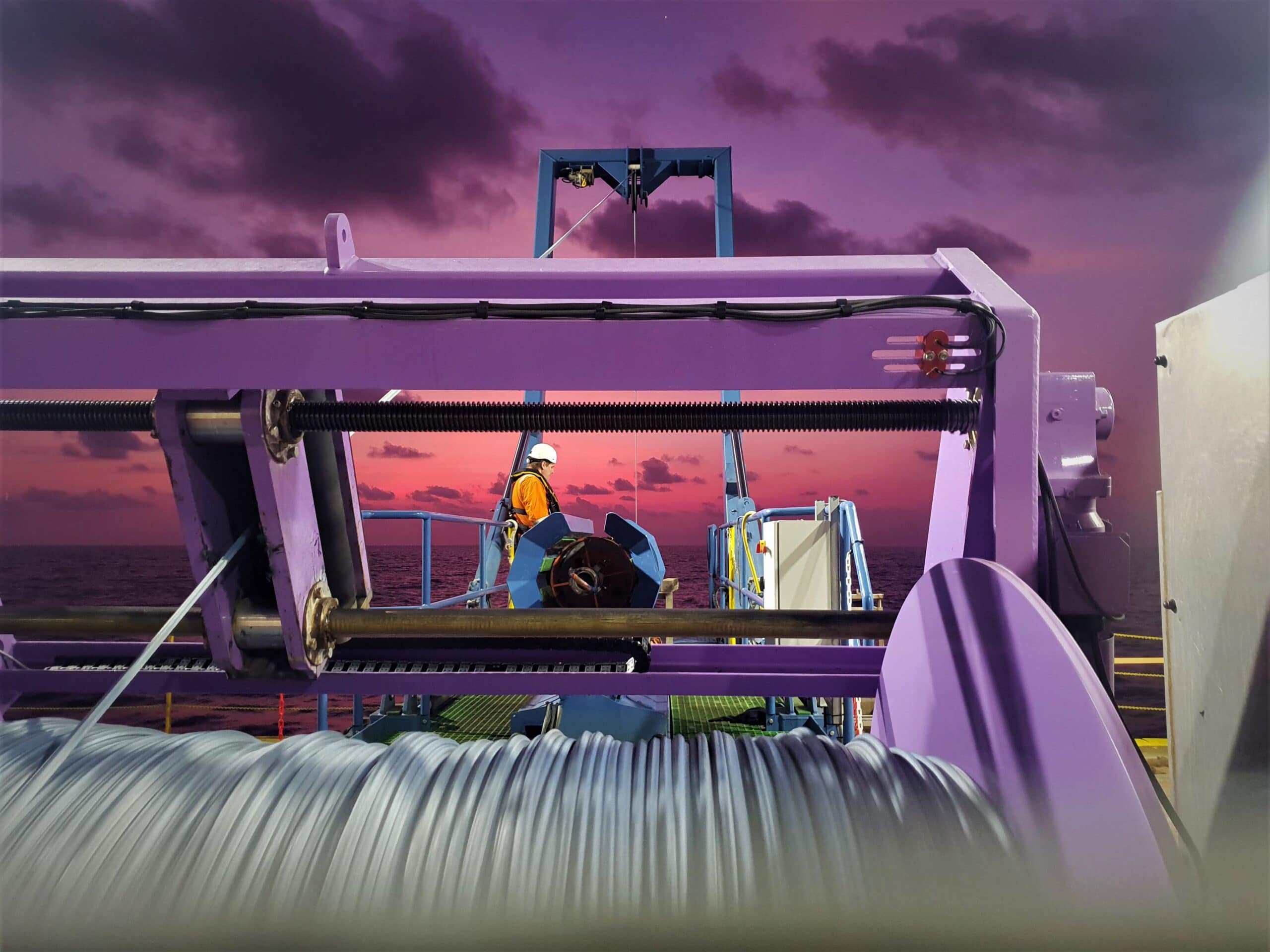
Feritech has announced that it is building a new, state of the art facility just outside Falmouth in Cornwall. Covering an area of 3.5 acres, the new site received planning approval this week. It will greatly increase Feritech‘s manufacturing capabilities and the services offered to both local customers and the company’s established global client base.
Founded in 2012, Feritech designs and builds subsea engineering solutions primarily for the marine geotechnical sector. All their products are designed, manufactured and tested at their own facilities. Over 90% of the company’s products and services are exported, with clients in more than 40 different countries.
Co-founder and Managing Director, Rob Ferris, explains:
“This new facility is a major step forward for our business. The development of Floating Offshore Wind is a fast growing regional and global opportunity and we are ramping up our capacity, partly so we can help accelerate development of this vital new industry. The new facility will be capable of handling up to 20 ton fabrications and is complemented with a new machining hall which can produce all manner of precision machined parts. Feritech’s design, electrical, electronic and hydraulic capabilities will also be expanded in line with the increased subcontract projects that we expect to fulfil.
“Research and development within the offshore renewable energy sector will always be a primary operation of the company and this facility will allow Feritech to undertake new challenges within this sector, providing solutions for customers quickly, while also tightly controlling the quality of the process from start to finish and all under one roof.”
Steve Jermy, CEO of Wave Hub Ltd, which is leading the South West Floating Offshore Wind Accelerator Project, says:
“The South West of the UK is set to become a world leader in floating offshore wind (FLOW). This exciting new development by Feritech exemplifies how innovative and forward looking businesses are rising to the challenge and will help to fast track the region's capacity to build out large scale wind farms in the Celtic Sea from 2025 onwards.”
Rob Ferris adds:
“The new building has also been designed to prove that our industry can work in harmony with the environment. The facility will harvest its own water, use ground source to heat the offices, and a solar roof with power storage to generate its own electricity. The site will have over 5,000 trees planted and use a pond to capture all the surface run off from the site. This will act as a heat store and provide vital new habitats for wildlife.”
Matt Hodson, Marine Hub Operations Director for Cornwall Development Company says:
“Ever since the company was founded, Feritech has been a leader, not a follower. They continually challenge themselves to develop world leading products that break the mould. This is another great example of a Cornish marine technology company that has rapidly become a global leader in its field. Companies like Feritech will be vital to our economic future, as we seek to recover from the impact of Covid while also grasping vital new growth opportunities, such as the massive potential that exists for Floating Offshore Wind power in the Celtic Sea.”
For more information please visit:
Seafloor EchoBoat-240™
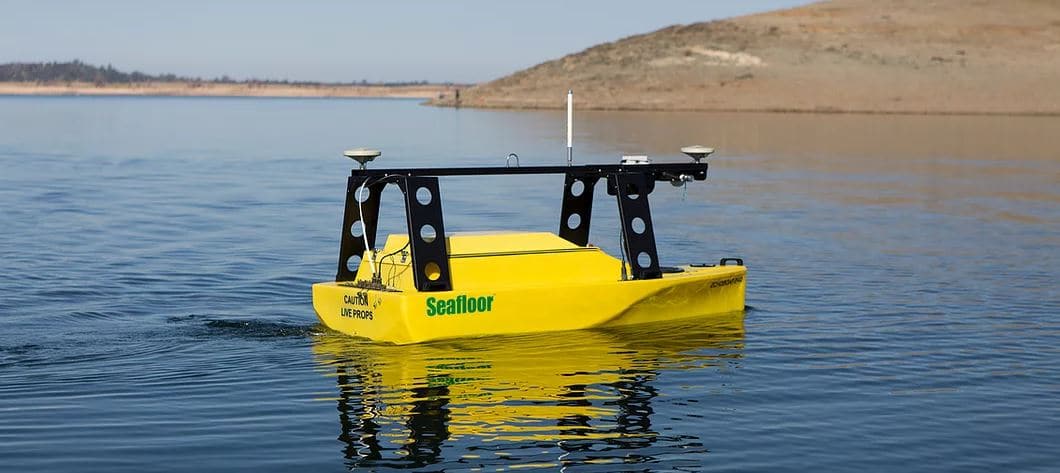
Seafloor recently designed & delivered an EchoBoat-240™ USV to the U.S. Army Corps of Engineers, Los Angeles District. The Seafloor Systems EchoBoat-240™ is a scaled-up version of our standard workhorse EchoBoat-160™ remote controlled and autonomous survey platform. It was designed for applications requiring the highest resolution sensor suite available, and to be more stable in rough water environments.
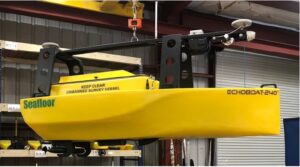
Ease of use was top of mind during development. The hinged water-tight lid quickly opens and closes, so all one has to do is power on the vessel, deploy it, and begin surveying. Live props reduce weed entanglement, and the SVP is encapsulated in the bow for protection. The wave-piercing hull was designed by our engineers to efficiently collect data and save time in the field.
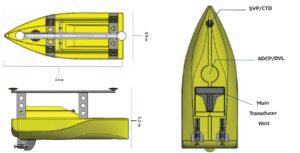
Equipment payload on the EchoBoat-240, fully integrated for use by the USACE:
• Teledyne SeaBat T50-R ultra high resolution Multibeam sonar (below)
• Integrated INS Type 20 INS/IMU (Applanix Wavemaster)
• AML Micro-X sound velocity sensor
• Valeport SWIFT sound velocity profiler
• HYPACK HYSWEEP Software
Still two person transportable, the Echoboat-240™ is ideal for launching from a trailer or cart in areas where a manned boat is not feasible. Seafloor’s field technicians collected some great data shots while training the Los Angeles District, U.S. Army Corps of Engineers to use their new autonomous vessel.
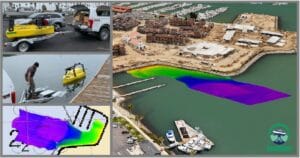
The Google Earth rendering shows a resulting data model from the onboard Teledyne RESON T-50 SeaBat multibeam sonar. The 2.4m / 7.87 ft vessel was right at home in this Ventura harbor, and is ready to become a hydrographic workhorse for the USACE.
For technical specifications and more information, please visit: