

GeoAcoustics Ltd strengthens presence in Southeast Asia with new channel partnership in Singapore
 Great Yarmouth, UK: Leading hydroacoustic technology manufacturer GeoAcoustics Ltd has appointed Oceanscan Singapore, a division of the UK-based Oceanscan Group, as its new channel partner for Singapore, Malaysia, Thailand, and the Philippines. The partnership boosts GeoAcoustics' regional presence and ensures that customers in these key maritime markets receive dedicated support and access to its industry-leading bathymetric sonar, sub-bottom profiler, and side scan sonar products.
As part of Oceanscan Group, Oceanscan Singapore brings extensive experience in subsea technology and survey equipment provision. With established operations in Singapore, Oceanscan will focus on integrating GeoAcoustics' subsea products in its extensive service and product portfolio for the region, reinforcing its commitment to supporting hydrographic and geophysical survey professionals in Southeast Asia.
With this agreement, GeoAcoustics' technology will be more accessible to marine survey companies, scientific institutions, and offshore operators across the four countries in focus. Oceanscan’s regional expertise will enable enhanced sales, support, and service, ensuring customers benefit from cutting-edge solutions for bathymetry, sub-bottom profiling, and high-resolution underwater imaging.
“We are thrilled to partner with GeoAcoustics through this channel partner agreement," said Sathish Kumar Selvaraj, Regional Director, Oceanscan Singapore. “This partnership represents a significant step in expanding our reach and delivering top-tier solutions to our customers. By joining forces with such an innovative and reputable company, we can offer enhanced value and strengthen our position in the market. We look forward to the shared success and continued growth that this collaboration will bring”
The collaboration aligns with GeoAcoustics' global strategy of working with expert local partners to ensure that its hydroacoustic solutions are supported by specialists who understand regional industry needs. Continued international growth and presence, and commitment to delivering high-quality hydroacoustic solutions to customers worldwide is a key reason GeoAcoustics was honoured with a King’s Award for Enterprise for International Trade in 2023.
"With a strong presence in Singapore and extensive experience across the region, Oceanscan is the ideal partner to support our continued growth in Southeast Asia," said Richard Dowdeswell, Chief Commercial Officer, GeoAcoustics Ltd. "Our advanced hydroacoustic systems are proven in diverse marine environments worldwide, and this partnership ensures that customers in these markets benefit from ease of access with dedicated local expertise and support."
As a trusted provider of hydroacoustic technology for offshore energy, marine research, and hydrographic surveying, GeoAcoustics’ product portfolio includes the AI-powered GeoSwath 4 bathymetric sonar, GeoPulse sub-bottom profiler, and Pulsar side scan sonar. All are designed to deliver accurate data in challenging environments, supporting applications ranging from seabed mapping to subsea infrastructure inspections.


NOC awarded more than £11 million to enhance climate tipping point early warning systems
 Scientists at the UK’s National Oceanography Centre (NOC) are to lead critical research into forecasting a major climate tipping point – the potential collapse of the Atlantic Subpolar Gyre.
Through more than £11 million in funding, from the UK’s Advanced Research + Invention Agency (ARIA), NOC will lead the development of novel and innovative new ways to detect early warning signs of a change in the Atlantic Subpolar Gyre.
Sitting just south of Greenland and Iceland, the Atlantic Subpolar Gyre is a key component of the global ocean’s circulation system, transporting heat around the planet, helping to regulate temperatures in Europe and North America.
Its collapse could have a major global impact on our weather, food and security, but existing climate models and ocean observations are too limited to accurately forecast a tipping point which could signal its collapse.
The funding, part of ARIA’s, five-year, £81 m Forecasting Tipping Points programme covers eight projects, three of which are being led by NOC’s world-leading scientists and worth more than £7 million.
One is an ambitious project exploring the use of novel earth observation platforms, such as airships or high-altitude pseudo-satellites, while a second will unlock the potential of existing international undersea communications cables to become a vast sensor network, starting in the North Atlantic.
The third project will use artificial intelligence (AI) and models to push the limits of existing ocean observations and to transform our ability to detect the early warning signs of Subpolar Gyre collapse, including identifying gaps and uncertainty in data.
NOC is supporting a further five Subpolar Gyre focused projects, led by other organisations and institutes, with more than £4 million funding.
NOC Chief Scientist Professor Penny Holliday says, "This transformative funding from ARIA comes at a critical moment for ocean and climate science, helping to fulfil an urgent need to address gaps in our understanding of Subpolar North Atlantic tipping points.
“NOC will be at the forefront of this ambitious programme developing pioneering innovative approaches—from AI-driven modelling to revolutionary ocean observation technologies—to bridge those knowledge gaps.
“By harnessing our world-leading science and pioneering technology, we will lead and collaborate on multiple projects to enhance our ability to detect early warning signs and better understand the future of our changing ocean."
The NOC-led projects, which are subject to final contract negotiation, are Full Ocean Fibre, Aerial Experimental Remote sensing of Ocean Salinity, heaT, Advection and Thermohaline Shifts (AEROSTATS) and Subpolar gyre Observations, models and artificial intelligence to Resolve Tipping points and provide Early warning Detection (SORTED).
Full Ocean Fibre, with partner National Physical Laboratory, will target the use of undersea cables used for telecommunications and forming the backbone of the internet to seafloor sensors across thousands of kilometres.
“Full Ocean Fibre will develop the acoustic and fingerprinting techniques needed to identify ocean processes and provide an unprecedented view of the deep North Atlantic from existing cables,” says project lead Dr Carl Spingys. “This project sets the scene for a next-generation ocean and climate observing network enabled by the global network of subsea cables.”
AEROSTATS is an ambitious airborne earth observation project focused on observing fine-scale interactions between air, ocean and ice in the Greenland sea ice margins. This will include exploring the use of airborne platforms such as airships or high-altitude pseudo-satellites to create cost-effective, long-term monitoring capabilities, with partners NOVELTIS, Radarmetrics and Pixalytics.
“This is a truly bold airborne earth observation project,” says project lead Professor Christine Gommenginger. “Our vision is cost-effective, long-term monitoring capabilities that support early warning of a potential Subpolar Gyre shutdown. With partners across diverse sectors, we’re a cross-disciplinary group bridging technology, climate science and a commitment to tackling climate challenges through innovation.”
SORTED will transform the ability to detect and monitor the early warning signs of Subpolar Gyre collapse by pushing the spatiotemporal capabilities of existing observational records using a novel combination of AI and tipping point knowledge from models. It will also identify critical gaps and uncertainties in ocean datasets and make recommendations on the observations still needed to build robust early warning systems for a potential Subpolar Gyre collapse, with partners University of Southampton and University of Bordeaux.
“Circulation in the Atlantic Subpolar Gyre is thought to be moving towards a collapse but, climate models and ocean observations are too limited to accurately forecast these tipping points,” says Dr Alejandra Sanchez-Franks. “We will be using a novel combination of AI and tipping point knowledge from models to push the spatiotemporal limitations of existing observational records and to underpin the robust early warning systems needed for a potential Subpolar Gyre collapse.”
Scientists from NOC are also involved in five further projects, also focusing on the Atlantic Subpolar Gyre. These are POLEMIX, led by the University of Southampton, TIMBER, led by the University of East Anglia, PROMOTE, led by the University of Reading, VERIFY, led by the University of Leeds and GRAIL, led by British Antarctic Survey.
These projects cover a wide range of innovation and collaboration, from a new proof-of-concept observing system using autonomous profiling floats to predicting tipping points in marine ecosystems and their consequences and opportunities for the UK, especially for the fishing industry.
They will also involve improving earth system models, creating digital twins to test early warning systems and using robotics to gather data in Antarctic regions.
Exail integrates Elwave’s electromagnetic sensing technology into R7 ROVs
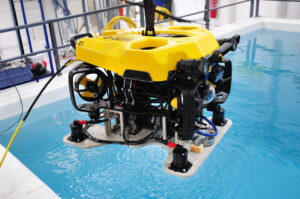 Exail has selected Elwave’s advanced electromagnetic sensing technology to equip its R7 Remotely Operated Vehicles (ROVs) for an undisclosed client. As part of this collaboration, Exail will integrate Elwave’s Tetrapulse sensors—powered by the innovative CEDAR (Controlled Electric Detection And Ranging) technology—into multiple R7 ROVs.
Enhanced target detection with electromagnetic sensing
This next-generation biomimicry sensing capability offers significant advantages in subaquatic electrical resistivity mapping. “In the context of target identification and neutralization missions, the integration of CEDAR technology enables superior operational performance in challenging environments, including turbid waters”, explained Gary Bagot, Sales Director at Elwave. The R7 ROVs equipped with Elwave‘s Tetrapulse sensors will improve the detection, localization, and characterization of both metallic and non-metallic underwater and buried targets, including steel, aluminum, and fiberglass composites.
The R7 ROV: A compact and versatile solution for underwater operations
Combining the agility of a mini-ROV with the capabilities of an observation-class system, the R7’s modular design supports a range of sensors, tools, and payloads. This versatility makes it particularly well-suited for underwater security missions, including hazardous terrain navigation, UXO detection, and disposal operations.
“By integrating CEDAR technology into the R7 ROV, Exail and Elwave are delivering an advanced solution that strengthens operational effectiveness for underwater exploration, defense, and security applications” said Nicolas Astruc, ROV Managing Director at Exail. “This collaboration combines Exail’s expertise in maritime robotics with Elwave’s electromagnetic sensing technology to provide customers with a unique and powerful tool for operations in complex environments”.
£4 m to boost marine robotics research capabilities
The UK’s National Oceanography Centre (NOC) has been awarded £4 million to bring next-generation sensing capabilities to its marine autonomous systems fleet for use in advancing sustainable ocean science.
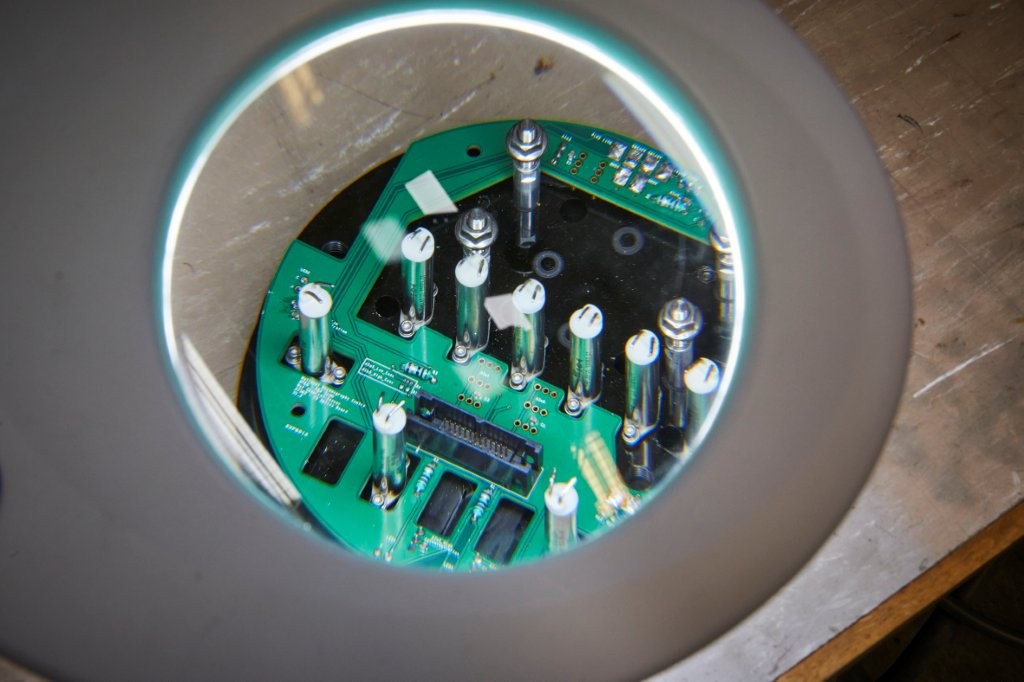
The funding, from the Natural Environment Research Council’s (NERC’s) Future Marine Research Infrastructure (FMRI) programme, will support three projects by leading scientists and engineers at NOC to develop advanced sensors targeting 10 different biogeochemical essential ocean variables, from physics to nutrients and carbon. These will then be integrated on to autonomous underwater vehicles such as gliders and NOC’s Autosub Long Range (ALR).
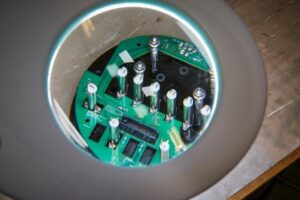 These advances will then be made available to the UK marine science community through the UK’s National Marine Equipment Pool, the largest centralised marine scientific equipment pool in Europe, as part of the National Marine Facilities, managed by NOC.
“This investment underscores NOC’s position as a global leader in marine technology capability and innovation, accelerating the development and uptake of sensors with the capacity to transform marine science through the deep expertise in our Ocean Technology & Engineering group,” says Julie Robidart, who leads the group.
“By translating our innovation into science-ready autonomous capabilities, we’re supporting FMRI’s vision for a modern, versatile and sustainable marine research infrastructure.”
“By accelerating the adoption of sensor innovation, this investment will help to position the UK at the cutting-edge of marine research capabilities,” says Kristian Thaller, FMRI Programme Director. “It will ensure that UK marine science can meet society’s urgent need to observe, understand and predict changes in the ocean.”
The funding from NERC’s FMRI programme supports its Accelerating Adoption of Sensor Innovation (AASI) initiative, which aims to show how innovation in marine sensor technology can be translated into deployable autonomous research capabilities.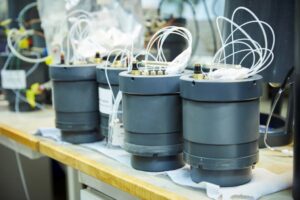
The funding will support three cutting-edge sensor development projects, the integration of these sensors into autonomous platforms, enhancing data management systems and targeting comprehensive validation trials by summer 2026.
The three sensor projects are:
Autonomous Sensors for fast In-situ Measurements of nutrient Ocean Variables (ASIMOV) – led by Dr Allison Schaap, will increase performance, speed, and reliability of nitrate and phosphate lab-on-chip sensors for use on Teledyne Slocum gliders.
Marine Sensors for Carbon Observations (MaSCOt) – led by Dr Socratis Loucaides, is a project to advance and optimise for use on gliders high-accuracy and precision lab-on-chip sensors for the marine carbonate system.
SixSense – led by Dr Andrew Morris, and as previously announced, will create a miniature multi-parameter sensor capable of measuring six key parameters covering biogeochemical, physical and environmental measurements (conductivity, temperature, dissolved oxygen, pressure, pH and Eh), to be integrated onto ALRs, gliders and other platforms, such as submersibles and profiling floats.
The FMRI programme mission is to revolutionise marine research infrastructure to deliver cutting-edge marine research capabilities so that science can serve society’s need to observe, understand and predict change in the ocean.
Kongsberg Maritime develops innovative Mooring Capable Solution for Offshore Construction Vessels
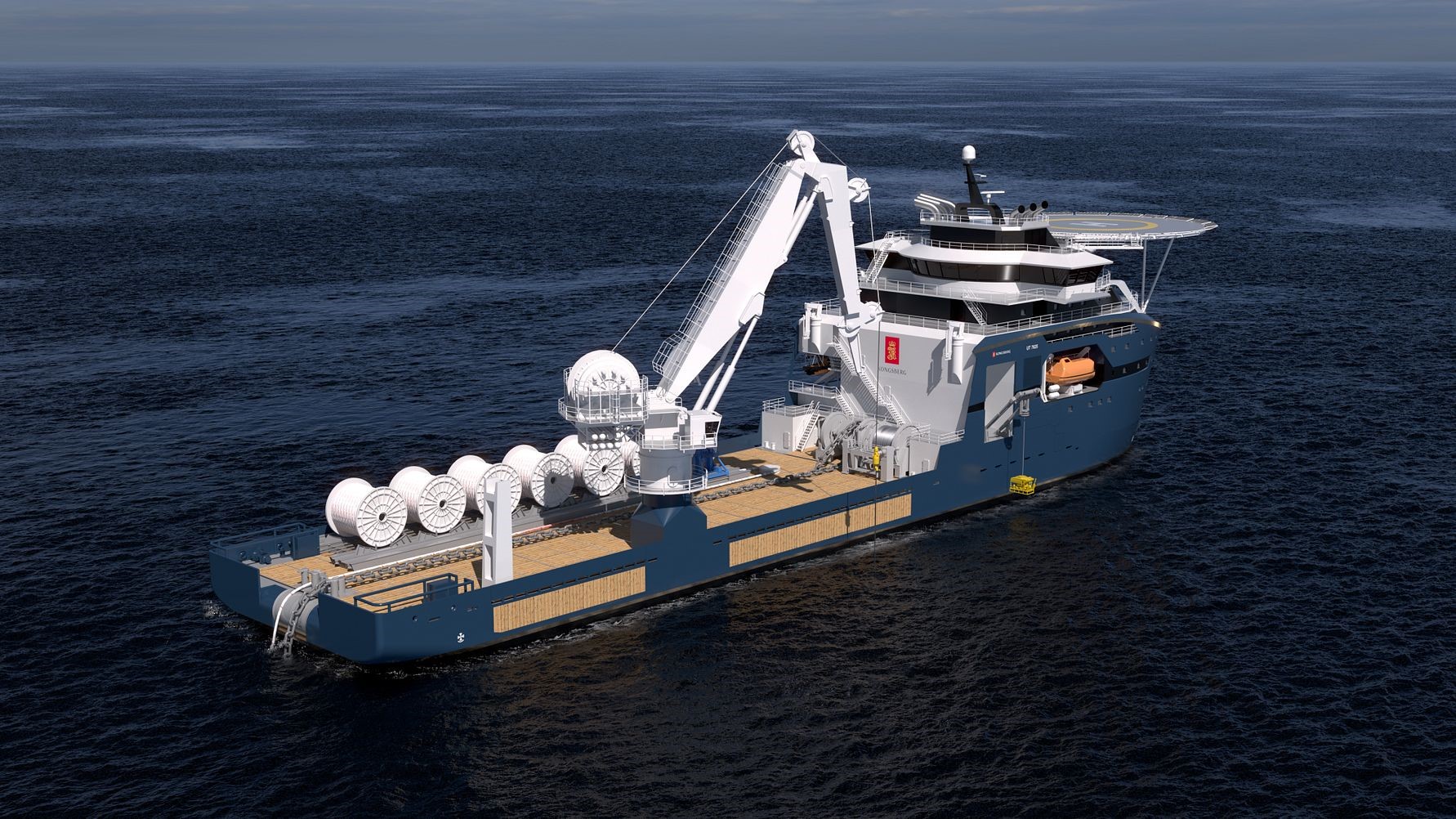
 Kongsberg Maritime has developed an innovative mooring capable solution for Offshore Construction Vessels (OSCVs), expanding the capabilities of OSCVs beyond their current scope to include the pre-lay of mooring lines as a natural extension to original suction anchor capabilities.
By integrating a purpose designed anchor handling winch, shark jaws and stern rollers into the design of OSCVs at the newbuild stage, vessel owners can now equip their ships to perform a broader range of mooring operations. This advancement allows OSCVs to handle more tasks independently, filling the shortage of vessels capable of large-scale mooring installations.
Key Benefits of the Mooring Capable Solution:
•Enhanced Operational Window: The new system allows OSCVs to carry out a larger portion of mooring operations, extending their operational window and reducing the need for additional vessels at the field.
•Cost Efficiency: By expanding the operational capabilities of OSCVs, significant synergies can be achieved for the field developer.
•Safety and Efficiency: The addition of winches and stern rollers enables safer and more efficient over-stern deployment of mooring lines, a method commonly used by AHTS vessels.
•Flexible Installation Options: The winch can either be permanently installed or portable and loaded on board only when needed. The shark jaws and stern rollers are permanently fitted to the ship.
•Versatile Equipment: The subsea crane, a common feature of OSCVs, can lift and install suction piles, as well as hold the load of mooring chain. The winch package includes one drum for work wire and two cable lifters for handling chain. In combination with superior DP capabilities and a large deck area that makes for an efficient installation vessel.
With regards to field development and mooring installation, OSCVs are currently limited to setting large suction piles or driven piles into the seabed using onboard cranes and ROVs, without requiring additional vessel equipment. While some mooring lines can be installed using ad hoc methods, the new solution from Kongsberg Maritime means that OSCVs can perform these tasks safer and more efficiently.
Runar Hjele, Sales Director, Offshore Construction & Support Kongsberg Maritime, said: "There will be a lack of vessels with subsea crane and sufficient deck area suited to support the planned high volume of both large anchors and mooring lines in the years to come. With the addition of this system, OSCVs become a more attractive and efficient solution, especially when there is a shortage of specialised mooring installation vessels.
“The Kongsberg proposed adjustments to construction vessel newbuilds will position them to take on a larger portion of mooring line installations. These vessels have synergies with other field development activities, so the message to owners is why not make your construction vessels Mooring Installation Capable?”
With the new space-saving Kongsberg Maritime system, OSCVs are prepared for the installation of anchors and pre-lay of mooring lines (both chain and fibre rope) without compromising on their construction capabilities.
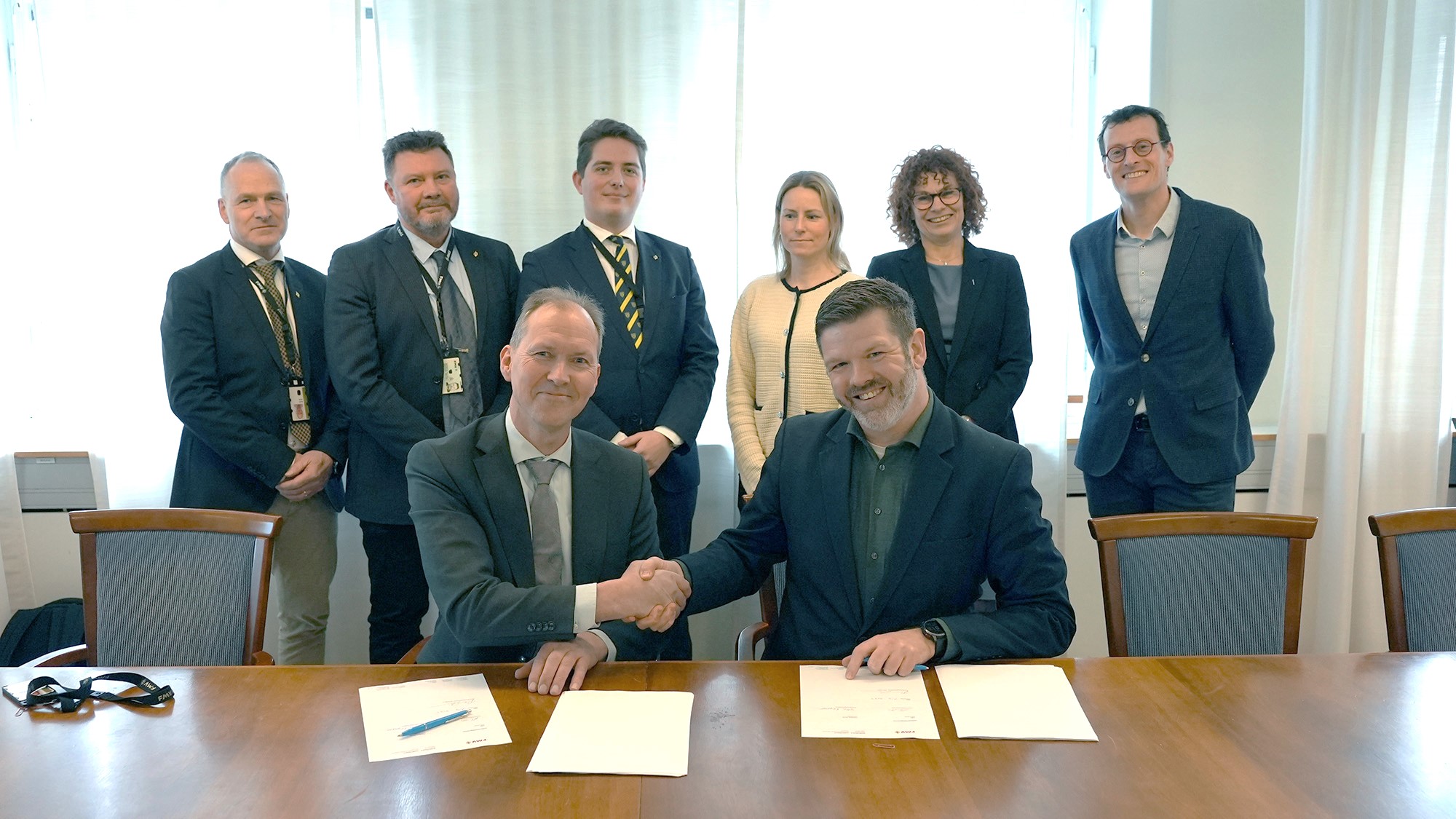
Teledyne Marine Signs a Framework Agreement with Swedish Defense Material Administration (FMV)
 Teledyne Gavia ehf. is pleased to announce the signature of a multi-year Framework Agreement for the delivery and support of GAVIA Autonomous Underwater Vehicles (AUV) for the Swedish Armed Forces (SwAF). The Gavia vehicles will be dedicated to Mine Counter Measures (MCM) applications.
The award of the Framework Agreement follows an international open tender last year with FMV selecting the GAVIA AUV with the highest meritorious score against their technical requirements.
Teledyne Gavia ehf offered its GAVIA AUV fitted with an EdgeTech 2205 side scan sonar and a Teledyne Flir Blackfly-S camera. Thanks to the GAVIA’s AUVs modularity, the Swedish Navy will also be able to add other payloads such as synthetic aperture sonar, magnetometers, or multibeams as mission requirements evolve.
The Framework Agreement will run over several years and has the option for extensions.
The long-term in-country support will be provided by Teledyne Flir AB in Sweden.
“The Portable MCM AUV will be operated from various platforms to allow rapid mapping of the seabed and detection of various objects of interest.” says Johan Björck, Strategic Buyer at FMV.
“We are honored to count Sweden as a new user of the GAVIA AUV which is already in service for various applications with nine NATO navies.” Stated Valentin Hanns, Senior Director of Sales – Marine Vehicles, EMEA.
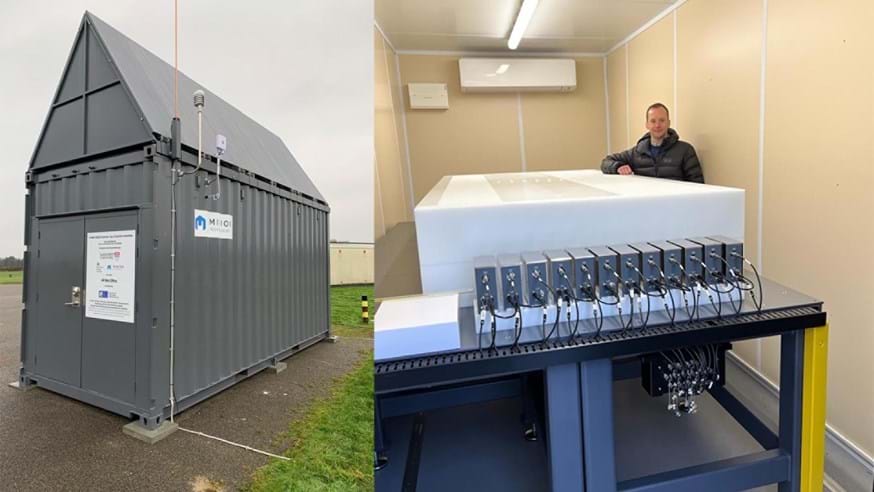
First space weather monitor in the UK for 40 years with a new design led by Lancaster University
Lancaster University has developed and built the first space weather monitor in the UK for 40 years.
The ground-based neutron monitor – installed at a Met Office site in Cornwall – is a new improved design created by Dr Michael Aspinall and a team from the School of Engineering, in collaboration with the UK Atomic Energy Authority (UKAEA) and Mirion Technologies (Canberra UK) Ltd and was tested on the ChipIr beamline at STFC’s ISIS neutron and muon source.
The new monitor joins an international network of around forty-five similar sensors worldwide that are continually monitoring changes in neutrons at the Earth’s surface to assess the influence of space weather.
The project also includes a smaller monitor soon to be based at Lancaster University.
Principal Investigator Dr Michael Aspinall said: “This project marks a major milestone for the UK in advancing our space weather monitoring capabilities—something crucial for safeguarding modern infrastructure and daily life.
“Bringing this neutron monitor online in collaboration with the Met Office and other international partners adopting our design strengthens global resilience to space weather risks by providing real-time data and new measurement capabilities. With our new design for an instrument that has not fundamentally changed in six decades, we’re not just building on the past—we’re setting new standards for the future of neutron monitoring.
“The NM-2023 monitor introduces innovations that improve efficiency, sustainability, and affordability, all the while delivering the critical data needed to better understand and mitigate the impacts of space weather."
The monitor will be chiefly looking for spikes in neutrons, called Ground Level Enhancements (GLE), which occur during solar radiation storms that are caused by the acceleration of particles close to the Sun. The new monitoring capability will enable alerts to be issued and validate existing forecasting methods of solar radiation storms, which can disable satellites and cause nationwide power outages on Earth.
Met Office Space Weather Manager Simon Machin said: “The new UK-based neutron monitor will enhance global monitoring of space weather events and will be an important part of our ongoing space weather forecasting and validating service.
“While severe space weather events are rare, this increased capability and resilience will help scientists and industries to manage risks and mitigate impacts where possible.”
The most severe solar radiation storms have the potential to impact aviation, satellites, spacecraft and even some ground-based electronics and can arrive to Earth from the Sun in as little as ten minutes. Enhanced ground-based monitoring can help to understand and mitigate impacts.
The project was funded by the UK Science and Technologies Facilities Council under the Space Weather Instrumentation, Measurement, Modelling and Risk (SWIMMR) programme, which aims to improve the UK’s capabilities in space weather monitoring and prediction with a series of projects.
Professor Ian McCrea, SWIMMR Senior Programme Manager at STFC RAL Space, said: “This new monitor will be welcomed by experts across the space weather community, including here at RAL Space. The monitor will support the SWIMMR programme’s goals to advance the UK’s space weather monitoring and prediction capabilities.
“The UK hasn’t hosted one of these monitors since the 1980s, and having access to its measurements will provide essential validation for the radiation modelling and airborne sensor capabilities being developed elsewhere in the SWIMMR programme.”
The installation aligns with the tenth anniversary of the opening of the Met Office Space Weather Operations Centre (MOSWOC) which has forecasted the arrival of thousands of space weather events, helping key industries to take steps to manage the risks posed by the Sun.
In addition to operational forecasting, MOSWOC plays an active role in the international scientific community for the advancement of space weather sciences, helping to develop capability around the world and advance scientific understanding. A recent Value Report suggested the Met Office’s space weather capability is worth £800 million to the UK over the next decade.

Ocean Business announces exhibitor list for 2025 show
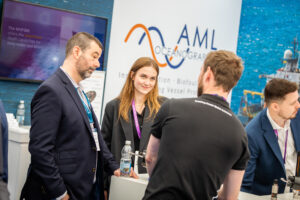
As the countdown begins to Ocean Business 2025, more details can be revealed about the line-up of exhibitors at the global technology and science exhibition for marine industries.
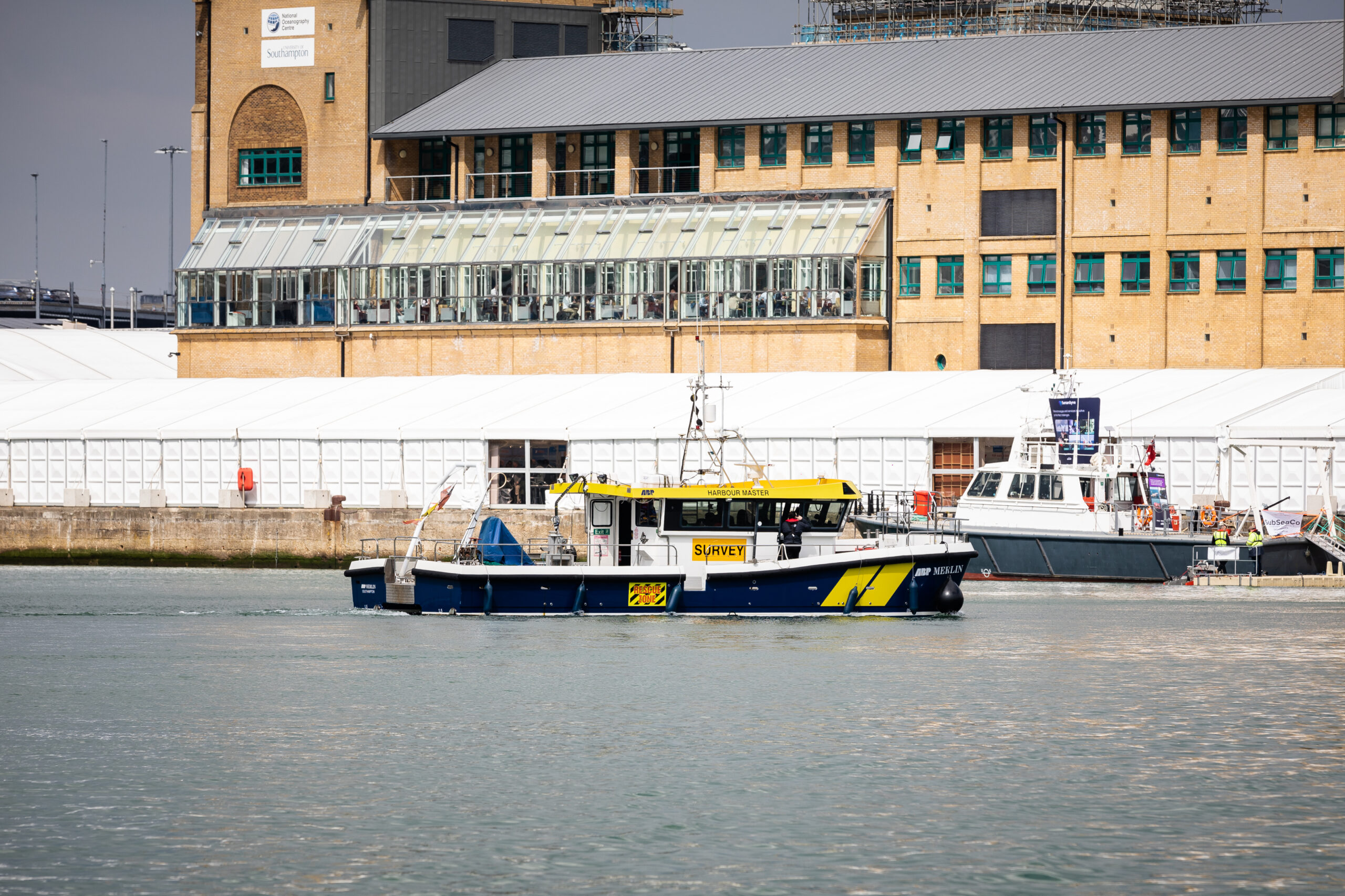
More than 350 world leading manufacturers and service providers shaping the future of ocean science and technology have booked space at the sold-out show, which runs from April 8-10 at the National Oceanography Centre in Southampton.
The three-day event is open to all visitors for free by registering online at www.oceanbusiness.com.
This year’s Ocean Business, inside the expanded exhibition halls and featuring a programme of training and demonstrations on the dockside, on board vessels and in the classroom, is expected to attract record crowds from around the world.
Visitors will be able to see the latest developments in transformational ocean technology, from autonomous vehicle underwater monitoring, next generation ROVs, ground-breaking advances in sensor technology, and much more.
Among the highlights this year, ecoSUB Robotics, a division of Planet Ocean, will present its range of advanced, affordable, low logistics AUVs, deployed in ocean research, offshore energy and defence markets, and currently supporting the Nippon Foundation’s initiative to map the entire ocean floor by 2030.
Sonardyne will provide insights into its recently launched shallow water dynamic positioning reference system, which joins the SPRINT-Nav family, the standard for underwater vehicle navigation worldwide. 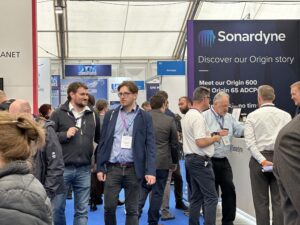
European leader in naval navigation Exail will highlight its advanced systems offering precise navigation, safe operations, and real-time data acquisition, delivering reliable performance from surface missions to ultra-deep waters.
Norwegian underwater instrumentation pioneer Norbit Subsea, meanwhile, will introduce the WBMS X, the latest addition to its innovative multibeam sonar family, designed with ultimate flexibility to tackle the most complex survey challenges.
And from the US, Greensea IQ, a leader in subsea robotics and defence solutions, is showcasing its Bayonet 250 amphibious underwater ground vehicle, deployed by the US Marine Corps for safer and more effective explosive ordnance disposal operations.
Other familiar big-name suppliers, including Teledyne Marine, Kongsberg Discovery and Nortek, will be out in force alongside newer entrants to the industry to preview emerging technologies in this fast-changing space.
Cheri Arvonio, Event Director at show organiser Diversified Communications, said: ‘Ocean Business 2025 will bring together ocean technology trailblazers from across the world for three days of exciting product launches, innovation and ideas.
‘We look forward to welcoming both Ocean Business regulars and first-time show goers for what promises to be a bumper exhibition, with unbeatable opportunities for doing new business, sealing deals, networking and hearing industry updates. See you there!’
To see the full exhibitor list, please visit: https://exhibitormanual.oceanbusiness.com/exhibitor-list-search/
Ocean Business announces exhibitor list for 2025 show
As the countdown begins to Ocean Business 2025, more details can be revealed about the line-up of exhibitors at the global technology and science exhibition for marine industries.
More than 350 world leading manufacturers and service providers shaping the future of ocean science and technology have booked space at the sold-out show, which runs from April 8-10 at the National Oceanography Centre in Southampton.
The three-day event is open to all visitors for free by registering online at www.oceanbusiness.com.
This year’s Ocean Business, inside the expanded exhibition halls and featuring a programme of training and demonstrations on the dockside, on board vessels and in the classroom, is expected to attract record crowds from around the world.
Visitors will be able to see the latest developments in transformational ocean technology, from autonomous vehicle underwater monitoring, next generation ROVs, ground-breaking advances in sensor technology, and much more.
Among the highlights this year, ecoSUB Robotics, a division of Planet Ocean, will present its range of advanced, affordable, low logistics AUVs, deployed in ocean research, offshore energy and defence markets, and currently supporting the Nippon Foundation’s initiative to map the entire ocean floor by 2030.
Sonardyne will provide insights into its recently launched shallow water dynamic positioning reference system, which joins the SPRINT-Nav family, the standard for underwater vehicle navigation worldwide.
European leader in naval navigation Exail will highlight its advanced systems offering precise navigation, safe operations, and real-time data acquisition, delivering reliable performance from surface missions to ultra-deep waters.
Norwegian underwater instrumentation pioneer Norbit Subsea, meanwhile, will introduce the WBMS X, the latest addition to its innovative multibeam sonar family, designed with ultimate flexibility to tackle the most complex survey challenges.
And from the US, Greensea IQ, a leader in subsea robotics and defence solutions, is showcasing its Bayonet 250 amphibious underwater ground vehicle, deployed by the US Marine Corps for safer and more effective explosive ordnance disposal operations.
Other familiar big-name suppliers, including Teledyne Marine, Kongsberg Discovery and Nortek, will be out in force alongside newer entrants to the industry to preview emerging technologies in this fast-changing space.
Cheri Arvonio, Event Director at show organiser Diversified Communications, said: ‘Ocean Business 2025 will bring together ocean technology trailblazers from across the world for three days of exciting product launches, innovation and ideas.
‘We look forward to welcoming both Ocean Business regulars and first-time show goers for what promises to be a bumper exhibition, with unbeatable opportunities for doing new business, sealing deals, networking and hearing industry updates. See you there!’

Fugro acquires EOMAP, adding unique satellite analytics to its water market solutions
 Fugro has acquired EOMAP GmbH & Co. KG (EOMAP), market leader in mapping and monitoring of marine and freshwater environments through satellite Earth Observation (EO). Adding EO technology to Fugro’s existing mapping solutions is a key step in the company’s strategy to further expand into the water market.
EOMAP has been pioneering EO technology since 2006, holding several patented algorithms. The market for EO solutions is growing due to increasing environmental regulations, the need to address climate change impacts, and the recognition of marine ecosystems’ vital role in our planet’s health.
Over the years, EOMAP has been a key partner in many of Fugro’s climate adaptation and nature conservation projects, including the ISPRA Seagrass Coastal Restoration project, in which Fugro is mapping the entire coastline of Italy. EOMAP and Fugro also collaborated in the recent COASTS project, which advances integration of data and modelling of coastal processes and blue carbon ecosystems with pilots in Europe and the Maldives.
Robert Hoddenbach, Fugro’s Global Director Climate & Nature, commented, “This acquisition is a big step forward, enhancing our capabilities in the water market and allowing us to better serve our clients with satellite EO technology. We welcome the EOMAP team to Fugro.”
Thomas Heege, Managing Director of EOMAP, added, “We are excited to join forces with Fugro, a company that shares our values and commitment to leveraging advanced technologies for a safe and liveable world. Together, we will create unparalleled value for clients and contribute to addressing global challenges in the aquatic environment.”
EOMAP recorded a revenue of around EUR 5 million for 2024.