
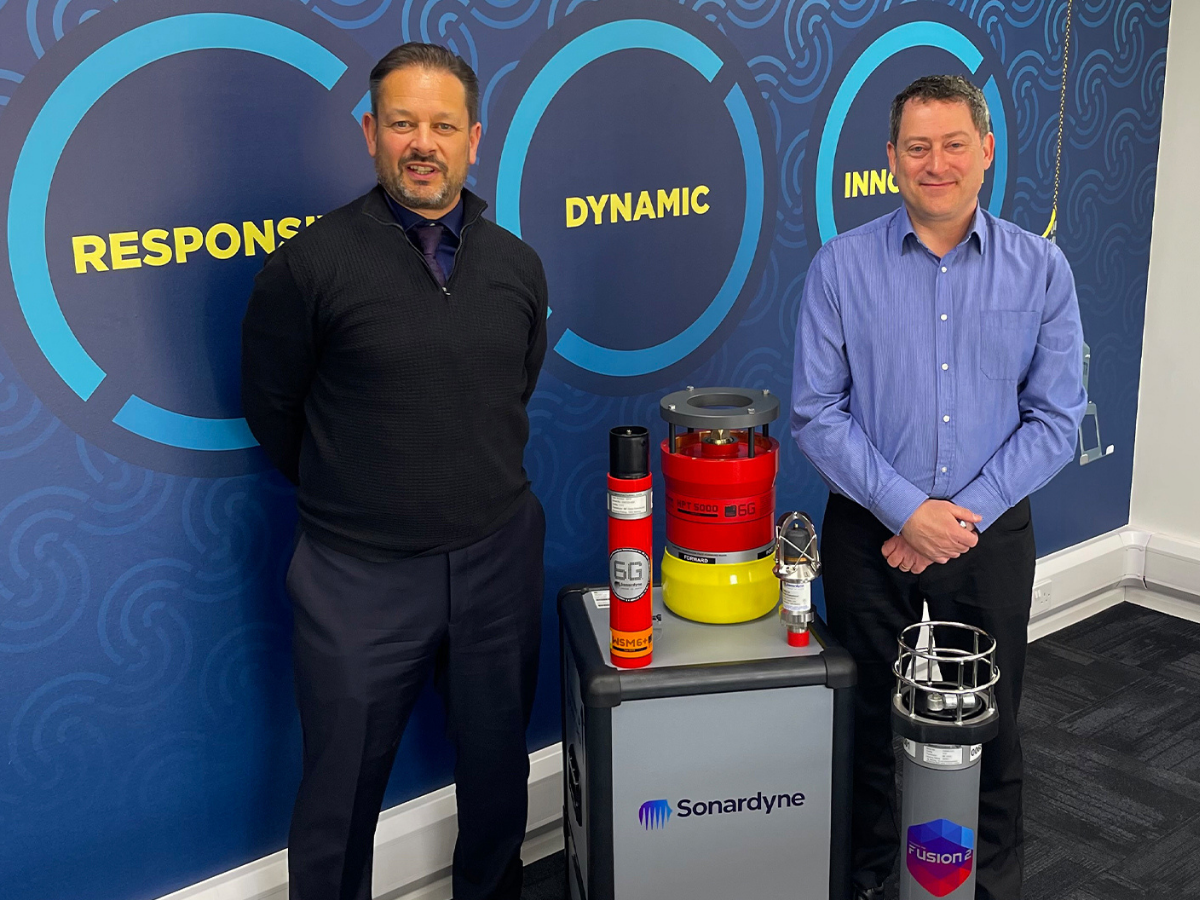
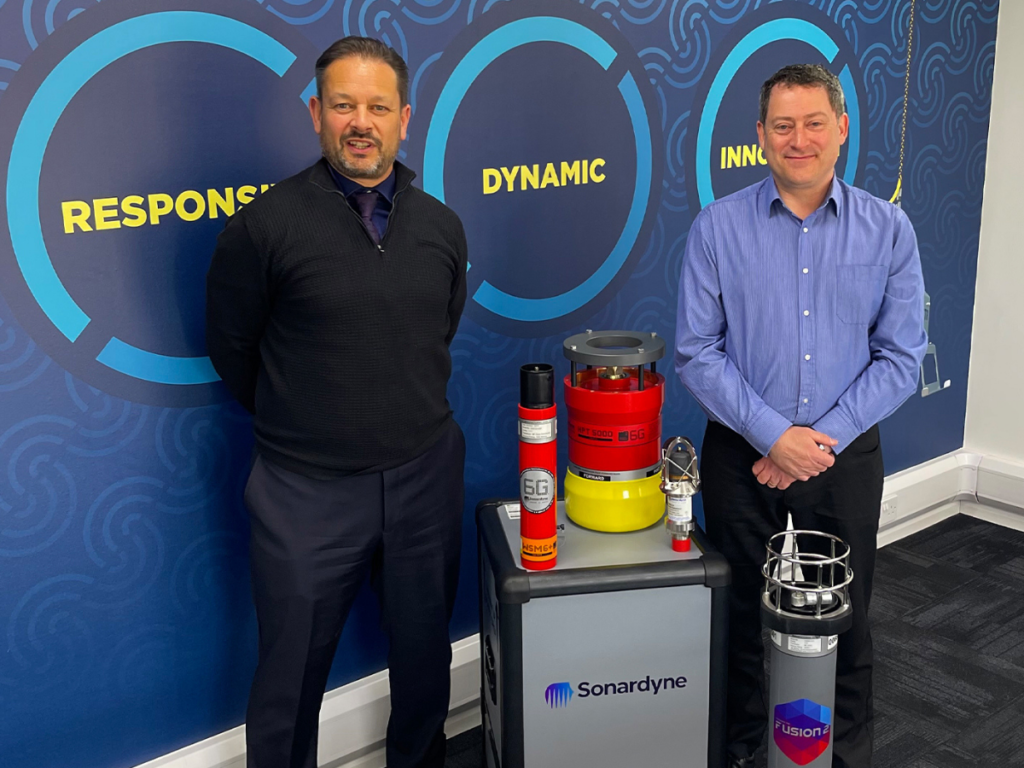
STR makes multi-million pound investment in latest Sonardyne acoustic and inertial technologies
Subsea Technology and Rentals (STR), a multi-disciplinary technology expert specialising in the design, production, rental and sale of innovative marine survey equipment, has committed to a multi-million pound investment in seafloor, vehicle and vessel-based positioning hardware from marine technology company Sonardyne.
STR’s purchase includes Sonardyne’s Long BaseLine (LBL), Ultra-Short BaseLine (USBL) and inertial navigation systems, equipment which will support survey and construction projects across the offshore energy markets.
STR, a Baird Capital portfolio company, continues to significantly invest in new technology. The size and spread of equipment ordered is considered a clear sign of STR’s confidence in the offshore energy market, as activity levels rebound sharply through this year and beyond, and in the commercial and operational value Sonardyne’s innovative subsea technology brings to STR customers.
“We’re witnessing increasing demand for our technology and services across the Offshore Energy markets,” says Scott Johnstone, chief operating officer, at STR. “Timely access to the latest generation of hybrid subsea technology to get these shallow and deep water projects executed on time is critical to us and our customers, which is why we’re making this investment now.
“The value that Sonardyne’s latest 6+ LBL hardware and INS systems bring to offshore operations is clear. Used with Sonardyne’s Fusion 2 combined LBL and INS topside software, surveyors can do more with less kit deployed. Using a single combined operating system makes set up time and complexity is reduced, compared with other systems. So subsea construction operations, from millimetre accurate metrology through to real-time SLAM calibration of sparse LBL arrays, are just simpler and faster.
“This is even more critical today than ever, as operators look to reduce, as practicably as possible, the carbon emissions associated with their projects, delivering the energy the world still needs, but with as low an impact as possible.”
STR’s order includes a large pool of Compatt 6+ LBL transponders, structure-mounted Gyro Compatt 6+s and ROV-mounted ROVNav 6+ ROV LBL transceivers. Sonardyne’s 6+ hardware uses the company’s exclusive Wideband 3 signal architecture, providing fast position updates of mobile targets as well as enabling sensor data, for example inclination and depth, to be embedded with acoustic ranging data – helping further de-risk operations at critical moments, such as structure touchdown.
STR has also invested in Sonardyne’s SPRINT-Nav hybrid underwater vehicle navigation technology. Combing Doppler-inertial navigation and depth sensing in a single pre-calibrated instrument, SPRINT-Nav offers high performance platform navigation without the challenges of separate sensors, size, weight, integration and alignment.
In addition, STR has invested in multiple Sonardyne Mini-Ranger 2 USBL systems and a large pool of Wideband Sub-Mini 6+ transponders (WSM 6+). In combination, Mini-Ranger 2 and WSM 6+ have fast become the go-to positioning system for offshore renewable energy site survey and characterisation operations, tracking and positioning a wide array of sensor systems. Quick to mobilise, easy to operate and then move to the next assignment, it’s a versatile and valuable rental pool asset.
“STR is very much a forward-looking company, both in terms of anticipating customer demand as activity increases, but also in terms of adopting the latest, most advanced technologies that provide the most value,” says Alan MacDonald, sales manager at Sonardyne.
“STR was the first company to invest our Syrinx DVL in 2016, followed up two years later by being the first to purchase Fusion 2, and our 6 plus hardware variants. We look forward to continuing to work with STR, supporting the company and its clients across the Offshore Energy market.”

National Oceanography Centre opens doors to world-leading European Glider Service Centre
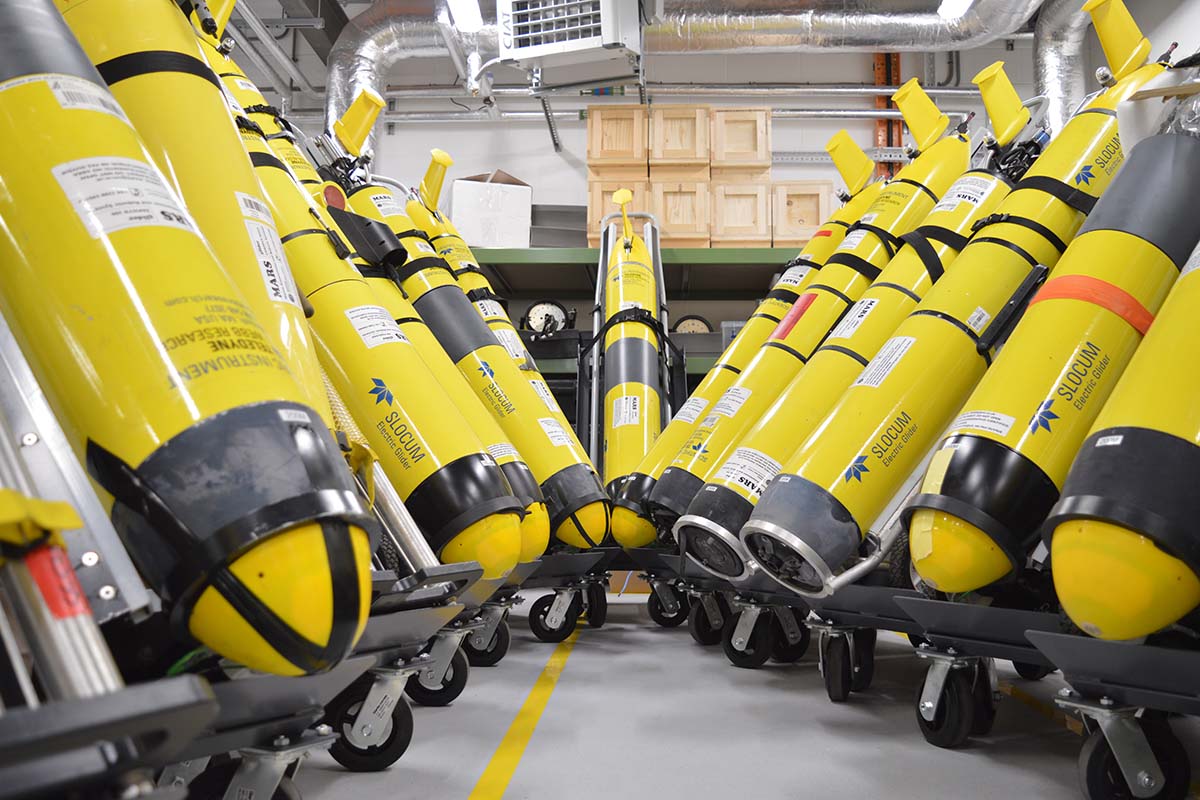
Teledyne Marine and the National Oceanography Centre (NOC) are proud to announce the launch of the new NOC Glider Service Centre; a joint partnership created for the servicing, support and repair of Teledyne Slocum Gliders from across Europe. This new partnership will benefit our European glider customers, avoiding the time and expense of shipping systems back to the US for service and upgrades.
The NOC Glider Service Centre will initially service payload bays including sensor calibrations and pressure testing. Services will gradually increase to offer subassembly servicing (shallow and deep water pumps), and will eventually move into complete vehicle servicing, upgrades and repairs. Training, piloting, spares and sales are also in the pipeline.
NOC is at the heart of underwater glider operations in Europe, with extensive expertise in this niche field, making them uniquely qualified to offer this commercial service. The NOC operates the UKs National Marine Equipment Pool, which includes Europe’s largest fleet of underwater gliders that they have been successfully equipping, servicing and operating for extended scientific missions for over 15 years.
iXblue completes remotely operated survey of Saint Nazaire offshore wind farm using its DriX Uncrewed Surface Vehicle (USV)
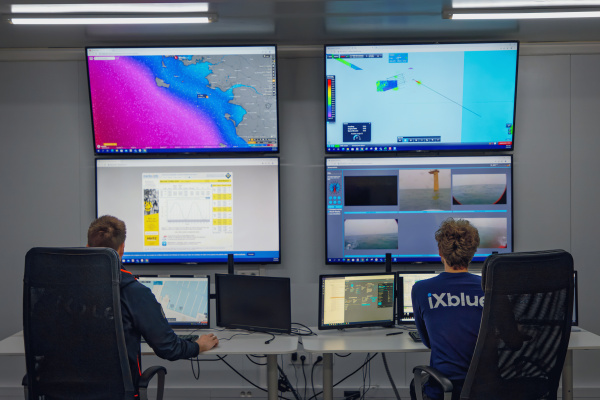
iXblue recently completed the bathymetric survey of the Saint Nazaire offshore wind farm using its DriX Uncrewed Surface Vehicle (USV). Relying on 4G and satellite communication, the operation – located 20km off the West coast of France – was remotely conducted by the iXblue teams of surveyors from their Remote Control Center in La Ciotat, South-east of France.
The purpose of the bathymetric survey inspection was to verify the seabed conditions before the deployment of Jan De Nul Group’s Vole au vent Offshore Jack-up Installation Vessel. Despite challenging offshore conditions, with strong winds and side currents, as well as an obstructed site, with around 70 monopiles already installed and several construction vessels mobilized on site, iXblue DriX USV, fitted with a Kongsberg EM2040 MBES, efficiently acquired accurate and high-resolution bathymetric data. The DriX USV conducted the survey without the need of a support vessel, relying on its unique situational awareness and obstacle avoidance system.
“We are pleased to have proven, once again, that the deployment of autonomous platforms is the way to go to deliver safe, carbon-neutral, and efficient offshore survey,” comments David Vincentelli, Head of iXblue Sea Operations division. “From our experience deploying our DriX USV, we know that replacing traditional survey vessels with uncrewed platforms is key to delivering unmatched efficiency and data quality in complex environments such as offshore wind farms. We are very proud to be leading the way towards new remotely operated uncrewed operations, supporting our customers in this transition, and would like to thank Jan De Nul Group and EDF Renewables and its partner for their trust on this new project.”

Operations Manager & Chief Executive (CEO) - The Hydrographic Society UK & Ireland (THS:UKI)
The Hydrographic Society UK & Ireland (THS:UKI) has vacancies for the Operations Manager and Chief Executive (CEO). The CEO and Operations Manager are key roles in THS:UKI. Both roles are home-based and offer flexible working.
THS:UKI is an independent, non-profit making, non-governmental, learned professional society. It provides a forum for all those involved in activities related to hydrography and associated disciplines, in the UK and Ireland. Our Individual and Corporate Members operate in many sectors including surveying for nautical charting, offshore resources, construction, engineering, renewable energy, environmental monitoring, oceanography, geology and the manufacture and supply of related products.
The CEO provides strategic and operational leadership to the organisation while taking responsibility for the organisation’s administration and financial management. Reporting directly to, and working closely with, the Board of Directors/Trustees the CEO helps develop and deliver the THS:UKI strategic plan. The CEO is the public face of THS:UKI and builds relationships with individuals, organisations and stakeholders within THS:UKI’s sphere of influence and operation and ensures engagement with THS:UKI’s membership.
Reporting to the CEO, the Operations Manager is responsible for the day-to-day management of THS:UKI. This is a multi-faceted role including: managing finances, maintenance and support of membership, delivery of THS:UKI publications and social media content, promotion and delivery of events.
Full details, including how to apply, for the CEO and Operations Manager can be found on the THS:UKI website. If you have any specific queries please contact [email protected].


IMPACT SUBSEA - Software Engineer
IMPACT SUBSEA
INNOVATIVE UNDERWATER PRODUCTS www.impactsubsea.com
Job Description
Software Engineer
Revision 1.0
Date: 20th April 2022
Reporting Line
The software Engineer will report directly to the Technical Director.
Location
Impact Subsea, Ellon, Aberdeenshire. There may be a requirement to visit suppliers, customers,
conferences, exhibitions and other work locations as required.
Role
To be the lead developer of software projects and maintain software as required.
Key Responsibilities
The Software Engineer will be required to:-
• Create applications
• Design user interfaces
• Write test applications for internal testing
• Help develop the software roadmap
• Comply with management system procedures, including health, safety and environmental
requirements within the company.
• Convey a professional image of the company at all times.
• Carry out any other tasks within the competence of the role and jobholder.
Key Outcomes
• To develop applications for company products for use by the end user
Limits of Authority
Full responsibility for all operational activities within the philosophies and constraints laid out in
the job description.
The company reserves the right to change the activities listed, taking into account the job holder's
qualifications and experience to enable the business needs to be met.
Qualifications & Experience
Essential:
• Proficient in C / C++
• Experience in graphical user application creation
Desirable:
Use of QT and QML
Python
Bonus:
Creation of web apps using Vue.js, Angular or similar
Proficient in firmware
VHDL
Personal Attributes & Knowledge
Essential:
• A proactive approach to dealing with challenges.
• Ability to work well as part of a development team.
Desirable:
• Flexibility to travel to meet the requirements of the role

Intelligent Muscle at OTC
A new extremely powerful and intelligent electric manipulator can be seen on Saab Seaeye’s Stand 1406 at the Ocean Technology Conference, Houston, 2 – 5 May 2022.
The pioneering breakthrough is Saab Seaeye’s new eM1-7 seven-function all-electric work-class manipulator.
As powerful as a hydraulic equivalent, it is more reliable and more dexterous.
Seaeye eM1-7’s micrometre precision comes from each of its seven joints having extremely accurate force and position feedback coupled with their own smart distributed microprocessor for intelligent, intuitive and precision arm control.
Visitors to the exhibition stand can also hear more about other innovations that are changing the face of underwater enterprises.
Saab Seaeye’s innovative new environmentally friendly electric work vehicle, called eWROV, matches the power of a 250 hp hydraulic work class system, but is easier to operate, more precise, acoustically quieter, more reliable, needs less maintenance and has a much lower lifetime cost.
Already the world leader in electric underwater robotics, Saab Seaeye’s eWROV joins the largest range of electric robotic vehicles in the industry.
This includes the multi-role 3000m rated Sabertooth, the world leading roaming and hovering robot that can operate in both fully autonomous and tethered modes, enabling fully flexible dual operations from a single platform fitted with cameras, sonars and tooling.
Two Sabertooth robots have succeeded in finding the wreck of the Endurance, sunk 3000m below the Antarctic ice during Shackleton’s ill-fated expedition in 1915.

Enter ASL‘s 2022 Early Career Scientist Contest to Win the Use of an Autonomous Scientific Echo Sounder for Three-Months
The goal of this program is to support the oceanographic and limnological research community by lending, free of charge, a calibrated battery-powered Acoustic Zooplankton Fish Profiler™ (AZFP™) (subject to availability either the 125/200/455/769 kHz or the 38/125/200/455 kHz configuration), plus mooring cage and battery for a three-month maximum deployment period along with the support from ASL’s team of experts. This instrument loan program is open to early-career scientists and engineers, graduate students, post-doctoral fellows and others involved in oceanographic or freshwater work.
With the unmatched combination of multiple frequency operation, low power and extended endurance, the ASL AZFP offers a new, economical way of obtaining reliable measurements of marine environmental conditions in the water column. The AZFP can monitor the presence and abundance of zooplankton and fish within the water column by measuring the acoustic backscatter returns at multiple ultrasonic frequencies. Other sonar targets realized from the sonar backscatter data include bubbles and suspended sediments. The AZFP is a powerful tool for scientific research and environmental monitoring in oceans, lakes and rivers. For more details on the AZFP, refer to our product brochure.
To apply to this program, send a summary proposal (maximum length 4 pages plus figures and references) of your study and description on how it would benefit from the use of the AZFP's capabilities. The selection criteria involve a number of factors including:
• Relevance of the project: the measurements obtained should advance the understanding of physical and/or biological phenomena of importance to the aquatic environment
• Innovation of the project including scientific merit
• The ability of the party to deploy and recover the instrument
Interested applicants may send proposals before June 30, 2022.

DLM Wheel De-trenching Grapnels
Dynamic Load Monitoring (UK) Ltd. (DLM), of Southampton, UK has received a landmark order for two wheel de-trenching grapnels, which will be deployed from subsea cable repair vessels in France. The products will be delivered to a long-standing DLM customer in May.
DLM is already renowned for the manufacture and supply of running line monitors (RLMs); saddleback monitors (SNMs), used in pre-lay grapnel run (PLGR) and route clearance operations to measure line tension; load pins; and load cells that capture data as tension is applied to the winch rope towing the grapnels. However, these products are unique in that they are specifically for recovering cable that is buried in a seabed.
A wheel de-trenching grapnel (or WTG) is used to de-trench cables buried at depths of greater than 0.5m. The WTG is one of the most robust grapnel products available; it can be used in harsher seabed environments, for example, rocky conditions, but also in soft and crumbly (friable) seabeds, where the addition of the wheels will help to maintain penetration. The end user operates a fleet of cable repair vessels, but the solution will be of interest to anyone that completes repair work on laid cables.
The customer knew of the concept, but asked DLM if it could design a version that was suitable to penetrate 1.8m into the seabed. Previous designs were only suitable for 1.1m. Notably, DLM is the only company that offers a 1.5m and 1.8m fluke (a prong-shaped tool that penetrates the seabed) version of the product.
Chris Scrutton, technical manager at DLM, said: “We will never sell lots of these products, as there is a limited number of cable laying ships in the world capable of handling them, but the fact that we have upgraded the design for the 1.5m and 1.8m penetration shows that we have one of the best offerings on the market and this will appeal to any cable ship owner in need of this type of equipment. Further, it reinforces the engineering prowess for which we are renowned. This type of product represents a steady source of income for us—and we can design them quickly and confidently. We completed a feasibility study for the client prior to them placing an order to ensure that the product would be suitable for the application.”
The de-trenching grapnels will be used repeatedly in a suite of cable repair equipment. They can also be used for plough assessment surveys to assess what the industry calls “plough-ability” of the seabed, providing important information prior to laying a new subsea cable. In other words, this deciphers how tough the seabed conditions are and what equipment will be required to lay a new subsea cable.

RTsys announces AUVs contract award with Slovenian Navy
RTsys, the French manufacturer of autonomous underwater vehicles (AUV) and handheld imaging sonar for EOD divers announces the contract signature with the Slovenian Navy for the supply of one COMET-MCM AUV and two NEMOSENS micro-AUVs.
These 3 autonomous vehicles will be added to the existing range in use of SONADIVE hand held sonar units and therefore will give to the Slovenian Armed Forces through its EOD Diving Department full capabilities for Mine Counter Measures from very shallow water up to 300m depth.
The COMET-MCM is designed to quickly and efficiently cover large underwater areas with both high-definition sonar imaging and TV camera capabilities, by offering the most accurate real-time tracking and positioning of the market. Alternatively, micro-AUVs NEMOSENS, man-portable and modular vehicle offering the same capabilities of live tracking and high accuracy positioning would operate in very shallow water (less than 5m) for various scope of operations like beaching, rapid environmental assessment or identification and localization of underwater mines.
“Delivering a new complete MCM ecosystem to a NATO Country is always a privilege for RTsys and confirms the attractiveness of our company in the supply of sea-proven manned and unmanned solutions” says Pierre-Alexandre Caux, RTsys business director. “Autonomous vehicles combined with EOD divers’ skills remain the most reliable and efficient combination to operate safe MCM operations while reducing the time of divers’ action into the water. It also makes sense for Navies worldwide to cooperate closely with one unique manufacturer, from their original clarification of needs up to final delivery, operational training, spare part management and long-term support for maintenance.”
Spectrum geophysics announces investment in edgetech 4205 sidescan sonar for their portfolio
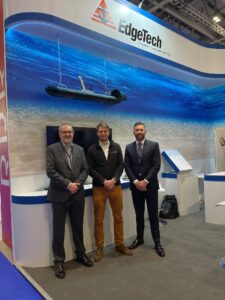 Subsea Technology & Rentals (STR) are delighted to announce that Spectrum Geophysics have purchased an
EdgeTech 4205 Side Scan Sonar System to complement their existing pool of geophysical survey equipment.
STR, who are a representative for EdgeTech in the United Kingdom, have seen an active increase in sales over the
past twelve months in EdgeTech’s sonar imaging systems and underwater technology to support their global
offshore energy customers.
Neil Jackson, STR’s Regional Director EMEA, said “STR are delighted to continue its long-term relationship as
Edgetech’s Authorized Service Centre in which we support both users and customers. In order to service this
relationship, STR has built a large inventory of stock and our technicians have been specifically trained to service
EdgeTech’s systems”.
Rob Arnold, Geophysics Director at Spectrum Geophysics, said “Spectrum are pleased to be adding the 4205 Side
Scan System to complement our existing pool of EdgeTech geophysical survey equipment. The system will be utilised
straight away on a Southern North Sea debris clearance contract for an offshore wind project”.
Doug McGowen, EdgeTech’s Director, Sales & Marketing, said “The next generation 4205 is a versatile Side Scan
Sonar system that can be configured for almost any survey application from shallow to deep water operations. The
system is available in either a tri-frequency side scan sonar configuration or motion tolerant and multi-pulse (MP)
configuration. Spectrum selected the 540/850kHz MP version of the 4205 which provides surveyors the ability to
operate either at faster survey speeds or in more adverse weather conditions while still obtaining high quality
underwater imagery. Additionally, this configuration can be operated in a single pulse high-resolution mode for
those operations that require an even more finite view of the seafloor.”