
Gabler has expanded its European in-service support capabilities
 Gabler, a leading manufacturer of submarine technologies, has expanded its European in-service support capabilities through a trilateral framework agreement covering German, Italian and Portuguese naval fleets.
The framework agreement was formally signed last week at the Liaison Office of Germany's Federal Office for Equipment, Information Technology and In-Service Support of the Bundeswehr (BAAINBw) in Lahnstein, near Koblenz.
It builds upon Gabler's existing German Navy contract with BAAINBw, signed in June 2025, and now extends support services to the Italian Navy's U212A-class submarines - expanding the partnership established in 2016 - and for the first time to the Portuguese Navy's 209PN-class submarines.
"This comprehensive contract extension represents a strategic milestone for Gabler in Europe," said Thorsten Klemann, Regional Sales & Contract Manager at Gabler, who led the contract negotiations. "Building on our nine-year partnership with the Italian Navy's U212A fleet, we're now extending that proven support model to include Portugal's 209PN submarines. Combined with our German Navy contract signed earlier this year, we're deepening our position as a trusted submarine support provider across multiple European NATO navies."
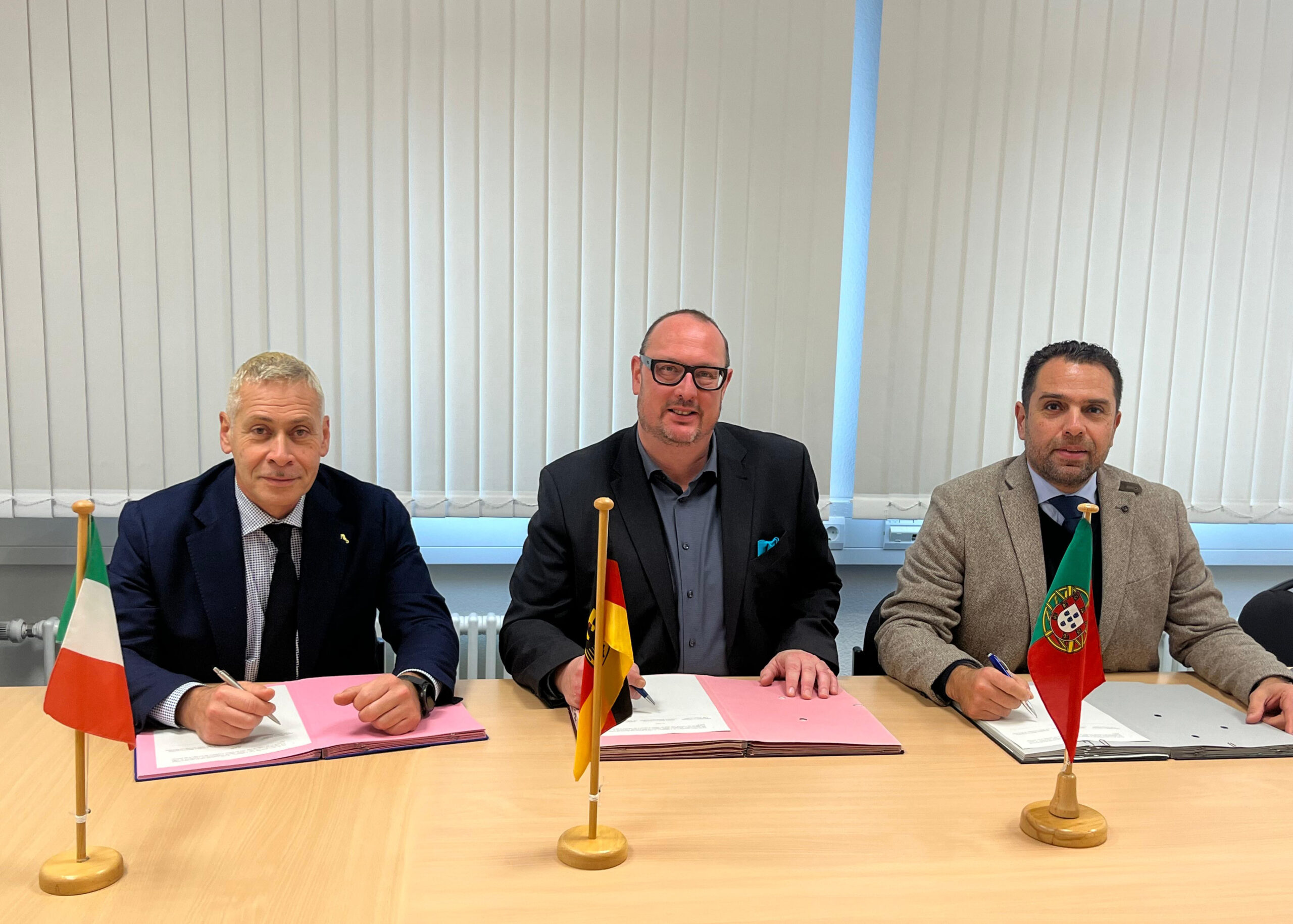
The ceremonial signing was carried out by Captain Stefano Russo, Head of Italian Navy Liaison Office, Commander Pedro Alexandre da Silva Melo, Head of Submarine Common In-Service Support Portuguese Office, and Thorsten Klemann, Regional Sales & Contract Manager at Gabler.
Covering both the modern U212A air-independent propulsion submarines and the proven 209PN diesel-electric class, the agreements address multiple operational submarine platforms within a coordinated support structure, demonstrating Gabler's commitment to reliable, long-term partnerships in the European naval sector.

Kraken Robotics and TKMS ATLAS UK Demonstrate KATFISH USV Launch and Recovery System on an in-service UK Royal Navy ARCIMS USV
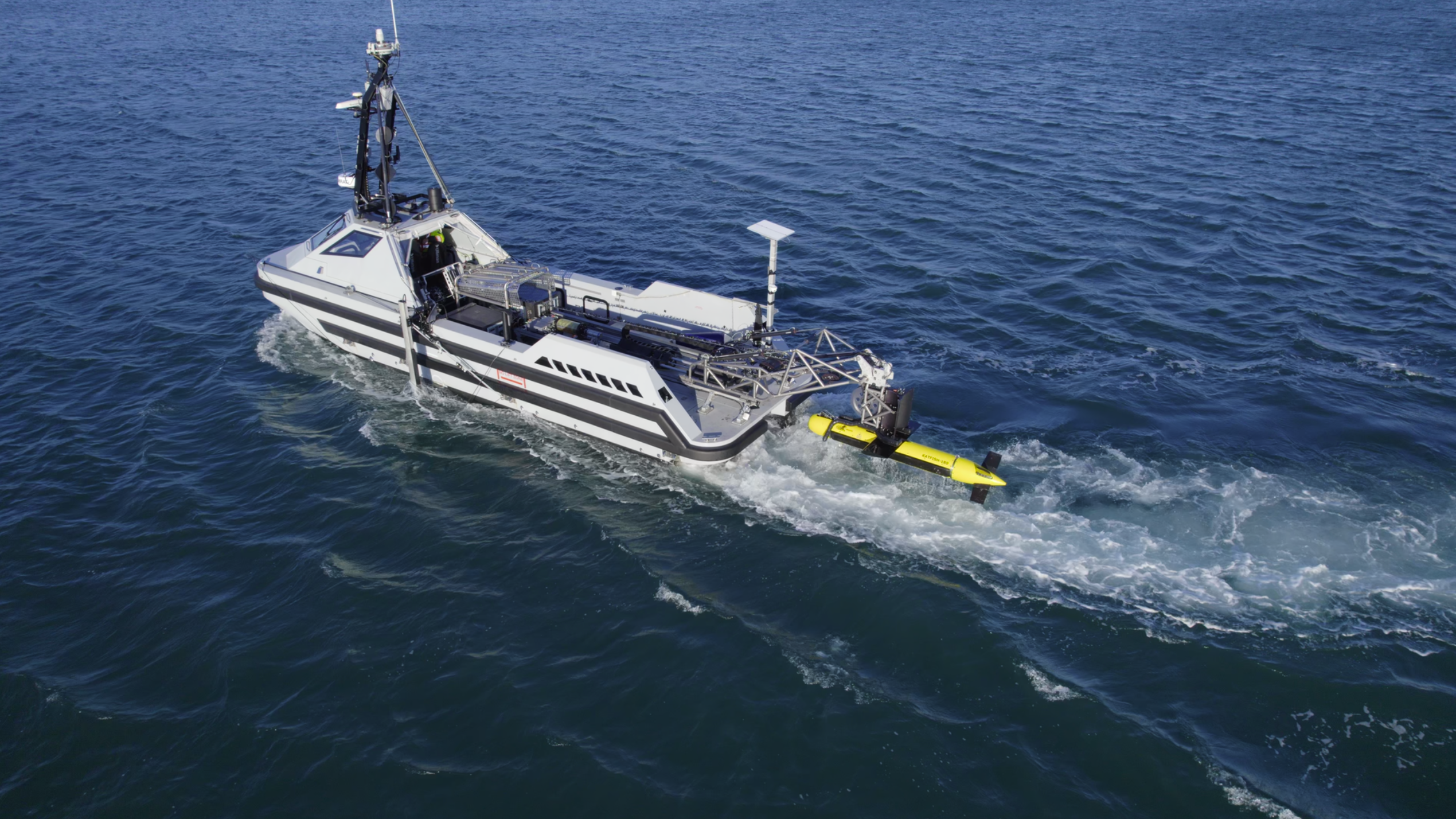
 Kraken Robotics Inc. (“Kraken” or the “Company”) (TSX-V: PNG, OTCQB: KRKNF) announces the successful demonstration of its KATFISH Unmanned Surface Vessel Launch and Recovery System (USV-LARS) from TKMS ATLAS UK’s (ATLAS UK) 11-meter ARCIMS USV. The systems offer a comprehensive autonomous survey package for maritime security missions including mine countermeasure operations and critical underwater infrastructure inspection. Together, ARCIMS and KATFISH USV-LARS provide the industry’s first air-deployable, 300-meter depth rated autonomous towed SAS survey system.
“With the surge in unmanned systems for defence, naval forces need the best technology available to protect national security,” said Greg Reid, President and CEO of Kraken Robotics. “With its ability to safely and autonomously launch and recover KATFISH from USVs, our USV-LARS allows small naval platforms to collect KATFISH’s high resolution synthetic aperture sonar (SAS) data, significantly increasing their capabilities and acting as force multipliers.”
The LARS footprint was designed to fit ATLAS UK’s ARCIMS common deck interface, enabling rapid rerole and seamless integration with the platform. Testing was successfully conducted up to sea state three, validating system robustness and operational readiness.
This joint integration marks a major step forward in delivering agile, modular, and cost-effective mine countermeasure capabilities for modern naval operations. By combining ARCIMS’ proven USV with Kraken’s cutting-edge towed synthetic aperture sonar and recovery system, navies can deploy advanced technologies faster and more efficiently, strengthening maritime security in increasingly complex environments.
The system was demonstrated off the coast of Portland, UK November 18-19 for NATO navies. Attendees witnessed the ARCIMS USV autonomously navigate and plan missions with the KATFISH towed system collecting high resolution SAS and bathymetric surveys in very shallow water. Data was live streamed via satellite communications to the command center on shore, enabling real-time classification of contacts by operators.
Wesley Galliver, Head of Surface Ship Systems Division, TKMS ATLAS UK said “This achievement demonstrates what can be accomplished when innovation and collaboration come together. Integrating ARCIMS with KATFISH and LARS in such a compressed timeframe sets a new benchmark for delivering operational capability to our customers. I am delighted with the results and proud of what the combined teams achieved.”
Kraken’s KATFISH collects high resolution synthetic aperture sonar data at up to a 200-meter range per side at a depth of 300 meters, with real-time data streamed at 3 cm x 3 cm resolution. Kraken’s KATFISH USV-LARS was designed specifically for small vessels, with an all-titanium construction for low magnetic signature and low weight.
KATFISH and USV-LARS were rapidly mobilized on the ARCIMS, with integration, testing and the demonstration happening over a period of just two weeks. Together, ARCIMS and KATFISH USV-LARS provide the industry’s first air-deployable, 300-meter depth rated autonomous towed SAS survey system.
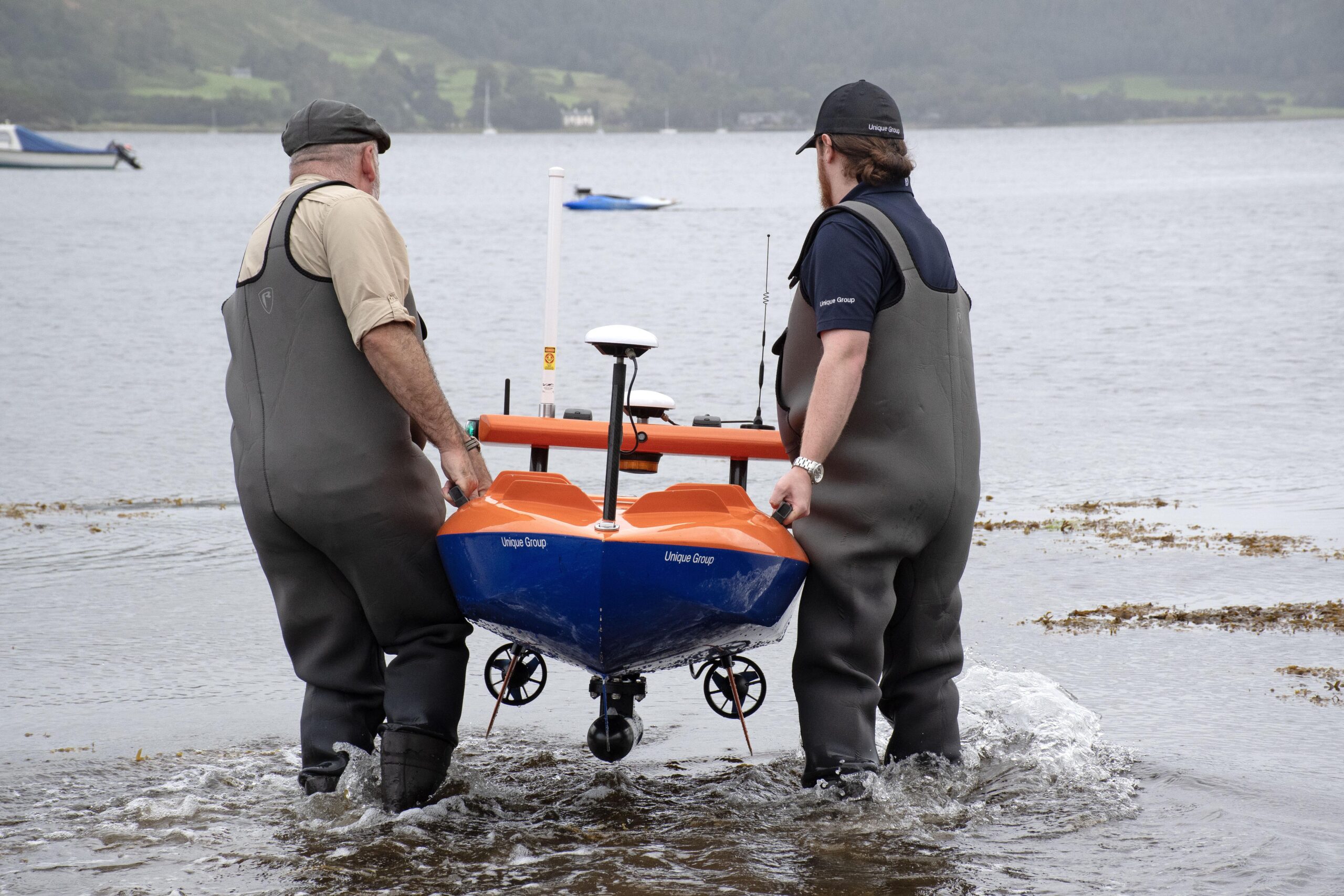
Marine robotics will aid restoration efforts on Scottish loch
 Restoration efforts on a Scottish loch have been boosted by experimental techniques using sea-going robotics that can identify the most suitable reintroduction sites.
Loch Melfort on the Kilchoan Estate, south of Oban, Argyll, has an ongoing oyster restoration project and is a sanctuary for the critically endangered flapper skate.
A collaboration involving scientists and robotics engineers from the Scottish Association for Marine Science (SAMS) Enterprise team, Unique Group and the University of Glasgow is currently planning a major survey of the loch, following a successful trial of autonomous surface vehicles.
The aim of the survey is to use the marine robotics to accurately survey the loch in order to build a habitat suitability model, which will inform the most effective site for reintroducing European flat oysters. The model will also indicate where flapper skate are most likely to lay their eggs.
Researchers on the project say a successful habitat suitability model for Loch Melfort, which has a shoreline measuring more than 22 kilometres, could pave the way for similar models to be built for similar habitats elsewhere.
Dr Phil Anderson, who heads up the Scientific Robotics Academy at SAMS Enterprise, said: “Marine and airborne robotic systems can completely transform the way we conduct and monitor restoration projects in Scotland.
“These systems can give us more coverage of an area, more quickly, collecting data that we’ve previously needed humans to record – such activity requires a lot of people over a long period of time.
“Although the potential of robotics is therefore clear to see, there is some hard work to be done in fine-tuning how that will be done. That’s what we are working on now with these Loch Melfort trials and we are fortunate to have a fantastic collaboration that draws on different expertise, covering engineering, physics and biology.”
 Researchers will use sensors on board the robotics to measure the velocity, or speed, of the currents and sonar to help map the bathymetry of the loch. The survey is planned for early next year, with the data from the trial currently being examined to help inform the next steps.
Marnik van Cauter, Charity Director at Kilchoan Melfort Trust, said: “It is rewarding to see how our mission to restore the once-abundant native oyster population in Loch Melfort has brought together a network of expert organisations, helping to develop tools that will support marine restoration and conservation projects not only here at Kilchoan, but hopefully across Scotland.”
Unique Group Vice President for Survey Chris Blake said: “Unique Group is proud to support the Kilchoan Melfort Trust, SAMS and the University of Glasgow in advancing marine rewilding efforts at Loch Melfort. By deploying our fully electric Uni-Mini Unmanned Surface Vessel (USV) with Ping DSP technology, we delivered high-resolution bathymetry in ultra-shallow and environmentally sensitive areas that are inaccessible to traditional vessels.
“This collaboration provided the detailed seabed insights needed to guide habitat suitability modelling and support the long-term restoration of native European flat oyster populations. We look forward to continuing our partnership on initiatives that enhance sustainability, protect marine ecosystems and drive positive environmental impact.”
Dr Anna McGregor, senior lecturer in Ecology & Environmental Change at University of Glasgow said: “Oysters require a specific set of conditions to grow well, and after supporting Kilchoan Estate’s excellent oyster restoration work for several years to collect data on some of the biological aspects, I’m very excited to be working together with SAMS Enterprise and Unique Group to take that work a step further.
“Having the additional data available from the survey capabilities brought together through this collaboration fills in several key parameters about the physical environment that should enable us to create a much more complete picture about where oysters grow best.”
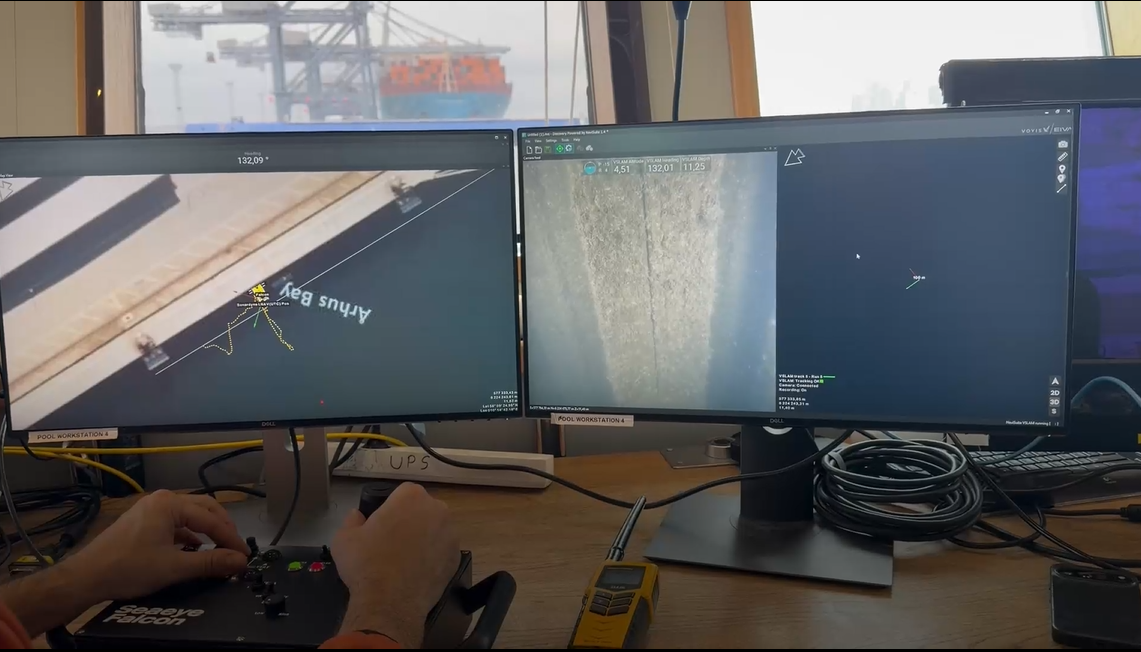
Voyis and EIVA Introduce Geo-Located Camera-Based Mapping to Voyis VSLAM Powered by EIVA NaviSuite
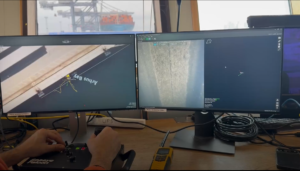 Voyis and EIVA Voyis and EIVA, both part of the Covelya Group, announced a major update to Voyis VSLAM Powered by EIVA NaviSuite. This technical advancement brings absolute geo-located mapping to real-time camera-based 3D reconstruction for subsea inspection and metrology. This new capability enables VSLAM-generated point clouds to be projected directly into global coordinates, from the moment an inspection mission begins.
This marks the first time that real-time visual mapping is natively aligned to global geodetic frames, bridging the gap between camera-based navigation and established industry survey standards.
Extending EIVA’s Trusted Geodesy to Camera-Based Mapping
For more than 40 years, EIVA’s NaviSuite geodesy computational tools have underpinned professional subsea survey and inspection workflows. The new update extends these same trusted geodetic capabilities directly into Voyis VSLAM Powered by EIVA NaviSuite, enabling visual point clouds to adhere to the same coordinate handling, consistency, and reliability expected in offshore operations.
By embedding NaviSuite’s geodetic engine, users can now define geodetic settings, including selecting coordinate systems from the full EPSG Library, before data acquisition begins. This ensures that every 3D point generated by the VSLAM solution is immediately tied to a known global reference frame.
A New Standard: Absolute Geo-Located Mapping from the Start of a Dive
Voyis VSLAM Powered by EIVA NaviSuite reads the initial global position from a connected INS, such as a Sonardyne SPRINT-Nav, and places the map into the selected geodetic frame at mission start. This global placement is preserved throughout the dive, even after relocalisation or loop closure events. While the VSLAM engine continues refining local map geometry, its global alignment remains stable.
This advancement transforms how pilots and surveyors interact with real-time camera-based 3D reconstruction:
- Situational awareness improves, with the ability to load background maps, reference charts, or seabed models directly beneath the live VSLAM point cloud.
- A priori models, such as CAD drawings of subsea structures, can be overlaid for immediate comparison and navigation.
- Inspection targets and points of interest can be marked in absolute coordinates and revisited across dives, days, or vessels.
- ROV navigation becomes more intuitive, enabling safer manoeuvring, cleaner tether management, and easier return-to-start positioning.
Operational Impact: Consistency, Efficiency, and Repeatability
The updated VSLAM solution elevates visual mapping from a purely relative model to a globally consistent dataset, enabling:
- Cross-dive continuity: Operators can resume inspections exactly where they ended, with the VSLAM map already aligned to the global frame.
- Faster data interpretation: Global positioning simplifies correlation between inspection data, engineering drawings, and historic survey datasets.
- Improved mission efficiency: Aligning to known structures and reference frames reduces redundant coverage and streamlines planning.
- Enhanced safety: Pilots benefit from live context by seeing real-time visual data within the surrounding geospatial environment.
This step significantly reduces the operational burden traditionally associated with reconciling visual reconstructions against external positioning data, making camera-based inspections more robust and survey-ready.
Seamless Integration Across NaviSuite
Once collected, point clouds generated by Voyis VSLAM Powered by EIVA NaviSuite can be further managed through NaviModel, where users can re-project datasets into alternative reference frames as project needs evolve, ensuring compatibility with engineering standards and long-term inspection archives.
A Foundation for Future Subsea Autonomy
With this recent update, Voyis and EIVA strengthen their shared vision of delivering reliable, survey-aligned perception systems for the next generation of subsea robotics. This update reflects the Covelya Group’s commitment to advancing survey-aligned perception systems for next-generation subsea robotics. By unifying real-time visual mapping with trusted geodetic frameworks, this release lays the groundwork for more autonomous, higher-confidence underwater operations across offshore energy, defence, and marine science.
Clear Water Systems to advance blue-green algae mitigation with USV-first solution using HydroSurv’s REAV-35
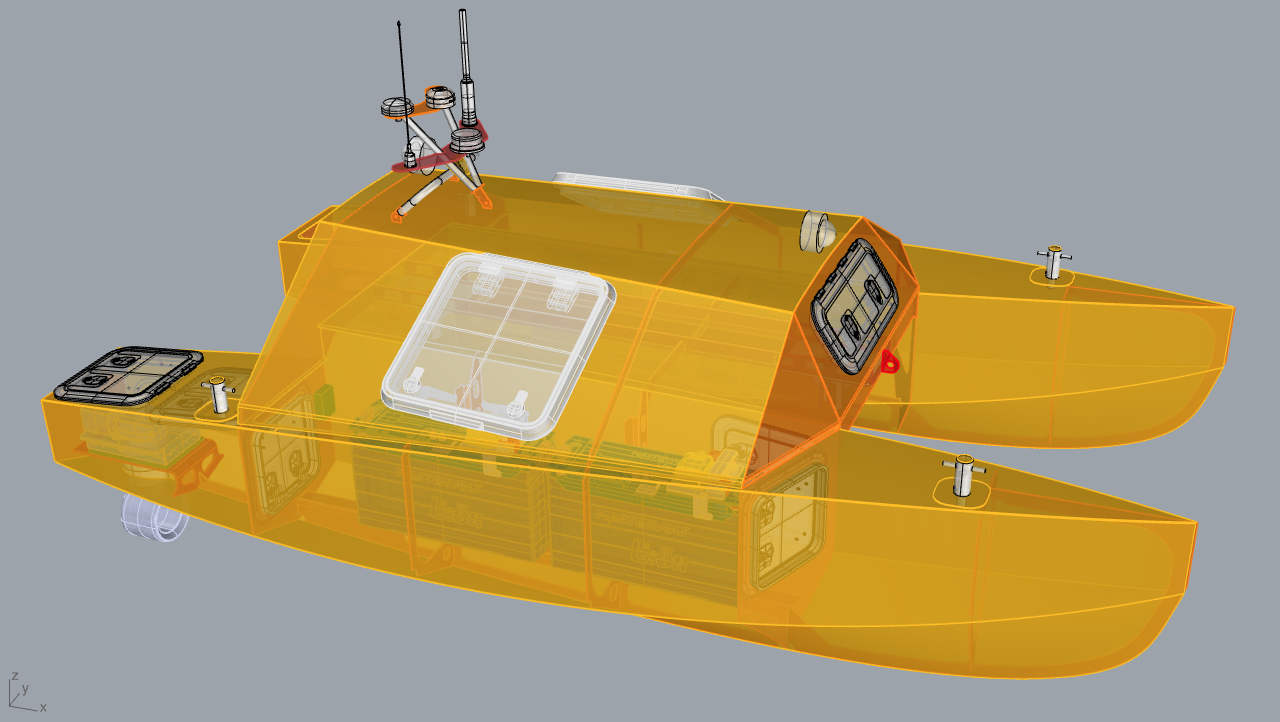
 HydroSurv today announced a new vessel order from Clear Water Systems Limited, supporting a groundbreaking technology development project that addresses one of the most critical environmental challenges facing freshwater ecosystems - harmful blue-green algae (cyanobacteria).
The pilot project, funded under a Small Business Research Initiative (SBRI) for the Department of Agriculture, Environment and Rural Affairs (DAERA), focuses on mitigating harmful algal blooms (HABs) in Lough Neagh, Northern Ireland’s largest inland lake. Over recent years, Lough Neagh has faced increasing prevalence of cyanobacterial blooms, which threaten aquatic life, and the water quality for local communities.
As part of the project, Clear Water Systems is developing a novel in-line water treatment system designed for targeted, mobile disruption and toxin reduction of blue-green algae directly in situ. The company’s SlipStream processor will be used to evaluate treatment approaches for HAB scums, with the objective of exploring the potential for reductions in algal concentration and potential toxin reduction.
To enable in-field testing and large-scale deployment, Clear Water Systems sought a zero-emission, uncrewed vessel platform capable of operating efficiently and safely within sensitive freshwater environments. To support in-field testing, HydroSurv is providing its REAV-35 Uncrewed Surface Vessel (USV), offering a capable and adaptable platform for hosting specialist environmental payloads, including Clear Water Systems’ SlipStream processor, during trials.
The 3.5 metre electric vessel features a 24kWh battery-electric powertrain driving twin 5kW steerable pod drives from Rim Drive Technologies, delivering quiet, emission-free operation with exceptional manoeuvrability and endurance. The REAV-35 builds upon HydroSurv’s established family of USVs proven in environmental monitoring and water quality applications across the UK.
“We’re delighted to be supporting Clear Water Systems in their SBRI project for DAERA, tackling the vital challenge of harmful algal bloom mitigation. Like Clear Water, HydroSurv is founded on principles of environmental stewardship and responsible innovation, so this collaboration feels like a natural fit. The SlipStream processor represents a groundbreaking approach to cleaner, healthier ecosystems - we’re proud that our Rapid Environmental Assessment Vessel can provide a proven platform to help bring this important technology to the field.”
Richard Boyd, Managing Director of Clear Water Systems Limited, said:
”Harmful algal blooms represent a growing challenge for freshwater ecosystems, and addressing them requires careful testing of new, mobile approaches in real-world conditions. Working with HydroSurv gives us access to an industry-leading USV platform, backed by proven operational experience in offshore and challenging environments, which supports the scale and complexity of the challenge at Lough Neagh. Their professionalism and sector experience allow us to deploy and evaluate our SlipStream processor using a reliable, zero-emission vessel, while maintaining a strong focus on environmental sensitivity and robust field trials. This collaboration is an important step in building the evidence base needed to inform future freshwater management solutions.”
This initiative marks a significant step toward climate resilience and ecological restoration, showcasing how technology-driven collaboration can harness innovation and autonomy to enhance freshwater management for the benefit of communities and environments alike.
CADDEN becomes the official distributor of CHASING ROVs in France
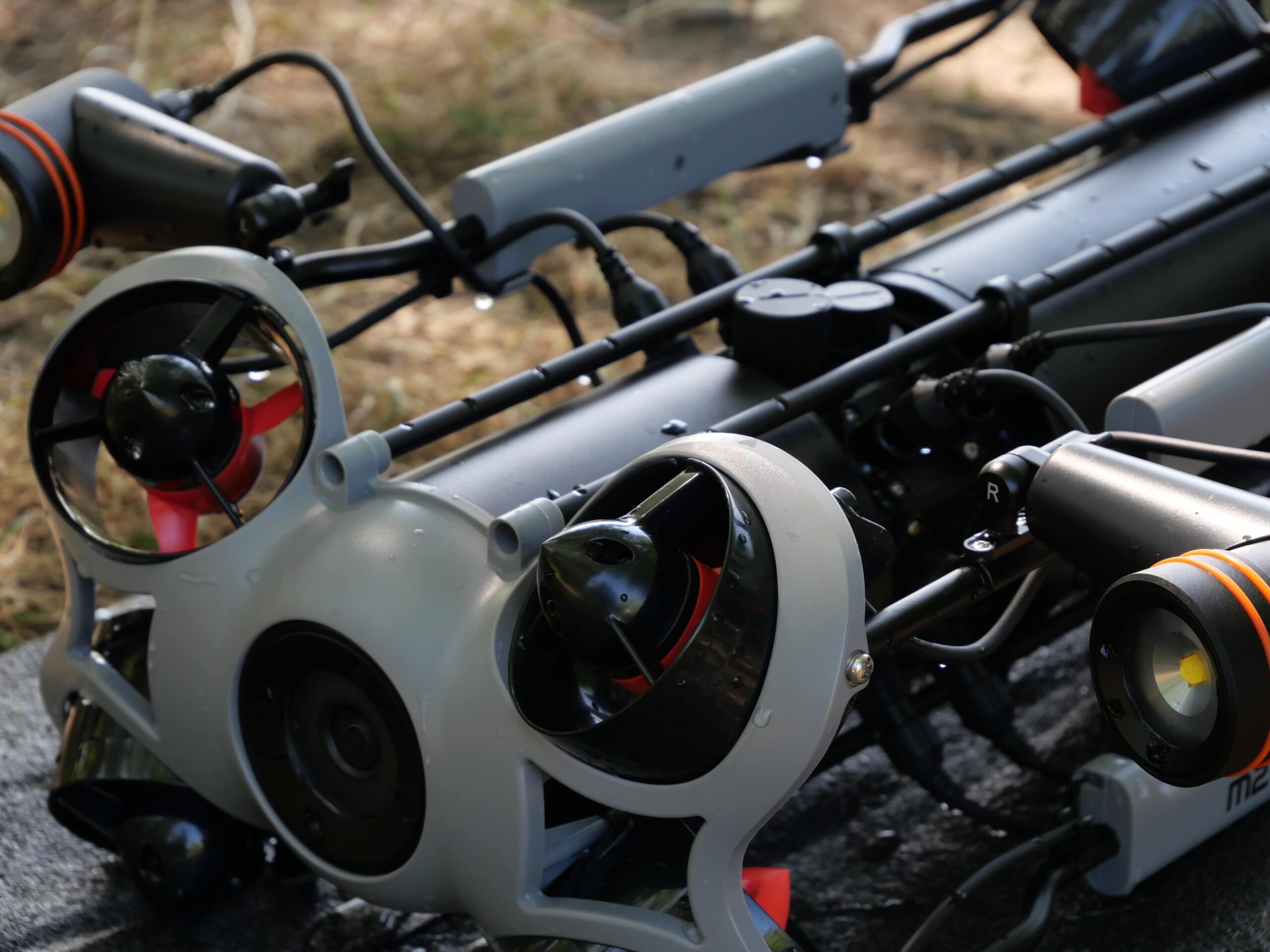
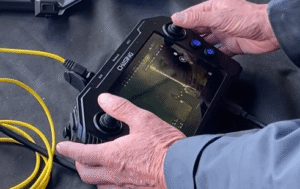 CADDEN, a major French player in the manufacture, distribution, integration and support of advanced technological solutions for geosciences, hydrography and robotics, announces that it is now an official distributor of
CHASING underwater drones in France.
This new strategic partnership allows CADDEN to expand its portfolio of robotic ROV solutions (Remotely Operated Vehicles), by offering remote-controlled underwater vehicles adapted to numerous scientific uses.
ROVs suitable for multiple underwater applications
CHASING ROVs are recognized worldwide for their quality, performance and maneuverability. The range includes lightweight off-road ROVs as well as more sophisticated models for inspection (pipes, docks, pipelines, wrecks, etc.), observation, scientific research, aquaculture or underwater maintenance operations.
These systems combine:
- Precise control and omnidirectional movements.
- High-resolution cameras with powerful lighting.
- Variable depth operation capabilities.
- Accessories and expansion options to adapt to business needs.
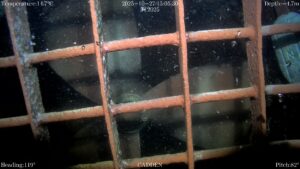 This diversity of applications makes them valuable tools for those involved in hull inspection, aquaculture, search and rescue missions or even underwater exploration, offering an excellent balance between performance, portability and ease of use.
A strong complementarity with the CADDEN offer
This partnership is part of CADDEN’s strategy to offer a comprehensive technological offering to its customers by integrating trusted robotic systems within its product ecosystem. By distributing the CHASING ROVs, CADDEN develop its catalog to meet the growing needs of its customers in the maritime, scientific, naval engineering and technical inspection sectors.
“We are excited to add CHASING ROVs to our portfolio. Their technological approach and the versatility of their ROVs perfectly complement our mission: to provide our customers with reliable, innovative solutions adapted to the requirements of field operations,” declares Gilles DANDEC, Founder of CADDEN."
Future-Proof Cable Tracking: Teledyne Marine Releases HydroPACT 440 MK2
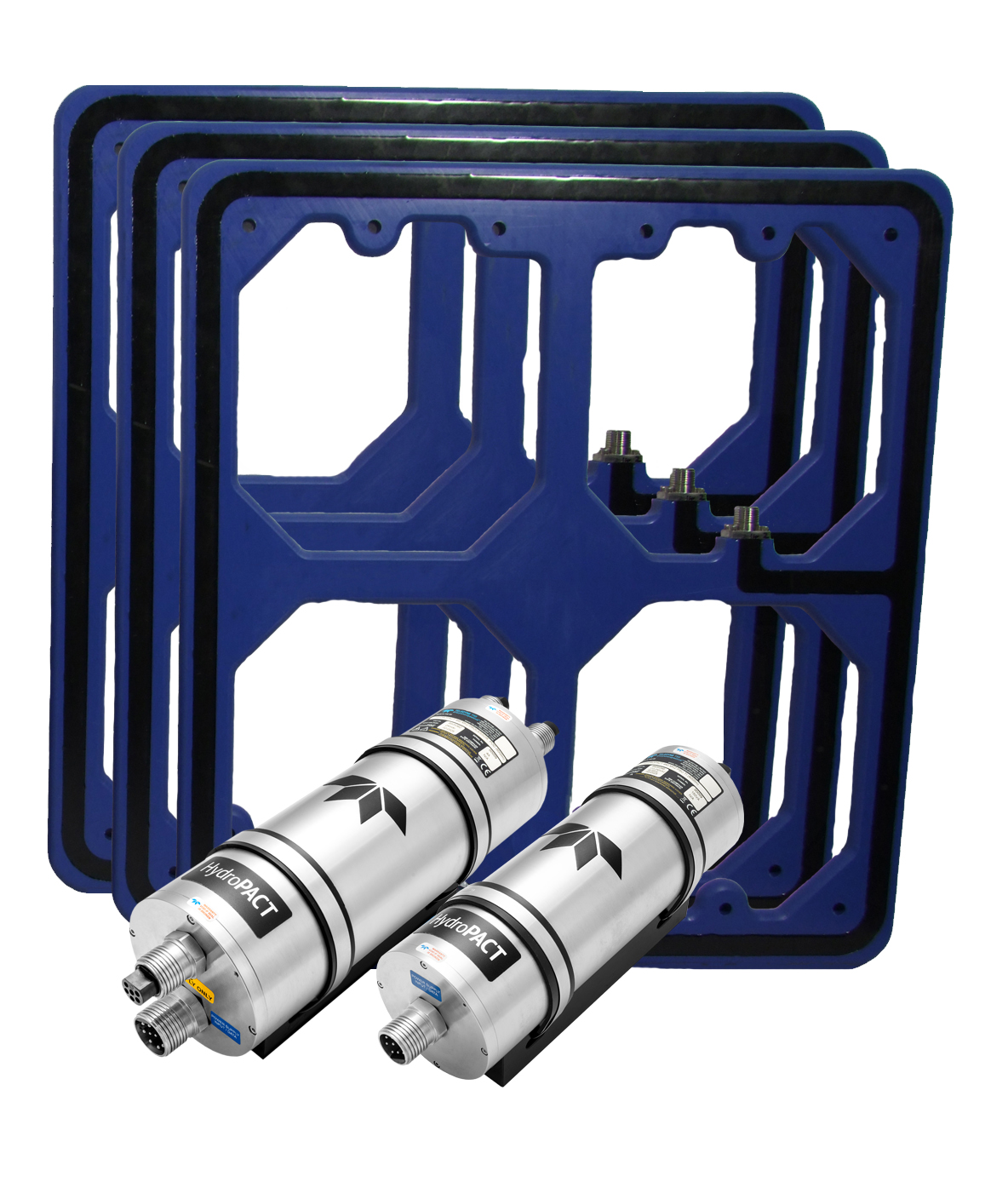
 Teledyne Marine has announced the launch of the HydroPACT 440 MK2, an upgrade of its market-leading subsea pipe and cable tracking system. Building on more than 30 years of trusted offshore performance, the MK2 has been engineered as a robust, future-proof upgrade that still offers the familiar user experience and operability, yet ensures long-term continuity of supply and operation for customers across multiple sectors.
The HydroPACT 440 has been the industry standard since its introduction in the early 1990s, playing a vital role in the installation, surveying, and verification of subsea pipelines and cables. Widely used in offshore energy, telecommunications, and defence applications, the system provides reliable, real-time tracking and measurement—critical proof-of-lay data and ongoing monitoring for assets already in situ. Generations of offshore personnel are trained on its operation, making ease of use and continuity essential for this new model.
Teledyne Marine has invested in a comprehensive redesign to secure the long-term future of the product. The result is a modernised system that maintains the same operability, with the addition of new architectural features, whilst retaining the same performance and familiar user experience.
“After many months of trials and testing, we’re extremely proud to introduce the HydroPACT 440 MK2,” said Jeremy Harrison, Business Manager at Teledyne Marine. “Customers can expect the same credible, proven performance they trust—but in a refreshed design built to operate reliably for decades to come. Continuity and future-proofing were our guiding principles.”
What’s new in the HydroPACT 440 MK2?
- Titanium subsea housing – lighter, more compact, and depth rated to 6,000 meters as standard.
- For the first time the MK2 system is offered as a 24Vdc single subsea pod, reducing cost and complexity. Especially suited to the newer eROVs now appearing in the market.
- New Windows 11 topside computers – New SDC11 and RMC11 units for enhanced survey workflow.
- The DeepView operating system has been upgraded to be Windows 11 compatible – ensuring familiarity for long-standing users while supporting modern capabilities.
The HydroPACT 440 MK 2 retains the system’s hallmark flexibility, it can be deployed on a wide variety of larger ROVs and trenchers enabling operators to conduct their own surveys and verify their work, and thereby helping to reduce operational costs.
Upgrade and replacement options are also available for users of the legacy HydroPACT 440 systems.
Importantly, the HydroPACT 440 MK 2 is being launched at the same price as the previous model, reinforcing Teledyne Marine’s commitment to customer value as the product enters its next generation.
The HydroPACT 440 MK2 is available to purchase now and the system will make its official debut at Oceanology International 2026, taking place 10–12 March in London
For more info, visit: www.teledynemarine.com/
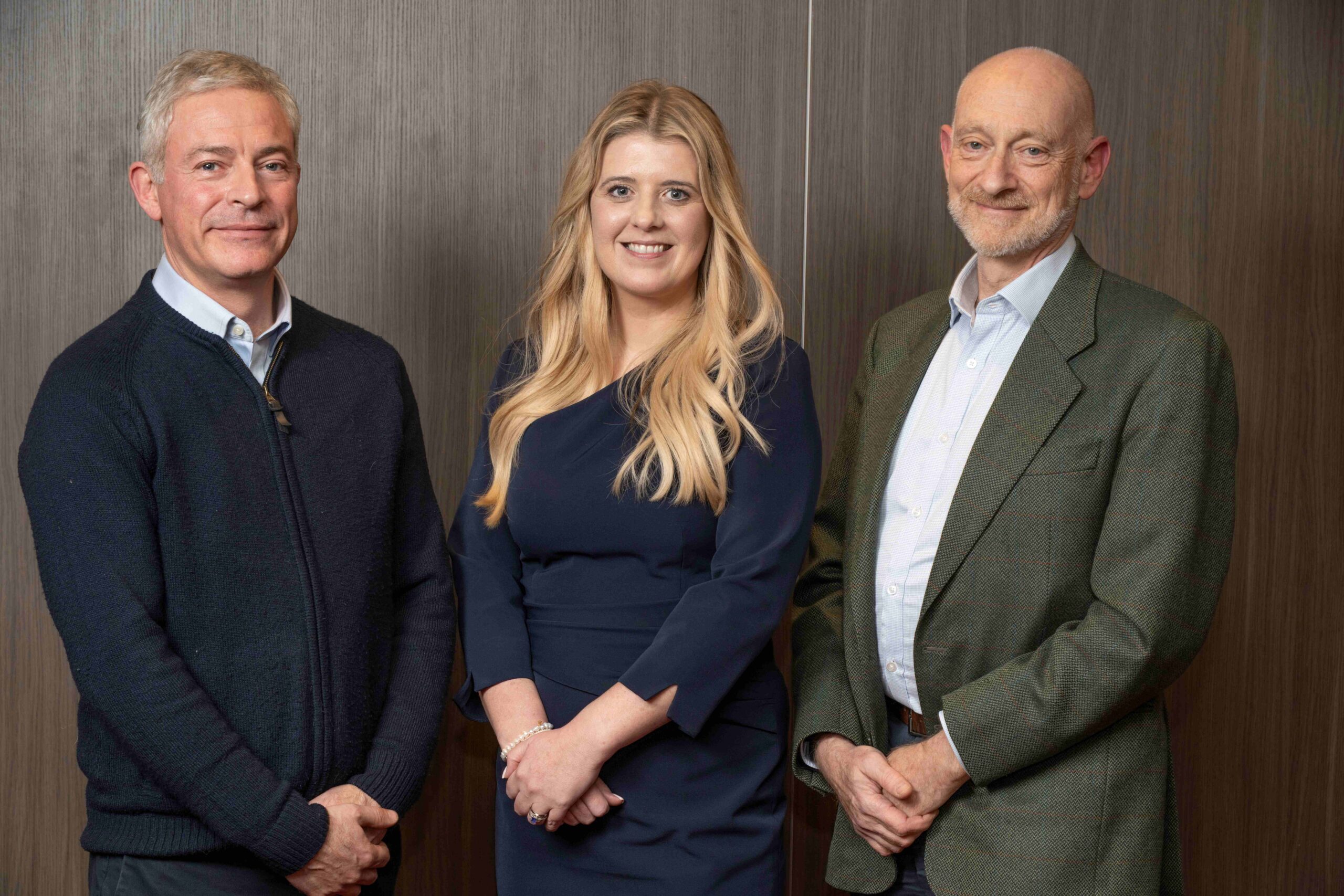
ORE Catapult Technical Director is new President of the SUT
 AGM of the Society for Underwater Technology (SUT) announced the official hand over to a new President; the announcement of three new Fellows of the Learned Society from three countries; and announcement of winners of two Awards. When the formalities of the AGM were concluded SUT members, and guests, were treated to a highly stimulating talk by Oliver Steeds OBE, Chief Executive of Nekton, and the 2025 winner of the Captain Don Walsh Award for Ocean Exploration, a joint award of the Society for Underwater Technology and the Marine Technology Society.
SUT’s new President
Dr Cristina Garcia-Duffy is SUT’s new President. She is Director of Research and Technical Capabilities at the Offshore Renewable Energy (ORE) Catapult, leading the strategic development of its technical capabilities and new areas of innovation. This includes the work of ORE Catapult’s state-of-the-art Digital, Autonomous and Robotics Engineering (DARE) Centre based at the National Renewable Energy Centre in Blyth. Before joining ORE Catapult, Cristina was Head of Technology at the UK Aerospace Technology Institute.
As SUT’s Chief Executive, Cheryl Burgess explained: “Cristina Garcia-Duffy’s professional career has been international, moving from aerospace to renewable energy and to her current role with ORE Catapult. As SUT’s new President, Cristina brings an in-depth portfolio of experience with people, projects, facilities, services and shaping and delivery of projects in blades, electrical, drivetrains, robotics and autonomous systems amongst others.
“Her commitment to SUT sector industries, and the SUT, was demonstrated through her engagement with our Executive Committee and their recommendation to Council for her election as SUT President. Our discussions with Cristina have showcased her involvement and engagement with SUT at the highest level, and in activities through Branches and SIGs reflected in OREC’s locations and interests.“ [Note to Editors: full biographical details follow].
Dr Cristina Garcia-Duffy said: “As I step into this presidency, I do so as both an engineer and an advocate. Together we will strengthen the connections between research and industry, between marine and non-marine sectors, between innovation and real world delivery. Thank you for your trust, your energy, and your commitment to this global community. The ocean holds vast possibilities, and beneath its surface lies an open invitation to explore and to create. I look forward to taking that journey with you.”
Retiring SUT President, Benj Sykes, UK Country Manager, Ørsted, looking back over his two years as President said: “It’s been an honour to be President of the Society for the last two years. Over that period, I’ve been delighted to see the SUT continue to deepen its reach in the energy transition, upskilling its members and supporting the global network of subsea professionals, innovators and scientists who are at the heart of, and vital to the success of, the successful transition of the world’s energy systems. And it’s a pleasure to be passing the baton on to Cristina, who brings a wealth of experience and is well placed to champion the next leg of the SUT’s journey.”
The President’s Award
‘Given annually, the SUT’s President’s Award, recognises contributions to the SUT and inspiration to those engaged in the marine science, underwater technology and subsea engineering.’
This year’s President’s Award for Outstanding Achievement was awarded to Judith Patten MBE. As Benj Suykes said: “Over the 25 years that Judith has been actively involved with the SUT she’s been instrumental in promoting the Society both in the UK and internationally, not least through her ground-breaking work in co-creating the ever-growing All-Energy conference and exhibition and building a deep and enduring partnership between SUT and the conference, with the many benefits that continues to bring to the Society and its members. But her contributions go far beyond this; she served as President of the Society as well as on Council and continues to support the promotion of the Society through her outstanding work on our communications. It's an immense privilege for me to be able to honour her service to the Society with the President’s Award.”
The second award made on the evening was the 2025 Gwyn Griffiths Award for Underwater Robotics Award, which was presented to sea-ice physicist Dr Christian Katlein [http://katlein.de/science/about-me/]
New Fellows of the SUT
The newly elected Fellows of the SUT are:
- UK - Dr Cristina Garcia-Duffy of ORE Catapult
- Australia – Mark Casey of Santos Ltd
- Houston, Texas – Maria Ancheril of Strohm
Awards made July 2024-June 2025
The 2024 President’s Award was made to Professor John Sharp for his work with the SUT Marine Renewable Energies Committee as its chairman.
The 2024 Captain Don Walsh Award for Ocean Exploration, presented jointly by the SUT with the Marine Technology Society (MTS), was awarded to Martin Klein; and the 2025 award was won by Oliver Steeds OBE, Chief Executive of Nekton. He will be presented with his award at Oceanology International in March in London.
Jonathan Colby of was the recipient of the 2025 Lennard-Senior Memorial Prize (presented at All-Energy 2025) for his impact in marine renewables. The prize is awarded in recognition of outstanding individual achievement in the field of Marine Renewable Energy.
The 2024 Gwyn Griffiths Award for Underwater Robotics was Jonas Wüst of Tethys Robotics and the 2025 Award, was presented at the AGM to Dr Christian Katlein.
The 2024 winner of the Mick Cook Award for Significant Contribution to Marine Site Investigation and Characterisation was Dr Philippe Jeanjean of BP, and the 2025 winner will be announced at Oceanology International 2026
Post AGM inspiring talk by Oliver Steeds
Oliver Steeds OBE, Chief Executive of Nekton, the winner of the 2025 Captain Don Walsh Award for Ocean Exploration gave a stimulating talk outlining the ongoing work of Nekton, Ocean Census and Encounter.EDU and reflecting the wording of the award citation that stated: “The Award is made in honour of your outstanding, sustained, international contribution to the development, application and propagation of marine technology toward the advancement of ocean exploration.”.
When the Award winner was announced on 1 October 2025
- Justin Manley, MTS Immediate Past President said: “Oliver Steeds exemplifies Captain Don Walsh’s spirit of exploration through his pioneering leadership and unique ability to unite science, technology, and storytelling. His work with Nekton and Ocean Census is expanding our understanding of the ocean while elevating its vital role in our world. By bridging discovery, innovation, and education, Oliver is helping to shape the next generation of ocean stewards. MTS is proud to honour his profound impact on the future of ocean exploration.”
- Benj Sykes, now Immediate Past President of the SUT, and Chair of the selection panel, explained: “The judging panel agreed that Oliver’s ongoing work with Nekton, Ocean Census and Encounter.EDU is completely aligned with Don Walsh’s vision for the future of ocean exploration and its importance in raising awareness of critical ocean issues, contributing to addressing the solution of crucial scientific, technological, societal and environmental challenges. His close links to Don Walsh make it even more fitting that he receives this year’s Award. SUT wishes him well for all that lies ahead.”
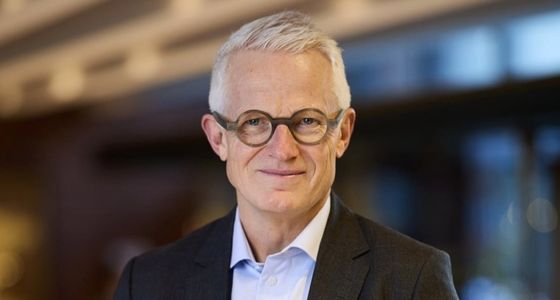
MacArtney Underwater Technology appoints Mads Nipper as Chair of the Board
MacArtney Underwater Technology appoints Mads Nipper as Chair of the Board. This succession reflects a continued commitment to strong board leadership and long-term growth.
Mads Nipper will be assuming the role of Chair of the Board at MacArtney Underwater Technology. Mads has a long professional career at several large Danish multinational companies and is currently also Chair at FLSmidth, a publicly traded company. Prior to this, Mads was CEO of Ørsted and CEO of Grundfos, and previously held several senior leadership roles at the LEGO Group.
“I am very much looking forward to assuming the role of Chair of the board for MacArtney Underwater Technology. I am convinced that the company, through its strong competencies, values, and dedicated employees, has the potential for further development and growth in the coming years. I am very much looking forward to cooperating with the leadership team, the board, and the owners, and providing my contribution to ensuring that the impressive development can continue,“ says Mads Nipper
Mads Nipper will formally replace outgoing Chairman of the Board Niels Erik Hedeager following the company’s annual general assembly in January 2026. Starting in 1989, Niels Erik became CEO in 1997. He held this role until 2017, when he assumed the position of Chairman.
“We would like to express our sincere appreciation towards Niels Erik for his 37 years of dedication to MacArtney Underwater Technology. He has played an instrumental role in leading the company – both as CEO and, over the last eight years, as Chairman – to where it is today,” says Glenn and Marco MacArtney.
“After 37 fantastic years at the helm of MacArtney and with a record year in both earnings and turnover, it is a good time for me to step down and proudly pass on the baton,” says Niels Erik Hedeager.
MacArtney Underwater Technology was founded 47 years ago by Winnie and Martin MacArtney, the parents of the current owners. The company is currently present in 14 countries worldwide and employs approximately 500 people.
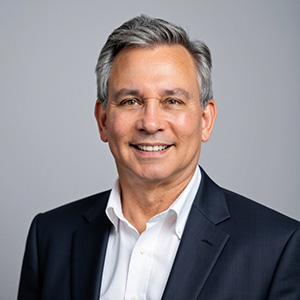
SIDUS Solutions announces leadership updates and honours company founder
SIDUS Solutions announced important company updates, honouring the legacy of its founder while reinforcing leadership continuity and continued commitment to its clients and partners.
 Honouring Our Founder
It is with profound sorrow that SIDUS Solutions marks the passing of its founder and Director, Leonard Pool, who died in November 2025.
Leonard Pool founded SIDUS with a clear vision: to deliver technically robust, reliable systems for complex and demanding environments. His dedication to engineering excellence, integrity, and mission-focused execution established SIDUS Solutions as a trusted partner across maritime, defense, and industrial sectors. His leadership and values remain deeply embedded in the company’s culture and direction.
Leonard’s legacy continues to guide SIDUS Solutions as the company moves forward.
Leadership Transition
SIDUS is also proud to announce that Tom Hernandez has assumed the role of President.
Tom Hernandez brings extensive leadership and operational experience and has worked closely with the SIDUS team to ensure a smooth and seamless transition. Under his leadership, the company will continue to focus on client success, technical innovation, and long-term growth while upholding the principles on which SIDUS Solutions was founded.
“I am honoured to carry forward Leonard's vision and work alongside the outstanding team at SIDUS,” said Tom Henandez. “Our mission, our clients, and our commitment to excellence remain unchanged.”
 Sales Leadership Promotion
In addition, SIDUS Solutions announced the promotion of Larry Hagstrom in his role as Sales Manager.
Larry Hagstrom continues to lead SIDUS’ sales efforts, strengthening customer relationships, and expanding the company’s presence across its core markets. His leadership and deep understanding of client needs have been instrumental in the company's ongoing success.
Looking Ahead
“These updates reflect both the strength of our leadership team and our continued dedication to our customers,” said Tom Henandez. “SIDUS Solutions remains focused on delivering reliable, mission critical solutions while honouring the legacy that built our company.”