
Latest NORBIT Multibeam Survey Technology gains immediate sales
NORBIT Subsea are proud to announce the launch of their latest fully active stabilised multibeam sonar system.
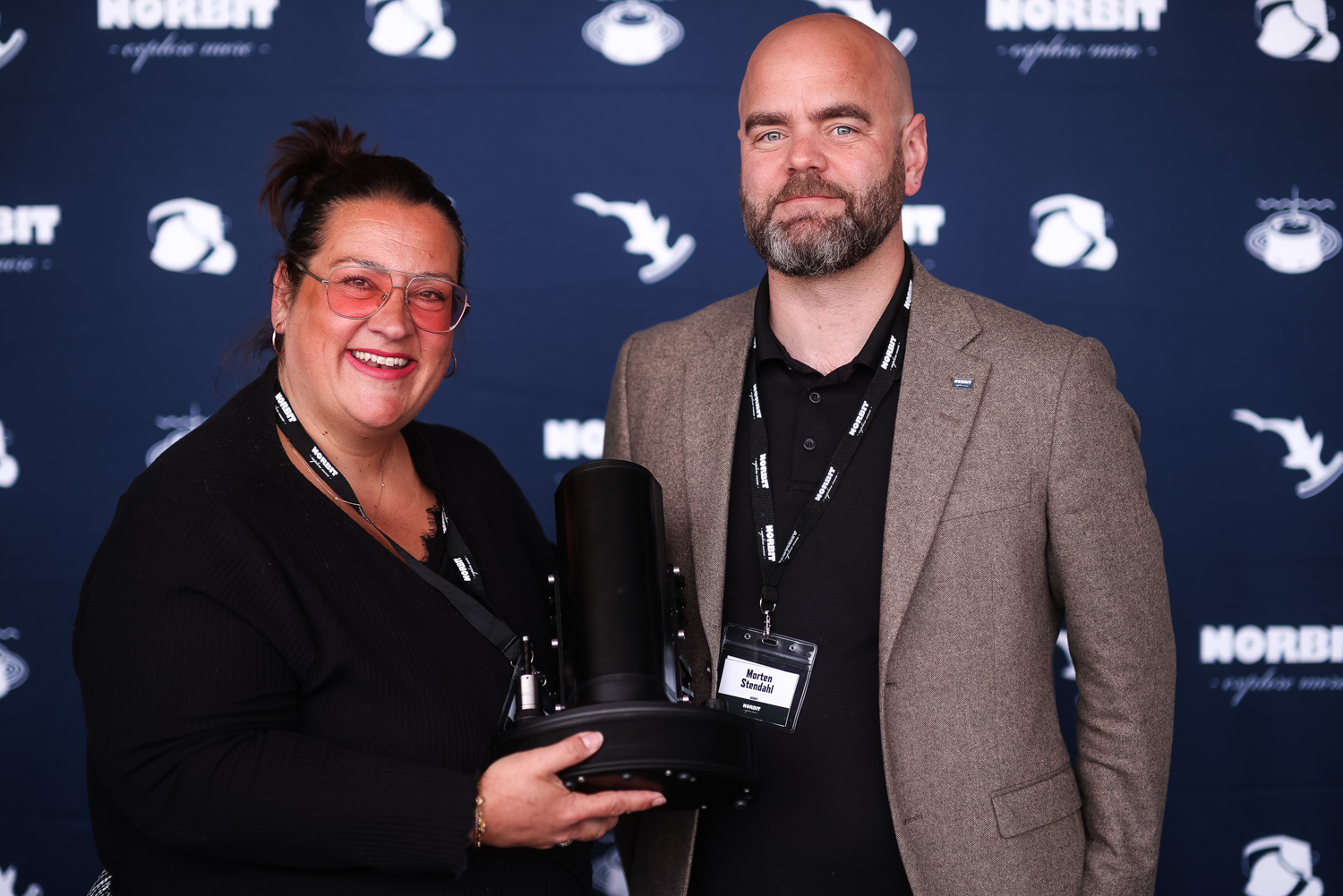
Building on the WBMS platform, the new “iWBMSh Stabilised” system was launched at the NORBIT Subsea Global Partner Day event held in Southampton, UK prior to Ocean Business 2023.
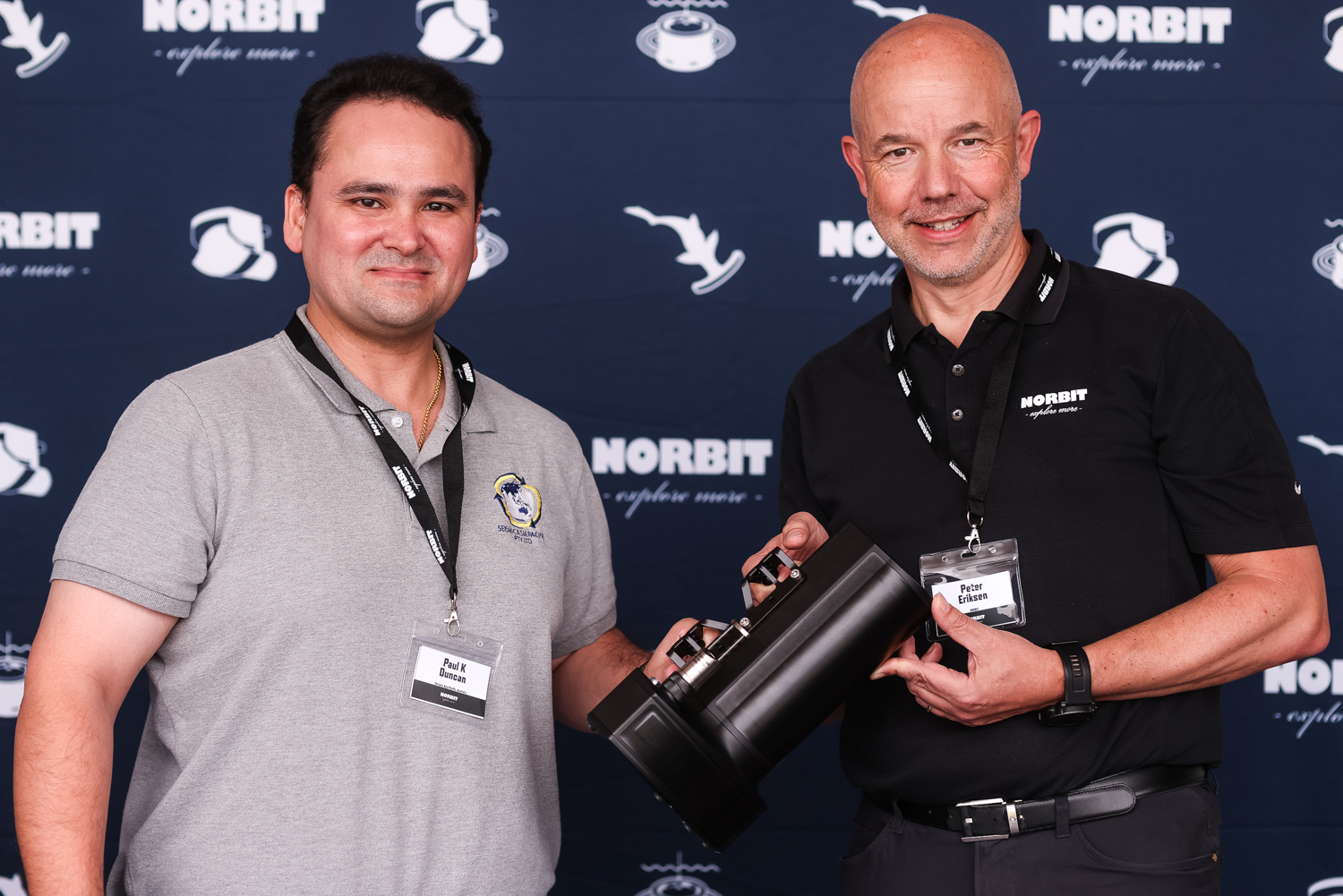
The system providing active Roll, Pitch and Yaw Stabilization as well as Dual Swath capability brings next generational functionality and capability in a very small compact lightweight form factor. During the product launch presentation, both Seabed BV from Amsterdam, The Netherlands and Seismic Asia Pacific Pty Ltd. from Australia issued an order for the system. Ms. Elice Collewijn, General Manager Seabed of concurred that “Such performance and usability yet packaged in a compact system will appeal to many within our market”. Mr. Paul Duncan, CEO Seismic Asia Pacific Pty Ltd. described the system as “revolutionary”.
Peter Eriksen, Business Unit Director at NORBIT Oceans commented "We are very grateful to both Seabed and Seismic Asia Pacific for their immediate commitment on our new product. The team at NORBIT work hard to ensure we deliver leading technology to the market, and the confidence shown by our partners demonstrates the exacting high standards for all our client multibeam deliverables. The market need for Active Stabilised multibeam technology has never been greater, and built upon the success of our WINGHEAD i80S, this new iWBMSh Stabilised product further provides solutions for more clients operating in more applications”.

Fugro and Petrobras pioneer remote subsea inspection survey in Brazil
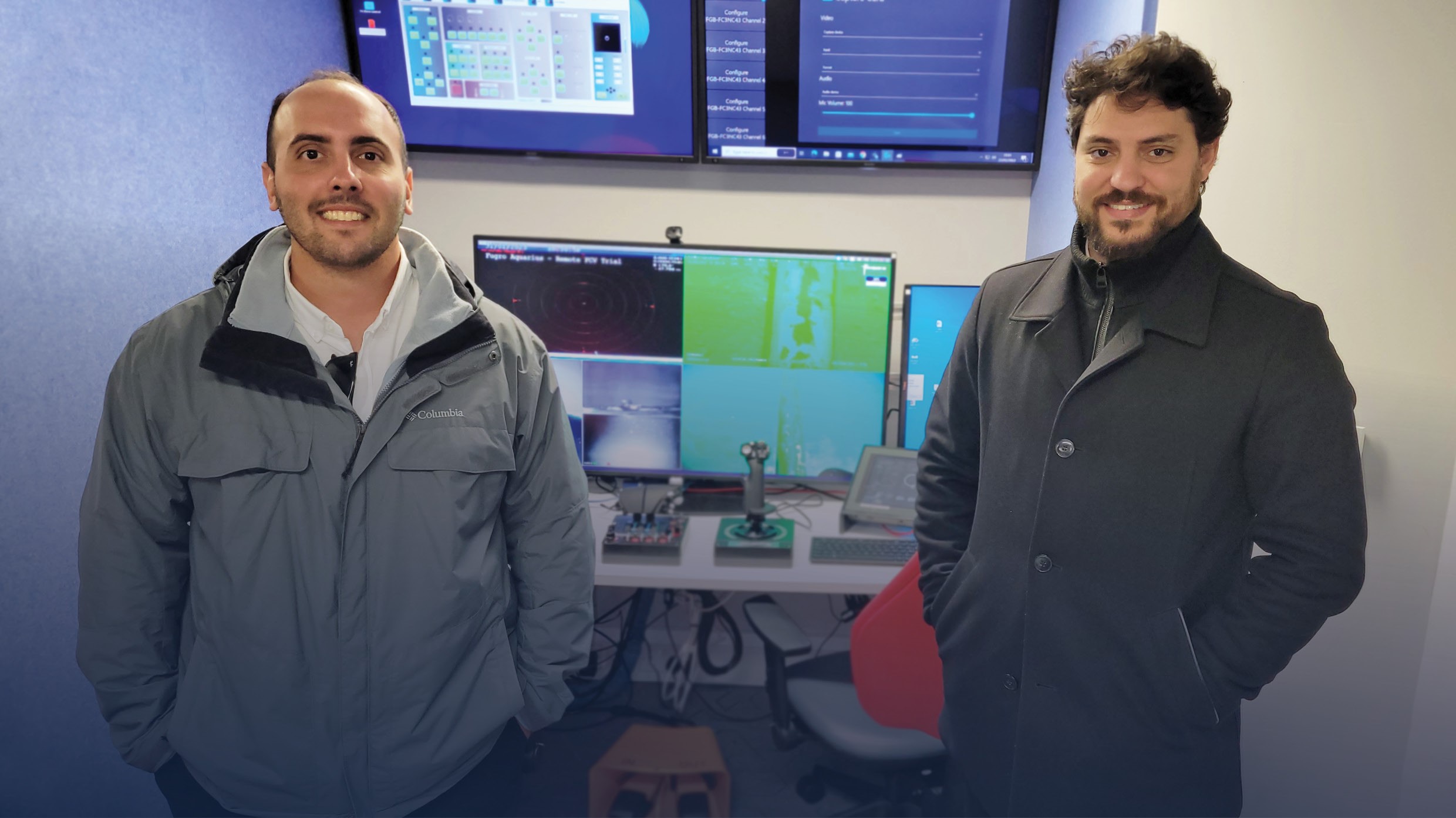
Fugro and Petrobras have achieved a major milestone in Brazil's offshore energy sector by successfully completing the country's first-ever remote subsea inspection survey. This technology trial was carried out by Fugro in collaboration with Petrobras under an existing multiyear contract with the aim of minimising risk and improving sustainability during inspection, repair and maintenance (IRM) projects.
Fugro utilised a remotely operated vehicle (ROV) deployed from the Fugro Aquarius to conduct the survey. Office-based personnel piloted the ROV from an operations centre in Aberdeen, Scotland, instead of from the vessel itself. The approach was informed by Fugro’s remote ROV piloting experience in other parts of the world, and was accomplished using a high-speed datalink provided by Petrobras. For future projects, remote ROV piloting may help Petrobras limit the number of crew deployed to the field, resulting in safer operations with a reduced carbon footprint.
“This landmark project represents a significant achievement in our ongoing work with Petrobras to support safer and more sustainable offshore energy production in Brazil," said John Chatten, Business Development Manager for Fugro's marine operations in Brazil. "As the country’s foremost provider of ROV services, we look forward to implementing this approach on future surveys and to bringing additional remote and autonomous innovations to the region."
Gwyn Griffiths Underwater Robotics Award: Nominations now welcome
The Society for Underwater Technology’s (SUT’s) International Panel on Underwater Robotics has announced that nominations/applications are now welcome for the Gwyn Griffiths Underwater Robotics Award (GGURA) here. The deadline for entries is 1 May 2023.
The GGURA recognises people in the early to mid-stages of their career (and under 40 years old) who have made outstanding contributions to their field in underwater robotics. The award may be for industry/commercial, research and/or creative activity in underwater robotics. The winner will receive £500, a certificate, and an engraved award.
Neil Bose, Chair of the Panel on Underwater Robotics stated:
“Members of the Panel on Underwater Robotics were excited by Professor Gwyn Griffiths’ generosity in supporting this award and were especially enthusiastic that it should be an early to mid-career award to encourage the up-and-coming generation of underwater robotics workers in their careers.“
While Gwyn Griffiths MBE, a Past President of the SUT added:
“As a vibrant, forward-looking learned Society the SUT is at the forefront of encouraging and facilitating international cooperation in Underwater Robotics. From my own career, I know that peer recognition of achievements through an international Award can make a substantial and lasting difference. These have been times for reflection, and by enabling this new Underwater Robotics Award I am delighted to support the innovators of today and tomorrow.“
Nominations or applications for the 2023 GGURA must consist of the following documents.
• A letter of nomination or application that describes how the candidate meets the criteria.
• The letter should be no more than two pages in length. Supporter(s) of the nomination/ application may add their signature to this letter or supply an email that indicates their support for the candidate
• A 100-word citation or appraisal of the candidate’s research describing their contributions in a way easily understandable to those outside the discipline
• A curriculum vitae
So far there have been two winners of the GGURA, both can be heard on the ‘Underwater Technology Podcast’. The winner of the inaugural GGURA in 2021, Aleksandra Tomaszek MBA, 1 CSI Ltd Co-founder & COO, Strategic Subsea Business Partner can be heard here; while 2022 winner Rustom Jehangir, Founder and CEO at Blue Robotics can be heard here.
Robosys Automation provides autonomy to new survey USVs
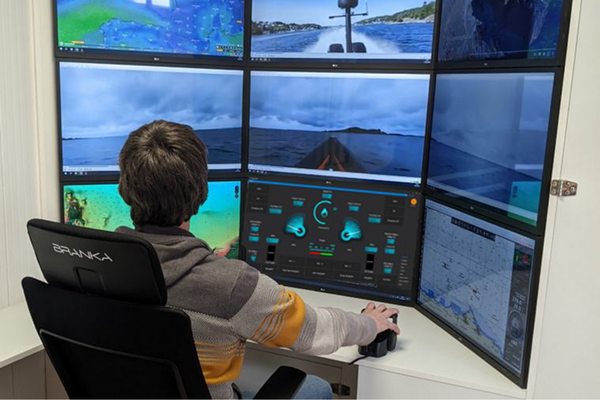
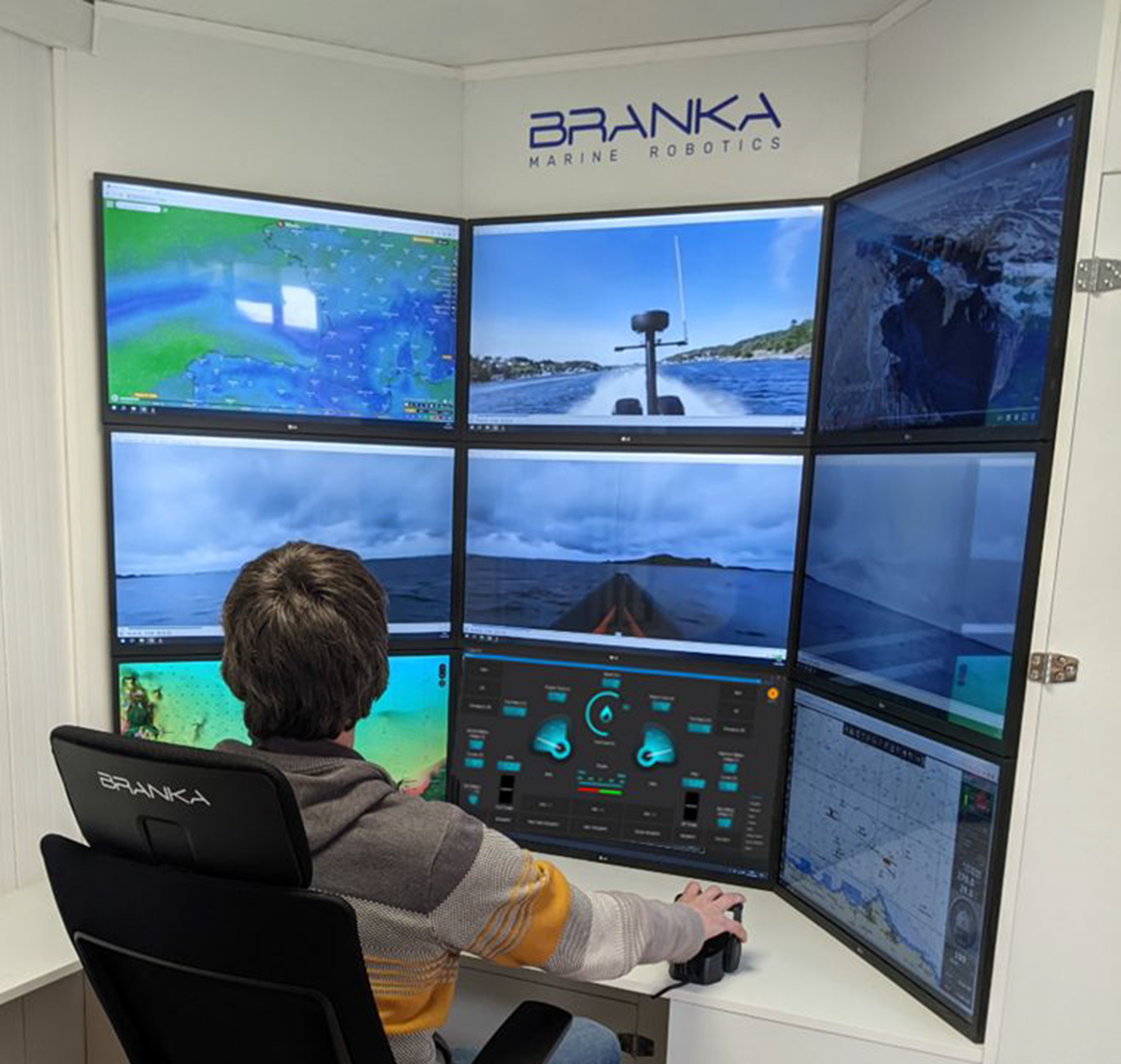
Robosys Automation has received a contract award from BRANKA Marine Robotics of Spain for their Voyager AI Surveyor software to go on board Branka’s latest, innovative solar powered, all electric drive, 6 Metre Oceanographic Survey USV, the Ranger 6.0 Electric. Voyager AI Surveyor software will be integrated aboard the Ranger and with the Branka advanced marine communications and control solution that includes an immersive user experience in a modular Remote Operation Centre.
The electric version of the Ranger is the latest in the line of their new range of oceanographic survey USVs. It is being developed for a marine science and technology centre in Spain, to which BRANKA already delivered a smaller USV. The Ranger has a 100% electric propulsion with the capacity to generate its own energy through the proprietary photovoltaic encapsulation technology in composite that is integrated into the vessel’s deck structure.
BRANKA wanted to have a future proof integrated Remote and Autonomous maritime navigation and control solution that will provide Collision Avoidance, Obstacle Avoidance and anti-grounding and is capable of expanding as further sensors and systems are added in the future.
Robosys Automation will be providing the Autonomous Remote Control and the Autonomous Navigation, including Collision Avoidance, Obstacle Avoidance and Anti-Grounding. The USV is convertible into a hybrid power system and sees Robosys integrating and customising their software with a custom-designed steerable single electric drive system developed in-house by BRANKA. In addition, Robosys Automation is providing an alarm and monitoring system as well as integrated switch and relay control.
Robosys Automation Chief Strategy Officer, Nigel Lee says “We are extremely pleased to be providing BRANKA. with their Remote and Autonomous Navigation software solution as well as supporting wider aspects of their platform control. BRANKA is leading the way in hybrid power and electric drive oceanographic survey USVs which aligns with Robosys Automation’s ethos’ of providing solutions that support a Safe, Sustainable and Smart Blue Ocean economy”.
Both Robosys Automation and BRANKA see the collaboration on this initial electric USV as part of a long-term partnership, given their synergies of operating within the blue economy and in response to the fast growing demand that Branka is experiencing. For further information, both Branka Marine Robotics Solutions and Robosys will be exhibiting at Ocean Business 2023.
For this programme the USV is due to complete build in April and to be fully operational by the end of June.

Fugro opens cutting-edge remote operations centre in St. John’s, Canada
Fugro celebrated the launch of its new remote operations centre (ROC) in St. John’s, Canada. The high-tech communications hub will allow Fugro experts to control offshore survey operations remotely for safer, more efficient and more sustainable projects. The milestone was marked by an open house event, giving clients and government officials the opportunity to tour the state-of-the-art facility and experience first-hand the innovative technologies on offer.
The St. John’s ROC will serve offshore energy and other marine-based clients whose work in Canada often involves harsh operating conditions and/or long-distance mobilisations. By limiting the number of crew required to work offshore, remote survey technologies will help clients minimise project risk while significantly reducing their carbon emissions. Clients will also benefit from improved project timelines as data processing takes place in near-real time, allowing faster access to critical project information.
Fugro built the ROC with support from the federally funded Newfoundland and Labrador Offshore Oil and Gas Industry Recovery Assistance Fund. The fund was created to maximise employment among Newfoundland and Labrador residents and support the recovery of the local offshore oil and gas industry.
“Newfoundland and Labrador workers are leading the world in lowering emissions and building up renewables,” said the Honourable Seamus O’Regan Jr., Canada’s Minister of Labour. “Fugro gets it. Great to have them on board.”
“Digitisation has become synonymous with innovation in the offshore sector,” said the Honourable Andrew Parsons, Minister of Industry, Energy and Technology. “For companies such as Fugro, this technology allows it to take advantage of new and emerging technologies, while generating environmental benefits as we navigate the energy transition. That was the intent of the fund, and it is great to see this international firm open a state-of-the-art facility in St. John’s as a result.”
“Fugro’s St. John’s office has been a regional employer for nearly three decades. In that time we’ve introduced some remarkable - even award-winning -innovations, but none so transformative as the digitally based solutions we can now provide from the Canada ROC,” said Pat Byrne, Marine Asset Integrity Manager for Fugro in Canada. “The ability to perform remote operations, provide processing and data management services, all from our control facility in St. John’s, represents a pivotal moment for this region. It’s exciting to consider the benefits this shift will bring, not only to our clients but also to our workforce.”
ASL conducts field trials of prototype autonomous long endurance split-beam sonar
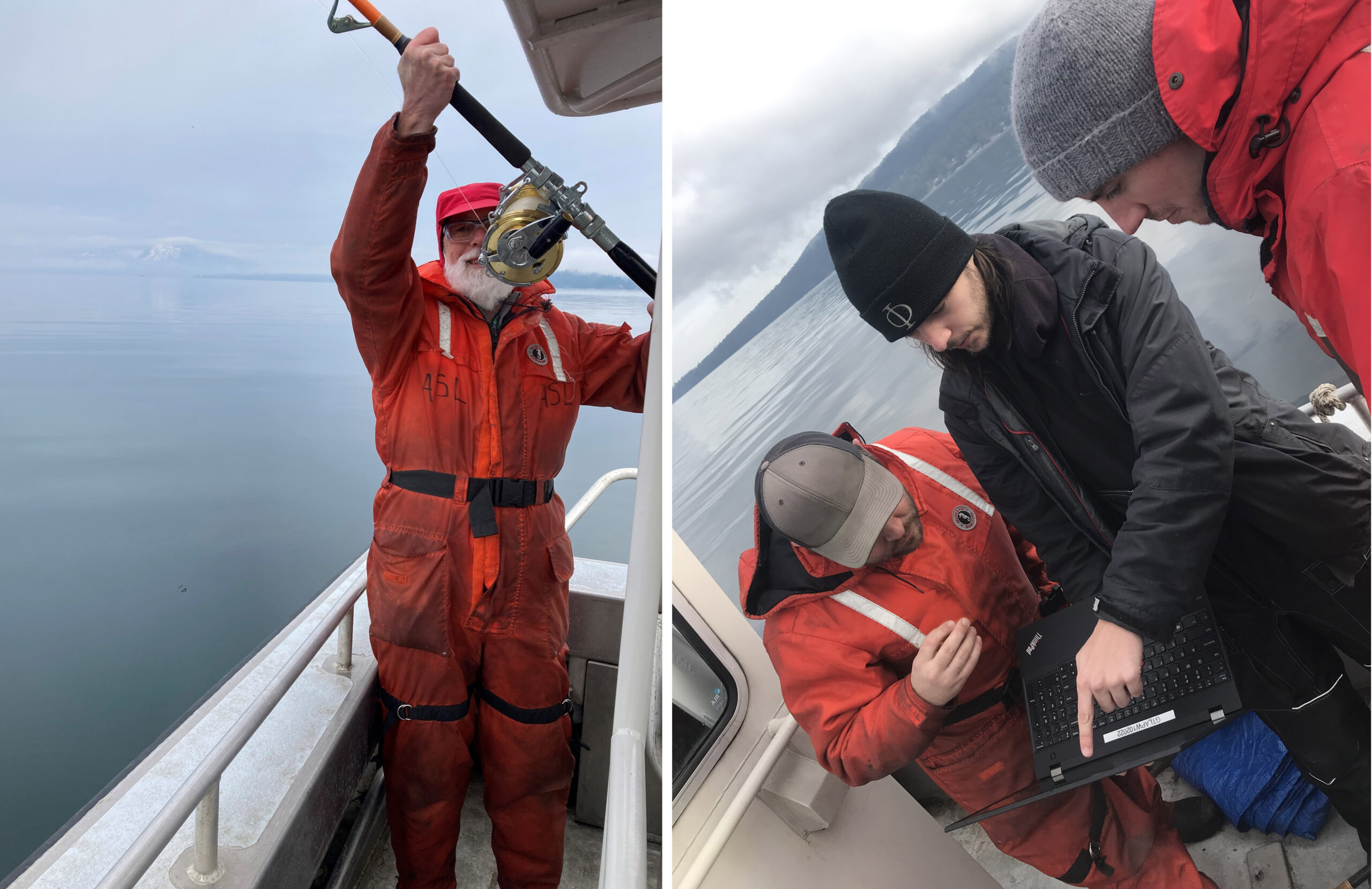
ASL Environmental Sciences is pleased to announce the successful field trials of a new prototype split-beam sonar. The trials were conducted in the Saanich Inlet near the Institute of Ocean Sciences (IOS), Sidney, BC. This milestone marks the first such deployment of the prototype instrument, as part of a collaboration between researchers at Memorial University, the Department of Fisheries and Oceans Canada (DFO), and ASL. The field testing was done from a small IOS launch with Dr. Stéphane Gauthier, Fisheries and Oceans research scientist, Dr. Len Zedel, Professor and Department Head of Physics and Physical Oceanography at Memorial University, and graduate student Axel Belgarde, also of Memorial University. ASL staff members Dr. Steve Pearce and Graeme Thompson participated in the study.
Split-beam echosounders use multiple receive channels to determine target location within the acoustical beam. Unlike ordinary single-beam echosounders, split-beam echosounders may determine not only the range but also the direction of arrival of incoming signals. This facilitates accurate measurements of target strength. When detecting fish over multiple pings, a split beam sonar may track the fish and estimate its swimming speed and direction.
ASL has extensive experience developing calibrated scientific hydroacoustic profilers. ASL instruments are known for their unmatched ability to collect long time series data, with typical deployments lasting 12 months. This new split-beam echosounder prototype is designed to run autonomously for months at a time, allowing researchers to collect long time series data at the study site. Many researchers find such tools useful when studying fish behavior throughout changing seasons, or when deploying in remote environments.
The field trial for this new design was carried out February 1, 2023 (Figure 1) and the results are promising. As part of the system testing, two small spheres were lowered and raised through the water column to a maximum depth of 220 m. The sample echogram of Figure 2 shows these spheres over one of the trial casts.
Partnership secures funding to enhance robotics and data solution for seagrass mapping
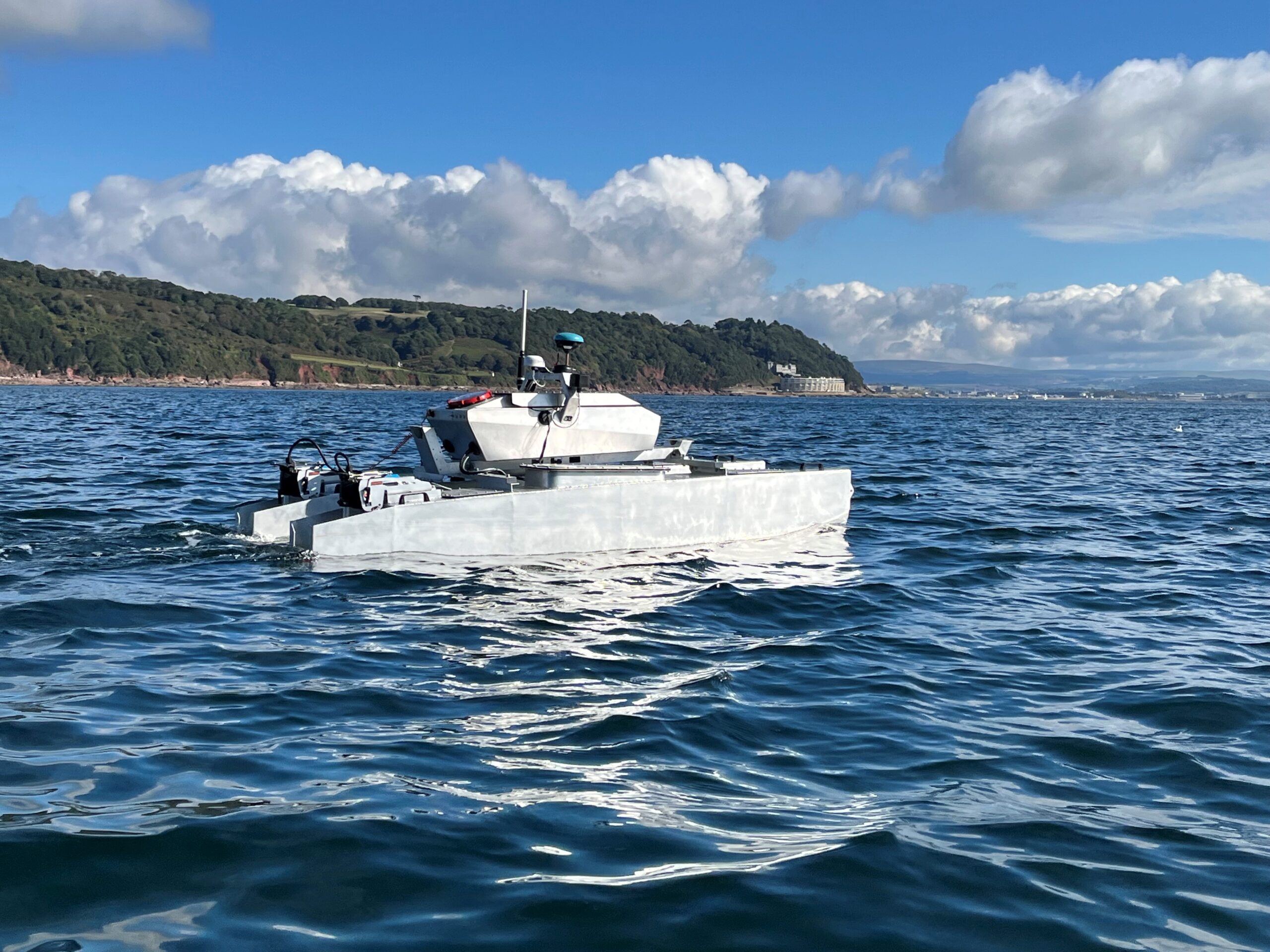
HydroSurv has won funding from Innovate UK to continue working with the University of Plymouth to enhance its technique of using Uncrewed Surface Vessels (USVs) to map seagrass coverage on the seabed.
Building on previous collaborations with the University and Valeport, the project aims to generate a comprehensive picture of seagrass meadows as well as to characterise the environment in which they are growing, enabling ecosystem health to be determined from the same survey campaign.
The project will see HydroSurv’s low impact, fully electric USV data acquisition platform developed further to deliver comprehensive, seagrass monitoring using an Acoustic Ground Discrimination System (AGDS) coupled with video and environmental data collection from new hull-mounted and underwater sensor arrays. These include two specialist cameras and a laser range finder, which is deployed to a constant altitude using an intelligently controlled cast winch on the HydroSurv REAV-28 USV.
A macro lens camera on the underwater skid will be lowered into sediment for close-up, hi-resolution photographs. Using an algorithm to ascertain grain size from the images, the type of ground in which the seagrass is growing can be determined. This enables stakeholders to monitor critical environmental parameters of seagrass habitats and to quantify meadow biomass and carbon sequestration potential, in turn informing better understanding of these habitats and their restoration.
The vessel’s sensor payload will also measure sound velocity, turbidity and chlorophyll levels, while machine learning algorithms, developed by the University, will objectively classify the seagrass beds using acoustic envelopes.
Processed data will be provided to coastal practitioners and scientists using an enhanced cloud-based data hosting and visualisation application developed by HydroSurv. This will enable them to create an enhanced picture of seagrass coverage, density and canopy height alongside improved environmental measurements and ground truthing video files, making actionable seagrass data wholly accessible.
HydroSurv COO, Ian Godfrey, commented: “The use of a non-invasive USV system to work in these sensitive environments reduces the risk of damage to the very habitat we are trying to protect. Beyond that, improved accuracy, low carbon emissions and reduced cost make uncrewed platforms an attractive proposition for survey and characterisation of seagrass meadows, even in waters that are difficult to access. HydroSurv is focused on providing a turnkey solution covering robotics and data processing in a single package that is readily accessible to industry stakeholders.”
The six-month project will culminate in a system demonstration involving key UK natural capital stakeholders actively involved in seagrass conservation projects and strategy, including DEFRA (co-funder), Natural England and the Environment Agency.
Dr Tim Scott, Associate Professor at the University of Plymouth said: “Collecting and processing ground truth images of seagrass habitats is currently an essential, but costly and time-consuming, activity. This project will dramatically improve our ability to monitor these critical ecosystems effectively and economically, facilitating the collection of regular and spatially comprehensive datasets that would not be possible without leveraging marine autonomy and advanced data analysis techniques.”
TDI-Brooks adds Manta-200 CPT to their geotechnical capabilities
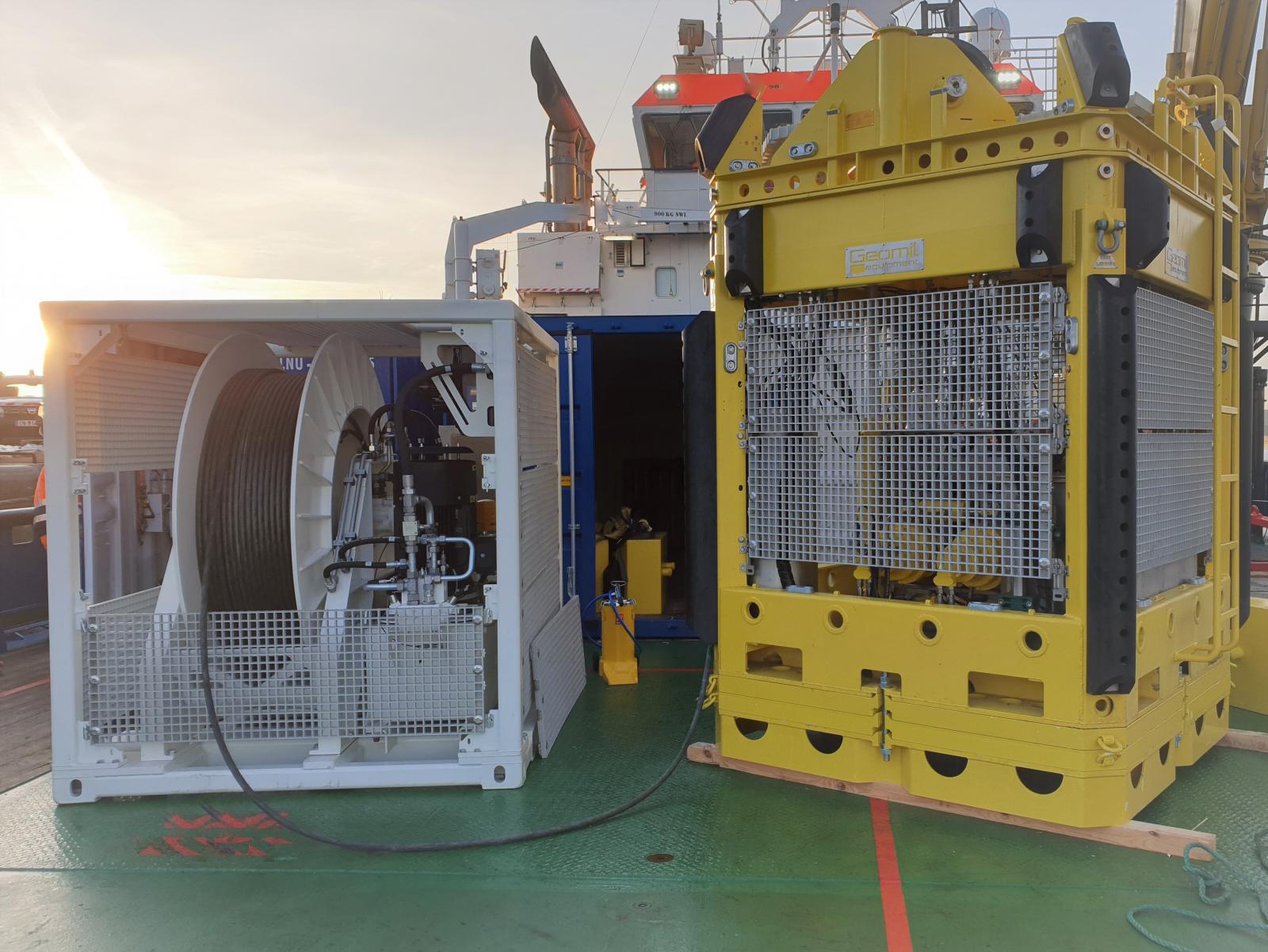
TDI-Brooks will be adding a Manta-200 CPT System to their geotechnical capabilities. The TDI-Brooks’ Manta-200 Cone Penetration Testing (CPT) system is suitable for almost any project in shallow water up to 150 meters. The Manta-200 represents the latest generation Cone Penetration Test (CPT) system for determining offshore seabed soil conditions.
Either deployed from TDI-Brooks’ DP vessel or off a charter DP vessel with a large 50-ton crane, the Manta-200 is designed for reliable results. During CPT operation the Manta is controlled from the surface with a real time link over a combined power and communication umbilical. Data can be viewed in real time allowing operators to manage the push and react to local sediment conditions to provide the highest quality data to the greatest depths possible.
The CPT system is powered by a unique Continuous Drive System (CDS) that was designed with a clear focus on durability and high production. It also guarantees uninterrupted penetration of the cone. Constant tension (CT) winches are used to support deployment at the working depth. The Manta-200 CPT system is a modular design capable of delivering results on even the most challenging of projects. Both casings and tubes can be operated simultaneously.
The Manta-200 CPT, along with the other TDI-Brooks’ suite of innovative geotechnical tools, are for soil sampling and measurement and also include box corers (BC), piston corers (PC), gravity corers (GC), jumbo piston corers (JPC), vibracorers (VC/pVC), cyclic t-bar instrument (TBAR), deep-reaching Shelby tube samplers (SPLR), and piezocone penetrometers including CPT-Stinger and Gravity CPT tools (gCPT).
Voyis Imaging Inc. chosen as the camera package for HII REMUS vehicles
HII is a global engineering and defense technologies provider and recognized worldwide as America’s largest shipbuilder. With a 135-year history of trusted partnerships in advancing U.S. national security, HII delivers critical capabilities ranging from the most powerful and survivable naval ships ever built, to unmanned systems, ISR and AI/ML analytics. HII leads the industry in mission-driven solutions that support and enable an all-domain force. HII creates advanced unmanned solutions for defense, marine research and commercial applications. Serving customers in more than 30 countries, HII provides design, autonomy, manufacturing, testing, operations and sustainment of unmanned systems, including unmanned underwater vehicles (UUVs) and unmanned surface vessels (USVs).
With the goal of further improving the autonomous capabilities of its vehicles, HII has selected Voyis Imaging Systems as the standard camera option for all REMUS UUVs (REMUS 100/300/620/6000).
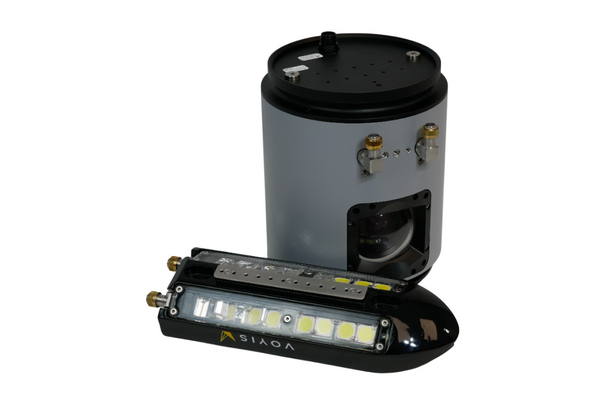
Voyis has developed the Recon UUV module, consisting of a highly advanced 4K stills camera and extremely efficient, high output external light bar, that enhances all REMUS platforms imaging capabilities in any operational situation. The Recon camera module offers extremely crisp stills imagery with on-the-sensor data processing for real-time, highly optimized datasets that improve in mission autonomy and analysis capabilities. These enhancements include improving image quality using image undistortion, true color correction, and image light leveling for consistent, actionable datasets available in-mission.
With Voyis cameras, navies are capable of completing the identification stage of MCM (mine countermeasure) operations, and improve target localization for neutralization/recovery completely submerged using REMUS platforms, improving operational covertness and efficiency. The high resolution imagery captured with Voyis’ Recon module provide increased confidence in subsea missions, ensuring REMUS customers receive safe, reliable, and efficient operations.
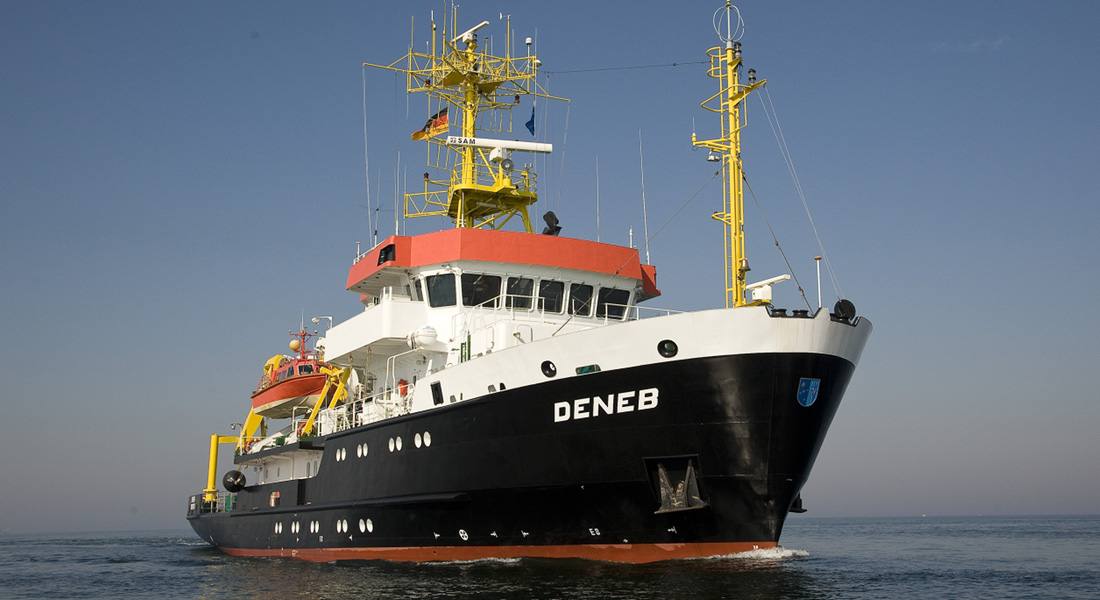
Another armoured cable for research vessel
NOVACAVI has recently designed and manufactured a special coax double armoured cable for the German BSH Bundesamt für Seeschiffahrt & Hydrographie, the Federal Maritime and Hydrographic Agency of Germany. We have been asked to fulfil their requirements and to supply a custom cable solution for their VWFS Deneb research vessel.
We have been glad to develop another coaxial cable for oceanographic use enriching our range of variety of sizes containing either single or multiple coaxial elements in a reliable solution for demanding application tasks underwater and in harsh environments.
Specialist in custom cables design and manufacturing since 1975, NOVACAVI will showcase sample of this cable together with other selected custom cables on stand F12 at Ocean Business 2023, Southampton next 18-20th April.