
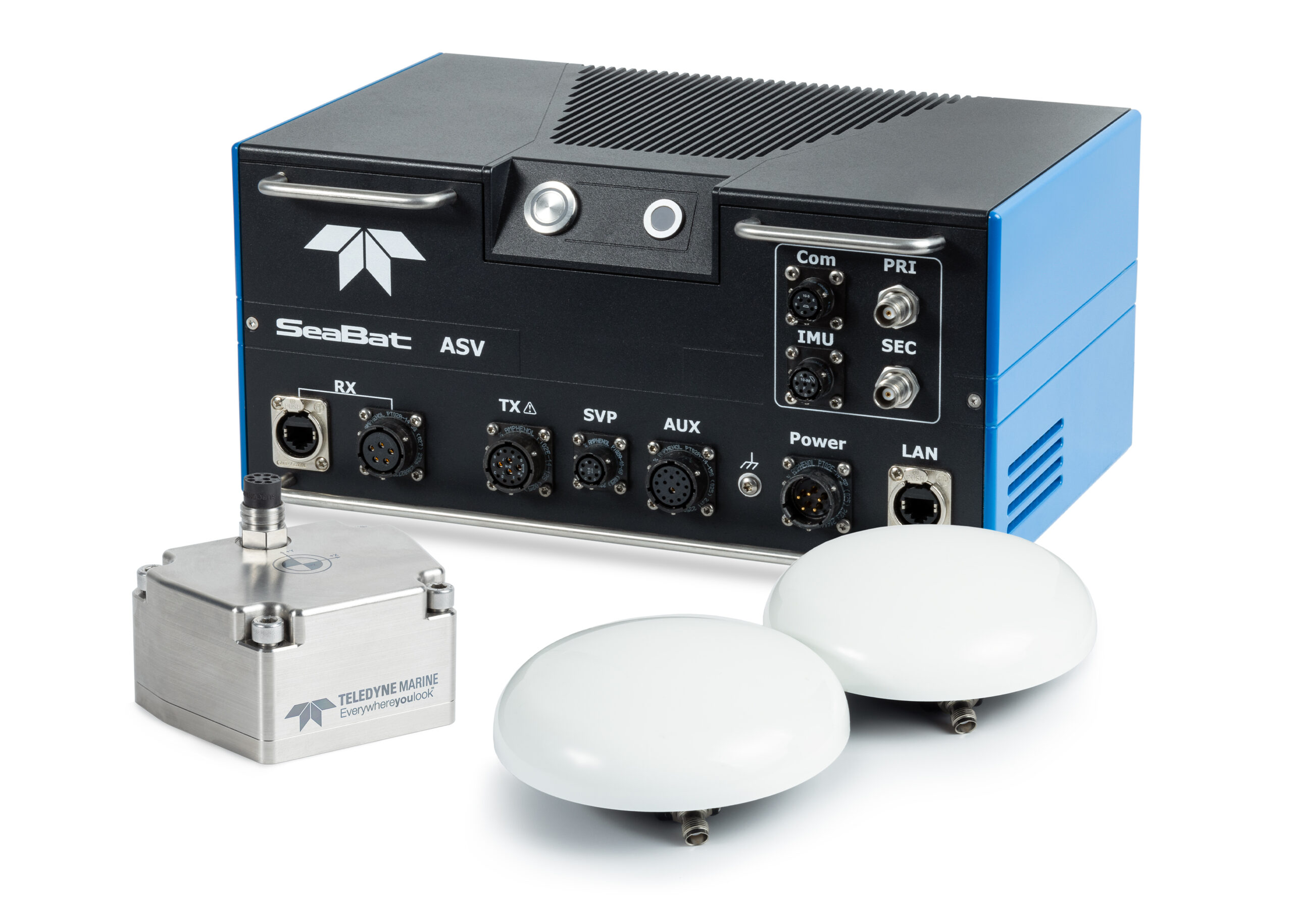
Teledyne Marine Launches Intrepid – A GNSS/Inertial Navigation System
 Teledyne Marine is excited to unveil the Intrepid, a GNSS/Inertial Navigation System. The system is integrated with the SeaBat T20-ASV processor and comprises a compact inertial measurement unit (IMU) and two GNSS antennas, delivering reliable and precise positioning.
With the Intrepid on board, no manual interfacing between sensors is required, as the system automatically streams data to third-party software. This eliminates the need for manual sensor interfacing and reduces downtime.
Teledyne Marine’s unified approach combines hardware and software into one single, intuitive interface for monitoring and controlling the mapping system. Moreover, the centralized system streamlines firmware and software updates, providing users with effortless access to the latest features and enhancements. The new Intrepid GNSS/Inertial Navigation System combines immediate feedback with the consistent and precise results of the SeaBat T20-ASV, delivering a seamless mapping experience.

The Intrepid GNSS/INS benefits all users in marine surveying applications by providing the precise navigation necessary for operational efficiency. Due to its intuitive design, it is easy to configure and monitor, allowing even entry-level operators to quickly set up the system and receive immediate feedback on navigational status - essential for dynamic marine operations.
“Teledyne Marine’s Intrepid GNSS/INS is the next step in our line of INS products with a combined GNSS/INS system. What we have done is to integrate the SeaBat Sonar software and the Intrepid software into one software program, making it simple and easy to use for the operators,” says Pim Kuus, Senior Hydrographer and Product Manager Instruments & Imaging at Teledyne Marine.

Uni of Strathclyde Collaboration in Subsea Neuromorphic Object Detection
 Robosys Automation and the UK’s University of Strathclyde have signed a Knowledge Exchange Agreement to support a new project which will explore underwater object detection using neuromorphic sensing.
Robosys is collaborating with the University of Strathclyde’s Department of Naval Architecture, Ocean and Marine Engineering (NAOME) and NSSP (Neuromorphic Sensor Signal Processing) lab from Department of Electrical and Electronics Engineering (EEE), and will also fund the testing of the sensing technology for underwater object detection using novel technologies. The aim of the project is to develop the encoding mechanisms for multimodal data collected through neuromorphic sensors for underwater object detection.
The challenges to underwater object detection include limited optical sensor visibility due to water turbidity and lack of light penetration, combined with interference due to environmental factors such as tides, temperatures and salinity, together with financial implications due to specialized equipment and increased maintenance frequency.
The University of Strathclyde’s Dr Chaitanya Patil, Lecturer in Naval Architecture, Ocean and Marine Engineering is leading the pioneering project, working closely with the EEE Department’s NSSP lab Research Director, Dr. Gaetano Di Caterina. Dr Patil is a specialist in marine system intelligence with a particular focus on modelling and simulation across cutting-edge technologies.
Dr Patil’s current research around intelligent marine systems utilizing advanced machine-learning methodologies lead him to develop the project focused on Neuromorphic sensor fusion for underwater object detection (SENSE) has been facilitated through EPSRC Grant reference EP/X525820/1.
Dr Patil approached Robosys due to the Company’s notable expertise and standing in the field of maritime navigation, autonomy and background in vision systems and associated algorithm development, in order to initiate a collaboration to help propel the research into neuromorphic systems.
The emergence of neuromorphic systems has delivered new methodology to how traditional computation is performed in robotics. Neuromorphic supported intelligence features brain-inspired efficiency, enabling robotics to swiftly and robustly learn and adapt to new scenarios and operations.
Aditya Nawab, Founder, CEO & CTO of Robosys Automation, comments, “We are delighted that Robosys Automation is collaborating with the University of Strathclyde in this exciting and ground-breaking project. As maritime industry innovators, the Robosys’ technical team continually explores novel methods of pushing the envelope. This project with the University demonstrates this, with change detection sensing working hand-in-hand with cooperative and competitive computation for perception and control, which will enable ever-increased learning and problem solving, being essential in the future of a safer, smarter and greener maritime.”
Following the culmination of the initial underwater object detection project, and as a reflection of the significance of the positive impact this technology will bring to the maritime and ocean technologies sectors, it is planned that this project will be further developed by the University’s PhD Students and Researchers in subsequent years.
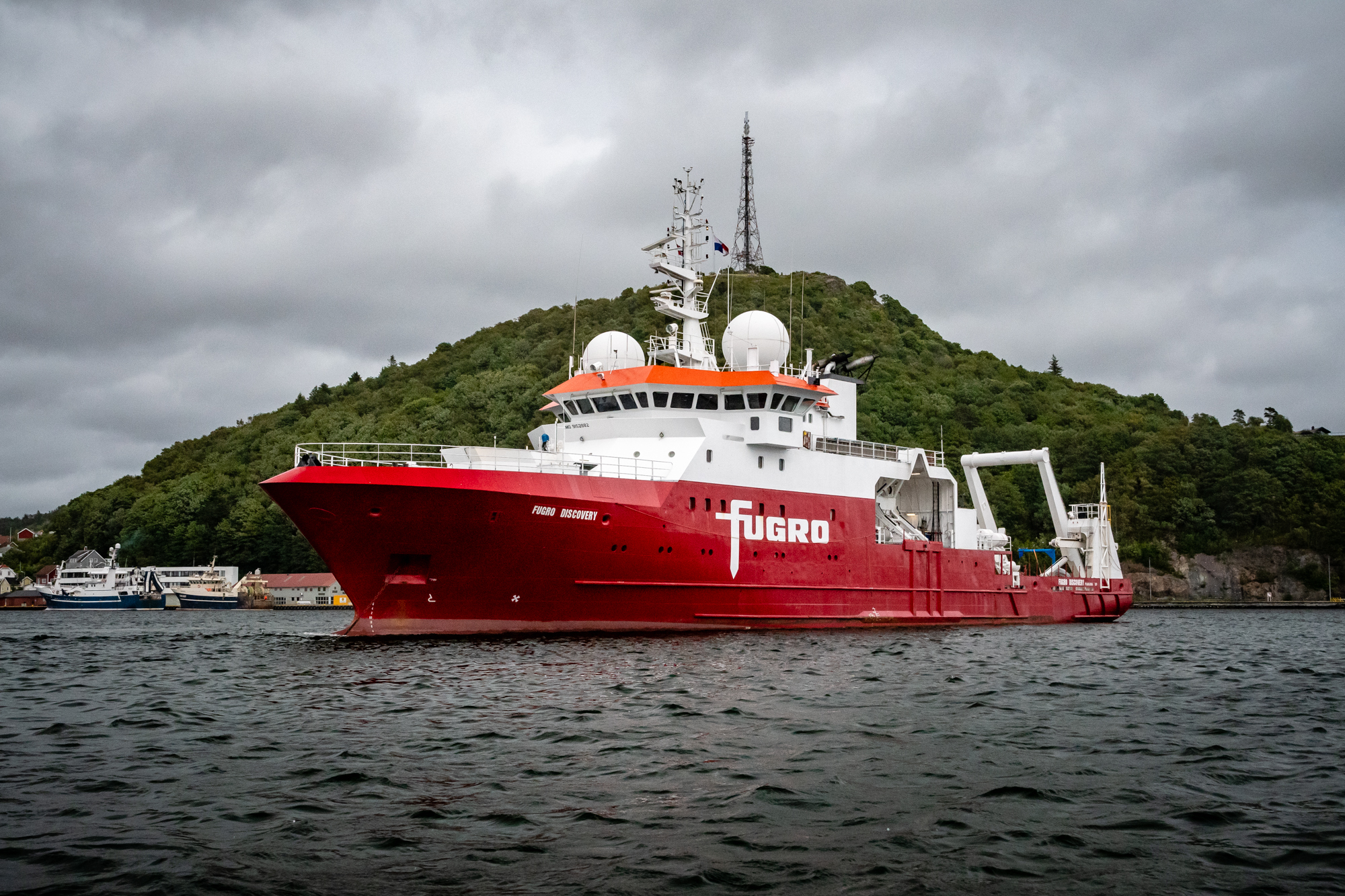
Fugro extends role in Norway’s 2024 MAREANO programme for seabed mapping with eDNA service
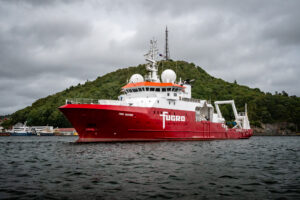 Fugro has completed the survey work for the 2024 MAREANO seabed mapping programme, including an innovative environmental DNA (eDNA) service, as part of a hydrographic survey contract awarded by the Norwegian Hydrographic Service (NHS). Supported by the Central Government of Norway, MAREANO is a multidisciplinary initiative aimed at mapping the seabed to generate scientific information for the responsible management and preservation of Norway’s marine resources.
This year’s survey covered an extensive 2,823 km² region in the North Sea, with water depths ranging from 146 to 337 metres. Using the Fugro Discovery, equipped with high-resolution multibeam echo sounders and sub-bottom data acquisition systems, the primary goal is to gather seamless datasets, integrating bathymetry, water column, and acoustic backscatter data.
Fugro employed cutting-edge sensors and advanced calibration techniques tailored to these challenging conditions. The survey was completed in September and work is now progressing on the final reports and data that will be available via VirGeo®, Fugro's web-based Geo-data platform.
In a first for the programme, Fugro included environmental DNA (eDNA) sampling as part of the survey datasets. This cutting-edge approach provides valuable insights into biodiversity and community composition, which are essential for projects aiming for net biodiversity gain and for monitoring endangered and invasive species. eDNA enhances existing environmental sampling programmes to gain deeper ecological insights, complementing other survey activities such as metocean, geophysical, and geotechnical surveys.
Furthermore, Fugro collected transit data for NHS to share with the European Marine Observation and Data Network (EMODnet). This data will contribute to The Nippon Foundation-GEBCO Seabed 2030 Project, which aims to map the world's entire ocean floor by 2030.
"The last few years, the MAREANO programme has placed emphasis on the North Sea. There is a need for marine knowledge in areas considered as particularly valuable and vulnerable. This marine knowledge is also relevant for the new marine industries – such as offshore wind and offshore aquaculture.” says Nicolien Haasbroek, project engineer for MAREANO in the Norwegian Mapping Authority.
Marc Kebbel, Fugro’s Service Line Director Hydrography for Europe and Africa said, "MAREANO is the largest multidisciplinary mapping programme of its kind in Norway and we are excited to continue our support for the project. Our knowledge of the marine environment and innovative techniques allow us to collect high-quality Geo-Data that deepens our understanding of the seafloor and supports scientific discoveries; to keep our oceans healthy and help manage them sustainably.”
Fugro has a track record of conducting successful surveys for the programme since 2006. To date Fugro has acquired over 140,000 km2 of data under the programme, which has helped Norway improve its understanding of its marine environment and resources.
National Oceanography Centre trialling fossil-free marine fuels
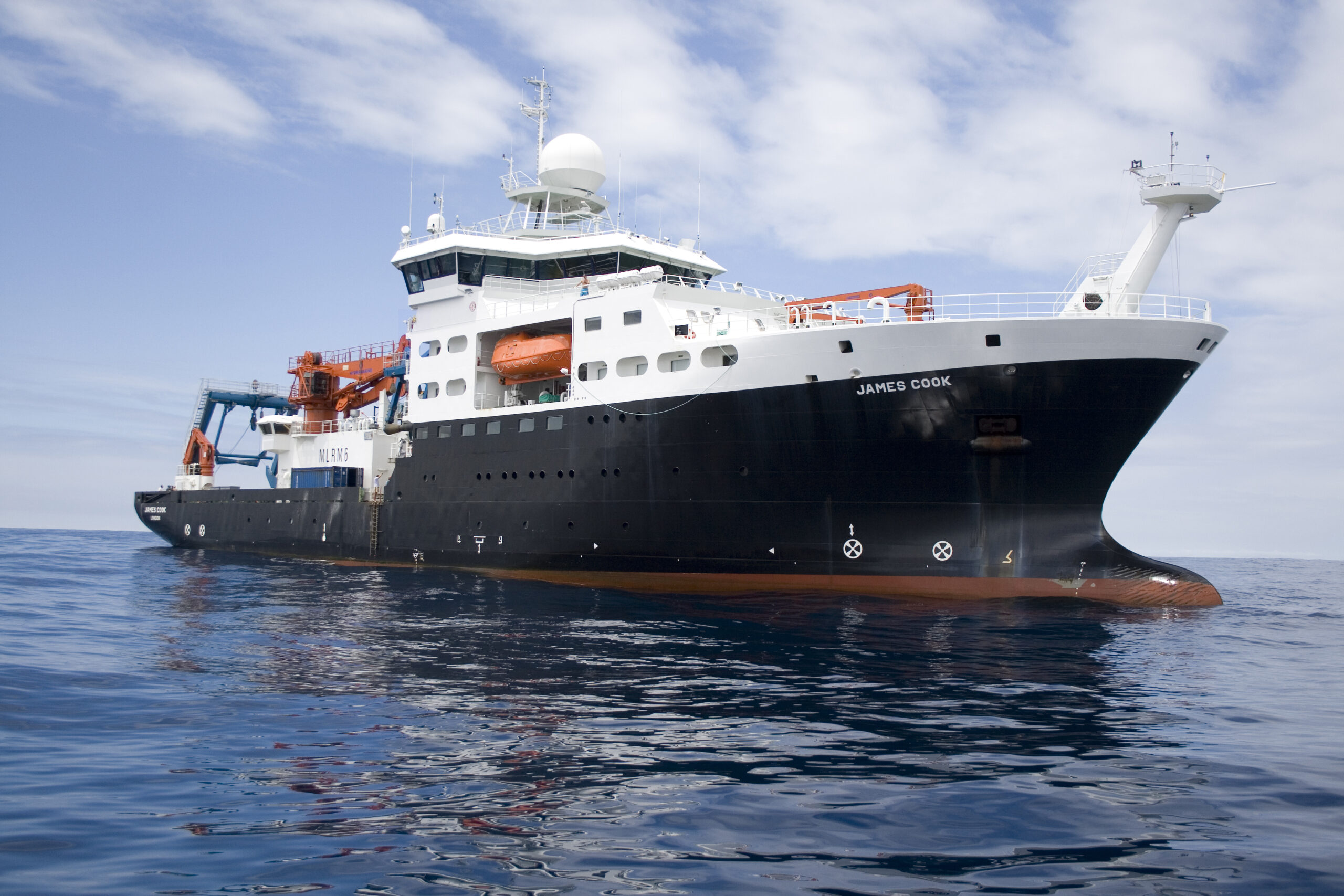
 The UK’s National Oceanography Centre (NOC) is trialling the use of a fossil-free marine diesel to fuel the Royal Research Ships (RRS) James Cook and Discovery.
Use of hydrotreated vegetable oil (HVO), made from used vegetable oils and fats and non-food crops, is able to significantly reduce net CO2 vessel emissions, compared to conventional diesel fuel.
The trial is funded by the UK’s Natural Environment Research Council (NERC), which owns the two vessels, in support of a UK Research and Innovation (UKRI) goal to achieve net zero emission operations by 2040.
HVO can be used as a “drop-in” replacement in marine engines and because it’s made from already used products and non-food crops, it’s life-cycle CO2 emissions are much lower than fossil fuel.
Kevin Williams, Head of Research Ships Engineering at NOC, says, “As a research organisation, NOC is focused on understanding and protecting our ocean. Reducing our own environmental footprint is a key part of that and the carbon emissions from our vessels is a major part of that.”
During the trial, HVO is replacing the low sulphur marine gas oil (LSMGO) NOC normally uses. HVO is one of the more stable biofuels, which means it’s suitable for the different conditions NOC vessels operate in, from high temperature regions to the Arctic.
However, there are some challenges around its use, such as cost and availability, especially in the remote places NOC operates, says Williams.
The HVO trial is part of wider emissions reduction work at NOC. For the vessels, this includes assessing the use of batteries onboard, to reduce the use of the engines during scientific operations, and a focus on marine operations planning, to reduce transit time and more efficient routing based on weather.
Find out more: https://noc.ac.uk/facilities/ships/net-zero-oceanographic-capability

Marine Technology Society and Society for Underwater Technology announce Martin “Marty” Klein as the recipient of the 2024 Captain Don Walsh Award for Ocean Exploration
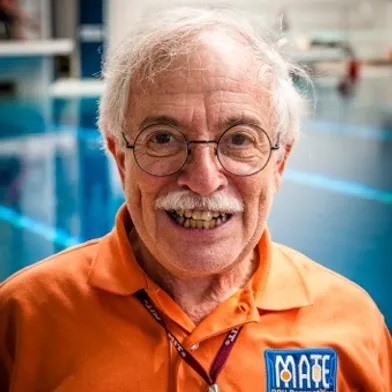
 The Marine Technology Society (MTS) and the Society for Underwater Technology (SUT) are thrilled to announce Martin “Marty” Klein as the distinguished recipient of the 2024 Captain Don Walsh Award for Ocean Exploration. This prestigious award recognizes an individual who has made outstanding, sustained, and international contributions to the development, application, or propagation of marine and underwater technology toward the advancement of ocean exploration.
Martin Klein, a name synonymous with ocean exploration, is a true pioneer in the field of underwater technology. Known as the “father of side-scan sonar,” Marty’s innovations have revolutionized oceanographic surveys and underwater searches. His ground-breaking work has made significant strides in marine technology, providing critical tools for the discovery and exploration of our oceans while also inspiring generations of ocean engineers.
Justin Manley, President of MTS, shared: “Marty Klein exemplifies the spirit of this prestigious award. His significant and continued innovation in our field, along with his unwavering dedication to mentoring young people, have left an indelible mark on the marine technology community. MTS is proud to recognize Marty’s legacy of growing the next generation of ocean explorers.”
Marty has been involved in Ocean Exploration since 1961, when MIT Professor Harold “Doc” Edgerton introduced him to Jacques Cousteau, George Bass, Peter Throckmorton, Ed Link and many pioneers in the field. When Marty introduced his side scan sonar systems in 1967, there were no commercial units on the market. He helped to create an industry – there are now over 30 manufacturers of these systems, which have truly helped open the world of ocean exploration.
Benj Sykes, President of SUT, stated: “On behalf of the SUT, it is my pleasure to congratulate Martin Klein as the chosen nominee for the Don Walsh Award for Ocean Exploration, 2024. Marty’s dedication to and support of ocean technology and its applications in ocean exploration, along with his contributions to education, make him a worthy recipient. His work has inspired the next generation of ocean professionals.”
Beyond his technical achievements, Marty’s commitment to education and giving back is unmatched. He plays an active role in shaping the next generation of ocean engineers across the globe. Marty has been an avid participant in MTS’s MATE ROV Competition, inspiring countless young ocean explorers. Jill Zande, Executive Director of MATE, described Marty as “humble and unassuming, cringing at being called one of the ‘grandfathers’ of side-scan sonar, but his humility and dedication have profoundly impacted future ocean technologists.”
Today, Marty supports organizations that parallel the pioneering spirit of his earliest work in ocean exploration. Katy Croff Bell, President of the Ocean Discovery League, shared: “I met Marty in 1999 when I was an ocean engineering student at MIT. When expanding the Board of Directors at ODL, Marty was at the top of my list. Marty is constantly pushing to take technologies further and figure out how we can improve the status quo; as a result, he has been instrumental in ODL launching a fundamentally new approach to ocean exploration via low-cost, accessible technologies and broadening the deep-sea community.”
Marty’s influence extends through his numerous publications, patents, and his involvement with various prestigious organizations, including the Explorers Club, the National Academy of Engineering, and the IEEE. His legacy is further cemented through the student scholarship he endowed at Memorial University, honoring his son’s memory and supporting future ocean professionals.
Upon receiving the news of the award, Marty said: “I am humbled and honored. When I was a student at MIT, I read with fascination the Life Magazine cover story about the historic deep dive to 35,813 feet in the Challenger Deep/Mariana Trench by Jacques Piccard and Don Walsh in the Bathyscaph Trieste. Little could I know that three years later, just as I was beginning my career, the nuclear submarine USS Thresher would sink, the Trieste would be called from San Diego to assist the project, and I would become intimately involved in the first ever deep water search. During that search the great Don Walsh became a hero of mine and an invaluable friend and mentor.”
The Captain Don Walsh Award for Ocean Exploration will be presented to Marty Klein at the 2024 OCEANS Conference in Halifax, Nova Scotia in September 2024.
Scottish expansion underway for UK’s world-leading offshore industry data resource
Work is now underway to integrate Scottish survey findings into the Marine Data Exchange (MDE), the UK’s world-leading resource for offshore industry survey data, research and evidence.
This follows an agreement between The Crown Estate and Crown Estate Scotland to extend the MDE to cover Scottish waters, allowing all developers working in UK waters to benefit from a streamlined and comprehensive dataset to inform offshore developments, supporting the faster, more sustainable roll-out of offshore technologies critical to the UK’s energy transition, while protecting and restoring the biodiversity of our seas and the marine environment.
Marine consultancy and survey company ABPmer has been appointed by Crown Estate Scotland to support data handling tasks critical to the effective management of the Scottish marine survey data and associated documents uploaded to the MDE. This includes primary data, observations, metadata, and reports gathered and stored by or on behalf of tenants in relation to geotechnical, geophysical, bathymetric, oceanographic, meteorological, acoustic, biological, sea user, sedimentological, cultural and heritage investigations, and modelling and monitoring.
The MDE was created by The Crown Estate in 2013 to store, manage and disseminate offshore survey data collected by offshore renewables developers during the planning, building and operation of offshore renewable energy projects and outputs from Regional Environmental Characterisation Surveys (RECS) under the Marine Aggregate Levey Sustainability Fund (MALSF).
The MDE provides an evidence base to help developers and stakeholders understand impacts, providing valuable lessons learnt and efficiencies for new projects and understanding cumulative impacts on the seabed. It enables The Crown Estate to draw insights using data across various projects and regions, so a holistic and proportionate approach to the development of the seabed can be made.
The data submitted to the MDE must comply with a set of consistent standards and requirements to ensure it is maintained to a high standard and is easily discoverable in line with the Q-FAIR principles (Quality, Findable, Accessible, Interoperable and Reusable). ABPmer’s support will ensure the data holding continues to align with Q-FAIR so the database maintains an excellent level of customer service, and to assist Crown Estate Scotland in ensuring the data holding continues to be utilised in projects which benefit the environment, the offshore industry, and the nation.
Damon O’Brien, ABPmer Managing Director said:
"We are proud to work with Crown Estate Scotland to ensure a high standard of quality for Scottish MDE survey data. Our specialists bring over a decade of experience to the project, having supported The Crown Estate with essential quality assurance and data handling for the MDE since inception.
Having provided input to many of Scotland’s key offshore wind developments, including Ayre, Bowdun, Salamander, MarramWind, Beatrice, Moray East and Moray West, we are delighted to further our support for the next generation of Scottish renewable energy, helping accelerate Scotland’s progress towards net zero.”
ABPmer’s data and GIS specialists are experienced marine data handlers, developing bespoke GIS mapping and data management tools for governing bodies, the public sector and marine and coastal operators. A recognised Development Service Provider, they support clients throughout the renewable project life cycle, and are regularly asked to advise government when developing and shaping policy.

Ocean Business earns title as one of the ‘World's Leading Trade Shows’ with exceptional exhibitor and visitor NPS Scores
Leading Event Industry Benchmark Research Company Explori confirms that Ocean Business has one of the highest Exhibitor and Visitor Net Promoter Score results of all trade shows held across the world.
With an Exhibitor NPS of +61, Ocean Business belongs to a select club of international trade shows who are in the top one percent of all trade shows internationally.
Explori's benchmarks contain data from over 8,000 events held across all sectors on all continents and is considered the go-to benchmark for organisers and marketeers, to measure the customer experience at trade events all over the world.
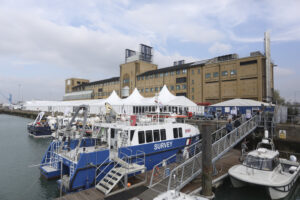 Visitor satisfaction is not far behind, with an NPS score of +50, which is considered ‘exceptional’, and in the top 10% internationally, according to Explori.
Portfolio Director Cheri Arvonio says: “Since it’s launch in 2007, Ocean Business has revolutionised the format of exhibitions in the ocean science and technology sector. Blending a traditional trade show with a conference, on-water demonstrations, and a huge social programme, it creates a truly unique experience for both exhibitors and visitors alike.
We have worked incredibly hard to ensure our events serve our communities to the highest standard, and we’re thrilled to be recognised in the top 1% of all trade shows across the world.”
The next edition of Ocean Business takes place on 8-10 April 2025 at the National Oceanography Centre, Southampton UK. For more information, please visit www.oceanbusiness.com.
NOTES: NPS stands for Net Promoter Score, a metric used in customer experience programmes. NPS measures the loyalty of customers to a company. NPS scores are measured with a single question survey and reported with a number from -100 to +100. A higher score is desirable.


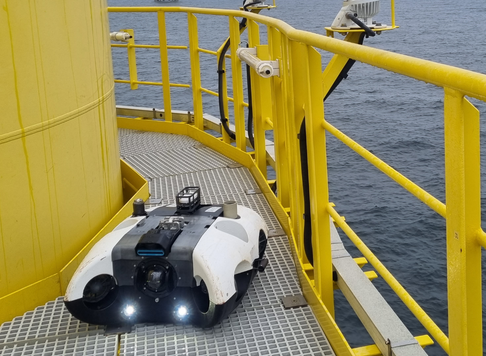
World's first HAUV featuring Adaptive Autonomy deployed at Nordsee One Offshore Windfarm
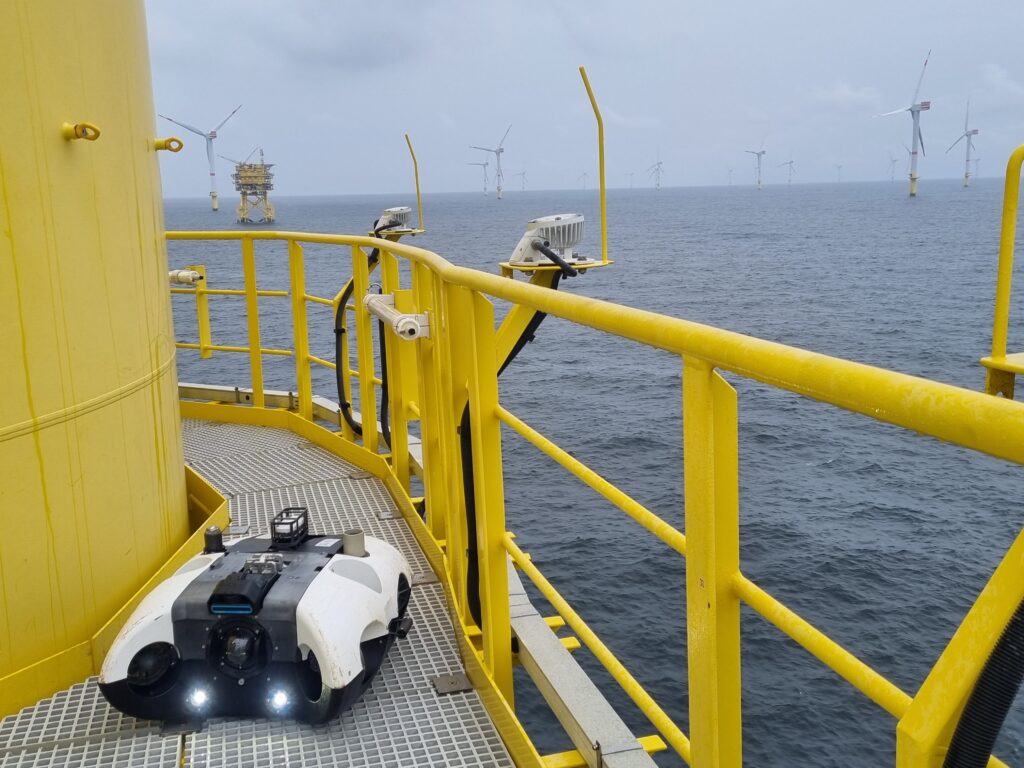
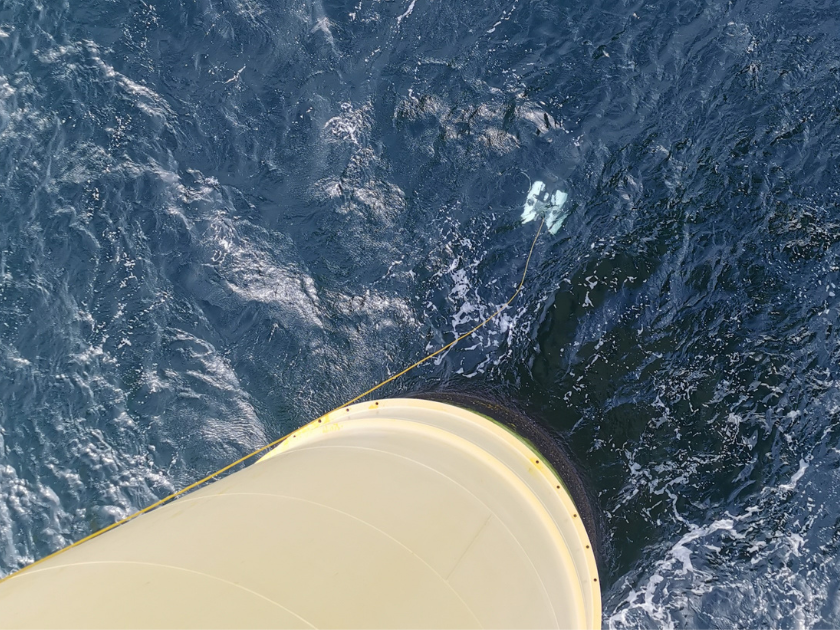
Trials of the state-of-the-art A.IKANBILIS Hovering Autonomous Underwater Vehicle (HAUV) conducted by Nordsee One GmbH and supported by manufacturer BeeX Pte Ltd and European partner Subsea Europe Services GmbH at the Nordsee One wind farm in the German North Sea have demonstrated true autonomous operation of an underwater inspection vehicle for the first time ever.
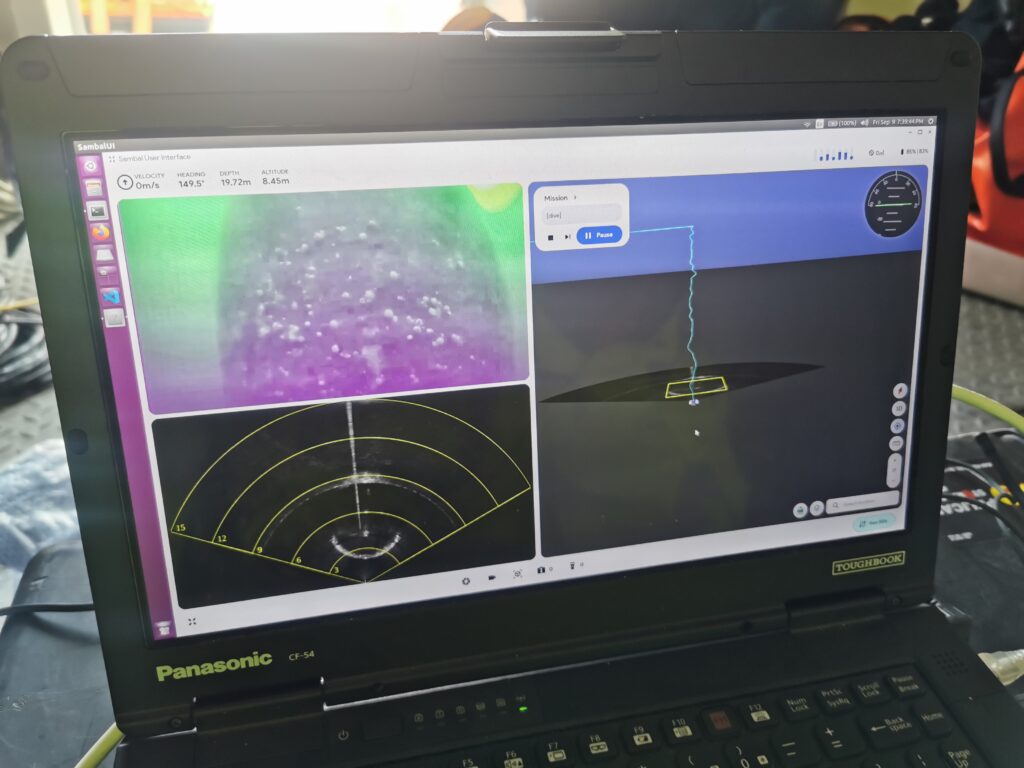
The trials, which took place this September, have proven an important milestone in the development and application of the unique A.IKANBILIS, which features an advanced AI powered Autonomy Engine that enables true ‘launch and leave’ operation for diverse underwater inspection tasks. With tethered or untethered operations, A.IKANBILIS optimises today’s standard recurring underwater inspection workflows, reducing associated equipment and manpower costs, while increasing capacity and safety.
During the trials, the Nordsee One team tasked an A.IKANBILIS HAUV to inspect monopile foundations including Impressed Current Cathodic Protection (ICCP) anodes and Cable Protection Systems (CPS). On launch, the vehicle was able to complete its objectives without a human in the loop, autonomously choosing the safest, fastest and most effective way to approach its mission parameters. The ability to make these decisions without operator input is possible due to the AI continuously learning from the suite of tightly integrated sensors, allowing intelligent adaption to complex and changing environments, such as tides, currents and visibility.
The inspection was carried out flawlessly and independently of any large on-site support vessels usually required for ROV- or diver-based underwater inspections, and with minimal specialised personnel in attendance. The geo-referenced reporting of the monopile condition and 3D CPS inspection was provided to the client in near real-time via an integrated cloud-based platform, reducing the typical weeks long wait for traditional reports to mere seconds.
Jan Schmökel, Balance of Plant Engineer at Nordsee One GmbH, said: “While we hear a lot about remotely-operated and autonomous technologies for marine data acquisition and underwater inspection, this is the first time we have witnessed a platform actually think and react accordingly to ensure an optimal approach based on the prevailing conditions. The speed and quality of the data reporting are unprecedented, and we are delighted to be trialling these innovations to achieve maximum value at our windfarms.”
Grace Chia, Co-Founder and CEO of BeeX said: “The unprecedented growth in Offshore Wind is key in meeting the world's energy demands in a sustainable way. By 2025, we expect BeeX’s fully autonomous systems to help wind farm developers and operators reduce costs and risks to a fraction of today’s, from consenting to end-of-life. This successful deployment is the first step towards accelerating safer and clean energy for all, and we look forward to deployments at more windfarms across Europe."
Sören Themann, CEO of Subsea Europe Services, the European sales and service partner for BeeX said: “The successful tests at Nordsee One have proven the disruptive capabilities inherent to the BeeX business case. The unique Autonomy Engine enables cost-efficient, launch and leave, carbon-neutral autonomous operation that will help the wind energy industry to install and maintain a huge influx of underwater infrastructure planned before 2030. This first demonstration on an operational wind farm is the launchpad for mainstream application within a few short years, enabling more asset owners to lower their costs, risks and carbon footprint.”


Parliamentarians call for Minister for the Ocean position in Government in an open letter to Prime Minister Liz Truss
In an open letter sent to the new Prime Minister Liz Truss, a group of 29 cross-party parliamentarians have requested that as one of the first actions in her new role, Truss considers creating a position for the Minister for the Ocean in Government. The letter asks that a standalone Ministerial position, dedicated to all ocean issues, is created in order to “further establish the UK as a global leader in ocean protection, conservation and research.”
The open letter references three key reasons as to why it is crucial that the Minister for the Ocean role is created in Prime Minister Liz Truss’s new Government.
Firstly, despite the vast importance of the ocean, and its relationship to several important policy areas including climate change, shipping, energy, research, defence, fishing and more, there is currently no standalone Minister for the Ocean role in the UK. The letter therefore calls for a “separate Minister position with direct and exclusive responsibility for all ocean issues” to fill this Ministerial gap.
Secondly, the letter highlights immediate policies related to the ocean which could be delivered by a specific Minister. These include climate change, but also wider issues such as marine military territory and green shipping.
Finally, the letter calls for a Minister for the Ocean position to be created in order to deliver an “integrated UK ocean strategy”, similar to what has been achieved already in space strategy. To ensure that the UK remains world leading in ocean research and conservation, which would include the UK meeting Global Ocean Alliance’s 30x30 target to protect 30% of the world’s oceans by 2030, the letter highlights the need for a standalone Minister to take direct responsibility on this campaign.
Sally-Ann Hart MP, Chair of the All-Party Parliamentary Group (APPG) for the Ocean, said:
“As Chair of the APPG for the Ocean, I am pleased to sign this open letter to the new Prime Minister Liz Truss, which calls for a distinct Minister for the Ocean role to be created.
I am delighted that nearly 30 cross-party parliamentarians have also signed this letter, which highlights the important reasons for this role to be created and shows the impact a Minister for the Ocean can have on a range of policy issues, including climate change, energy and shipping.
I hope that Prime Minister Liz Truss recognises the necessity of this position and prioritises it as one of the first actions in her new role.”


Ashtead Technology announces acquisition of WeSubsea
International subsea rental equipment and solutions specialist Ashtead Technology has announced its intent to expand its mechanical solutions service offering with the planned acquisition of WeSubsea.
The transaction is expected to close during Q4 of 2022 and will be the Group’s sixth acquisition in the past five years, demonstrating its commitment to expanding its geographical presence and growing its capability and service offering to support customers globally.
Founded in 2010, WeSubsea is a specialist in subsea dredging technology solutions supporting customers globally from its operating base in Aberdeenshire, UK.
Allan Pirie, Ashtead Technology’s CEO, said: “WeSubsea is a pioneering technology business with an excellent reputation and strong customer service ethos. Their fleet of high-performance dredge systems and strong technical know-how will be a great strategic fit for our business and will complement our extensive range of dredging, cutting, coating removal and ROV tooling solutions and services.
“The acquisition is expected to be completed during Q4 and underlines our ambition to be a global leader in IMR and decommissioning through providing one of the widest subsea equipment and service offerings in these fields to support our customers’ operations across the offshore energy sector.”
The addition of WeSubsea to Ashtead Technology’s portfolio follows recent growth announcements, most notably the company’s IPO on the London Stock Exchange’s Alternative Investment Market (AIM) in November 2021.