
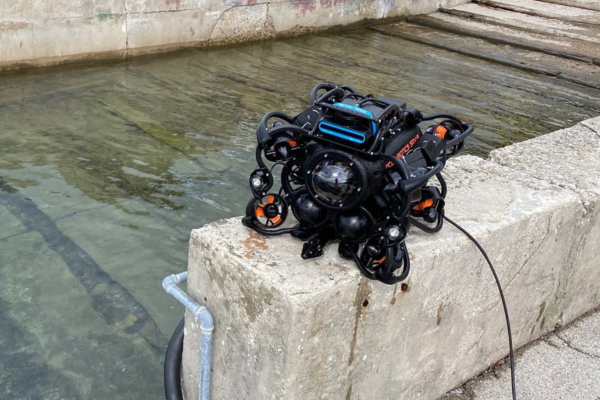
Mexico Port Authorities enhance security with Oceanbotics’ SRV-8 underwater drones
The Mexico Port Authorities have enhanced its port security capabilities by obtaining nine (9) advanced SRV-8 professional underwater drones from Oceanbotics Inc. This strategic move aims to
elevate its surveillance and monitoring capacities, ensuring state-of-the-art technology is deployed across all ports under their jurisdiction.
During the summer, the Oceanbotics support team conducted an immersive, in-person training program for the Mexico Port Authorities. With these drones in operation, professionals are empowered to conduct real-time hull inspections, enhance threat detection measures, and monitor environmental conditions.
As the global landscape transitions towards the widespread adoption of professional underwater drones, this investment positions the Mexico Port Authorities at the forefront of maritime security, setting new industry standards.
L3Harris, Voyis and Wavefront collaborate to enhance NATO Navy’s AUV capabilities
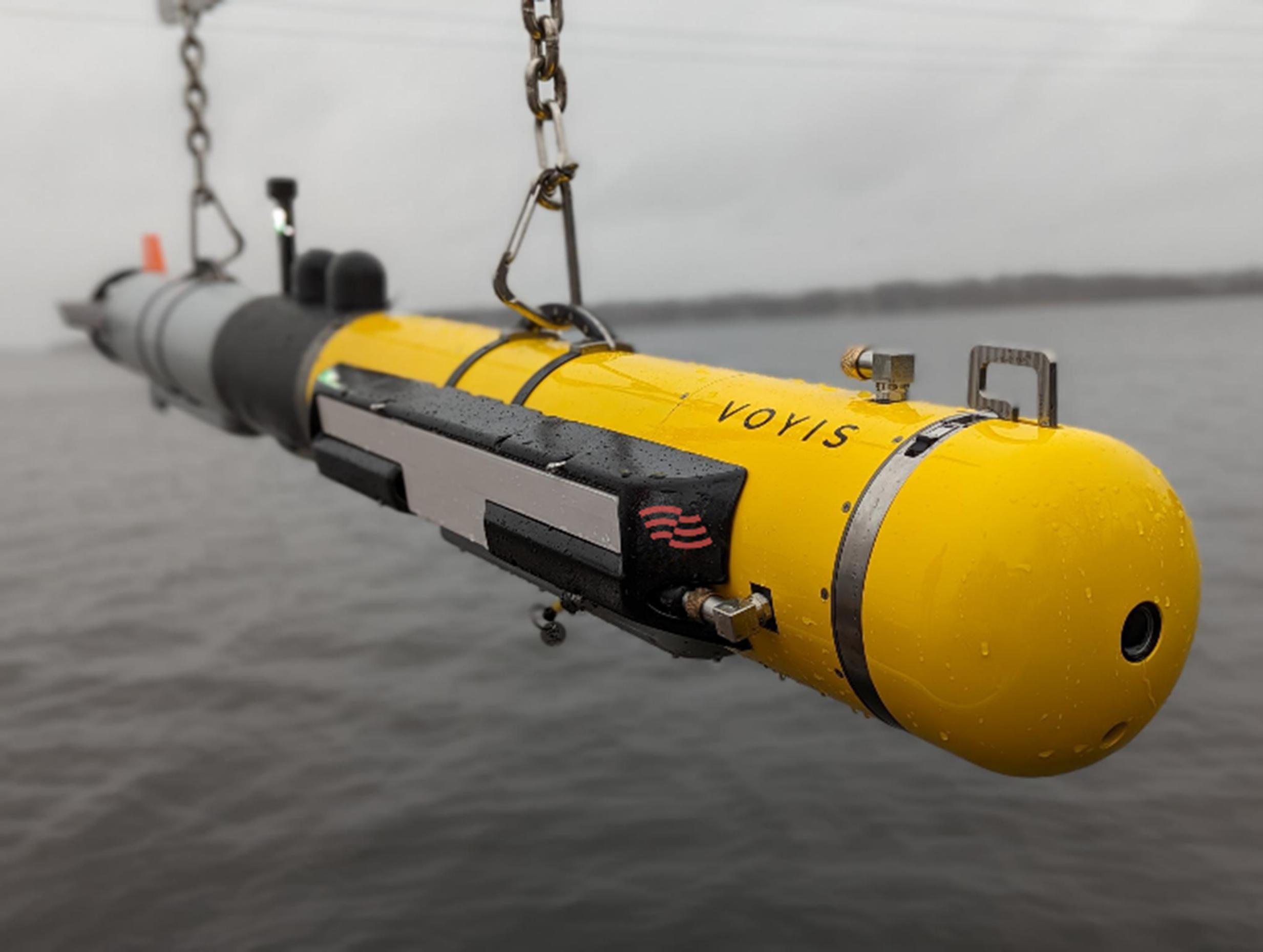
L3Harris, Voyis and Wavefront collaborate to deliver advanced technology to enhance NATO Navy’s autonomous underwater vehicles (AUV) capabilities. L3Harris’ area of expertise is the development of AUVs for a variety of maritime applications. AUVs are designed to operate in harsh environments, including deep water and can be used for a range of missions, including search and rescue, surveillance, mine countermeasures and oceanography. L3Harris is at the forefront of AUV development and continuously advances its technology to meet critical evolving defence mission needs. To further improve L3Harris’ Iver4 900 AUV capabilities, the global defence company integrated a Voyis Recon LS and the Wavefront Solstice 3000 multiple-aperture sonar (MAS) Combined AUV payload onto the Iver4 900 platform to support defence missions.
The Voyis team, in collaboration with Wavefront Systems, is proud to announce a successful factory acceptance test of the Recon LS/3000MAS AUV payload with L3Harris, to be delivered to a NATO Navy, further improving the IVER4 900 capabilities. It consists of a single, integrated forward payload section housing Voyis’ compact dynamic laser scanner, which captures high-resolution 3D point-cloud data, the Voyis’ 4K imaging system with appropriate lighting which captures crisp, evenly illuminated still images with its edge-computed image enhancement feature, and finally, the Wavefront Systems’ Solstice multi-aperture side-scan sonar that delivers 200m-wide swath coverage and bathymetry at high resolution.
The Voyis Recon LS/WaveFront Solstice Combined AUV payload offers a solution for autonomous underwater vehicles to covertly detect, classify, and identify mine-like objects (MLOs), reducing risk to divers. The system uses the multi-aperture side-scan sonar, 4K digital still-camera and high-resolution laser scanner to carry out this task.
The L3Harris’ Iver4 900 vehicle provides the payload with both stability and endurance to make the most of the payload.
MCM operations involve four stages: detection, classification, identification, and disposal/neutralization. Currently, side-scan sonar is used for mine detection and sometimes for classification. However, visual identification requires a clearance diver or remotely operated vehicles to enter the minefield, which is time-consuming and risky, especially in areas with complex seabed. This requires multiple resources to be deployed into a potentially hazardous environment to complete a successful operation, which is inefficient when relying on lower-quality sensor data and dangerous if humans are mobilizing the assets.
The Recon LS/WaveFront Solstice MAS Combined AUV payload is designed to rethink how mine countermeasure (MCM) operations are conducted today and enable single assets to complete complex missions without deploying additional resources within the minefield. By enabling search and classify mapping using Wavefront’s leading multi-aperture sonar Solstice, the vessel can re-acquire and identify MLOs using Voyis’ laser and camera, improving the probability of detection, reducing false alarms, and sustaining a high op tempo.
Voyis and Wavefront partnered with Forcys, a global maritime defence company and a sister company in Covelya Group, to market the system to allied nations.
Driving Growth: Greensea IQ appoints Jeff Vos for key role
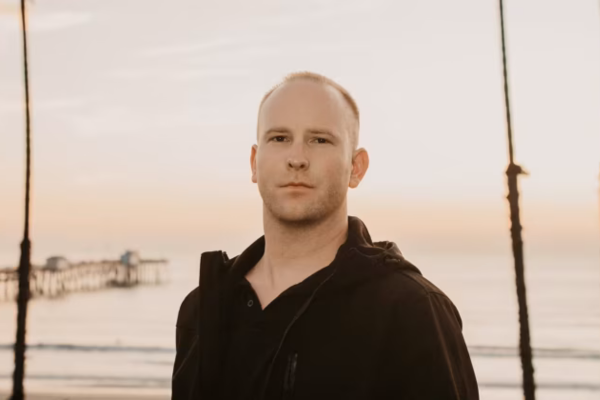
Greensea IQ, a leading provider of intelligent ocean solutions and the creator of the OPENSEA operating system, is pleased to announce the newest addition to its team, Jeff Vos, who has been appointed as the Business Development Manager for Integrated Systems. Vos brings a wealth of experience and expertise in the marine industry, having worked in ocean robotics for the past five years, most recently at Oceantobics, Inc.
In his role as Business Development Manager for Integrated Systems, Vos will be based out of Greensea IQ's San Diego office, where he will focus on driving sales and building strategic partnerships. His primary responsibility will be to promote and enhance the market presence of Greensea IQ's Bayonet autonomous underwater ground vehicles (AUGV), a cutting-edge solution that offers unmatched autonomy and versatility in near shore, underwater operations, making it an invaluable asset for marine applications in the surf zone.
"We are really excited to have Jeff join Greensea IQ," said Rob Howard, Chief Growth Officer at Greensea IQ. "His strong background and experience in ocean robotics business development, along with his international network, will provide tremendous support to our commercial and defense growth next year."
In his new role, Vos will play a pivotal role in identifying key partners, building long-term relationships, and developing new market segments. His focus on the Bayonet AUGV technology will contribute to its success as a groundbreaking solution for marine applications in the surf zone.
Vos expressed his excitement about joining Greensea IQ, stating, "I am excited to join the team at Greensea IQ and contribute to the growth of the Bayonet AUGV product line. The opportunities for innovation in marine robotics are immense, and I look forward to leveraging my skills to elevate Greensea IQ's position in the market."
Greensea IQ is confident that Jeff Vos's addition to the team will further strengthen the company's position as a leader in intelligent ocean solutions and reinforce its commitment to providing state-of-the-art technology for underwater operations.
NASH Maritime launches online marine safety management system, DigiSMS
NASH Maritime, a recognised specialist in port marine safety and compliance, is pleased to announce the launch of its online marine safety management system, DigiSMS.
Under the Port Marine Safety Code, statutory harbour authorities and other marine facilities have a duty to use and maintain a Marine Safety Management System.
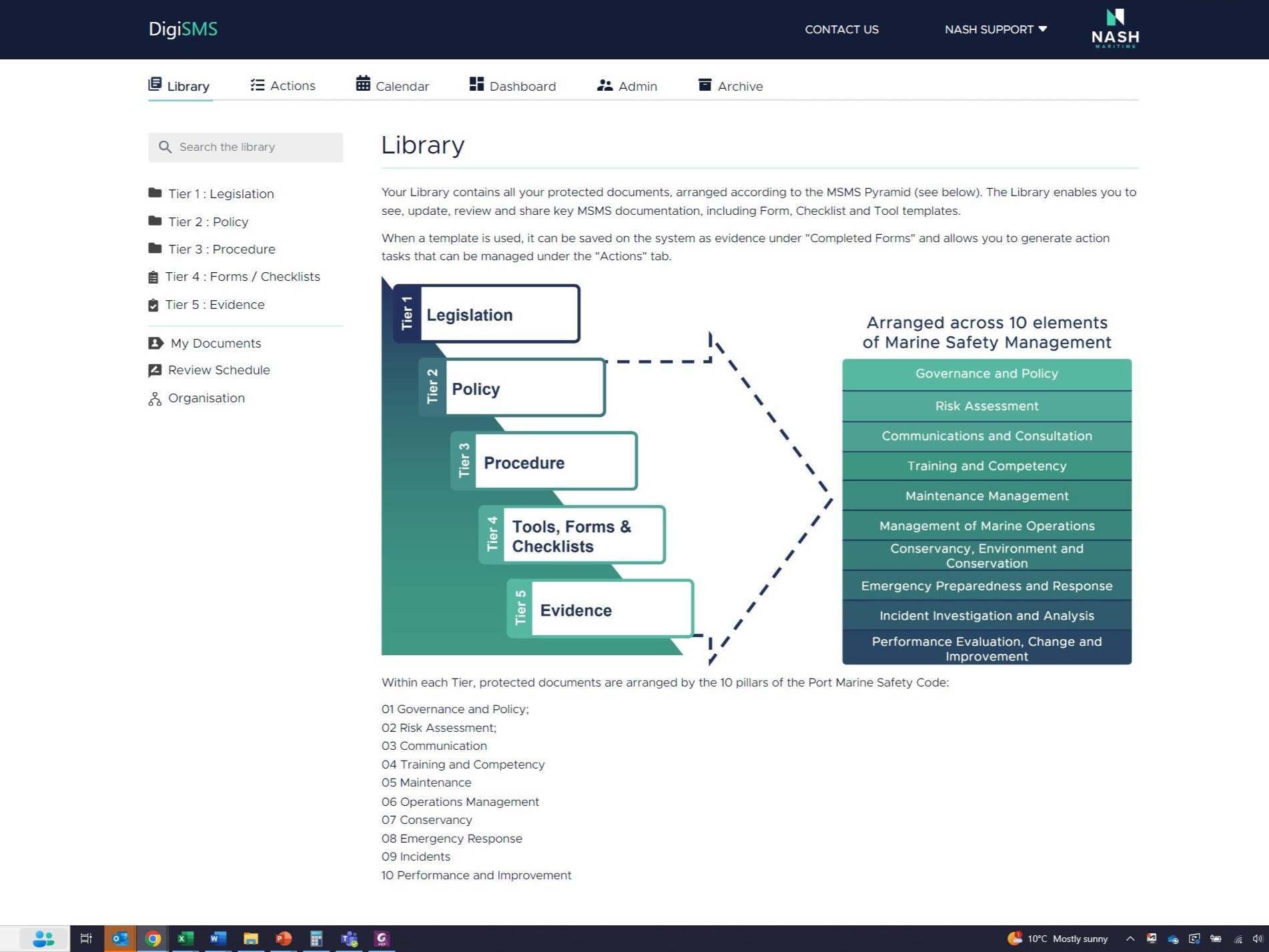
DigiSMS has been specifically designed to reduce the burden of managing and maintaining a Marine Safety Management System. Often policies, procedures, checklists and forms are held in multiple places whereas the new online system brings everything together into an integrated, comprehensive planning and management tool.
Members of NASH Maritime’s Governance and Innovation teams have been working together to make marine safety management simple, efficient and effective. DigiSMS is the product of this collaboration and its development was supported through funding from InnovateUK.
NASH Maritime Co-Founder, Dr Ed Rogers, said,
“We’re really excited by the launch of DigiSMS. In our work supporting port and terminal operators we're regularly told how time-consuming maintaining a Marine Safety Management System can be.
“We listened and understood the difficulties with current in-house systems and designed DigiSMS to make safety management efficient and compliance easily demonstrable.”
With DigiSMS users can:
- Search and share documents,
- Upload completed forms and checklists,
- Manage, schedule and log document reviews,
- Plan marine safety activities with an integrated calendar,
- Assign actions and monitor progress,
- Track compliance metrics, all activity is logged for end-to-end traceability,
- Drive continuous improvement.
The launch of DigiSMS is yet another example of NASH Maritime’s commitment to improving maritime safety through better science, systems and software.
DigiSMS adds to NASH Maritime’s existing portfolio of port compliance services and software.
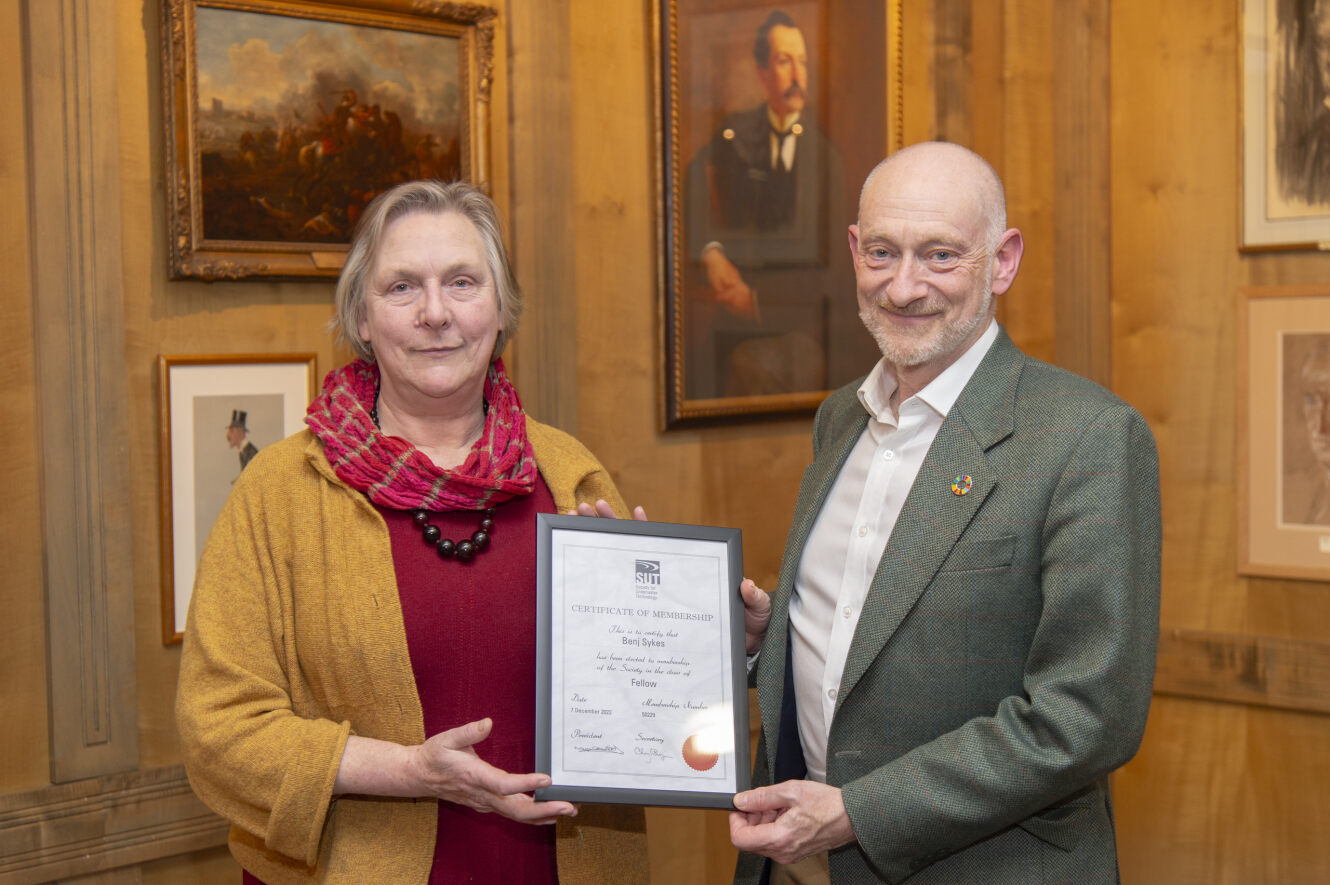
Ørsted’s Benj Sykes becomes President of the SUT
The Society for Underwater Technology recently marked the official hand over to new elected officers in three senior posts – President, Hon Secretary and Hon Treasurer; the announcement of a new Fellow of the Learned Society; and of winners of four Awards. These being The President’s Award, the Gwyn Griffiths Award for Underwater Robotics, the Lennard-Senior Award; and the Captain Don Walsh Award for Ocean Exploration. Once all the formalities were concluded SUT members were treated to a look at decarbonising the energy system by Abigail Davies PhD with particular reference to decommissioning..
Benj Sykes, Vice President, Head of Environment, Consenting and External Affairs at Ørsted has been elected SUT’s President, Nick Swift becomes Hon Secretary, and Mick Cook returns as Hon Treasurer. Sue John continues in her role as SUT’s Chair.
As SUT’s Chief Executive, Cheryl Burgess explained: “Benj Sykes will bring valuable insights and connections to the Society. He has worked extensively in both the offshore oil and gas and the offshore renewables sector. Through his current role at Ørsted, and previously at the Carbon Trust, and his non-executive roles in the Offshore Renewables Catapult and previously the Offshore Wind Industry Council and RenewableUK. He is a current member of the Board of the Global Underwater Hub.
“His experience and connections are well suited to helping the Society navigate the energy transition; helping to guide the offshore oil and gas sector through the energy transition, while building a stronger position in offshore renewable energy and the wider components of a sustainable ocean economy.”
Benj Sykes, now a Fellow of the SUT, said: “Renewable energy will be at the heart of the world’s future energy systems. I’m looking forward to helping champion the SUT on its journey to playing a full role in the energy transition as we move away from fossil fuels and towards a cleaner, greener future.”
The President’s Award
Outgoing SUT President, Moya Crawford, revealed that: “This year’s winner of the SUT President’s Award for outstanding achievement is Mr Ali Hynd, Vice Principal of Mintlaw Academy in Buchan, NE Scotland and the pupils he inspires in Mintlaw ROV, a very professional school club run under his technology remit.
“It has been awarded in the face of very stiff opposition, as a shining example of what can be achieved in the most formative stages of life when the creative and rewarding relationship between mentor and young minds is operating at its best. Directed by a strong sense of purpose and supported by the community, including industry, the focus of overcoming the challenges of delivering function in the underwater realm has developed personal skills and generated opportunity as well as being an applied learning experience.
“Together, they are a shining example to us all one which justly deserves the honour of President's Award, to acknowledge their effort and commitment. This will be handed over at Subsea Expo in Aberdeen in February 2024 and we look forward to covering their joint achievements in full, then.”
Awards made July 2022- June 2023
The 2022 President’s Award was made to Mensun Bound in recognition of his career achievements to, and contributions in, the field of marine archaeology and the Falkland Maritime Heritage Trust in recognition of their dedication to preserving the rich and varied seafaring history of the Falklands and those who have been associated with them.
The 2023 Gwyn Griffiths Award for Underwater Robotics was presented to Rustom Jehangir of Blue Robotics at Ocean Business 2023.
Norma Hogan of Highlands and Islands Enterprise was the recipient of the 2023 Lennard-Senior Memorial Prize. The prize is awarded in recognition of outstanding individual achievement in the field of Marine Renewable Energy. Norma has supported the wave and tidal sector for 15 years, working behind the scenes to support a sector that will be transformational for the UK.
The 2022 Captain Don Walsh Award for Ocean Exploration, presented jointly with the Marine Technology Society (MTS), was awarded to University of Georgia oceanographer Dr Samantha Joye.
Decarbonising the energy system with reference to decommissioning
Following the formal proceedings Abigail Davies spoke on decarbonising the energy system, which she described as “one of the most pressing issues of our time” and presented her PhD work investigating the greenhouse gas emissions from decommissioning and how the results can be used to inform decarbonisation decision making.
Abigail has over 15 years of experience in the oil and gas industry working in various roles in geosciences for operators and supply companies. Having very recently completed her PhD in the quantification of greenhouse gas emissions from decommissioning Abigail joined the Robert Gordon University in September as a lecturer in sustainability. Her research interests include quantification of GHG emissions from the energy system, including GHG emissions transition pathway mapping, sustainability, circular economy and climate change mitigations.
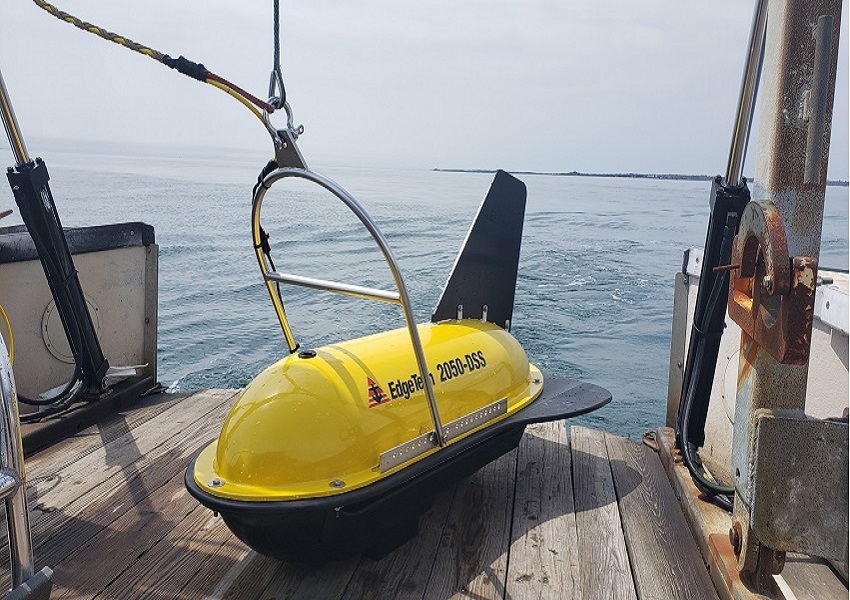
EdgeTech increases the depth rating on the 2050-DSS combined side scan sonar & sub-bottom profiling system
EdgeTech, the leader in high resolution sonar imaging systems and underwater technology, has increased the standard depth rating to 3,000 meters on all new 2050 combined tri-frequency side scan sonar and high resolution sub-bottom profiling sonar systems.
The 2050-DSS is a tri-frequency side scan sonar system, where any two, operator selectable, frequencies can be operated simultaneously. The system can be provided with either a 120, 410 & 850 kHz towfish, or a 230, 540 & 850 kHz towfish. Additionally, both towfish options are equipped with a 2-16 kHz sub-bottom profiler, that utilizes a PVDF panel receive hydrophone.
The 2050-DSS comes complete with a combined towfish, digital telemetry that runs over a single coaxial cable, a 19-inch rack mount topside interface, and EdgeTech’s DISCOVER acquisition software. The 2050-DSS can be integrated with several auxiliary sensors such as magnetometer and USBL responder. Additionally, an interface is fitted to the electronics so that the electronics and sensors can be mounted onto an ROV. The 2050-DSS is ideal for applications such as cable and pipeline surveys, marine construction surveys, pre and post dredging surveys and more. The new increased depth rating enables an even larger scope of applications particularly in relation to the use of the systems on ROVs.
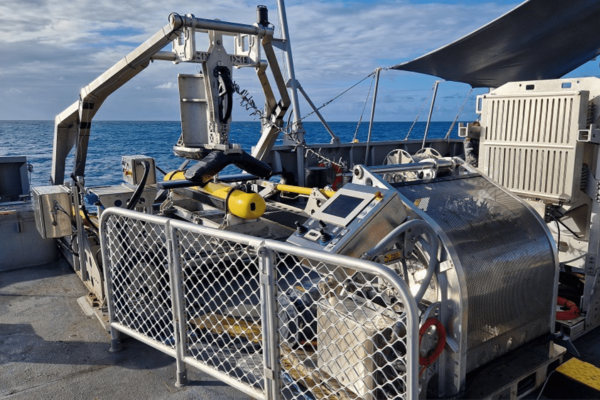
Kraken Robotics awarded seabed survey contract in Australia
Kraken Robotics Inc. is pleased to provide more detail on a recent contract announcement. Kraken will supply high-resolution seabed mapping sonar service to Precision Hydrographic Services (PHS), a customer supporting the Australian Department of Defence. The Australian Department of Defence has awarded PHS a program to collect Hydrographic High Resolution Route Surveys (RS) for a number of Australian ports. The purpose of the RS is to enable the collection of Maritime Geospatial Information (MGI) to support maritime domain awareness through the acquisition of high-resolution seabed foundation data and associated oceanographic data.
Under the scope of Kraken’s contract, a KATFISH™ high-speed survey/detection solution will be used to acquire high-resolution route surveys of Australian ports. The survey campaign will take place between January and May 2024. This contract follows the results of a successful in-country demonstration of KATFISH™ for the customer in Q1 of this year and the purchase of a KATFISH system by the RAN in Q2.

Kimberlee McHugh joins Teledyne Marine - Falmouth
Kimberlee McHugh has joined Teledyne Marine - Vehicles, located in North Falmouth, Massachusetts, as the organisation’s new marketing manager.
Mrs. McHugh, former marketing director at the Steamship Authority, has over 15 years of senior level marketing experience in the maritime transportation, hospitality, and tourism industries. Her career highlights include digital marketing development and execution, HR recruitment advertising planning and execution, increasing market share, sales and revenue growth, website development and launch, 360 marketing strategy, project management, event planning, attending trade shows, and digital content planning and execution.
"We welcome Kimberlee to the Teledyne Marine team and look forward to her bringing her wealth of digital marketing experience and knowledge to us,” said Senior Vice President of Sales & Marketing William Egan.
Kimberlee's role at Teledyne encompasses the planning, development and implementation of internal and external marketing strategies, marketing communications, event coordination and planning, social media, web presence and messaging, and public relations activities, and coordinating the development and implementation of support materials and services day-to-day for Teledyne Marine located in North Falmouth, Massachusetts.
“I am thrilled to be a part of Teledyne’s dynamic sales and marketing team and getting to know the brilliant professionals who are responsible for developing, managing and delivering cutting-edge subsea technology,” Ms. McHugh said. “I look forward to sharing a fresh, new perspective to Teledyne’s marketing strategy.”
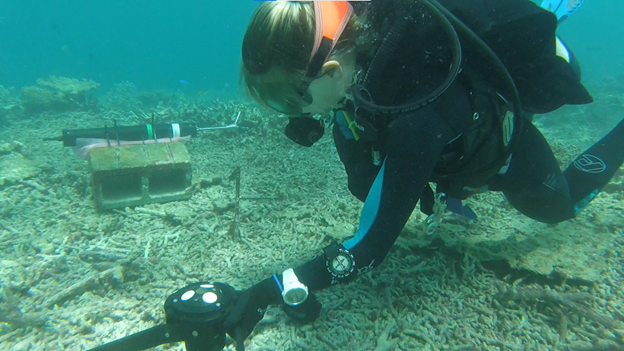
Repairing coral reefs after damage from climate change
Researchers at the Heron Island Research Station in Australia are using a Nortek velocimeter to determine how much hydrodynamic energy it takes to move around “coral rubble,” the skeletons of corals broken apart by bleaching or storm events in the ocean. Fortunately, researchers have found that stabilizing rubble can be an effective technique for coral reef recovery.
Coral bleaching and storm events can create vast areas of coral rubble on the Great Barrier Reef. If rubble remains in one place for a long time, new, healthy corals can effectively recruit onto it and the reef can recover naturally; but if the rubble is moving around a lot due to waves and currents, new corals living on it can die, hindering recovery. Rubble stabilization interventions can be deployed in areas where the rubble is prone to frequent movement, but we don’t yet know where those areas are.
Investigating energy thresholds for coral rubble movement
“With climate change, we’re going to see more frequent and intense storms and cyclones, as well as coral bleaching events,” says Dr. Tania Kenyon, Postdoctoral Researcher in the Marine Spatial Ecology Lab at the University of Queensland in Australia.
Using a Vector velocimeter designed by Nortek to measure water flow , Dr. Kenyon and other researchers correlated the movement of rubble pieces with flow disturbances to determine how much hydrodynamic energy it takes to move coral rubble.
“What we’re doing with the Vector is looking at rubble mobilization thresholds. We’re using it to monitor the hydrodynamic environment while also looking at the movement of rubble pieces,” Dr. Kenyon explains.
“From previous work I’ve done in the Maldives, we’ve found movement thresholds of about 0.3 to 0.4 m/s. We’re furthering that work now on the southern Great Barrier Reef.”
Working to preserve coral reefs during climate change
“Reefs are very important: millions of people around the world rely on them, they’re important for coastal protection and they’re one of the most biodiverse habitats in the world,” says Dr. Kenyon.
Coral reefs support more species per unit area than any other marine environment and are key to many human development goals, such as supporting sustainable fisheries, discovering new species that can be used in new medicines and bringing in tourism money to support local economies.
Armed with information on what characterizes sites that could benefit from coral rubble stabilization techniques, the team will develop maps of the Great Barrier Reef that show priority areas for such interventions, i.e. areas in the ocean where rubble is moving too frequently for natural coral recovery to occur.
Research in Australia into coral rubble stabilization
Dr. Kenyon is part of the Rubble Stabilisation Subprogram team, comprising scientists from the University of Queensland and Queensland University of Technology, including Dr. Daniel Harris, who is also working on rubble movement and stabilization.
The subprogram is part of the Reef Restoration and Adaptation Program (RRAP) , which has brought together Australia’s leading coral reef experts and is funded by the partnership between the Australian Government’s Reef Trust and the Great Barrier Reef Foundation.
This work will contribute to broader-scale research that identifies areas appropriate for rubble stabilization intervention efforts.
Rubble stabilization techniques include structures that are attached to the substrate to pin rubble down or corral it, including biodegradable meshes, rock piles, rebar grids and structures such as MARS Reef Stars. If rubble is stable for long enough, it can then be naturally bound together by sponges, coralline algae and other marine organisms into a stable surface, like bricks and mortar.
Identifying the best coral restoration techniques for reefs worldwide
While Dr. Kenyon is currently working on the Great Barrier Reef, she is hopeful that the outcomes of this and the other research being done can be used to identify the best coral restoration techniques for reefs worldwide and help reefs navigate the challenges of climate change.
“There is hope for our reefs, if we give them the best fighting chance,” says Dr. Kenyon. “If we bolster their resilience and foster adaptation through various interventions, while also moving to clean energy, we can hopefully hold onto these crucially important ecosystems.”
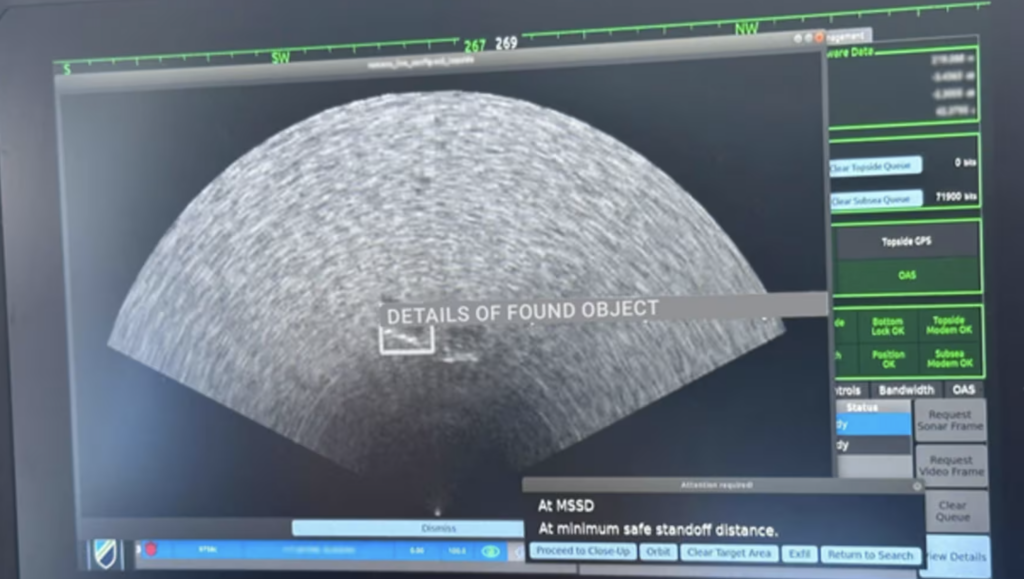
Greensea IQ demonstrates Autonomous Explosive Ordnance Disposal mission for US Navy and Defense Innovation Unit
Greensea IQ is the first to successfully complete a demonstration of a prototype Autonomous EOD Maritime Response Vehicle (AEMRV) for the Defense Innovation Unit (DIU) and US Navy. Utilizing the advanced capabilities of OPENSEA Edge, the system provides the computing resources needed to power edge perception systems and advanced autonomous behaviors of EOD Workspace, allowing human-on-the-loop autonomy and untethered command and control over the ROV platform.
The demonstration took place over several days in September in the open ocean off the coast of San Diego, featuring a fully integrated OPENSEA Edge-driven untethered ROV, a VideoRay MSS Defender modified by Greensea IQ to include batteries and an acoustic modem. During the demonstration real world tasks were demonstrated by autonomously searching the environment for threats utilizing acoustic communications.
This groundbreaking demonstration highlighted the autonomy system for EOD Workspace, Greensea IQ's robot agnostic software platform for Mine Countermeasure (MCM) and Explosive Ordnance Disposal (EOD) operations. It also showcased Safe C2, Greensea IQ's communication platform for long-range standoff command and control of autonomous ocean robots, both integrated within the OPENSEA Edge modular, hardware-agnostic system.
Ben Kinnaman, CEO of Greensea IQ, shared his thoughts on the technology "Autonomous intervention technology is the key to increasing our persistence in the ocean, and for making the work we do there safer and more effective. There is no better example of this technology at work than what we have demonstrated to the US Navy and DIU. This software package will make the neutralization of subsea threats safer and scalable using ocean robots.”
Kinnaman went on to say "Working with the Defense Innovation Unit has been amazing. DIU has leaned in hard on finding an urgent solution for subsea threat intervention. This program has combined the rigors of engineering with the possibilities of emerging technologies through a program that is equal parts contracting and venture funding to field a prototype in a very short amount of time."
Greensea IQ has worked under contract with the DIU since 2021 to develop a fully autonomous and untethered software platform for ROVs used in MCM and EOD operations. This exercise was the final demonstration of the successful prototype delivered to the US Navy for further evaluation.