
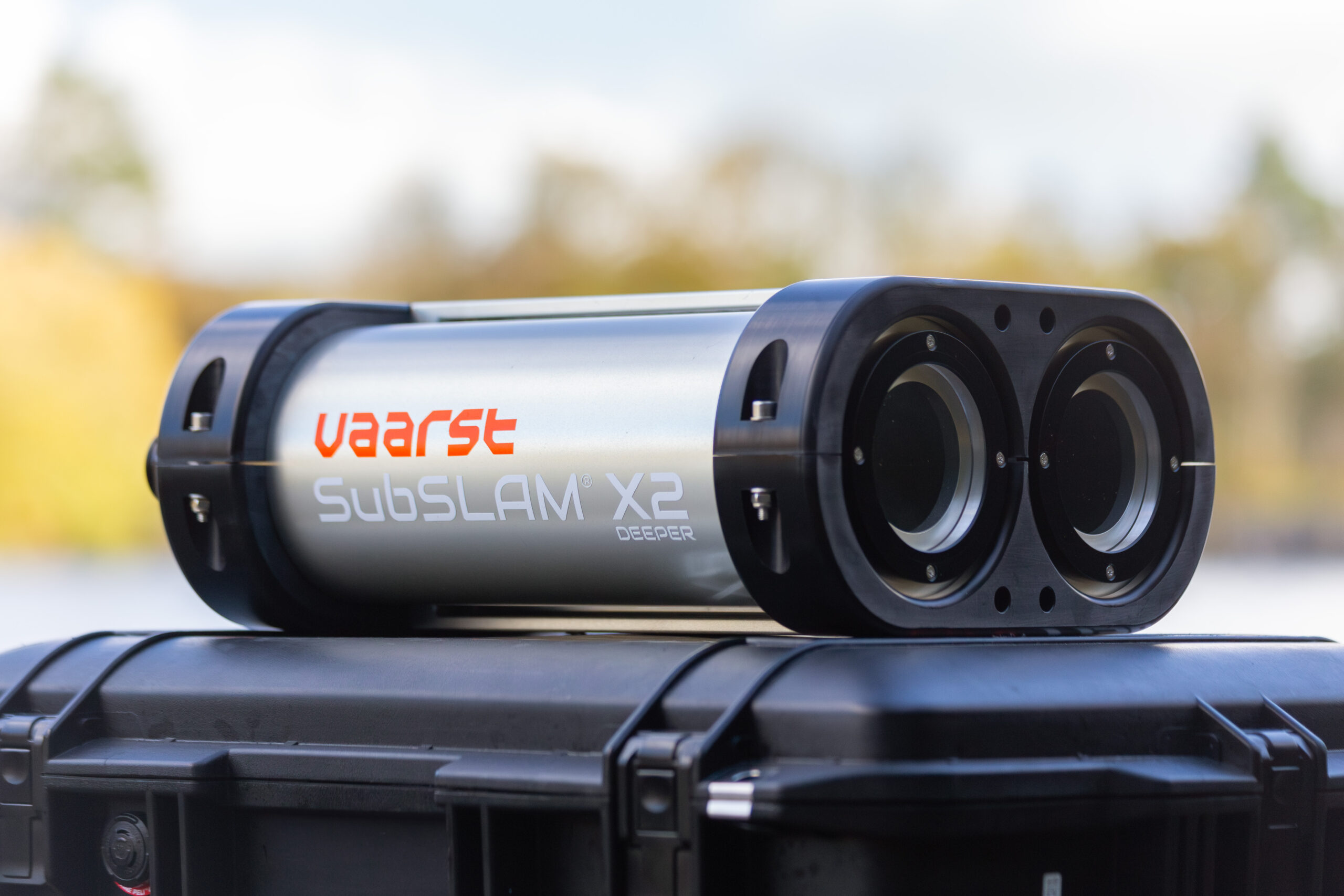
Vaarst goes deep to develop another global subsea first
Vaarst, a leader in accelerating data intelligence, has developed the world’s first real-time data collection system capable of building live 3D reconstructions in deep waters down to 6000m/19685ft feet.
This depth of operation was requested by the marine ecology and salvage industries and will also be of use to the energy industry. Industries that explore and operate in deepwater sites around the world including South America, in the Gulf of Mexico and West Africa can now deploy Vaarst’s industry leading SubSLAM® X2 technology to deliver complete spatial reconstructions to advance understanding of challenging subsea environments using SubSLAM® Deeper.
Vaarst’s technology enables complete, accurate subsea data capture and intelligence for faster and easier decision making. SubSLAM® X2 is the first real-time system to deliver dense point cloud data with perfect relative positioning and sub-millimetre precision underwater.
Developed in the UK, SubSLAM® addresses many time-consuming disadvantages of conventional inspection procedures while delivering more detailed, quantifiable datasets faster than previously available. Applications across projects range from asset integrity, UWILD, subsea metrology for construction projects, decommissioning, retrofit engineering, UXO clearance and defect analysis.
The latest addition to the SubSLAM® X2 family, Deeper, triples the capability of Vaarst’s existing deepwater system which operates down to 2000m/6562ft. Vaarst also has a shallow water system which operates to depths of 300m/984ft.
Fully tested to a depth of 6700m, well beyond a 10% threshold, SubSLAM® Deeper’s hardware was proven to be robust enough to withstand intense pressure while its ruggedised software and measurement performance was not affected by greater deepwater operation. It is already successfully operational in the Gulf.
In keeping with other SubSLAM® X2 models, 3D reconstructions can be generated simultaneously while performing visual inspections. Reconstructions and inspection data can be live streamed to devices anywhere in the world over low bandwidth links (≤200kbps), enabling real-time assessment and remote manipulation of view and measurements.
Joe Tidball, Vaarst Business Unit Director, explained why this was an important addition to the SubSLAM® X2 family which will bring benefits to a wide range of customers around the world.
“As the subsea industry moves to using 3D data more often as a standard deliverable, we were continually asked to support projects beyond the 2000m rating of our existing SubSLAM systems. We’ve built on the verified X2 platform to create a system that can be used by engineers, researchers and surveyors that need accurate 3D modelling and precise measurements to de-risk and verify their deepwater activities.”
“SubSLAM Deeper’s unique ability to function at depths far below what’s currently offered gives operators the capability to explore new fields in even deeper, more hostile environments.
“While immediately serving the energy industry, SubSLAM® Deeper has application in other sectors, including marine salvage. Having access to complete and accurate data about deep underwater structures will enable their condition to be assessed, whether they can be recovered and determine if they pose an environmental hazard through, for example, damage that could leak fluids.
“SubSLAM® Deeper provides marine ecologists with the capability of mapping deep sea environments to assess species density, habitat morphology or monitor changes over time.”
Proven to be an industry game changer, SubSLAM® utilises a 4K stereo camera pair to provide exceptional resolution video while simultaneously create dense 3D point clouds at sub-millimetre accuracy. By using stereo imagery no scale bars are required, speeding up operations through more straightforward task plans.
Mounted on any ROV carrying out a visual inspection, SubSLAM® proves inspection coverage allowing work to be complete in a fraction of the time of other systems. This reduces potential for unnecessary additional mobilisations bringing cost and efficiency benefits to customers.
SubSLAM®, SubSLAM®Deep and SubSLAM® Deeper are available to purchase or day rate hire with systems ready to ship globally.
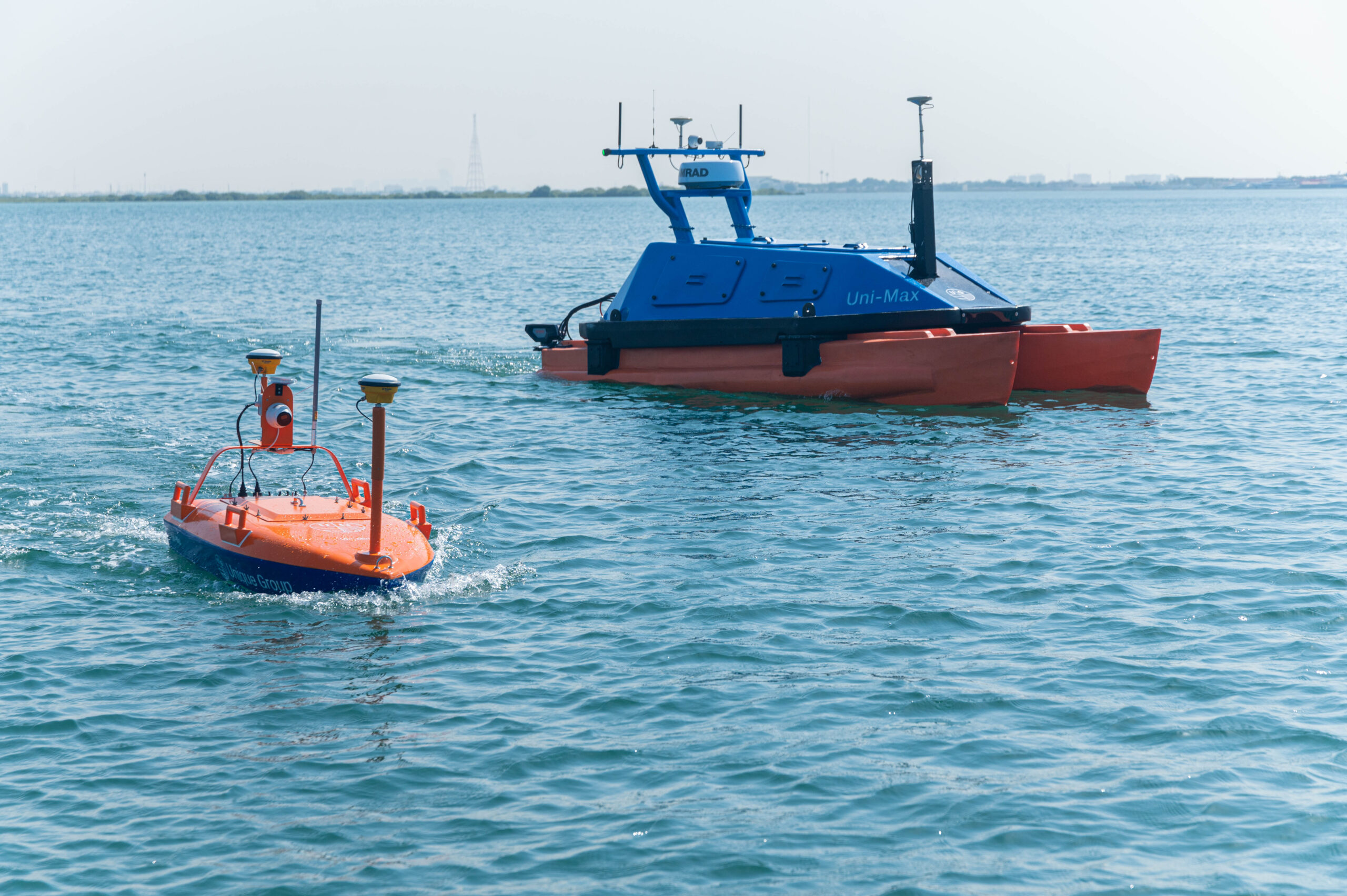
Unique Group broadens Unmanned Surface Vessel (USV) portfolio with the launch of two new models tailored for diverse applications
Unique Group, global innovators in subsea technologies and engineering, has announced the launch of two Unmanned Surface Vessels (USVs), the Uni-Mini and Uni-Max. The USV systems have been developed entirely in-house, designed for surveying operations and engineered to meet diverse operational needs across challenging environments.
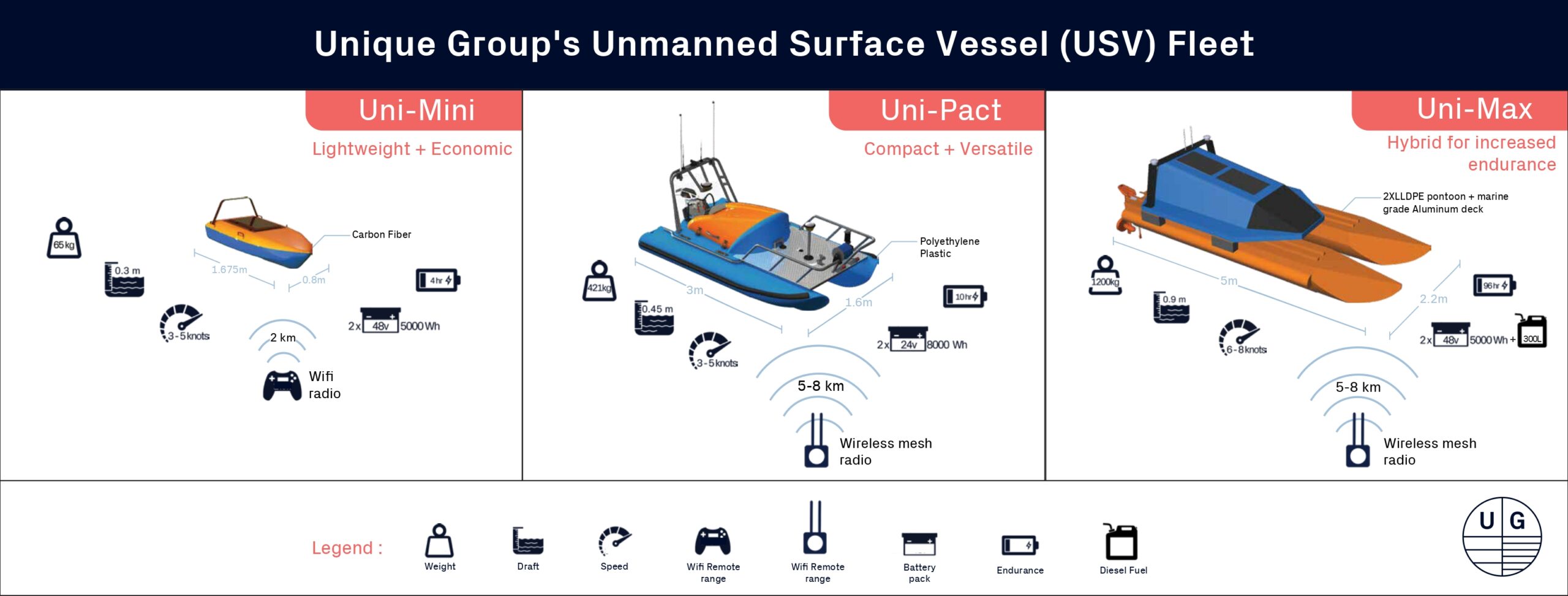
The new addition of these USVs further enhances Unique Group’s USV fleet as the company can now provide clients with specific USVs ranging from small, medium and large sizes based on project applications. The Uni-Mini USV is an economical, compact and lightweight vehicle that can be effortlessly operated by just two people, ensuring quick and hassle-free deployment. It has been specifically engineered for shallow water surveys, offering an unprecedented level of convenience and versatility. With the ability to integrate seamlessly with a wide range of transducers and GPS systems, the Uni-Mini can execute various survey tasks with minimal effort and manpower.
The Uni-Max USV incorporates a Hybrid Power System, integrating a generator with a diesel tank and solar PV cells. This new addition significantly extends operational capabilities, enabling prolonged missions in remote or demanding terrains. This advanced USV is designed to allow surveying in locations and situations where deploying conventional platforms proves impracticable. Featuring two Torqeedo Cruise 6.0RS Engines with Hydraulic Steering, the Uni-Max ensures unparalleled performance and manoeuvrability.
Sahil Gandhi, CEO of Unique Group commented: “Our first mid-range USV, Uni-Pact, introduced in 2020, has gained global acclaim for its capabilities. The recent additions to our USV lineup, Uni-Mini and Uni-Max, underscore Unique Group's commitment to providing cost-effective solutions. These vessels prioritise compactness, ease of use, and outstanding performance, reinforcing our dedication to offering solutions that enhance operational efficiency for our customers. I am particularly proud of Unique Group's achievements in R&D and in-house engineering, which have played a pivotal role in bringing these innovative vessels to the market."
Unique Group’s Uni-Mini USV has already made significant strides in the market, having been deployed on key projects in the Middle East for shallow water bathymetric surveying. In collaboration with a prominent EPC company, the Uni-Mini has delivered outstanding survey results, showcasing its efficiency and reliability in real-world applications.
As Unique Group celebrates its 30-year anniversary this year, this milestone is marked by increased Research and Development (R&D) efforts across all its divisions and multi-million-dollar CAPEX investments to further enhance its portfolio of survey equipment globally.
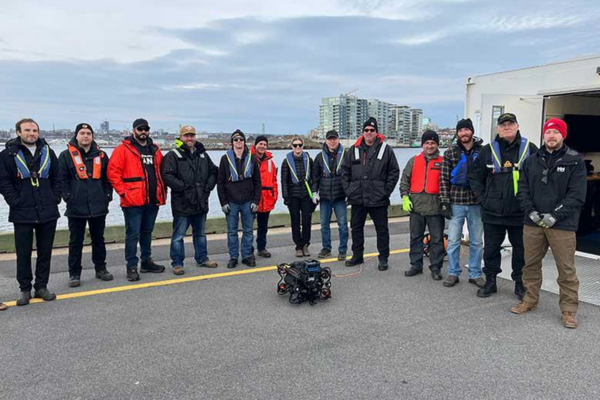
Training supplied by ROMOR, Applied Acoustics and Oceanbotics accepted by DND
ROMOR and technology partners, Applied Acoustics and Oceanbotics, conducted a 4-day training seminar at The COVE for the Nexus 2 USBL and SRV-8 ROV.
Darrin Verge, President of ROMOR, chose The COVE as it provided an ideal space for the training which consisted of real-world deployment and practical use of the systems.
Day 1 included introductions from the 14 trainees representing FMF Cape Scott Engineering Group and underwater acoustics, mechanical, electrical and weapons experts from the dockyard. Day one training was held at a local survival training centre.
Trainee teams used the SubNav operating systems and an xBox controller to fly the SRV-8. That afternoon the teams activated the system’s sonar and practiced locating suspended objects in the pool. The team enjoyed recovering objects (hoops and rings) using the manipulator arms (the Grabber).
Day 2, training teams flew the SRV-8 at The COVE, operating the system inshore, learning ROV tether handling and more advanced operating procedures of the SRV-8 drone ROV.
Day 3, the SRV-8 was deployed near and under a Canadian Frigate. Trainee teams were introduced to real-world applications, where the SRV-8 would be used to inspect vessels.
Trainees greatly appreciated the opportunity to operate the system under the Frigate and showed enthusiasm and commitment, working through snow, wind and cold conditions.
Some highlights from the group include:
“We never seen that before”, “We never got the divers to do this kind of thing before”, “This system was able to do exactly what we needed to do without having to bring in a human diver.”
Day 4 saw the group back at The Cove with instructors from Applied Acoustics, Ben Darling, (Support Engineer) and Gavin Willoughby, (Director of Business Development).
Trainees started in the classroom followed by dock training on the Applied Acoustics Nexus 2 USBL system. The group had lots of questions on best practices, system capabilities, specifications and performance.
Ben Darling, from Applied Acoustics provided operational and technical training on the Nexus 2 USBL which included a 30m cable (topside) and underwater transceiver.
“Thank you to ROMOR Ocean Solutions and all those that attended the event. Canada has been very welcoming.” Ben Darlin, Support Engineer, Applied Acoustics
Training wrapped up with the technical team from ROMOR attaching an underwater acoustic beacon to the SRV-8. Trainees had the opportunity to fly the outfitted ROV around and through the underwater Stella Maris Platform.
The SRV-8 was acoustically tracked by the Nexus 2 transceiver deployed on a mechanical pole on the pier.
The complete system and training supplied by ROMOR, Applied Acoustics and Oceanbotics was accepted by the Department of National Defence.
“We want to thank everyone who participated in this training event, especially our technology partners who provided expert knowledge & advice on the Nexus 2 USBL and SRV-8 ROV. “ Darrin Verge, President, ROMOR Ocean Solutions
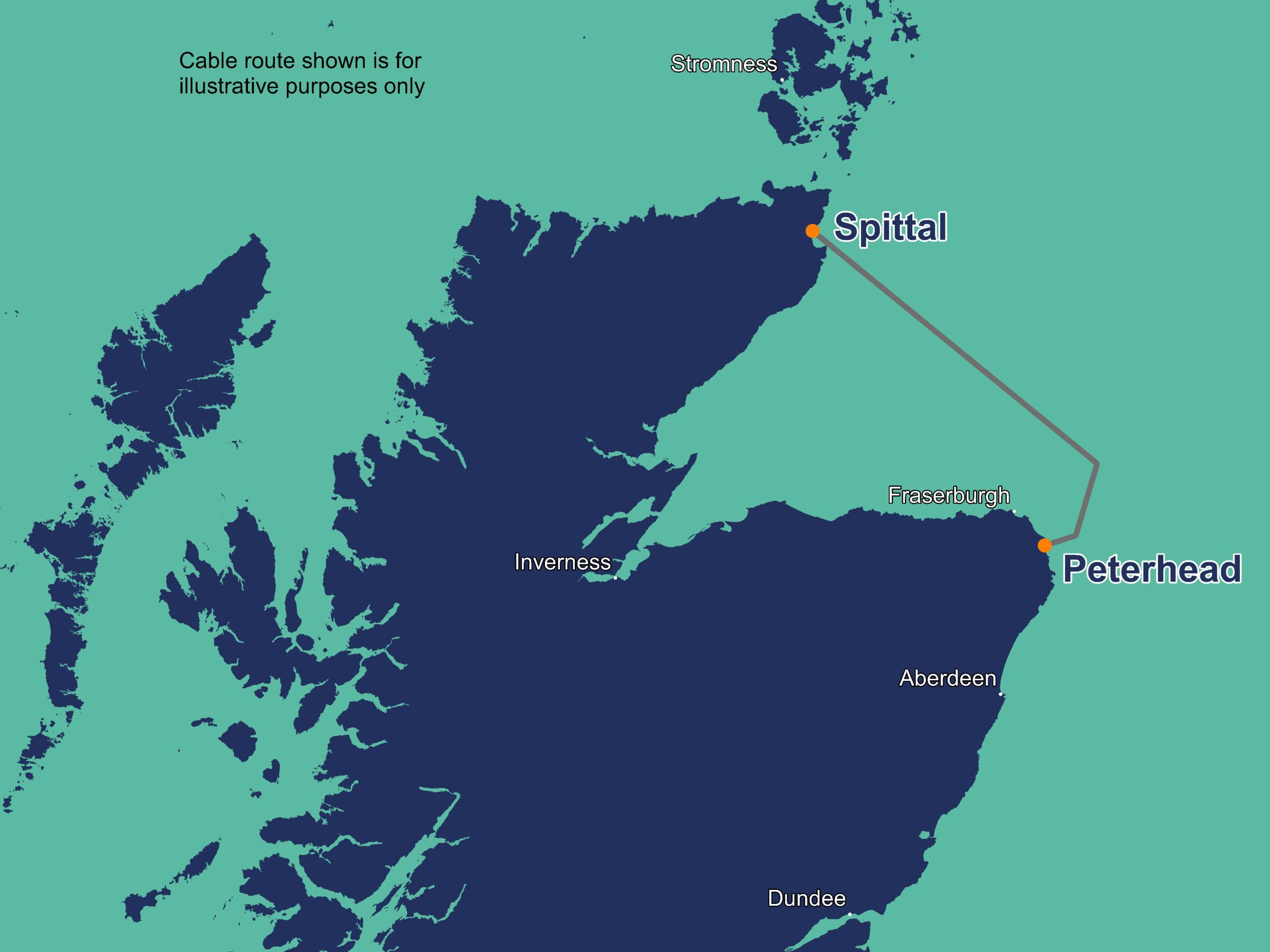
Navigation risk assessment underway for SSEN Transmission Spittal to Peterhead subsea cable link
Specialist shipping, navigation and maritime risk consultancy, NASH Maritime, has been appointed to undertake the navigation risk assessment for the proposed offshore HVDC transmission connection between Spittal and Peterhead.
The Spittal to Peterhead HVDC Project is a 2GW transmission reinforcement and is part of the Pathway to 2030 Holistic Network Design (HND) which is being delivered through the Ofgem Accelerated Strategic Transmission Investments (ASTI) framework.
NASH Maritime is part of the project marine team led by MarineSpace to identify, assess, evaluate and propose controls/mitigations for any shipping and navigation risks or impacts associated with initial proposed corridors for the subsea power cable. The data will be used for detailed engineering and environmental assessment of potential cable routes with the corridor.
Jamie Holmes, NASH Project Director, said:
“We’re delighted to be appointed as the shipping and navigation specialist advisor to this project.
“Together with our extensive experience and expertise in cable assessments, we’re familiar with the region and local stakeholders having undertaken a range of assessments for other developments in the area across multiple sectors.
“To undertake the navigation risk assessment we will combine our specialist knowledge and practical experience of maritime risk with our advanced data processing and analysis skills”.

National Oceanography Centre’s CEO Professor Ed Hill to retire
Professor Ed Hill CBE will retire as Chief Executive Officer of the National Oceanography Centre (NOC) in 2024, after more than twenty years since he was first appointed Director of NOC.
Professor Hill, physical oceanographer by background, was appointed as Executive Director in 2010, previously holding the position of Director at NOC and the Proudman Oceanographic Laboratory (Natural Environment Research Council).
Since then, he has led the organisation to become one of the world’s top oceanographic institutions. In particular, Professor Hill steered NOC through its transition to become an independent, not-for-profit research institute, an evolution completed in 2019. Professor Hill was also appointed a Commander of the Most Excellent Order of the British Empire (CBE) in 2020 for services to ocean and environmental sciences.
Professor Hill said: “It has been a huge privilege for me to lead the National Oceanography Centre and to work over the years with so many fantastic colleagues in this wonderful institution as well as across the UK and worldwide. Four years after becoming an independent organisation, and with NOC in such very strong scientific and financial health with a great leadership team, I feel now is the right time for me to pass the baton on to someone with a fresh pair of eyes – and I feel very confident in doing so”.
Professor Hill will continue to actively lead NOC until a successor is in place, maintaining our reputation for excellence. The National Oceanography Centre has engaged the services of Odgers Berndtson for the search for a new Chief Executive Officer, for more information please visit their website.
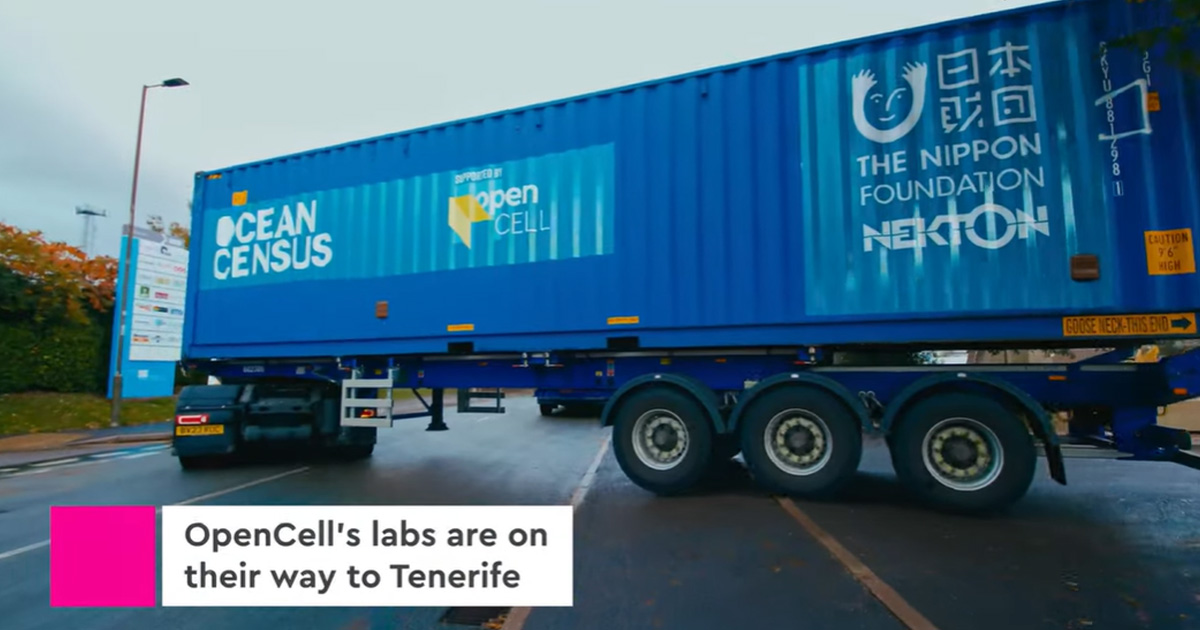
Mobile laboratories set to revolutionise ocean species discovery
Tenerife's Radazul Port has welcomed two state-of-the-art mobile shipping container laboratories, a pivotal component of an innovative toolkit being developed by Ocean Census and OpenCell. These laboratories will play a central role in an ambitious mission to meticulously explore and document ocean life.
Ocean Census, the pioneering open network launched by The Nippon Foundation and Nekton, has partnered with OpenCell Labs as part of a global effort to accelerate the pace of ocean species discovery. OpenCell’s mobile laboratory systems will enable marine scientists to conduct shoreside taxonomy on location, helping to support the delicate preservation and recording process at the moment of recovery.
This landmark partnership, rooted in innovation and a shared vision for a sustainable future, will leverage cutting-edge cyber-taxonomy, which will take place in the state-of-the-art mobile laboratories, in a global effort to identify 100,000 new species over the next decade. The two laboratories will be deployed on the upcoming Ocean Census Macaronesia Expedition based out of Radazul Marina in Tenerife.
The collaboration between OpenCell and Ocean Census exemplifies a joint effort to demobilise resources from pandemic-related activities and redirect them toward urgent environmental concerns.
"During the global pandemic, we united on a global scale to use our skills and knowledge to address one of humanity's most critical crises. Now, we apply this expertise in collaboration with Ocean Census to tackle another pressing emergency – the biodiversity crisis."
Helene Steiner, CEO of OpenCell comments:
The first usage of the containerised laboratories provided by OpenCell will be on the Ocean Census Macaronesia - Tenerife Submersible & Diver Expedition. This expedition is a significant undertaking aimed at exploring the rich, yet largely uncharted marine environments of Tenerife, Canary Islands, Spain.These state-of-the-art mobile labs will enable researchers to conduct on-site analyses, enabling scientists to immediately process, document, and analyse samples.
“These mobile laboratories will not only streamline the process of species identification and data gathering but also enhance the efficiency of research conducted in remote and often challenging marine environments. The use of these advanced laboratories in the Ocean Census Macaronesia Expedition is a prime example of how the programme is integrating cutting-edge technology with field research to accelerate the understanding and preservation of marine biodiversity.” Daniel Moore, Ocean Census Expedition Science Manager
The integration of advanced facilities and skills is critical to the Ocean Census mission to uncover life within the ocean’s biodiversity hotspots and contribute to global conservation strategies.
Fugro gains full ownership of SEA-KIT International, strengthening its leadership in marine robotics solutions
Fugro is pleased to announce it has reached a binding agreement for the acquisition of the remaining shares in SEA-KIT International, a long-standing partner in the development of hi-tech uncrewed surface vessels (USVs) for low carbon emission maritime operations and research.
For several years, Fugro and SEA-KIT have collaborated closely to push the boundaries of USV technology, achieving numerous breakthroughs and milestones along the way, including:
- Delivery of the first commercially available remotely operated USV and electric powered remotely operated vehicle (ROV) combi solution to the offshore asset inspection and monitoring market;
- Approvals from various authorities in Europe, Middle East and Australia to operate the jointly developed USV and ROV combi solution through a global network of remote operations centres;
- Delivery of five Fugro Blue Essence® 12 metre USVs spread across all key regions;
- Completing the world’s first fully remote inspection of offshore wind farm assets carried out by an USV and integrated ROV;
- Winning multiple awards globally for our innovations contributing to safer, faster and more sustainable offshore operations.
Ben Simpson, CEO and founder of SEA-KIT International, has been a key leader in the partnership, playing a fundamental role in reshaping the maritime industry. His entrepreneurialism was instrumental in the growth and success of the SEA-KIT business. Under Ben's leadership, SEA-KIT fostered a culture of innovation, excellence and adaptability, propelling the company to the forefront of the autonomous maritime industry.
“We are excited to welcome the talented SEA-KIT team into the Fugro family," said Henk van Dalen, Director Blue Robotics at Fugro. "We look forward to leveraging their knowledge and growing the SEA-KIT product offering to the maritime industry as we continue to drive innovation in this space. We are committed to ensuring a smooth integration process and will work closely with our new team members to maximise the value delivered to our combined customer base.”
The transaction is expected to be completed before the end of 2023, subject to customary closing conditions. SEA-KIT will continue to provide clients with high-quality USV products for cost-effective operations with enhanced safety and significantly reduced carbon emissions. New advancements to look forward to in the wake of this acquisition includes the launch of the next generation of USVs, the Blue Eclipse® 18 metre USV specially designed for fast pipeline and deep-water asset inspection activities, as well as a zero-emissions hydrogen-powered USV.
Unmanned vessel data collection marks new era in oceanography
Heralding a new zero-carbon era for ocean observations, a wave-propelled uncrewed surface vessel (USV) has for the first time successfully recovered scientific data from a sensor moored 1,800 metres deep in the Rockall Trough.
The USV, deployed by the Oban-based Scottish Association for Marine Science (SAMS) and manufactured by AutoNaut in the UK, remotely collected data from the Sonardyne Fetch AZA bottom pressure recorders (BPRs), before sending it back to oceanographers on shore via satellite.
Scientists say the successful mission is a step change in how oceanographic data is collected and reduces the reliance on ships for deep sea fieldwork.
Prof Mark Inall, an oceanographer SAMS, said: “This is an incredible achievement by the team at SAMS and our partners at AutoNaut and Sonardyne. We believe it is the first example of through-water communications of ocean climate research data to an autonomous vehicle, and instant transmission of data to shore.
“It has never been more important to have accurate and up-to-date measurements about what is happening in our ocean, which is undergoing major and rapid changes in the face of climate change.
“While traditional ship-based observations provide the most reliable data, such scientific cruises take some time to organise, are expensive and produce a large carbon footprint. This Autonaut mission feels like a major milestone for oceanography as it opens up a new way of collecting more data, more regularly, which is key to improving climate predictions and helping us to prepare for what the future may hold.”
Last year SAMS deployed two BPRs on the seabed of the Atlantic Ocean: in the Rockall Trough, west of the UK, and in the Labrador Sea, east of Canada. Based on the weight of the water above it, the instrument can detect a change in pressure that is the equivalent to a sea-surface height change of one centimetre.
By comparing the sea surface height on the western and eastern flanks of the Atlantic Ocean, oceanographers can calculate the speed and strength of vast ocean currents that dictate much of Earth’s climate.
As the BPRs will remain on the seabed for up to 10 years, the previously held expectation was that ship-based cruises would be the only way to remotely retrieve their data.
However, by equipping the five-metre AutoNaut USV, named Jura, with a Sonardyne HPT 3000 transceiver it was able to link to the acoustic through-water comms transmitter on the bottom of the mooring to successfully retrieve the data recorded so far. After analysis of the data, scientists sent Jura back and over several days fine-tuned the calibration of the bottom sensor.
AutoNaut founding Director Mike Poole said: “This is the first time in the 10 years of AutoNaut’s experience we have been asked can we get zero carbon data, not the cheapest data. It is a practical and positive response to climate change.
“As wave propelled USVs that are self-righting in the event of capsize, AutoNauts are well suited to very long endurance missions in the open ocean. Importantly, this will probably become much cheaper than sending manned, diesel-fuelled ships.”
The mission was part of the Future Marine Research Infrastructure (FMRI) programme, funded by UK Research and Innovation’s Natural Environment Research Council (UKRI-NERC).
Leigh Storey, Senior Responsible Owner for FMRI, applauded the ambition shown by SAMS and welcomed the successful result. He said: “As we carefully consider what the UK’s future marine research infrastructure needs to include to enable frontier science, the innovative use of new technology and the adoption of novel scientific techniques demonstrated here is hugely important.”
Through the FMRI programme, NERC is considering what mix of technologies (sustainably fuelled ‘green’ research ships, autonomous robots fitted with novel marine sensors and the digital infrastructure required to optimise its use) will be required in the next decade. Extensive engagement with the science community, ongoing trials of new technology and early engagement with UK industry will be prioritised over the next 12 months.
Aidan Thorn, Business Development Manager - Marine Robotics at Sonardyne, said: “We’re delighted to be working with environmentally aware customers and USV developers, such as SAMS and AutoNaut, to show how marine robotics can be used for zero carbon data harvesting. The potential benefits of this technology in all marine industries are immense and could revolutionise the way we manage ocean data collection in the future.”
GeoAcoustics appoints new channel partner to help grow hydroacoustic technology market in Singapore
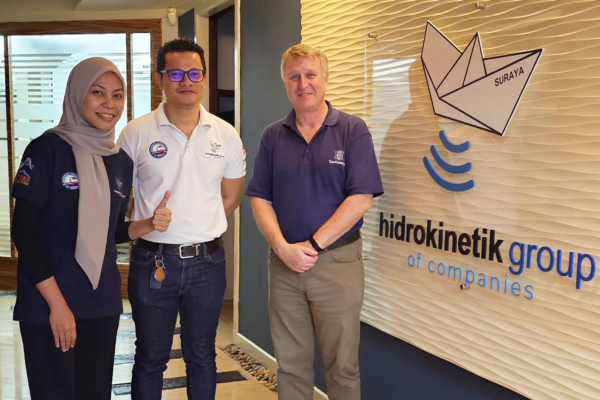
GeoAcoustics Ltd continues to expand its global sales and support network with this week’s appointment of its first channel partner in Singapore, Hidrokinetik Technologies Pte Ltd. A Hidrokinetik Group company, Hidrokinetik Technologies is one of South East Asia’s primary providers of hydrographic and geophysical services, and an established subsea technology rental company.
Concluded as part of a recent visit to Kuala Lumpur by GeoAcoustics’ Chief Commercial Officer Richard Dowdeswell, the new partner agreement brings the established bathymetric sonar, sub-bottom profiler and side scan sonar manufacturer’s total number of channel partners to 57, serving a total of 68 countries worldwide.
Hidrokinetik Technologies is heavily invested in research and development at its unmanned technology facility located at the International Islamic University Malaysia and is regarded as one of South-East Asia’s pioneers in the design, development and deployment of Unmanned Surface Vessel (USV). The company currently owns the largest fleet of Autonomous Surface Vessels in the region and is also recognised as a key Remotely Operated Vehicle (ROV) expert.
“Our strategy to ensure we are closer to our customers wherever they are depends on building strong relationships with experts serving local and regional markets, and we are confident that the Hidrokinetik Technologies team possesses the knowledge and experience to promote and support our products across a diverse customer base and wider market,” said Richard Dowdeswell, CCO, GeoAcoustics Ltd.
“We’re impressed by GeoAcoustics innovations including the new AI data processing for GeoSwath 4 bathymetric sonars and sure that Hidrokinetik’s diversified track record in the hydrographic and geophysical business will enhance the presence of the GeoSwath, GeoPulse and Pulsar product lines in Singapore and the APAC region, especially as they are so suited to data acquisition in the challenging, turbid waters local to us,” said Mirza Hamza, Technical Director, Hidrokinetik.
Kraken announces changes to Board of Directors
Kraken Robotics Inc. is pleased to announce that effective November 20, Peter A. Hunter has been appointed to the Company’s Board of Directors. Mr. Hunter replaces Larry Puddister, a long time Kraken Director who has resigned. Mr. Puddister has other active business interests and has resigned from his board position with the Company to dedicate more attention to those interests.
Mr. Hunter is the founder, Chairman, and Managing Partner of Artemis Capital Partners, L.P., a Boston-based specialized private equity firm focused on differentiated industrial technology manufacturers. An attorney and a CPA, Mr. Hunter brings more than 30 years of experience as both an investor and operator. His areas of expertise include strategic growth, structuring of multi-stakeholder strategies (including M&A, joint ventures and partnerships), corporate governance, and organizational planning. Mr. Hunter also brings subsea technology expertise to Kraken’s Board, having served 3 years as the Chairman of Hydroid, LLC, an industry leader in unmanned underwater vehicles (UUVs) with its REMUS UUV brand. Mr. Hunter was Chairman of Hydroid from its early days to its eventual acquisition by Kongsberg Maritime, AS in 2008. Hydroid was subsequently acquired from Kongsberg in 2020 by Huntington Ingalls, the US Navy’s largest shipbuilder and UUV provider (now known as HII).
Commenting on the changes, Greg Reid, Kraken’s President and CEO and Director noted, “We are very pleased to welcome Peter to the Board of Directors. His strategic, governance, financial, and operational experience and knowledge of the subsea industry will add significant value to Kraken. In addition, on behalf of management and the Board, I would like to thank Larry for his input and guidance over the years and we all wish him the best in his future endeavors.”
The Company issued 400,000 stock options to Mr. Hunter in connection with his appointment to the Board. These options have a five-year term, with vesting in three equal instalments on the date of grant and on the one and two-year anniversaries of the date of grant. Each option is exercisable for one common share at an exercise price of $0.495.