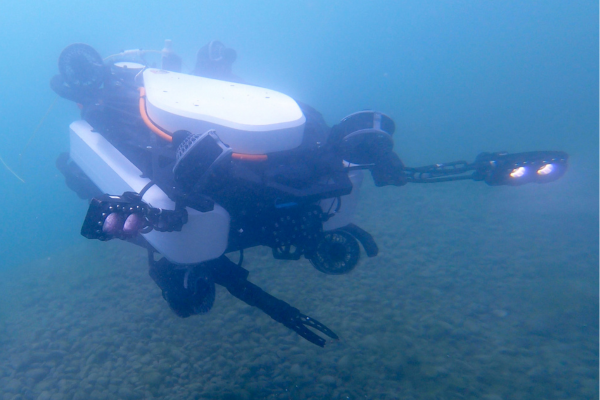
A compact underwater robot providing a safer alternative for underwater inspection, search and maintenance
Divers can face difficult and dangerous conditions when performing essential underwater inspection, search and maintenance. Now a new Remotely Operated Vehicle (ROV) from Switzerland’s Tethys Robotics is providing a much safer alternative.
There are several technical challenges to operating an underwater robot in a lake or river, or offshore in areas of strong tides: the water is often cloudy or murky, making visibility poor, often with leaves and other objects floating or in suspension. The water can be fast flowing, and the bottom can be moving, with sediment, or small stones dragged along by the current.
High-accuracy positioning and inspection in near-zero visibility
Jonas Wüst, now CEO at Tethys Robotics, set out to meet these challenges following a student research project at Eidgenössische Technische Hochschule Zürich (ETH Zurich), a public university in Switzerland.
Tethys Robotics’ goal was to build an autonomous underwater robot capable of being deployed in rough water with currents of up to 2 m/s. It would need to be capable of high-accuracy positioning and inspection of its immediate environment in near-zero visibility. This required a very accurate underwater navigation solution.
Controlling an underwater robot in swirling currents
If this can be achieved it provides immense advantages to operators, as they can focus on controlling the robot relative to the stationary physical surroundings, without having to worry about trying to control it against swirling currents.
To meet these positioning and navigation needs for their ROV, Wüst and his team equipped their small ROV with a Nortek DVL that meets their specific requirements for achieving bottom tracking and current measurements in the most difficult conditions, securing navigational accuracy.
The DVL, or Doppler Velocity Log, is an acoustic sensor that estimates velocity in water relative to the bottom, using a long pulse along a minimum of three acoustic beams, each pointing in a different direction.
Achieving bottom tracking for ROVs near a moving riverbed or sea floor
During Tethys Robotics’ first discussions with Nortek, the DVL500 Compact had just been released. This is a 500 kHz DVL in a small form factor – a good match for the requirements of the small ROV the team at Tethys Robotics was working on.
The DVL500 Compact represents the latest generation in survey-grade DVL technology. By combining the convenient size of the higher-frequency DVL1000 with the superior bottom-tracking range of traditionally larger 500 kHz systems, the DVL500 Compact provides developers of small robotic systems with a reliable, high-performance solution for aiding underwater navigation and control.
“The benefit of the DVL500 Compact for Tethys Robotics was the good penetration of the DVL’s signals through the bottom, river or lakebed,” explains Nortek’s Cristobal Molina, the Senior Sales Engineer working on the project.
Autonomous mapping of submerged infrastructure in strong currents and poor visibility
Their work with the underwater robot has attracted a lot of attention.
“Tethys Robotics is an invaluable partner for developing underwater robots with unique capabilities, such as for autonomous mapping of submerged infrastructures in strong currents and poor visibility,” says Kai Holtmann, Deputy Head of the Swiss Drone and Robotics Centre.
“Their innovative approach allows inspection and exploration works to be carried out at lower cost and, most importantly, without putting divers at risk.”
Good localization and mapping simplify underwater ROV inspections
The success of the unit has opened up a whole new world of applications.
“We are now aiming for applications where we can replace divers, especially in dangerous situations. We recently had our first test with a hydroelectric plant, where the underwater robot had to hold its position relative to the ground in a river flowing at up to 1.2 m/s. It was quite a milestone to see it used in this application, and how easy it is to do inspections if you have good localization and mapping,” Wüst says.
The technology promises significant benefits for the reliability and safety of important infrastructure.
“Wherever you have submerged infrastructure, good reliable inspection is key.”
There are also promising applications for research on submerged structures.
“We’re in talks with archeological teams here in Switzerland,” Wüst adds.

Ashtead Technology signs rental agreement with Reach Robotics
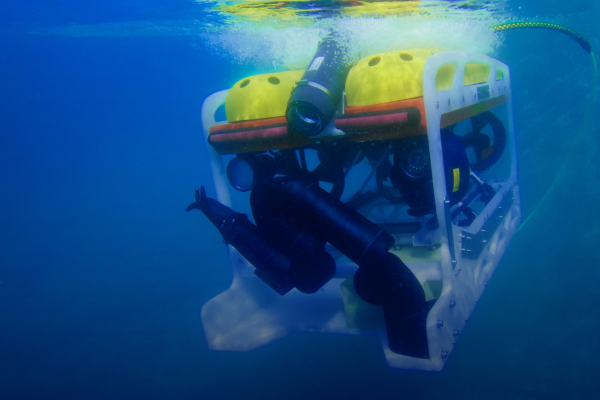
International subsea rental equipment and solutions specialist Ashtead Technology has signed a rental agreement with Reach Robotics, an Australian-based manufacturer of industry-leading all-electric robotic arm solutions for inspection class ROVs.
Under the terms of the agreement, Ashtead Technology will be the exclusive rental partner for all Reach Robotics manipulators which enable inspection, maintenance and repair tasks usually reserved for more expensive work-class ROVs.
Reach Robotics ROV manipulators are compact, lightweight and offer best-in-class performance designed for operating in harsh environments. Available in a range of configurations, they come with an advanced software interface with 3D visualisation. Combined with the company’s operator control unit, Reach Control, and the Master Arm, Reach Robotics advanced manipulators multiply the capability and efficiency of a human operator.
Brett Lestrange, Ashtead Technology’s Regional Director for Europe, said: “This exclusive agreement with Reach Robotics strengthens Ashtead Technology’s existing inventory of manipulator equipment, allowing us to offer a more comprehensive range of solutions to support our customers’ ROV tooling applications. It also demonstrates our ongoing commitment to the global offshore energy market by offering the latest and most advanced technologies to support our customers’ projects worldwide.
"We look forward to seeing these manipulators performing in the field and delivering excellent results for our customers.”
Anders Ridley-Smith, Reach Robotics’ Commercial Director, added: “For us, finding the right rental partner was all about reach, reputation and, to be frank, enthusiasm. We’re confident in the value our electric manipulators can bring to a service provider’s operations, and also in Ashtead Technology’s ability to help maximise their availability.
“With Ashtead Technology’s global reach, this rental agreement is an important strategic opportunity for Reach Robotics and will significantly support the steep growth of our business.”
Founded in 2016, with its headquarters and manufacturing facility in Sydney, Australia, Reach Robotics’ vision is to extend human reach into harsh environments. The company’s products enable complex inspection and intervention in maritime infrastructure management, military/police operations, marine science and autonomous robotics research applications.
IMCA's new Code of Practice could save millions for the offshore wind industry by preventing subsea cable failure
With some estimates putting the cost of subsea cable failure for offshore wind at more than £500 million in 2020, the average insurance claim worth more than £3 million, and an estimated 30% failure rate in any given year, the International Marine Contractors Association (IMCA) has released a new Code of Practice to improve the installation of underwater power cables in offshore wind.
The Code of Practice for Offshore Cable Laying in the Renewable Energy Industry (IMCA M264) addresses issues for the safe laying and terminating of offshore power cables to prevent damage, a significant challenge for offshore wind where rates of failure result in millions worth of loss to everyone involved in delivery – including contractors, developers, and insurers.
At the point at which cables leave the laying vessel and meet the seabed, they are frequently subject to damage caused by over-bending, cable-pulling, and inadequate design of lead into the monopile.
In addressing issues such as the laying spread – the combined set of systems required for the installation of the cable – as well as the interface between the vessel and the spread, and the safest methodology for overboarding, trenching and cable pulling, the IMCA Code of Practice establishes a new baseline for safely laying offshore submarine power cables which will significantly improve performance.
Mark Ford, Marine & Quality Manager of IMCA, said: “This new Code of Practice is an excellent example of IMCA's role in facilitating industry collaboration to improve offshore delivery and performance.
“Contractors have come together to share their experiences around the design, testing, operation and maintenance of cable laying, the specialised equipment and technology used, and how it interfaces with supporting vessels. Decades of experience gained through the installation of thousands of kilometres of offshore cables have helped us find tangible solutions for the industry.
“There are huge expectations around offshore wind in helping countries around the globe meet Net Zero targets. Fixing ongoing challenges around the installation of power cables could bring substantial savings for project and maintenance costs. Research shows that 90% of insurance claims for power cables are due to damage caused during installation, and this new IMCA Code of Practice will help reduce this figure.”
IMCA Members can download the Code of Practice for Offshore Cable Laying in the Renewable Energy Industry (IMCA M264) at the IMCA website.
Kongsberg Discovery sets new AUV milestone with successful sea trials of HUGIN Endurance
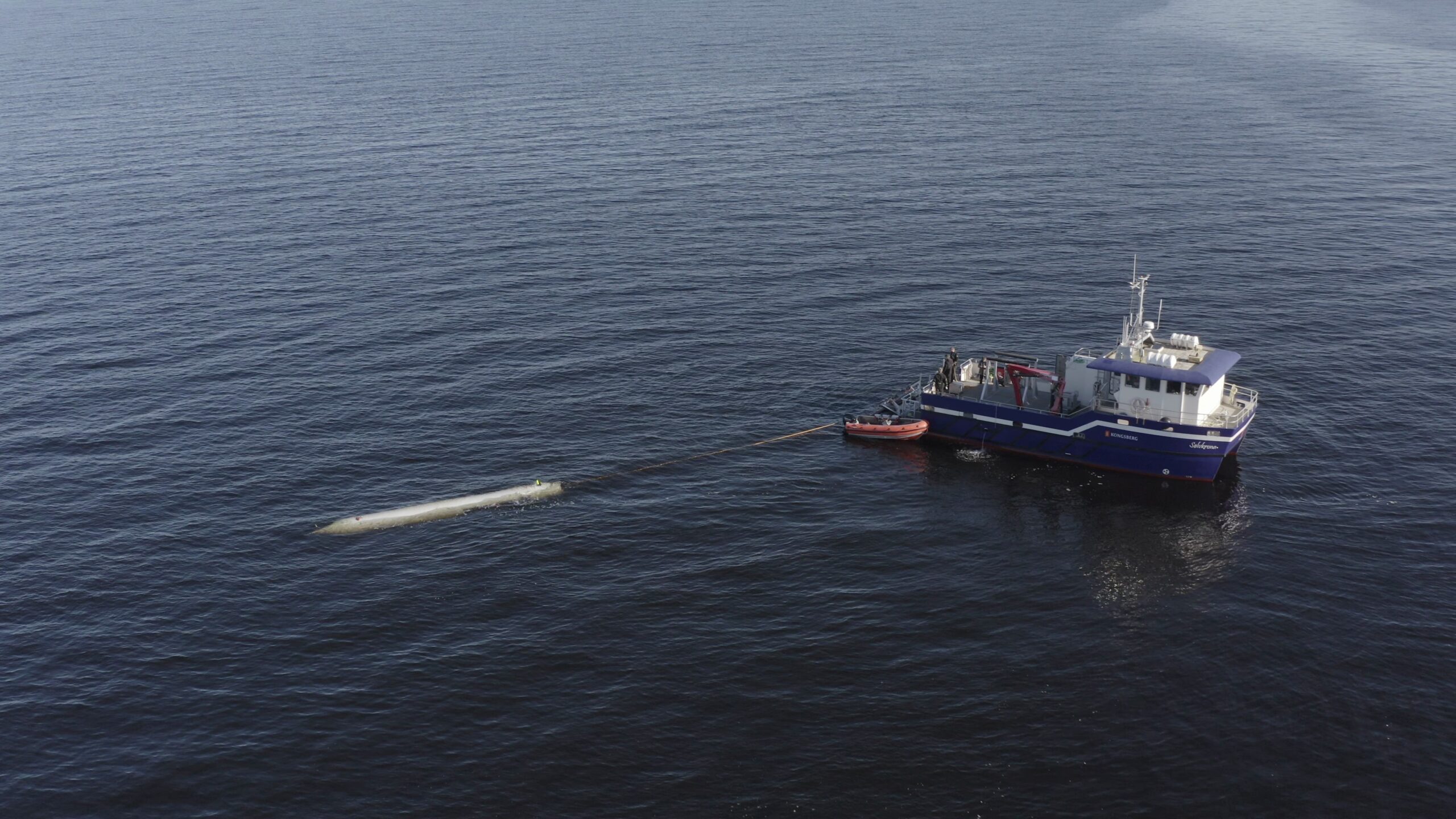
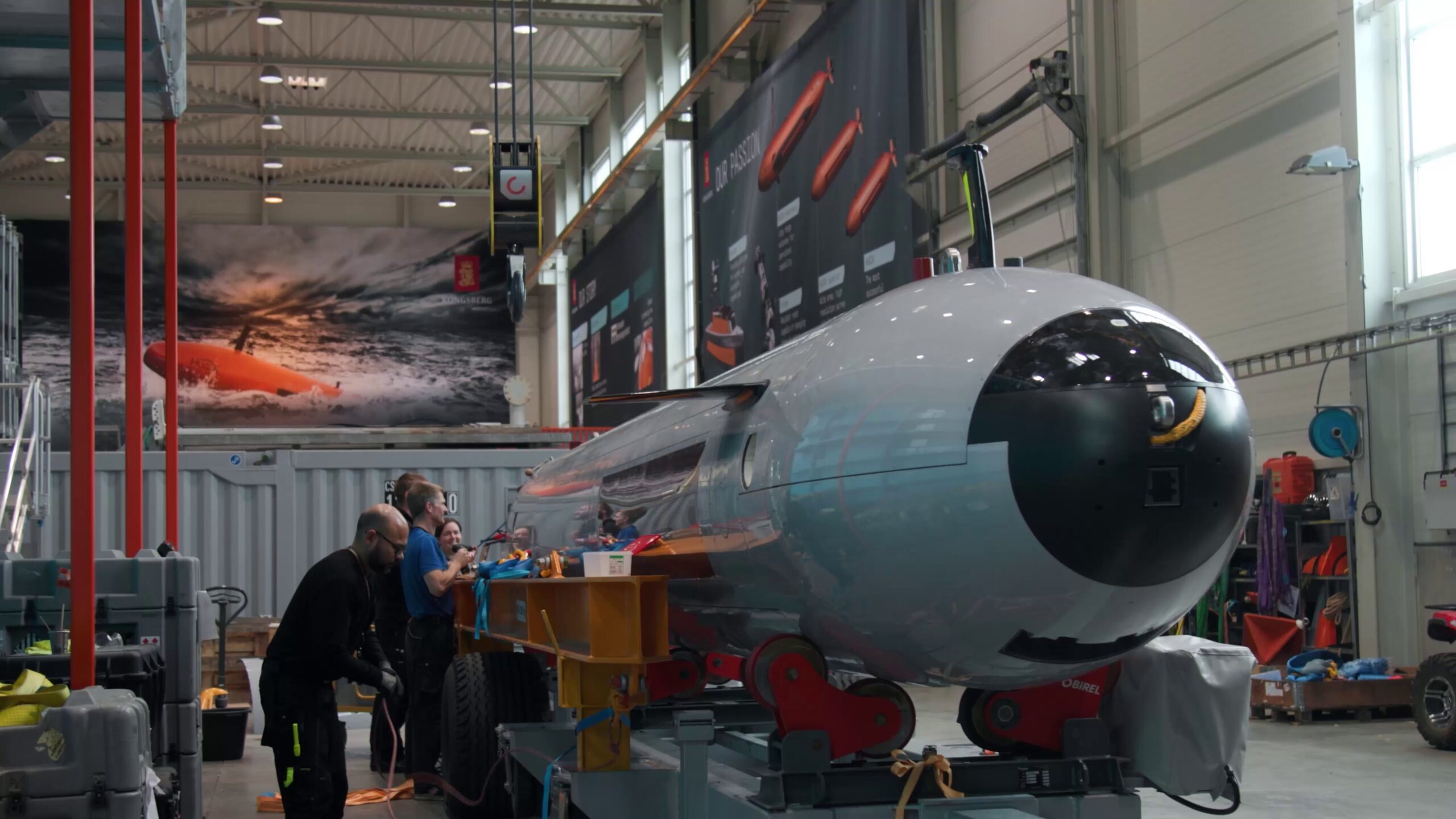
Kongsberg Discovery has started an extensive programme of sea trials with its new and revolutionary long-range Autonomous Underwater Vehicle (AUV), the HUGIN Endurance.
HUGIN Endurance, launched in 2021, is the largest member of Kongsberg Discovery’s HUGIN family of AUVs. Measuring approximately 11 metres in length, with a diameter of 1.2 metres and weighing around 8,000 kg, it is rated to a depth of 6,000 metres and designed to facilitate independent multi-role operations spanning approximately 2,200km or 1,200 nautical miles.
Making the impossible possible
“With HUGIN Endurance we are pushing the boundaries for autonomous over-the-horizon AUV operations. There are countless possible underwater applications, including geophysical, environmental, hydrographic, naval, security, critical asset inspection and search-and-rescue operations. Although we only launched the development project in 2021, thanks to our more than 30 years of experience in AUV technology we’ve been able to develop a transformative product within a very short time. To see it in the water, responding as expected, is very exciting,” says Martin Wien Fjell, President Kongsberg Discovery.
A world first in shore-to-shore operations
Powered by pressure-tolerant lithium batteries, the unit’s biggest differentiator is that it can be deployed directly from shore and spend up to 15 days at sea.
“The name Endurance says it all. Its long-range capability represents a huge cost benefit, with no mother ship required for launching, monitoring and recharging. For customers, being able to carry out unsupervised operations far from any support infrastructure, both reduces project costs and carbon footprint while significantly increasing the weather window,” says Fjell. “And even if a support ship is available or required, it can be assigned to other productive tasks while the HUGIN Endurance is on mission.”
Unmatched payload flexibility
As standard, HUGIN Endurance comes equipped with a wide array of sensors for survey campaigns. This includes a wide-swath high-resolution synthetic aperture sonar (HISAS 1032 Dual RX), multibeam echo sounder (EM 2040 MkII), sub-bottom profiling system, colour camera, laser profiler, magnetometer and environmental sensors collecting data such as conductivity, temperature, sound and speed, and environmental sensors for methane, CO2 and O2 concentration.
“HUGIN Endurance can accommodate whatever kind of payload a customer wants, whether for seabed mapping or inspection, oceanography profiling, pre-surveys for offshore wind parks or as a surveillance tool for critical subsea infrastructure or changes in ecosystems. It offers unmatched coverage and can generate data across an area close to 1,000 square km in a single dive,” says Fjell.
Family flagship
The unit retains many of the proven, commercial-off-the-shelf capabilities found across Kongsberg Discovery’s entire HUGIN range. It also looks similar to previous HUGIN models but boasts new features including fins that allow stable and horizontal flight in waters of varying density and more agile bottom avoidance, as well as a unique tail design accommodating contra-rotating dual propellers.
Using KONGSBERG’s Sunstone inertial navigation system (INS) for highly accurate underwater positioning, HUGIN Endurance is designed for days to weeks of submerged autonomous operation without position update from external sources. A new autonomous mission management system allows new levels of situational awareness and decision making compared to previous designs. HUGIN Endurance can communicate acoustically with pre-deployed transponders and surface vessels when submerged and has RF and satellite connectivity when at the surface.
The HUGIN Endurance programme has attracted interest both from the defence sector and commercial operators, with delivery of the first unit scheduled for early 2024. KONGSBERG is in talks with several potential customers for further deliveries.
Marine robot fleets set to revolutionise ocean exploration
A fleet of marine robots that can tackle complex offshore tasks, part of a recently completed, groundbreaking project funded by Innovate UK, is poised to change approaches to ocean exploration.
Autonomous marine systems are being developed and deployed in increasing numbers. However, as maritime operations become ever more complex and expensive, and installed energy infrastructure increases in scale and distance from shore, there is a rapidly emerging need for more sophisticated multi-platform capabilities.
Squads of Adaptive Robots (SoAR), a 2-year collaborative research and development initiative was led by the developer of ecoSUB AUVs, Planet Ocean. The project kicked off in September 2021 and culminated this summer with full system testing at Smart Sound Plymouth on England’s south coast.
The SoAR team’s aim was to demonstrate how large-scale survey and exploration missions can be achieved by going beyond the limitations of individual AUVs. Industry partners Planet Ocean, Sonardyne International and HydroSurv worked alongside the National Oceanography Centre (NOC), Royal Holloway University and the Offshore Renewable Energy (ORE) Catapult to develop advanced AI-driven mission planning, communications protocols for fleet coordination and significant improvements in underwater navigation and communications technology.
Open-water trials successfully showcased co-ordinated missions designed, monitored and adapted in real-time by an intelligent “Autonomy Engine”. The trials involving several surface and underwater autonomous systems, with mission management conducted from a remote shore-based command and control facility. The trials simulated an offshore windfarm concession survey mission informed by a comprehensive business case analysis by the team at ORE Catapult.
SoAR has led to the introduction of several technological innovations, including advanced AI-driven mission planning, open-source communications protocols for heterogenous fleet coordination and a range of new and enhanced platform capabilities for both surface and sub-surface systems. The variety of small form factor robotic platforms involved in the project represented some of the best innovation in UK ocean robotics to date.
The SoAR concept is adaptable to various applications but strategically tailored to address the specific needs of the offshore wind sector, developing an approach that will offer new operating paradigms and substantial long term cost savings for offshore asset construction and maintenance compared to conventional methods.
The Technology
The fleet-level autonomy engine developed by Royal Holloway, University of London serves as the mission’s central nervous system, making real-time decisions and replanning when necessary due to factors such as inaccurate mission execution, vehicle faults, changing in the operating environment, or the addition and removal of stations. The division of labour enabled by this approach showed significant promise in productivity gains made possible by robotics and AI.
The SoAR Communications Backbone, developed and released by the team at the NOC addresses the absence of standardised interfaces and communication protocols. It acts as a central messaging system which enables interoperability between the fleet-level autonomy engine, each vehicle-specific command and control system, and any other sub-system requiring bi-directional communication. This is key to allowing the seamless introduction of different platforms and sub-systems in diverse combinations to suit a wide range of mission objectives.
For the trial, Sonardyne provided inter-medium communications via its AvTrak 6 Nano acoustic transceivers fitted to each AUV. This enabled simultaneous USBL tracking via a surface vessel and robust telemetry for AUV-to-vessel and AUV-to-AVU communications.
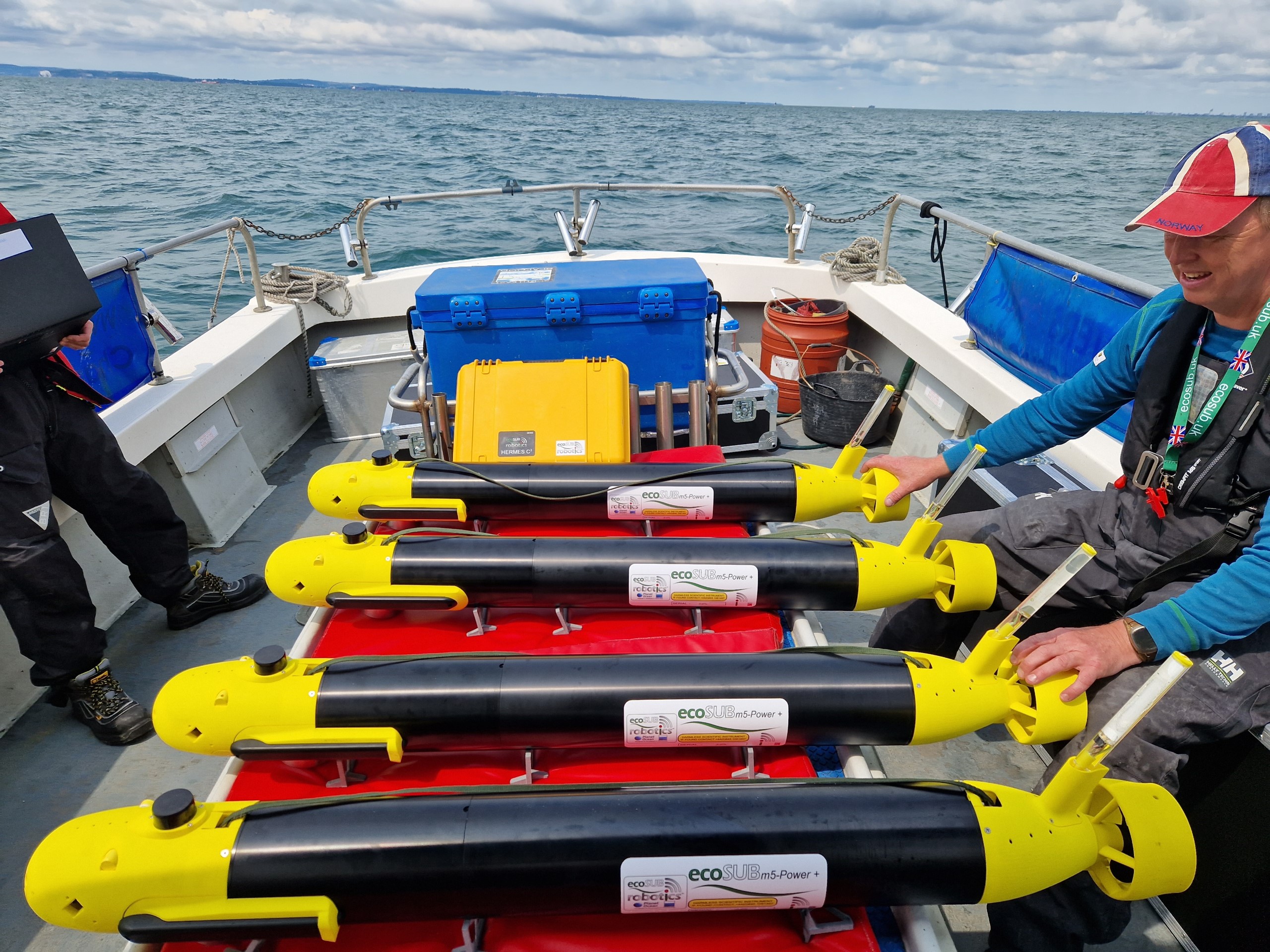
ecoSUB AUVs represent a significant advancement in affordable and versatile ocean science robotics. Equipped with the capability to deploy a wide range of advanced sensors including high-quality side scan sonar systems, DVL, acoustic communications and a range of science payloads, these budget-friendly AUVs cross various sectors and application use cases. A small swarm of four ecoSUB AUVs, each fitted with a Sonardyne AvTrak 6 Nano acoustic transceiver, played a crucial role in rapidly assessing the underwater environment and conducting preliminary evaluations to identify targets of interest.
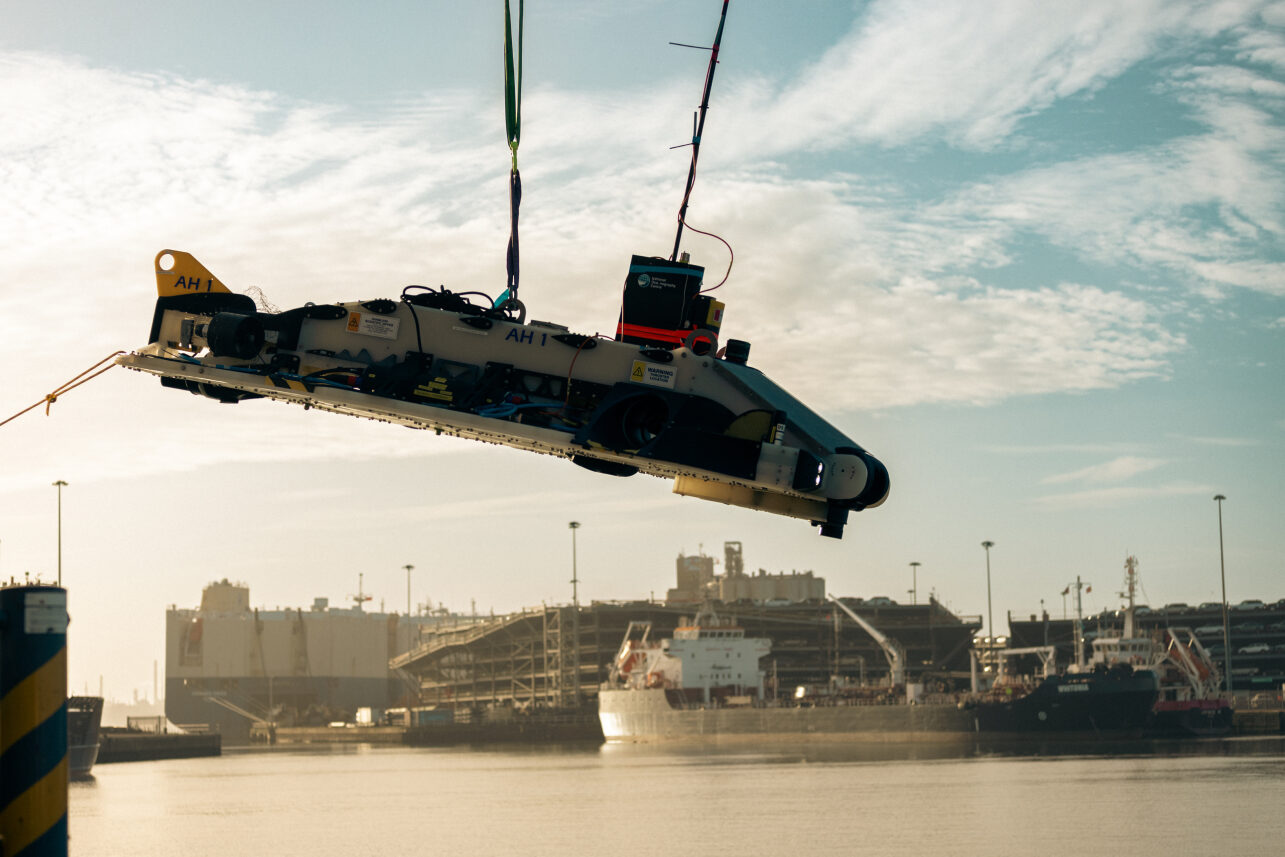
Auto-Hover 1 (AH1), owned and operated by NOC, represents the state-of-the art in hover-capable AUV platforms. Equipped with six thrusters, AH1 is capable of exceptional precision in maintaining station and navigating vertically within the water column. With advanced sensing capabilities, and also fitted with an AvTrak transceiver, AH1 was dedicated to close inspection tasks, enabling intricate and comprehensive examination of identified targets.
HydroSurv’s innovative long-endurance USV, the REAV-60 was purpose designed and built for operations Beyond Visual Line of Sight (BVLoS). Central to its use case is versatility across a wide array of offshore survey and inspection needs, whilst aligning with incoming regulatory requirements.
Sonardyne’s REAV-60 USV ‘Decibel’ assumed a pivotal role, serving as a crucial communications gateway to the AUV swarm. It was fitted with an HPT 3000 transceiver, and running their well-established Ranger-2 software on its topside facilitating inter-medium communication and providing navigation support to the AUVs. Decibel was also equipped with various communications devices including 4G/LTE and Iridium satellite communication systems to enable communications between subsea, surface and the Autonomy Engine.
The deployed SoAR fleet was managed and control from HydroSurv’s shore-based Remote Operations Centre in Exeter, using 4G/LTE and Iridium communications.
Job Advert: EIVA hiring for Technical Sales / Business Development Manager
Do you have experience selling software solutions for the offshore and shallow water engineering and survey industries? If yes, you may be one of the team members EIVA is looking for to help continue growing its activities worldwide as part of the sales and business development team!
You will be joining EIVA’s international network of locations, and the position will not require being based at EIVA headquarters in Denmark. Consequently, EIVA welcomes applications from candidates based in the UK, Germany, Denmark, Romania or Singapore.
Duties and responsibilities
As technical sales manager you will be focusing on:
- Achieving sales order intake by taking over on and fostering a mix of existing accounts and new sales territory
- Responding to RFP and tenders
- Developing and executing sales plans within your assigned area of responsibility in collaboration with the relevant stakeholders in EIVA, subject to sales and KPI targets
- Contributing to the production of information on EIVA’s products (news items, case studies, website pages, videos, etc)
- Representing EIVA at exhibitions, conferences and other events
The ideal candidate…
- Understands solutions in the industry – for example through a degree in engineering or equivalent work experience
- Has a strong sales track record from positions with other players in the industry
- Has a commercial, growth-oriented focus and a hunger to chase and close new business, through a passion for tasks related to the sale and promotion of technical products
- Has an established network in the industry
Innovate UK announce £7.5M South West Marine and Maritime Launchpad funding to support innovation and growth
Maritime UK SW is pleased to announce that the Great South West, which covers Cornwall, Devon, Dorset, Somerset and the Isles of Scilly, has been chosen as the country’s Marine and Maritime Launchpad, recognising its leadership in the sector.
As part of the programme, the region is set to receive up to £7.5m of investment to drive innovation and business growth, building on its strengths in marine and maritime.
The Marine and Maritime Launchpad has been developed jointly by the Great South West and Maritime UK South West alongside regional partners (in its role as the programme board for the Great South West) and Innovate UK.
UK registered organisations can now apply for funding from Innovate UK for business-led projects that grow activities in the marine and maritime cluster in the Great South West. The competition for funding opens on 23 October 2023 and closes on 6 December 2023.
Kevin Forshaw, Chair of Maritime UK South West and Director of Industrial and Strategic Partnerships at University of Plymouth, said: “The innovation funding announced in the Great South West Marine and Maritime Launchpad is a fantastic opportunity to boost levels of innovation, exploiting what is already a world-class ocean economy cluster to create commercial solutions to the challenges facing our sector. I am proud to Chair the Maritime UK South West cluster, and help support government, industry and academia to collaborate and develop the South West regional economy, creating a cleaner, high growth, digitally enabled sector”.
Innovate UK’s Launchpads programme recognises industry clusters with the potential to deliver jobs, growth, and productivity, and unlocks funding from £15,000 to £1m, to support SMEs driving innovation in their area.
SMEs working in the region’s marine and maritime sectors are invited to enter a competition to secure funding from the programme. The competition opens on 23rd Oct.
Maritime UK South West are organising a free Marine and Maritime Launchpad briefing and networking event at Plymouth Marine Laboratory on 3 November. The event will provide briefings on how to apply with case studies from SW businesses and ample opportunity for Q&A and networking plus an option to join online. The event will also look at opportunities for the sector in decarbonisation and working across the region together to alleviate talent shortages.
Indro Mukerjee, CEO of Innovate UK, said: “Innovate UK has been building strong regional partnerships across the UK to support local innovation and commercialisation. Today’s launch of the Marine and Maritime Launchpad is an important step and another example of active collaboration with regional partners to deliver growth and productivity through innovation.”
Find out more about the Launchpads programme and the Innovate UK briefing event.
Expert regional innovation hubs given £75 million boost to local research, businesses and economies across UK – GOV.UK
Paul Wickes MBE, CEO of Cornwall Marine Network, said: “As the business support delivery arm of Maritime UK South West, CMN is delighted with the £7 million investment by Innovate UK which will further boost marine innovation across Cornwall and the wider South West. The new Launchpad funding will provide significant opportunity for local businesses, many of whom have or are developing world-leading products, to capitalise on the outstanding progress achieved to date with previous marine technology funds. It will ensure that together this industry and academia partnership continues to develop, and commercialise new ideas and products that move the marine industry closer to net zero by 2050.”
Details of the Marine and Maritime Launchpad
- Funded by Innovate UK is designed to support outstanding innovation projects by businesses active, or growing activities, in the marine and maritime innovation cluster in the Great South West – this is defined as Cornwall & Isles of Scilly, Devon, Somerset and Dorset.
- The vision for the Launchpad is to create a global centre of excellence for the testing, development and manufacture of autonomy, digital and clean ocean technologies for the rapidly growing global ocean economy.
- This is one of eight regional Launchpads funded by Innovate UK this year, following successful pilots in the Liverpool City Region and Tees Valley clusters in 2022. The regional Launchpads align with the Government’s goals in the Levelling Up White Paper.
- Under the Launchpad, up to £7.5m is available in the region over three years. UK registered organisations can now apply for funding from Innovate UK for business-led projects that grow activities in the marine and maritime cluster in the Great South West.
- The competition for funding opens on 23 October 2023 and closes on 6 December 2023.
- Companies can choose to apply for two different types of funding: smaller-scale financial assistance for a single company (between £25k and £100k), or larger-scale collaborative research and development projects (between £150k and £1m) as part of a consortium. As part of the Launchpad, Innovate UK also invites bids for funding for managing each regional cluster.
- Projects under the Great South West Launchpad can focus on:
- Marine autonomy. Disruptive technology to replace traditional ship-based alternatives for equipment inspection and other marine monitoring operations and enhance safety of the seas
- Clean maritime. Achieving net zero through transition to alternative fuel powered vessels using energy from low or zero emission sources or highly efficient batteries, as well as integrating ports into a decarbonised energy network and supplying the fuels of the future.
- Digital ocean technologies. Leading sensor and communications technology advancement and their connectedness and interoperability, to inform offshore operation by enhancing our understanding of the ocean and any impact upon it
- The Marine and Maritime Launchpad is promoted in partnership with Cornwall & Isles of Scilly LEP, Heart of the South West LEP and Dorset LEP.
- The Great South West has a prominent marine and maritime sector, contributing £1,417m of GVA in 2019 and generating over 29,000 jobs. 25% of all UK marine manufacturing jobs are based here, with significant shipyards in Devonport, Appledore and Falmouth and supply chains across the area. Cluster strengths are anchored by the highest concentration of marine engineering in the UK. The region boasts the UK’s highest concentration of environmental scientists delivering ocean monitoring, digital and clean technologies.
- Maritime UK South West is an independent business, research government cluster, working in partnership with Cornwall Marine Network to represent the Great South West area. Maritime UK SW is a member of Maritime UK and acts as a national lead on innovation.
- The vision is to create a global centre of excellence for the testing, development and manufacture of autonomy, digital and clean ocean technologies in alignment with the priorities of the Ocean Futures partnership – a strong thematic cluster, creating a hotbed of innovation with an international reach.
Greensea IQ celebrates expansion of its production facility in Plymouth, MA
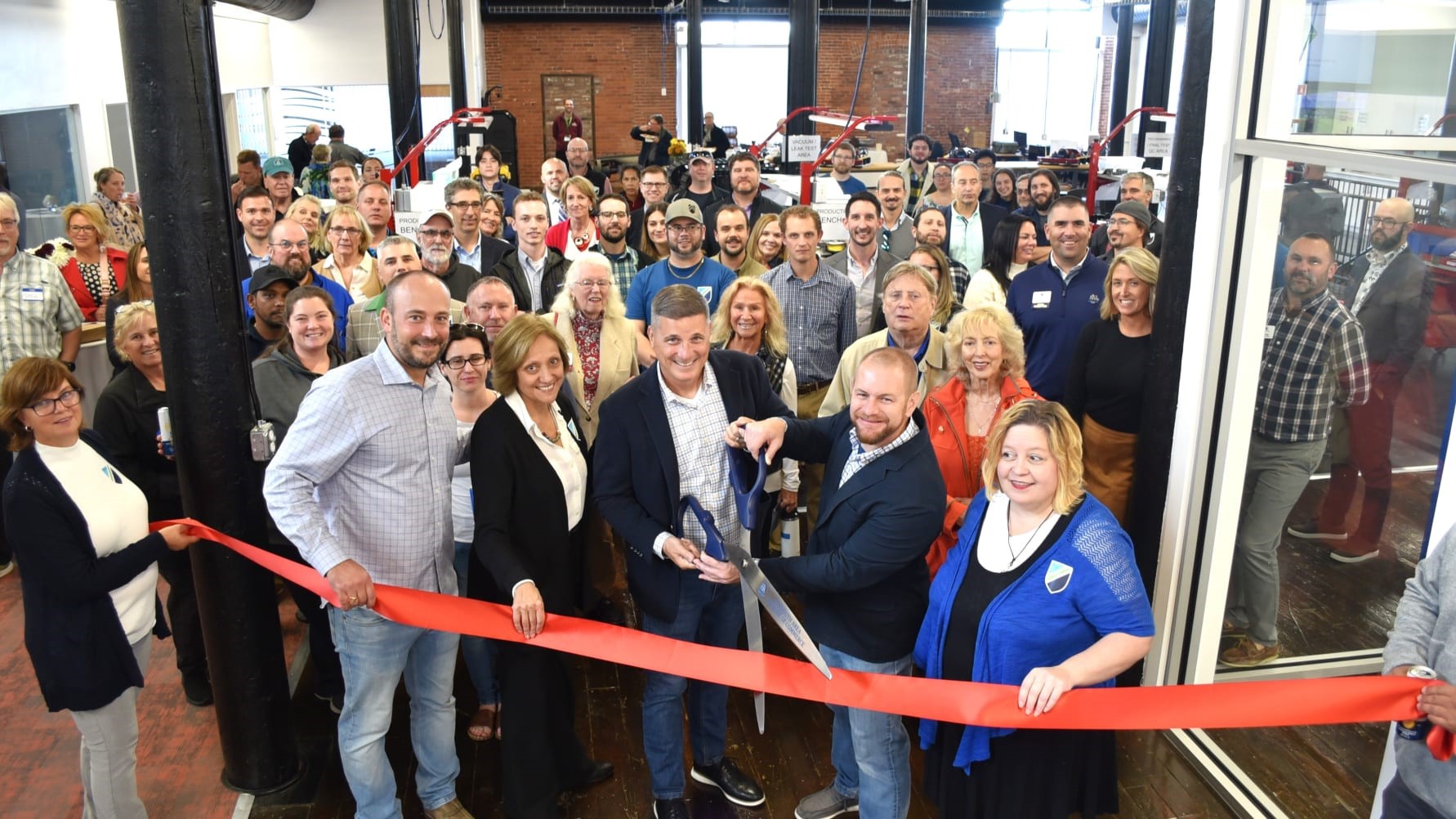
Greensea IQ celebrated the 25,000 square foot expansion of its Cordage Park production facility on October 17th. This new expansion establishes a manufacturing center for the production of several navigation and robotics systems including the Bayonet line of surf zone crawlers, EverClean hull cleaning robots, RNAV3 diver navigation systems, and OPENSEA Edge autonomy hardware.
Greensea IQ Chief Growth Officer Rob Howard, states “We were excited to open our newly expanded facility to the public for the first time and welcomed local blue tech businesses, community leaders and others from the marine industry.”
He continues, “This expansion is the next step in Greensea IQ’s transition from doing custom development work to delivering fully integrated intelligent products for working in the ocean. The new facility will support the planned growth and worldwide expansion of our robotics-as-a-service program, EverClean, while it gains adoption as fleet owners work to meet increasingly demanding carbon emissions requirements and increased hull performance throughout the cruise and shipping industries. Plymouth will also allow us to quickly scale to meet demand for the new Bayonet line of AUGVs as we start delivering the platform to defense and commercial customers for use in near shore MCM, EOD, UXO and surf zone survey applications.”
Greensea IQ’s expansion celebration took place immediately following an on water demonstration as part of the Blue Future Conference held in Plymouth, Massachusetts held at the Cordage Park Marina, Greenea IQ’s on water testing area. In addition to the Bayonet 250 other participants at the demo included Jaia Robotics, SeaTrac, and students from Massachusetts Institute of Technology.
First deliveries of ecoSUBm5-Power+ AUV with ecoCAM
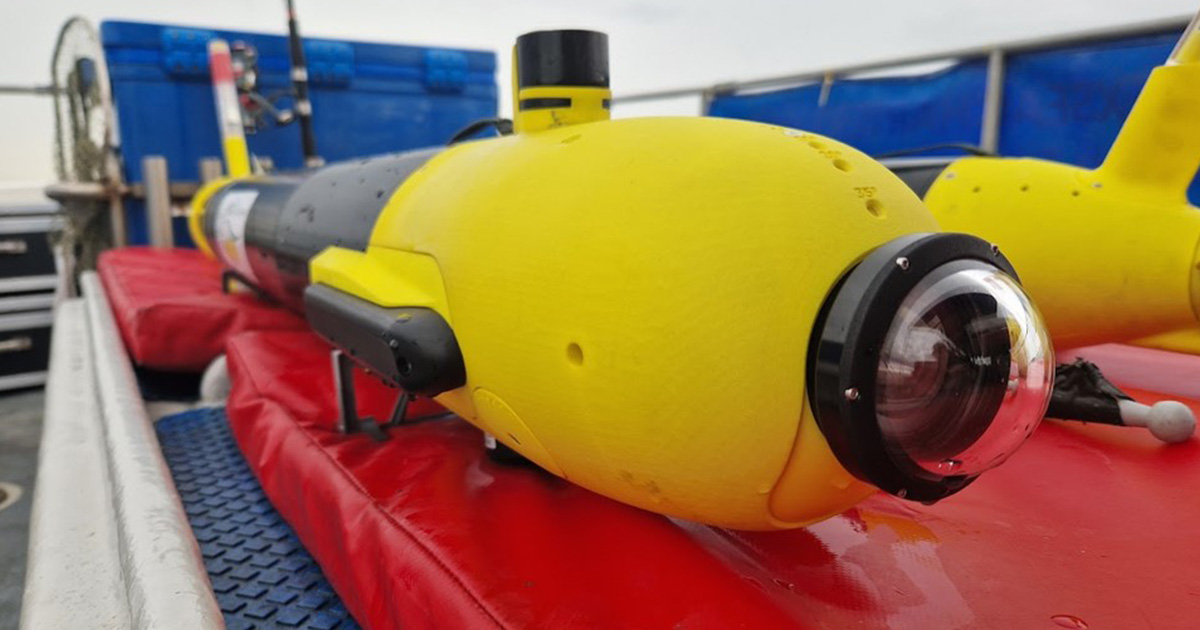
ecoCAM is a brand new 4k video and still image camera developed by the ecoSUB team, fully integrated into the ecoSUBm5-Power+ AUV system. The camera system has been designed to provide extremely high-quality video and still images, whilst being an ideal solution for machine learning applications. A 1.1” Sony IMX267 global shutter CMOS sensor, coupled with a Computar fixed 8mm lens provides high resolution, high frame rates and noise free image reproduction (8.85 MPix (4096 x 2160 px) at 33.0 fps). The camera is an underwater first, running with Subsea USBC data transfer, to provide excellent data speed for video encoding on a Jetson Orin Nano computer.
Both new users from the US and Germany intend to use the ecoCAM for machine vision applications, benefitting from the power of the Nvidia Jetson backseat computer, enabling edge computing. In one case the camera feed is being used with a navigation algorithm to pilot the vehicle into a docking station.
The ecoCAM module is a compact unit, rated to 2,500m, suitable for ecoSUBm-series AUV platforms, and is mounted in a custom nose cone that allows the camera to be orientated from forward looking to downward looking for seabed imaging. Subsea lighting packages can be provided for low/zero light applications. Onboard our ecoSUBm5-Power+ AUV platform, the ecoCAM can be coupled with side scan sonar, DVL and acoustic modem for underwater coms and USBL, if required.
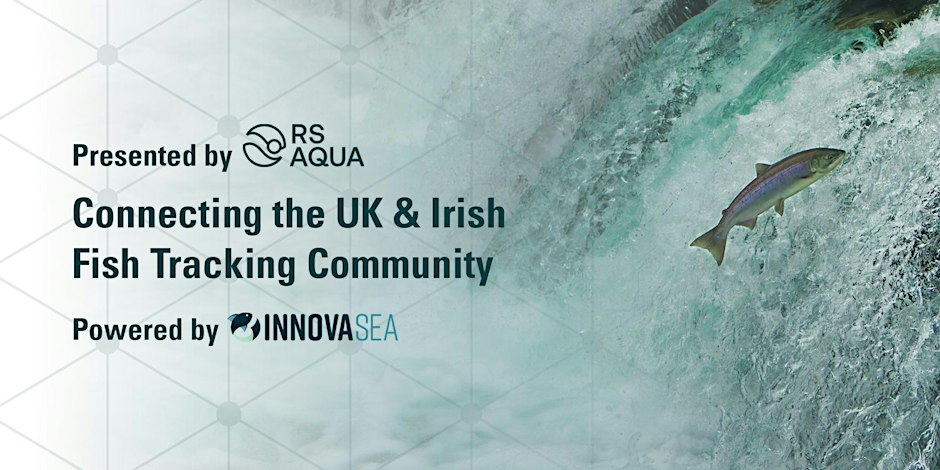
RS Aqua announce fish tracking conference 22nd November
RS Aqua are hosting its first Fish Tracking Conference taking place this November, powered by Innovasea.
The aim is to connect the UK and Irish acoustic telemetry community, to showcase new and innovative technology, and to ultimately enable a better understanding of fish behaviour in our waters.
The conference takes place on Wednesday 22nd November at Port Solent, Portsmouth. It will feature key speakers who are leading research projects around our coastline, with new technology updates and workshops from Innovasea. There are additional optional demonstrations and workshops from RS Aqua and Innovasea on the Tuesday afternoon (21st) and Thursday morning (23rd).
Those interested can learn more about it and register for tickets here.