
Zupt secures first major renewable contract for offshore wind farm development
Zupt just announced winning its first major renewables contract for a unique offshore wind farm development offshore the northwest coast of France. Zupt will develop, source, integrate, and operate a complex sensor suite on a large subsea template to tackle the challenges of this development and support the installation of fixed wind turbine monopiles in shallow and rocky subsea terrains.
Due to the difficult geophysical terrain, the process begins with drilling 10-meter-wide sockets into the seabed, which are then filled with sand to establish a consistent foundation prior to the monopile installation. A custom 20-meter-tall subsea template is then positioned directly atop the sand-filled sockets in absolute space, serving as the base through which the monopiles will be inserted.
Zupt will integrate a complex sensor suite onto the subsea template to monitor and ensure precise positioning and attitude of the large-diameter monopiles during installation. The template used will be relocated and utilized for every monopile installation, with the sensors permanently fixed. This sensor suite contains over 40 advanced sensors, including cameras, lights, acoustic and mechanical proximity sensors, GNSS, multiplexors, and inertial measurement units, all connected to the surface via a 10GB network architecture. These sensors will be strategically placed across the template, and accompanying software will be supplied to facilitate real-time structure monitoring and precise control.
Zupt's development of proprietary sensors placed across the template makes this project unique and cutting-edge. While incorporating some off-the-shelf components, the project primarily features custom-designed sensors such as cameras, lights, mechanical proximity sensors, and a specialized MUX system. This proprietary sensor technology adds value by providing a more cost-effective and efficient solution. For example, the specialized MUX systems, strategically designed to optimize power distribution and communication, offer a practical alternative while reducing overall project expenses.
Zupt's involvement in this project goes beyond the integration of complex sensors; we are actively engaged throughout the project lifecycle, from the initial engineering phases, installation onto the template, and monitoring offshore operations firsthand. With a dedicated team present offshore and an operational strategy spanning around 200+ days, Zupt ensures meticulous attention to detail and operational efficiency.
Zupt's thorough approach involves comprehensive testing phases - factory acceptance tests (FAT) and systems acceptance tests (SAT) to ensure reliability and functionality at every stage before deployment. These tests conducted both at Zupt's facility in Houston and the client fabrication yard, where the template is assembled, ensure the technology's readiness on the template before the offshore operations begin.
The significance of this project isn't solely the magnitude of installing numerous offshore wind turbines but in Zupt's ability to solve complex problems through innovative approaches and technical expertise. By successfully navigating challenging subsea terrains with precision and reliability, Zupt not only contributes to expanding renewable energy but also advances wind farm installation methods. While the project's commencement is scheduled for later in 2024, the detailed planning and preparation highlight the complexity involved in such offshore projects. With Zupt's leading expertise and experience, this project sets a benchmark for efficient, precise, and innovative offshore wind farm installations.
Stay tuned for more updates from Zupt as the offshore wind farm development continues to unfold.
Fugro expands Blue Essence® fleet and receives highest level of UK coastguard approval
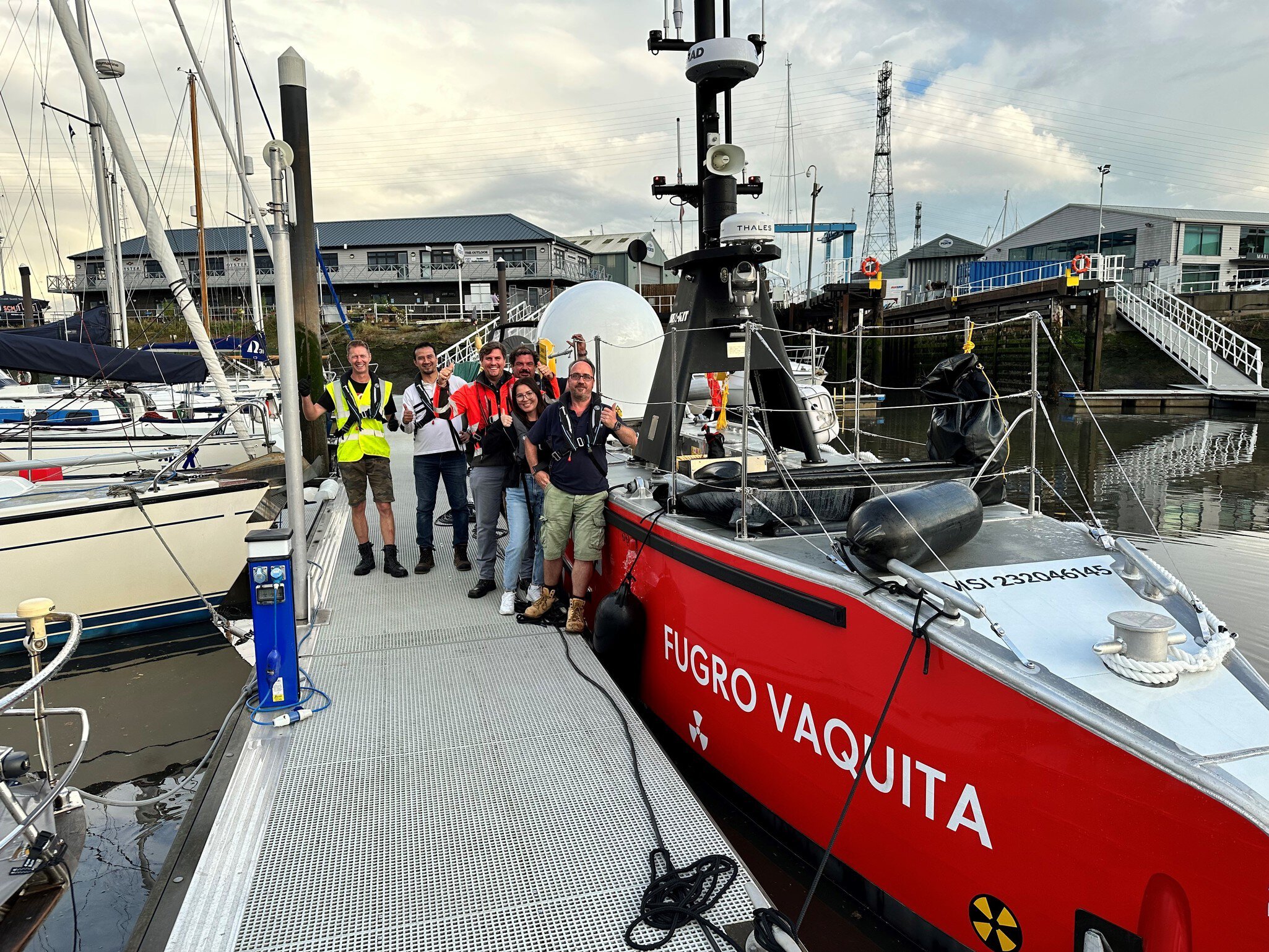
Fugro has expanded its 12-metre Blue Essence® uncrewed surface vessel (USV) fleet with the addition of Fugro Vaquita. The latest Blue Essence® has earned Category 0 approval from the UK Maritime Coastguard Agency (MCA), the highest level of approval for autonomous vessels. It is now the largest USV to operate fully remotely, with unrestricted access, to support marine projects further offshore while enhancing safety and environmental performance.
The expansion of the Blue Essence® fleet demonstrates Fugro’s commitment to leveraging technology for a safe and liveable world. Both USV and electrical remotely operated vehicle (eROV) will be remotely controlled from Fugro’s global network of remote operations centres (ROCs).
This remote operation capability not only removes personnel from potentially high-risk offshore environments but also significantly reduces the carbon footprint of operations, with the USV's emissions up to 95% lower than conventional support vessels. Operators can also monitor and control the vessels from anywhere in the world, enabling faster decision-making and access to near real-time data. This information is crucial for optimising project schedules, ensuring safety, and maximising asset performance.
Nick Simmons, Fugro’s Director of USV and Remote Working in Europe and Africa said: “This is a ground-breaking milestone for the maritime sector as we strengthen our capabilities to service assets further offshore. We are thrilled with the development of our Blue Essence® fleet as we commit to more remote operations and progress towards our goal of net zero emissions by 2035.”
The Fugro Vaquita, developed in partnership with SEA-KIT, is the second of the company’s Blue Essence® USV fleet to operate in European waters. In 2023, Fugro Orca completed multiple projects including several asset integrity and seabed surveys for key clients.
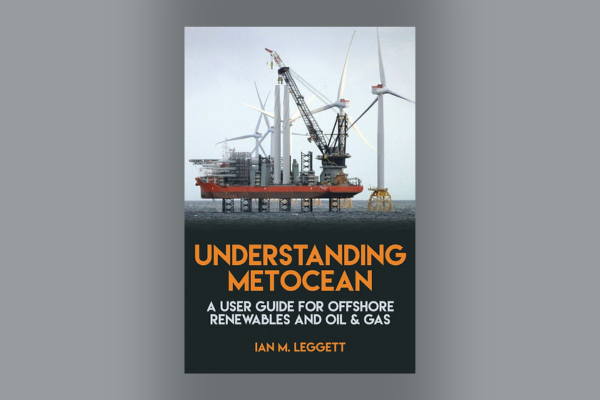
Director of OceanExpert Ltd announces new book 'Understanding Metocean - A User Guide for Offshore Renewables and Oil & Gas'
Ian Leggett, Managing Director of OceanExpert Ltd an independent Metocean Consultancy, announces the publication of his new book 'Understanding Metocean - A User Guide for Offshore Renewables and Oil & Gas'.
This book draws on his 45 years of experience in Metocean, providing guidelines, procedures and information for the offshore renewables and oil & gas sectors with regard to the requirements for metocean at each stage of the life cycle of a project. It also provides details about metocean processes and activities that ensure these requirements are addressed. It therefore presents a better understanding of what metocean is all about and how optimum use of data and information can benefit offshore development activities.
Copies are available here and further information on OceanExpert Ltd can be found here.
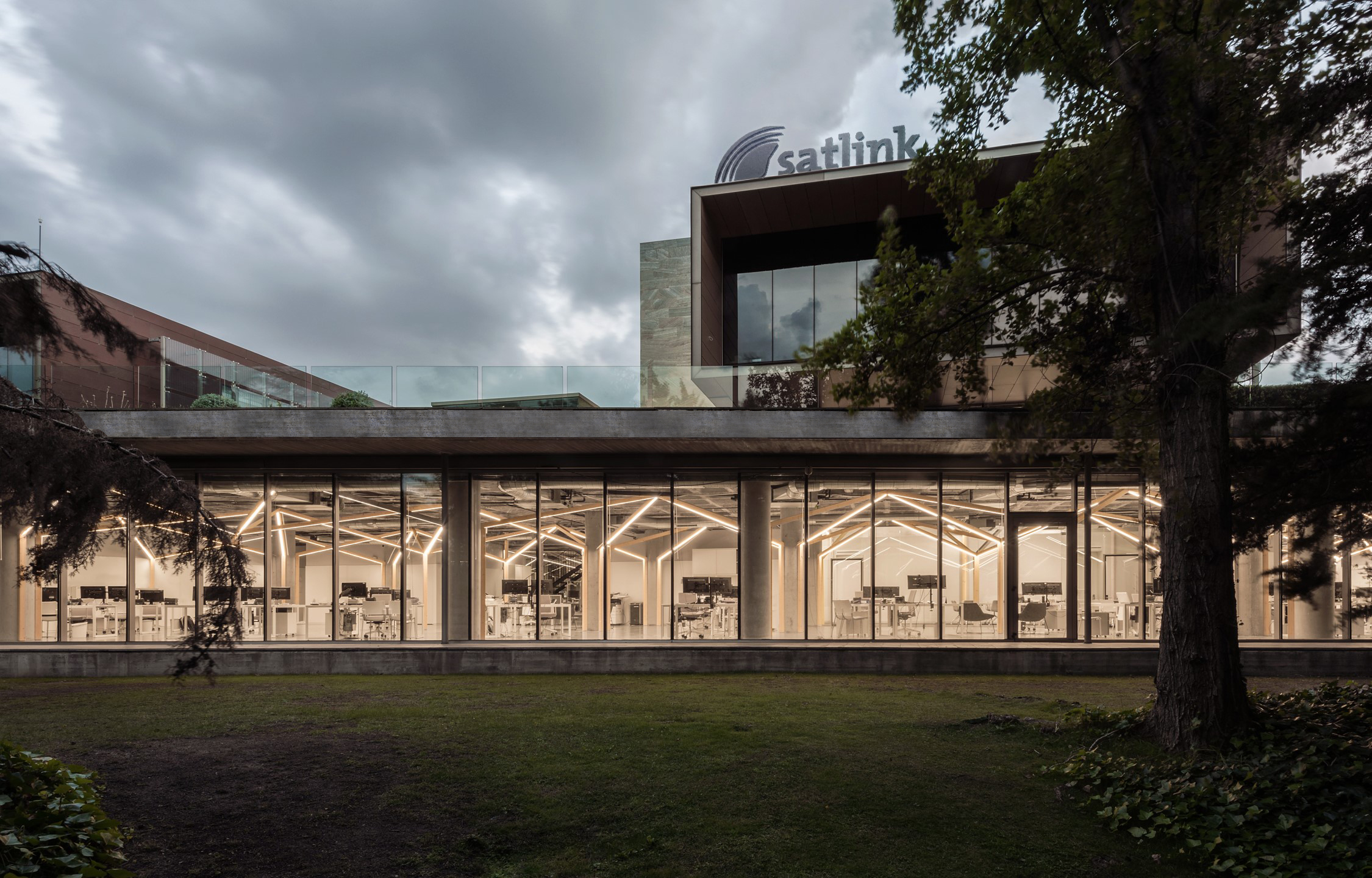
Technology company Satlink acquires Canadian Xeos Technologies
Satlink, the global leader in proprietary technology solutions for the maritime sector, has acquired Xeos Technologies (“Xeos”), a Canadian company with 20 years of experience in providing specialised asset-tracking solutions and communication services for high-value devices operating under harsh maritime environments and the oceanographic field. Based in Halifax (Nova Scotia, Canada), Xeos serves hundreds of public and private customers.
Through this acquisition, Satlink strengthens its position as a strategic provider of high value-added technology for the knowledge and management of oceans. Its cutting-edge developments in data collection and analysis not only enable a better understanding of the oceans and their resources, but also ensure the long-term sustainability of these resources. With over 7,500 clients – including governments, maritime regulators and fisheries – Satlink exports its products and solutions to more than 90 countries.
With this acquisition, Satlink increases its presence in North America, where the company initially established a presence in 2020. As such, Satlink will complement its existing locations in Spain, Korea, Taiwan, Seychelles, Ecuador and Fiji with a new office in Canada. Xeos’ founders and management team will reinvest into Satlink, further strengthening the partnership and future strategic vision. Terms of the deal have not been disclosed.
Faustino Velasco, Founder and Chairman of Satlink, said: “We are very excited to integrate Xeos and welcome the team onboard, with whom we share the same vision for the future: relentless innovation, commitment to quality, and improving ocean knowledge and sustainability through technology. That's where we want to make the difference.”
Derek Inglis, co-Founder and President of Xeos, added: “The agreement with Satlink represents an important recognition for the work done since the company’s foundation. We believe Satlink is the perfect partner for Xeos and will allow the company to accelerate its international expansion while enhancing the current product portfolio, fostering even more innovative solutions and, accordingly, bringing Xeos to the next level. We are thrilled to start this new phase alongside Faustino and the wider Satlink team.”
Geoff MacIntyre, Vice President and General Manager of Xeos, commented: “We are pleased to join a group that not only shares our vision for the sustainability of the oceans, but also demonstrates a genuine commitment to maritime technology. We believe that the combination of our two companies will significantly enhance our ability to serve our clients with world-leading technology and service”.
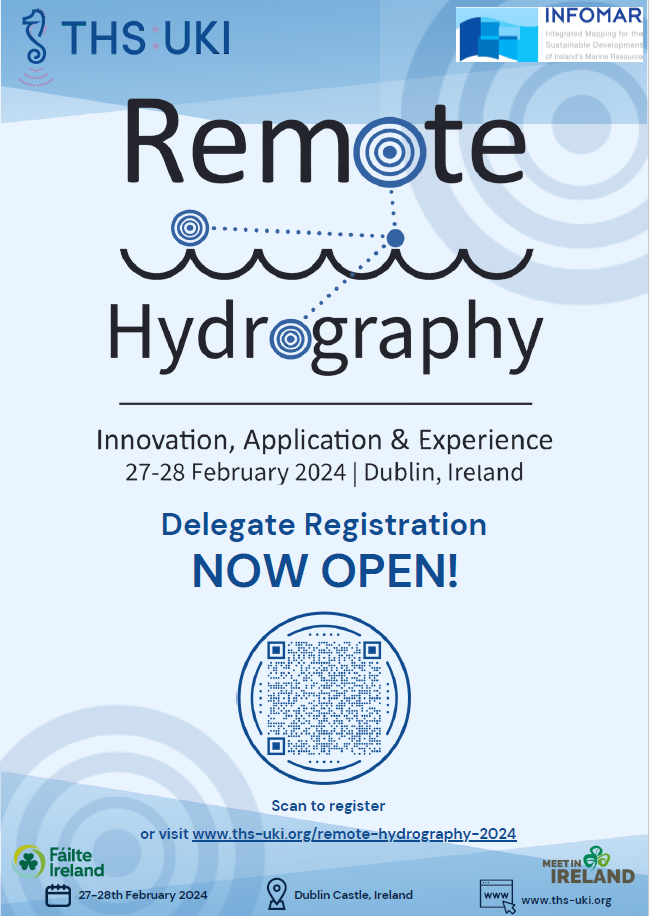
The Hydrographic Society UK & Ireland announce Remote Hydrography 2024 conference to take place 27-28 February
The Hydrographic Society UK & Ireland (THS:UKI) is delighted to announce its flagship conference, Remote Hydrography 2024, to be held 27-28 February 2024 in Dublin Castle.
To register to attend the event, visit: Remote Hydrography 2024 - Tickets. THS:UKI Members can take advantage of reduced rates.
The THS:UKI’s second Remote Hydrography conference and exhibition in conjunction with INFOMAR is returning to Dublin. This event brings together manufacturers, operators, regulators, and research and development leaders from both industry and academia, within the rapidly developing field of remote surveying and uncrewed survey operations.
Remote Hydrography 2024 provides an opportunity to share experience gained in the development and application of autonomous and uncrewed platforms (surface, underwater, aerial, and space-based) and the associated command and support services. These and enabling technologies like machine learning and artificial intelligence will revolutionise workflows for hydrographic data collection, processing, analysis, and presentation.
The conference will build on the success of the 2022 event which featured informative lively debates, both in session and during the busy social programme. The 2024 event will also provide formal and informal opportunities to network, make contacts, and build relationships. Through leaders, innovators, and practitioners, Remote Hydrography represents a key opportunity for networking, promotion, and demonstrations.
For further details, email: [email protected].
The International SeaKeepers Society, Maiden and Seabed 2030 join forces to advance ocean research and empower the next generation during the 2023/2024 Ocean Globe Race
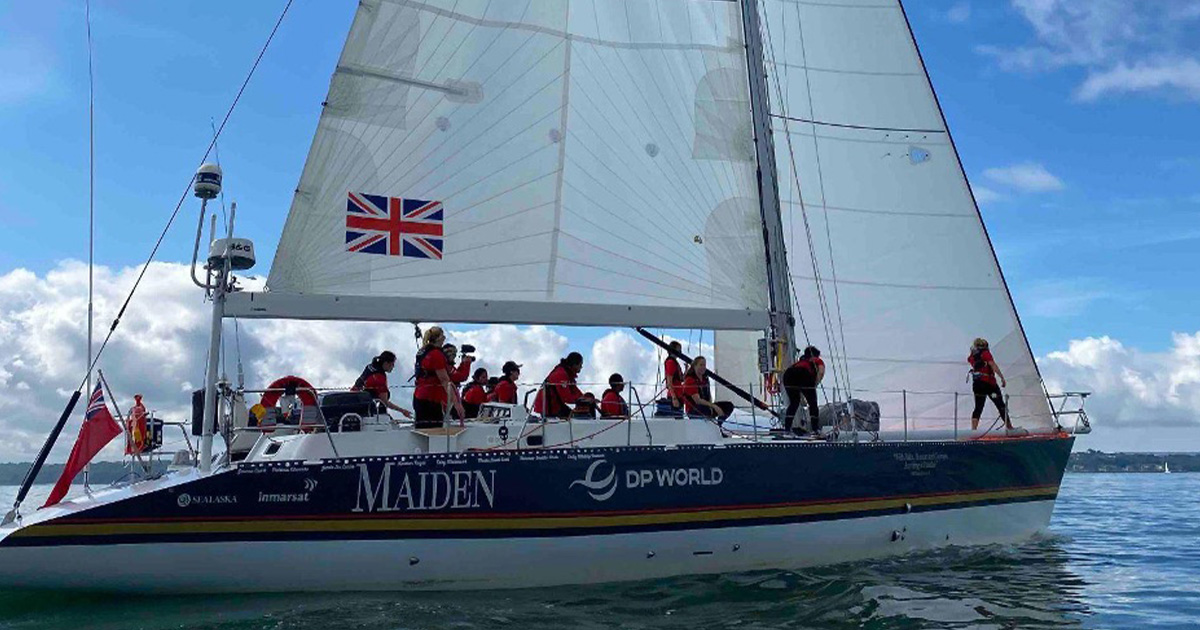
The International SeaKeepers Society partners with Maiden as it pauses its world tour to compete in the Ocean Globe Race. Maiden, a vessel with a storied history of breaking barriers and empowering women, aligns seamlessly with SeaKeepers’ mission to advance ocean research and education.
Since September 2021, Maiden has embarked on a global journey spanning nearly 30,000 nautical miles, visiting 20 destinations, and engaging with schools, charities, and organisations. Tracy Edwards MBE, the skipper of the first all-female crew in the 1989 Whitbread Round the World Race, continues her trailblazing legacy by using Maiden to educate, empower, and elevate girls worldwide.
The Ocean Globe Race (OGR), a fully crewed retro race commemorating the 50th anniversary of the 1973 Whitbread Round the World Race, provides an exceptional platform to amplify Maiden’s mission. Edwards and her team faced formidable challenges in the 1989 race, challenging the status quo and paving the way for future generations of female sailors.
Tracy Edwards MBE said: “SeaKeepers’ collaboration with Maiden extends beyond the OGR. Maiden is a proud SeaKeepers program partner and a supporter of The Nippon Foundation-GEBCO Seabed 2030 Project. The crew carries the Seabed 2030 logger on board, contributing valuable data to map the ocean floor as part of SeaKeepers’ Citizen Science initiative. The logger was installed before the OGR, and the first leg of data from the UK to Cape Town is already in the hands of SeaKeepers’ Citizen Science team.”
Seabed 2030 Project Director, Jamie McMichael-Phillips, said: "We are delighted by this collaboration and greatly appreciate the support from SeaKeepers, a valued, long-standing partner of Seabed 2030, as well as Maiden, under the leadership of the inspiring Tracy Edwards.
“This partnership stands as a testament to our unwavering commitment to forging a path toward a future where the ocean is comprehensively understood and diligently preserved for generations to come. Our mission is a collective endeavour - achievable only through collaborative efforts, such as this, on an international scale."
As Maiden arrived in New Zealand, SeaKeepers’ South Pacific Program Development Manager, Melissa White, welcomed the crew in Auckland, demonstrating SeaKeepers’ global outreach. The collaboration extends to Educational Outreach, with Maiden and SeaKeepers’ co-creating an international online program to inspire the next generation of ocean enthusiasts.
SeaKeepers' Director of International Relations, Gill Rodrigues, commented: “Maiden’s journey is not just a race around the globe; it’s a testament to the resilience and capability of women in sailing. Their dedication to education, empowerment, and ocean research reflects SeaKeepers’ mission, making this partnership a powerful force for positive change.”
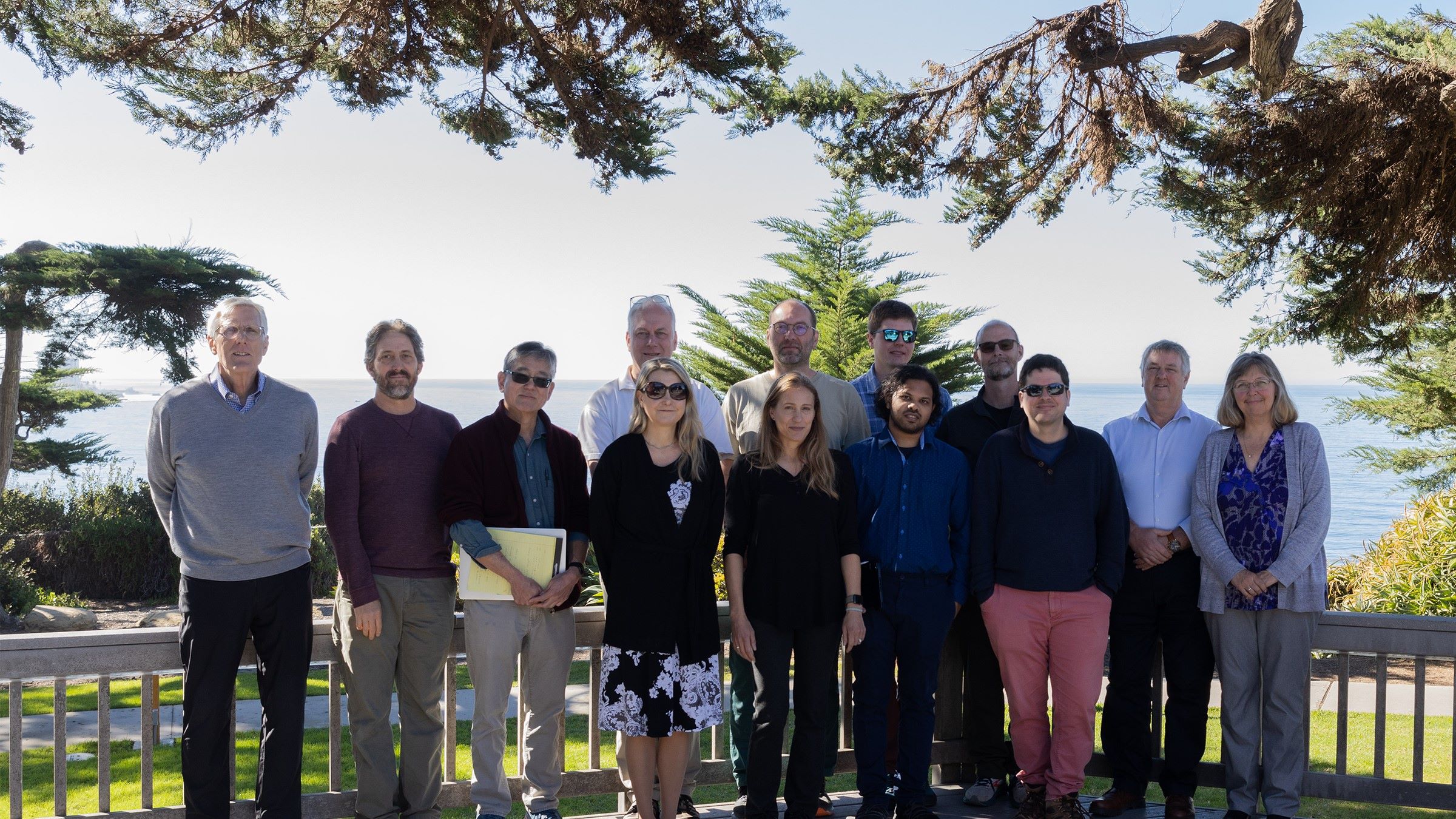
Monitoring the seabed and cultivating a community
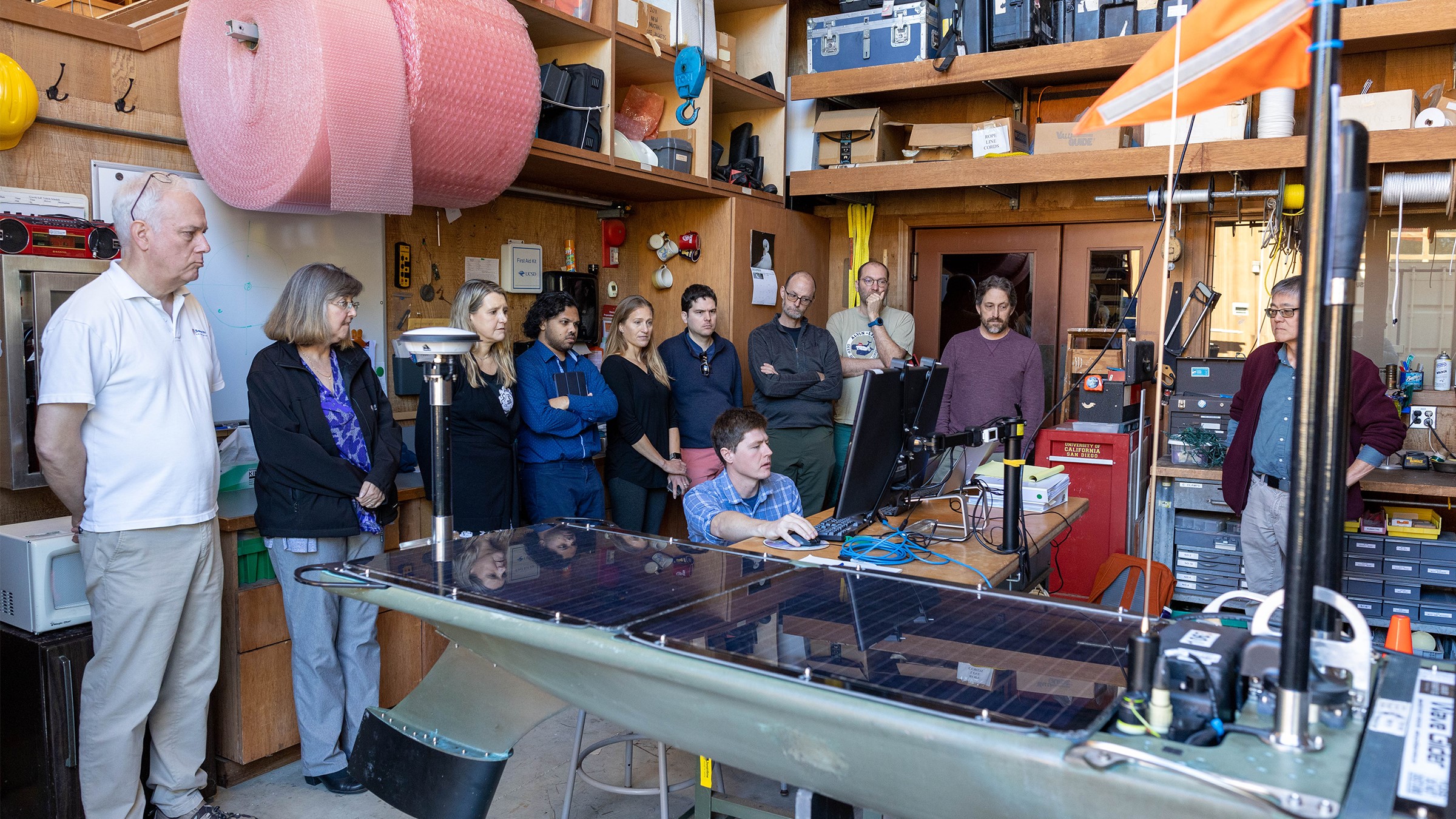
It’s not often you get all the right people in one room. At the end of last year, Sonardyne managed just that. It held a two-day Seabed Deformation Technical Workshop bringing together some key members of the Sonardyne academic user community in the USA and Canada to share insights, experiences and how our GNSS-A and AZA instruments can be further improved to meet their future needs.
These included; Ocean Networks Canada, U.S. Geological Survey (USGS), Georgia Institute of Technology, Woods Hole Oceanographic Institution and the University of Washington, as well as Sonardyne's hosts Scripps Institution of Oceanography in California. As well as providing the stunning backdrop for this event, they furnished instruments for the workshop form the large pool of equipment that they support this community with.
GNSS-A and AZA are two independent technologies that are providing scientists with a ground-breaking new toolset for measuring seabed deformation caused by plate tectonic movements:
• GNSS-A involves accurate (centimetric) global reference framework (principally horizontal) positioning of Fetch transponders on the seabed using an Uncrewed Surface Vehicle (USV).
• AZA is a technique to accurately measure pressure (and thus vertical elevation) of a Fetch transponder. It does this by correcting for the inherent drift of the pressure sensor. This is also being increasingly used by scientists studying ocean circulation, for whom long term pressure measurements are critical.
Each attendee shared their latest research projects and plans with the group, helping the attendees cross pollinate ideas and discuss the challenges they are facing.
The core of the workshop, comprising in-depth technical insights and demonstrations was supplied by Sonardyne’s, Nick Street and Guy Hebden the Queens Award-winning seabed deformation technology from inception and Guy, from Sonardyne's applications group, has first-hand experience of product deployment and managing remote operations.
This kind of community interaction is invaluable to ensure that our technology continues to push forward to meet the demanding needs of its scientific users into the future.
The USA and Canada academic sectors provide many collaborative partnerships for Sonardyne and they are some of the most prolific and high profile users of its products across a wide range of research fields.
“It’s humbling and very rewarding to see how key our technology is to answer some of the most critical questions about seabed deformation and how this relates to earthquake and tsunami risks. It was no mean feat to pull this collection of world-leading institutions from the US and Canadian academic community together for two days, but the feedback has been so positive that we’re already being asked when we’ll do it again. In fact, it’s encouraging us to look across other parts of our technology portfolio to identify other workshop opportunities that will help foster a collaborative community between us and our academic users.” Geraint West. Head of Science. Sonardyne International.
The high volume of interactive Q&A and discussion between the attendees provided valuable insight into how Sonardyne's products are currently used and how they can be developed to further enhance future research. As a result, Sonardyne is investigating the potential for further workshops to foster more user collaboration and communities in future.
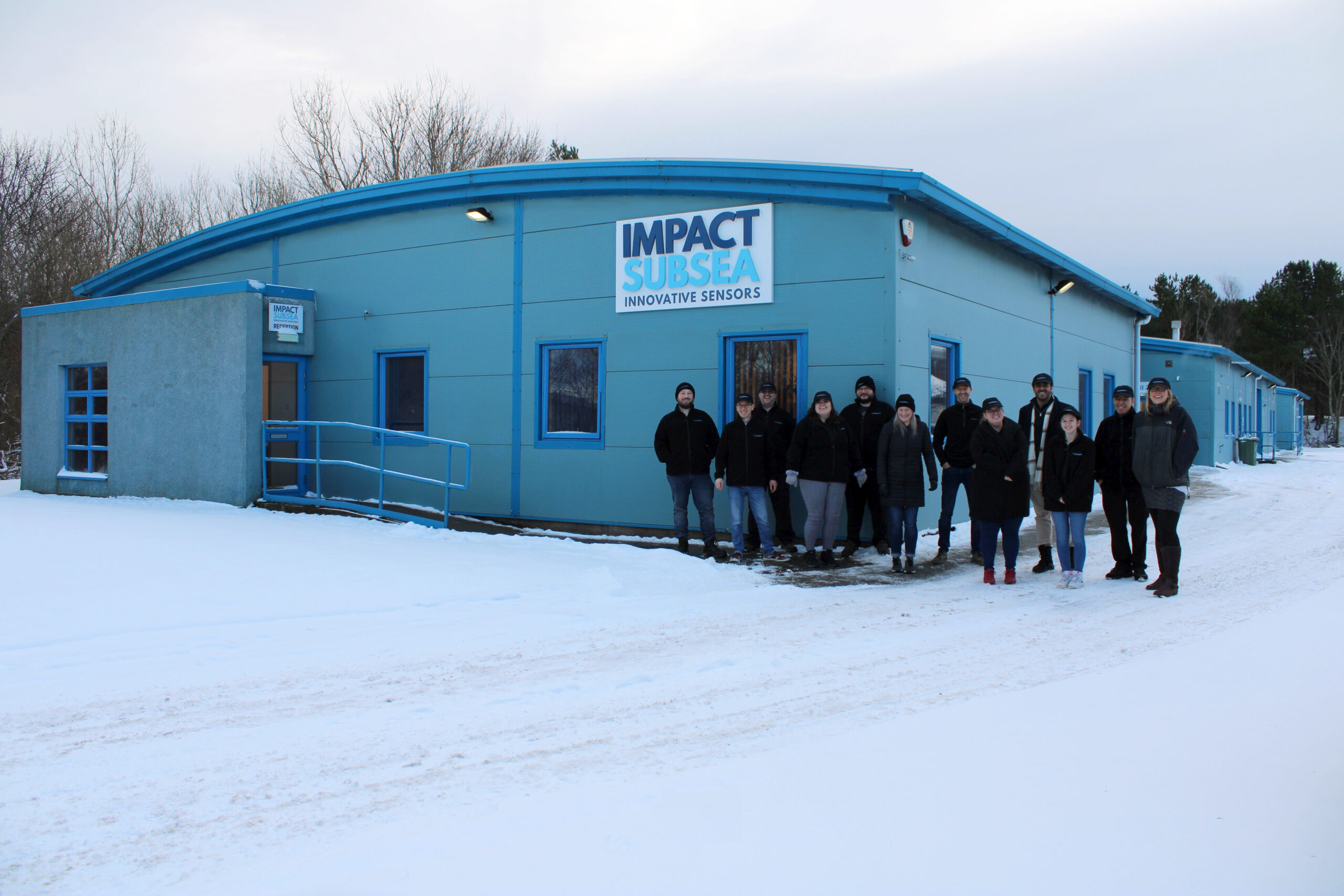
Engineering a bright future: Impact Subsea's Aberdeen headquarters showcases commitment to growth
Impact Subsea, a company specialising in underwater sensors, recently opened a new chapter in its growth trajectory with the move to larger headquarters in The Aberdeen Energy Park, United Kingdom.
The company's headquarters, located at Silverfield House, provide ample space to support the company's sustained growth. Silverfield House provides 12,000 sq ft of modern office, production, training, calibration and demonstration space.
With its previous base situated in Ellon, Aberdeenshire, the move to Aberdeen will serve as a more centralised hub to streamline the company's operations.
Managing Director Ben Grant was pleased with the move, saying;
"To support the continued growth of Impact Subsea, we are delighted to announce the acquisition of larger premises. Our new premises not only enable continued support to users of our sensors but provide a strong base to take on new employees and launch further innovative underwater sensors."
Alastair Mclennan-Murray, Technical Director, shared the same sentiment, noting that;
“The new headquarters will facilitate the development, prototyping and production of sensors in line with the product development road map. Mclennan-Murray concluded, "The year ahead is going to be an exciting one as we release new technology to challenge the status quo of existing solutions in the market."
Impact Subsea’s NEW Address:
Silverfield House,
Aberdeen Energy Park,
Claymore Drive,
Bridge of Don,
Aberdeen,
AB23 8GD,
United Kingdom.
All telephone and e-mail contact details will remain the same.
MacArtney launches new TrustLink™ Hybrid connector with minimal footprint
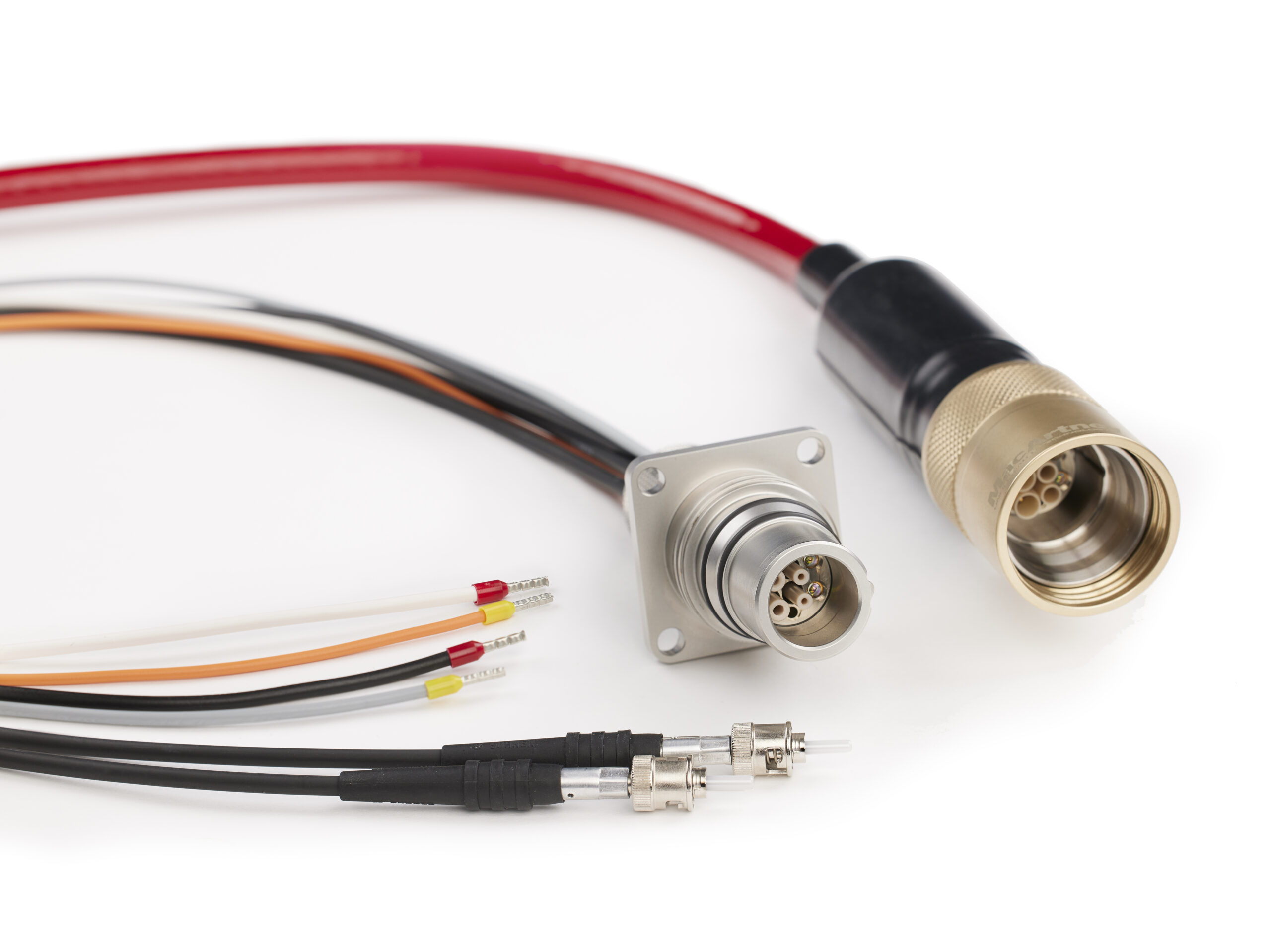
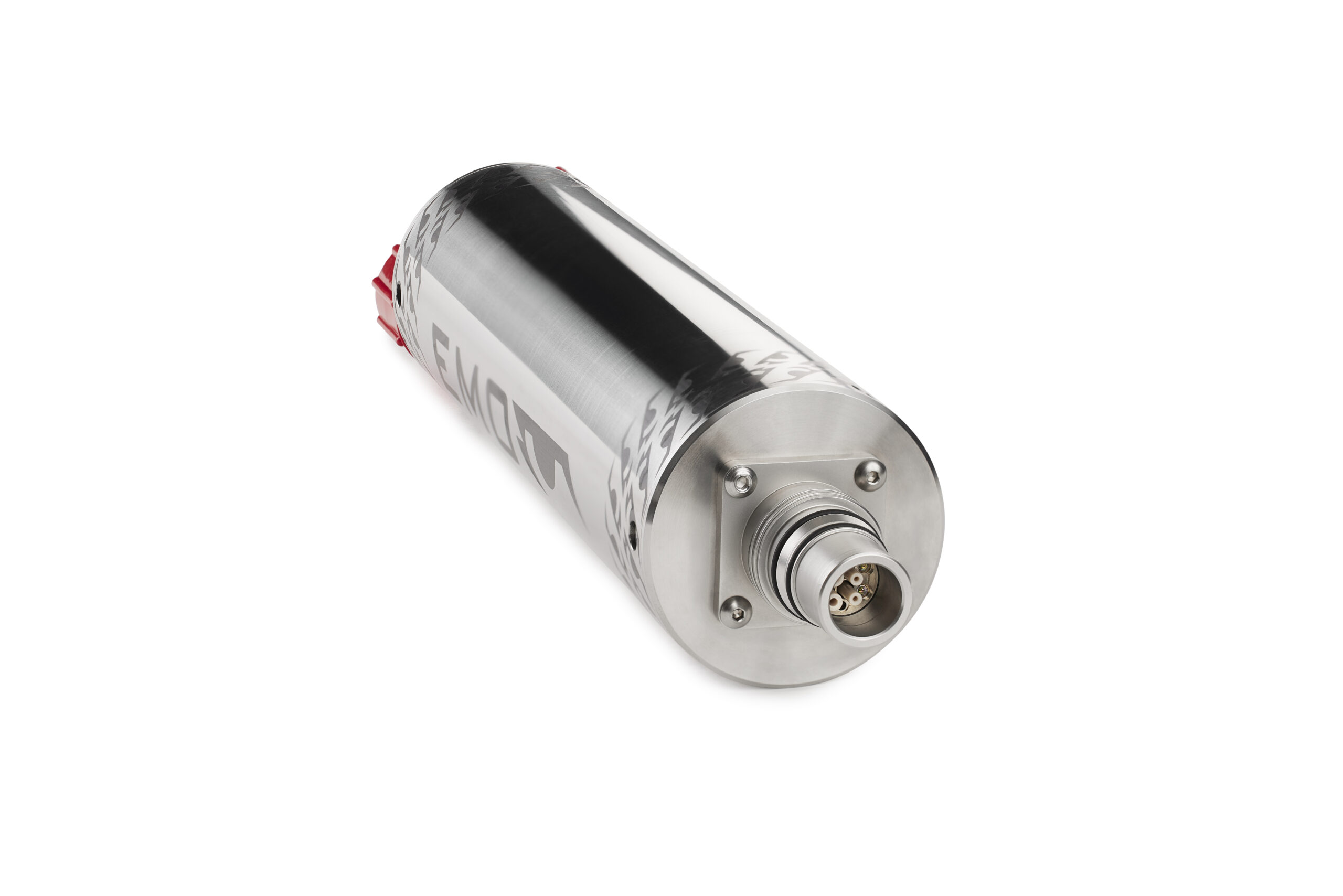
MacArtney proudly introduces the Hybrid connector, a compact addition to its renowned TrustLinkMacArtney launches new TrustLink™ Hybrid connector with minimal footprint Metal Shell series. Meeting customer demands, the Hybrid seamlessly delivers power, data, and communication in one.
The TrustLink Metal Shell (MS) design prioritises reliability in a high-density connector, addressing the challenges of harsh marine environments with limited space.
Paul Anthony, Global Business Manager Connectivity, emphasises the Hybrid's innovation: “With the Hybrid connector, MacArtney has taken this a step further. The single-footprint Hybrid is ideal for tight spots. With two optical passes and four electrical contacts, it enhances versatility while reducing the number of connectors required.”
Customer-driven innovation
Building on the success of the TrustLink MS connectors, the Hybrid naturally extends the series. It is developed in response to customer demands for a small, all-in-one connectivity solution supporting numerous applications, including efficient and reliable data transmission with minimal attenuation and interference.
Leveraging MacArtney's proven OptoLink technology, initially designed to deliver dependable fibre optic connections in a compact connector, the Hybrid excels in high-speed data and video transmission. This is achieved through minimal insertion loss and low back reflection.
Exceptional flexibility and robust connections
The Hybrid offers remarkable flexibility, featuring two optical passes that enable the combination of single-mode and multi-mode fibre optics, along with four electrical contacts. Expanded optical beam technology ensures robust and secure connections, positioning it as the ideal connectivity solution where the accuracy and integrity of transferred data are paramount.
Furthermore, its easy-to-clean connector design ensures seamless maintenance.
A terminated connectivity solution
Acknowledging the need for accessibility and ensuring a quick turnaround for MacArtney's customers, the Hybrid will be available from stock.
It is designed as a connectivity solution with recommended or client-specific cable options, terminated by one of MacArtney's global workshops. The comprehensive workshop solutions cover every subsea and offshore aspect, including moulding, custom assemblies, end-to-end harnesses, dedicated cable, electronics, fibre optics and testing facilities.
With its usability-enhancing qualities, this next-generation TrustLink Metal Shell Hybrid represents MacArtney's commitment to simplifying operational complexities in subsea and offshore environments.
HydroWing creates unique new barge to service its tidal energy technology
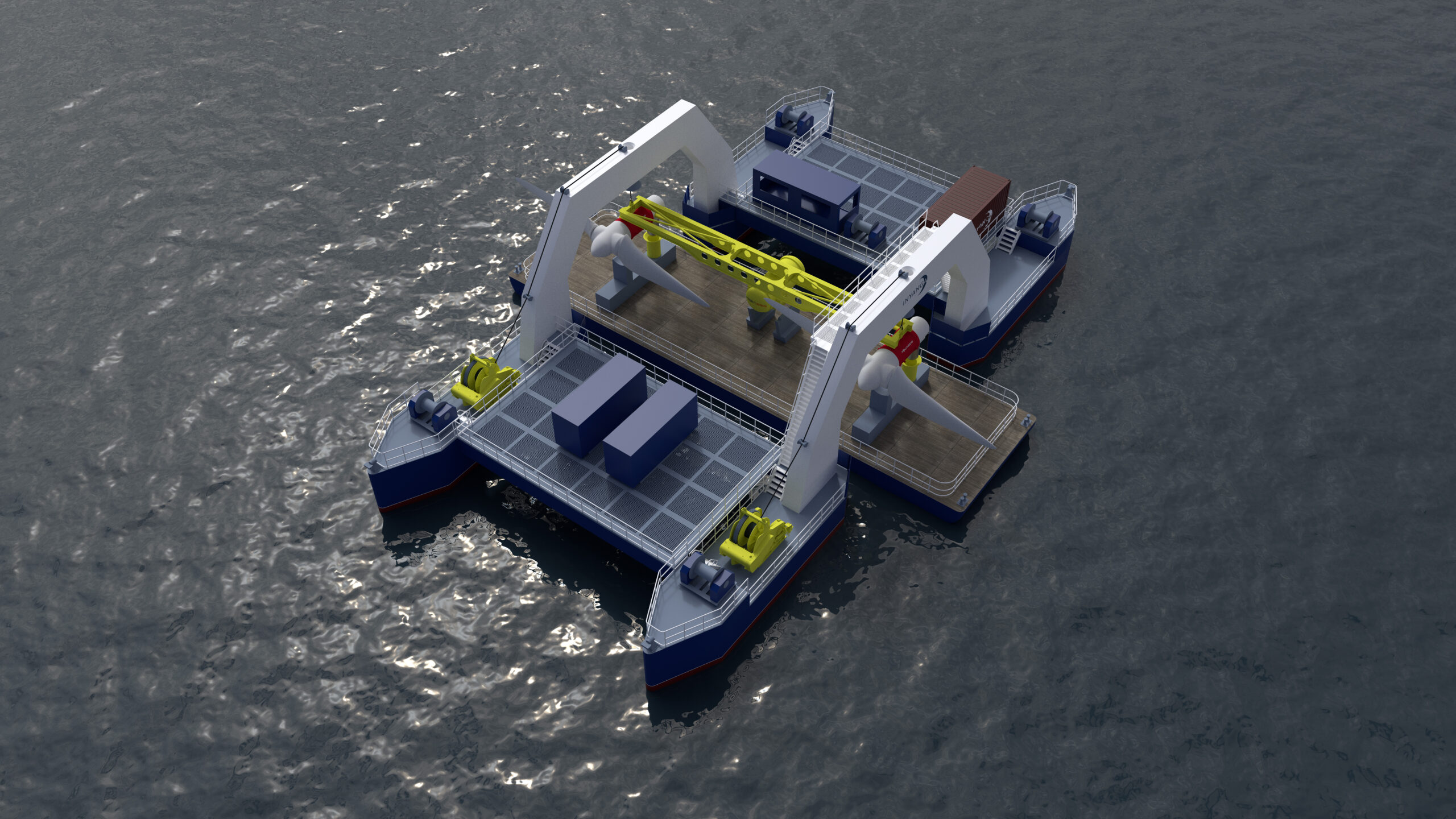
HydroWing has designed an innovative new barge which will help drive down the cost of installation and maintenance for its patented tidal stream array technology.
HydroWing is designed to be a cost-effective and scalable solution to tidal stream energy generation and was the largest tidal stream project in Wales to be successful in the UK government’s latest Contracts for Difference round, having been awarded a 10MW project at the Morlais tidal energy site in Anglesey.
Commercialisation of the tidal energy sector has so far been held back by high operations and maintenance costs. HydroWing’s next generation technology addresses that challenge head on. Its HydroWing technology offers a modular, reliable solution, based on its unique patented design. The wing system streamlines operations and maintenance by allowing for removal of sets of tidal energy turbines without the need to remove or work on the foundations. The new Quad Hull Barge is the latest innovation to the HydroWing system, which further increases productivity and drives down costs.
Richard Parkinson, MD of Inyanga Marine Energy Group, which is the parent company for HydroWing, said: “ Deployment, recovery, and operations and maintenance are large factors in determining the levelized cost of electricity. However, offshore construction vessel availability is very weak with expensive day rates. This means that the cost of planned and unplanned offshore operations is very high. HydroWing’s new Quad Hull Barge has been specifically designed to tackle this issue, driving down costs and ensuring the turbines can be effectively maintained at low cost and with reduced downtime.
“By using four hulls connected by crossbeams and arch support beams, the limit to load width is dramatically increased. Where commercial vessels would typically need to place the load onto the deck with little to no overhang of the load, the Quad Hull Barge locks the load after lifting to the arch. This reduces offshore handling and makes the operation much safer. It means that the width of the load can be independent of the vessel width.
“Our new Quad Hull Barge represents a major leap forward for the sector. The design ticks all the important boxes for offshore operators. It is modular, so it can be transported by road and assembled at site. As it is modular, it can also easily be scaled up for larger turbines. The four pontoons are 25 tonnes each and can be transported by road, which reduces manufacturing costs. It is low drag and easier to tow and can therefore be handled by small, locally available tugs. All of these factors will help to lower the cost of each intervention. In addition, it is on permanent standby and can be deployed quickly, which will help operators to reduce production downtime.
“The Quad Hull Barge will mean that our HydroWing tidal energy arrays can be serviced by existing port infrastructure, rather than requiring major new investment, which is one of the keys to ensuring that the sector achieves profitable growth into the future. We believe our HydroWing technology will unlock the commercial potential of tidal energy worldwide.”
The company has filed a patent application to protect its unique Quad Hull Barge design.