Celebrated explorer, Jim McNeill, invites intrepid individuals on high latitude Ocean Warrior citizen science expedition
Ocean Warrior Project's #Resolute Expedition is a pioneering, high Arctic waters expedition, which is looking for intrepid travellers.
The expedition has the patronage world-renowned yachtswoman, Tracy Edwards - who skippered the first all-female crew to sail around the world - and will set sail in June 2023 on a journey from Svalbard, via London and Plymouth, and on to the ultimate destination of Resolute Bay, Nunavut, Northern Canada, before its return journey.
Just 144 intrepid travellers will be given the unique opportunity to join the Ocean Warrior Project #Resolute Expedition, which will be split into eight legs lasting between nine and 31 days, covering a total distance of 10,000 nautical miles.
Up to 18 guests will join each leg, travelling from Svalbard to Plymouth, followed by legs to Iceland, South Greenland, Resolute Bay via Baffin Island and back to Nuuk, then on to West Greenland, Nararsuaq in South Greenland, Reykjavik, and finally back to Plymouth via the Faroe Isles.
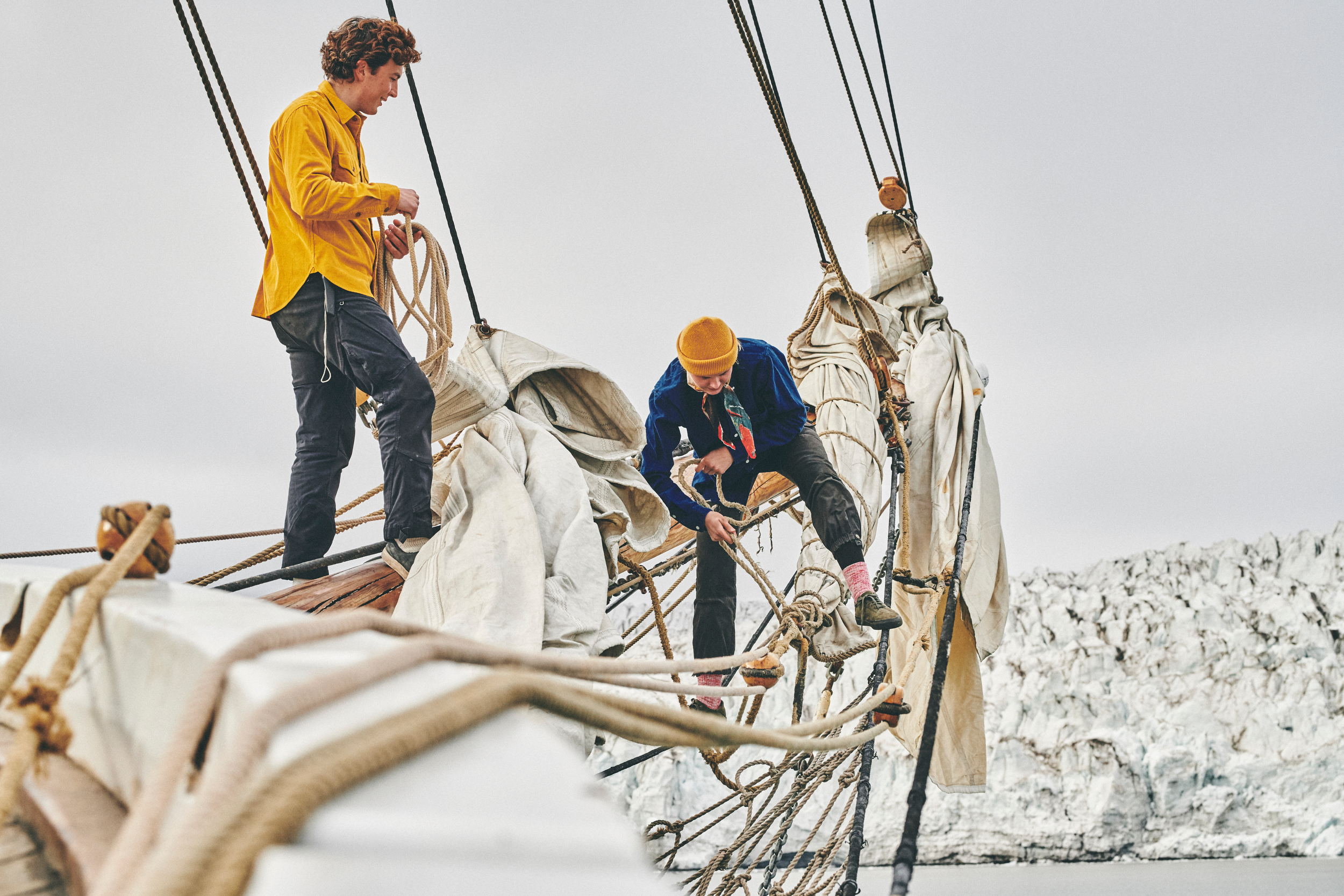
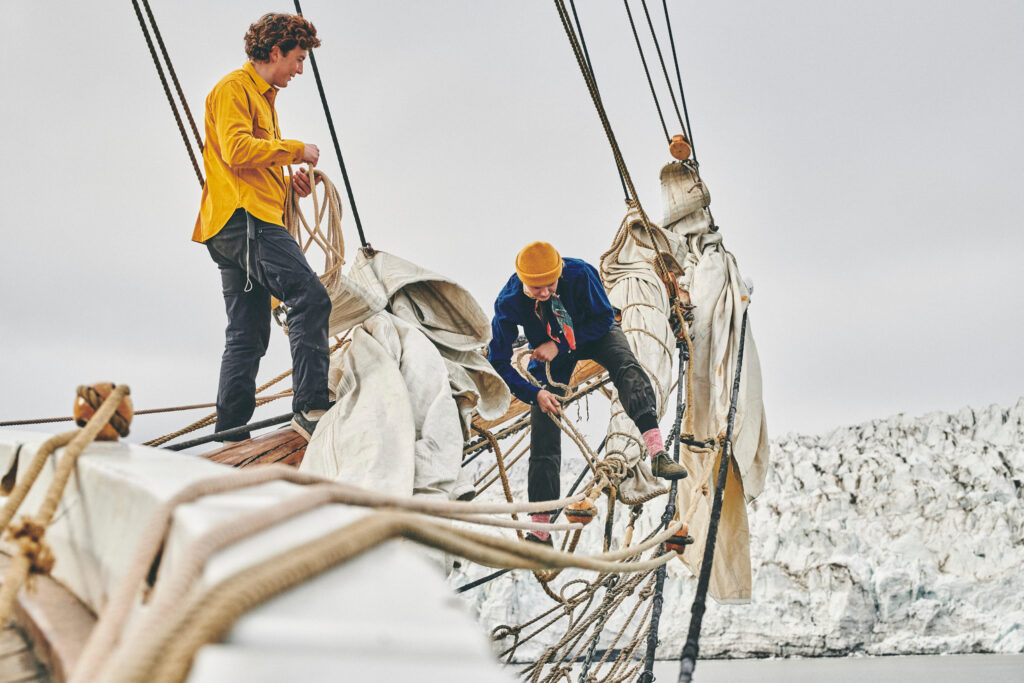
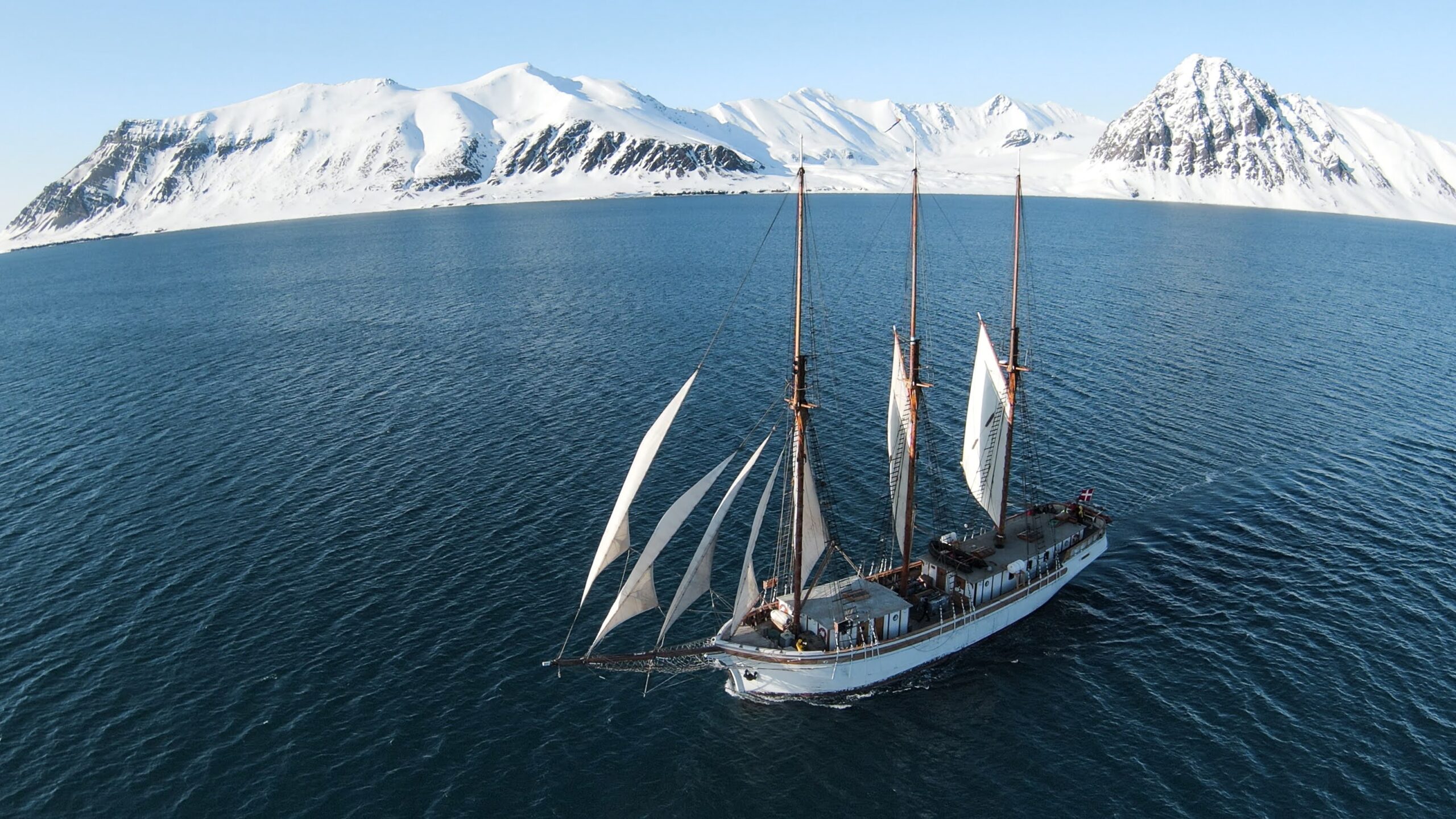
Sleeping on board in the comfort of this iconic vessel, participants joining the journey will help sail the wind powered SV Linden in what will be one of the most sustainable and important expeditions of its kind ever undertaken.
Designed by one of the world's most experienced and respected explorers, Jim McNeill, the voyage's goal is to monitor the pulse of the planet using citizen science. This will be implemented by would-be explorers sailing and staying on board Europe's largest three-masted wooden Schooner, SV Linden; itself modelled on a ship of the same name from the 1920s.
This citizen science focussed voyage will collect critical 'ground truthing' scientific measurements to help deliver 'the holy grail of oceanography': understanding how much carbon is stored in our oceans, and how this is impacting on acidification, pollution, and species in our oceans. Jim's past work on ground truthing has helped the likes of NASA build a better understanding of the Polar Regions.
Dr Rowena Stern, Marine Biological Association, commented on the expedition, saying: "The MBA researchers are working on marine microbes. These marine microbes are the first to respond to the rapidly changing arctic environment. All arctic marine animals depend on these vital marine microbes either directly or indirectly. We urgently need information on ice melt and dynamics of these microbial communities to better understand food webs and to calculate predictions for the future of the arctic ocean. In Ocean Warrior's expedition we will be using new technology to instantly record scientific data in these extreme environments. We will take photographs of algae from the surface of the sea ice, which are an indicator of ice melting capacity. By using field microscopes, we can photographically capture the types of algae growing on sea ice, and images can immediately be saved to cloud platforms for expert analysis. This allows us to explore diversity of algae in some of the more isolated environments that most scientific expeditions cannot reach. Along our four-thousand-mile sea voyage to the arctic we will be using the plankton indicator to capture the diversity of plankton life at the surface.”
Individuals interested in joining the #Resolute Expedition need to apply before the end of February.
While no previous experience is required, aspiring explorers will need to show initiative, resilience, tenacity, and good humour, all of which will be required on the journey, and will be assessed during a series of challenges on an optional pre-selection weekend, the first of which will be held on 10 February.
Successful participants can also look forward to experiencing extraordinary seascapes and to making a real scientific difference to our understanding of the health of the planet's oceans.
Explorers on the voyage will also learn new and potentially life-changing skills, including:
• guidance on fundraising to help pay for the expedition
• on-vessel training in sailing and the use of scientific equipment to measure the pulse of the planet
• training in maritime safety, resulting in a certificate in Standards of Training, Certification and Watchkeeping; (STCW: A V1/1-1 and 1-4); required by all crew on commercial vessels over 24 metres
• team building and resilience in the face of adversity
Commenting on the Ocean Warrior #Resolute Expedition, Jim McNeill explained: “My goal is to share the gift of exploration with individuals from all walks of life, helping those from ordinary backgrounds achieve the extraordinary.
“Adventurous travellers, be they students on a gap year, individuals on a sabbatical, professionals sponsored by companies, or retirees looking for a new challenge, will join my crew and ten lucky inner-city would-be explorers who I'll be sponsoring personally on this scientifically significant and life-changing endeavour. They will enjoy an unparalleled experience at the same time as making an invaluable difference to our understanding of the health of our oceans, through the collection of data for scientific bodies.”
Depending on the length of the leg, prices range from £8,000 for the shortest ten-day leg, through to £18,000 for the longest 31-day leg. A deposit of 25% is required, followed by full payment by 1st
May, giving individuals time for fundraising. Tickets for the optional selection weekend cost £200.
The Voyage - detail
Leg 1: Svalbard to London, and on to Plymouth – 22 days (25 June-16 July): £14,000
Leg 2: Plymouth to Reykjavik – 11 days (17-27 July): £8,000
Leg 3: Reykjavik to Nuuk – 12 days (28 July-9 August): £10,000
Leg 4: Nuuk to Nuuk via Baffin Island and Resolute Bay – 31 days (10 August- 10 September): £18,000
Leg 5: Nuuk to Upernavik – 10 days (11-20 September): £9,000
Leg 6: Upernavik to Narsarsuaq – 10 days (21-30 September): £8,000
Leg 7: Narsarsuaq to Reykjavik – 10 days (1-9 October) £8,000
Leg 8: Reykjavik to Plymouth – 15 days (10-24 October) £8,000
To find out more information about Ocean Warrior Project, the #Resolute Expedition, its selection process, and how to join as a self-funded, or fundraised participant, visit https://www.warrior-ocean.com/ or https://www.ice-warrior.com/.

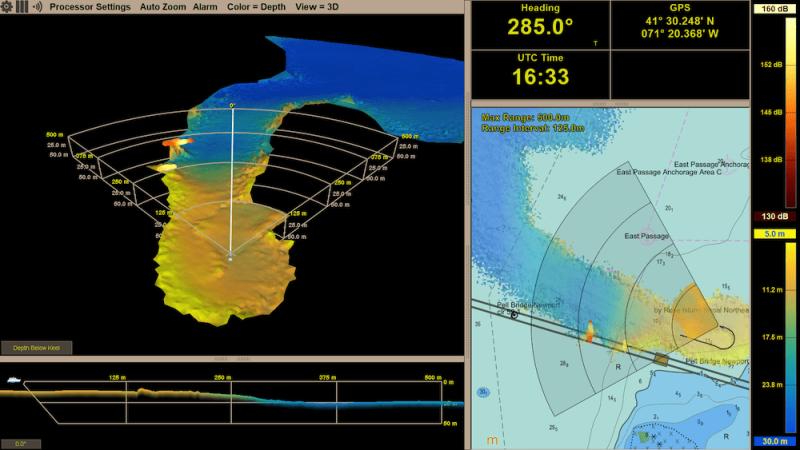
Turkish USV’s integrated with FarSounder’s Argos Forward Looking Sonar
FarSounder Argos 3D Forward Looking Navigation Sonars have been included in the navigation control system for two Unmanned Surface Vessels (USV) built in Türkiye. The vessels have comprehensive automation technologies enabling them to sail autonomously. The addition of the Argos systems will help them carry out their missions safely. Promar Deniz Malzemeleri A.S., FarSounder’s dealer in Türkiye, was instrumental in securing this sale.
Argos sonars interface with the vessel navigation and control systems, providing vital information about the current state of the environment in front of the vessel and below the water line. This gives the vessel an invaluable level of situational awareness. The systems do all the data processing and provide the vehicle control system with the information needed to make intelligent navigation decisions and make real time course alterations.
“The real time, 3D information of what is under the water ahead of the vessel is valuable for any navigator. However, it is even more crucial to safe navigation for systems when no human operators are in the loop,” said FarSounder CEO, Matthew Zimmerman. “With this in mind, FarSounder developed our SDK to incorporate and integrate Argos data into a USV’s navigation system.”
The need for safety in this developing subset of the marine industry is prevalent as unmanned vessels are at risk of collision with the limitations of traditional navigation methods and technologies. Argos sonars provide the vessel the information it needs to avoid danger via machine interface giving the team confidence in the vessel safely achieving its mission.
Echoview Software launches the latest release of Echoview with cutting-edge artificial intelligence
Echoview Software is thrilled to release Echoview 13, the latest update to the most powerful hydroacoustic data processing software commercially available for water column research in both marine and freshwater environments.
This latest release was developed in conjunction with ongoing consultation with users and industry partners to ensure that Echoview® is directly meeting the needs of those working with echosounder and sonar data.
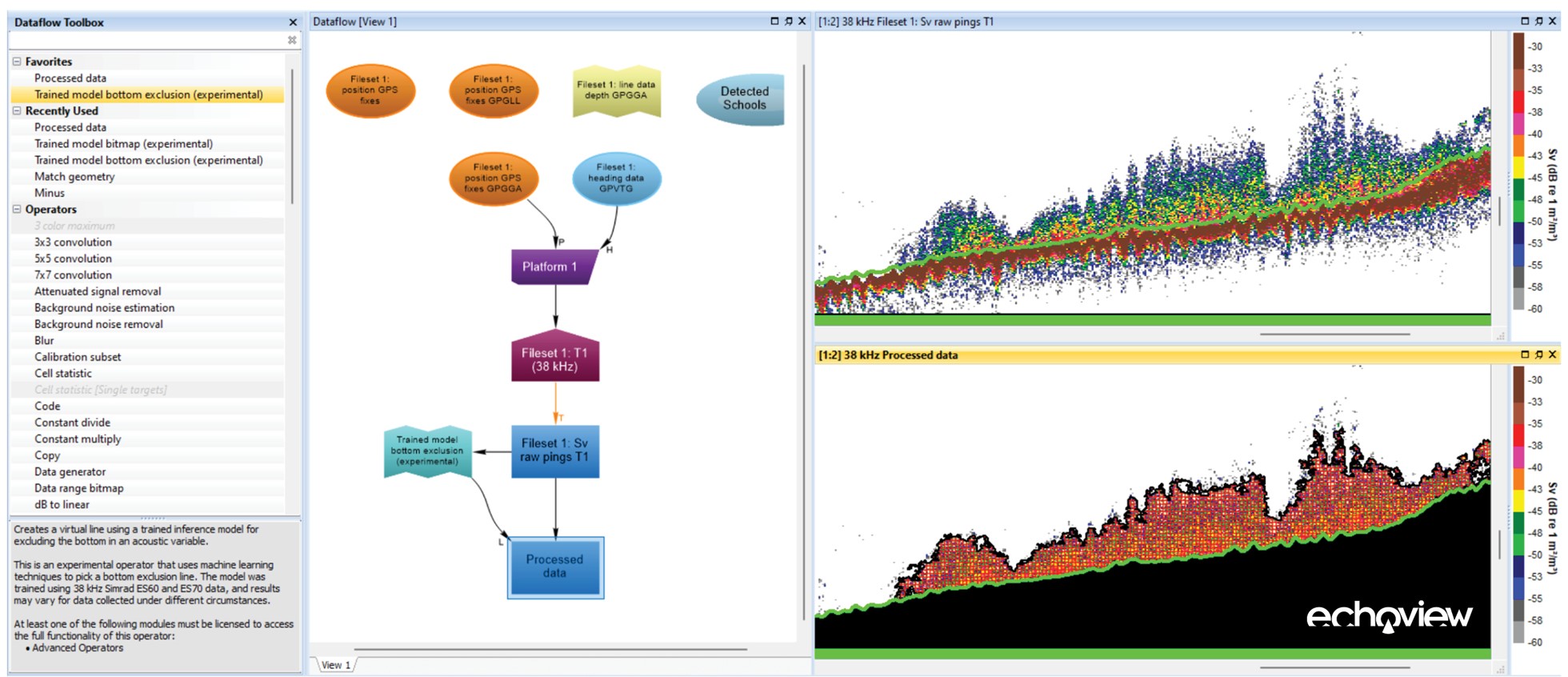
Echoview 13 includes breakthrough machine learning capabilities, representing a significant step forward for efficiency in hydroacoustic data processing.
CEO of Echoview Software, Brett Merritt said, “Our commitment to delivering major advances to our customers is reflected in the breadth of compelling new features in Echoview 13, including new operators and automation tools, and support for multiple new hardware file formats.”
“However, this release is particularly exciting as it marks our debut into machine learning. We are thrilled to collaborate with the Commonwealth Scientific and Industrial Research Organisation (CSIRO), Australia’s foremost scientific research institute, to create AI models for hydroacoustic data processing.”
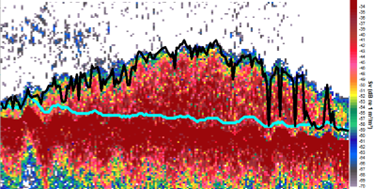
Echoview Software’s Product Manager, Briony Hutton, said that this work was motivated by a need to make particular data processing steps simpler and easier, starting with automatic exclusion of unwanted bottom signal in water column analyses.
“In specific situations users needed to edit or manually draw bottom exclusion lines in echosounder data, such as when fish schools are closely associated with the seafloor. This requires expertise and can take considerable time when working through large volumes of survey data.”
“By leveraging cutting-edge outcomes from other fields such as medical research and imaging, we were able to implement appropriate AI technologies to find a solution.”
CSIRO supplied large quantities of labeled data, which was then used to train Echoview to recognize similar features in other data.
“Applying Echoview 13’s new capabilities to CSIRO’s data demonstrated that this feature is performing well on data that wasn’t used to train the model, and is also very easy to use. Users are not required to refine complicated algorithm parameters or request expert knowledge to achieve their goals.”
“Practically applied, our users can now reduce the amount of time needed for manual line editing, and more easily and accurately evaluate the biomass of fish schools on the seafloor in their stock assessments. This will be meaningful for many applications, including environmental studies and research associated with commercial fishing activities.”
“Our skilled development team has created a reliable, robust tool using AI that demonstrates the viability of machine learning for feature detection in Echoview. The expertise gained in developing this tool for bottom exclusion can now be applied to finding other features in hydroacoustic data. We look forward to collaborating further with CSIRO and others in the industry to make this happen,” said Briony.
Tim Ryan, Team Leader, Acoustics and Pelagic Ecosystems at CSIRO said, “CSIRO has multi-decadal acoustic recordings within Australia’s EEZ (Exclusive Economic Zone) and the Southern, Indian and Pacific oceans. To date analysis has been highly focused due to the large amount of human interaction needed to produce a reliable product. Hence we are very excited by these advances in AI.”
“When combined with Echoview’s automation capability there is the prospect of both mining extensive historic data sets and handling the vastly larger data volumes that will be generated in the future. This will enable a ‘big data’ approach to extracting information to help understand productivity and pelagic ecological processes in our changing oceans,” said Tim.
Echoview 13 also includes new support for Blueprint Subsea Oculus, R2Sonic water column data, Simrad omnisonars and fishery sonars in netCDF format, NORBIT Winghead and WBMS, Teledyne Odom MB2, Nortek Signature GPS data, and more. Echoview Software collaborates with an unrivaled range of hardware manufacturers, now boasting compatibility with data recorded by more than 75 echosounders and sonars across 17 brands.
Other key highlights in Echoviews newest release include:
• New and expanded operators, particularly for understanding and mitigating data noise
• Dataflow toolbox
• Easy, publication-quality image exports
• Performance boosts
• New automation capabilities and tools
Seatronics select the ISS360HD Imaging Sonar from Impact Subsea
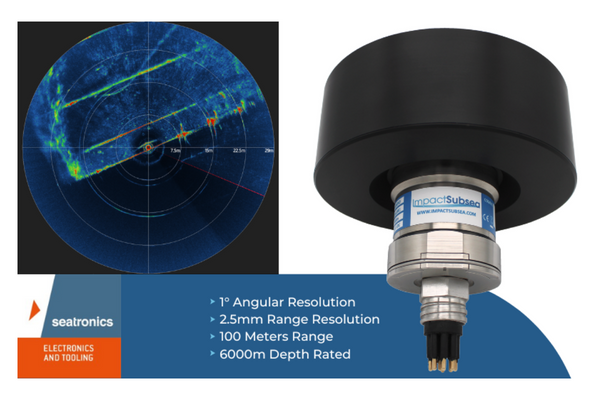
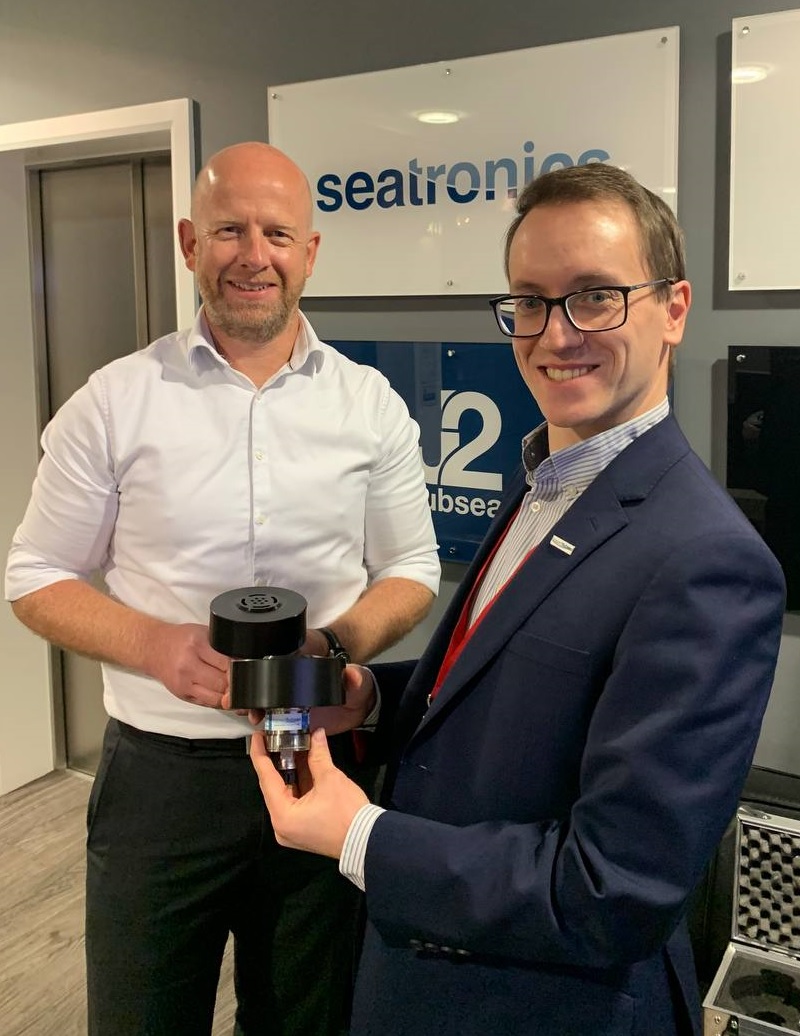
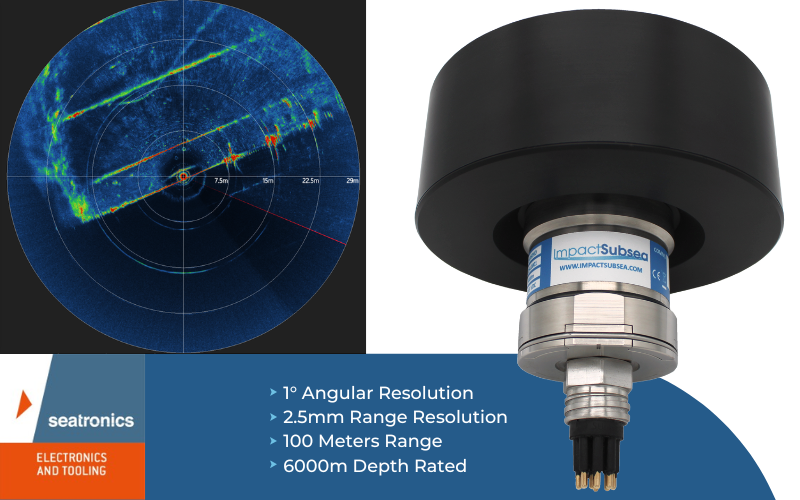
Impact Subsea has provided several ISS360HD Sonars to Seatronics, a brand in Acteon’s Data and Robotics Division.
The ISS360HD Imaging Sonar provides a step change in performance in the scanning imaging sonar market. Providing a 2.5mm range resolution combined with a 1° angular resolution enables exceptionally high definition imagery from a highly compact sonar. With a range capability in excess of 100 meters the ISS360HD can suit a range of AUV, ROV and standalone underwater applications.
Richard Main, Regional Manager UK Seatronics commented “We have a focus to provide the best in class technology to the subsea industry. Having added ISS360 sonars earlier in the year to our rental pool we are delighted to now also add the ISS360HD. The ISS360HD will provide our customers with high resolution sonar imagery for large work class vehicles as well as observation class vehicles”.
Ben Grant, Managing Director, Impact Subsea commented “We have worked with Seatronics for many years and with the addition of the ISS360HD; now all Impact Subsea sensors can be hired from Seatronics. We have seen a high demand for the ISS360HD since launch and are delighted to continue to work with Seatronics to support that demand”.
Kite flying with the Saab Seaeye Falcon
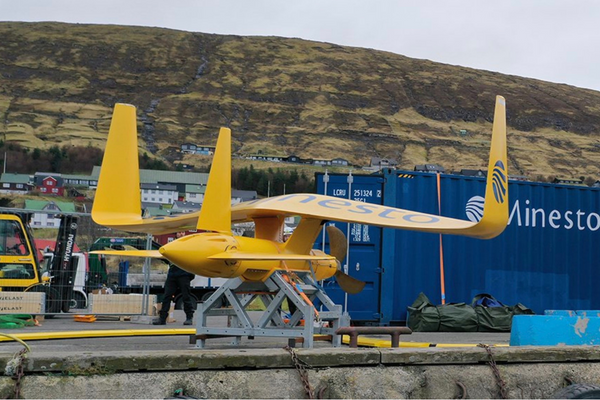
Flying kites underwater to generate electricity is an innovative renewable energy concept being installed in the Faroe Islands, supported by SJH Diving and their new Saab Seaeye Falcon.
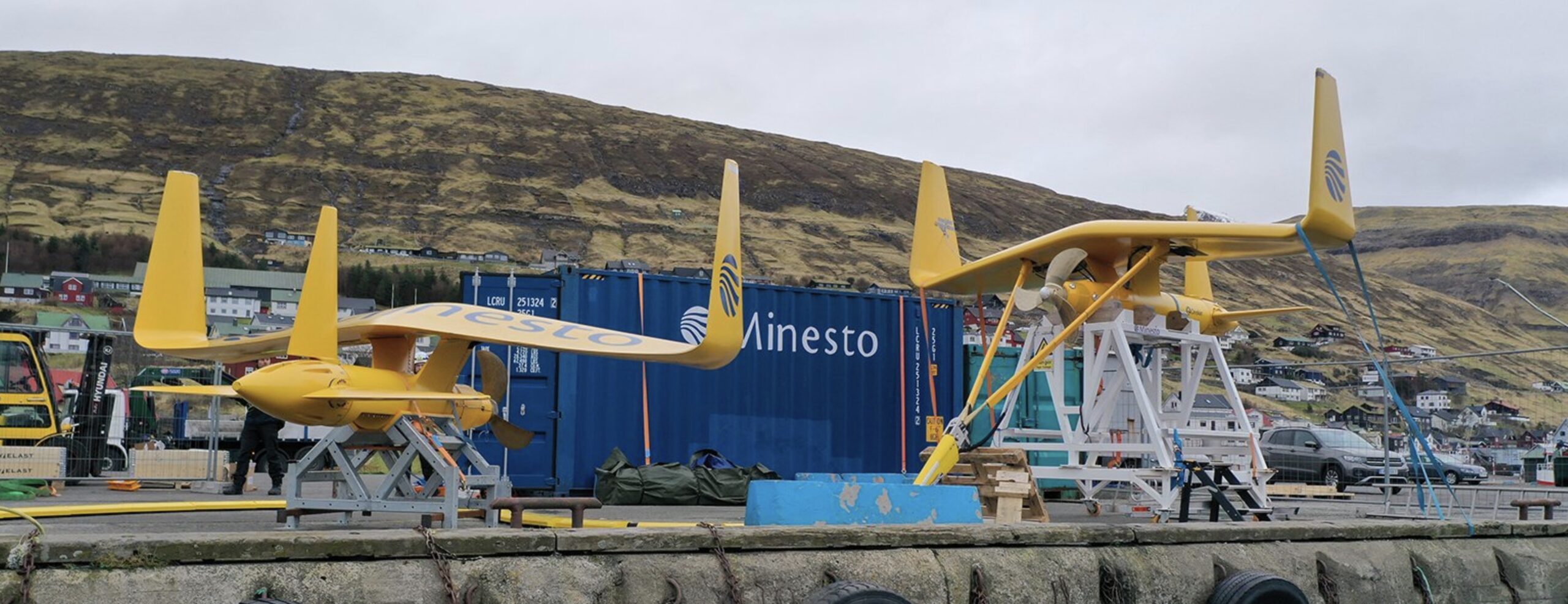
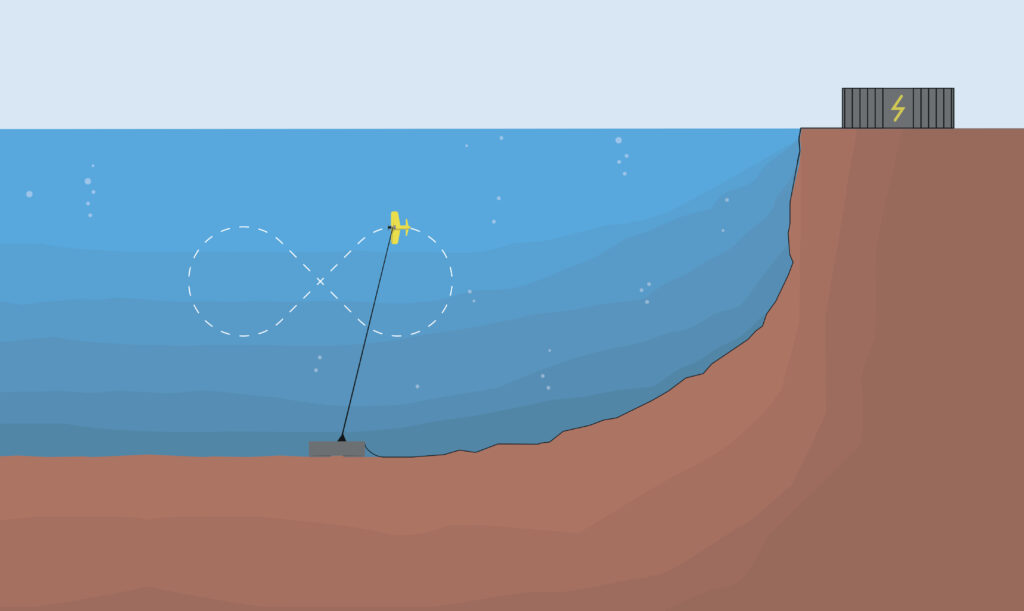
The subsea kite turbine is a unique concept created by developer Minesto to generate electricity in tidal streams and ocean currents using the principle of flying a stunt kite in the wind.
By swooping through the water in a constant figure of eight motion on a tethered cable, the kite turbine accelerates through the water considerably faster than the actual flow speed.
The electricity generated from a kite turbine is several hundred times greater than from a stationary turbine.
In support of multiple kite installations, Faroes-based SJH Commercial Diving will deploy their Seaeye Falcon underwater robot for inspecting power-cable runs along the seabed to the shore and inspecting and cleaning foundation points.
Símin Jákup Højsted of SJH Diving says the Falcon was the best choice for strong currents compared to five competitive makes of vehicles.
SJH Diving has been involved with the project for over two years.
Minesto is a marine energy technology developer founded in 2007, since when it has successfully developed its unique marine energy technology called Deep Green.
The ability to also operate at low velocities makes Minesto's Deep Green the only technology to be cost-efficient in both tidal and ocean currents.
Mastering currents has helped the Falcon become the world’s top selling robot in its class, along with its being an easy to use, small, intelligent, powerful, and multi-tasking with a reliability record covering over a million hours underwater.
SJH’s Seaeye Falcon comes with a multi-beam sonar, single function and five function manipulators, a cathodic potential probe and a fully-kitted cleaning skid.
Job Advert: Blue Ocean Marine Services (BOMS) is seeking AUV Supervisors, Engineers and Technicians
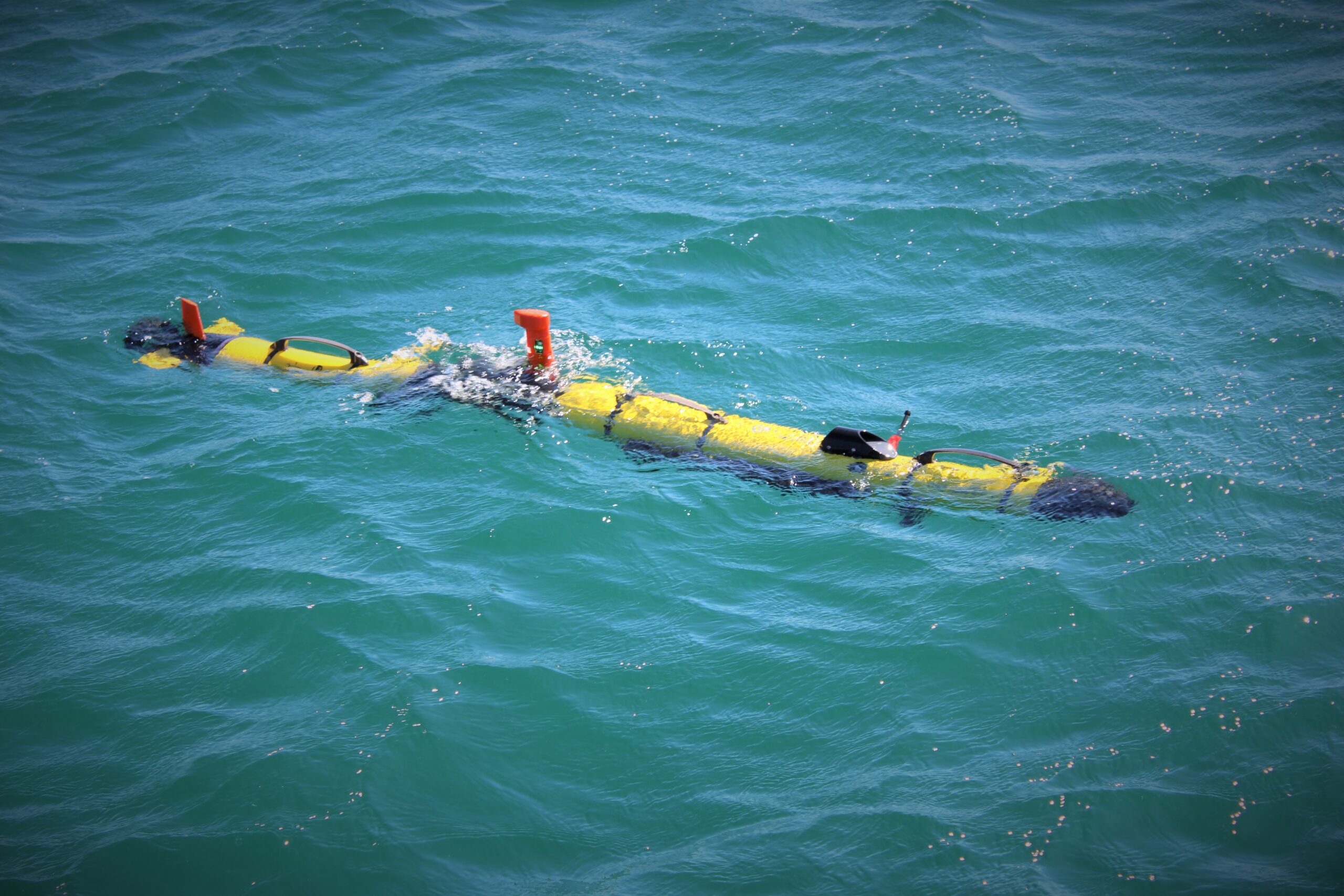
Blue Ocean Marine Services, experts in the design and execution of offshore surveys primarily using unmanned and remotely operated survey technologies, are currently seeking Autonomous Underwater Vehicle (AUV) Supervisors, Engineers and Technicians to join the growing team responsible for the operation and maintenance of subsea robotic systems. The roles will be based in Perth, Australia, and international applications will be considered.
This will primarily focus on the L3Harris Iver-3 AUVs but will also include work on Remotely Operated Vehicles (ROV), subsea acoustic positional systems, and a range of oceanographic and environmental monitoring equipment.
Responsibilities for all roles will include
• Support of vehicle operations;
• Design and upgrade of vehicle and monitoring systems;
• Development and tracking of documentation; and
• Data management.
Candidates must have the ability to work cooperatively in a team environment both onshore and during field operations. Sea duties include operational and technical support of systems at sea, world-wide but primarily in Australian region. Expected travel will be up to 60 days per annum with typical individual trip lengths of 1-3 weeks.
For further information please get in touch here: [email protected] or visit www.blue-ocean.com.au/careers
Kraken receives $0.8 million international Robotics as a Service (RaaS) contract
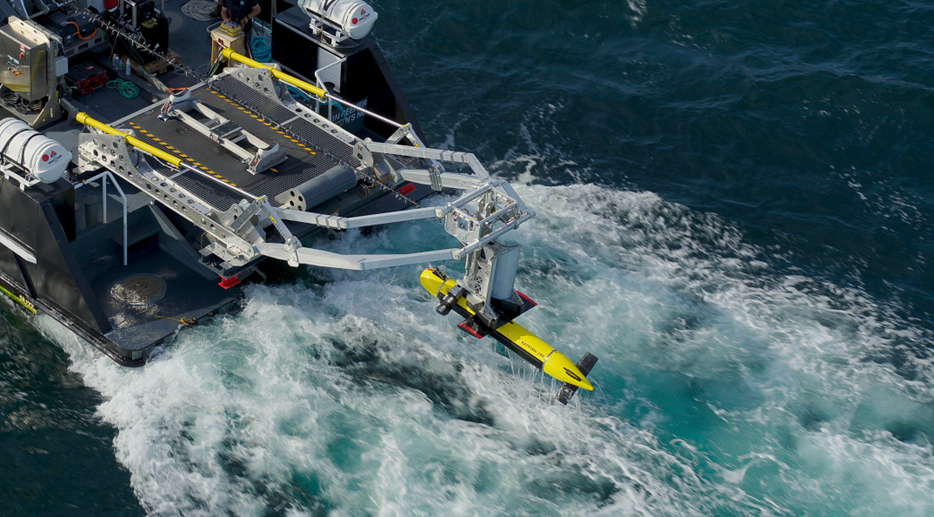
Kraken Robotics Inc., is pleased to announce that it has received an international Robotics as a Service (RaaS) contract for the high- resolution inspection of the critical sea routes and critical marine infrastructure. The initial contract is valued at $0.8 million and will be undertaken in Q1/2023 using the KATFISH™ high-speed towed synthetic aperture sonar (SAS) system coupled with Kraken’s Automated Launch and Recovery System (ALARS) on a vessel of opportunity. For confidentiality reasons, the location of the contract cannot be disclosed.
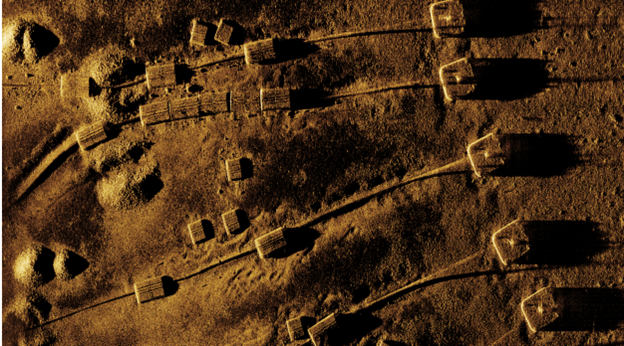
KATFISH is a high-speed, actively stabilized Synthetic Aperture Sonar (SAS) towfish that operates at speeds up to 10 knots. The high-speed capability, and constant resolution of KATFISH significantly increases Area Coverage Rates (ACR) by providing more useable data at longer ranges and higher fidelity than traditional Side Scan Sonars. KATFISH provides acoustic seabed imagery with a range-independent resolution of 3 cm x 3 cm and area coverage rates (ACR) of up to 4 km2/hour, with swaths of up to 400 meters, including simultaneous full swath 3D bathymetry. With post-processing, 1.9 cm x 2.1 cm constant resolution imagery is available.
MacArtney takes customer support all the way to the North Pole
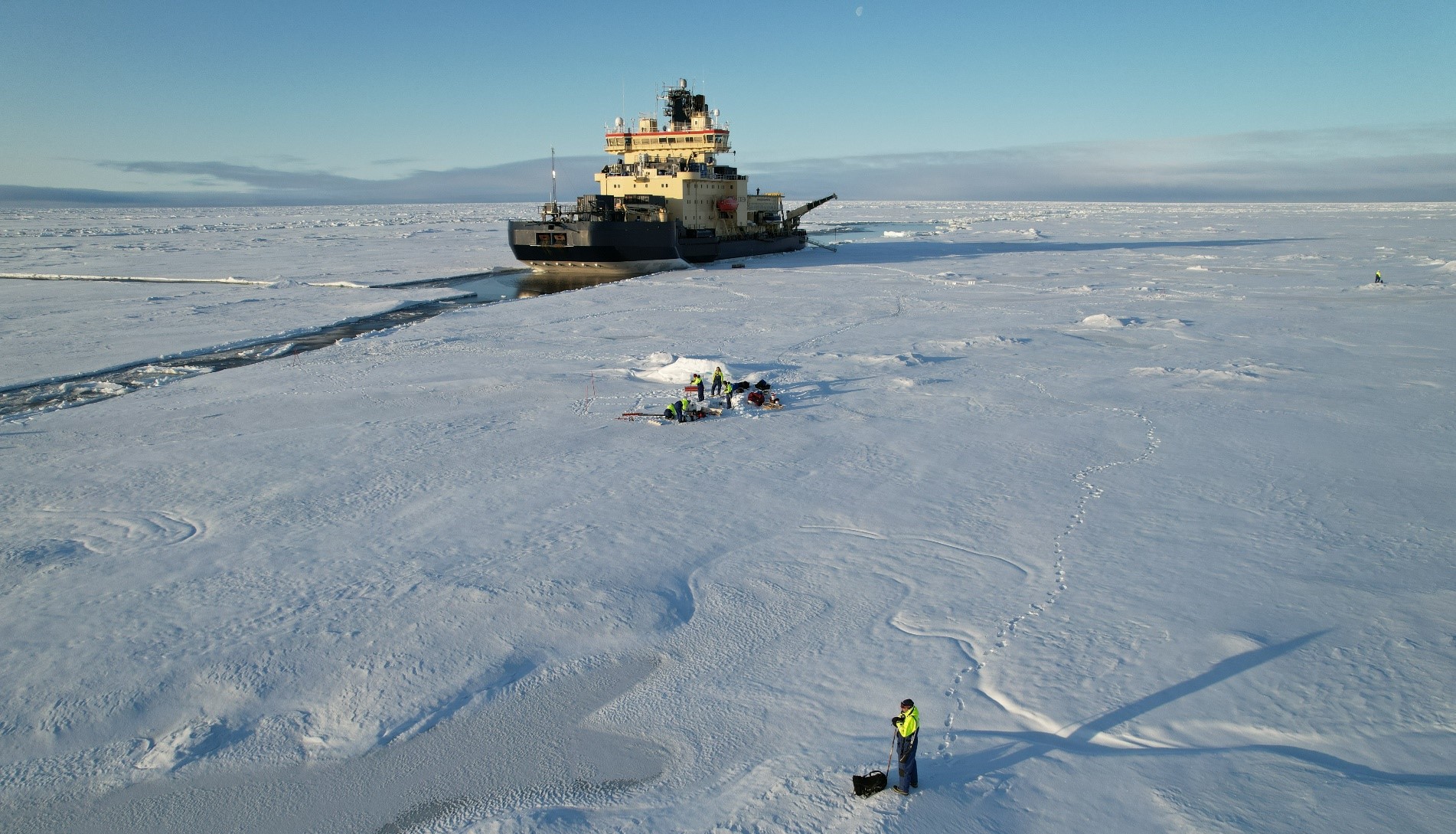
MacArtney supplied and fitted a containerised MERMAC winch to Oden, the Swedish Maritime Administration's icebreaker and research vessel, for an expedition to the North Pole. The company was chosen as a supplier due to system flexibility and vast experience in solution customisation rigged to customer applications.
The Synoptic Arctic Survey 2021 expedition is now part of MacArtney's history as it did not only have MacArtney technology and equipment on board. The company's Sales Director for Ocean Science, Hans-Jørgen Hansen, participated as a fully-fledged crew member.
The data and samples collected during the voyage are currently being studied, documented and catalogued for further or concluding research on the Arctic ecosystem – including data acquired from the water column via the bespoke MacArtney MERMAC winch.
MacArtney on board
Before and until the departure, the world was still toiling with the pandemic, which delayed equipment installation. Hans-Jørgen recalls:
"MacArtney was to supply the containerised winch for Oden's Arctic cruise, but due to Covid-19, post-installation testing had to be severely curtailed, and we ended up installing the gear just six weeks before she sailed."
The short testing window led the Swedish Maritime Administration to inquire if a MacArtney technician could join the ship. Hans-Jørgen was the ideal choice as, apart from being intimately familiar with the mechanical aspects of the winch, his scientific background provided unique insight into operating the instruments.
Scope of supply
System flexibility and a vast experience in solution customisation were essential to the choice of MacArtney as a supplier.
With deep-sea CTD profiling and water sampling being the primary deployment, the chosen solution was based on a standard winch system and fitted to the Swedish Maritime Administration’s applications and operations in the Arctic.
The scope comprises a MERMAC winch integrated into a 20’ container. It includes a right-angle level wind and a 7,000 m fibre optic cable solution with MacArtney's TrustLink stress termination and a custom-built NEXUS Multiplexer.
Both the Chief Scientific Officer and Captain of the Oden agreed that MacArtney had not only supplied high-quality equipment but had gone above and beyond the call of duty by supplying a senior executive able to give qualified input to the expedition.
The Oden continues using the customised solution for water column profiling and revealing data from the depths of the ice-covered Arctic Ocean.
SUT awards those who discovered Shackleton’s ‘endurance’
The discovery of Enest Shackleton’s ship, Endurance, an incredible feat of subsea engineering and specialist expertise, took centre stage at the recent Annual General Meeting of the Society for Underwater Technology (SUT) along with news of the election of a new Fellow of the learned society and the presentation of the Alan Greig Memorial Prize.
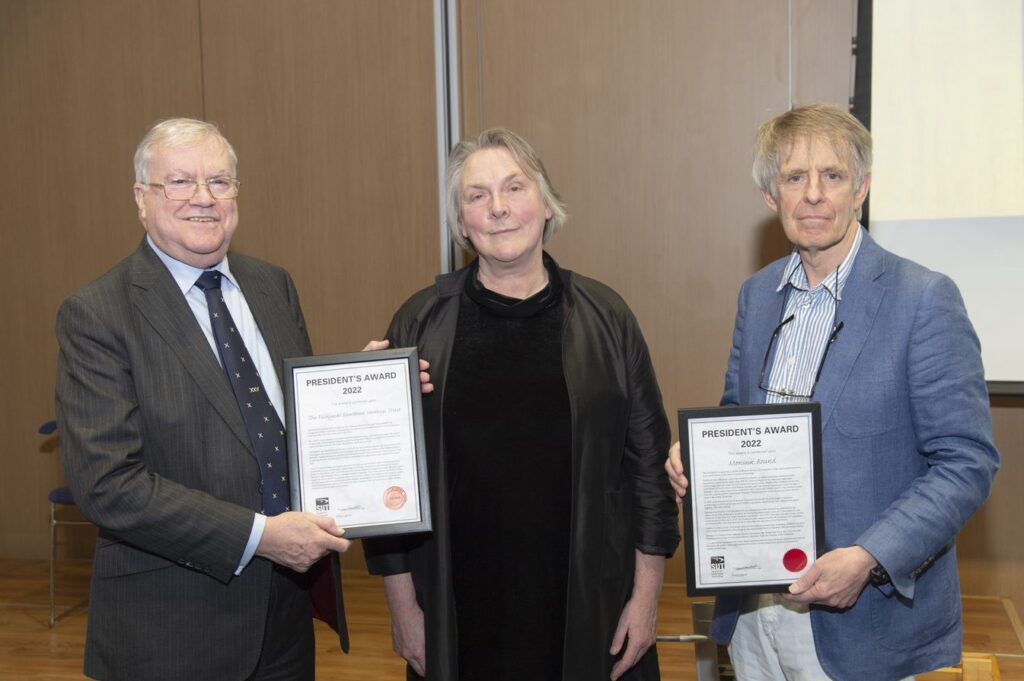
After the formal proceedings, marine archeaologist and author, Mensun Bound and Donald Lamont, Chair of the Falklands Maritime Heritage Trust (FMHT) were each presented with the SUT President’s Award by the SUT’s President, Moya Crawford.
As she explained:
“The story of Shackleton, Frank Worsley and the rest of the crew of the Endurance remains an inspiration to people around the globe over a hundred years after her loss. I can think of no better team of people to find her, and re-kindle this story than Mensun Bound and his friends and colleagues from the FMHT.
“For this prestigious award from the SUT to go to the Southern Ocean, to mark the discovery of such an iconic wreck, lying in 3000 metres water depth, beneath the ice brings modern elements of determination , teamwork and endeavour to the fore, giving us all inspiration and it is my privilege to present the President's Award to mark such an outstanding achievement.”
Falklands-born Mensun Bound the Expedition Director of Exploration and a Trustee of the FMHT responded saying that the Award was unexpected and that he was overwhelmed and extremely grateful. He emphasised that it was: “a team effort from beginning to end” a theme repeated by Donald Lamont who, speaking on behalf of the FMHT, said how delighted and honoured he was saying:
“The project emphasises that team work involving people using up-to-date technolgy in the most challenging of environments brings success” and adding: ““I consider it a matter of pride that an outstanding team can achieve such an incredible result.”
Mensun Bound then spoke about the two expeditions in 2019 and 2022 to discover ‘Endurance’ the story of which is told in his new book ‘The Ship Beneath the Ice: The Discovery of Shackleton’s Endurance’, with Nico Vincent of Deep Ocean Search (DOS), who was manager-in-charge of all equipment preparation, testing and training ashore and all subsea operations and related topside activities at sea on Endurance22, explaining the numerous technical achievements..
In his book Mensun gives a blow-by-blow account of the two dramatic expeditions, the Weddell Sea Expedition and Encurance22, to find ‘Endurance’. As with Shackleton, Bound too experienced failure and despair, and at time his own ship was on the cusp of being frozen in ice, much like Endurance.
As one of the world’s foremost experts on the ‘Endurance’ his book includes previously untold stories of Shackleton’s epic survival and fascinating details abut his iconic ship. It also includes numerous photos from the orignal expedition in 1914-17, as well as from the wreck on the seafloor.”
Other presentations – one new Fellow and the presentation of the Alan Greig Prize
Nick McNaughton was is a newly elected Fellow of the SUT for ‘Services to the Perth (Australia) Branch’, as the citation explained:
“Over the last 13 years Nick, through direct involvement with the Society’s Perth branch has assisted it in moving forward through tough times by taking on a number of sub-committee positions including Branch Secretary, working on Branch Strategy, Scholarships, YES!, training courses, involvement in the AGM and Annual Dinner. His direct and on-going support has directly assisted the Branch in achieving SUT goals and member engagement.”
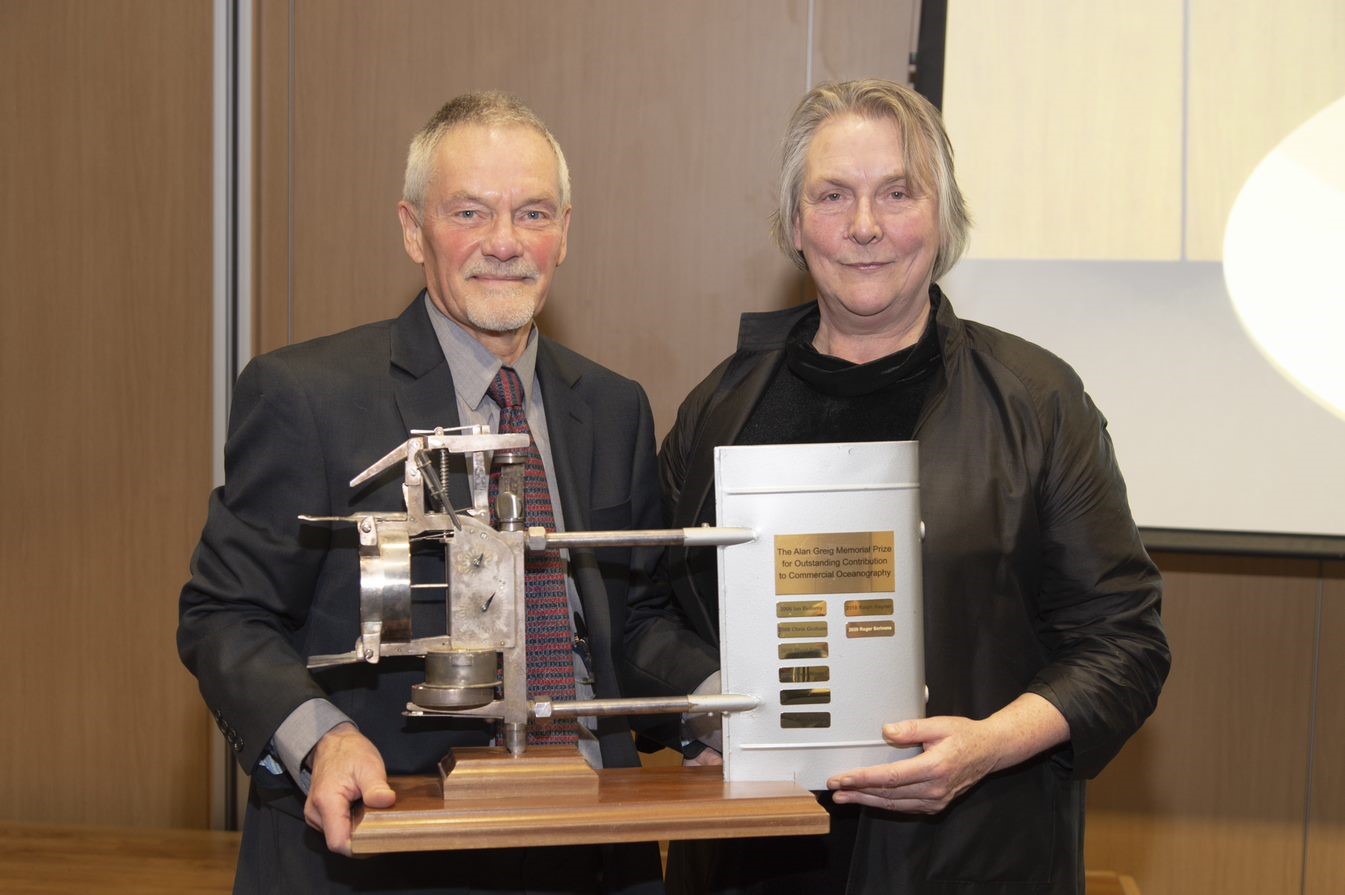
The Alan Greig Memorial Prize for Outstanding Conribution to Commercial Operational Oceanography was awarded to Roger Scrivens who was presented with the Ekman Meter, first awarded in 2006 folllowing Alan’s death in 2004.
As he accepted the award, Roger Scrivens paid tribute to Alan Greig:
“My delight at receiving the Alan Greig Memorial Prize has obvious grateful overtones of professional recognition from my peers but above that is the personal aspect. Alan Greig, believed to be the UK's first ever 'commercial oceanographer', was a very intelligent, humble, knowledgeable, diligent and professional man. For me he was also a wonderful family man, a trusted friend and a very reliable business partner. Taken too soon in his mid-fifties, he was a great loss to the world of operational oceanography and a great loss to me.”
During his long career Alan Greig worked for Imcos Marine, Hunting Surveys, Space Technology Systems and co-founded InstallOcean Ltd. The prize was established in recognition of Alan’s outstanding contribution to commercial operational oceanography.
Commercial operational oceanography has grown to be a significant area of enterprise with companies offering a wide range of products and services to meet an ever-increasing range of applications. For example, it is critical to the offshore oil and gas sector where drilling and production is taking place in ever deeper waters and in ever more hostile environments such as the Arctic. In order to conduct these and other operations safely, economically and in an environmentally acceptable way it is crucial to be able to measure, understand and predict the ocean environment. Many pioneering organisations have emerged to deliver commercial products and services tuned to meeting the specific needs of those who operate in the marine environment.
Kraken Robotics announces Management Transition
Kraken Robotics Inc. announced that Karl Kenny, Founder and President and Chief Executive Officer, has been appointed Executive Chairman of Kraken and the transition of the President and Chief Executive Officer role to Greg Reid. Mr. Reid joined Kraken more than 7 years ago as Chief Financial Officer and since 2019 has been Chief Operating Officer. This transition became effective January 1, 2023.
“It has been an honour and privilege to lead this company as Founder, President and CEO for over a decade, and I am pleased to continue to serve as Executive Chairman to help oversee Kraken’s ongoing progress,” said Mr. Kenny. “Over the course of my 45-year career, I have witnessed the profound impact of technological evolution as well as the expansion of the blue economy. The past decade alone has been transformational for Kraken in science, technology and product R&D. We have delivered some of the most important global advances in seabed imaging and robotics; made significant strategic and tactical decisions across the business and delivered record performance. Most of all, I am proud and humbled to have led our talented and dedicated team around the world. The decision to step aside from daily operations was one of the most difficult of my career, but it is the right one. This is good for the Company and our shareholders as our organization is delivering strong performance across all units and is positioned for continued success. I will turn 63 next year and this is right for me personally, as I can spend more time and focus with family. But rest assured, I won’t be far away. I have the utmost confidence in Greg to lead Kraken as the Company’s next President and CEO.”
“I am honored to move into the President and CEO chair at Kraken, and to continue to build upon the success that Karl, the management team, and employees have driven in the ten years since he founded the company,” said Mr. Reid. “We have a world class team at Kraken and I am excited to lead as we gain market share with a strong offering of products and services that allow our customers to explore and understand the subsea and sub-seabed. Karl’s vision led to the creation of Kraken at exactly the right time. With big challenges such as national security and the global energy transition, Kraken has the technologies and people to help our customers protect and power the world. The Kraken of today is much different than the Kraken of even 3 years ago. We have more management depth, a deeper roster of engineering, science, and services talent and our technologies and systems are more hardened. With major reference customers across various navies, defense contractors, UUV OEMs, and energy companies, we are just getting started. We look forward to capitalizing on the favorable industry trends in subsea robotics and I am excited when I think about our prospects. Our technology, products, people and brand carry incredible momentum. I would like to reinforce our commitment to our employees, customers, shareholders and partners and I look forward to leading the organization for the long-term growth of Kraken,” said Mr. Reid.