

Job advert: Instrumentation Engineer for The University of Southampton
Instrumentation Engineer
Location: National Oceanography Centre Southampton
£31,406 to £38,587 Per annum
Full Time Fixed Term (3 years, possibility of extension)
Closing Date: Thursday 21 July 2022
Reference: 1873322HN
The University of Southampton hosts one of a few research groups in the world that collect marine electromagnetic data in the deep ocean. The University operates a deep-towed electromagnetic transmitter (“DASI”) and fleet of sensors that are towed behind the source to measure the electric field. This equipment is operated globally from research vessels, usually as part of international research collaborations.
We are looking for an enthusiastic and versatile engineer, to be based at the University of Southampton’s Waterfront Campus, who will maintain and develop this equipment. You will be responsible for mobilising the equipment for use at sea, leading a small team of engineers and scientists operating it at sea, and refurbishing it following use. This post offers global travel and working at sea, providing the key datasets required by scientists working at the forefront to better understand how our planet works.
To be successful you will have skill level equivalent to the achievement of HND, Degree, NVQ4 or basic professional qualification in technical, engineering or science and/or equivalent technical experience along with knowledge/experience of power electronics, analogue circuit skills and micro-controller embedded systems.The University of Southampton is committed to fostering a culture of equality, diversity and inclusion. We welcome applications from suitably qualified candidates, and particularly encourage applications from candidates belonging to groups who are under-represented within technical posts at the University, including, but not limited to: people from Black and minority ethnic groups; and disabled people. The University is committed to providing equal opportunities for all and a range of family friendly policies, and we encourage staff to apply for flexible working.
Informal enquiries can be made to Prof Tim Minshull ([email protected]).
Apply here.



Job advert: Electronics Test Engineer for GeoAcoustics
Electronics Test Engineer £35K-£40K
Main Responsibilities:
• Testing of electronic sub-assemblies and completed products as set out in corresponding testing documentation
• Accurate recording of test results and findings in test logs
• Carrying out test and inspections on returned products, documenting findings and conclusions/recommendations
• Working with engineers to document test procedures for new products
• Visual inspection and electrical testing of components and goods delivered as part of the supply chain
• Seeking improvements to processes and quality of production, working with the HSEQ team to implement these improvements
• Adhering to company HSEQ policies, ensuring safe working practices
• The above is not an exhaustive list of duties and you will be expected to perform different tasks as necessitated by your changing role within the organisation and the overall business objectives of the organisation
Essential Knowledge/skills:
• Minimum 3 years’ experience as a test engineer within an electronic/electrical manufacturing environment
• Minimum HNC or equivalent in an engineering discipline, preferably electrical or electronic
• Ability to follow technical instructions to the letter
• Logical approach to fault-finding and troubleshooting
• Thorough understanding and awareness of the necessary precautions for working with sensitive electronics, including ESD handling and working near high voltages
• Familiar with standard electronic test instruments
• Ability to work as part of a team and under pressure
• Ability to carry out basic repairs to electrical/mechanical equipment, including soldering
• Positive attitude and willingness to take on additional responsibility
• Experience working within a quality management system
• A keen eye for detail and for following processes/procedures
• Good numeracy and communication skills
• Excellent team working and ability to develop strong and effective relationships at all levels within the company
• Experienced user of MS applications including Word and Excel
At GeoAcoustics Ltd we are committed to investing in its people and you will benefit from the following:
• Excellent remuneration
• 25 days holiday allowance plus statutory bank holidays
• Flexi-time with the ability to take an additional day’s leave/month
• Private medical insurance
• Pension with matched contributions up to 8%
• Death in service benefit
• Sick pay
• Bike to work scheme
• Employee assistance scheme
Contact [email protected] for more information

Job advert: Electronics Design Engineer for GeoAcoustics
Electronics Design Engineer £45K-£50K
Main responsibilities:
- Be part of the engineering team working on new product designs and maintenance/repair of existing products
- Development of electrical and electronic hardware and embedded microcontroller solutions
- Prototyping, testing and trouble-shooting products and electrical/electronic sub-assemblies
- Component level design, schematic entry, PCB layout and test of electronic sub-systems
- Conducting design reviews at various stages of design/development
- Creation of supply chain documentation, including detailed BoMs, for fabrication
- Validating engineering drawings
- Create and/or contribute to design, production and user documentation
- Write testing and assembly procedures for PCB assemblies
- Product integration, system testing, acoustic measurements and offshore trials
- Providing technical assistance to internal and external customers, including technical support
- Working within an ISO9001-accredited quality management system
- Complying with GeoAcoustics’ values and adherence to all company policy and procedures, including Health & Safety and Environmental Management
Essential Knowledge/skills:
- HND, degree or equivalent in electrical and electronic engineering
- Minimum of 3 years’ (degree qualified) or 5 years’ (HND) experience designing electrical and electronic products and embedded system design
- Digital and analogue design experience
- Strong technical, analytical, problem-solving and time management skills
- In depth communication protocol knowledge (including SPI, I2C, Ethernet (TCP & UDP) & RS232)
- Good knowledge of DSP techniques (e.g. down-sampling, mixing, various filter types, etc.)
- VHDL code development
- Good technical documentation skills
- Good team player with excellent communication skills
- Willingness to undertake occasional travel within UK and overseas to support customers
At GeoAcoustics Ltd we are committed to investing in its people and you will benefit from the following:
• Excellent remuneration
• 25 days holiday allowance plus statutory bank holidays
• Flexi-time with the ability to take an additional day’s leave/month
• Private medical insurance
• Pension with matched contributions up to 8%
• Death in service benefit
• Sick pay
• Bike to work scheme
• Employee assistance scheme
Contact [email protected] for more information
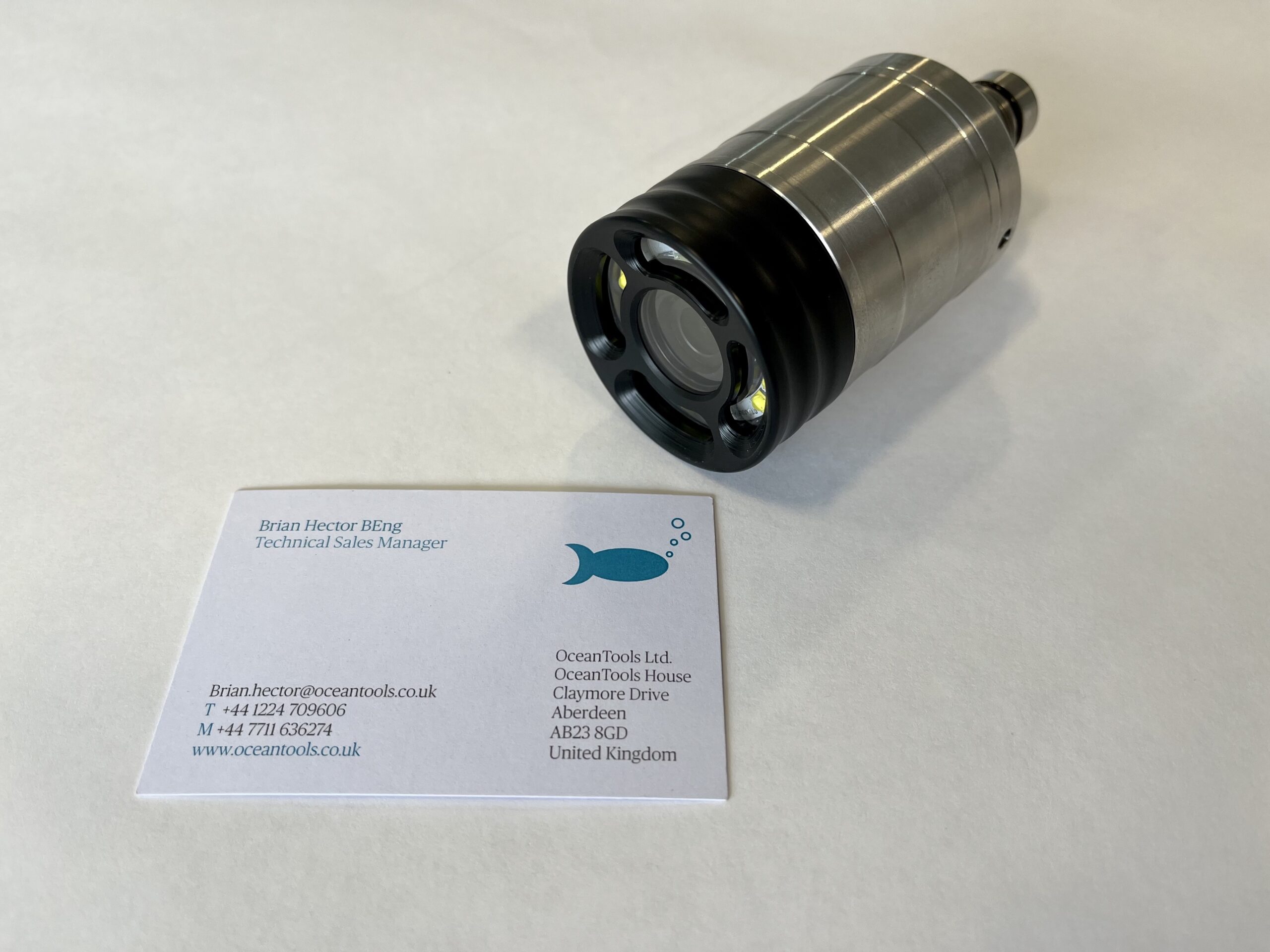
OceanTools launch new C7 Colour Subsea Camera with light ring
OceanTools, global supplier of underwater technology, launch the new C7 colour camera adding to their extensive industry leading range of high specification subsea cameras. Differing from its sister products, the OceanTools C7 multipurpose subsea camera has an integral high intensity controllable light ring to illuminate the underwater environment, providing clear video footage at depths down to 6000m.
The compact C7 subsea observation camera offers an impressive 800 TVL resolution composite video output with a Wide Dynamic Range providing superb video quality under all lighting conditions. The integral light ring has 12 LEDs that can provide light output of up to 2,250 lumens.
The unique design is manufactured from Grade 5 Titanium and features separate Sapphire windows for the camera and light ring, to eliminate reflected light.
Brian Hector, Technical Sales Manager, OceanTools said “I am very proud of the C7 addition to the ever-expanding family of high specification OceanTools cameras. The C7 has been designed with specific customers’ requirements in mind and utilises the latest CMOS sensor camera technology and high efficiency ultra-bright LED’s in a very small 6000m package. We believe the C7 is the smallest camera currently on the market to be able to offer very high-resolution SD video and integrated LED lamps making it truly versatile”.
The C7 product announcement follows a series of pioneering releases for OceanTools including the high performance C6 Colour Zoom camera producing advanced video imagery at resolutions up to 1080p, launched earlier this year.
For further information on OceanTools products and services, visit www.oceantools.co.uk or email [email protected]
Tech firm playing key role in Antarctic science voyage
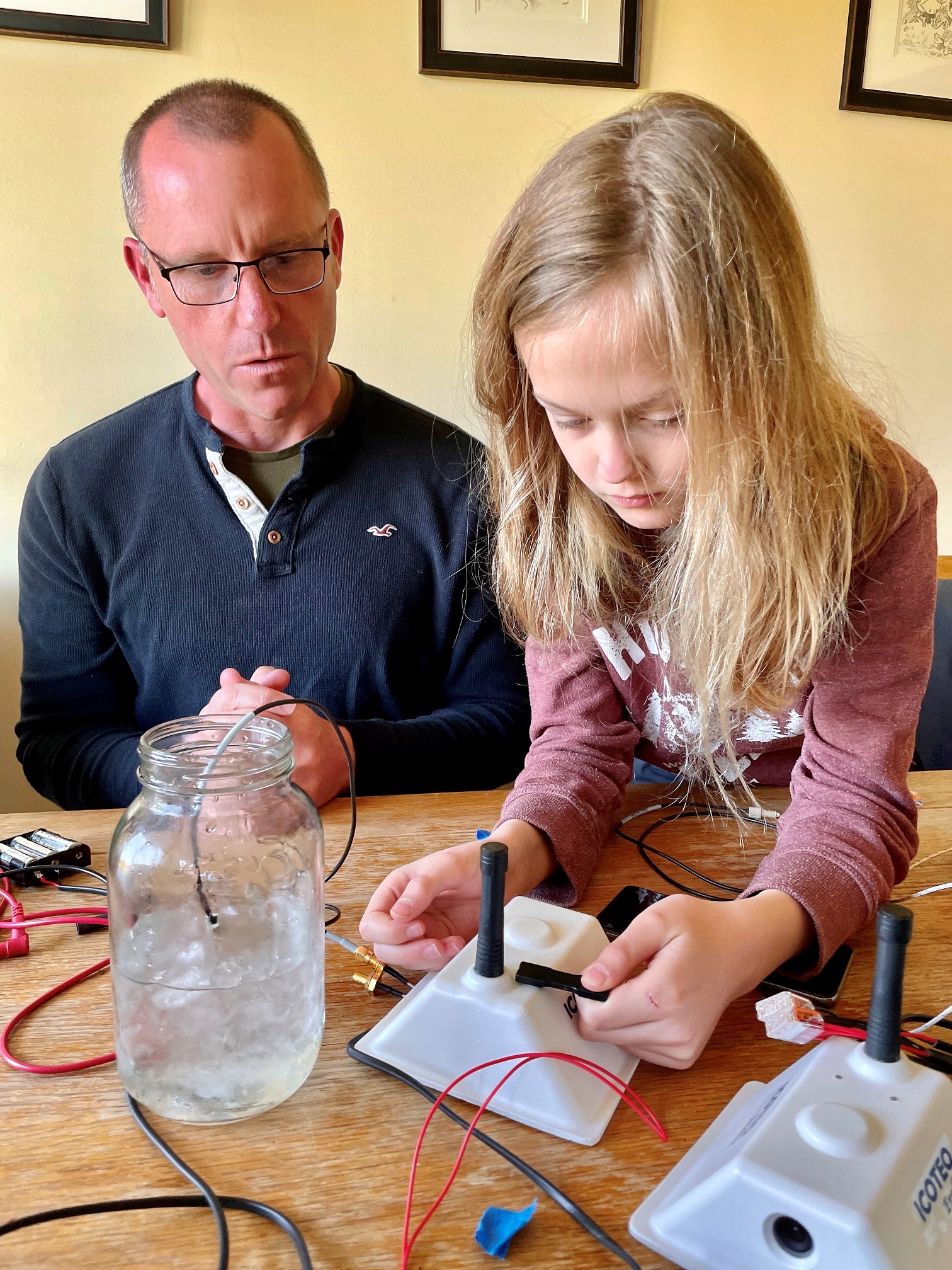
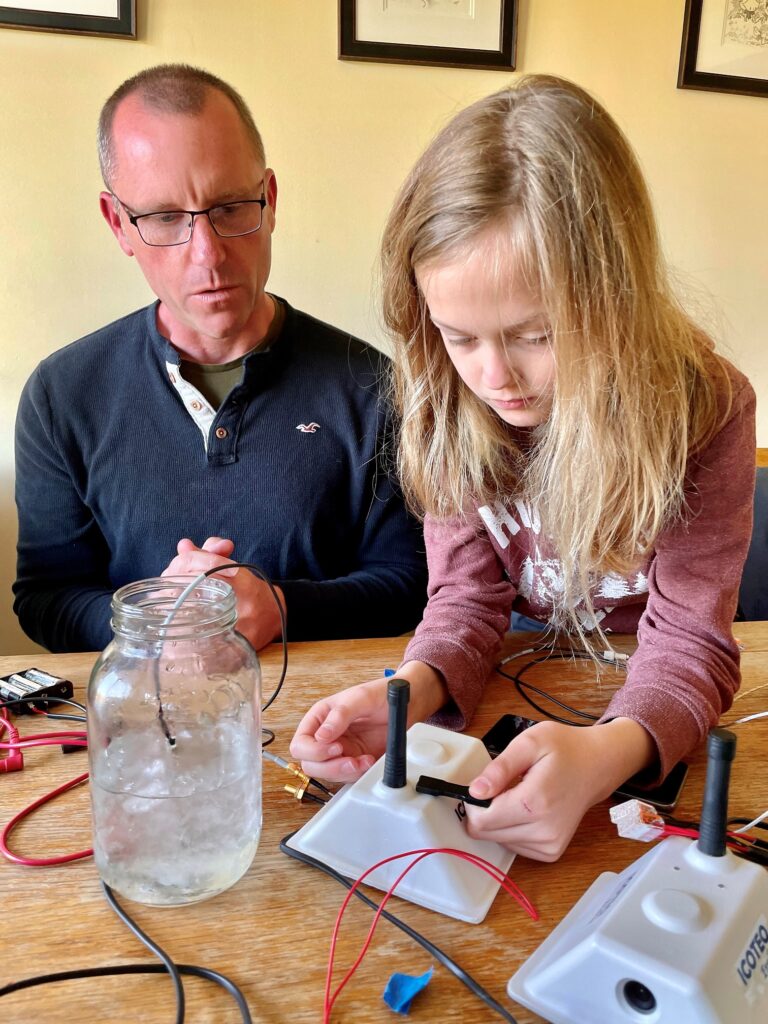
Bath-based wireless technology specialists Icoteq are supporting two young Scottish brothers, aged 10 and 12, in an epic 20,000 kilometres voyage to send two replica ships to circumnavigate Antarctica in what is thought to be a world first.
Icoteq has designed tracking and monitoring devices for the vessels that will report back via satellite the location of each boat throughout the journey and sensor data measuring sea temperature and ocean pH – both of which can be used as markers for climate change. Images from an integrated camera will also be sent once per month.
The metre-long scaled wooden replicas of 19th century warships, HMS Erebus, and HMS Terror, will drift through the Southern Ocean following the circumpolar current around the coastline of Antarctica in an expedition – known as Project Erebus.
“We were contacted by the boys’ father MacNeill Ferguson to ask if we could advise him on the best tracker to buy online to fit to the boats,” said Craig Rackstraw, who founded Icoteq in 2013 and lives in Wells, Somerset. “We were so inspired by his sons’ mission, we offered to build the technology for them.
“We developed a custom tracking and data monitoring device that incorporates a GPS receiver, air and ocean temperature probes, a pH probe to measure ocean acidity and a forward-facing camera. Position and scientific data will be sent back to us using an ARGOS satellite communication link.
“The boys will hopefully provide inspiration to other children and families. They’re both extremely hands on and have worked hard to make this happen. They built the boats as far as possible by themselves – and where they have had to get professional help, it’s all been given for free.”
Craig said, if successful could show that low-cost sensors, such as those used on Ollie and Harry’s expedition, could be a viable way to help monitor climate change.
“This is currently done using expensive complex equipment. If low-cost sensors combined with citizen science, can contribute to the gathering of important scientific data, it could open the doorway for larger scale monitoring at a fraction of the price.”
Icoteq – whose previous work includes developing a new generation of satellite tracking equipment aimed at sea turtles and a plastic pollution tracker for a National Geographic-backed expedition – will feature a dedicated Erebus page on its website with a map that will track the two boats, along with a monthly camera image sent via satellite.
“It’s like a mission to Mars,” said Harry Ferguson, 10. “We cannot rescue the boats once they are launched so we have to plan every detail.”
The vessels are due to leave for South Georgia in the Southern Atlantic and will be handed over to the territory’s government who will take the boats on board a fisheries patrol vessel from which they will be launched 160 kms north into the Antarctic Circumpolar Current.
Project Erebus is the latest adventure for Ollie and Harry from Aberdeenshire, who previously set the world record for the longest distance travelled at sea by a toy boat with their Playmobil pirate ship ‘Adventure’ which sailed 6072km to the Caribbean as part of their list of 500 adventures.
They went on to smash their own world record last year with a second toy ship, that managed to sail over 15,000 km through the Caribbean and the Gulf of Mexico.
For further information on Icoteq visit: https://www.icoteq.com/

Operations Manager & Chief Executive (CEO) - The Hydrographic Society UK & Ireland (THS:UKI)
The Hydrographic Society UK & Ireland (THS:UKI) has vacancies for the Operations Manager and Chief Executive (CEO). The CEO and Operations Manager are key roles in THS:UKI. Both roles are home-based and offer flexible working.
THS:UKI is an independent, non-profit making, non-governmental, learned professional society. It provides a forum for all those involved in activities related to hydrography and associated disciplines, in the UK and Ireland. Our Individual and Corporate Members operate in many sectors including surveying for nautical charting, offshore resources, construction, engineering, renewable energy, environmental monitoring, oceanography, geology and the manufacture and supply of related products.
The CEO provides strategic and operational leadership to the organisation while taking responsibility for the organisation’s administration and financial management. Reporting directly to, and working closely with, the Board of Directors/Trustees the CEO helps develop and deliver the THS:UKI strategic plan. The CEO is the public face of THS:UKI and builds relationships with individuals, organisations and stakeholders within THS:UKI’s sphere of influence and operation and ensures engagement with THS:UKI’s membership.
Reporting to the CEO, the Operations Manager is responsible for the day-to-day management of THS:UKI. This is a multi-faceted role including: managing finances, maintenance and support of membership, delivery of THS:UKI publications and social media content, promotion and delivery of events.
Full details, including how to apply, for the CEO and Operations Manager can be found on the THS:UKI website. If you have any specific queries please contact [email protected].

IMPACT SUBSEA - Software Engineer
IMPACT SUBSEA
INNOVATIVE UNDERWATER PRODUCTS www.impactsubsea.com
Job Description
Software Engineer
Revision 1.0
Date: 20th April 2022
Reporting Line
The software Engineer will report directly to the Technical Director.
Location
Impact Subsea, Ellon, Aberdeenshire. There may be a requirement to visit suppliers, customers,
conferences, exhibitions and other work locations as required.
Role
To be the lead developer of software projects and maintain software as required.
Key Responsibilities
The Software Engineer will be required to:-
• Create applications
• Design user interfaces
• Write test applications for internal testing
• Help develop the software roadmap
• Comply with management system procedures, including health, safety and environmental
requirements within the company.
• Convey a professional image of the company at all times.
• Carry out any other tasks within the competence of the role and jobholder.
Key Outcomes
• To develop applications for company products for use by the end user
Limits of Authority
Full responsibility for all operational activities within the philosophies and constraints laid out in
the job description.
The company reserves the right to change the activities listed, taking into account the job holder's
qualifications and experience to enable the business needs to be met.
Qualifications & Experience
Essential:
• Proficient in C / C++
• Experience in graphical user application creation
Desirable:
Use of QT and QML
Python
Bonus:
Creation of web apps using Vue.js, Angular or similar
Proficient in firmware
VHDL
Personal Attributes & Knowledge
Essential:
• A proactive approach to dealing with challenges.
• Ability to work well as part of a development team.
Desirable:
• Flexibility to travel to meet the requirements of the role

Intelligent Muscle at OTC
A new extremely powerful and intelligent electric manipulator can be seen on Saab Seaeye’s Stand 1406 at the Ocean Technology Conference, Houston, 2 – 5 May 2022.
The pioneering breakthrough is Saab Seaeye’s new eM1-7 seven-function all-electric work-class manipulator.
As powerful as a hydraulic equivalent, it is more reliable and more dexterous.
Seaeye eM1-7’s micrometre precision comes from each of its seven joints having extremely accurate force and position feedback coupled with their own smart distributed microprocessor for intelligent, intuitive and precision arm control.
Visitors to the exhibition stand can also hear more about other innovations that are changing the face of underwater enterprises.
Saab Seaeye’s innovative new environmentally friendly electric work vehicle, called eWROV, matches the power of a 250 hp hydraulic work class system, but is easier to operate, more precise, acoustically quieter, more reliable, needs less maintenance and has a much lower lifetime cost.
Already the world leader in electric underwater robotics, Saab Seaeye’s eWROV joins the largest range of electric robotic vehicles in the industry.
This includes the multi-role 3000m rated Sabertooth, the world leading roaming and hovering robot that can operate in both fully autonomous and tethered modes, enabling fully flexible dual operations from a single platform fitted with cameras, sonars and tooling.
Two Sabertooth robots have succeeded in finding the wreck of the Endurance, sunk 3000m below the Antarctic ice during Shackleton’s ill-fated expedition in 1915.

Enter ASL‘s 2022 Early Career Scientist Contest to Win the Use of an Autonomous Scientific Echo Sounder for Three-Months
The goal of this program is to support the oceanographic and limnological research community by lending, free of charge, a calibrated battery-powered Acoustic Zooplankton Fish Profiler™ (AZFP™) (subject to availability either the 125/200/455/769 kHz or the 38/125/200/455 kHz configuration), plus mooring cage and battery for a three-month maximum deployment period along with the support from ASL’s team of experts. This instrument loan program is open to early-career scientists and engineers, graduate students, post-doctoral fellows and others involved in oceanographic or freshwater work.
With the unmatched combination of multiple frequency operation, low power and extended endurance, the ASL AZFP offers a new, economical way of obtaining reliable measurements of marine environmental conditions in the water column. The AZFP can monitor the presence and abundance of zooplankton and fish within the water column by measuring the acoustic backscatter returns at multiple ultrasonic frequencies. Other sonar targets realized from the sonar backscatter data include bubbles and suspended sediments. The AZFP is a powerful tool for scientific research and environmental monitoring in oceans, lakes and rivers. For more details on the AZFP, refer to our product brochure.
To apply to this program, send a summary proposal (maximum length 4 pages plus figures and references) of your study and description on how it would benefit from the use of the AZFP's capabilities. The selection criteria involve a number of factors including:
• Relevance of the project: the measurements obtained should advance the understanding of physical and/or biological phenomena of importance to the aquatic environment
• Innovation of the project including scientific merit
• The ability of the party to deploy and recover the instrument
Interested applicants may send proposals before June 30, 2022.

DLM Wheel De-trenching Grapnels
Dynamic Load Monitoring (UK) Ltd. (DLM), of Southampton, UK has received a landmark order for two wheel de-trenching grapnels, which will be deployed from subsea cable repair vessels in France. The products will be delivered to a long-standing DLM customer in May.
DLM is already renowned for the manufacture and supply of running line monitors (RLMs); saddleback monitors (SNMs), used in pre-lay grapnel run (PLGR) and route clearance operations to measure line tension; load pins; and load cells that capture data as tension is applied to the winch rope towing the grapnels. However, these products are unique in that they are specifically for recovering cable that is buried in a seabed.
A wheel de-trenching grapnel (or WTG) is used to de-trench cables buried at depths of greater than 0.5m. The WTG is one of the most robust grapnel products available; it can be used in harsher seabed environments, for example, rocky conditions, but also in soft and crumbly (friable) seabeds, where the addition of the wheels will help to maintain penetration. The end user operates a fleet of cable repair vessels, but the solution will be of interest to anyone that completes repair work on laid cables.
The customer knew of the concept, but asked DLM if it could design a version that was suitable to penetrate 1.8m into the seabed. Previous designs were only suitable for 1.1m. Notably, DLM is the only company that offers a 1.5m and 1.8m fluke (a prong-shaped tool that penetrates the seabed) version of the product.
Chris Scrutton, technical manager at DLM, said: “We will never sell lots of these products, as there is a limited number of cable laying ships in the world capable of handling them, but the fact that we have upgraded the design for the 1.5m and 1.8m penetration shows that we have one of the best offerings on the market and this will appeal to any cable ship owner in need of this type of equipment. Further, it reinforces the engineering prowess for which we are renowned. This type of product represents a steady source of income for us—and we can design them quickly and confidently. We completed a feasibility study for the client prior to them placing an order to ensure that the product would be suitable for the application.”
The de-trenching grapnels will be used repeatedly in a suite of cable repair equipment. They can also be used for plough assessment surveys to assess what the industry calls “plough-ability” of the seabed, providing important information prior to laying a new subsea cable. In other words, this deciphers how tough the seabed conditions are and what equipment will be required to lay a new subsea cable.