

Marine Measurement Forum (MMF) returns in June 2022
After a 2+ year break, the long-standing MMF series of events has finally returned. MMF64 will be held in person in Port Solent Marina (Portsmouth, UK) on 15th June 2022.
The MMF is a series of one-day, non-profit events that provides opportunities for the informal exchange of ideas, knowledge and developments across the marine measurement and ocean technology industries. Businesses and Institutions across the UK ocean technology sector take turns to host MMF meetings, and RS Aqua have been selected to host MMF64.
RS Aqua are now calling for speakers to submit abstracts for presentation on the day. Ten speakers will be selected, and the theme for this event will be cross-sector collaboration. Presentations that feature insightful stories about collaborative activities are particularly encouraged.
Please send speaker abstracts / talk summaries to [email protected] by 11th May at the latest.
We are also now accepting registration for attendance at the event (here), which includes all day access, multiple networking breaks, lunch and refreshments and more, all for £37.50 (plus VAT) per person. The event is non-profit, with any surplus income to be donated to charity (Hampshire & Isle of Wight Wildlife Trust).
The events venue in Port Solent Marina can comfortably cater for up to 100 people but not more, so don’t delay, book your ticket today!
To register, visit the RS Aqua website or the Eventbrite page.

Impact Subsea Launches seaView V3
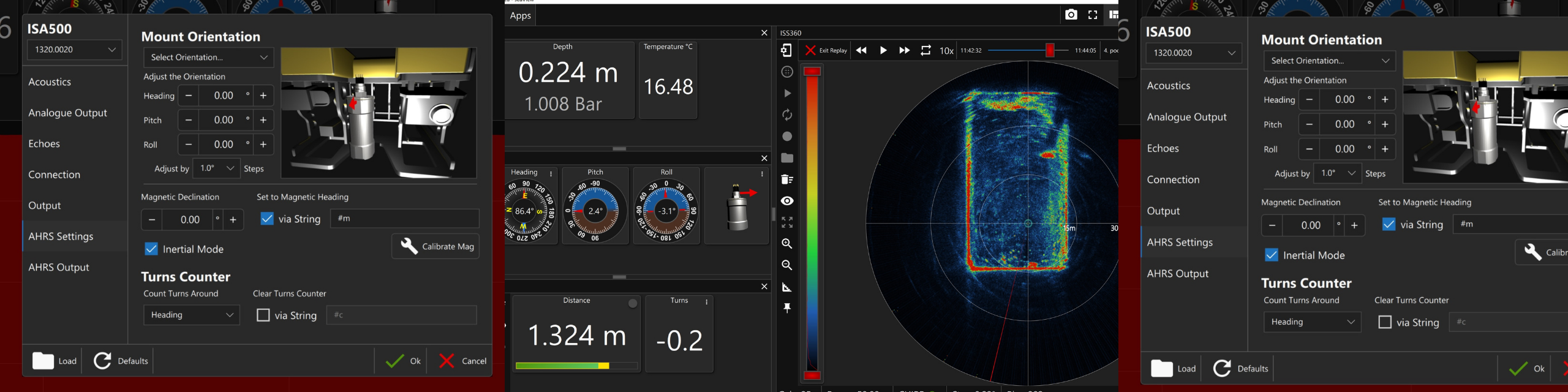
Impact Subsea has launched the third generation of seaView software to support their range of Altimeters, Attitude and Heading Reference Systems, Depth Sensors and Sonars.
seaView V3 provides a cutting-edge user interface for the setup and operation of Impact Subsea sensors. The launch of seaView V3 is accompanied by the release of a third generation of sensor firmware.
V3 is an entirely new software development and intends to provide a powerful platform for existing Impact Subsea sensors and future sensor developments.
Commenting on the launch, Alastair Mclennan-Murray, Technical Director of Impact Subsea, stated ‘To support our existing and new generation of underwater sensors, we have redeveloped seaView together with our sensor firmware from the ground up. This provides new capabilities to the user and a strong software and firmware base for future product development’.
V3 allows a single or multiple Impact Subsea sensors to operate simultaneously from a single application. This is ideal for operations with a single sensor to ROV operations where Sonar, Altitude, Depth, Heading, Pitch & Roll can all be displayed on screen at the same time.
With V3 comes the ability to automatically detect any sensor that has been physically connected to the computer. The user no longer needs to deal with communication port allocation or configuration of required baud rate – this is handled automatically by the software. Sensors are physically connected then automatically displayed on screen. This is a great time-saver for applications where multiple sensors are in operation.
All sensors are fully software configurable, with seaView V3 providing a clear process to set up and configure sensors to suit specific requirements. For example, V3 allows for custom output strings to be created, where users can add new formats of ASCII output strings to a sensor’s firmware. This enables quick integration of sensors into existing platforms and software applications by the user, without the need to redevelop systems or request additional support from Impact Subsea.
The ‘inversion reset’ capability in Impact Subsea sensors has been further enhanced: Three inversions within 10 seconds of power on sets the sensors to RS232; Six inversions, sets it to RS485. This allows sensors to quickly be configured to suit the required communications interface.
A turns counter feature has been added for all Impact Subsea sensors enabled with the integrated Attitude and Heading Reference System. Ideal to keep track of umbilical loops in ROV operations, or other applications where the rotation of an underwater asset requires monitoring.
To learn more about Impact Subsea’s range of AUV, ROV and underwater sensors please follow this link.

Ashtead Technology develops new optical chain measurement system
International subsea rental equipment and solutions specialist Ashtead Technology has developed a new optical chain measurement system (CMS) to provide highly accurate and repeatable mooring chain measurements to track chain corrosion, wear and elongation between surveys, combined with inclination measurement to verify chain tension.
Using high resolution video combined with machine vision algorithms, Ashtead Technology’s new optical CMS reduces chain measurement time by more than 50% and provides real-time results.
Ashtead Technology is a market leader in mooring system inspection having completed over 200 projects worldwide. With a strong culture for innovation and continuous improvement, Ashtead Technology’s new optical CMS offers substantial operational time and cost advantages over other technologies such as mechanical calipers, photogrammetry and laser measurement systems.
Tyler de Gier, General Manager of Ashtead Technology’s mooring inspection and asset integrity business, said: “Ashtead Technology has 37 years’ experience developing and operating ROV-based technology in every major offshore energy region worldwide and we are committed to investing in the development of new technologies to ensure we remain at the forefront of underwater inspection applications.
“Our new optical CMS is considered to be the most accurate and reliable mooring chain measurement system in the market, delivering real-time measurement of chain dimensions within seconds of tool placement. The system is particularly well suited for chain measurement in high-motion environments and we recently carried out successful field trials in the North Atlantic, under conditions that no other technologies would be able to contend with.
“We are seeing extremely strong uptake so far for the new optical CMS which is enabling our customers to make faster and more informed decisions about the integrity and future performance of their subsea assets and infrastructure.”
The development of Ashtead Technology’s new optical CMS was supported in part by advisory services and research and development funding from the National Research Council of Canada Industrial Research Assistance Program.
New Sales Manager for Teledyne Marine Interconnect/Impulse-PDM in Europe.
April 2022, Teledyne Marine are pleased to announce the appointment of Paul Barr as European Sales Manager for Teledyne Marine Interconnect Solutions underwater connector range Impulse-PDM.
Paul has 26 years experience working in sales and marketing roles with products such as RF & microwave, fibre optics, interconnect, cables assemblies, system integration, switches and industrial ethernet. His most recent role was with Carlisle Interconnect Technologies.
“Teledyne Interconnect has made major investments in our specialist connector and cable assembly facility in Alton, UK over the last couple of years, increasing the manufacturing capacity of our highly specialized underwater connectors in Alton. “Said Ole Søe-Pedersen, Vice President & General Manager Teledyne Marine Europe, “This is the right time to strengthen the sales team. Paul come with a solid experience that will help us adapt to changing requirements, harness the latest technologies and bring ever better solutions to the market to support our customers and increase our markets”
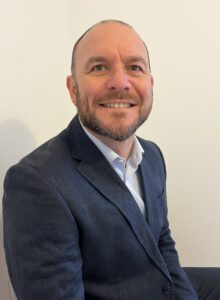
Based out of the UK, Paul will head up the sales organisation for Teledyne Impulse-PDM to promote and grow both the Impulse and PDM brands in Europe and to assist other Teledyne Interconnect companies to expand their market coverage in the region.
Paul joined Teledyne Interconnect April 4th , 2022.

MacArtney expands in Scandinavia, new office opens in Sweden
MacArtney, the leading supplier of underwater technology, is set to expand in Scandinavia with the opening of a dedicated office in Mölnlycke near Gothenburg, Sweden.
To date, the Swedish market has been served from MacArtney’s head office in Denmark with a distributor in Sweden - Marine Survey, led by Cecilia Drougge. A long-term, rewarding business relationship, creating a solid base, branding the MacArtney portfolio within underwater solutions such as underwater connectivity and data acquisition.
However, the extensive marine and offshore activities along Sweden’s coastline, matching MacArtney fields of operation, motivated the establishment of a local office in Gothenburg. An ideal location for interacting with renewable and defence enterprises and supporting ocean science initiatives involving industrial, academic and scientific institutions.
38-year-old Emil Andersson, who has worked for MacArtney over the last three years, mainly involved in global sales, will now be charged with leading the sales efforts in his home country and welcomes the expansion:
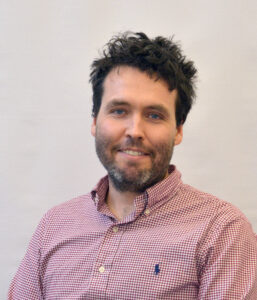
“The Swedish market has grown rapidly in the last couple of years. Especially in terms of large-scale projects, resulting in a growing volume of orders for products such as our connectors, winches and underwater systems. The potential for spin-off business is enormous, and we are therefore scaling up our presence, opening an office staffed initially by myself and a Sales Administrator.”
Local engagement is essential for growth. It opens more and new doors, which MacArtney’s CCO Rasmus Bonde is highly enthusiastic about.
“We want to continue servicing the connectivity business and support our customers in Sweden. Our aim is to create a fully-fledged MacArtney setup, building our relationships with Swedish customers and get in even closer collaboration on new projects,” states Bonde.
Emil Andersson has solid experience with underwater technology, working with this field in Swedish and Australian companies for the past 10 years. Emil is a graduate engineer having a background in sonar and underwater video technology.
Looking forward to the Swedish office with Emil at the helm, CCO Rasmus Bonde concludes: “We continue to strengthen our global presence and local support, with the emphasis on agility and quick responsiveness to our local customers’ requirements.”
MacArtney Sweden AB will officially open its doors during April 2022.
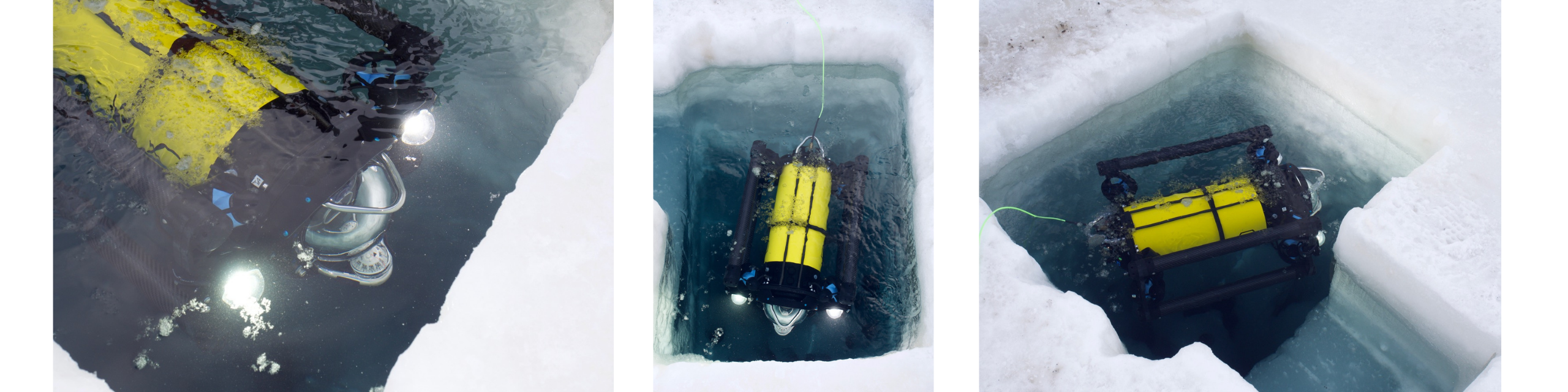
Boxfish Research Announces New Reseller Agreement with DK M-Tech
Boxfish Research, a New Zealand manufacturer of underwater remotely operated vehicles (ROVs), today announced an authorised reseller agreement with DK M-Tech, a market-leading provider of specialised marine equipment in South Korea.
This new business partnership introduces Boxfish Research’s innovative ROV systems to the Korean market and enhances DK M-Tech’s capacity to improve Korea’s maritime safety and marine environment.
Based in Auckland, New Zealand, Boxfish Research designs and manufactures cutting-edge underwater robotic vehicles recognised internationally for their unparalleled vision technology, manoeuvrability and reliability.
Boxfish ROVs are lightweight, versatile and easy to use with six degrees of freedom of movement, an auto-stabilisation system and pilot assist features. Their underwater drones can operate in harsh polar conditions and challenging remote locations capturing tack-sharp uncompressed 4K video at depths of up to 1,000 metres.
DK M-Tech distributes state-of-the-art equipment and systems to the Korean marine industry, building strong and successful customer relationships. Together Boxfish Research and DK M-Tech will deliver an indispensable underwater tool to the market that enhances safety, efficiency and capability in diverse industries, including commercial diving, offshore energy, biosecurity and search & research, marine science and cinematography.
“We are excited to partner with DK M-Tech and have them join our community of resellers,” says Craig Anderson, Co-founder of Boxfish Research. “This agreement brings our world-leading underwater vision technology to a new market and enhances our capacity to serve customers in the Asia Pacific region.”

New Feritech Innovation Centre is opened by HRH The Duke of Kent
The newly-constructed Feritech Innovation Centre, which is located near Falmouth, had its official opening on 11th April 2022. The guest of honour for the occasion was HRH The Duke of Kent.
The Duke of Kent was welcomed by Rob Ferris and Gemma Ferris, Directors and co-owners of Feritech Global Ltd. He was accompanied on the visit by the Lord Lieutenant of Cornwall, Colonel Edward Bolitho OBE and Deputy Lieutenant James Staughton OBE.
The Duke of Kent was taken on a tour of the new Innovation Centre, which specialises in advanced engineering solutions for marine and other industries. The new facility will offer a full range of services including product design, machining, fabrication, electrical, electronics, embedded software, hydraulics and 3D printing services – all under one roof. This will be one of the most advanced facilities of its kind in the UK.
After the tour, Rob Ferris thanked The Duke of Kent, who unveiled a plaque to commemorate the occasion. The Duke was then invited to plant a tree close to the entrance of the centre, as part of The Queen’s Green Canopy tree-planting initiative to celebrate the Platinum Jubilee.
Commenting on the visit, Rob Ferris said: “We are very grateful to HRH The Duke of Kent for making the time to visit us today. It has taken a huge effort by our team to get this new facility planned and built, and it is really exciting to now see its official opening. This new innovation centre will give us space to grow as a business, by expanding our range of services, helping us win important new contracts, and providing new job opportunities in our local area.”
The new facility has been designed to work in harmony with its local environment. The site is designed to harvest its own water from boreholes. It has a state of the art solar roof which provides all of its power, with air source heating for its offices. The surrounding area will have over 3,000 trees planted, to help it blend with its rural location and promote bio-diversity.

NextGeo selected PanGeo SBI for further survey on Hollandse Kust West Beta (HKWb) routes for TenneT TSO.
Marine geoscience and offshore construction support service provider NextGeo has been carrying out various works as part of its contract with TenneT TSO B.V. for UXO survey services in support of the vast offshore wind energy programme promoted by the Dutch Government in the Dutch sector of the North Sea.
Following the completion of a successful route survey campaign performed on Hollandse Kust West Beta (HKWb) last year, NextGeo has selected PanGeo Subsea (a Kraken Robotics Company) to provide its SBI to conduct a detailed survey around the Baloeran wreck close to cable routes to provide a clearer picture of subsea conditions underneath the seabed level.
NextGeo CEO Giovanni Ranieri commented,
“The relationship between NextGeo and PanGeo is just at the beginning, but this represents a key milestone for both companies with multiple potential developments in the current energy transition market.”
Applying state-of-the-art beamforming synthetic aperture sonar arrays that provide a real-time 3D view of the sub-seabed, PanGeo’s SBI gathers highly accurate and usable data and has a proven track record in cables and UXO detection. The SBI has been installed on Ievoli Ivory’s WROV to ensure a maximised coverage of the targeted area characterised by strong currents, shallow water depth and very low visibility.
“We are truly excited to have the opportunity to team up with NextGeo and work together on the HKWb campaign. TenneT is no stranger to the SBI data, we value this and strive to continuously explore ways to enhance our service delivery. We look forward to building a strong working relationship with NextGeo to leverage onto future projects in the region.” said Moya Cahill, PanGeo Subsea CEO.

NOAA’s Ocean Exploration Cooperative Institute takes delivery of DriX Uncrewed Surface Vehicle
The University of New Hampshire’s Center for Coastal and Ocean Mapping (UNH CCOM), as a member of the Ocean Exploration Cooperative Institute (OECI), funded by NOAA Ocean Exploration, has taken delivery of an iXblue DriX Uncrewed Surface Vehicle (USV) and its Universal Deployment System. The autonomous solution will help expand the footprint and efficiency of the OECI’s ocean exploration operations.
Delivered in July to UNH CCOM, DriX and its novel Universal Deployment System have successfully completed sea acceptance trials and extensive personnel training during the summer of 2021 as well as integration and a first shakedown cruise onboard Ocean Exploration Trust’s E/V Nautilus in March 2022.
“We are delighted to embark on this exciting endeavor, working collaboratively with our partners to develop and enhance autonomous technologies that will expand the limits of our capabilities and bring new efficiencies to our efforts to explore and characterize the vast unknown areas of our oceans,” said UNH CCOM Director Larry Mayer.
“NOAA Ocean Exploration is pleased to see the operations of this new DriX technology successfully integrated with Exploration Vehicle Nautilus,” said NOAA Ocean Exploration Director Jeremy Weirich. “Being able to operate DriX over the horizon and away from a ship will increase the rate at which we can explore the U.S. Exclusive Economic Zone in support of the National Strategy for Ocean Mapping, Exploration, and Characterization.”
Selected by OECI for its mission endurance, ability to operate at high-speed, and excellent offshore seakeeping ability, DriX will support NOAA Ocean Exploration’s mission by providing mapping and characterization capabilities and supporting other autonomous vehicles that are independent of the activities of the mother ship, greatly expanding the efficiency and effectiveness of ocean exploration operations. The research being conducted with DriX will serve to inform NOAA on the potential use of autonomous systems in support of the broad NOAA mission.
“We are thrilled to add DriX to the OECI collection of vehicles. It is critical to our vision of expanding the footprint of ocean exploration by collecting valuable ocean exploration data independently and simultaneously with a research vessel and at the same time providing communications and support for submerged assets” said Dr. Adam Soule, Executive Director of OECI. “This is a linchpin for the future of ocean exploration.”
The DriX vehicle will be a key technology in several ocean exploration expeditions this summer. Learn more and join the expeditions at https://nautiluslive.org/expeditions/2022
Sustainability and skills are priorities for the maritime sector, says new President of the IMarEST
Sustainability, decarbonisation, skills, and workforce health are among the top priorities for the maritime sector in the coming years, according to Alastair Fischbacher FIMarEST, who took up the role of 119th President at the Institute of Marine Engineering, Science and Technology (IMarEST) yesterday.
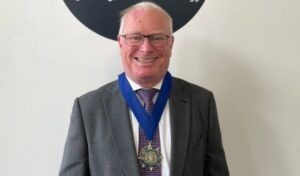
Alastair Fischbacher, explains:
“Sustainability is a key issue that we must work on together now with some urgency. Creating a sustainable future for everyone is going to continue to evolve and expectations of the industry will change over time, requiring a process of continuous adaptation, improvement, skills development, as well as ensuring we achieve milestones and goals.”
It is with this in mind that Alastair plans to promote sustainability as a connecting and enabling factor across the Institute’s work over the coming year. He adds:
“Being elected as the 119th president of the IMarEST is an enormous honour. The Institute has many expert members across the globe on topics ranging from marine plastics, autonomous vessels, the human element, decarbonisation, aquaculture to mammal welfare; the depth of knowledge and the drive to make a difference is remarkable. Our members are building sustainability into the fabric of what we all do and are helping to guide, educate and articulate the integration of sustainability within our respective sectors.”
Having started his career as a Master Mariner, Alastair has been involved in ship and cargo chartering and operations, coal marketing, coal mine acquisition in Colombia, coal terminal development, alternative fuels, and ship building and operation. He has been chair of the World Ocean Council, Rightship and the Sailors’ Society and was involved with the founding of the Sustainable Shipping Initiative of which he is co-chair.
Alastair is particularly interested in the role of technology in improving performance, reliability and safety. He explains: “The human element aspect has long been a particular interest, as has the welfare and conditions for seafarers. As we head towards autonomous vehicles, there will always be a role for seafarers whether it is working on the legacy systems on board vessels or developing and operating the leading-edge technologies of the future. It is vital therefore that we ensure those in the profession are given access to ongoing skills development.
“I believe that we must also aim to increase the visibility of the maritime industry, which despite the increased volumes of cargo and the numbers of ships, is still pretty invisible until an incident occurs. It’s important to showcase and highlight developments, progress and ensure the industry is seen as a respected part of global society.”
Alastair will hold the position of IMarEST President for one year. He succeeds Kevin Daffey. Martin Shaw, current co-chair of the Institute’s Human Element special interest group, is President Elect.