Valeport strengthens senior team
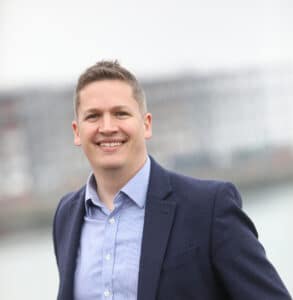
Valeport has strengthened its senior management team with the appointment of a Head of Marketing, as it targets market leadership in the environmental sensors sector.
The internal appointment of former marketing manager, Guy Frankland, to Head of Marketing marks the latest step in the strategic growth plans for Valeport – the UK’s leading oceanographic, hydrographic and hydrometric instrument manufacturer.
With over 20 years experience in strategy, brand and digital marketing, Guy joined Valeport in 2018 and has been responsible for overseeing a comprehensive refresh of the brand that has served the subsea sector for over fifty years, supporting Valeport’s expansion into new markets and delivering new products to customers across a large number of sectors.
Valeport Managing Director Matt Quartley, said: “Guy has been fundamental in helping us shape the business in recent years and appointing someone of Guy’s calibre to our senior team is a key part to helping us continue to implement our plans for Valeport’s growth moving forward.”
Valeport technology is selected by leading subsea, hydrographic, hydrometric, metrological & positioning, oceanographic, ports, harbours & dredging, renewable energy and scientific research organisations worldwide.
For more information visit: www.valeport.co.uk


International collaboration to develop ultra-deep sea sensors begins
This month marks the start of a new international collaboration to better understand the ultra deep-sea through innovative adaptation of sensors to withstand the crushing pressures at depths of down to 11,000 metres.
Funded through the NERC Global Partnerships Seedcorn Fund, the project will bring together experts from the National Oceanography Centre (NOC) with researchers from the newly created centre of excellence for ultra-deep sea research - the Danish Center for Hadal Research (HADAL) at the University of Southern Denmark (SDU), to jointly improve knowledge about the processes governing organic carbon degradation in deep-sea trenches.
The hadal, or hadopelagic zone, is found from a depth of around 6,000 to 11,000 metres (20,000 to 36,000 ft), and is the deepest region of the ocean lying within oceanic trenches. It accounts for nearly half of the ocean's depth range, but has only recently been recognised as potential hotspot for organic carbon turnover and microbial activity. To understand the carbon mineralization and the related biogeochemical processes in hadal sediments is of global importance, as carbon recycling in sediments can have critical implications for ocean chemistry, redox conditions, and nutrient availability, impacting life in the oceans.
The project will support knowledge exchange and a collaborative design between partners to adapt the innovative sensor technology required to study the ocean at these extreme depths. The sensors will be provided by the NOC’s Ocean Technology and Engineering team and rigorously tested in the pressure testing facilities of the Danish Center for Hadal Research before being deployed during joint field work in a deep-sea trench off Japan in 2022.
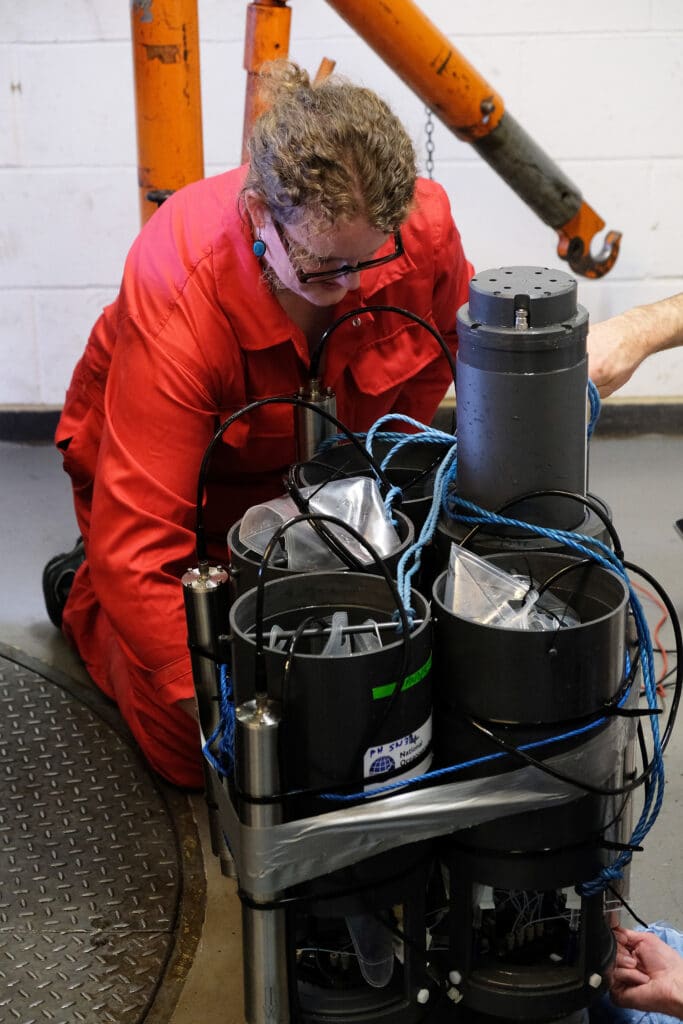
The NOC’s Dr Anna Lichtschlag is leading the project working with NOC research engineer Dr Allison Schaap (pictured below).
For more information visit: www.noc.ac.uk

Innovative NOC project wins funding to support Blue Economy and sustainable energy
A new project being led by the National Oceanography Centre to develop a system to improve the efficiency of offshore renewable energy generation and help develop the Blue Economy has been awarded funding from Innovate UK’s Sustainable Innovation Fund.
Submarine High-fidelity Active-monitoring of Renewable energy Cables (SHARC) aims to improve the operational efficiency of offshore renewable energy generation by addressing failure management of critical subsea infrastructure, in this case submarine cables. Between 2014 and 2017, recorded cable failures across UK sites alone led to a cumulative loss of £227 million, highlighting the importance of innovations to improve cable failure-management strategies.
Reducing these costs will make offshore renewables more competitive and accelerate their uptake, contributing to the UK Government's Clean Growth Strategy and enabling net-zero carbon emissions. Furthermore, COVID-19 has increased the need for remote monitoring of assets. Remote monitoring can be performed in socially distanced settings, removing the need to deploy crews offshore to operate in the tight confines of vessels. This approach is more economically efficient, as it will allow in-service fibre-optics to be remotely accessed. Additionally, it will reduce the health risks to employees by limiting their potential exposure to COVID-19, enabling the offshore renewable energy industry to 'build back better'.
The SHARC project will develop innovative techniques to monitor the condition of cables in real-time, taking into account the combined influence of various marine-environmental and intrinsic cable heating effects. This will result in early detection of potential threats to cables or better prediction of their potential failures, which will enable timely intervention, avoiding large-scale damage and the associated costly downtimes.
To achieve this goal, the NOC is leading a team of world-class experts from the fields of marine geoscience, next-generation distributed fibre optics design and instrumentation, ocean technology and engineering, machine learning & artificial intelligence algorithm design, and exploitation and modelling of dynamic and static cable rating, with the European Marine Energy Centre (EMEC) as the end-user and key stakeholder.
"The SHARC project will develop the capability to accurately monitor and assess the condition of subsea infrastructure that supports offshore renewable energy production in real-time, and has the potential to avert and address potential damage before it’s too late, by which time it becomes incredibly expensive to repair. The societal benefits that SHARC will contribute to are also significant in terms of the more efficient generation of clean, renewable energy, reducing the risk to people operating in this sector, with concurrent monitoring of the precious oceanic environment."
SHARC project lead, Dr Mohammad Belal from the National Oceanography Centre
“The National Oceanography Centre’s SHARC project, along with every initiative Innovate UK has supported through this fund, is an important step forward in driving sustainable economic development.”
Innovate UK Executive Chair, Dr Ian Campbell
For more information please visit: www.noc.ac.uk
Falcon for Swedish Safety and Survey
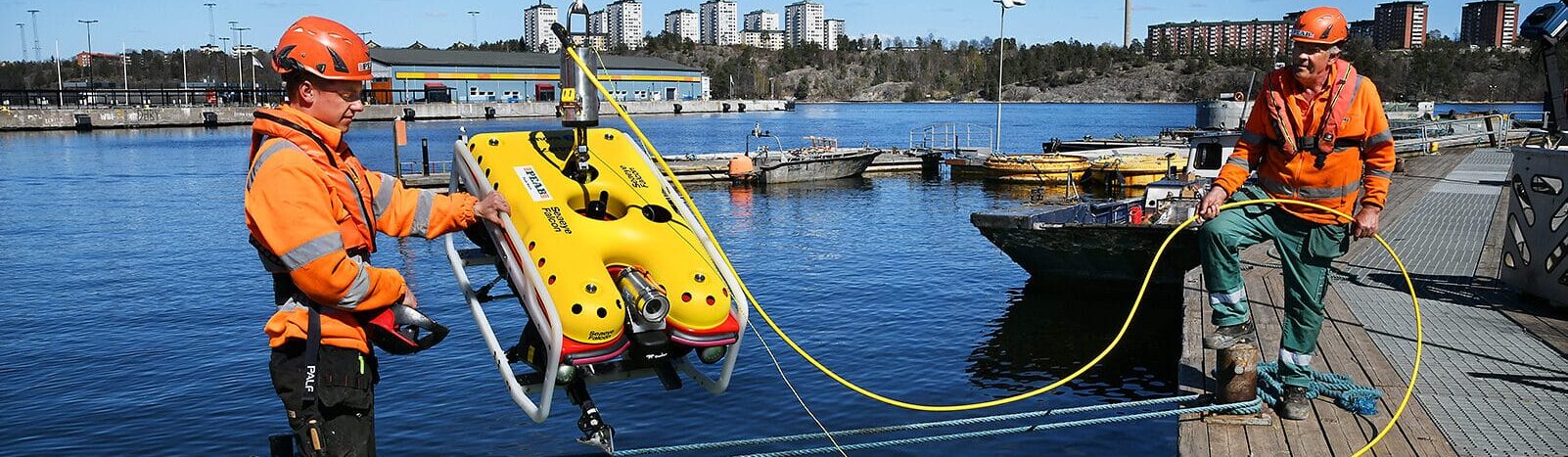
Peab Marin chose a Saab Seaeye Falcon as a multi-functional resource in support of the company’s marine survey, salvage and civil construction operations. The Swedish marine services company says the Falcon will secure a safer working environment for its divers and will be an “excellent tool” for surveying. Importantly for Peab Marin’s wide range of construction and maintenance work the Falcon’s quick and easy deployment with ready systems change and expandable systems options, make it a highly adaptable resource.
Diver Safety
Diver safety is paramount and in hazardous circumstances the Falcon can be deployed to work underwater endlessly and tirelessly. Robert Hedin at Peab describes the important role the Falcon will play in diver safety:
“Some work can offer serious risk for a commercial diver, especially Delta-P situations when the differential pressure between two water columns attempts to equalize, creating tremendous pressure/suction.
It’s a hazard that cannot be downplayed, as in some cases it’s just impossible to reduce the suction in case of emergency.
In situations like this, we prefer to send down the Falcon to either completely replace the diver’s work or in order to make a proper safety assessment. It really helps us to create a safer work environment for our commercial divers.
This has been exclusive to the offshore industry for a long time, and we’re really glad to see the same application moving into the civil inshore industry in Sweden.”
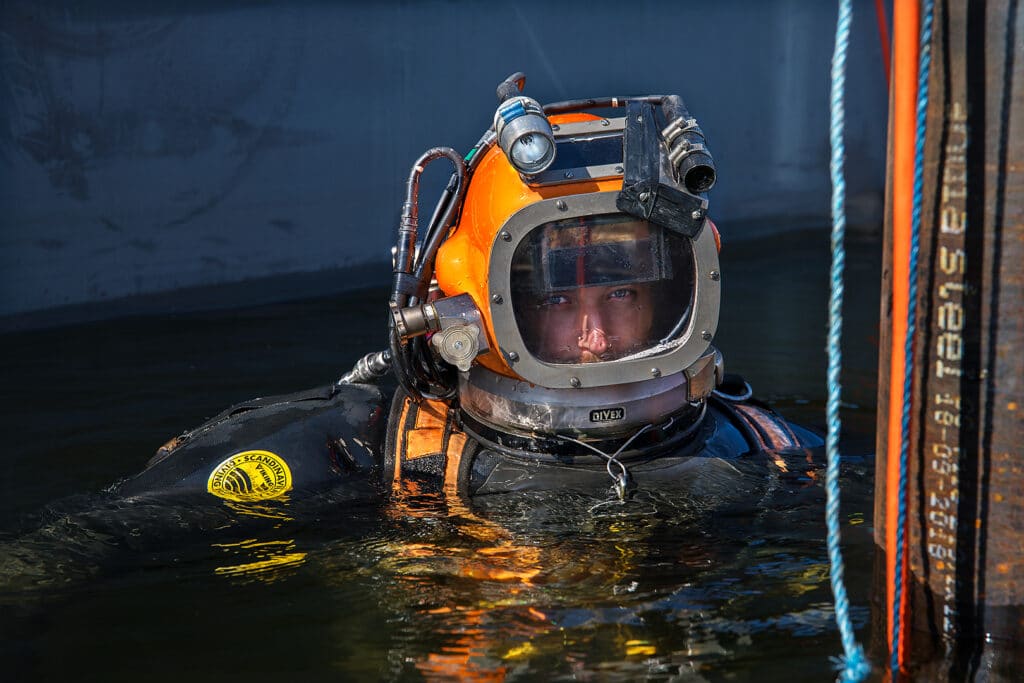
Photo by Peter Steen: The Falcon can make a safety assessment before sending divers down.
Murky Water Working
With Swedish waters notorious for low visibility, typically 0.5m and less, and working in a wide variety of water states from open seas to waterway locks, fitting a Bluetooth multibeam sonar to the Falcon was essential, says Robert Hedin: “It is a must-have for operating an ROV in our underwater environment.”
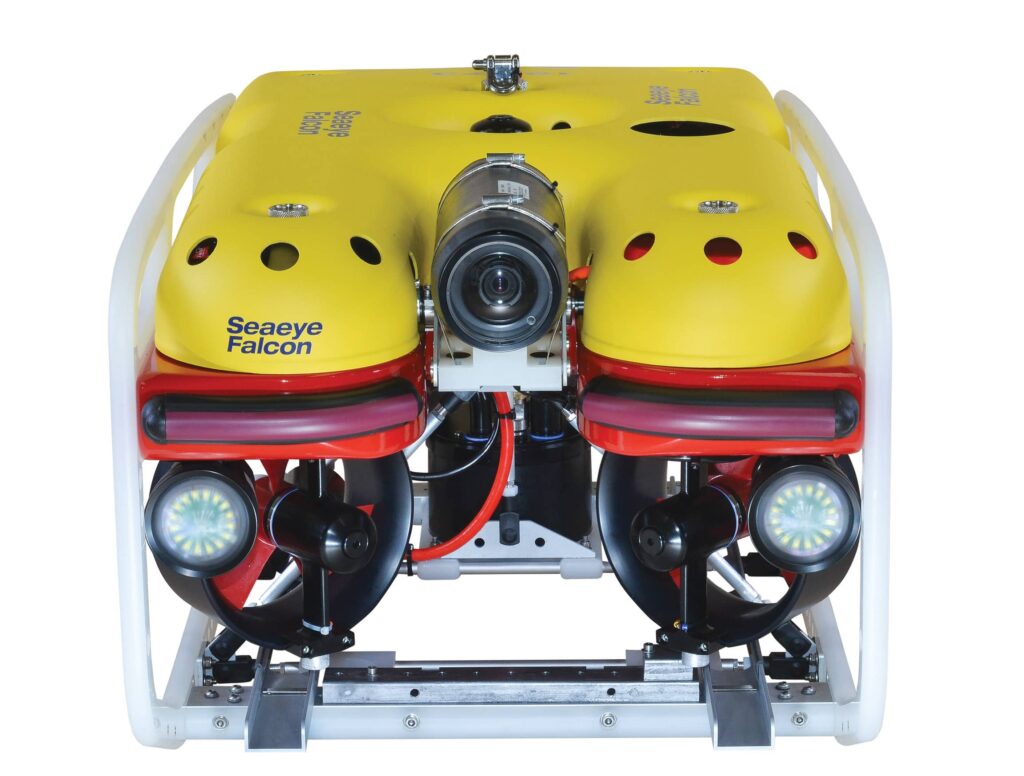
Photo: Saab Seaeye Falcon - A multi-functional resource in support of Peab Marin’s marine survey, salvage and civil construction operations.
Pilots’ Friend
With Peab Marin pilots typically working in challenging conditions, their pilots welcome the precise control, agility and stability of the Falcon when faced with complex environments in turbulent waters and strong currents.
The pilots particularly like the vehicle’s user-friendly interface with its advanced array of functions including customisable graphics and diagnostic pages.
The Falcon’s 20 year success - winning top-in-class world status - comes from its future-flexible, ever-evolving technology package that Saab Seaeye has designed around a compact, powerful, highly manoeuvrable, easy to use vehicle, enhanced with iCON™ intelligent control.
For more information visit: www.saabseaeye.com

BSL completes another successful Pre-Decommissioning Survey
BSL as a subcontractor to N-Sea onboard the Noordhoek Pathfinder has completed another successful pre decommissioning survey for Perenco. As part of a broader scope of work, BSL undertook the pre-decommissioning habitat and environmental baseline survey, including provision of a dedicated sampling winch. Thanks to the collaborative effort and cooperation between all parties, the campaign was completed efficiently and without incident.
BSL is undertaking the laboratory analysis of the samples acquired offshore and subsequent data processing prior to completion and delivery of the environmental habitat and baseline reports.
For more information visit: www.benthicsolutions.com
New Compact Hydrographic System Meets Growing Demand For Shallow-Water ‘Gap-Filler’ Surveys
Hydrographic survey technology provider Subsea Europe Services GmbH has introduced a new compact version of its unique integrated Hydrographic Survey System (iHSS). Called iHSS-Compact, it meets the growing demand for shallow-water ‘gap-filler’ marine surveys and simplifies the acquisition of commercial grade marine data for users of any experience.
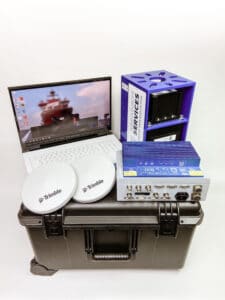 iHSS-Compact leverages Subsea Europe Services’ technology integration expertise to provide a low-cost, turnkey marine survey package for deployment on almost any vessel. Designed for customers seeking an easy to access alternative to commercial survey vessels for on-demand shallow-water projects, the system is delivered in a single, ‘person-portable’ Pelican case for fast deployment and streamlined set up.
Ready now for rental, subscription or purchase, in many cases, iHSS-Compact can be pre-configured and available anywhere in Europe virtually ‘next-day’, with installation and calibration in less than two hours. Practically plug and play, iHSS-Compact includes everything needed to acquire high quality marine data to new IHO S-44 Exclusive Order standards, including an R2 Sonic 2020 wideband multibeam echosounder, I2NS Inertial Navigation System, versatile mounting solution, survey and post-processing notebook, software and cabling. The iHSS-Compact is also available as a dual head system allowing for more than 200 degrees of swath coverage.
“We created the iHSS to simplify marine data acquisition with a lower cost, easier to access solution for when commercial survey vessels are unavailable, too expensive, or too cumbersome for the job at hand,” explains Sören Themann, CEO, Subsea Europe Services GmbH. “The iHSS-Compact is a natural extension of the concept with specific focus on providing a mobile, flexible solution primarily for shallow-water survey projects that need fast access to high-quality marine data acquisition technology.”
For more information visit: www.subsea-europe.com
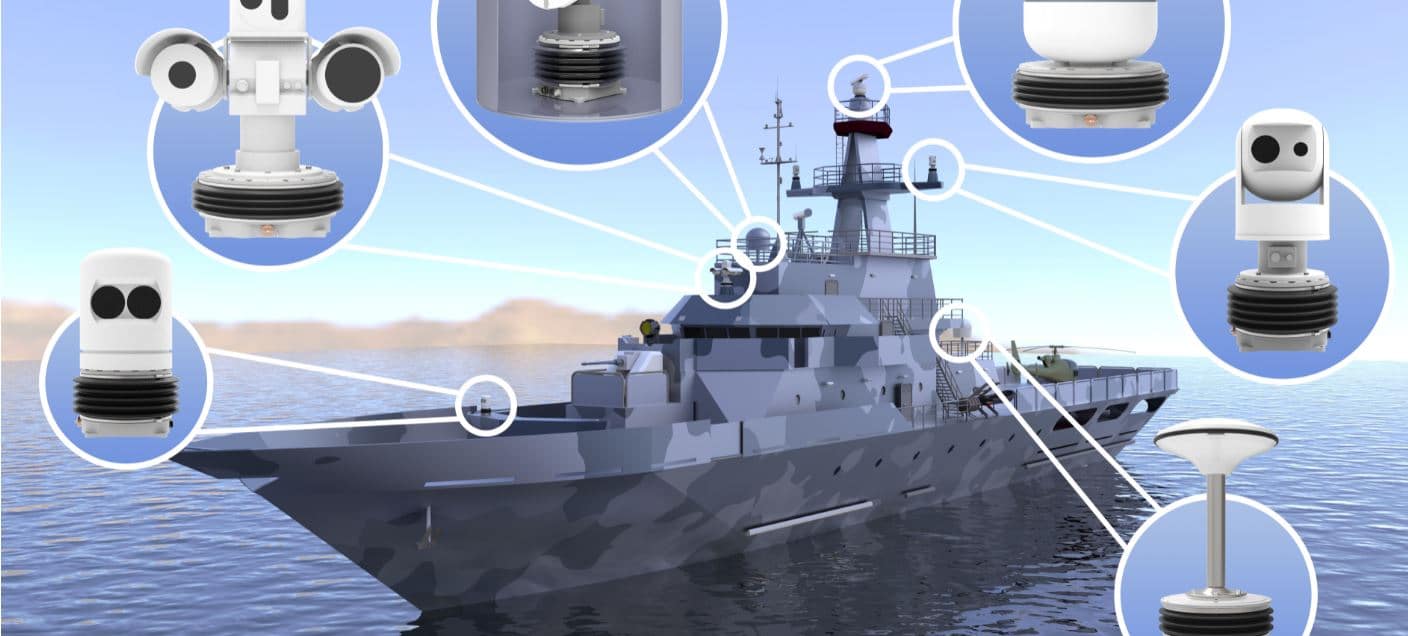
SOMAG AG Jena launches Nautical Gyro Stabilization Mount NSM 400
With the launch of the NSM 400 SOMAG AG Jena has expanded its maritime portfolio’s capabilities. The NSM 400 is a medium-sized gimbal between the smaller RSM 400 and the larger OSM 4000 and complements the product portfolio of Gyro Stabilization Platforms, which are designed for land and offshore use.
Reliable Gyro Stabilization for Surveillance Sensors
The NSM 400 was primarily designed for the stabilization of surveillance sensors on medium (starting from 1.0 kt onwards) to large maritime vessels. Un-stabilized systems follow the movement of the water caused by the swell which adversely affects the detection and threat-tracking capabilities of the sensor. Using a Gyro Stabilization Mount ensures a stabilized field of view and high-resolution images by compensating the movements of the vessel. This allows EO/IR systems to scan their environment without interference even in extreme sea conditions, in order to best detect, track and classify asymmetric air and surface threats. The NSM 400 is the perfect gimbal for IRST (infra-red search and track) and other surveillance systems to ensure 360° protection for surface vessels of naval forces.
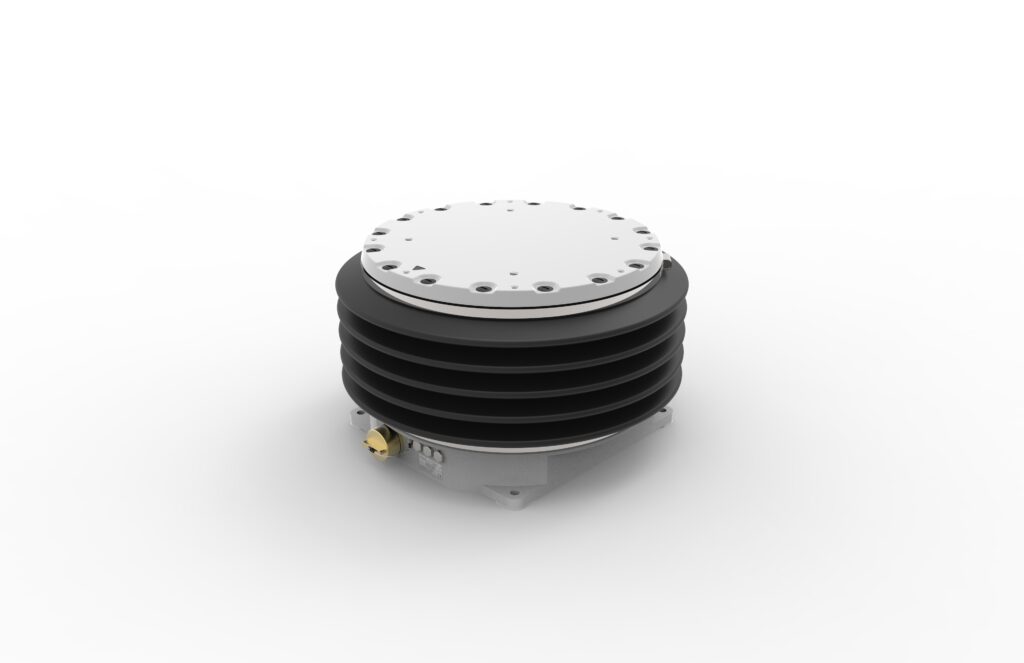
Image: The NSM 400 is a high-precision gimbal for offshore stabilization of sensor systems
Highest torque and stabilization range for the best gimbal performance on the market
Like all SOMAG marine Mounts, the NSM 400 is IP 67 compliant and made to perform in very rough sea conditions, up to sea state 6 and beyond. To achieve this performance, the NSM 400 features a peak torque of 350 Nm to withstand even 1.5 G lateral acceleration*. Users who choose an NSM 400 not only opt for an extremely powerful Mount, but also for one with a uniquely large stabilization range. The NSM 400 compensates for movements in roll and pitch up to ≤±20°. Even an installation at high altitudes, such as on 30-meter high masts, does not affect its performance. Designed to work 24/7 it offers an unmatched stabilization accuracy of ≤0.4° rms without external IMU data. It is also possible to feed in NMEA frames or ship data to improve the long-term stabilization performance of the Mount.
NSM 400 offers new communication standards
The NSM 400 offers another innovation as it is the first stabilization platform equipped with an Ethernet port. This enables the user to integrate the Mount into a network. Numerous advantages result from this, such as communication with the Mount over long distances and the possibility to easily access the Mount from different devices within the network as well as the simultaneous configuration if several Mounts are integrated in the network.
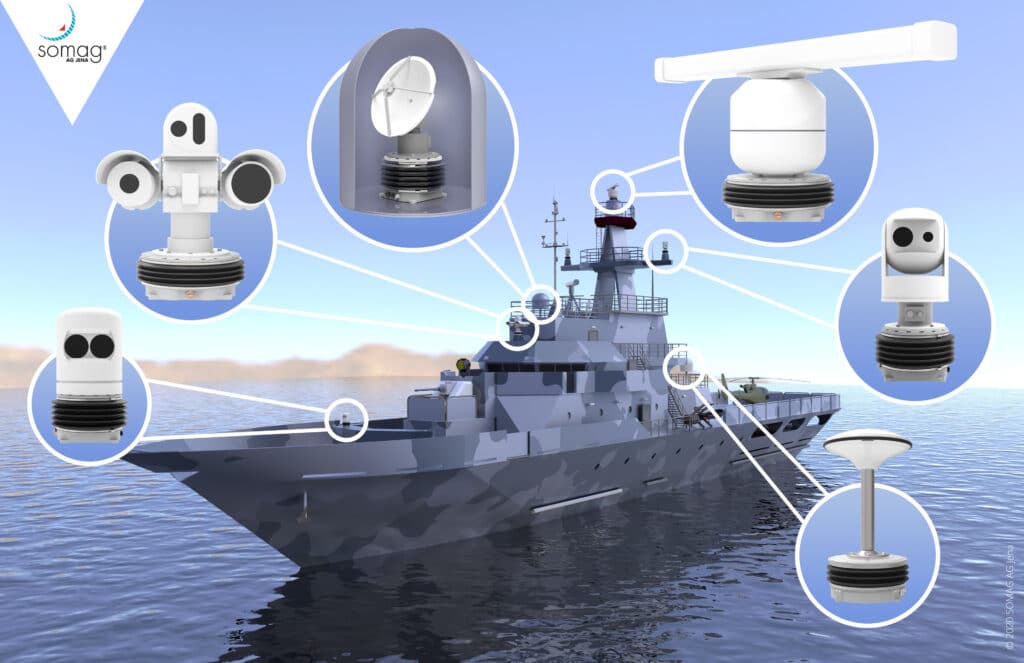
Image: SOMAG’s maritime mount portfolio offers the right gimbal for various payloads and installation conditions
For further questions and prices please contact the SOMAG sales team at [email protected]
* The possible payload to be stabilized is related to the center of gravity of the payload as well as the lateral accelerations the Gyro Mount and payload have to withstand. Please do not hesitate to contact us if you have any questions in this regard. In order to give you the best possible assistance, please include the following information in your request:
- Where should the Mount be installed (floating platform, buoy, ship etc.)?
- Dimensions (length/width/weight) of the platform or vessel
- How many meters above the waterline should the Mount and the payload be installed?
- Center of gravity and weight of the payload
- Further information you consider important
The more information we get about the planned application, the better we can support you.
Find out more about SOMAG AG Jena on their website.
HYPACK Training Event on 6-8 January 2021
Join HYPACK for their annual Training Event on January 6th-8th, 2021 through their virtual platform. This training will offer instruction on the newest features of HYPACK® 2021 as well as comprehensive training for both novice and experienced users in HYPACK®, HYSWEEP® and DREDGEPACK® software. HYPACL will be providing a state of the art virtual experience with an exhibit hall, live training sessions, one-on-one chats and more! By attending you will have exclusive access to all of our training sessions and the ability to network with other attendees and exhibitors.
Training Sessions
Training is essential in keeping up to date with the latest changes in the industry. This three-day event will provide you with the tools needed to do your job efficiently. HYPACK's training sessions will run similar to their in-person event. They will be having three different virtual rooms running at the same time with new content for novice and experienced users. These sessions will run from 10:00AM-3:00PM EST. A schedule is on the last page.
Missed a training session? Don’t worry! All sessions will be accessible on demand to go back and watch only to those who are registered for the event.
One-on-one Sessions
HYPACK will also be offering one-on-one sessions for attendees to meet with their experts. You will be able to sign up for a specific time to meet with one of the sales or technical representatives to talk about project specific questions or general questions. Keep an eye out for an email with one-on-one sign up times!
Exhibit Hall
You will be able to meet exhibitors from the industry’s leading companies and learn about their products and services! HYPACK's virtual exhibit hall will be open from 8AM to 4PM EST for attendees to network with the exhibitors before, after and during the training sessions. You will be able to visit the virtual booths, download their brochures and content, watch promotional videos and more! Upon entering a virtual booth, you can set up a one-on-one chat session with the booth sales person. This gives you the interaction and networking you would usually get at an in person event. Attendees will also be able to connect with other attendees through chat capabilities within the virtual platform.
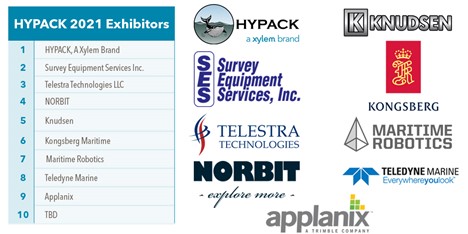
For more information visit https://www.hypack.com/training/conferences-trade-shows/exhibit-at-hypack-2021
Shell and Ocean Infinity Collaborate to Provide Uncrewed Seep Hunting Capability
Shell and offshore robotic ship operator Ocean Infinity have signed a joint development agreement to combine expertise and assets to execute multiclient seep hunter projects.
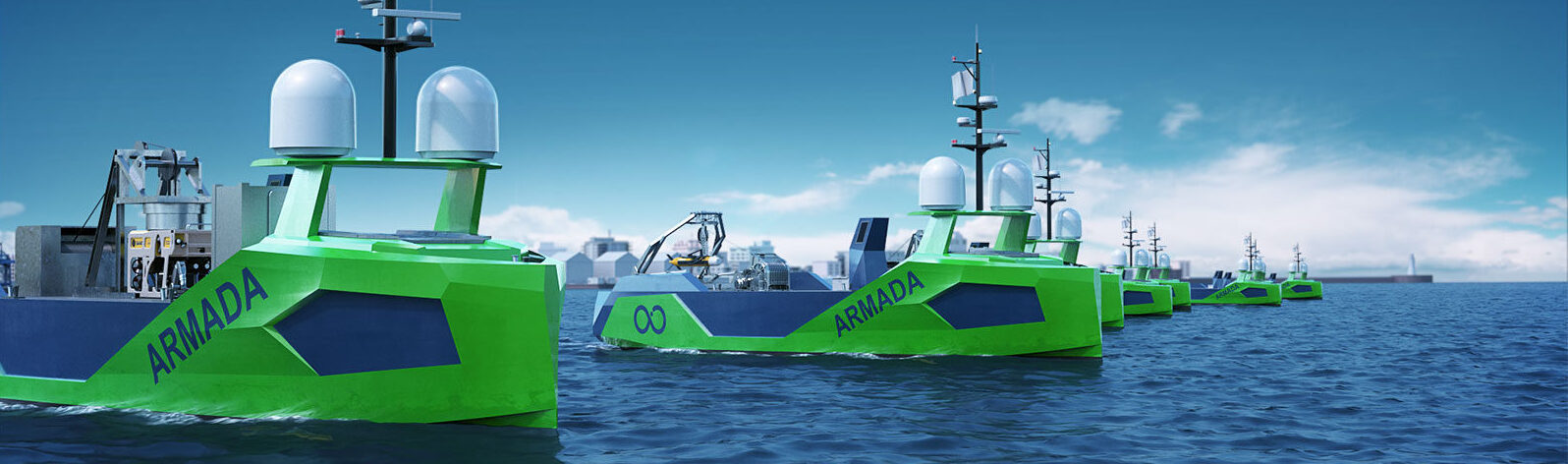
The combination of Shell’s specialist seep hunting expertise and Ocean Infinity’s ‘Armada’ fleet of robotic ships, will provide effective location targeting and wide scale coverage. In turn this will culminate in more reliable results, improving the focus of exploration work with fewer risks and environmental impacts.
Ocean Infinity’s Armada fleet, which will become operational next year, is equipped with autonomous underwater vehicles (AUVs) offering deep-water coverage on a uniquely large scale.
The Armada fleet will truly transform the way the global maritime community operates. With zero people required at sea, operations conducted by the fleet are set to be the safest the industry has seen as well as the most sustainable.
“Historically the most fruitful and successful collaborations are formed during the most challenging times. Ocean Infinity is very excited to begin our new multiclient data chapter, and we are especially delighted to commence this endeavour with Shell”, said Katya Krylova, VP Business Development Oil & Gas Exploration Services, Ocean Infinity.
“The deployment of the Armada fleet will mark a major technological advance in the industry and redefine traditional ways of working. Refining our ability to conduct tasks such as seep hunting using uncrewed technology opens up possibilities in so many other areas; the experience gained as a result of this collaboration could prove transferable to other offshore tasks such as carbon capture storage (CCS) monitoring”, she continued.
For more information visit: www.oceaninfinity.com
SeaRobotics Launches Next Generation “Utility Class” ASV
SeaRobotics Corporation (SRC), a leading developer of marine robotics, today announced details of their next generation Utility Class ASV, the SR-Utility 3.0. This latest addition to the SRC portfolio is designed to extend the range and versatility of unmanned coastal marine survey operations by providing professional surveyors with a configurable platform that allows for interchangeable payloads and sensors, including the incorporation of existing instrumentation.
“We have been building ASVs for over twenty years now and understand that there is always a need for some degree of customization when defining form and function, but increasingly we see surveyors demand systems that they themselves are capable of modifying to fit certain applications,” according to Lou Dennis, VP of programs at SeaRobotics.
The launch of the SR-Utility 3.0 follows the successful 2019 introduction of the SR-Surveyor M1.8, a smaller, tightly integrated ASV designed specifically for the survey of shallow and hard-to-access areas. System compatibility was a key design principle for the new Utility Class ASV, and the SR-Utility 3.0 and SR-Surveyor M1.8 will share the same operator, survey and autonomy controls and unique SRC Uni-Cab architecture.
“The growing appetite for autonomous systems among commercial surveyors calls for ever more flexible and intuitive plug and play platforms like the SR-Utility 3.0, which offers a modular approach to set-up, intuitive interfacing, and—thanks to a shared common Uni-Cab architecture—the option of modular upgradeable expansion to multi-ASV deployments,” Dennis added.
One of the first confirmed contract awards is from CSA Ocean Sciences, a US-based marine environmental consultancy firm that already uses a number of other SRC ASV models on large-scale environmental, hydrographic and geospatial survey projects.
Speaking of the order, CSA CEO Kevin Peterson said:
“We are excited about the addition of the SR-Utility 3.0 to our existing fleet of SR-Surveyor M1.8s and the benefits that this breakthrough technology offers to our customers. Having a highly reliable and standardized suite of ASVs helps us maintain the same established crew training, spare parts, and support depots—it is ultimately about optimizing efficiency in the collection of precise data.”
To find out more about the SR-Utility 3.0, visit: www.searobotics.com