
bp Ventures, Woodside Energy and Blue Ocean Monitoring back Blue Ocean Seismic Services in a £10 million funding round
- BOSS is developing an autonomous underwater vehicle to conduct offshore seismic surveys.
- The technology will significantly reduce the cost, risk, environmental impact and time currently required for offshore exploration of oil, gas, and carbon storage.
Farnborough, 13 October 2020: Blue Ocean Seismic Services, the marine seismic survey disruptor, has secured a total of £10 million of Series A investment from a group of world-leading energy technology and investment companies: bp Ventures, Woodside Energy and Blue Ocean Monitoring.
The investment will be deployed to continue the development of a fully integrated system which uses long endurance self-repositioning autonomous underwater nodes to conduct offshore seismic surveys for oil and gas exploration and reservoir optimisation, whilst also identifying and monitoring carbon storage opportunities under the seabed.
The technology has been designed to be fully containerised, scalable and modular allowing for deployment to survey locations across the globe. While collecting high quality seismic data, the vehicle is anticipated to deliver substantial cost savings and to facilitate a significant reduction in survey time, thereby enabling results to be delivered much faster and at a lower cost than is available through current technologies. In addition to these commercial benefits, BOSS’ integrated autonomous system will reduce the HSSE risks, while the reduced survey time and the use of autonomous vessels will have a range of environmental benefits such as significantly reduced carbon emissions during operations.
To support the project, BOSS has appointed a highly experienced technical team, and has a number of forthcoming engineering roles providing BOSS with the in-house expertise to develop its first autonomous underwater vehicle. In line with its strategy to establish a presence in key oil and gas markets, the team has established a new corporate head office, lab and workshop facility in Farnborough, UK, adding to its existing premises in Perth, Australia. It is planning to open other offices from next year.
All three investors are actively involved in developing the technology and are represented at Board level.
Simon Illingworth, Managing Director & Chief Executive Officer, Blue Ocean Seismic Services said: “This significant investment marks an important milestone in the development of our revolutionary underwater vehicle and we are excited to be opening up a range of new job opportunities in Farnborough. This support from major industry innovators serves as a strong endorsement for our technology and vision as we continue our journey to disrupt the marine seismic acquisition sector. Through our technology, future customers will be able to explore the subsurface of the ocean whilst substantially reducing risk, carbon emissions, duration and cost, enabling customers to overcome a range of challenges.”

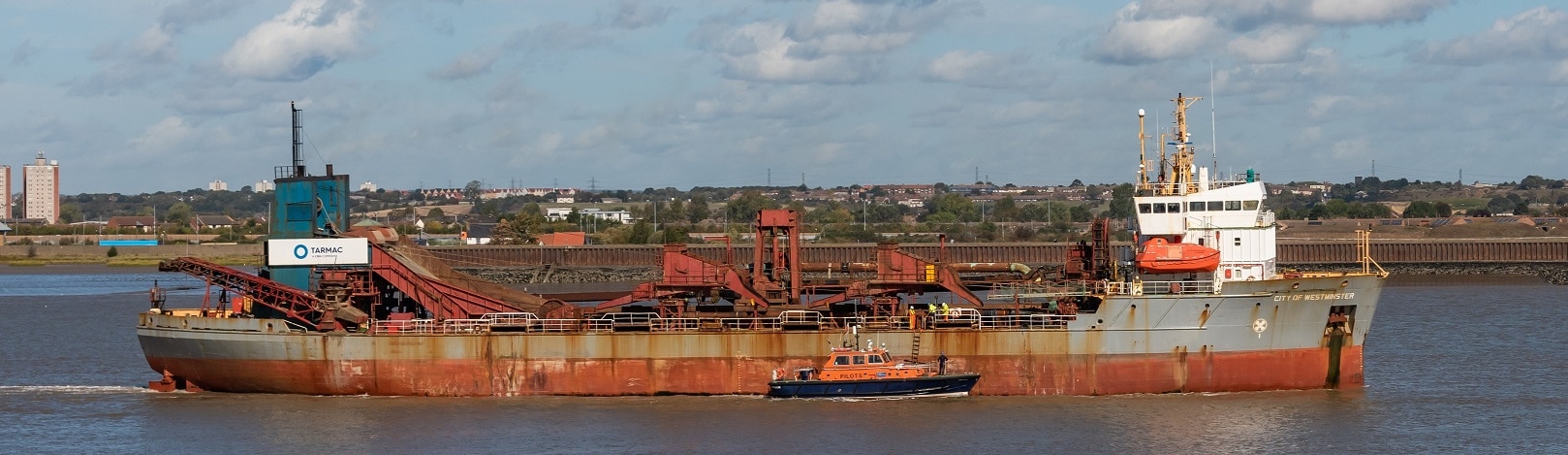
Port of London brings the latest technology to University College London
The Port of London (PLA) Hydrographic department recently teamed up with Unmanned Survey Solutions (USS) to provide ground-breaking educational support to University College London’s (UCL) IHO CAT A course in Hydrographic Surveying.
The PLA have supported the University for many years by providing lectures in current Hydrographic techniques and equipment as well as supporting their student field projects. However, due to COVID-19 restrictions, the final element of this year’s support had to be conducted virtually. The PLA, in conjunction with the USS and UCL, devised a two-week schedule which incorporated a combination of manned and unmanned survey tasks to bring the very latest industry solutions to MSc students.
‘Unmanned Surface Vessels (USVs), have a key role to play in the future of surveying’ says John Dillon-Leetch, Port Hydrographer at the Port of London Authority. He went on to say ’With the same sonar system technology as fitted to our larger surveying vessels, Maplin and Thame but at a fraction of the size of the size, this remote unmanned vessel can access areas that weren’t accessible before to this level of survey capability, changing the way we survey the riverbed. It is battery powered so releases no carbon emissions and is robust enough to work in rough offshore and coastal conditions.’
Using remote access capability to onboard systems, students from as far away as China, Saudi Arabia, and Singapore received daily interactive broadcasts from the Hydrographic teams aboard the PLA manned vessels M/V Maplin and M/V Thame to direct and participate in the project work. During the final week of operations, they were also able to remotely pilot USS’s Accession 350 Unmanned Surface Vessel (USV) and send it off on pre-programmed survey missions to gather high resolution bathymetry. As future hydrographic surveyors, this was a real insight into how the industry is tackling the challenges which COVID-19 is having on daily survey operations.

Major Contract Win For OTAQ with Unique Maritime Group
World class marine technology company, OTAQ Offshore, has announced a significant contract award and exclusive supply agreement with Unique Group to supply a number of seabed landers.
The Aberdeen based company, a subsidiary of OTAQ PLC, with offices in Lancaster, Ulverston and Puerto Montt in Chile, will design and build the observation platforms in collaboration with Unique Group.
Commonly used to record physical, chemical and biological activity, OTAQ Offshore will fit the seabed lander systems with inspection products, such as very high-resolution stills cameras, Eagle IP video cameras, OceanSENSE leak detection system and Dragonfish laser measurement systems. The systems will also be configured to carry other third-party supplied inspection and monitoring equipment.
Two models are in line to be produced; a shallow-water version rated to 300m and a deep-water version rated to 4000 metres, available for rental and sale exclusively through Unique Group’s worldwide office network. Independently owned with global reach, Unique Group leads the way in providing engineering, expertise, sales and rental equipment, as well as the developing and implementing the latest technology for the marine, diving, pipeline and subsea market sectors. The two models will allow clients to use the landers in a range of applications using their existing cables and winches.
Phil Newby, Chief Executive Officer, OTAQ plc said: “We are thrilled Unique Group chose OTAQ Offshore to support them with this project. We have an exceptional team of engineers, whose skills are uniquely suited to this type of activity. Having Unique Group as our exclusive partner for sales and rentals will open new doors for us, as well as strengthen our position as a world class marine technology company.”
Chief Operating Officer at Unique Group, Sahil Gandhi, said: “We are excited to be able to further our partnership with OTAQ Offshore by collaborating on the development of seabed landers. Through this launch, we reiterate our commitment to offering exceptional products and solutions to our customers globally, and look forward to future innovations with OTAQ.”
Unique’s 500 strong team work worldwide through Unique Group’s six multi-site divisions; Survey Equipment, Autonomous Survey Vessels, Marine & Subsea, Diving & Life Support, Buoyancy & Ballast and Medical Technology.
For further information please visit www.otaq.com.
ROMOR Ocean Solutions unveils two NEW Wave Gliders for Dalhousie University
ROMOR Ocean Solutions has announced the arrival of two new Liquid Robotics Wave Gliders for Dalhousie University in Nova Scotia, Canada.
The two gliders are an addition to the suite of ocean monitoring tool used by Dalhousie-based Ocean Tracking Network (OTN), the Ocean Frontier Institute (OFI) and the Marine Environmental Observation Prediction and Response (MEOPAR) network. These two new vehicles will be used to support critical marine research in the Northwest Atlantic and will be housed at the Centre for Ocean Ventures and Entrepreneurship (COVE) in Dartmouth, NS. Dalhousie, under the auspices of the Coastal Environmental Observation Technology and Research (CEOTR) group, operates the largest glider monitoring program in Canada.
“Liquid Robotics has worked with ROMOR to deliver Wave Gliders to Canadian research institutes like the team at Dalhousie University for a number of years, but this year presented some unexpected challenges, as we all know,” said Jimmy Board, Senior Manager of Business Development at Liquid Robotics. “Darrin’s understanding of the Canadian market has always been impressive and extremely valuable. This year he went above and beyond, navigating the challenges of 2020 to make sure we could deliver for the customer, and culminating in the delivery of new SV3 v300 Wave Gliders to expand our footprint in Canada.”
The gliders—also known as marine autonomous vehicles— exploit the difference between wave energy at the surface and the energy at depth to generate forward propulsion. Equipped with solar panels and satellite communications, these gliders can recharge, reposition and relay critical information for months at time.
“ROMOR is delighted to see the latest in Wave Glider technology joining OTN’s fleet at the Cove. Two years of project work with the team at Dalhousie’s CEOTR glider team with Liquid Robotics has led to some innovative developments, including customized integration for the Wave Glider by Liquid Robotics and the development of a CTD profiling winch. We look forward to continued involvement on this exciting project,” says Darrin Verge, CEO of ROMOR Ocean Solutions.
These two new vehicles will be used to support Dalhousie University glider operations under the Development of Autonomous Marine Observation Systems (DAMOS) program, funded by the Canada Foundation for Innovation and OFI. The vehicles will be used in the Northwest Atlantic Ocean to support CEOTR by offloading data from bottom-mounted acoustic receivers that listen for acoustically tagged animals. The gliders can also detect tagged animals, such as snow crab and lobster, and routinely patrol the Scotian Shelf monitoring for these animals to help researchers gain knowledge about the movements and life histories of these commercially important species. During these missions, the gliders collect meteorological and oceanographic data that are made available to stakeholders across industry and research sectors.
ROMOR congratulates Dalhousie University for continuing its leadership role in the deployment of ocean technology for innovative ocean research. A huge thanks goes out to the team at Liquid Robotics for designing a great product and providing superior technical support. This is another big win for the ocean technology industry in Atlantic Canada.
More info: romor.ca
SeeByte deliver step change in linking underwater autonomy and communications
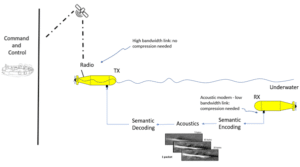
SeeByte, a global leader in developing smart software solutions for unmanned maritime systems, have successfully linked autonomy and communications to maximise the information that can be transferred in communications-limited scenarios.
SeeByte was awarded the work under the Defence and Security Accelerator (DASA) Autonomy in Challenging Environments Phase 1. The aim of the project, coined CARUSO, was to deliver a step change in autonomy systems, integrating communication and sensing performance directly into the autonomy problem.
The need for Autonomous Underwater Vehicles (AUV’s) to operate in highly complex, variable, and comms-limited environments requires effective autonomy and high performance underwater communications standards. Developing behaviours that can exploit an increased level of real-time environmental awareness will allow robots to maximise their in-field persistence and operational effectiveness.
Strengthening the bond between human and machine, robots will optimise the use of underwater communications, prioritising what information to report to command and control to support important decision making.
"CARUSO demonstrated that the integration of communications performance directly into the autonomy problem is key for the next generation of marine autonomy: robots can make decisions to maximise operator awareness and to ensure quick human-robot re-synchronisation when communications falter." said Andrea Munafo, Engineering Manager at SeeByte.
SeeByte’s Commercial Manager, Alastair Cormack added, “this project has enabled SeeByte to extend its autonomy capability; integrating CARUSO technology with our proven mission-level autonomy software, Neptune, has opened up new opportunities for our technology and commercial applications”.
More info: www.seebyte.com
HydroSurv received investment from Katapult Ocean
HydroSurv Unmanned Survey (UK) Ltd is one out of 10 international ocean startups that have received investment from Katapult Ocean this autumn. Katapult Ocean invests in and supports startups with a positive impact on our ocean. In the selection process Katapult Ocean has screened and interviewed a pipeline with more than 1,500 startups.
“As a company, we’re delighted that Katapult Ocean has decided to invest in HydroSurv - its the best demonstration that our vision to offer carbon neutral hydrographic and environmental surveys by 2025 using our unmanned survey vessels is resonating with international investors, who recognise that a sustainable future for our oceans can also be a profitable one.” said David Hull, CEO HydroSurv. “We really believe in the vision of HydroSurv of making economic hydrographic and environmental surveys and analytics as a great progress towards unlocking and understanding the potential of our oceans.” , said Jonas Skattum Svegaarden, CEO Katapult Ocean.
The next three months HydroSurv Unmanned Survey (UK) Ltd will take part in a fully digital accelerator program, designed to help startups grow faster and better. The program brings together founders from six different countries and across the ocean industry sectors.
"We are excited to see the synergies develop between the founders and the rest of our portfolio”, said Jonas Skattum Svegaarden, CEO of Katapult Ocean. “It is also encouraging to see that COVID-19 has not stopped passionate founders. There is no shortage of talent and innovation in the ocean impact space”
The 10 ocean startups that received investment from Katapult Ocean this autumn are:
- Aquammodate (Sweden): Aquammodate - Accommodating the world’s need for clean water
- Desolenator (UK/Netherlands): Desolenator is fighting our global water crisis through 100% solar ocean-safe desalination
- ecoSpears (US): ecoSpears is a cleantech remediation company that is ushering in the carbonless future of environmental cleanup
- Fortuna Cools (US): Fortuna makes coolers from coconuts: designed to last years, not millennia
- Hooked (Sweden): Hooked leads the transition to a more harmless seafood consumption by offering tasty plant-based seafood that is good for the planet and good for your health
- HydroSurv (UK): HydroSurv delivers economic, low-impact hydrographic and environmental surveying and interpretive analytics using our advanced Unmanned Surface Vehicles (USVs)
- Matter (UK): Matter is an innovation company, pioneering plastic capture for the good of the planet
- Ocean Rainforest (Faroe Islands): Ocean Rainforest grows premium quality seaweed for the food, feed and health market
- Paralenz (Denmark): Paralenz cameras empower divers to easily capture and share both their underwater footage and ocean data with the world and dedicated scientific communities
- SolarDuck (Netherland): SolarDuck transforms the world with affordable offshore floating solar energy
About Katapult Ocean
Katapult Ocean invests in and supports startups with a positive impact on our ocean. Since 2018, Katapult Ocean has made 32 investments in exciting ocean impact companies from all over the world (17 countries, 4 continents). The companies participate in a 3-month long accelerator program to support growth and impact. A global network of more than 100 mentors and partners support the companies together with a team based in Oslo, Norway. To learn about the companies Katapult Ocean has invested in, visit the website.
About HydroSurv
HydroSurv is an innovative constructor and operator of Unmanned Surface Vehicles for hydrographic, geophysical and environmental survey. As a company, their mission is to disrupt the market for waterborne data acquisition and processing across a range of industries including utilities, ports and harbours, hydrography and the renewable energy sector replacing the work of conventional ships with unmanned vessels operated from land-based operations centres.
Planet Ocean Ltd is pleased to announce the formation of the ecoSUB Robotics Advisory Board
As the ecoSUB range of small, affordable autonomous underwater vehicles enter full production, Planet Ocean is pleased to announce the formation of an advisory board to help guide the project into the next phase and beyond. The board is comprised of acknowledged leaders in their fields to counsel the company on the opportunities for maximising the impact of its technologies globally.
“We recognise that although we have a deep understanding of the technology and the three main target user groups for ecoSUB, we are by no means expert in them all and the formation of this board of specialists will ensure that we remain focused and on the right track as well as providing industry insights into what the users groups around the World need in the future.” says Terry Sloane, founder and MD of Planet Ocean and ecoSUB Robotics.
The advisory team have long been advocates of the use of small, agile autonomous systems in their respective fields and ecoSUB in particular. Their decades of real world experience and vision is a significant asset available to the ecoSUB team. Of particular importance is an understanding of how micro AUV technology fits into the wider use of undersea autonomy in general.
The Advisory Board:
|
Professor Russell Wynn
Science |
Russell was the first Chief Scientist for Marine Autonomous and Robotic Systems (MARS) at the UK’s National Oceanography Centre, where he also served as Associate Director for Government, International and Public Engagement. He led external engagement for £30M of UK Government investment in the MARS fleet and ensured the adventures of the Autosub vehicles (aka Boaty McBoatface!) reached the wider public via TV and other media. Russell also initiated and co-ordinated the annual ‘MASSMO’ series of demonstrator missions for UK marine autonomous systems, which were sponsored by Dstl and included Royal Navy, UKHO, Met Office, CMRE and several industry and research organisations as partners; these missions involved the largest mixed fleets of marine robots (including ecoSUB) to be deployed in UK waters.
Russell was previously Head of Marine Geoscience at the NOC and published over 100 peer-reviewed science papers on topical marine matters, including novel use of marine robotics. He is currently focused on wildlife conservation and education as a Director of Wild New Forest CIC, but retains Senior Visiting Fellow status at the NOC and is an Honorary Professor at University of Southampton
|
|
| Dr Peter Collinson
Energy |
Peter is focused on delivering ‘net zero robotics solutions’ for energy and maritime industry applications. Peter has worked extensively on the strategic development and rollout of Marine Autonomous Systems for bp over the past 7 years. In that role he lead many developments of marine robotic technology, including ecoSUB and several USV and AUV solutions for subsea inspection, survey and environmental/crisis applications. He is a member of robotics committees for UKRI (Innovate UK Government) and an Industry advisor to the National Oceanography Centre, UK. Prior to his role in technology he was a Risk and Crisis Manager with extensive experience in enterprise risk management and crisis response, leading humanitarian and environmental teams during 9-11, the Asian Tsunami and the Deepwater Horizon oil spill incidents.
Peter holds a PhD in Marine Ecology from The University of Hong Kong and is a Fellow of the Institute Marine Engineering, Science and Technology (IMarEST).
|
|
| Cdre David Burton RN (rtd)
Defence |
Mr David Burton is the Director of ASW Barrier Smart Defence Initiative, a multinational initiative comprising: Australia, Denmark, France, Germany, Greece, Italy, Netherlands, Norway, Portugal, Spain, UK, and the US. The SDI is sponsored by the NATO Maritime Unmanned Systems (MUS) initiative.
Prior to this David was Strategic Advisor to the UK’s NavyX programme and before this Director Strategy for NATO’s Centre for Maritime Research and Experimentation (CMRE), an executive body of NATO’s Science and Technology where he was instrumental in the formation of the Maritime Unmanned Systems Initiative.
Before joining CMRE, Mr David Burton was the Chief Technology Officer (CTO) for the NATO Communications and Information (NCI) Agency.
Previously, Mr Burton served as a Commodore in the Royal UK Navy in the post of Director Change within the Information Systems & Service Directorate of the Defence Equipment and Support Organisation of the UK Ministry of Defence.
At the UK Ministry of Defence, Commodore Burton worked for the Chief Information Officer with responsibility for the UK Defence Information Exploitation and Enterprise Architecture Programmes. Prior to this he held the position as NATO’s Network Enabled Capability Integrated Project Team Leader based at ACT, Norfolk Virginia.
A Physics graduate of Bristol University, Mr Burton joined the Royal Navy in 1980. After a variety of operational appointments at sea and with the Royal Marines, he attended the Royal Military College of Science, where he was awarded a Masters Degree in Design of Information Systems. Project Management experience followed in a variety of strategic Information Systems and organisational change programmes, including Programme Management of major Public Private Partnerships within UK defence. In the late 1990s, he filled a key role within NATO’s Maritime Command and Control Information System (MCCIS) Programme.
Mr Burton is a Chartered Engineer, Chartered IT Practitioner, and Fellow of the British Computer Society. |
For more information please visit www.planet-ocean.co.uk

MIND Technology's Klein unit completes advanced naval technology exercise
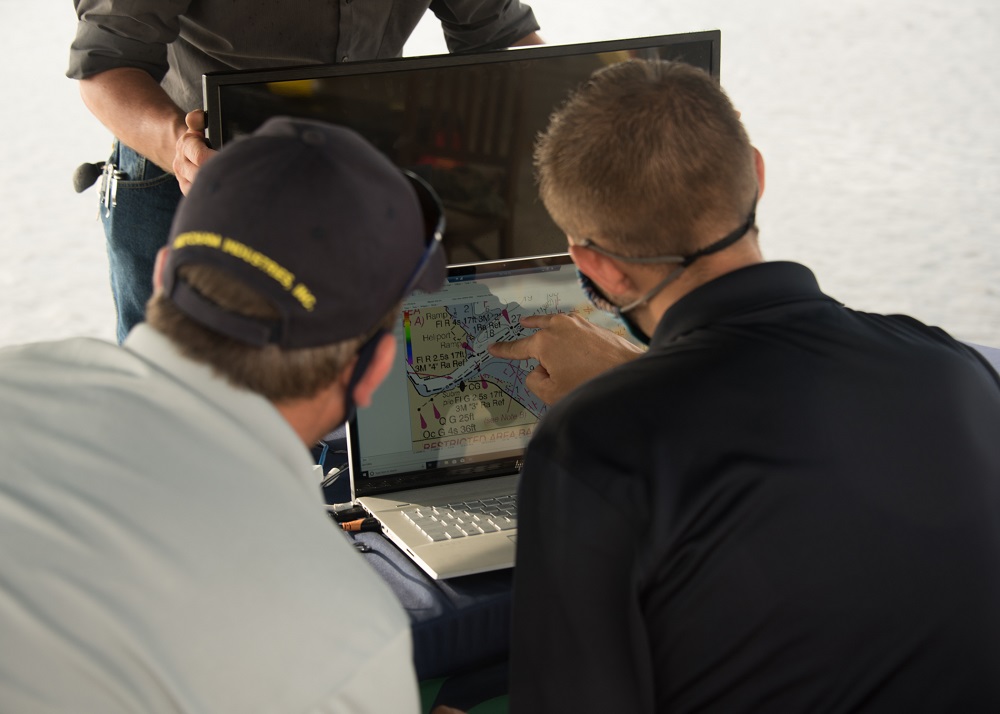
MIND Technology, Inc. (NASDAQ: MIND) and its Klein Marine Systems subsidiary successfully completed a live Advanced Naval Technology Exercise (ANTX) in a collaborative effort with the Naval Surface Warfare Center Panama City Division (NSWC PCD); Commander, Naval Meteorology and Oceanography Command (CNMOC) and in coordination with the Naval Oceanographic Office's Fleet Survey Team (FST), at NSWC PCD.
Despite COVID-19 limitations and numerous planning challenges caused by Hurricanes Laura and Marco, the collaborative team succeeded in conducting a live ANTX event. Participants travelled across the country to both Gulfport, Mississippi and Panama City, Florida to assess the operational and technical capabilities of emerging technology innovations.
Klein and a group from NSWC Panama City partnered to integrate the Klein UUV 600 and µMAX technologies into their Iver3 vehicle. In addition, Klein partnered with Seafloor Systems, Inc. to integrate the Klein MAX View 600 gap-filling side scan sonar system with their large-format, wave adaptive HydroCat-180 USV. The HC-180 has been integrated with a winch and Towfish Launch & Recovery System (T-LARS) designed and tested by Seafloor Systems. The USV is designed to be deployed by boat or from shore and be remotely piloted or programmed to conduct a pre-planned mission. The MAX View towfish was remotely deployed and recovered and the sonar data was sent back in real-time to either the mother ship or shoreside via a radio data link.
"The main benefits of ANTX are two-fold, the government gains first-hand interaction with emerging technology and the innovation providers gain warfighter feedback and insight on how to better work with government," said Todd Holland, director, mine warfare prototyping at NSWC PCD. "Our team here at Panama City Division, including our test directors, test engineers, range managers, and public affairs personnel did a great job of responding to various challenges while hosting an outstanding ANTX event in collaboration with Klein Marine Systems."
Guy Malden, Co-Chief Executive Officer and Executive Vice President Marine Systems, MIND Technology, added, "We were very pleased to have successfully demonstrated the benefits of our MA-X and µMA-X technologies despite the challenges of weather and COVID-related travel restrictions and greatly appreciate the efforts of NSWC Panama City and Seafloor Systems in this project. We believe through improved data quality and reduced time on station, MA-X provides for more than a 40% improvement in survey efficiency."
For more information, visit mind-technology.com
Saab Seaeye Leopards join Ocean Infinity robot fleet
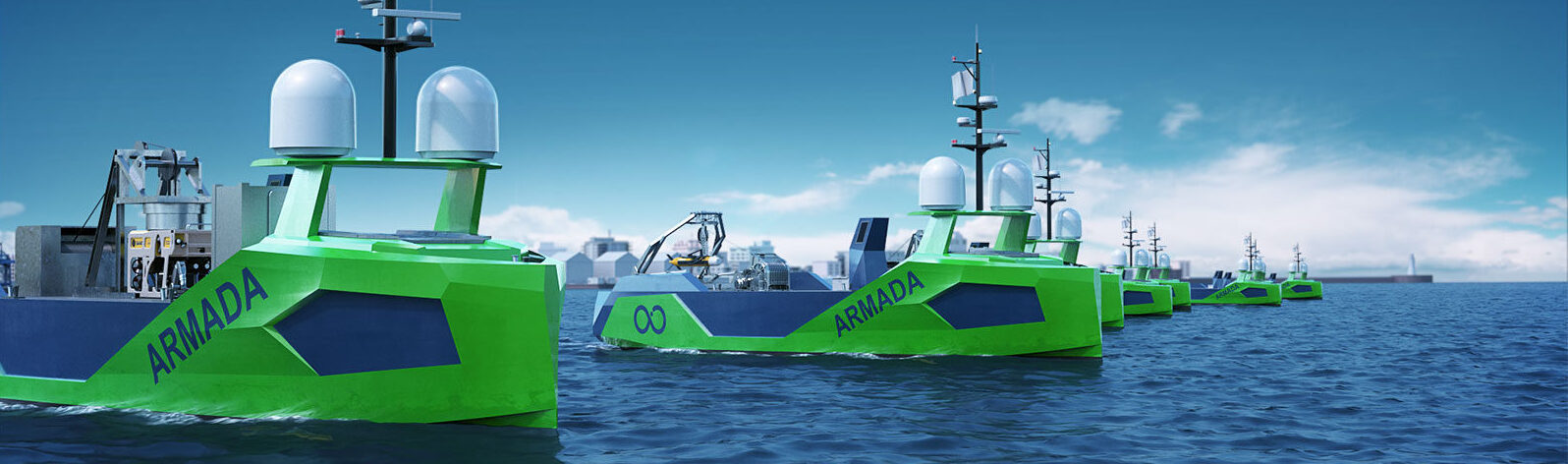
Ocean Infinity have selected the Saab Seaeye Leopard to complement its pioneering 'Armada' fleet of unmanned surface robot vessels.
The Leopard work-class underwater vehicles will be deployed from Ocean Infinity’s initial 13 environmentally sustainable unmanned vessels for a variety of offshore and coastal services.
Dan Hook, Ocean Infinity, said, "The 3000 m Seaeye Leopard was chosen not only because it is well suited to USV applications but more specifically because of its comparable capabilities to a conventional hydraulic work class vehicle, but with considerably less input power, meaning materially reduced carbon emissions."
"The Leopard has ready adaptability for ‘Over the Horizon’ operations as well as a clear reputation for reliability and its suitability for remote operations – crucial for maintenance or repairs as part of an unmanned fleet," he continued.
Jon Robertson, Saab Seaeye said: "We're proud to be chosen to be part of this revolutionary unmanned fleet. The Armada Fleet complete with the Leopard vehicle will dramatically reduce the impact of offshore operations by cutting CO2 emissions and at the same time increase safety at sea by reducing manpower deployed."
Ocean Infinity’s Armada Fleet is a major advance in the global maritime industry, driving technology and sustainability to deliver a wide range of services including offshore and coastal survey data acquisition, geotechnical surveys, ROV and AUV operations, logistics and security in the safest, lowest impact and highest value way that exists today.
The fleet will be operated and monitored from onshore control centres based in Southampton UK, Austin Texas USA and a location soon to be finalised in Asia.
Construction of the fleet is underway and is expected to be operational early next year.
Find out more on the websitewww.saabseaeye.com/news
Vallourec, FORSSEA Robotics and iXblue join forces to facilitate the inspection of subsea pipelines using drones and digital technology
Vallourec, a leader in premium tubular solutions, is working with FORSSEA Robotics, a startup specializing in smart robotics and visual positioning, and iXblue, a company recognized for its expertise in inertial navigation, subsea positioning and autonomous technologies – to develop a pipeline inspection solution combining subsea drones and the use of visual markers, removing the need for surface vessels.
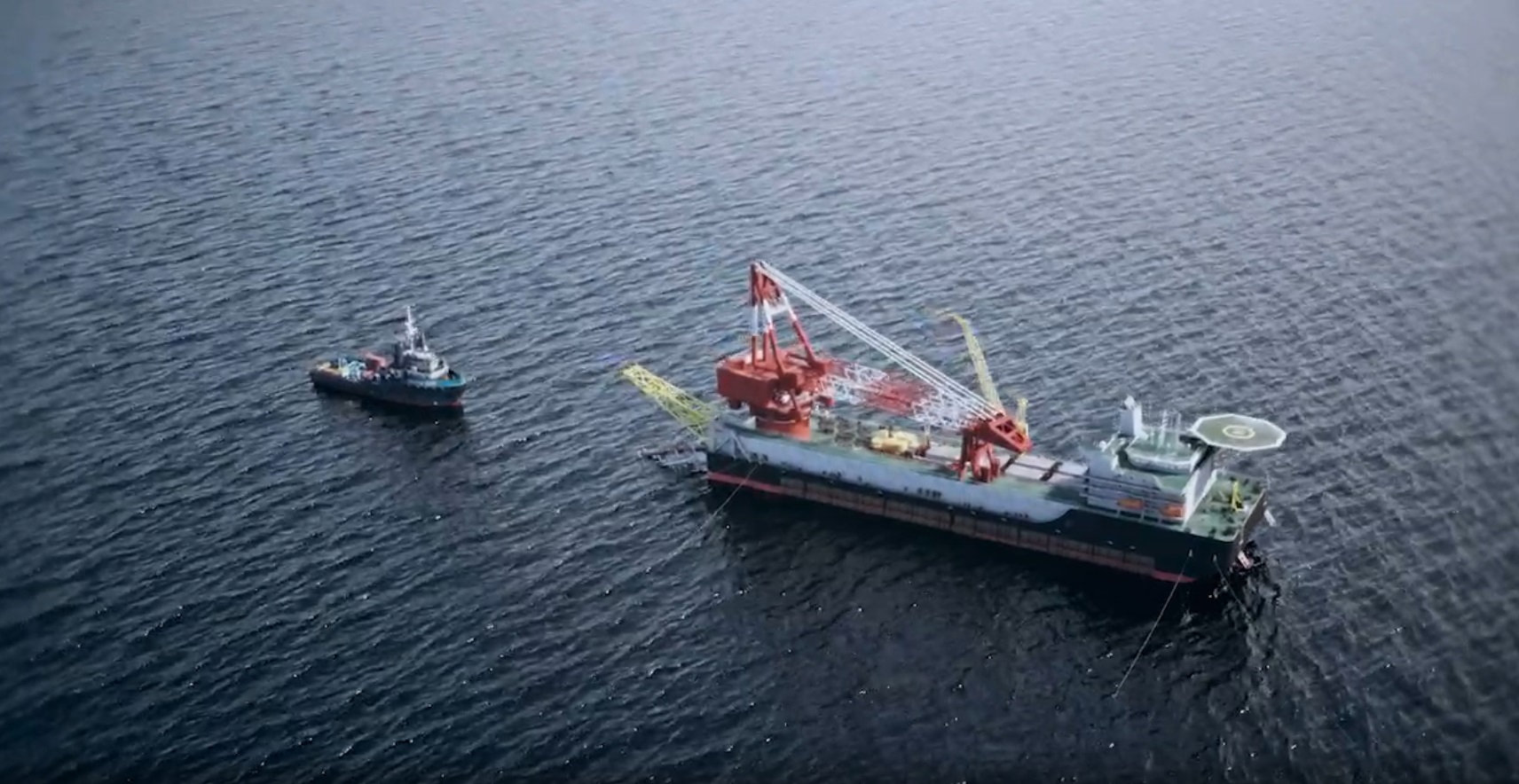
Traditionally, the inspection of subsea pipelines and structures requires the use of a surface vessel (manned or unmanned) with acoustic positioning used to monitor the deployment of Autonomous Underwater Vehicles (AUVs) or Remotely Operated Vehicles (ROVs). These subsea vehicles then collect the required information – such as a pipeline’s general aspect and route, anode consumption, free span, burial and crossing areas – using observation sensors.
In order to reduce pipeline inspection operational costs, Vallourec, iXblue and FORSSEA decided to develop a solution using visual markers directly integrated on subsea pipelines that enables vessel-free subsea navigation.
The project relies on barcodes placed on installed pipes, resulting in many passive positioning references logged with their own coordinates during the laying operation which will remain accessible throughout the life of the field. These markers would be used as navigation aids for subsea drones equipped with FORSEEA cameras and iXblue’s inertial navigation systems that easily relay the pipelines’ locations to the operators thus removing the need for acoustic positioning systems and costly mother vessels. To remain visible to divers and subsea drones throughout the project’s lifespan, these markers are long-term resistant to marine growth and erosion.
“This technology had already proven itself on large structures in the field”, said JeanGuillaume Besse, Vallourec R&D project leader. “Back in January of this year, we did a first sea trial on much smaller surfaces – down to pipes of 6” in diameter – in the South of France. The tests were a success, proving that these markers, combined with iXblue’s and FORSSEA’s expertise, can be used to provide accurate subsea positioning without the need of acoustic systems".
This innovative inspection technology could be further enhanced when combined with existing digital solutions from Vallourec smart’s services portfolio. For example, the Smartengo Best Fit digital solution already associates a unique tag on each pipe to ease traceability, fit-up and pipeline construction.
The advanced solution developed with FORSSEA and iXblue is a key milestone for future pipeline inspection and could be considered as a next step in the Vallourec smart offering, further facilitating operators’ asset management.
Find out more information via www.ixblue.com