
Robosys partners with Lynx Power Catamarans in delivering AI driven maritime autonomy solutions
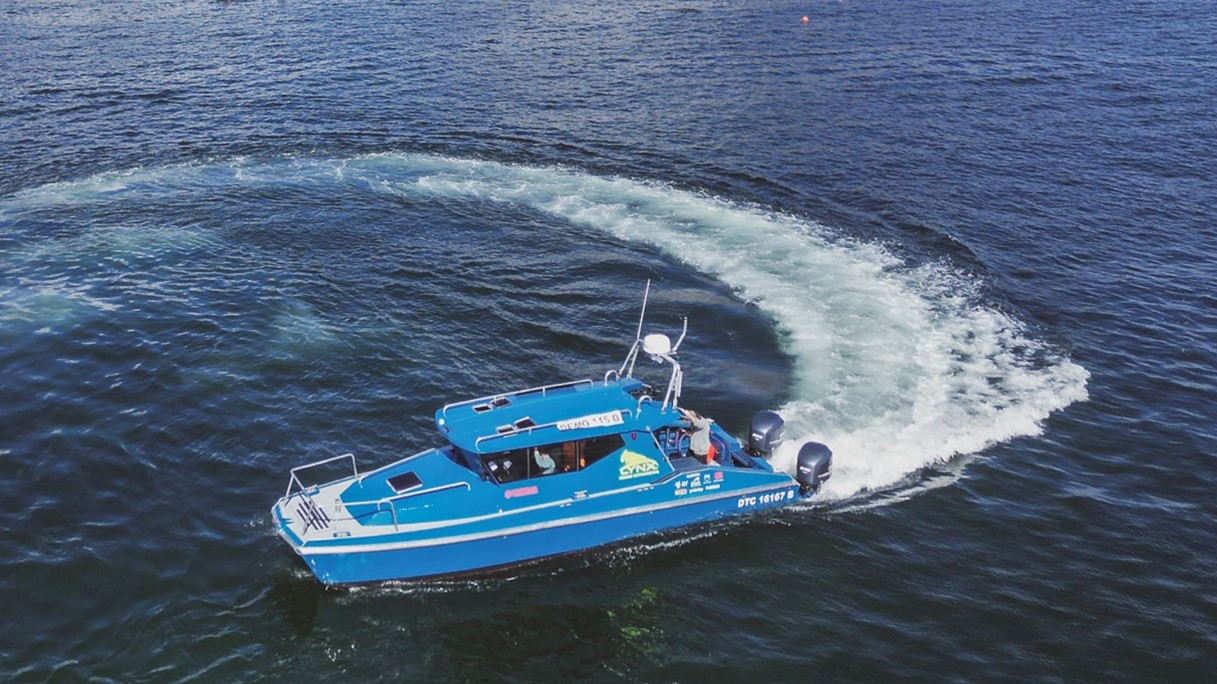
AI based Maritime Autonomy & Navigational specialist, Robosys Automation, is partnering with Lynx Power Catamarans in delivering a fully autonomous multi-role vessel.
Constructed and designed by Lynx Power Catamarans, headquartered in Cape Town, South Africa, the Lynx Multi-Role Vessel (MRV) has been designed for specialist maritime duties including surveillance and patrolling.
The Lynx MRV Power Catamaran has the factory option of fully autonomous navigation for uncrewed and remote operations utilising Robosys Automation’s Voyager AI Vessel integration.
The Lynx is an 11 metre aluminium twin-hulled multi-Role vessel which offers a swift and stable platform for waterborne surveillance, ambulatory operations, and patrolling duties. Designed to service the African port infrastructure network, the vessel is particularly suited to defence, coastguard, firefighting, search and rescue (SAR), and fisheries sectors. It operates comfortably up to Seastate 3, with a running speed of 30-35 knots. The Lynx Power Catamaran is also specifically designed to be easily transportable by air, road, and sea.
Robosys’ Voyager AI Vessel solution is being installed onto Lynx Power Catamarans to enable crewed, lean crewed, optionally unmanned and fully unmanned options at the switch of a button and delivers efficient and reasoned autonomous operations from a remote operations centre (ROC) or ground control station (GCS), either ashore or afloat from a mothership.
Robosys’ cutting-edge solution is a full stack autonomy solution that is complemented by artificial intelligence combined with decision-aids enabling fully autonomous unmanned surface vessels (USVs) from 3-340 metres.
Peter Tinker of Lynx Power Catamarans comments, “Due to the myriad unique benefits of Robosys’ system, such as proven full autonomous capabilities of up to 45 knots, combined with collision avoidance, anti-grounding, and smart object avoidance, and loss of communications features, amongst others, Voyager AI Vessel is ideal for the Lynx Power Catamaran.”
“Following an introduction to Robosys from our longstanding technology and tactical communications collaborator, Soteria Advanced Technologies of Cape Town, we selected Robosys Automation as its Voyager AI Vessel solution offers IMO Degree 4 autonomy, is a straightforward integration, has in-country support, and as it is incomparable with anything else in the market.”
Nigel Lee, CSO of Robosys Automation comments, “The Lynx Power Catamaran MRV is an innovatively designed vessel, which is perfectly suited to incorporating our Voyager AI Vessel intelligent navigation system.”
He continues, “In addition to the unsurpassed capabilities of Voyager AI Vessel, it is also unique in its abilities to be retrofitted to almost any vessel or workboat. This enables increased cost-effective, safer, and environmentally focused outcomes for those who wish to continue using their existing craft, but now with the added benefits of crewed, lean-crewed, optionally uncrewed and uncrewed options, dependent on the specific challenge.”
All Robosys Automation’s systems offer remote control as well as advanced and intelligent autonomous navigation, with platform and payload control which can be integrated to most vessel systems, together with collision avoidance, and systems monitoring options, delivering a proven and trusted full-stack maritime AI autonomy solution. All Voyager AI solutions are vessel, propulsion, and sensor systems agnostic.

AI modelling predictions to aid coastal water quality monitoring
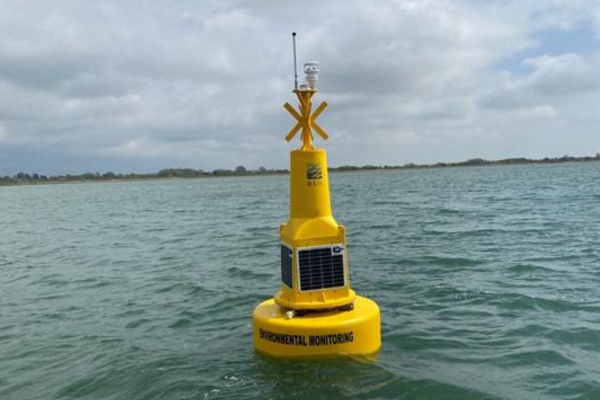
Ocean Scientific International Ltd (OSIL) are investigating improvements to cost effective real-time marine water quality monitoring solutions, using AI modelling to help visualise and predict events.
With the aim of improving predictions for high coliform events OSIL have manufactured and deployed a self-contained 1.2m Tern data buoy platform equipped with multiparameter water quality instrumentation, met sensors and GSM data telemetry system. The buoy is monitoring local conditions for a range of parameters including coliforms, providing feedback on sedimentation, low oxygen levels, excess nutrients and effluent pollution. The data is validated externally by the collection of local water samples.
The data from both the smart monitoring buoy and the sample analysis are then entered into an AI modelling system to look at developing specific indicators for coliform predictions, and are presented in a Graphical User Interface (GUI). The goal is to narrow the set of parameters that are needed to model predictions for high coliform events, thereby reducing the cost of monitoring and evaluating these events, and enabling more systems to be deployed in increased locations longer term.
The project is being funded by Innovate UK, part of UK Research and Innovation, in conjunction with the Department for Environment, Food and Rural Affairs (Defra) as part of a series of innovation projects that can improve the observation capabilities of the UK’s waters, towards improved assessment and evaluation of the status and risks to natural capital assets and marine biodiversity.
OSIL now have well in excess of 750 data buoy systems worldwide, and are a leading manufacturer of marine environmental monitoring and sampling systems.
Tritech announces new reseller agreement in China
Tritech are pleased to announce a significant milestone as it finalises an exclusive reseller agreement with Nortek China: a renowned leader in the industry. This strategic partnership allows Tritech to further enhance our global presence and provide localised support to our valued users and customers.
As a company committed to delivering exceptional quality and service, Tritech has diligently built a network of trusted Value Added Resellers worldwide. Tritcech carefully select partners with outstanding local reputations, ensuring that its customers receive the highest level of support in their respective regions. Nortek China aligns perfectly with the Tritech mission, and are confident that this collaboration will bring immense value to all stakeholders involved.
Bruce Hardy, Sales & Marketing Director for Tritech stated:
“We are very pleased to announce our new partnership with Nortek China. Leon and his team bring a wealth of knowledge and expertise to the team and as our exclusive distributors in China will provide our customers with the first class product knowledge and support they expect”.
At the end of 2022, Tritech joined General Oceans AS: an umbrella company specialising in underwater technology and headquartered in London. This union has already fostered a closer relationship between the two General Oceans AS subsidiaries: Nortek and Tritech. By leveraging each other's strengths and expertise, both companies can expand their operations and thrive in the dynamic Far East market.
It is worth noting that Tritech and Nortek have already been collaborating on various engineering and project-related endeavours. The synergy between teams has been remarkable, and both are excited to amplify this partnership through sales efforts. Tritech hope that this enhanced alignment will unlock new opportunities for both companies.
GeoAcoustics appoints C.A. Richards as channel partner with focus on Gulf of Mexico energy sector
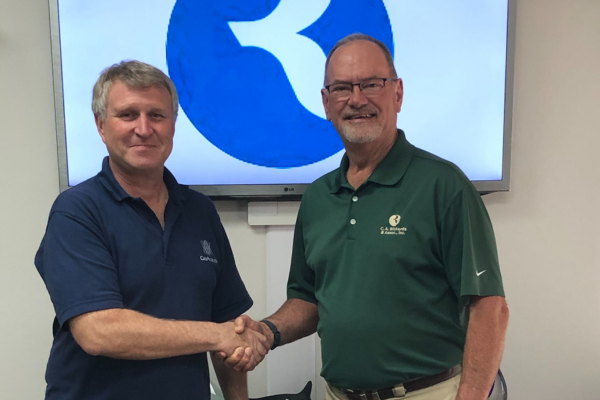
GeoAcoustics Ltd has appointed Houston-based subsea technology specialists C.A. Richards and Assoc., Inc. as its new channel partner in the USA, with focus on sales and support of the GeoSwath bathymetric sonar, GeoPulse sub-bottom profiler and Pulsar side scan sonar product lines for customers working in the Gulf States of Texas, Louisiana and Mississippi.
C.A. Richards and Assoc., Inc. is an award-winning company that has been providing technical services and integrated instrumentation solutions for the subsea and offshore industries, including the offshore diving, ROV, drilling, survey and geophysical contractors, construction, pipelay, government and academia markets, since 1971.
As GeoAcoustics Ltd’s newest channel partner, C.A. Richards and Assoc., Inc. will provide access to the entire GeoAcoustics hydroacoustic technology product portfolio, including new sonar systems arriving in 2023. The partnership will also provide more reach for GeoAcoustics Ltd’s GeoSwath 4 sonar and its cutting-edge new artificial intelligence upgrade which positions it as a viable, lower-cost alternative to multibeam echosounders for bathymetric surveying.
“We are excited to have signed this Channel Partner agreement with GeoAcoustics. C.A. Richards and Assoc., Inc. has a long history with imaging sonars and sub-bottom profilers, and now with the addition of the GeoSwath, we have an outstanding multibeam solution for our customers. GeoAcoustics has an excellent reputation for product development and support, and we look forward to a long and fruitful relationship with the team there for many years,” said Chuck Richards, President of C.A. Richards and Assoc., Inc.
“The US has always been an important market for GeoAcoustics and we’re confident that with the help of C.A. Richards and Assoc., Inc. we can increase our visibility and Gulf of Mexico customer base across our entire portfolio,” said Richard Dowdeswell, Chief Commercial Officer, GeoAcoustics Ltd.
“With offshore wind growing in the Gulf, the time-saving capabilities of our new AI system for GeoSwath 4 should be of particular interest to C.A. Richards and Assoc., Inc. customers, as it can make up for the shortage of marine surveyors in the region by enabling them to do more specialist tasks while quality-controlled data is delivered automatically, in real-time,” adds Dowdeswell.
With C.A. Richards and Assoc., Inc. as the latest addition to the network, there are now 59 GeoAcoustics Ltd channel partners servicing 68 different countries and their surrounding regions.
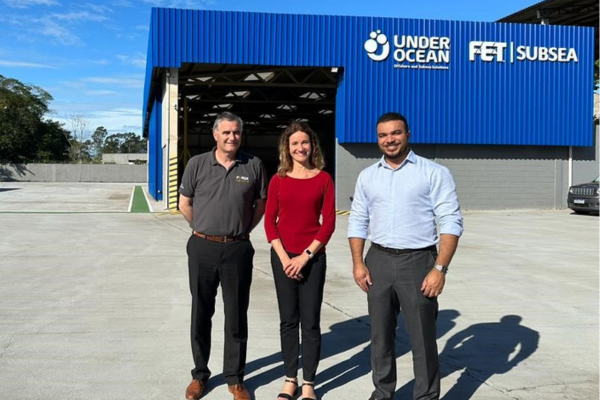
Forum Energy Technologies Subsea bolsters Brazil growth strategy with partner appointment
Forum Energy Technologies (FET) has appointed UnderOcean Servicos Maritimos (UnderOcean) to represent its Subsea operations in Brazil.
The partnership will see UnderOcean provide business development and engineering support on behalf of FET’s Subsea Technologies product line in Brazil. Headquartered in Macaé, Rio de Janeiro, UnderOcean will deliver service, repair, calibration, upgrades, and modifications for FET’s remotely operated vehicles (ROVs), associated tooling and Dynacon Launch & Recovery Systems.
With more than 20 years’ experience in the offshore industry, UnderOcean provides skilled personnel to the global offshore & subsea construction industry, including in the oil and gas, windfarm and academic sectors. It also supplies simulator training, scenario development and has a key focus on delivering highly competent, skilled technicians who operate with the highest levels of safety and respect for the environment.
Kevin Taylor, Vice President - Operations, Subsea Technologies said: “As part of the ambitious strategy to increase our presence in Brazil, it was important that we appoint an in-country agent to support the strong demand for our products.
“FET is well known in the marketplace for its quality of service, and it is vital that we work with partners that can consistently meet this high standard. In UnderOcean, we have a reputable organisation with a renowned team that can complement our existing framework across the academic, survey and energy markets.
“This agreement will ensure that our clients in Brazil receive the same streamlined and reliable support they are accustomed to from our teams around the globe.”
Andre Valente, UnderOcean Managing Director said: “We are extremely excited by this partnership and certain that our customers in Brazil will appreciate the respect and the quality of the service that will be delivered.”
Blumags and DeepOcean team up to deploy Moby, latest innovation in ROV magnets
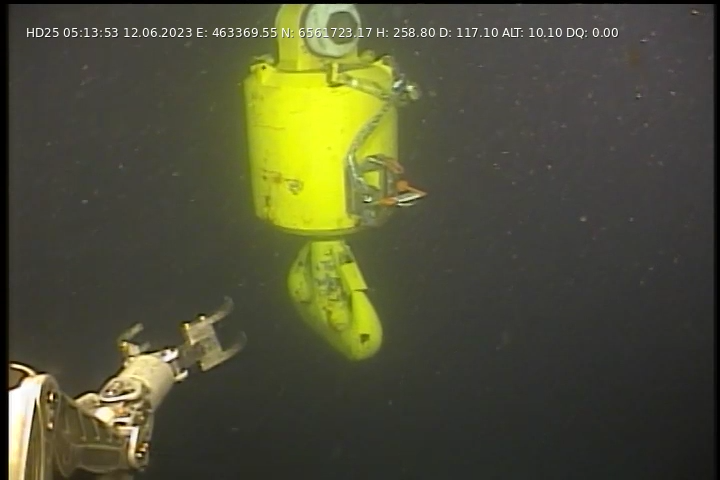
Blumags recently sent its latest innovation, the Moby ROV magnet, for field trials with its development partner DeepOcean in the Balder field in the Norwegian sector of the North Sea. The plan was for Moby to assist with ROV hull cleaning and other tasks on the Balder floating production unit.
The magnet was tested as an ROV guide for the 250Te crane main block on OLYMPIC ARES during a tree cap replacement and as an ROV grabber bar on a template during a clamp installation. The DeepOcean operatives reported back as follows:
'The design is a robust and lightweight solution, easy to handle by both personnel onboard the vessel and by ROV subsea. The possibility of angling the magnetic modules ensured Moby could be installed on a curved surface and the release mechanism was easy to operate both by hand and with the ROV. The magnet held firmly when installed and released as expected after operation.’
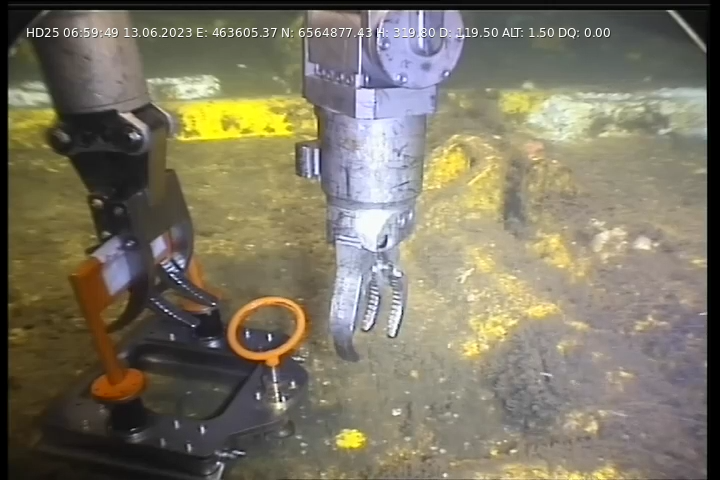
For the crane hook test Moby was installed on a clean, painted surface whereas during the template test it was installed on a surface with low amount of marine growth and no prior cleaning.
Moby was installed on the crane block on deck and secured to the hook with a lanyard. The main block was deployed down to approximately 115m depth, where the ROV grabbed the magnet with its Atlas arm and parallel claw and positioned the hook above the tree cap running tool. The hook was then carefully landed on top of the running tool to add additional weight to the tree cap during installation.
During a clamp installation Moby was tested as an anchoring point on the template structure. The magnet was deployed by the ROV held in the Atlas parallel claw and with a security lanyard. Moby was initially placed on the structure with the release mechanism activated allowing the ROV to manoeuvre the magnet freely into the desired position before disengaging the release mechanism. After the magnet was fully attached the ROV atempted to move the magnet both by pulling with the Atlas arm and applying full thrust in all directions. The magnet did not move. To release the magnet the ROV activated the release mechanism, the magnet was released from the structure as expected and recovered to deck in a subsea basket.
Moby was easy to use and operate, and the ROV handle gave a good grip for the parallel claw.
Some small improvements have been suggested by DeepOcean, mainly around protection for Moby and the use of a keeper to prevent unintentional atachment of the magnet to metallic surfaces and these will be incorporated in future production.
The next consignment of Mobys is on its way to a de-commissioning project offshore north-west Australia.
Rare East Antarctic expedition for OSIL Multiple Corer
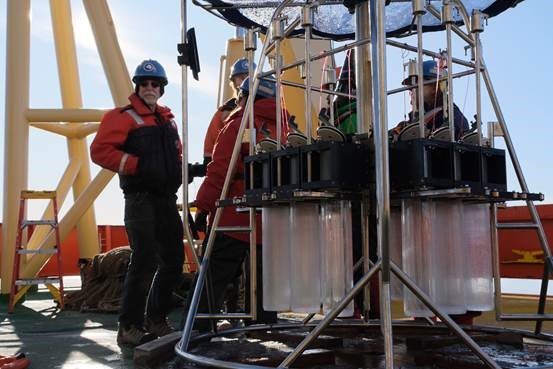
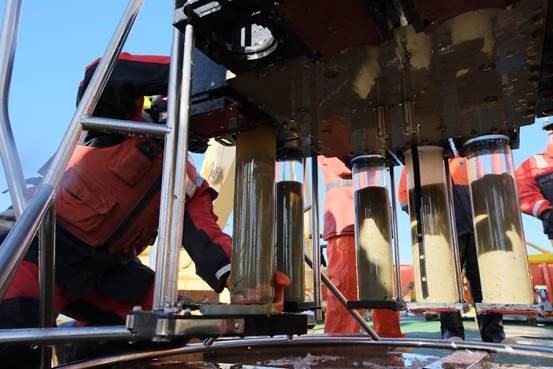
Ocean Scientific International Ltd (OSIL) have reported that their Multiple Corer has recently been employed on the Antarctic Expedition NBP 23-03 which, unusually, had been focussed on biodiversity studies in the East Antarctic.
The East Antarctic is a significantly under-studied region (no visits from US vessels in 22 years & very limited contact from other countries), so the results of these studies will be crucial to increasing understanding of the area. The cruise, which ran from on board the RVIB Nathaniel B. Palmer, focussed on Antarctic Marine Nematodes with the aim of evaluating their biodiversity, evolution & ecology using molecular data retrieved from Multiple Corer samples for a baseline dataset for historical taxonomic studies.
The Multiple Corer, which was procured by the US Antarctic Program, is essential in the collection of the molecular data as it provides a pristine sediment sample that can be easily sectioned to study the microbial component of the sample.
The penetration speed is controlled by a hydrostatically damped piston & central weight system which enables up to 12 core tubes to be slowly driven into the seabed at a consistent rate. The core tubes are automatically sealed top and bottom immediately on commencement of the recovery process (using a hydrostatic seal at the top, and a mechanical seal at the bottom), capturing a immaculate sediment sample together with the overlying supernatant water, and allowing the corer and samples to be rapidly recovered to the vessel without compromising the integrity of the sample. The transparent cast acrylic core tubes are removed individually and can be subsampled immediately or treated/preserved for later study.
OSIL have an abundance of global experience in the construction and operation of a wide range of sediment coring equipment, including the industry standard Multi Corer and the unique Giant Piston Corer which is capable of achieving cores up to 60m in length. OSIL also offer a full design, build and implementation service for all of their heavy offshore equipment.

2023 Captain Don Walsh Award for Ocean Exploration 2023 – Winner announced
Dr Peter Girguis, Professor of Organismic and Evolutionary Biology at Harvard University and Adjunct Oceanographer at Woods Hole Oceanographic Institution, described by his peers as ‘the epitome of a deep-sea explorer’ and ‘a man for all ocean seasons”, has been announced the winner of the 2023 Captain Don Walsh Award for Ocean Exploration by the Marine Technology Society (MTS) and the Society for Underwater Technology (SUT).
Peter Girguis’ prolific career is dedicated to increase understanding of the animals and microbes that thrive in the deep sea. His profound dedication lies in advancing deep-sea exploration to expand humanity’s understanding of the natural world. Colleagues have paid tribute to his leadership, attributing it to his capacity for expansive thinking in ocean science – considering what the field requires to flourish and identifying emerging scientific questions.
His primary focus is to understand how marine organisms have adapted to their habitats and how they respond to a changing world. Within his research, his team made groundbreaking discoveries of previously unknown microbe communities that ‘eat’ methane at unprecedented rates, keeping the greenhouse gas out of our atmosphere. His pioneering efforts continued with the development of innovative methods to grow the deep-sea microbes that are responsible to keeping methane out of the atmosphere.
Receiving news of his win he said: “I am deeply honored to be the recipient of this award. I know there are many others who qualify for this recognition, so I view myself as representing all of us, from all backgrounds and walks of life, who have contributed to ocean exploration.
“To paraphrase Captain Walsh, there’s a lot of work left to do in exploring and understanding our ocean, so I will continue to do my part and support as many others as I can on our journey to further understand this ocean world on which we live.”
Educational Commitment
Dr Girguis’ peers also talk of his “deep commitment to supporting scholars from underrepresented groups at Harvard University and beyond by developing and supporting programs that earnestly improve diversity, equity and inclusion.” To elaborate: “He has collaborated with submersible and ROV operators to establish an expeditionary program with cost-effectiveness, enabling a diverse group of individuals to participate in deep-sea exploration missions. Additionally, he played a key role in co-founding a Harvard/high school internship program, leads diversity, equity and inclusion (DEI) efforts in ocean sciences in the U.S. and abroad, and works closely with United Nations delegates to promote democratization of ocean sciences around the world.”.
The presentation of the Captain Don Walsh Award for Ocean Exploration, by Don Walsh, is scheduled to take place at Oceanology International 2024 (London’s ExCeL 12-14 March).
MTS and SUT Presidents share their enthusiasm
MTS President Justin Manley noted: “Dr Girguis is a prominent and key thought leader for the ocean exploration community. His technical contributions are widely recognized and appreciated. Having had the opportunity to spend time with Peter, I can highlight that his passion for the subject is infectious. Peter always shares captivating stories, offers kind words, and greets others with a warm and welcoming smile. The marine technology community feels privileged to have Dr Girguis as one of its esteemed members.”
As SUT’s President, Moya Crawford, said of Dr Girguis’ win: “One of the great strengths of the SUT is its broad coverage and connectivity. Decades of conducting deep water cargo recovery has given me rather more first-hand experience of 'tubeworms' (vestimentifans) than most might expect. Therefore, it is my pleasure that this year's Captain Don Walsh Award goes to Dr Peter Girguis, as a scientist who has brought together the application of technology, with animal physiology and technical ingenuity to recover these amazing creatures to the surface, in order to better understand how they live in what we consider to be such extreme conditions. It is very fitting that his research and endeavour should be marked by this year's Captain Don Walsh Award.”
Peter Girguis is no stranger to winning awards and accolades. He was named a Fellow of the American Academy of Microbiology and The Explorer’s Club. He received the Petra Shattuck Excellence in Teaching award, the Lowell Thomas Award for Engineering Exploration, the Lindbergh Foundation Award for Science & Sustainability (microbial fuel cells), the State of California’s Distinguished Community Service Award; and received Discover Magazine’s ‘10 Everyday Technologies That Can Change the World’ (microbe-powered lighting for the developing world.
Canada’s renowned Marine Institute joins global endeavour to map entire ocean floor
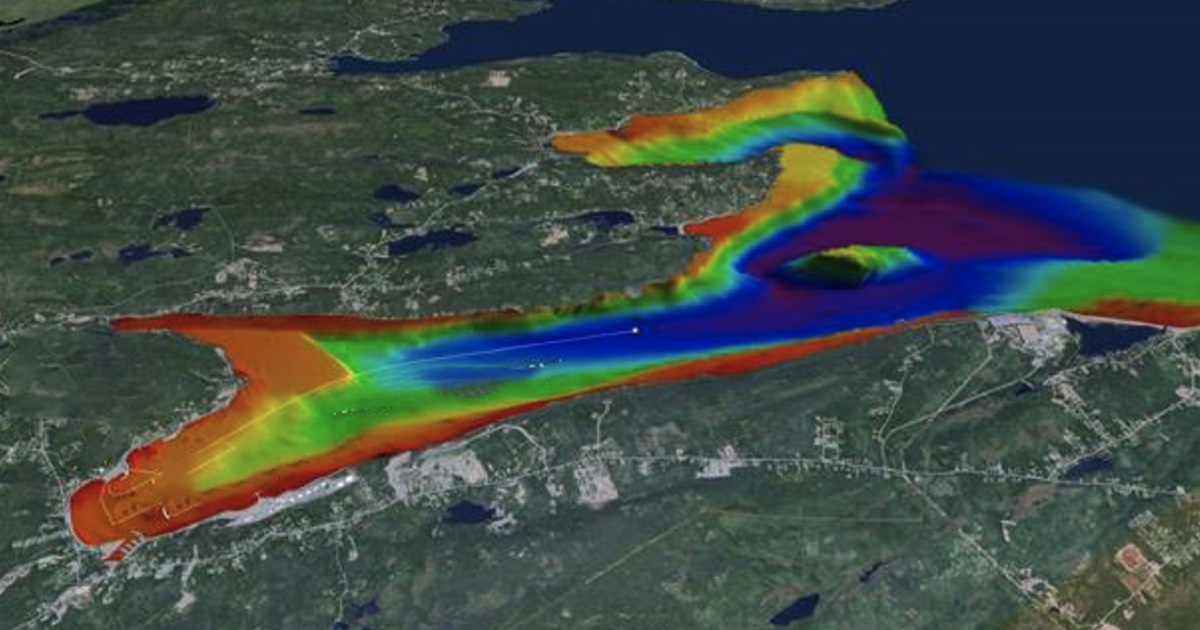
The Nippon Foundation-GEBCO Seabed 2030 Project has announced a new partnership with the Memorial University of Newfoundland’s Fisheries and Marine Institute – a leading centre of excellence for marine research and education.
Seabed 2030 is a collaborative project between The Nippon Foundation and GEBCO to inspire the complete mapping of the world’s ocean by 2030 and to compile all bathymetric data into the freely available GEBCO Ocean Map – it is also a formally endorsed Decade Action of the UN Ocean Decade. GEBCO is a joint programme of the International Hydrographic Organization (IHO) and the Intergovernmental Oceanographic Commission (IOC), and is the only organisation with a mandate to map the entire ocean floor.
Memorial University is among Canada’s top research universities, with over 40 per cent of its research being ocean-focused. The university is a partner of the Ocean Frontier Institute - a collaborative research initiative bringing together researchers to tackle complex ocean challenges; and a member of Canada’s Ocean Supercluster – an industry-led cooperation accelerating the development of globally-relevant ocean solutions.
The Marine Institute is Canada’s most comprehensive centre for education, training, applied research and industrial support for the ocean industries, with studies available in the School of Fisheries; the School of Maritime Studies; and the School of Ocean Technology. The institute – which was established in 1964 and joined the university in 1992 – also boasts ‘The Launch’, the Institute’s new state-of-the-art marine living lab that offers a safe, reliable, near-Arctic environment to test new technology, train in harsh conditions and explore the next advancements in ocean research.
“The Marine Institute’s world-class expertise and research capabilities will greatly support our mission here at Seabed 2030,” commented Project Director Jamie McMichael-Phillips. “We look forward to working collaboratively with colleagues at the Marine Institute towards a more comprehensive understanding of the ocean floor, in order to ensure its sustainable use and management.”
Dr Paul Brett, vice-president, Memorial University (Marine Institute) and IOC appointed member of GEBCO said, “We are delighted to partner with Seabed 2030 in this groundbreaking initiative. Our institution has long been dedicated to advancing marine science and technology, and this collaboration aligns perfectly with our vision of fostering a sustainable ocean through knowledge and innovation.”
Sarah Walsh, Geomatic Specialist, with the Marine Institute’s Centre for Applied Ocean Technology, and Marine Institute graduate will lead the Institute’s work.
All data collected and shared with the Seabed 2030 project is included in the free and publicly available GEBCO global grid.
FET supplies electric observation-class ROV to the Memorial University of Newfoundland
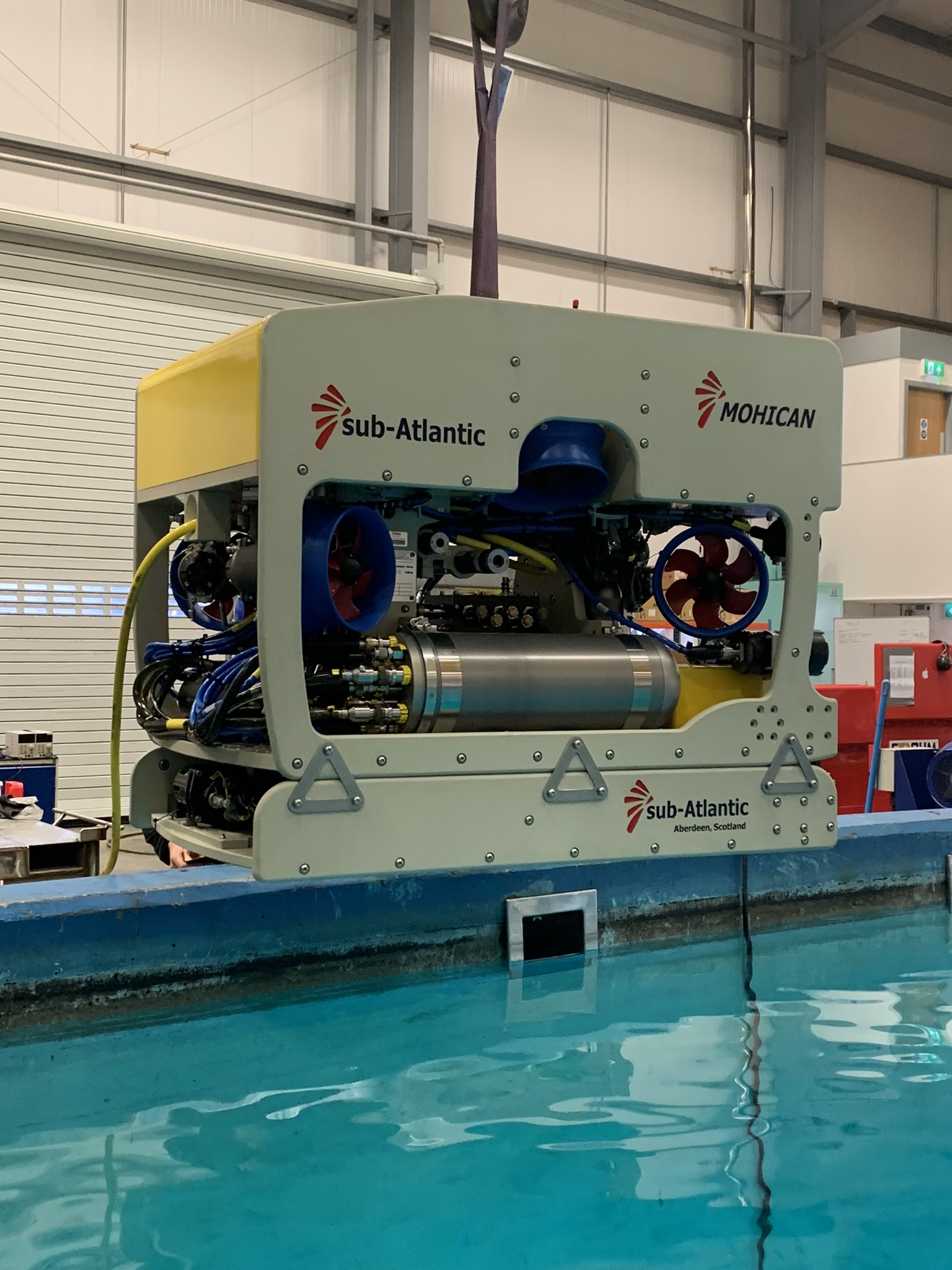
Forum Energy Technologies (FET) secured a contract from the Memorial University of Newfoundland to supply an electric observation-class remotely operated vehicle (ROV) to its Fisheries and Marine Institute (MI), School of Ocean Technology.
The primary function of the Sub-Atlantic Mohican ROV system will be to support ocean research, while it will also be used for pilot technician training. For ocean research operations, the ROV will be required to carry a payload skid for navigation, equipment and sensors, as well as be capable of manipulation and intervention.
The Mohican is equipped for inspection tasks, non-destructive testing, (NDT), light intervention, pipeline/cable/seabed survey, diver assist/safety, harbour and port security, scientific survey and data collection, renewable energy projects, civil engineering, long tunnel excursion and for inland waterways.
The ROV was manufactured at FET’s UK facility at Kirkbymoorside, North Yorkshire, and delivered to MI this year.
Kevin Taylor, FET vice president - subsea vehicles, said: “FET has a strong reputation as a single source for manufacturing and delivering high-quality, robust vehicles and associated auxiliary products which are suited to underwater industry applications. As well as defence, this includes oil and gas, renewables, telecommunications, mining, aquaculture and academia. This contract demonstrates the value our vehicles can also offer to scientific research projects.
“We are very proud that Memorial University recognises our capabilities and reliability. I am looking forward to seeing our system provide the required operational resilience and performance standards expected in such an important sector.”
Joe Singleton, interim Head for the School of Ocean Technology at the Marine Institute of Memorial University, said: “The acquisition of the FET Mohican ROV system vastly increases our capability to complete scientific observation and sampling research work up to depths of 2000 m. The ability to add additional sensors, cameras, and equipment to the payload makes it versatile for all anticipated expeditions. For our students completing the ROV Technician program, this comprehensive system provides a great experiential learning platform for maintenance, repair, integration, and operations.”
The Mohican ROV has a 2,000m depth rating and with TMS Garage system, is suited to inspection, survey repair, oceanographic research and subsea maintenance tasks. Ancillary tools and sensors can also be added to the vehicle for survey and light intervention work. The Mohican is equipped to a high specification with a four function manipulator arm for complex underwater procedures.
The ROV supplied also has precision measurement and navigation systems, HD & SD cameras, LED lighting and sonar for low visibility operations. Emergency location systems fitted include VHF beacon, combined with flasher.
The system was supplied complete with a 20’ control container, Launch and Recovery System and comprehensive spares package.
FET’s Sub-Atlantic range of ROVs are class leading and provide users with immense reliability and capability.