

Ocean Infinity acquires Abyssal
Ocean Infinity, the marine robotics company is excited to announce that it has acquired software engineering specialists, Abyssal.
Abyssal develops and implements proprietary software solutions for the offshore industry geared towards improving the safety and efficiency of subsea operations. As part of Ocean Infinity, the team will play a key role in shaping the enlarged group’s software development capability as it continues to grow and provide ever expanding robotics and data acquisition services to its marine customer base.
Abyssal’s technology ranges from a managed cloud data platform, synthetic environments, advanced 3D visualisation and operation management system tools. With artificial intelligence enabled digital twinning core to its services, Abyssal enables some of the world’s largest offshore operators to safely deliver complex projects.
Integrating Abyssal’s software expertise with Ocean Infinity’s robotic fleet will further underpin the company’s safe and secure data acquisition operations through the development of operational simulation, fleet management and cloud data tools.
Abyssal’s 38 highly experienced employees will transition to the Ocean Infinity Group, and will operate from Porto, Portugal, under the Ocean Infinity brand.
Oliver Plunkett, Ocean Infinity’s CEO, said: “Over the past nine years, Abyssal has built a great business with a talented team, focused on designing incredibly creative tools to improve the safety and data quality of its customers operations. Bringing this team of highly skilled solution developers into Ocean Infinity strengthens our in-house capability to provide the highest quality data, securely and quickly. Growing our team in such a way unquestionably moves us forward in becoming the leading ocean and seabed data analytics business. On behalf of everyone at Ocean Infinity I extend a warm welcome to our new colleagues.”
Manuel Parente, Founder and CTO of Abyssal, said: “With Ocean Infinity we share a vision to keep pushing the boundaries of technology development, in order to enable ever safer and ever more sustainable offshore work. We are pleased to now be part of this ambitious, “can do”, group. I look forward to the opportunities ahead, both for the team but also for our existing and future customers.”
For more information, please visit: www.oceaninfinity.com or www.abyssal.eu

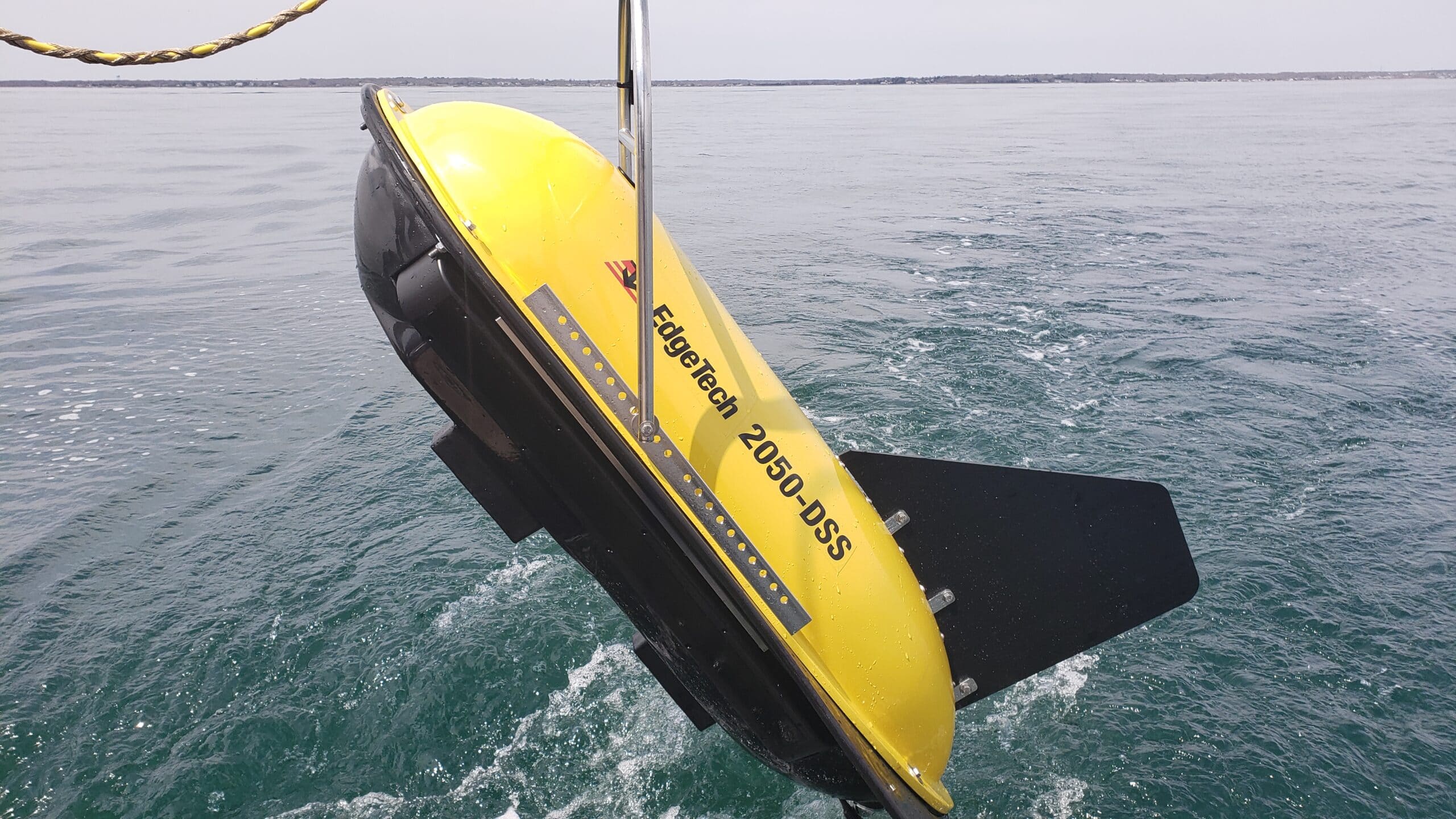
EdgeTech Introduces New 2050-DSS Combined Side Scan Sonar & Sub-Bottom Profiling System
EdgeTech, the leader in high resolution sonar imaging systems and underwater technology, has recently introduced a new combined tri-frequency side scan sonar and high resolution sub-bottom profiling sonar system.
The 2050-DSS is a tri-frequency side scan sonar system, where any two, operator selectable, frequencies can be operated simultaneously. The system can be provided with either a 120, 410 & 850 kHz towfish, or a 230, 540 & 850 kHz towfish. Both towfish options are equipped with a 2-16 kHz sub-bottom profiler, that utilizes a PVDF panel receive hydrophone. Use of an area based receive hydrophone panel provides improved beam patterns and therefore improved signal to noise ratio’s, which in turn means cleaner data for the operators.
The 2050-DSS comes complete with a combined towfish, digital telemetry that runs over a single coaxial cable, a 19-inch rack mount topside interface, and EdgeTech’s DISCOVER acquisition software. The 2050-DSS can be integrated with several auxiliary sensors such as magnetometer and USBL responder. Additionally, an interface is fitted to the electronics so that the electronics and sensors can be mounted onto an ROV. The 2050-DSS is ideal for applications such as cable and pipeline surveys, marine construction surveys, pre and post dredging surveys and more.
For more information please visit: www.edgetech.com
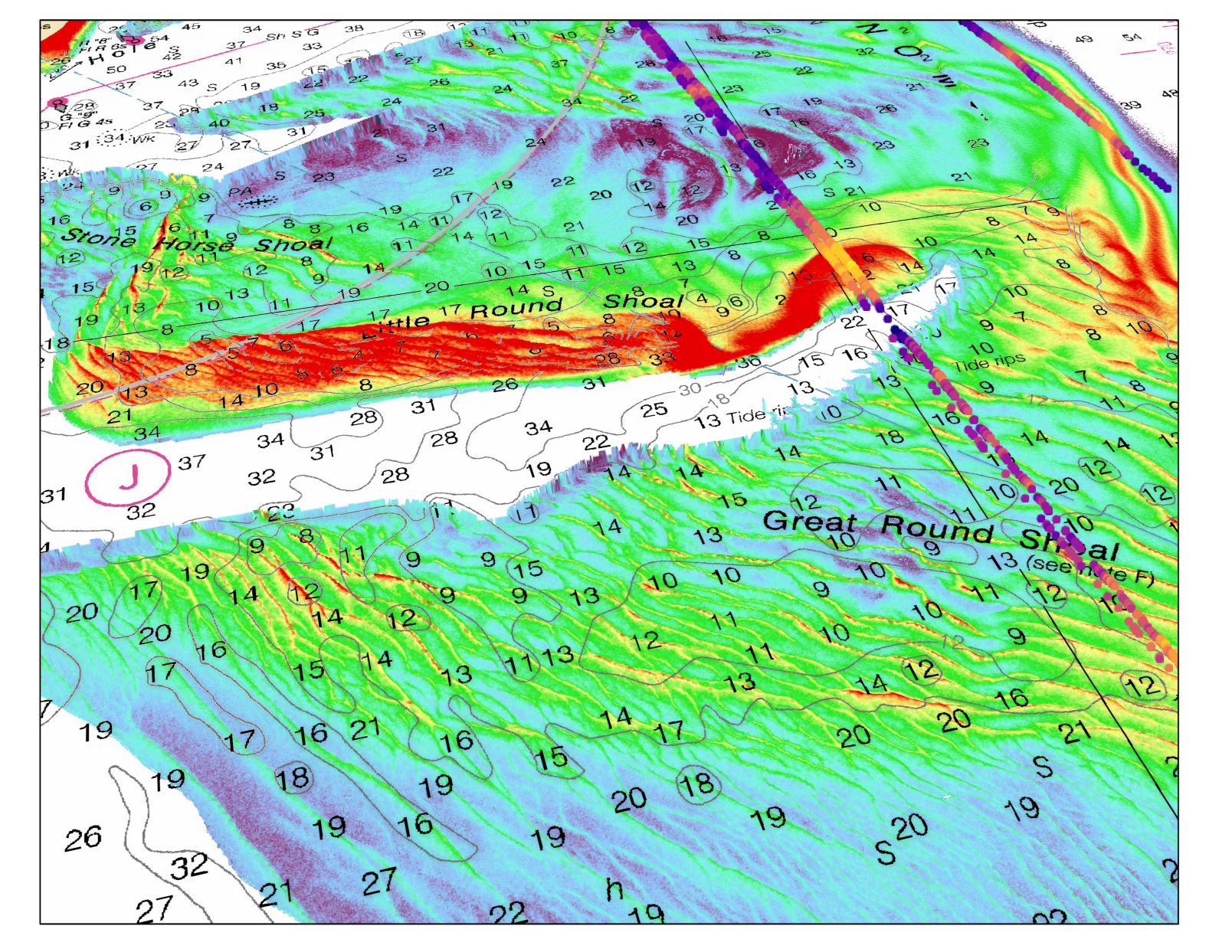
TCarta Delivers Satellite-Derived Bathymetry to NOAA for U.S. Coastal Mapping Pilot
TCarta Marine, a global provider of marine geospatial products, has supplied the National Oceanic and Atmospheric Administration (NOAA) with satellite-derived bathymetry (SDB) validated by green laser altimeter data from the NASA ICESat-2 satellite for two U.S. shallow-water coastal areas.
TCarta was the subcontractor on the prime contract awarded to Woolpert, an international geospatial firm headquartered in Dayton, Ohio.
The NOAA pilot focused on two shallow-water regions that were 3,000 square kilometers in total area - one in the Green Bay area of western Lake Michigan and the other around Cape Cod and Nantucket Sound. Both areas experience natural forces that alter the underwater terrain faster than traditional bathymetric surveys can be completed.
SDB is being considered as a fast and inexpensive alternative for such coastal zones. A primary advantage of SDB is that orbiting satellites can be tasked to collect up-to-date imagery, with bathymetric measurements derived to create end products in a matter of days.
TCarta created products in the two project pilot areas to enable NOAA to test the use of SDB in shallow coastal zones. This provided updated bathymetry and infilled data gaps from traditional bathymetric measurement technologies, such as airborne lidar or marine sonar. The pilot was conducted jointly by NOAA’s Office of Coast Survey and National Geodetic Survey’s Remote Sensing Division. The SDB data sets measured the seafloor to a depth of 20-25 meters, with validation using ICESat-2.
"The integration of ICESat2 bathymetry with satellite imagery derived bathymetry is a powerful combination to increase accuracy," said RDML Shepard Smith, the recently retired Director of NOAA's Office of Coast Survey. "It holds the potential to dramatically improve our ability to monitor change in dynamic coastal waters and allow us to map remote areas for the first time."
“The enhanced SDB product validated with ICESat-2 data created for this pilot results directly from our research under the National Science Foundation SBIR program,” said TCarta President Kyle Goodrich.
In late 2019, TCarta received Phase 2 Small Business Innovation Research (SBIR) grant to commercialize next-generation SDB measurement technologies. ICESat-2 (Ice, Cloud & land Elevation Satellite) space-based laser data was included in the research following the satellite’s launch in 2018.
For more information, please visit: www.tcarta.com
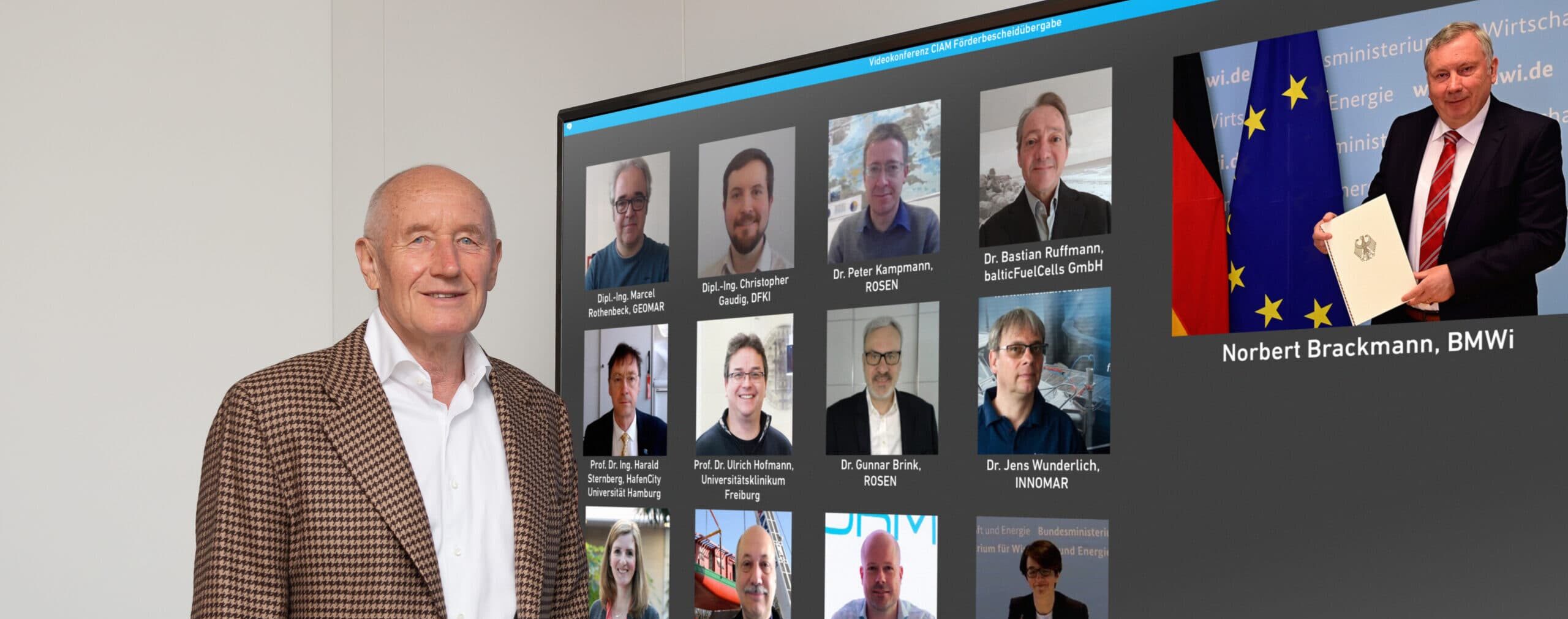
Go-ahead for Marine Technology Cooperation
Federal ministry of economics and energy funds research project for fully autonomous deep-sea applications to protect people and the environment.
The German Federal Ministry for Economic Affairs and Energy is providing 12 million euros as part of the Maritime Research Program for the development of a novel autonomous submersible robotics system that will enable autonomous monitoring of underwater installations in the deep sea with a significantly reduced carbon footprint.
Norbert Brackmann, member of the German Bundestag and the German government's coordinator for the maritime industry, presented the funding decision to the nine participants in the CIAM ("Cooperative Development of a Comprehensive Integrated Autonomous Underwater Monitoring Solution") project during an online event on April 30.
Brackmann commented:
“I am pleased to be able to give the go-ahead today for a new marine technology project that is not only an example of the maritime industry's high innovative strength, but is also characterized by good cooperation between small and large companies, renowned universities and research institutions. As a future and growth industry, the maritime sector is actively shaping the maritime energy transition and investing in research and development. The future CIAM vehicles, which are expected to achieve particularly long mission durations, be deep-sea capable and yet relatively light, will be a step forward for German marine technology. With such innovative technologies for pipeline and submarine cable inspection, we are also strengthening our position on the world market.”
As part of the project unmanned submersible robotic systems with unprecedented autonomy will be developed and build, without the need for costly support vessels. These will monitor underwater assets and infrastructure such as oil and gas pipelines, hydrogen lines, renewable energy power cables, and telecommunications cables, and help prevent damage to these assets.
Governments and businesses worldwide see the oceans as a driver of future economic development with great potential for innovation and economic growth. In this regard, autonomous underwater vehicles (AUVs) are an important component of expected future market developments for a variety of underwater applications.
The CIAM project aims to solve a key problem of unmanned submersible vehicles: namely, that AUVs have so far required large, costly support vessels, in addition to high risks associated with flooding the AUVs and retrieving them from the sea again. To date, in addition to the availability of skilled personnel, the availability of suitable vessels and AUVs has been a challenge, especially in urgent operational and emergency situations. Maritime applications also typically require a global presence. Therefore, flexible systems that can be deployed quickly and flexibly in any weather and sea state are needed, possibly with air cargo capability.
The CIAM approach aims to solve these challenges in a new class of unmanned submersible robotic systems controlled by artificial intelligence. These should be able to achieve particularly long mission durations and ranges, enable fully autonomous coast-to-coast operations, be capable of deep-sea operations and still be relatively light.
Hermann Rosen, President of the ROSEN Group, added:
“The permanently high investments we have made so far in in-line inspection of onshore and offshore pipelines, broad manufacturing capability, system competence and, for some years now, also in our own AUV development, demonstrate our commitment and ambition to become a national champion and world market leader for autonomous underwater applications in this business field as well. In this context, we are very pleased to receive government support, which together with our partners should help us to achieve comparable international competitive conditions.”
In addition to ROSEN, the consortium includes three other renowned universities, two research organizations and three technical experts from Rostock, Schwerin and Karlsruhe as project partners. Dr. Gunnar Brink, Head of Global Market Strategy for Subsea Asset Integrity at the ROSEN Group, coordinates the project consortium and is proud to be part of the team: “Especially in the last weeks and months of project preparation, it was a pleasure for me to see how much the partners in this project have grown together. We know each other. The partners have been carefully selected. Each project partner has the will to contribute to the success of the project with their individual contribution, in order to ultimately establish themselves at the top of the global competition in this business field.”
The Maritime Research Program is part of the maritime research strategy, which provides incentives for research and development to support the German maritime industry in tapping growth potential and strengthening its international competitiveness. In addition, the program serves to support the industry in developing sustainable technologies, in securing and expanding competitiveness, and in identifying climate and environmentally compatible solutions. The special interest lies in the creation and safeguarding of high-quality maritime jobs as well as in the improvement of maritime value creation in Germany.
The ROSEN Group is a leading global service provider for in-line inspections of pipelines. It initiated the CIAM project and will manage it responsibly. ROSEN defines itself as “empowered by technology”, as a company that provides sophisticated services worldwide with application of the latest technologies in harsh environments to protect people and the environment.
This project will advance the inspection of subsea assets, push the boundaries of deep learning applications and certainly reduce the carbon footprint.
For more information, please visit: www.rosen-group.com

Chelsea Technologies Announces Research Partnership with Ground-Breaking Transatlantic Research Project ‘Mayflower’
Chelsea have been selected as a research partner to an international effort led by marine research organization Promare and will deploy a ground-breaking next generation multi-parameter algae sensor aboard the unmanned Mayflower Autonomous Ship when it embarks on its historic transatlantic voyage from Plymouth, UK, to Plymouth, Massachusetts in May.
The 15-meter vessel is designed to provide scientists with a flexible and cost-effective platform for collecting critical data about the health of the ocean and further the technological development of marine autonomous systems. The AI navigation suite has been trained to recognise other marine traffic and obstructions using over 1 million real-life training images.
Joining a global consortium of partners including the lead technology and science partner IBM, Chelsea will be collecting multi-parameter fluorescence measurements from the vessel throughout the hazardous ocean crossing.
The 6-channel sensor, which is not currently available for general release, will continuously measure 4 algal pigments under test conditions, with 2 environmental fluorescence corrections integrated within a single, compact sensor housing. The data collected is expected to provide new insights into primary productivity and ocean health in the North Atlantic.
The probe will be mounted on board the autonomous vessel and will operate via a specially designed flow chamber. The sensor will be operated continuously throughout the voyage, providing valuable data on primary productivity and phytoplankton health.
Metrics gathered on the voyage will help the Chelsea development team evaluate the sonde for general manufacture. Once the technology is assessed, the sensor has the potential to provide significant new capabilities to many service applications. In addition to algae, the multi-parameter sonde may be available in hydrocarbon and tryptophan-like fluorescence variants.
Why measure multiple algal pigments?
Different algal species have different induction spectra depending on their specific pigment composition.
The Chelsea payload will measure 4 different wavelengths, designed to excite different algal pigments. This allows many different types of photosynthesizing organisms to be detected, including red algae, diatoms and cyanobacteria. Studying the relative concentrations of each pigment can provide information on the amount and type of species present within the algal community.
For more information, please visit: www.chelsea.co.uk

Industry Leader Q&A with SMI's CEO, Tom Chant
About Tom...
Tom has a long association with the marine industry, having been an active sailor and student of boatbuilding in Southampton. His career has encompassed a wide range of market sectors and he has gathered experience of business development, marketing and distribution in an international business environment. Recent career experience included distributor management for a marine equipment company before he joined SMI in February 2017, as the Business Development Director and Secretary to the Commercial Marine Group and Marine Science & Technology Group. Tom was appointed Chief Executive of the SMI in August 2020.
How is SMI adapting to the challenges of these uncertain times?
The initial work of the pandemic was all around helping to find out information and feeding in industry views to a variety of government panels. These were pretty much weekly at the start but that’s now receded to a fortnightly or monthly routine. Currently, we’re looking at how to operate in this hybrid world, with physical attendees joined by ones via Teams/Zoom. Providing insight and value to members is both easier and more difficult in the virtual world. We can’t completely recreate the spontaneity of physical meetings and yet we can provide insight more easily as no one has to travel.
Please tell us more about how you are supporting your teams and/or local communities?
The SMI team has been having almost daily catch ups via Teams since I took over in August last year. We’re up to about 60 meetings now just for this year. These have been essential in sharing updates on all the work we get involved in. At the same time they are a valuable team building/shared pain exercise!
How do you think the industry will change? Are there potential opportunities?
The digital world has certainly been fast-forwarded, combined with a need to remove humans from environments due to covid and cost. That really plays into the MST sector and its strengths. There are always opportunities out there!
What do you think are the main challenges ahead?
Private and company investment will have taken a hit, which reduce order books for some but as some areas - like oil and gas - shrink the opportunities in renewables grow so companies have to be agile and responsive to the markets.
What’s the most rewarding aspect of your job?
I’m privileged to be connected across the industry at the highest levels and really enjoy being able to connect people with opportunities.
And the most challenging?
Probably the sheer diversity of the sector and how it expands beyond MST into the rest of the SMI membership and sectors – but that makes it fascinating so I’m not complaining.
Who or what inspires you to be even better?
I do my best to surround myself with positive engaging people and there is no shortage of them within SMI’s membership. I hope I’m never heard saying “..but we’ve always done it like that”, as I’m keen to try new ideas. One day I’ll do some more work with something like the Open University, which keeps the grey cells developing.
Tell us a fun fact about yourself that most people don’t know.
I worked on a luxury yacht for the best part of 2 years and sailed the Atlantic twice – once the “wrong way” from the Azores direct to Bermuda.
What’s the best advice you’ve ever been given?
A recent advice, which I’ve used a lot is “faster, better, cheaper”. To sell more you need one of those 3 things.
What advice would you give to someone starting out in the industry?
Jump in – join professional societies, keep learning and get involved beyond the day job.
Why is innovation so vital to the ocean technology sector?
The challenges out there are immense in climate change and environmental damage, all whilst reducing human involvement. There is an immense amount of work to be done and innovation creates more ways to solve these huge issues.
How important is Ocean Business to the ocean technology sector? Why would you recommend a visit?
You won’t find another exhibition like it – smaller approachable exhibition stands, live demos and the best networking, all while being in the heart of the UK industry at the NOC.
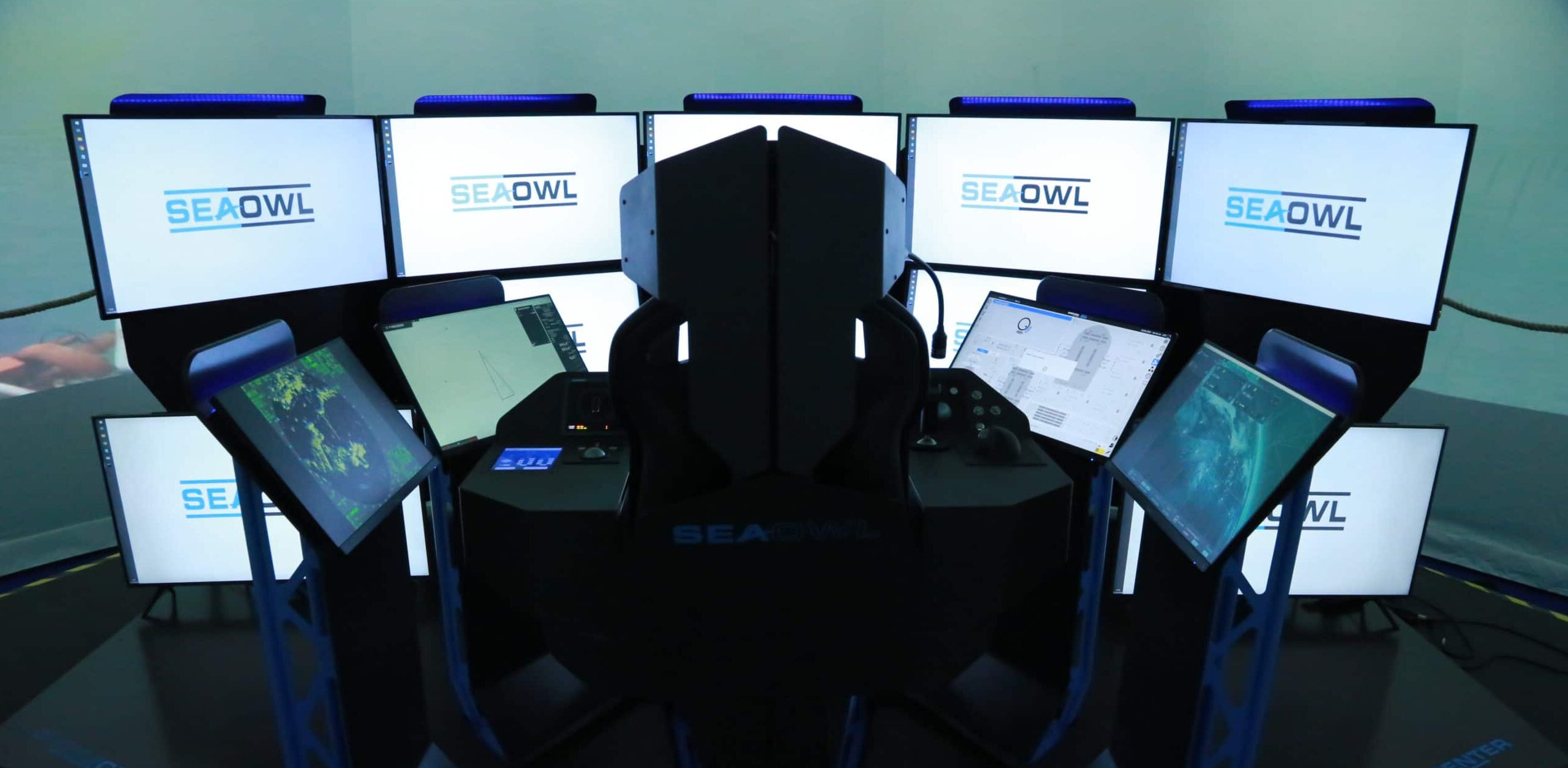
AMSSI - Agora for Maritime and Submarine Sustainable Innovations
Alcatel Submarine Networks, iXblue and SeaOwl announce they are joining forces to develop partnerships around innovative technologies dedicated to environmental protection underwater.
Following several months of fruitful discussions and dialogue, several French players have announced the creation of the AMSSI (Agora for Maritime & Submarine Sustainable Innovations):
- Alcatel Submarine Networks (ASN) - world leader in the procurement of submarine telecommunication cable systems
- iXblue - global high-tech company recognized worldwide for its advanced technologies in the fields of maritime autonomy, inertial navigation, subsea positioning and subsea imagery
- SeaOwl - international maritime services operator, pioneer in the implementation of drone-based maritime services
These 3 companies are today the core of AMSSI; new French and European members will shortly join them to accelerate the emergence of new innovative projects.
Innovation, R&D and industrial projects
This partnership aims to be a French innovation cluster where members share a desire to combine their know-how and technologies with the objective of bringing to life concrete and innovative industrial projects in the maritime and underwater fields, as well as in the fight against climate change. AMSSI will promote R&D, innovation and French know-how.
AMSSI has a proactive approach towards the concretisation and implementation of the various technologies developed through its members' R&D programmes, leading to the industrial deployment of its projects.
An ecosystem and concrete projects
By combining the expertise of its members, AMSSI will continue to develop an ecosystem cap
able of meeting major technological challenges and building an effective and relevant community for maritime technologies and services.
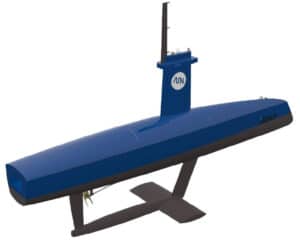
Among the developments involving the most advanced technologies of its partners, member companies are already working on an innovative project: the development of a remotely operated hydrographic surface vessel, i.e. a drone capable of carrying out long-distance survey missions.
Other projects related to climate change and marine digitalisation are also being studied.
For more information, please visit: www.asn.com
Teledyne Webb Research Incorporates JASCO-made OceanObservers on Slocum Gliders
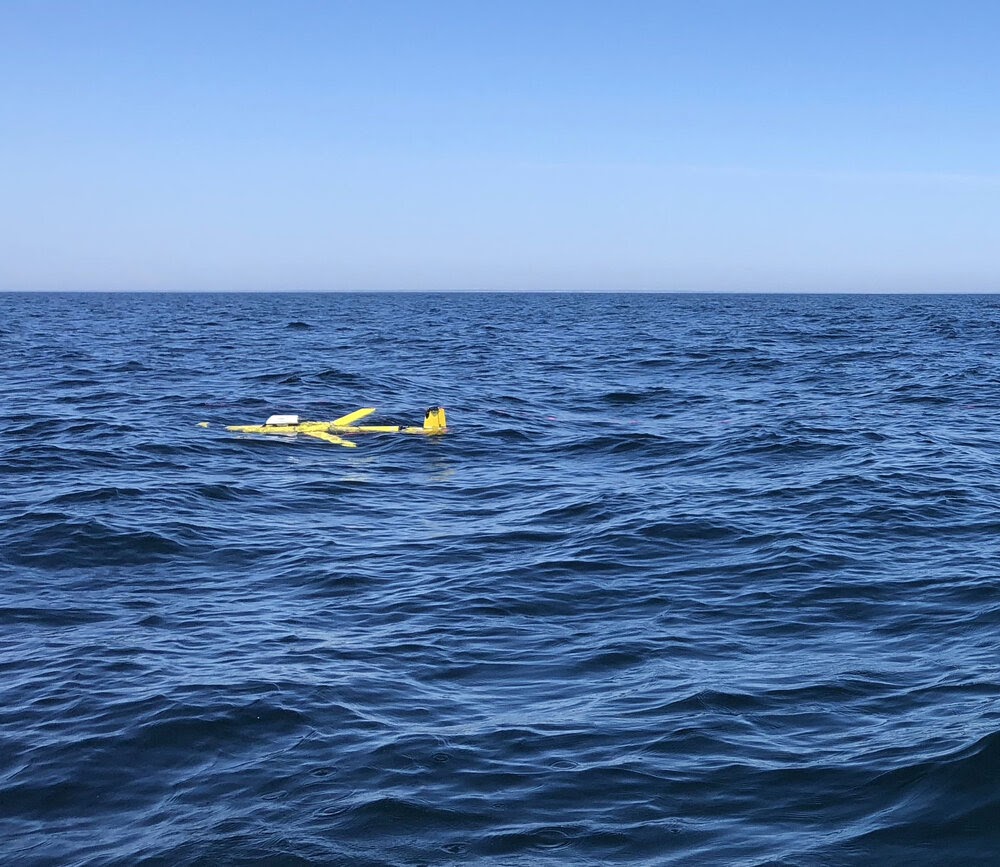
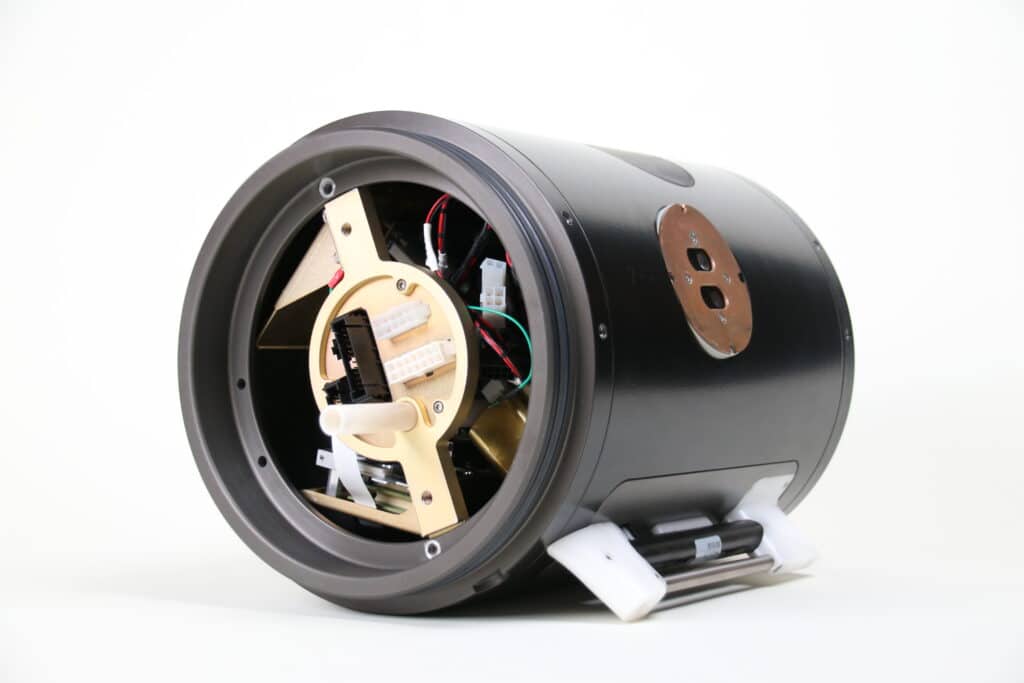
Teledyne Marine is pleased to announce the availability of the JASCO-made OceanObserver™ system on Teledyne Webb Research’s Slocum Glider Autonomous Vehicles. This latest addition to the Slocum Glider sensor suite adds key capabilities to the already versatile Slocum Glider platform.
OceanObserver™ is an intelligent passive-acoustic, multi-sensor system capable of in-situ, near-real-time underwater sound detection and measurements. The Observer records the underwater sounds and detects marine mammal calls from species of interest, quantifies ambient and anthropogenic noise, and derives other information of interest. Acoustic detections and measurements are sent to stakeholders in near-real-time.
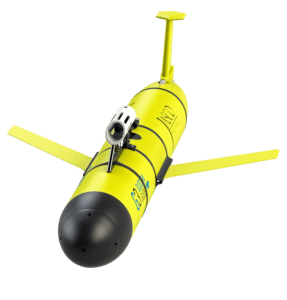
Slocum Gliders outfitted with OceanObservers and CTDs can also provide in-situ measurements of sound velocity profiles and ambient noise. Together, CTD and ambient measurements improve sonar sensor performance prediction and vulnerability assessment. The combined system is capable of monitoring in any sea state over extended periods of time.
Recent sales include universities and navies. OceanObservers are being used by academics to support marine mammal science and mitigation measures, autonomous vehicle navigation research and the development of new detection, classification and localization techniques. Naval customers are using Slocum’s for marine mammal mitigation and measuring Sound Velocity Profiles & ambient noise variability over long deployment periods. Ocean ambient noise is affected by weather, waves, and shipping traffic.
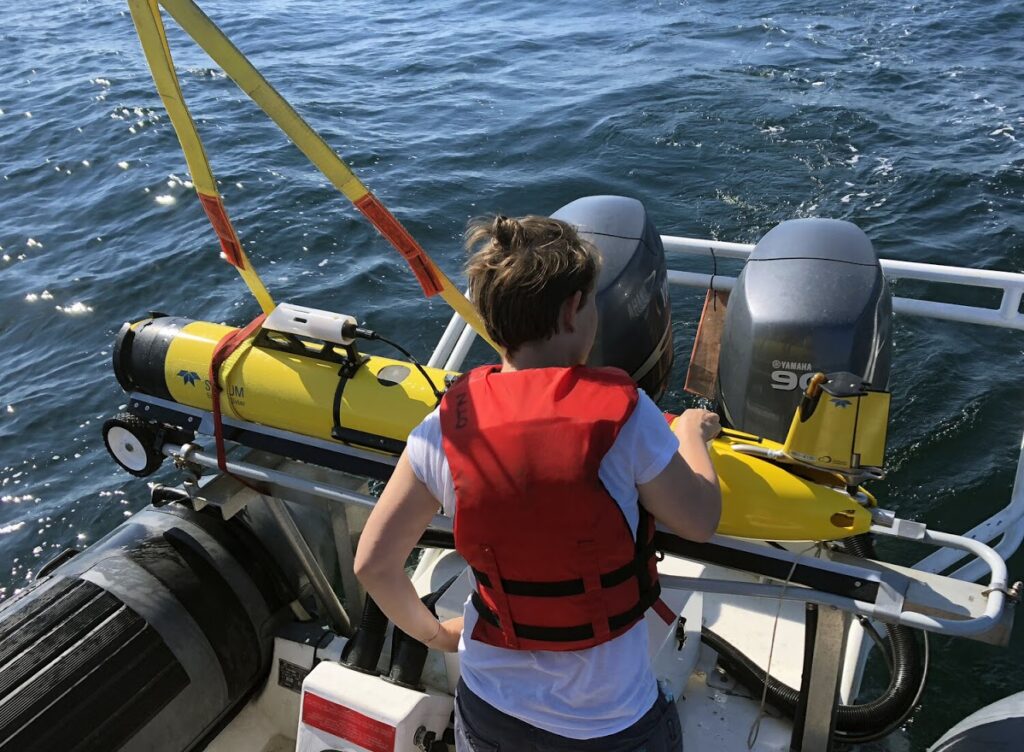
The Slocum glider is buoyancy driven to enable long range and duration remote water column observation for academic, military, and commercial applications. The Slocum Glider can be deployed and recovered from any size vessel with minimal time on station. Once the Slocum glider is deployed, it can easily be controlled from anywhere in the world through the use of web based piloting tools. This allows fleets of gliders to be operated remotely with minimal personnel and infrastructure.
Slocum gliders are modular, allowing for rapid sensor reconfiguration to respond to emergency conditions or situations. Over 40 sensors and other options are available to address a wide variety of ocean conditions and sampling requirements.
For more information, please visit: www.teledynemarine.com
New Business Development Manager joins Swathe Services
Swathe Services are very pleased to announce the appointment of Kerry Beckwith as their new Business Development Manager.
After achieving a BSc in Hydrography at the University of Plymouth, Kerry spent 15 years working offshore on a wide range of projects and seagoing vessels gaining extensive operational experience. She then returned to the UK as a Training Centre Manager/Technical Author, providing support for some of the latest marine systems and processes.
Tasked with contacting new and existing companies to introduce the integrated support solutions offered by Swathe Services, Kerry plans to drive the business forward to greater heights. Swathe Services’ flexible approach means they deliver the right solution to their customers needs, first time, every time.
With a keen interest in technology, Kerry is eager to see how the new autonomy and Artificial Intelligence (AI) processes coming to the market will affect the role of surveying. Kerry will also provide advice and consultancy to Swathe Services’ sister company, Unmanned Survey Solutions. Their vision is to become a leading supplier of innovative systems combining unmanned, air, surface and underwater technologies for seamless integration and operation.
Kerry says “I have received such a warm welcome in my first week from the team and I am very much looking forward to the exciting opportunities presented by working within the Swathe Group.”
For more information, please visit: www.swathe-services.com
Dynautics goes the extra mile for Chinese market
Dynautics is a pioneering provider of intelligent technology for unmanned marine missions worldwide. We have had a strong distribution partnership with the Beijing Oceaneco Technology Company (BOT) for over 10 years now, providing our AUV Sim simulation solutions for their customers in the uncrewed underwater vehicle (UUV) research and development sector.
Here we examine some of the factors that have contributed to this successful, long-term partnership.
Complex design challenges
Researchers and developers in the academic and commercial markets require effective simulation tools that aid the complex task of designing an uncrewed underwater vehicle (UUV). The Dynautics AUV Sim is a proven simulation software suite that enables designers to overcome power budget management challenges, maximise endurance, provide accurate guidance and make the right propulsion design decisions as well as ensure efficient payload transportation for their UUV designs.
When design iterations can be modelled, tested and modified without the safety risk and expense of scale or full-size models and test tanks, the development cycle is shortened and the road to achieving a commercially viable and successful solution becomes safer, faster and more cost-effective. In 2019 this was clearly demonstrated on a Phantom AUV project where AUV Sim was used to deliver several AUVs to the US Navy in record time – just 100 days from order to delivery.
Flexible marketing & training solutions
To support BOT with their own sales process, we adapted one of our promotional videos to replace the English subtitles with Chinese, enabling BOT to reach their target customers with a clear value message. This localised content initiative secured a rise in sales/enquiries of around 200% for BOT.
BOT General Manager, Dr Alan Zhang commented: “Our customers really engaged with the simulation software video. When the dialogue was translated, they could fully understand the value of the simulation tool. It has really opened up the market for us.”
Remote training and online walk-through sessions have also played an important role in securing sustained business in the sector for BOT. Simulation software can be exceptionally difficult to master, due to the complexities of simulation itself. To further support BOT, the UK-based Dynautics team provides regular, live, online training sessions for their customers to familiarise them with the functionality and kick start the design process. The same training also supports BOT’s sales managers in their own conversations with customers and new prospects.
Software & hardware support
BOT customers have also recently purchased several AUV Simbox products. The AUV Simbox enhances the functionality of the software only AUV Sim solution by including the hardware elements, in this case the Underwater MicroSPECTRE and interface units. This gives the AUV developer everything they need to create both a virtual and actual environment to test and trial their designs.

Dynautics AUV Simbox
AUV Simbox has proved to be an enormously powerful and practical tool. The kit, which contains the simulator software, a SPECTRE autopilot module, RCW front-end Remote Control Workstation (RCW) software, a GENIE analogue and digital interface as well as power supplies and cables, saves time by enabling the testing of the MicroSPECTRE firmware before it is installed in a real prototype.
Dr Zhang explained, “The AUV Simbox has everything our clients need, conveniently packaged in a robust carry case. It has helped our customers to achieve a dramatic reduction in development time, and I can’t emphasize enough how important that is in terms of reaching a successful mission conclusion. Access to water tanks or lakes is expensive, so if the design can be tested and adapted via simulations prior to water trials then that represents a real saving of resources”.
Dynautics firmly believes in the power of logic, precision and scientific integrity to deliver strong commercial results. Our hands-on approach and focus on our clients’ needs first and foremost ensures that we develop fit-for-purpose solutions that meet the demands of our customer, and subsequently their clients. Dynautics is a trusted technology partner to clients across the maritime sector, including offshore energy, mining, oceanography, marine transport and defence and security.
For more information on their range of simulation solutions, please visit: https://www.dynautics.com/products-unmanned-surface-vehicle/marine-simulators/