
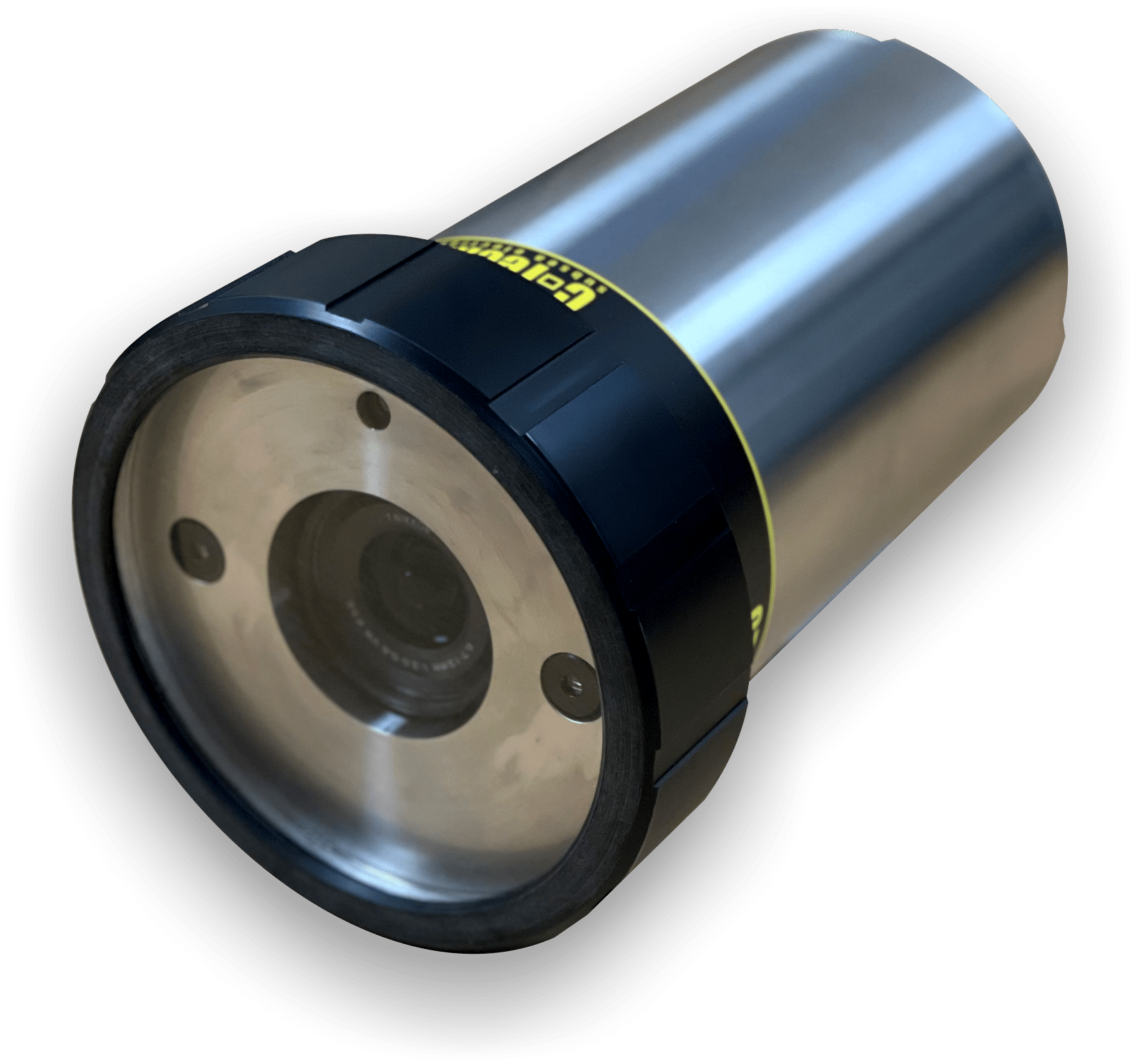
New camera technology brings huge savings and hugely improved performance
A new combined Stills-Laser-Video camera is taking the marine science market by storm.
C-tecnics have used new technology to bring huge savings for customers looking for a camera offering multi-functions required in aquatic and benthic studies. The system offers real time video and stills photography with built in lasers for scaling marine creatures.
The SLV Mk 2 camera minimises use of wiring and separate components to reduce costs in production and assembly and is significantly less than any competing system. The design results in an exceptionally robust product with up to date video processing technology.
Once the deployment has finished, all video recording and still images can be easily downloaded via a USB connector. Controls are through RS232/RS485 connection via software.
A major Scientific institute has recently exchanged older systems for the new product and are delighted with the increased performance and high quality images.

Transmark Subsea new representative for Boxfish Remotely Operated Vehicles in Europe
Transmark Subsea becomes the European distributor of ROV systems from Boxfish Research, New Zealand, expanding their offering of high-tech subsea solutions to help their customers operations stay relevant and effective.
Boxfish Research designs and manufactures industry leading, actively stabilised, ultra-high definition underwater ROVs and 360 cameras for submerged asset inspection, defence & security, marine science, energy, aquaculture, police and search & rescue, VR/ AR and cinematography. A tetherless, autonomous option is pending – stay tuned!
Distribution of Boxfish Research ROV systems complements Transmark Subsea’s diverse range of underwater solutions which include WiSub pinless connectors, DeepSea Power& Light cameras and lighting, as well as the company’s in-house range of subsea cabling and termination solutions.
“Boxfish Research is excited to be able to better serve our clients in Europe and expand our regional capabilities in partnership with Transmark Subsea,” said Craig Anderson, Co-Founder of Boxfish Research.
“Transmark Subsea is proud to become the European representative for this reputable product line”, said Transmark Subsea’s Managing Director Leif Hugo Arntsen. “Boxfish’s superior product range aligns very well with our development of Subsea resident solutions and swappable tools.”
For more information, please visit: www.transmark-subsea.com
Top Mississippi State University Oceanographers Select SeaTrac SP-48 for Environmental Monitoring and Threat Assessment
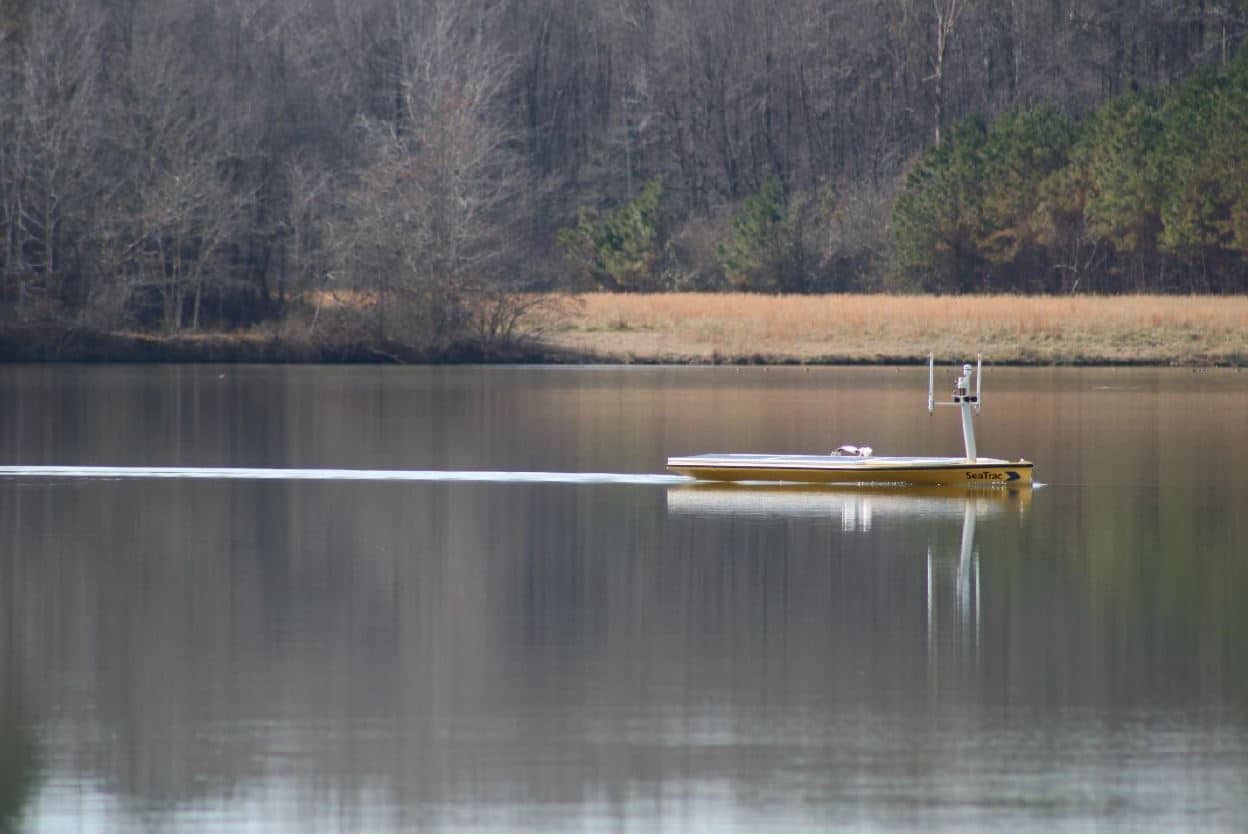
SeaTrac Systems, Inc. (SeaTrac) is pleased to announce the sale and delivery of one of its SP-48 persistent Uncrewed Surface Vehicles (USVs) to a team at Mississippi State University’s (MSU) Geosystems Research Institute (GRI), in Starkville, MS. GRI selected the SP-48 to support a research study funded by the Army Corps of Engineers to study real time water quality monitoring and threat assessment of navigable waterways of the Gulf of Mexico region. GRI develops, operates, and maintains an increasingly integrated research and transition program, the results of which raise awareness and understanding of the Gulf region.
The MSU team was attracted to the SeaTrac platform for its ease of use and versatility to navigate in a variety of waterways, as well as its ample available power to support a rich payload over long durations. The custom payload includes the following: Pro Oceanus CO2-Pro CV sensor, Seabird SBE 63 dissolved oxygen sensor, 3 Seabird ECO Triplets, AML CT Sensor and AML pH Sensor.
“The team at SeaTrac is first rate; they can integrate anything and have been a pleasure to work with, pushing the envelope to fit into their boat all of our complex demands,” notes Dr. Robert Moorhead III, Director of GRI. “Because of its versatility, we plan on deploying the SP-48 in a number of our waterways, ranging from very shallow waterbodies to the open ocean in the Gulf.”
“Increasingly customers’ missions have grown in complexity requiring a range of sensors, and they’re looking for less costly, less resource-intensive and more flexible solutions to carry out a variety of tasks simultaneously in challenging marine environments,” said Buddy Duncan, Co-Founder, SeaTrac Systems. “We are pleased to help the MSU team achieve its real-time monitoring and data-collecting goals.”
The SP-48 is designed for users who require a flexible data gathering and communications platform that adapts to a wide variety of operational scenarios and payloads. The solar-powered, 4.8m SP-48 is a low-logistic, sensor-agnostic persistent USV with Automatic Identification System (AIS) collision avoidance, speed of 5kts, 500W payload power, and 70Kg payload capacity that can host a variety of sensors perfect for the collection and communication of real-time ocean data over long durations. Built to operate in all marine environments—from inland, near shore to open ocean—the SP-48 has a self-righting hull and efficient electric motor that frees it from reliance on wind or waves for propulsion. It is easily deployed from a boat ramp, pier or ship. Communications is achieved by line-of-sight Radio Frequency (RF), cellular, high-bandwidth satellite or custom networks.
For more information, please visit: www.seatrac.com.
High Speed Transfers future proofs fleet with triple order from BAR Technologies and Chartwell Marine
HST places order for two BARTech 30 CTVs and an additional Chartwell 24 in high-tech boost for offshore wind
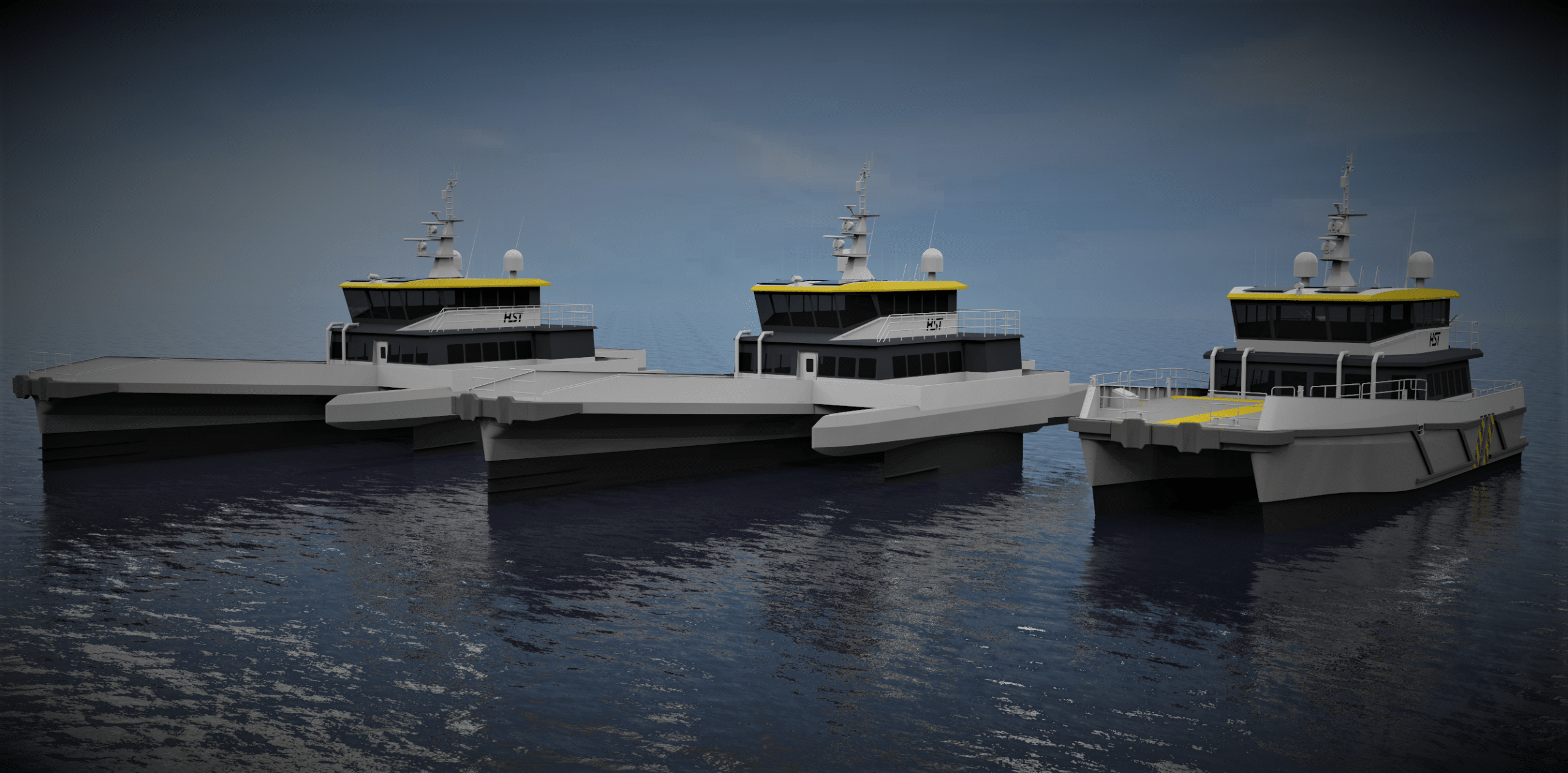
High Speed Transfers (HST), an innovative crew transfer vessel (CTV) operator that supports the offshore wind energy and oil and gas industries worldwide, has confirmed its order of two BARTech 30 CTVs from innovative simulation-driven marine engineering consultancy, BAR Technologies, and an additional hybrid Chartwell 24, with BAR Technologies’ Foil Optimised Stability System (FOSS), from Chartwell Marine, a pioneer in next-generation vessel design. The vessels will be built at Diverse Marine, on the Isle of Wight, UK.
As offshore wind technology continues to evolve, and projects are developed further out to sea, the operational profiles that wind farm operators require have become diversified. Versatile fleets have become increasingly prized in the race to scale the sector in new markets. Equally, as decarbonising the vessel supply chain becomes a key imperative for wind farm owners and operators, BAR Technologies’ CTV is set to provide HST with fuel – and therefore emissions – savings of up to 30%.
Additionally, to ensure that new projects can be safely and efficiently maintained, vessel designers have risen to the challenge to deliver the next wave of innovation in offshore wind’s maritime supply chain – without sacrificing the proven characteristics that have underpinned the sector’s success to date. The two BARTech 30 vessels will offer HST the flexibility to operate year-round, benefiting from a significant reduction in vertical acceleration to ensure optimal performance.
HST’s order will ensure that the business is able to continue to provide the highest standards of comfort for passengers during voyages to wind farms even in regions that typically see higher sea states such as the US. The proven Chartwell 24 vessel formula will be further enhanced with BAR Technologies’ FOSS, offering improvements in seakeeping and boosting efficiency.
Crucially, the vessels will all have the same layout of the console, seating and bridge, adhering to HST’s strict safety specifications and ensuring operational familiarity for crew and passengers. All three vessels will be equipped with Reygar’s BareFLEET technology to give HST a granular view of fuel use and operational efficiency, delivering savings to clients and using data to demonstrate the concrete benefits of the vessel platforms to wind farm operations.
Tom Nevin, CEO, High Speed Transfers, said: “Offshore wind owners and operators have shown a real appetite for efficient, low-carbon vessel platforms. It is exciting to work with vessel designers such as BAR Technologies and Chartwell Marine who understand what the industry needs and have the expertise to deliver next-generation designs without overcomplicating the vessels. BAR Technologies’ FOSS is fast becoming a ‘must have’ and we are keen to demonstrate the capabilities of our new vessels to the market.”
John Cooper, CEO, BAR Technologies, said: “Offshore wind is about to enter a golden era, but the sector needs to be ready for rapid growth – and this means building out a solid global fleet. We are proud to support forward looking vessel operators such as HST as they tackle the challenges of future offshore wind operations head-on by adopting the latest innovations in vessel design.”
Andy Page, Managing Director, Chartwell Marine, said: “We looked at a broad suite of propulsion options for the vessel before deciding on the configuration that suits HST’s needs best, as we understand how important it is to maintain the core HST identity while continuing to innovate. By opting for a full complement of BARTech 30 and Chartwell 24 CTVs, HST has continued to show leadership in offshore wind by taking the next step in performance.”
John concluded: “Decarbonisation is the next great challenge for the offshore wind sector as it continues to expand into new markets. A crucial element of net-zero in offshore wind is reducing emissions in its maritime supply chain, using hydrodynamic expertise to deliver vessel platforms designed to reduce energy waste, opening the door to battery-electric drivetrains and cutting the carbon footprint of existing fuels.”
For more information, please visit: www.hst-marine.com, www.bartechnologies.uk or www.chartwellmarine.com
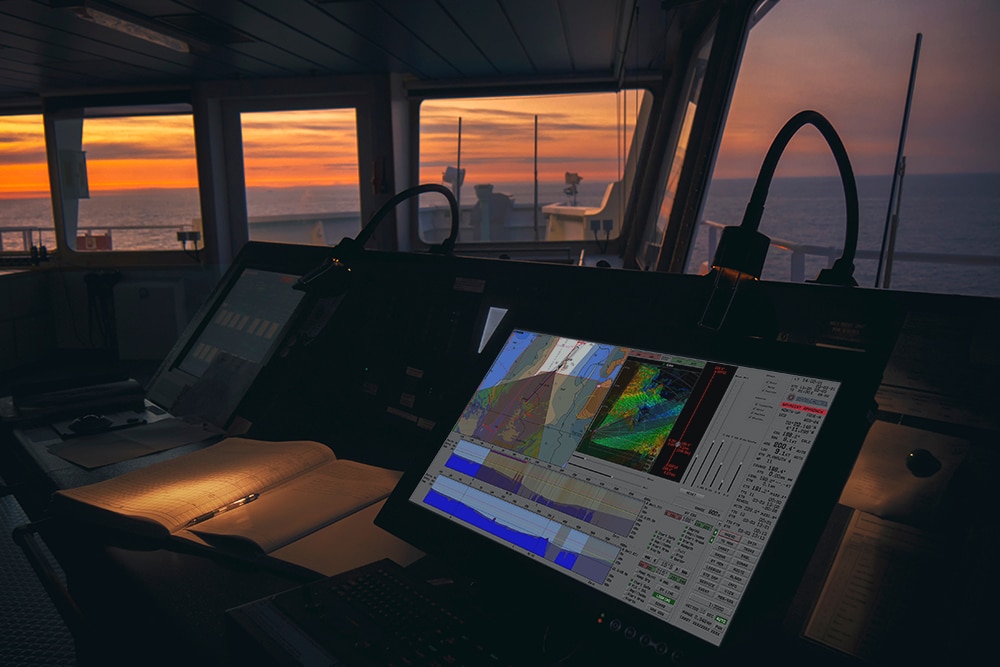
Sonardyne’s forward looking sonar now supported in NAUDEQ’s ECDIS
Marine technology company Sonardyne has announced its Vigilant Forward Looking Sonar (FLS) is now available as an external sensor interface for NAUDEQ’s electronic chart display and information system (EDCIS) MASTER-DEQ.
Sonardyne’s Vigilant FLS shows captains and crews where it is safe to navigate and alerts them to potential underwater dangers that could result in a collision or grounding. It can be used as standalone system or overlaid into third party ECDIS systems such as MASTER-DEQ. This means NAUDEQ’s naval, merchant and fishing vessel users can now take advantage of this valuable aid to navigation through Vigilant’s enhanced reality imaging overlaid on their MASTER-DEQ bridge display.
Using the sonar data from Vigilant, NAUDEQ’s MASTER-DEQ builds and displays cut profiles and 3D maps of the seabed, taking into consideration the tide level. Through MASTER-DEQ, mariners can also view cut profiles looking at their course over ground, obstacle avoidance coinciding with heading and a profile in a user-defined direction. By superimposing reliable Vigilant data on the seabed topography, built using NAUDEQ’s technology and using ENC S-57 data, a comparative analysis can also be run. Any discrepancies between the chart data and the real-world returns from Vigilant are then clear to see.
For more information visit: www.sonardyne.com

Amphibious vehicle auto-pilot for British Army
The team at Dynautics recently worked closely with Ultrabeam Hydrographic on a MoD Defence and Security Accelerator (DASA) funded project, ‘Map the Gap’, run on behalf of the Defence Science and Technology Laboratory (Dstl). Ultrabeam, in conjunction with Foundry Cube Ltd (a subsidiary of Ultrabeam Limited), was awarded one of five contracts to develop a remotely-operated reconnaissance aid to help British Army troops safely and stealthily advance across water obstacles in enemy territory.

Crossing challenge
Currently, the only way of identifying suitable water crossing points is to send Royal Engineer reconnaissance troops to survey both banks of the river – exposing them to danger which also risks compromising the operation by signalling interest in that location to the enemy. The aim therefore is to ultimately remove personnel from these dangerous tasks with a remote system that allows more crossing locations to be surveyed, increasing the choices available to commanders and giving an opportunity to surprise the enemy.
Tailored solution
Ultrabeam’s goal was to demonstrate the capabilities of their autonomous and amphibious hydrographic survey vehicle – the Argocat – in meeting the challenges of this crucial work.
As a strategic partner, Dynautics is sharply focused on the ultimate goals of its customers and the team immediately started work on honing autopilot specifications to support the Ultrabeam team in achieving their mission. Dynautics’ key task was to develop its MicroSPECTRE autopilot hardware to drive the Argocat. This included the consideration of: joystick-based remote operation; the ability to follow a straight-line heading or pre-planned mission tracks; steering, heading control and track keeping both for land and waterborne operations and collision avoidance measures.
“We thrive on new integration challenges to existing systems. The team had never attempted to control a vehicle both on land and in the water before, but we were able to adapt our SPECTRE Autopilot quickly and effectively. It goes to show really how robust and capable our solutions are.”
Henry Robinson, Dynautics CEO

Successful field trials
Dynautics’ autopilot products enable tight heading and speed controls, track following (including event management at waypoints), vehicle following, collision avoidance, attitude and depth control as well as hovering and dynamic positioning. Traditionally used for marine vessels, such as uncrewed surface vessels (USVs), adapting MicroSPECTRE for an amphibious vehicle was a new challenge that the team rose to, with successful field trials being completed in December 2020.
Moving forward
The second phase of the Map the Gap project has now been launched and Dynautics continues to work closely and collaboratively with Ultrabeam Hydrographic. More news coming soon!
Watch the video for more info on the Argocat and phase 1 trials:
For more information visit: www.dynautics.com/2021/02/26/amphibious-vehicle-auto-pilot-for-british-army
The Hydrographic Society UK Announces Hydro 21 Conference and Exhibition
The Hydrographic Society UK (THS UK) are pleased to announce that they will be hosting the Hydro 21 conference from 16th to 18th November 2021 at Cork City Hall, Cork City, Ireland. Hydro 21, is the latest in the International Federation of Hydrographic Societies' world-renowned series of hydrographic symposia which date back to 1976.
Hydro 21 will incorporate the THS UK postponed Remote Hydrography conference but will be further expanded in terms of papers, exhibition and aligned events, and will retain the theme of ‘remote hydrography’. The speakers that were originally selected have been invited to refresh or revise their papers, it is likely that a further call for papers will be issued in May 2021.
THS UK Chief Executive, David Parker said: “Whilst we were very disappointed to have postponed our Remote Hydrography Conference twice in 2020, we are now looking forward to delivering an even better event in 2021. Hydro 21 will be a fantastic event that provides the hydrographic community with the opportunity for education and networking. To further connect with our Irish Region of THS UK we have also decided to host the event in Cork, Ireland. We would like to thank all of our Members, Speakers, Sponsors and Exhibitors for their patience and continued support.”
Seán Cullen, Chair and Regional Director of THS UK commented: “The Hydro 21 Conference and Exhibition will run immediately after the annual INFOMAR Seminar at the same venue – allowing for a greater networking opportunity for hydrographers in Ireland to meet up with the wider industry”.
Sponsorship and exhibiting opportunities will be released in the coming months.
For further information please contact us: [email protected]
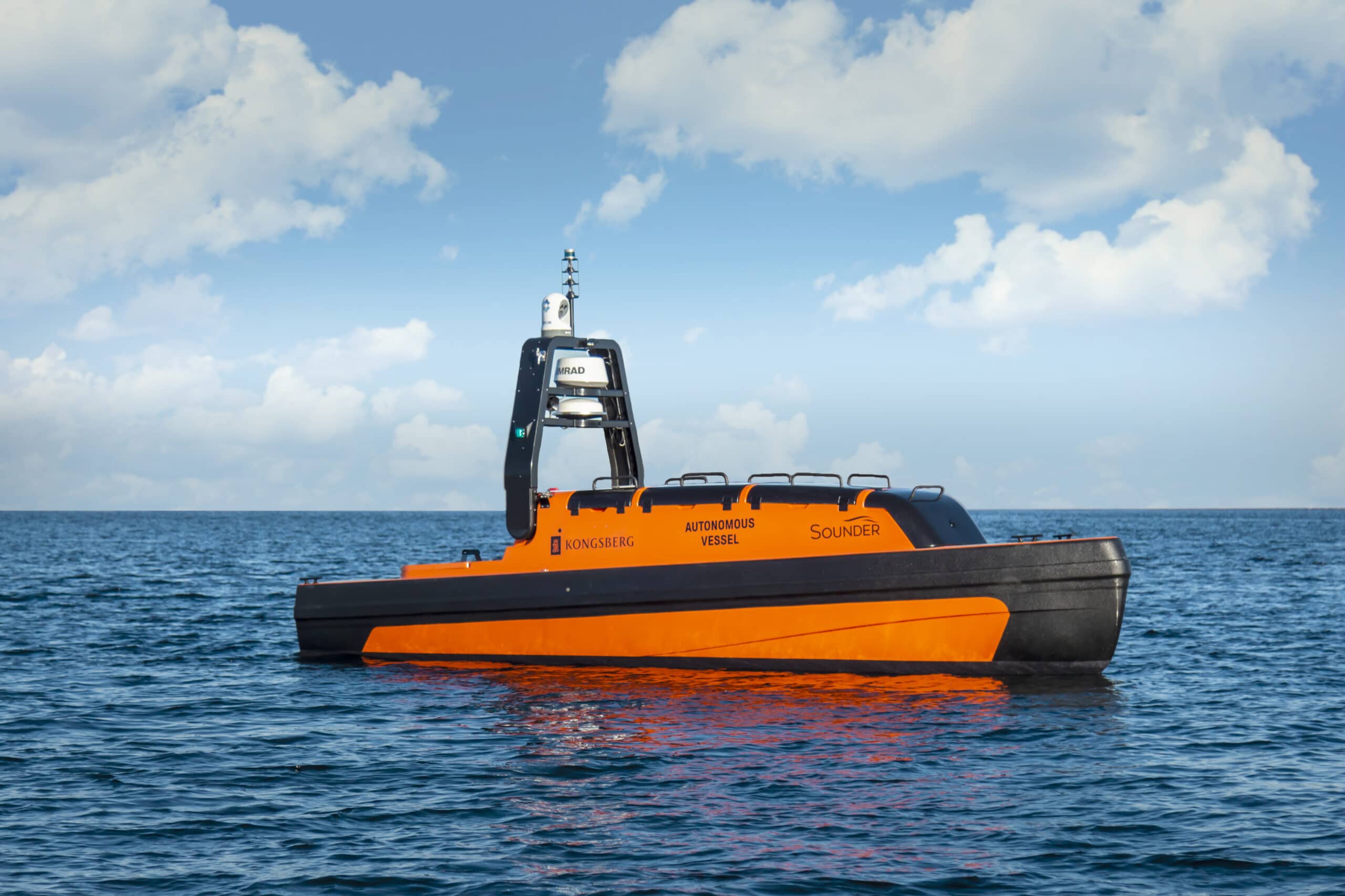
KONGSBERG secures contract to deliver full solution for ecosystem monitoring using autonomous vessels
Kongsberg Maritime is pleased to report that it has reached an agreement to supply Norway’s Institute of Marine Research (IMR) with four autonomous vessels. The scope of supply includes two Kongsberg Maritime Sounder USVs (Unmanned Surface Vehicles) and two KONGSBERG AUVs (Autonomous Underwater Vehicles), which will form the practical basis of the institute’s long-term strategy to develop the monitoring and management of marine environments and resources.
The four autonomous vessels will be equipped with KONGSBERG’s new Blue Insight, a cloud-based ecosystem designed to facilitate remote instrument operation, data visualisation and smart management of oceanographic and meteorological data. Infrastructure for automated classification of fish through machine learning is a key feature of the delivery, consolidating the long-running partnership between KONGSBERG and the IMR towards the goal of implementing seagoing drones for ecosystem management.
The KONGSBERG AUVs are scheduled for delivery this year, with the USVs following in the late summer/early autumn of 2022. The AUVs are depth-rated to 1,500m and are equipped with a powerful payload for environmental monitoring and seabed mapping. The IMR USVs will be equipped with a full EK80 wideband system accommodating ADCP functionality, similar to the setup on their existing research vessels. Importantly, control and navigation of both AUVs and the Sounder USVs can be handled just by a single interface. The comprehensive overview provided by this fleet management capability enables interoperability between all assets and reduces in-mission complexity.
This integrated autonomous survey solution is the first to merge AUV and USV operations, and the investment testifies both to the IMR’s future- and sustainability-focused ambitions and to its faith in KONGSBERG’s ability to supply the most advanced autonomous craft.
As one of the largest marine research institutes in Europe, the IMR is committed to promoting sustainable practices at sea, and digitalisation is a cornerstone of this policy. Stimulus programmes introduced last year to facilitate remote working during and after the pandemic have accelerated the institute’s wholesale adoption of high-tech digital solutions, supported by a substantial digital investment by Norway’s Ministry of Trade, Industry and Fisheries, in addition to external research grants.
“As we embark on the next stage in this project, we are happy to do so alongside our trusted and long-term partner Kongsberg Maritime,” says the IMR’s CEO, Sissel Rogne. “We are seeing a wide range of changes in our coastal and ocean ecosystems – and these changes happen fast. In response to this, we must streamline and increase our management efforts. To obtain this we need innovative and reliable partners, and the cooperation with Kongsberg Maritime is therefore vital to us. Their USVs and AUVs will initially work alongside our traditional research vessels in an ‘armada strategy,’ but will subsequently operate more independently as we expand our plans.”
“We’re very pleased to have secured this contract with the IMR,” adds Tonny Algrøy, Sales Director, Ocean Science, Kongsberg Maritime. “This delivery builds upon decades of collaborative work with the IMR to create innovative solutions for ocean ecosystem monitoring, and the addition of smart platforms plus a new E-infrastructure solution is a logical next step in this shared history.”
For more information visit: www.kongsberg.com/maritime
Greensea Announces Free Webinar Series
A Unique Webinar Series of Conversation & Discovery for the Marine Industry
Greensea, creator of OPENSEA®, the universal open architecture software platform for the marine industry, announces an entertaining and educational webinar for anyone interested in robotics, entrepreneurship, and the marine industry. The webinar series, entitled The Mixtape Sessions, will be led by a variety of different speakers (both Greensea employees and other partners) and will take on different formats based on the discussion topic with all sessions allowing for an open conversation between speakers and participants.
“Like everyone else, Greensea has been unable to meet face-to-face with our customers, partners, or employees,” says Greensea CEO, Ben Kinnaman. “After a long winter in Vermont, we wanted to do something virtual, but also something that gets away from ‘the standard corporate webinar’ format. We want to have open and honest conversations with people about the issues and concerns that face all of us working in the marine industry. Hopefully, people will leave a Mixtape Session feeling like they learned something they might not have known and that they have had a good time. ”
Kinnaman goes on to say, “All of the presenters are passionate about their chosen topics. Most of us aren’t professional public speakers, so Greensea’s Mixtape Sessions may lack that corporate polish, but they should be fun. I’m hoping to present from Greensea’s neighborhood pub, if they’ll have me, to ensure that the atmosphere for my topic is even more relaxed.”
The first Mixtape session will be held March 24th on the topic “An Open Architecture Framework for the Next Generation of ROVs” and will be conducted in an interview format with Ben Kinnaman being interviewed by Marybeth Gilliam, Greensea CMO.
The Mixtape Session series will run through 2021, with an event happening most months. For more information, and to register, visit: Greensea.com/events.
We want to hear from you as well, if you would like to collaborate on your own Mixtape session, email [email protected]. Mixtape Sessions will be recorded and available for download by registered users after each event.

Teledyne CARIS announces its complete workflow software, Onboard360, featuring data acquisition with CARIS Collect
Teledyne CARIS partnered with Teledyne Marine to leverage years of leadership in the marine survey market to create CARIS Collect, a modern and easy to use software package for data acquisition.
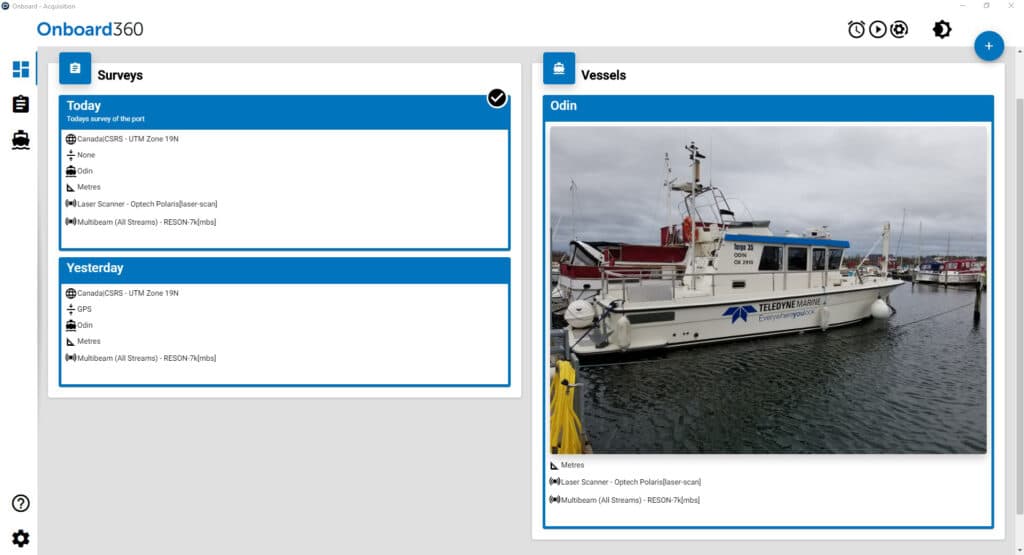
Teledyne CARIS, a Teledyne Technologies [NYSE:TDY] company, and leading developer of marine mapping software, is pleased to announce the release of Onboard360 featuring CARIS Collect. The newly released software delivers a seamless flow of data into the Ping-to-ChartTM workflow. When combined with the Onboard360 Process module, logged data is imported and processed automatically allowing near real-time and remote quality monitoring of in-progress surveys.
The CARIS Collect module provides simple and effective data collection for the most common sonar and lidar systems in the market. CARIS Collect was designed with an intuitive user experience for ease of integration and simple user adaptation, minimizing the effort required to implement new software.
Vice-President of Sales and Marketing Andy Hoggarth commented: “We are pleased to offer our customers the ability to collect with confidence using CARIS Onboard360. Our Ping-to-Chart solution is now complete with the inclusion of the simplest acquisition software available for hydrographic survey operations whilst providing significant reductions in ship to shore turnaround times.”
Available as a perpetual or SaaS annual license, Teledyne CARIS has made Onboard360 the most cost-effective acquisition software package on the market.
Teledyne CARIS is hosting a webinar on Thursday, March 25, 2021 at 10:00 a.m. EDT to expand on key features and benefits of Onboard360 and the CARIS Collect module. Interested parties can register here:
https://teledyne.zoom.us/webinar/register/5816152363030/WN_pnGRgvYxSRaB_f1R7ecTZg