
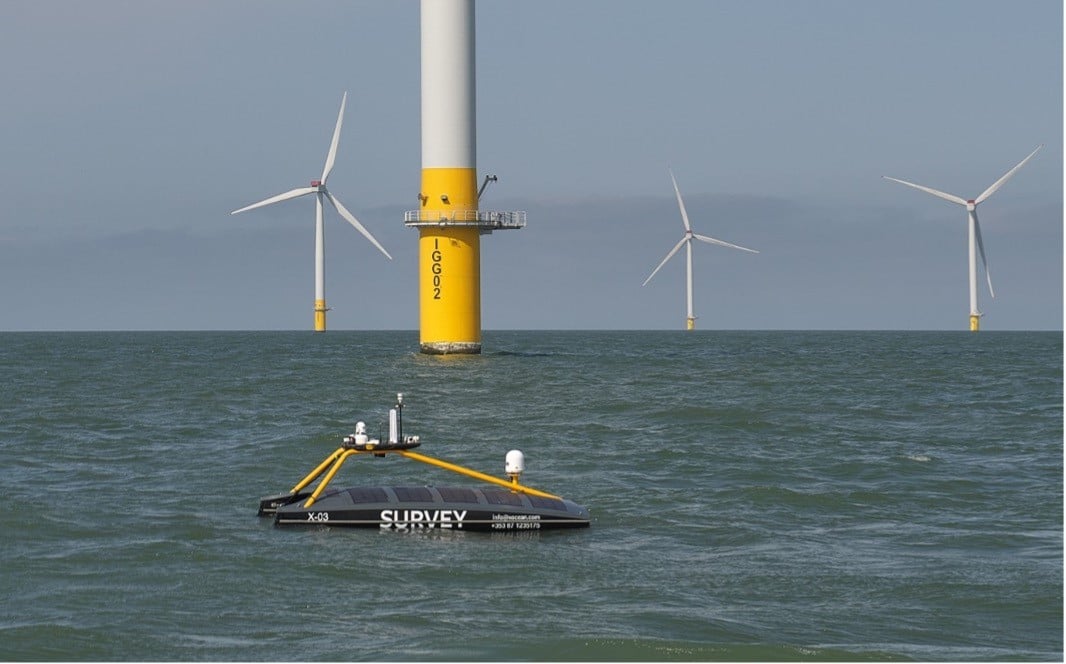
XOCEAN Continue Global Expansion of USV Operations with Opening of Norwegian Entity
International ocean data company XOCEAN has today announced the opening of a new entity in Norway to service growing demand in the market for the company’s pioneering, carbon-neutral, data collection services using remotely controlled Uncrewed Surface Vessels (USV).

The company uses its unique robotic technology to collect ocean data sustainably across a range of industries, including offshore wind. Already a respected player in the market, XOCEAN has operated in 16 jurisdictions across the globe, accumulating over 35,000 hours of operation and delivering over 100 projects successfully, including on over 20 offshore wind farms for clients such as Ørsted, SSE Renewables and bp.
With offices already in Ireland, the UK and North America, the expansion into Norway will allow XOCEAN to continue with their ambitious growth plans, forecasting another year of significant revenue growth and expanding their team from over 100 staff to 350 in the next 24 months, whilst also tripling the size of their fleet to over 60 USVs.
XOCEAN’s pioneering USV platform offers significant benefits including safety with operators remaining onshore, efficiency with 24/7 operations and environmental with ultra-low emissions (emitting 1,000 times less carbon than traditional survey vessels) which together leads to significant economic savings. The business will continue to push the boundaries of technology with an ambitious roadmap, integrating new capabilities and maximising efficiency.
Commenting on the opening, Tomas Frafjord, Norway Country Manager at XOCEAN, said:
“This is an exciting time for the business. The opening of this new Norwegian entity supports our large-scale market growth and I’m thrilled to be leading XOCEAN into a new phase. Our world class technology already supports clients globally and a new base in Norway will help us continue to facilitate the successful delivery of projects worldwide.”
XOCEAN’s Founder and CEO, James Ives, said:
“We’re delighted to take this important step into the Norwegian market, especially at a time when offshore wind projects in Norwegian waters are gaining momentum. Our vision is to transform ocean data collection and support the sustainable and economic growth of our oceans. Moving into new markets allows us to deliver data in a safe, economic and low-impact way; serving clients across multiple industries.”
XOCEAN serves the growing demand for carbon-neutral data collection using in-house developed remotely operated USVs. As the offshore wind sector continues to accelerate, XOCEAN's work will contribute to that development, empowering the global shift to renewable energy and enhanced understanding of the oceans.

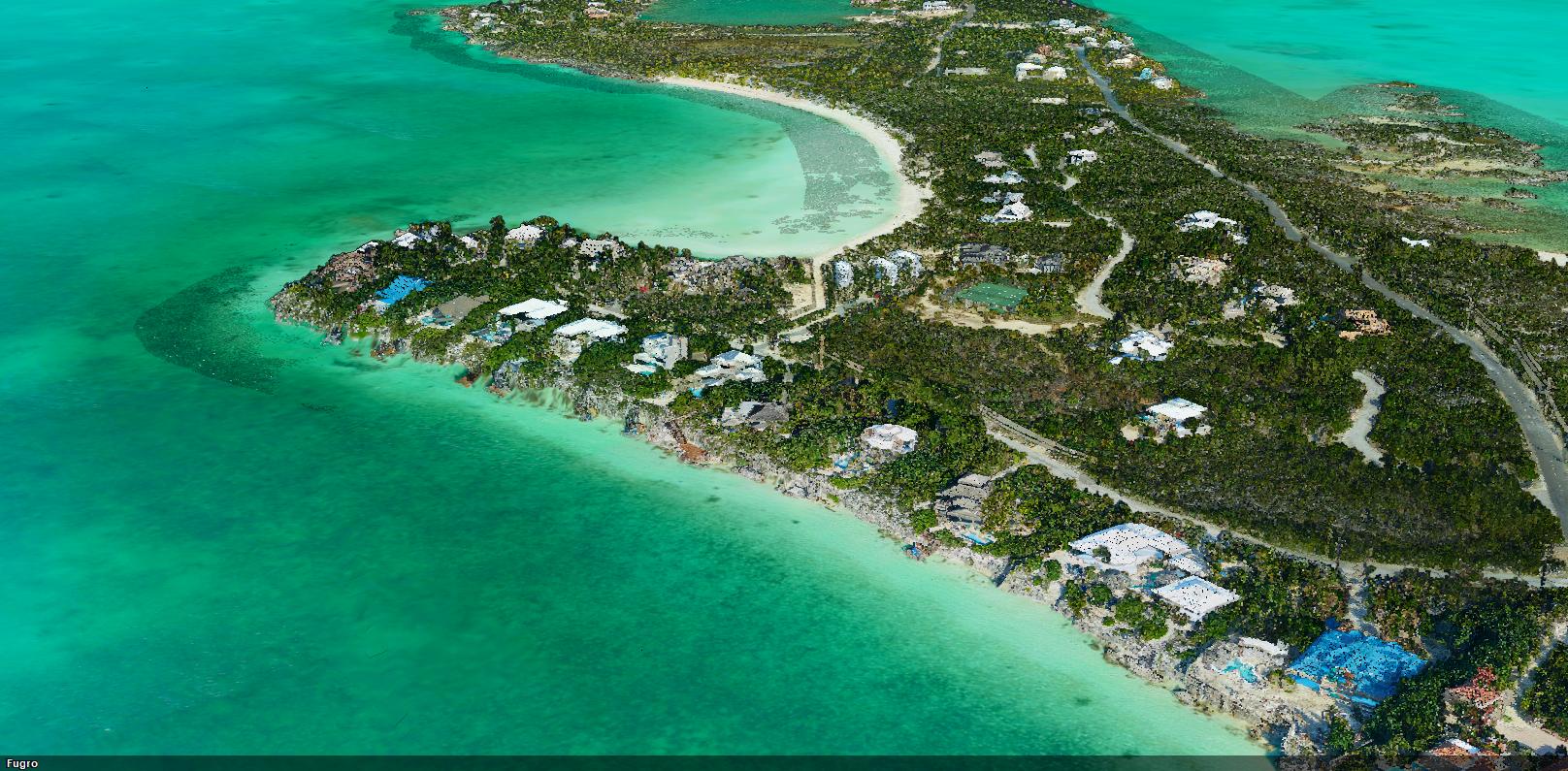
Fugro to update Cayman Islands hydrography for UKHO with carbon-neutral survey
The UK Hydrographic Office (UKHO) has selected Fugro to survey a 515 km2 area over the Cayman Islands in November. The project will support updated nautical charting and improved coastal zone management. To accomplish the work, Fugro will deploy their Rapid Airborne Multibeam Mapping System (RAMMS), a solution that meets International Hydrographic Organization (IHO) quality and accuracy standards, while also contributing to UKHO’s goals for carbon neutral operations.
Fugro has successfully used RAMMS on four projects for UKHO since commercialising the system in 2018. Compact and weighing only 30 kg, it is an efficient and cost-effective alternative to traditional airborne lidar bathymetry (ALB) systems. Fugro estimates that using RAMMS on the Cayman Islands project will reduce carbon emissions by 80 % compared to legacy ALB sensors. The company will apply additional carbon mitigation strategies to bring the project’s total environmental impact to ‘net zero’.
“UKHO helped inspire Fugro’s development of RAMMS by challenging industry to improve the efficiency and quality of ALB data, so we are proud to take these gains a step further with delivery of our first carbon neutral survey,”
said Edward Saade, President of Fugro in the US. “We look forward to celebrating the results of this collaboration in the months to come and we thank UKHO for their leadership and partnership in moving the hydrographic community forward toward a more sustainable future.”
Ashtead Technology starts new growth chapter after successful IPO
 Ashtead Technology has announced that it has secured strong support from new institutional investors and will become a publicly listed company on Tuesday 23 November when its shares begin trading on the London Stock Exchange’s Alternative Investment Market (AIM). Current owners Buckthorn and APICORP will remain significant shareholders in the business.
The IPO marks the latest stage in the growth journey of the Aberdeen-headquartered company, which provides subsea equipment rental solutions, advanced technologies and support services to the global offshore energy sector.
Over the past four years, Ashtead Technology has expanded its operations with five acquisitions which have helped drive strategic growth through geographic expansion and enhanced product and service offerings across its three service lines – survey and robotics, mechanical solutions and asset integrity.
So far this year, Ashtead Technology has invested £8 million in new subsea equipment and technology to expand its extensive equipment rental fleet. It has also increased its workforce by 34 taking employee headcount to 204.
The company is experiencing strong momentum across its end markets, with increasing customer activity helping to drive revenue growth of approximately 25% in the six months to 30 June 2021 compared to the first half of 2020. It has continued to win new contracts for offshore wind developments and recently secured a series of awards to support the construction and installation of the Neart na Gaoithe (NnG) offshore windfarm, in the Firth of Forth. The offshore renewables energy market now accounts for 30% of Ashtead Technology’s revenue.
Three highly experienced Non-Executive Directors have been appointed to the Group’s Board, with Bill Shannon joining as Independent Non-Executive Chair, and Thomas Thomsen and Tony Durrant as Independent Non-Executive Directors.
Allan Pirie, Ashtead Technology’s CEO, said:
“This development marks another exciting milestone in the evolution of Ashtead Technology. As a newly listed company, we plan to continue to grow and strengthen our core business in subsea technology rental and solutions both organically and through acquisition to further broaden our range of complementary equipment and services and expand our geographic presence.
“Our IPO will allow us to continue supporting the energy transition and capitalise on the significant expected increase in expenditure in the global offshore wind market, while maintaining Ashtead Technology’s position as a leading independent subsea equipment rental business.
“We are delighted to welcome our new shareholders in Ashtead Technology after receiving an excellent reception during our IPO. This is clear recognition of the progress we have made building the business in recent years and I would like to thank our hardworking people and current shareholders for their support and dedication throughout.
"I’m also very pleased to be welcoming Bill, Thomas and Tony to the Board. They bring high calibre public company and energy sector experience that will be invaluable as we seek to deliver our growth ambitions for our existing and our new shareholders.”

British Antarctic Survey selects DriX USV to enhance its scientific capabilities
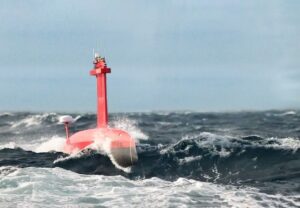
The British Antarctic Survey (BAS), a world-leading centre for polar science and operations, adds iXblue DriX Uncrewed Surface Vessel (USV) to its advanced robotic survey means. Deployed from polar research stations and from the British polar research ship RRS Sir David Attenborough, the DriX USV will help BAS conduct multi-disciplinary sciences such as surveying the impact of ocean currents on melting ice flow or mapping the seabed in the polar regions.
A versatile platform able to deploy various sensors with multiple missions’ capabilities, the DriX USV will be equipped with CDT, ACDP, MBES and MetOcean sensors and will help BAS capture data from the extreme polar environments.Pierre Dutrieux, Ocean and Ice Research Scientist at BAS, explains:
“DriX offers a mix of excellent sea-keeping and mission endurance to observe treacherous near-glacier ocean and seabed processes repeatedly with high data accuracy, opening new perspectives for polar discoveries. We would like to thank the British Antarctic Survey for trusting our DriX USV as they turn to unmanned systems for their cutting-edge scientific operations in the challenging environments of polar regions”
Regis Blomme, Sales Director at iXblue comments.
“We’re very proud to have been selected by such a leading-edge research institute and it is an honor for iXblue to be part of the BAS ocean exploration operations.”

UTEC deploys Sonardyne’s Fusion 2 to support offshore construction in Australia
Combined long baseline (LBL) acoustic positioning and inertial navigation system (INS) software from energy technology company, Sonardyne, has helped to support the latest phase of an offshore project northwest Australia.
The project is the first full use of Sonardyne’s Fusion 2 software and associated 6 ‘plus’ (6+) hardware in Australia, cementing the global adoption of the new survey and construction technology in the wake of field development projects across Europe, North and South America, the Middle East and Asia.
In this latest deployment, geo-data insights firm UTEC, the lead brand for Acteon’s Geo-services segment, used Fusion 2 software and 6+ hardware in support of full and sparse LBL operations to position and install a new subsea well gathering system being tied back to an existing facility.
“Fusion 2 vastly simplifies topside interfaces and simplifies use, because it does the job of three systems, in one,” says Edd Moller, Sonardyne’s Head of Energy. “When used with our latest generation 6+ hardware, including the industry standard Compatt 6+ transponders and vehicle-installed ROVNav 6+ transceiver, it enables more to be done with less equipment in the water. It can operate in full LBL arrays, where required, but, using the latest fast LBL mode, it can also reduce time on task. That’s because it can take advantage of the combined ranging and telemetry functionality of our 6+ hardware, which is enabled by our Wideband 3 digital signal protocol.
“Fusion 2 can also operate in sparse LBL arrays, reducing the amount of subsea hardware required during these operations, saving project costs but still with the same LBL positioning accuracies. Fusion 2 can also be operated in USBL-aided INS mode, allowing improved and fast updates of the vessels USBL system. It’s a truly flexible system for supporting any offshore construction or survey operation.”
Quote from UTEC:
Paul Barry, Country Manager – UTEC said; “Following installation of five drill centre arrays for future structure installation we were able to use the SLAM calibration routine to integrate the wider area cut-to-length arrays using fewer Compatts than we would have normally. The SLAM calibration on the cut-to-length Compatts was done in parallel with the pre-lay survey as the ROV was passing along the route, therefore saving vessel time and reducing the carbon footprint of the project.
Using various combinations of Sparse LBL aided INS and full LBL aided INS a total of 29 structures were installed. The ROV was docked onto the structures and the much faster and smoother aided INS position updates made for efficient structure installation operations.
Our successful, and continuing, use of the system was built on the comprehensive training in Fusion 2 and 6+ of our field personnel by Sonardyne and the supply of the Compatts and ROVNAV’s from Seatronics, the lead brand for Acteon’s Electronics and Tooling segment. The Seatronics supply required them to upgrade their Compatt and ROVNAV 6’s to 6+ functionality plus perform rigorous pre-mob testing.
UTEC’s use of Fusion 2 and 6+ hardware to generate vessel time-savings on this project is just one example of UTEC’s objective to safely manage the introduction of new technologies to benefit our clients on future projects around the world.
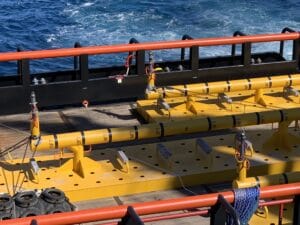
Image Caption: UTEC have become the first operator to fully deploy Sonardyne’s Fusion 2 software and associated 6 ‘plus’ (6+) hardware offshore Australia.
Teledyne Marine strengthens its Product Management team
Teledyne Marine are pleased to announce the appointment of Pim Kuus to the newly created role of Senior Hydrographer & Product Manager for Teledyne RESON’s market leading echosounders.
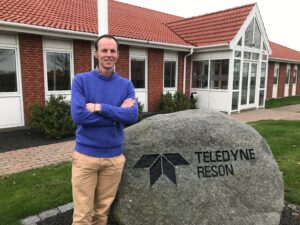
Based out of the UK, Pim is well known in the industry and rejoins Teledyne Marine having previously spent seven years working for Teledyne RESON as a hydrographic specialist, site engineering manager and global training manager. Having spent the past two years working as a Project Surveyor for Fugro in Aberdeen, Pim also has valuable overseas experience working for Van Oord, Rijkswaterstaat, C&C Technologies (now Oceaneering) and for Geological Survey of Canada (GSC). With a BSc in Geomatics from NHL Stenden University, Pim attended graduate school at the University of New Brunswick, where he studied under the renowned multibeam system expert, Dr. John Hughes Clarke, earning an MSc.Eng. in Geodesy and Geomatics Engineering in 2008.
“As the Hydrographic Market continues to evolve, Teledyne Marine are focused on developing new solutions to continue being ahead, enhance our products and adapt to emerging needs.” Said Tim Jensen, VP of Products & Technology for Teledyne Marine’s Imaging & Instruments team in Europe. “With a number of key developments ongoing related to software integration, signal processing, artificial intelligence and machine learning, this is a great time to strengthen the team by having Pim Kuus joining. We will greatly benefit by having a senior hydrographer of Pim’s caliber joining us and help us bring our multibeam roadmap forward. With a strong combination of research and academic skills combined with practical experience from the industry Pim has exceptionally good insight to the industry and will help us adapt to changing requirements, harness the latest technologies and bring ever better solutions to the maritime domain.”
Pim looks forward to joining Teledyne Marine from early November and engaging once more with users around the world.
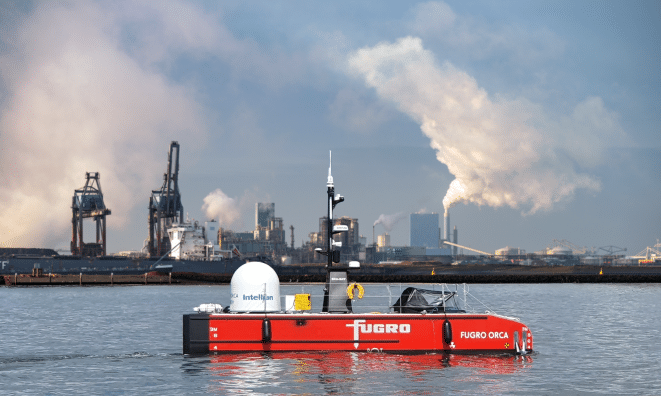
Fugro launches its new generation of uncrewed surface vessels in the Netherlands
Fugro’s Blue Essence, an offshore certified uncrewed surface vessel (USV) with an electric remotely operated vehicle (eROV), will begin its first project in the Netherlands. During operations the vessel is controlled from an onshore remote operations centre (ROC) via a satellite connection and will be used for the inspection of offshore assets, construction support services, and hydrographic and geophysical surveys.
USVs play an important role in the future of the maritime sector by improving safety, reducing carbon emissions, and delivering data more efficiently. USV operations remove personnel from high-risk offshore environments to an onshore ROC and reduce carbon footprint by 95 % when compared to traditional survey methods. Cloud-based data processing allows near real-time data delivery, leading to faster and more informed decision making.
René de Vries, Harbour Master of the Rotterdam Port Authority, said:
“We welcome this special vessel in our port. It’s the first time a remotely controlled uncrewed vessel will go to the North Sea from the port of Rotterdam to carry out a project without any personnel on board. We are proud that this project will be executed safely due to the careful preparation of all parties involved. We expect the development of digitalisation in the shipping sector will improve the safety and accessibility of the Rotterdam port.”
Erik-Jan Bijvank, Group Director Europe and Africa at Fugro, said:
“Fugro is a leader in the operation of USVs. Since 2020, Fugro has been deploying its Blue Shadow USV fleet for medium- to large-scale hydrographic survey applications. Recently, Fugro’s first Blue Essence has completed its first remote inspection, in Asia Pacific. I am excited that we now also have this newest generation of USVs available for European clients. Over the coming years, Fugro will further expand its fleet of USVs for safer, more sustainable solutions for marine operations.”

SUT’S Gwyn Griffiths Underwater Robotics Award Winner announced: Nominations now open for 2022
Operator demand was what stimulated Aleksandra Tomaszek, the winner of the inaugural Society for Underwater Technology (SUT) Gwyn Griffiths Underwater Robotics Award 2021, to become interested in robotics.
The inaugural award received high-calibre international nominations, with Aleksandra Tomaszek, COO and Co-Founder of Aberdeen-based 1CSI selected as the 2021 winner
Gwyn Griffiths MBE, a Past President of the SUT explained the judges’ selection:
“Aleksandra's achievements, drive and business acumen make her a most worthy winner. What stands out is her strong background in offshore project engineering and management, coupled with a mind tuned to the sometimes elusive combination of technology and business innovation.
“Those personal attributes led her to the design, development and introduction of the revolutionary TIAMAT ROV-mounted ultrasonic testing tool to meet client needs, with a vision to change the face of subsea ultrasonic inspection: a truly inspirational winner!”

Aleksandra Tomaszek
Nominations for the 2022 Gwyn Griffiths Underwater Robotics Award are now sought with full details at www.sut.org/gwyn-griffiths-underwater-robotics-award-ggura/. The award recognises people in the early to mid-stages of their career (and under 40 years old) who have made outstanding contributions to their field in underwater robotics. The award may be for industry/commercial, research and/or creative activity in underwater robotics. The winner receives £500, a certificate and an engraved award.
About the 2021 winner and her interest in robotics
Aleksandra Tomaszek, who at 1CSI is responsible for leading the company’s business operations globally, executing its business strategy and ensuring operational excellence, explained how her interest in robotics was stimulated:
“Following time with Balmoral Offshore Engineering overseeing the design and manufacture of deep-water products; I then spent three years at Oceaneering where my role involved the worldwide deployment of leading-edge subsea inspection technology using remote vehicles, it was where I met my business partner Matthew Kennedy - who developed a subsea scanner in 2009. I found my time there to be fascinating and exciting – it drew me in and made me wish to develop more methodical and effective approaches to the assessment of underwater asses.
“We were just finishing a project when the operator in question approached us looking for an inspection solution for another of their assets. At the time there was nothing that could be done with the existing technology. That made me think: ‘What if we had a clean sheet of paper, time and the resources required? How amazing it would be to create something new!’
“The opportunity arrived when we left Oceaneering and set up 1CSI Ltd in early 2017. Driven by operator demand and the desire to create applicational solutions we sought and received government grant funding to design and develop the TIAMAT™

Ocean Infinity to deliver a zero-emissions marine propulsion system
UK Government backed partnership programme for a ground-breaking
Ammonia based fuel cell system for Armada fleet
Ocean Infinity, the marine robotics company is pleased to announce it is a winner of The Clean Maritime Demonstration Competition, enabling the Company and its partners to build a Marine Propulsion Test facility, with an integrated Ammonia Marine Propulsion System (AMPS). The test facility will demonstrate clean-fuelled technology eventually capable of powering Ocean Infinity’s Armada fleet, using an innovative ammonia based fuel cell system.
The Clean Maritime Demonstration Competition is funded by the Department for Transport, with Innovate UK acting as delivery partner. With Ocean Infinity acting as lead partner, the company is combining forces with UK-leading experts in clean fuel cell technology; maritime logistics; deployment and operation of remote and autonomous technology; and the development of operational regulations. The project team consists of an industry leading operator, Oxford Green Innotech, the University of Oxford and the University of Southampton’s Marine and Maritime Institute.
Currently, most vessels use Green House Gas intensive internal combustion power systems. Directly targeting key elements of the UK Government’s 2050 Clean Maritime Plan, Ocean Infinity and its partners are introducing innovative new technologies and techniques for clean vessel propulsion, expecting to make a meaningful contributing towards the UK’s net-zero greenhouse gas commitment.
This project, due to deliver a zero-emissions marine propulsion system, is crucial for developing a robust understanding and thus optimisation of an AMPS, suitable for integration into Ocean Infinity’s Armada fleet and beyond.
Dan Hook, Ocean Infinity’s Chief Technology Officer, said:
“Winning The Clean Maritime Demonstration Competition is a significant step forward in the delivery of a zero emissions marine propulsion system. Working with the UK’s leading experts, we are driving forward a ground-breaking ammonia based fuel cell system, which will not only make the Armada fleet the cleanest in the world, but also has the potential to revolutionise marine propulsion systems.
I would like to extend our thanks to the Department for Transport, and Innovate UK, for instigating the competition and for their financial support of this important programme.”
Sonardyne and Wavefront demonstrate obstacle avoidance capability on UK’s test XLUUV
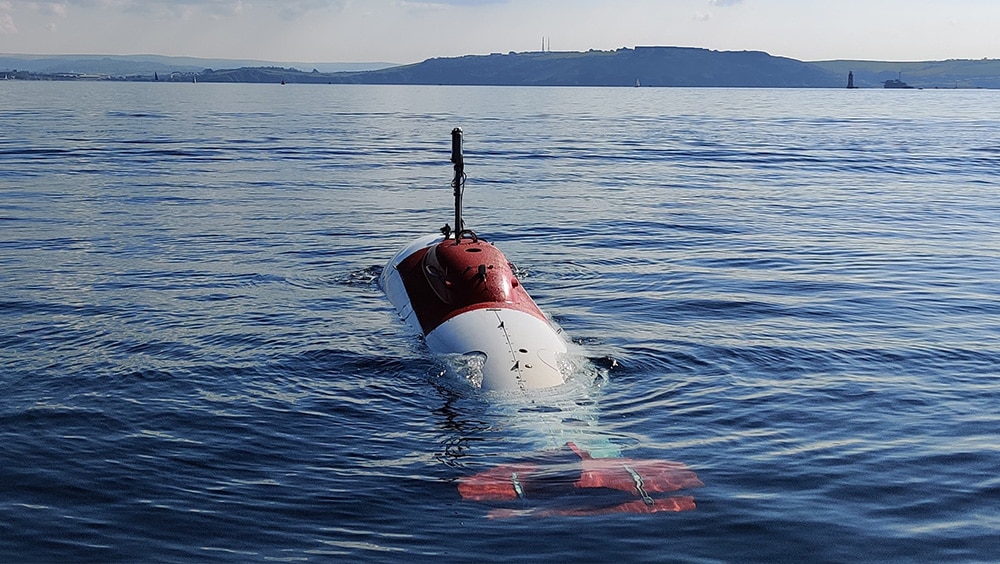
Underwater obstacle avoidance technology from maritime defence technology companies, Sonardyne and Wavefront, has been successfully demonstrated on board an extra-large, uncrewed, underwater vehicle (XLUUV) built and operated by Plymouth-based MSubs Ltd.
The demonstration of the Vigilant forward looking sonar was part of the first phase of the UK’s Defence and Security Accelerator’s (DASA) ‘Uncrewed Underwater Vehicle Testbed – Opportunity to Integrate’ competition, run jointly with the Royal Navy and the Defence Science and Technology Laboratory (Dstl).
The DASA competition is focused on testing and validating commercial-off-the-shelf technologies (COTS) sensors and payloads, like Vigilant, to help the Royal Navy understand the future roles for XLUUVS for surveillance, reconnaissance and anti-submarine warfare, and deliver new capabilities to the Royal Navy years earlier than otherwise be possible.
Vigilant, developed by Wavefront and manufactured and commercialised by Sonardyne, is a navigation and obstacle avoidance sonar for ships, uncrewed surface vessels (USVs) and underwater vehicles. It provides crews with automated long-range detection of objects in the water column, showing them where it is safe to navigate and alerting them to potential underwater dangers that could result in a collision or grounding.
The system has two operating modes. In 3D mode, Vigilant produces accurate 3D bathymetry and colour-coded depth imagery out to 600 m and to depths down to 100 m. In Sonar mode, Vigilant processes the intensity of the acoustic data to extract long-range positional data out to 1.5 km and over a 120-degree field of view. The sonar returns are used to generate alerts highlighting the presence of a navigationally relevant obstacle.
For the trial, the system’s sonar projector and receiver array were mounted in the bow of the 9 m-long MSubs’ S201 XLUUV. At just 31 cm-wide and weighing only 14 kg in air, Vigilant is easy to retrofit on a wide range of platforms including ships, USVs or, as in this case, an XLUUV.
As part of the demonstration, the XLUUV was programmed to travel beyond the breakwater outside Plymouth sound. Vigilant was used to create a bathymetric map that was used by the XLUUV to navigate. The data was also overlaid over existing charts of the area, demonstrating the higher resolution provided by Vigilant.
Ioseba Tena, Head of Defence at Sonardyne, said: “We’re delighted to be playing a role in helping the Royal Navy and programme partners to test and evaluate technologies that will help the UK stay ahead of her adversaries in the underwater battlespace.
“Seaborne collision avoidance is a vital consideration for autonomous and uncrewed naval platforms. Vigilant can be integrated into these ocean robots to provide essential information to autopilots and command and control systems, to aid safe navigation and manoeuvres around hazardous obstacles.”
Bret Phaneuff, Managing Director at MSubs, said:
“The data from Vigilant is truly impressive and transformative. It provides our XLUUV with instant situational awareness, which will help it avoid obstacles and, with some further integration, help optimise navigation trajectories to improve our performance and increase our endurance.”
Image Caption: The MSubs S201 XLUUV is being trialled by the UK’s Royal Navy to explore the potential capabilities of large uncrewed underwater vehicles for its future missions.
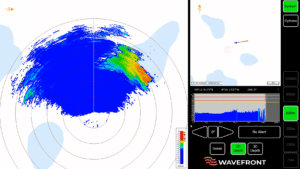
Image Caption: 50 m deep, 16 km south of Plymouth, the vehicle can be seen navigating around an area of shallow water to the north.