
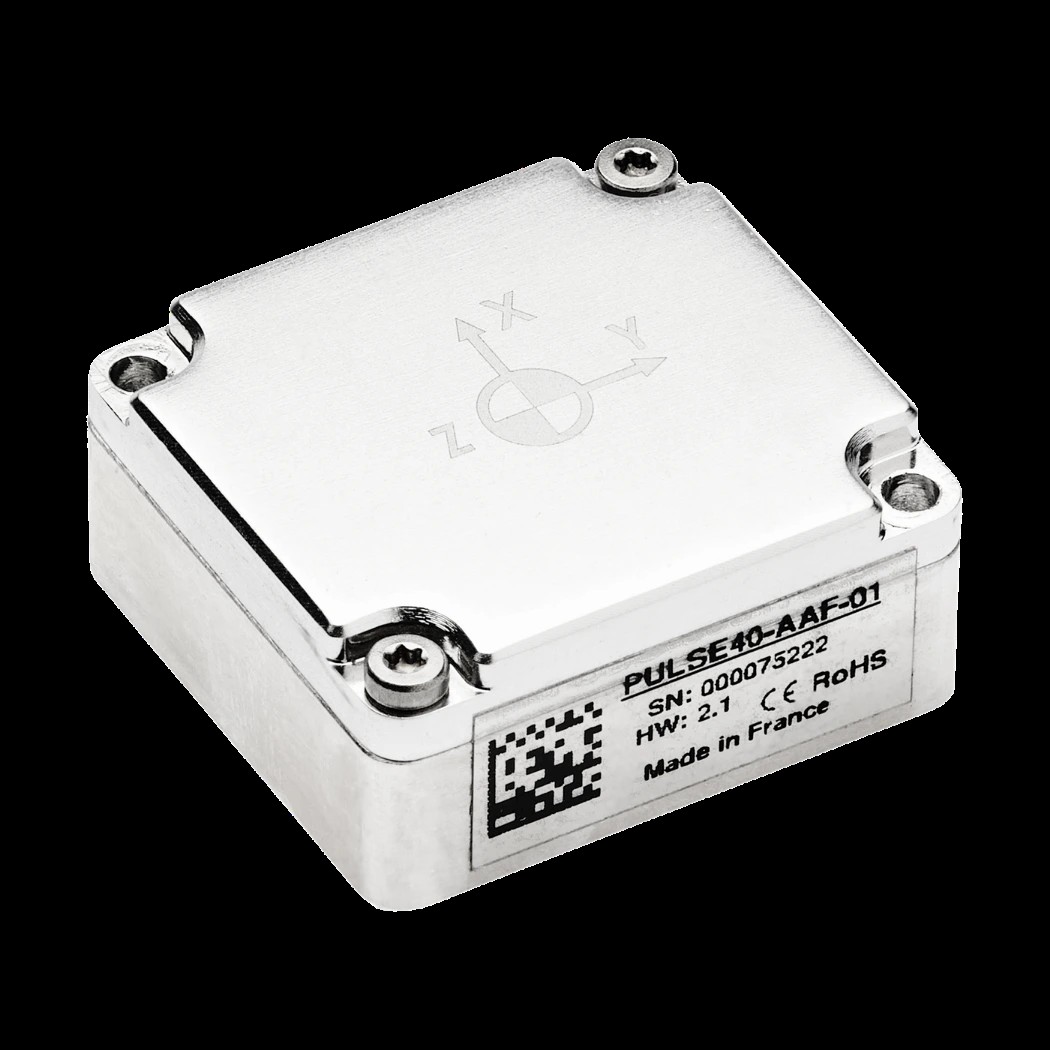
SBG Systems launches the new Pulse-40 OEM with tactical-grade performance, enhanced resilience, and built-in vibration intelligence
The next-generation Pulse-40 OEM preserves its industry-leading SWaP characteristics while delivering improved inertial performance, enhanced vibration and EMC resilience, a ±4000°/s gyroscope range, integrated magnetometers, and real-time vibration spectrum monitoring up to 8 kHz.
SBG Systems today announced the launch of the new Pulse-40 OEM, the latest generation of its miniature tactical-grade Inertial Measurement Unit (IMU). Built on the success of the original Pulse-40, the new model delivers significant improvements in performance, environmental robustness, manufacturing scalability, and integrated vibration spectrum monitoring while preserving the compact size, low weight, ultra-low power consumption, and seamless integration capabilities that have made the Pulse-40 a trusted solution for demanding navigation, stabilization, and guidance applications.
Designed for engineers who require uncompromising inertial performance in space-constrained systems, the version 2 of the Pulse-40 OEM maintains full form and function compatibility with existing Pulse-40 integrations, allowing customers to upgrade to the latest generation with minimal system redesign.
"The defense market is increasingly looking for navigation and stabilization solutions that fit into smaller platforms without compromising performance," said Gaël Bielecki, Business Development Manager – Defense at SBG Systems. "The new Pulse-40 OEM delivers exactly that combination. Its unique blend of tactical-grade performance, vibration resilience, low SWaP, and integrated vibration monitoring makes it particularly well suited for guided rockets, precision-guided glide bombs, loitering munitions, and next-generation optronic systems operating in demanding environments."
Preserving the Benefits that made Pulse-40 Successful.
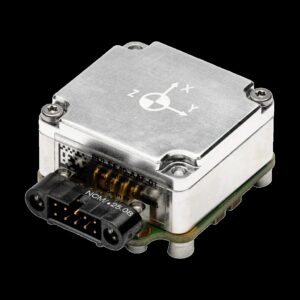
The new version of Pulse-40 OEM retains the core strengths that established the Pulse-40 as one of the industry's most compact tactical-grade IMUs.
With dimensions of only 30×28×13.3 mm, a weight of just 19 grams, and typical power consumption of only 0.3 W, the Pulse-40 OEM continues to set the benchmark for Size, Weight, Power, and Cost (SWaP-C) efficiency.
The new generation also preserves the architecture that made Pulse-40 unique, including:
• Tactical-grade inertial performance in an OEM form factor
• Ultra-low-noise MEMS sensing
• Continuous Built-In Test (CBIT) capabilities
• High-integrity redundant sensor cluster architecture
• High data output rates up to 2 kHz and advanced synchronization capabilities
These characteristics enable system designers to integrate high-end inertial sensing into platforms where every gram, millimeter, and watt matter.
Higher Performance for Demanding Applications
Pulse-40 OEM introduces multiple enhancements to gyroscope performance, including improved bias stability, improved long-term bias repeatability, and enhanced scale factor accuracy. These improvements deliver greater measurement of precision and consistency across a wide range of operating conditions.
The IMU also introduces a new ±4000°/s gyroscope range, doubling the maximum angular rate supported by previous high-range Pulse-40 variants. This expanded dynamic range enables accurate measurement of fast rotational motion in demanding applications such as guided munitions while maintaining the performance expected from a tactical-grade sensor.
To further expand functionality, Pulse-40 OEM now integrates three-axis magnetometers, providing a complete 9-DoF sensing solution within the same compact footprint.
Faster Measurements with Ultra-Low Latency
Modern guidance, stabilization, and control systems increasingly depend on low-latency sensor data.
The new Pulse-40 OEM introduces an optimized processing architecture capable of delivering motion-to-output latency as low as 1.5 milliseconds, helping engineers reduce control-loop delays and improve overall system responsiveness. Combined with output rates up to 2 kHz, the new architecture provides rapid access to inertial measurements for time-critical applications.
Enhanced Resilience to Real-World Conditions
Environmental resilience was a key design objective for the Pulse-40 OEM.
The new hardware architecture incorporates an integrated vibration damping system that significantly improves immunity to high-frequency vibrations. At the same time, an updated electrical design improves resistance to electromagnetic disturbances, delivering greater robustness in challenging EMC environments.
Together, these enhancements help preserve inertial performance in operating conditions where vibration and electromagnetic interference can negatively impact measurement quality and navigation accuracy.
Introducing Built-In Vibration Intelligence
One of the most innovative capabilities of the new Pulse-40 OEM is its integrated vibration monitoring technology.
Beyond providing inertial measurements, the IMU continuously analyzes the vibration environment and delivers a complete vibration spectrum from 4 Hz to 8 kHz directly from the sensor. This unique functionality gives engineers real-time insight into the mechanical environment surrounding their platform without requiring dedicated external instrumentation. Available in real time, the feature provides both raw FFT outputs and summarized vibration reports, allowing users to characterize vibration sources, accelerate integration and qualification activities, validate mechanical designs, and simplify troubleshooting throughout the system lifecycle.
"Many of our customers operate in environments where vibrations and electromagnetic disturbances can be just as challenging as achieving the required inertial performance," said Yoann Plenet, Head of Product Management at SBG Systems. "The new Pulse-40 OEM addresses both challenges. This new platform is more resilient to harsh operating conditions, and its unique vibration spectrum monitoring feature gives engineers direct insight into the vibration environment up to 8 kHz. This not only helps preserve navigation performance but also dramatically simplifies integration, testing, and troubleshooting."
Designed for Scalable Production
The new Pulse-40 OEM features a redesigned hardware platform optimized for manufacturing efficiency and production scalability.
The new design simplifies manufacturing while maintaining the performance, quality, and consistency expected from tactical-grade inertial sensors. These improvements enable SBG Systems to support larger deployment programs while continuing to provide the reliability required by mission-critical applications.
Seamless Upgrade Path for Existing Integrations
For current Pulse-40 users, transitioning to the new generation is straightforward.
Pulse-40 OEM maintains the same form factor, mechanical interfaces, and software integration philosophy as the original Pulse-40, enabling customers to benefit from improved performance and robustness while minimizing redesign effort and qualification risk.
Availability
The new Pulse-40 OEM is now available for customer evaluation and integration programs.
For additional information, visit the SBG Systems website or contact the SBG Systems sales team.

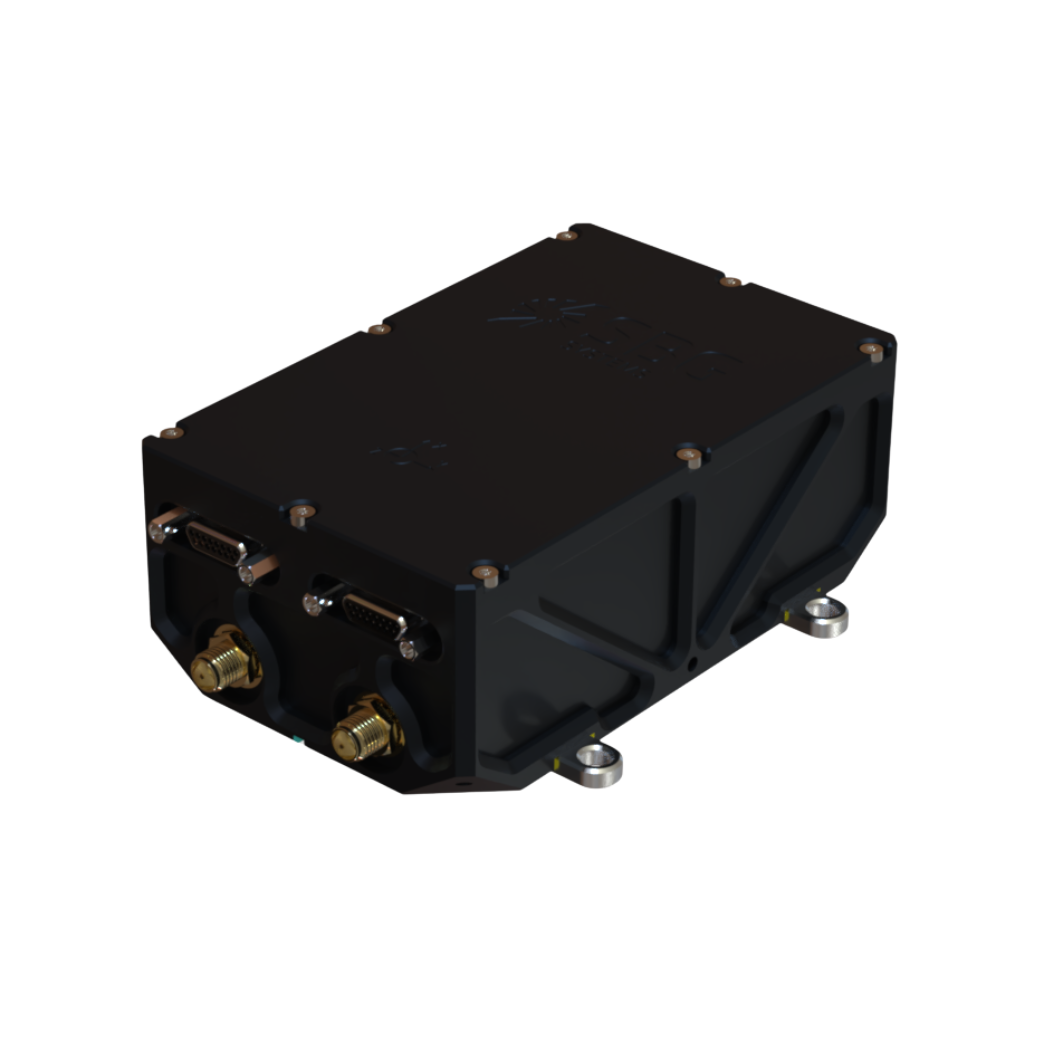
SBG Systems unveils Stellar-40, its most resilient INS
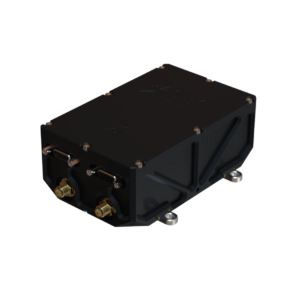 SBG Systems expands its product portfolio with the unveiling of Stellar-40, a modular and scalable inertial navigation system (INS) developed for demanding environments and mission-critical applications.
Designed for land, air, and marine platforms, Stellar-40 integrates a tactical-grade IMU, a GNSS receiver, and advanced sensor fusion algorithms within a compact and rugged enclosure. The system is developed to provide reliable navigation performance in high-vibration, high-dynamics, and electronically challenging environments.
The development of Stellar-40 focused on two main objectives, increasing resilience in harsh operational conditions and improving production scalability. To overcome the vibration sensitivity commonly encountered in defense and industrial applications, SBG Systems implemented an innovative three-level mitigation approach:
- Sensor-level isolation: dampers integrated directly at the IMU sensor level reduce vibrations at the source.
- Resonance-free enclosure: a specialized housing engineered to drastically minimize resonance and internally induced vibrations.
- Structural isolation: custom external dampers designed to isolate the unit from harsh vehicle dynamics.
This architecture supports stable system behavior in dynamic environments.
Beyond mechanical robustness, Stellar-40 addresses modern electronic warfare challenges. The system incorporates a high-performance GNSS receiver designed to actively mitigate advanced jamming and spoofing threats. When GNSS signals are degraded or unavailable, the system relies on multi-sensor fusion and dead-reckoning capabilities to maintain navigation continuity.
Positioned as the heavy-duty counterpart to Ekinox Micro, Stellar-40 introduces a revised mechanical and electronic design intended to simplify integration and manufacturing processes. The system is suited for defense programs, robotics platforms, UAVs, and autonomous systems requiring compact, scalable navigation solutions.
Kaoutar, Product Manager at SBG Systems, comments:
“Stellar-40 was developed with scalability and integration flexibility as key priorities. The design aims to support a broad range of platforms while keeping large-scale production in mind. This product brings high-end resilience against vibrations, jamming, and spoofing into a box that teams can completely trust in real-world operations."
With the introduction of Stellar-40, SBG Systems continues to expand its range of inertial navigation solutions for professional and industrial applications.
For more information about Stellar-40, visit www.sbg-systems.com/ins/stellar-40/
Applications Across Industries
Stellar-40 is designed for a wide range of applications across defense and autonomous systems. It supports platforms such as UAVs, robotics, and other autonomous vehicles that require compact and scalable navigation solutions. Its revised mechanical and electronic design simplifies integration and manufacturing, making it well suited for both large-scale production programs and demanding operational environments.
Availability
Stellar-40 will be commercially available worldwide in June this year.

Oceanbotics Introduces the SRV-8C: Compact, Capable & Cost-Effective ROV
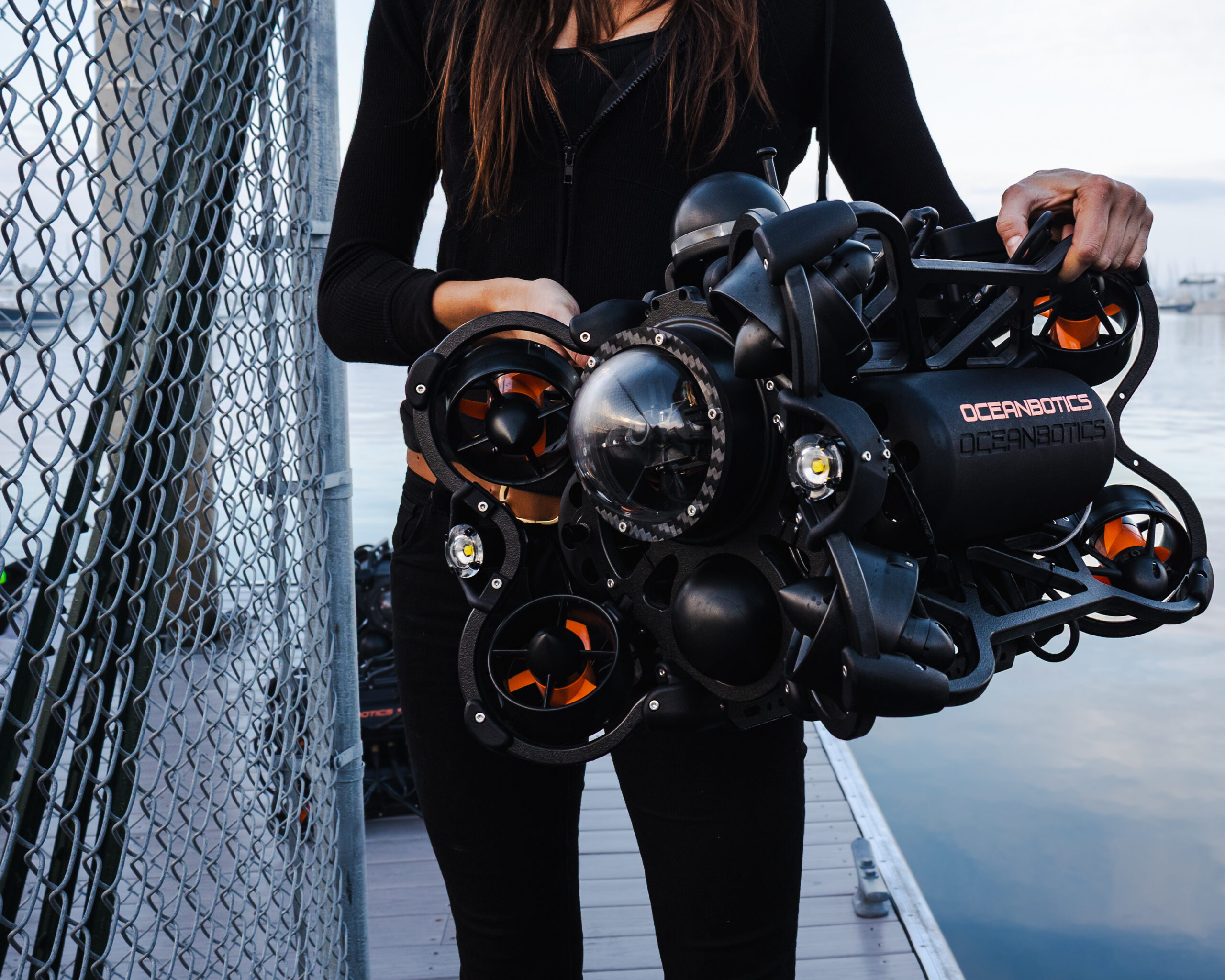
 The SRV-8C is finally here. The most compact remotely operated vehicle (ROV) in the Oceanbotics lineup, the SRV-8C delivers the same ease of operation, extreme maneuverability, and intuitive software the SRV-8 Series is known for—now in a streamlined, highly portable system.
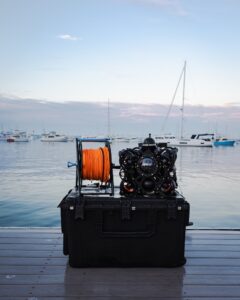
Standing at just over 15 inches tall, the SRV-8C is designed for efficiency in both size and deployment. The vehicle, tether, and essential accessories can be packed into a single rolling case, enabling rapid mobilization in the field and reducing logistical complexity compared to traditional inspection-class ROV systems.
The SRV-8C introduces a new price point for Oceanbotics—making professional-grade underwater inspection more attainable than ever. Compact yet highly capable, the system enables users to perform critical tasks such as object identification, inspection, and retrieval, all while delivering an industry-leading battery life of up to four hours.
The SRV-8C completes the SRV-8 Series, joining the SRV-8 and SRV-8X to offer a comprehensive range of solutions tailored to diverse mission requirements. Accessories are fully interchangeable across the series, allowing operators to maximize their existing investments and use the same intuitive software across all platforms.
Designed for industries where portability, efficiency, and cost are critical, the SRV-8C stands out as a robust, all-in-one solution. Its compact design, single-case portability, and accessible pricing make it a strong contender in the inspection-class ROV market.
In short, the SRV-8C is built to be the perfect fit—where performance meets practicality. Explore the SRV-8C at oceanbotics.com/SRV-8C.
Future-Proof Cable Tracking: Teledyne Marine Releases HydroPACT 440 MK2
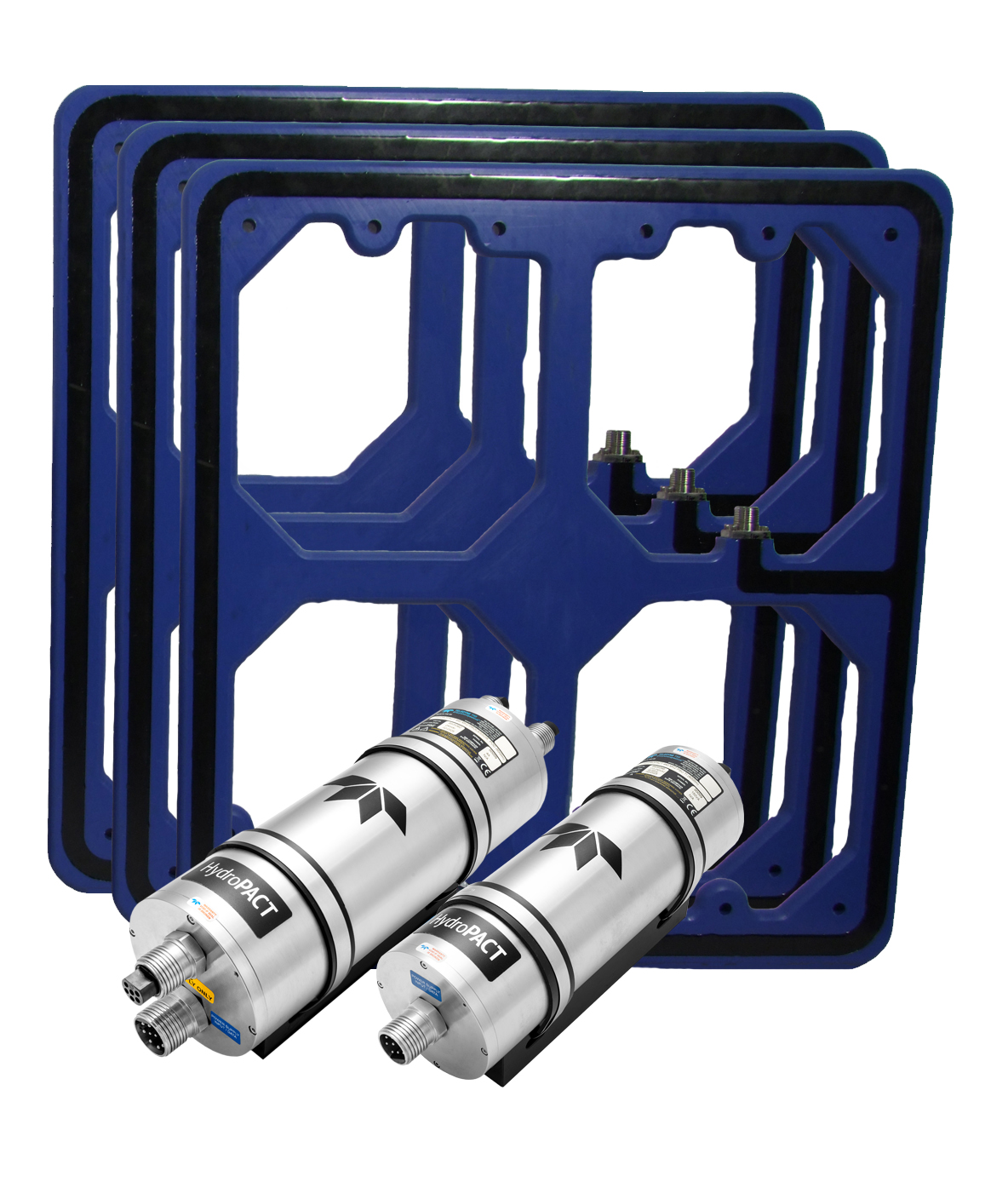
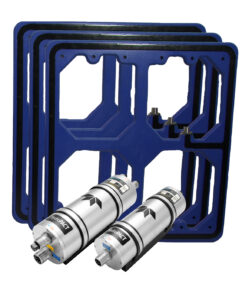 Teledyne Marine has announced the launch of the HydroPACT 440 MK2, an upgrade of its market-leading subsea pipe and cable tracking system. Building on more than 30 years of trusted offshore performance, the MK2 has been engineered as a robust, future-proof upgrade that still offers the familiar user experience and operability, yet ensures long-term continuity of supply and operation for customers across multiple sectors.
The HydroPACT 440 has been the industry standard since its introduction in the early 1990s, playing a vital role in the installation, surveying, and verification of subsea pipelines and cables. Widely used in offshore energy, telecommunications, and defence applications, the system provides reliable, real-time tracking and measurement—critical proof-of-lay data and ongoing monitoring for assets already in situ. Generations of offshore personnel are trained on its operation, making ease of use and continuity essential for this new model.
Teledyne Marine has invested in a comprehensive redesign to secure the long-term future of the product. The result is a modernised system that maintains the same operability, with the addition of new architectural features, whilst retaining the same performance and familiar user experience.
“After many months of trials and testing, we’re extremely proud to introduce the HydroPACT 440 MK2,” said Jeremy Harrison, Business Manager at Teledyne Marine. “Customers can expect the same credible, proven performance they trust—but in a refreshed design built to operate reliably for decades to come. Continuity and future-proofing were our guiding principles.”
What’s new in the HydroPACT 440 MK2?
- Titanium subsea housing – lighter, more compact, and depth rated to 6,000 meters as standard.
- For the first time the MK2 system is offered as a 24Vdc single subsea pod, reducing cost and complexity. Especially suited to the newer eROVs now appearing in the market.
- New Windows 11 topside computers – New SDC11 and RMC11 units for enhanced survey workflow.
- The DeepView operating system has been upgraded to be Windows 11 compatible – ensuring familiarity for long-standing users while supporting modern capabilities.
The HydroPACT 440 MK 2 retains the system’s hallmark flexibility, it can be deployed on a wide variety of larger ROVs and trenchers enabling operators to conduct their own surveys and verify their work, and thereby helping to reduce operational costs.
Upgrade and replacement options are also available for users of the legacy HydroPACT 440 systems.
Importantly, the HydroPACT 440 MK 2 is being launched at the same price as the previous model, reinforcing Teledyne Marine’s commitment to customer value as the product enters its next generation.
The HydroPACT 440 MK2 is available to purchase now and the system will make its official debut at Oceanology International 2026, taking place 10–12 March in London
For more info, visit: www.teledynemarine.com/
Saab’s 600th Seaeye Falcon expands DISA International fleet
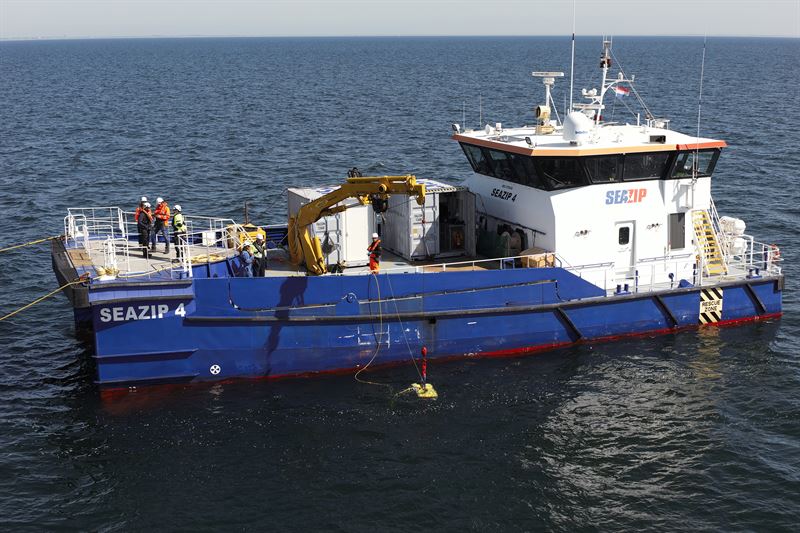
 Saab UK announces the delivery of its 600th Seaeye Falcon subsea vehicle produced in Fareham, UK. This specific Falcon was built for international subsea specialist DISA International. The latest addition joins DISA’s growing fleet of Saab Seaeye vehicles and contributes to DISA’s high-performance inspection and survey operations across Europe.
The newly delivered Falcon is already at work supporting offshore wind energy operations in Germany, where it is conducting balance of plant inspections and general visual inspections (GVI). The vehicle will soon be deployed to further projects in the Netherlands and Belgium, playing a key role in offshore inspections and measurement tasks.
This latest purchase brings DISA’s fleet of Saab Seaeye vehicles to eight, including the Panther XT Plus, Cougar, Lynx and multiple Falcons.
The Falcon’s versatility extends beyond offshore wind. DISA routinely deploys its Falcons for harbour inspections, near-shore structural surveys, and RAC (Remote Area Compliance) inspections – demonstrating the vehicle’s adaptability in a variety of working environments.
Jon Robertson, Managing Director at Saab Seaeye, said
“DISA International’s decision to continue investing in the Seaeye Falcon is a testament to the trust our customers place in the reliability, performance and flexibility of our systems. Delivering our 600th Falcon to a long-term partner like DISA International is a suitable milestone in the manufacturing of British designed and built subsea vehicles.”
Didier De Graaff, Managing Director at DISA International, said:
“The Falcon is our go-to vehicle for operations from smaller vessels. It’s compact, easy to set up, and can be launched with an onboard crane, making it ideal for rapid mobilisation. Performance-wise, we’ve always been very satisfied.”
DISA International has significantly expanded its subsea vehicle capabilities over the past six years. The addition of this 600th Falcon highlights both the organisation’s growth and the strong partnership between the two companies.
Boxfish Robotics Introduces Reliable and Easy-to-Use Hovering AUV for Marine Research
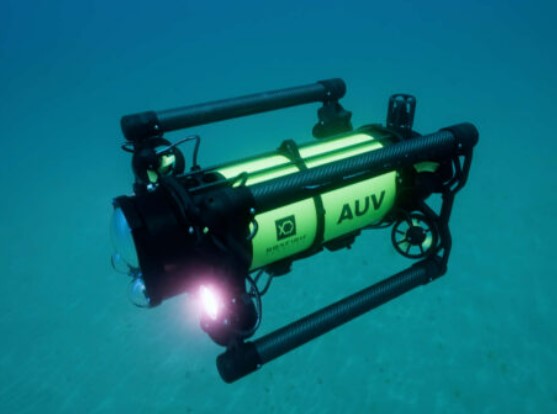
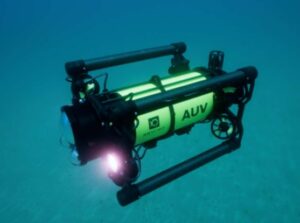 Boxfish Robotics is proud to announce the launch of their first generation of fully autonomous tetherless hovering Boxfish AUV (Hovering Autonomous Underwater Vehicle), featuring cutting-edge advancements in autonomy that set a new standard in underwater exploration.
The Boxfish AUV is equipped with Boxfish’s latest proprietary autonomy software, allowing it to operate with precision and efficiency. The easy-to-use graphical user interface, SafePath Planner, offers a high level of customisation and ensures that the AUV can navigate complex underwater environments with ease. Users can also monitor the progress of the mission and intervene if required.
The AUV supports benthic photogrammetry work, seabed mapping, coral reef and artificial coral reef monitoring, coral bleaching studies, fish studies, and invasive species studies. The Boxfish AUV operates tetherless at depths of up to 600 meters, with future enhancements planned to reach 1000 meters. The Boxfish AUV can carry a number of sensors to measure water quality and take high-quality video complemented by stereo cameras for fish census surveys.
The unique design of the Boxfish AUV sets it apart from traditional torpedo-shaped autonomous vehicles. It can manoeuvre with agility, allowing it to perform tasks such as seabed mapping, inspection, and data collection more effectively. This versatility makes it an invaluable tool for scientists, researchers, and industry professionals alike.
A combination of the Return to Surface function, proven by other Boxfish Robotics products in the field, and the Boxfish Satellite Tacker that reports the location of the AUV in case it is lost, brings peace of mind.
"We are thrilled to introduce the updated Boxfish AUV to the market. Our advanced autonomy software and innovative design provide users with a powerful and reliable solution for underwater exploration. Whether it’s for scientific research, environmental monitoring, or industrial applications, the Boxfish AUV is equipped to meet the most demanding challenges" - Craig Anderson, Co-founder and Director of Engineering at Boxfish Robotics.
The Boxfish AUV is now available for order. For more information, please visit the Boxfish Robotics website here or contact our sales team.

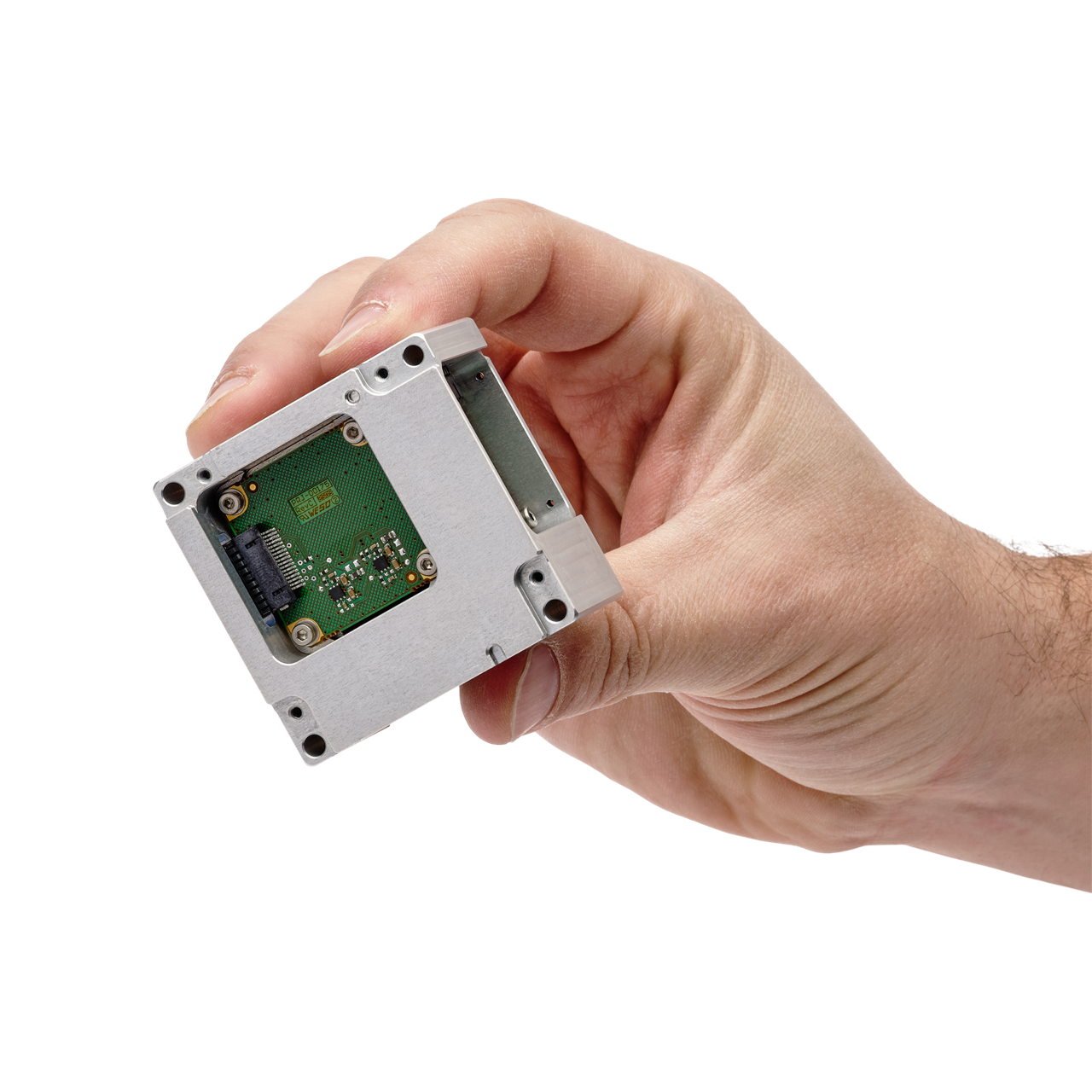
SBG Systems unveiled the world's First MEMS-based Gyrocompassing IMU at Ocean Business 2025
 SBG Systems, a global leader in high-performance Inertial Measurement Units (IMU) and Inertial Navigation Systems (INS), is proud to introduce the world’s first MEMS-based North seeking IMU, capable of operating without GNSS aiding—a breakthrough in MEMS technology.
This leap forward paves the way for future products, including AHRS and INS solutions, to further expand the possibilities of MEMS-based navigation. This innovation marks a major milestone in inertial navigation by bringing the benefits of MEMS sensors to the world of high-performance navigation and orientation.
Unprecedented Performance & Innovation
This MEMS-based IMU provides unparalleled precision, achieving a heading accuracy better than 1° secant latitude without GNSS aiding, and an INS heading accuracy better than 0.01° when fused with GNSS using SBG Systems’ state-of-the-art navigation and orientation algorithms.
Furthermore, this is a true MEMS-based gyrocompass with no moving parts, that doesn’t rely on carouseling, ensuring durability and reliability in all environments.
Key benefits of SBG Systems’ MEMS-based Gyrocompassing IMU include:
• Unmatched SWaP (Size, Weight, and Power) optimization: miniature form factor (52 x 52 x 36 mm, <150g) with low power consumption (2W), making it the most compact and efficient solution in its category.
• Volume ready: designed for high-volume production, enabling broad adoption across industries and competitive pricing.
• Robustness: no moving parts, ensuring long-term reliability even in the most demanding conditions.
• ITAR-free: for unrestricted global deployment.
Revolutionary Gyrocompass Alignment Algorithms
SBG Systems has developed cutting-edge and patent pending algorithms to provide ultra-fast gyrocompass and INS alignment in all conditions:
• Pure north-finding algorithm: capable of rapid initialization in both static and dynamic conditions down to one minute.
• Advanced GNSS/INS algorithm: takes full advantage of gyroscope performance, to provide exceptional single-antenna heading accuracy even in non-dynamic scenarios.
“With this breakthrough, we are pushing the boundaries of MEMS technology. This IMU lays the foundation for a new generation of compact, cost-effective, and high-accuracy navigation solutions for marine, autonomous systems, and georeferencing applications.” said Thibault Bonnevie, CEO of SBG Systems.
Target Markets
• Subsea applications: ideal for ROVs (Remotely Operated Vehicles) and AUVs (Autonomous Underwater Vehicles) that require precise navigation in extreme environments.
• Geospatial & marine surveying: enables high-performance single-antenna marine surveys with unparalleled accuracy, making it the perfect choice for hydrographic, dredging, and offshore operations.
First off-the-shelf solutions are planned for early 2026.
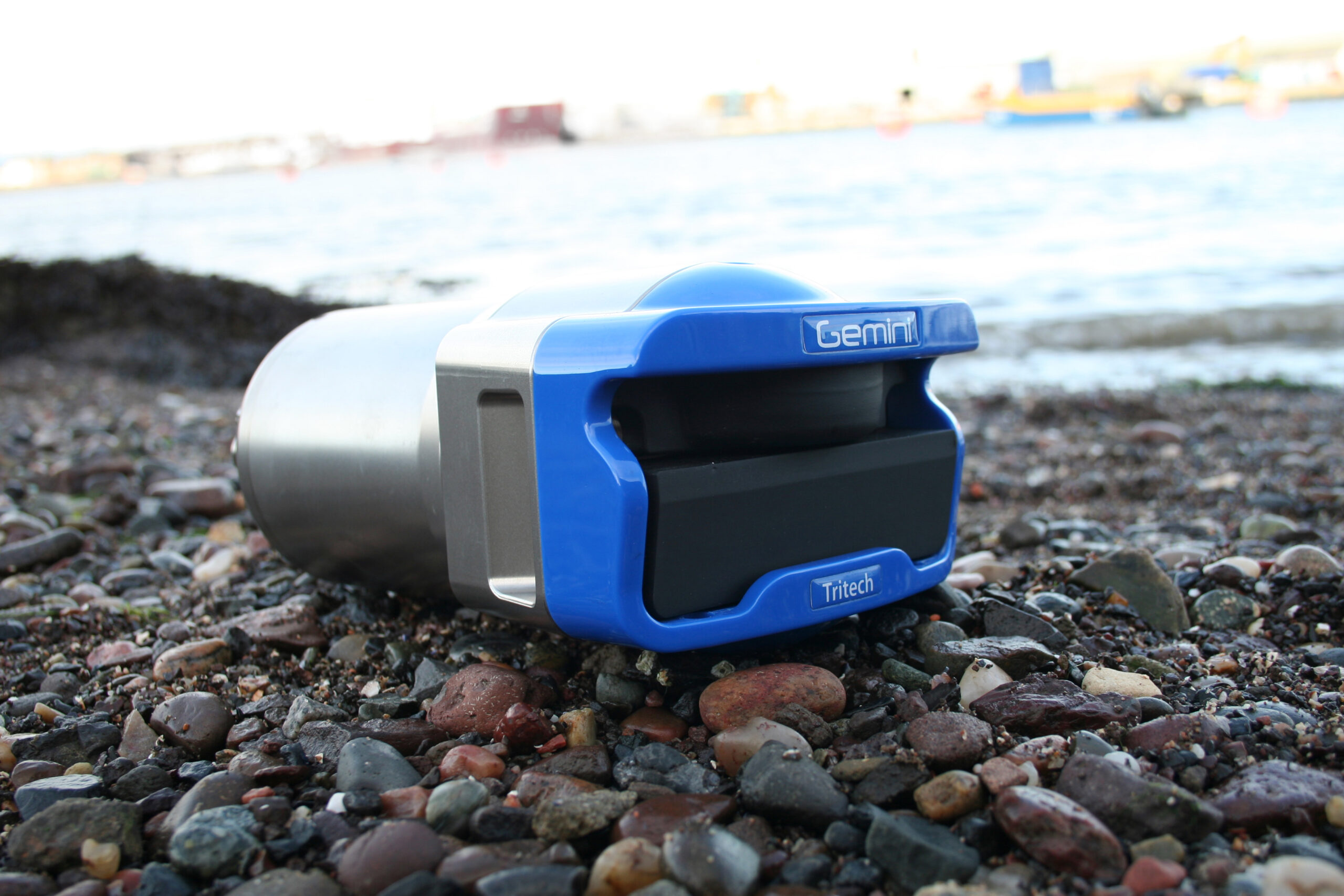
Tritech Announces Launch of New Gemini 1200id
An easy upgrade path to higher resolution imaging for work class ROVs
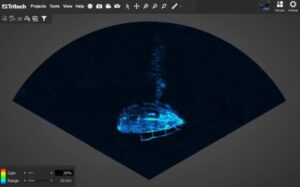
An integrated speed-of-sound sensor ensures that targets are displayed to a high degree of positional accuracy. CHIRP processing provides improved target separation over longer ranges.
The 1200id is fully compatible with Tritech’s software package, Genesis. This ensures improved user interaction and allows for control of multiple Tritech products from within one software package. Software development kits (SDKs) are also available for Windows and Linux operating systems.
Bruce Hardy, Sales and Marketing Director, commented: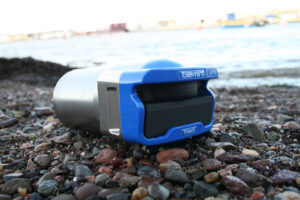 “We are really pleased to bring the new dual frequency Gemini 1200id to market. Having listened to our customers’ requests for higher definition and enhanced target resolution we believe the new 1200 kHz acoustic frequency will provide just that, along with Tritech’s reputation for quality and reliability, backed by our 3-year guarantee.”
Unrivalled Imaging Performance
The Gemini 1200id employs a completely in-house developed analogue front-end solution that incorporates fully differential receiver channels for enhanced acoustic reception. Internal electronic circuits have been optimised and where necessary additional filtering exclusively employed to minimise self-generated noise. The sonar also actively attenuates external waterborne noise from other subsea equipment in the vicinity of the sonar. These enhancements enable the Gemini 1200id to produce sonar images displaying sharp and bright acoustic returns on a noise reduced background resulting in crisp sonar images of impressive clarity.
 Asim Azad, Hardware Engineering Manager, commented:
“With its ultra-low-noise differential analogue front-end supporting a wide dynamic range optimised for sonar imaging applications, and with its ability to actively attenuate waterborne electrical noise from other subsea equipment, the Gemini 1200id provides work class ROV operators the clarity and confidence necessary for mission critical operations.”
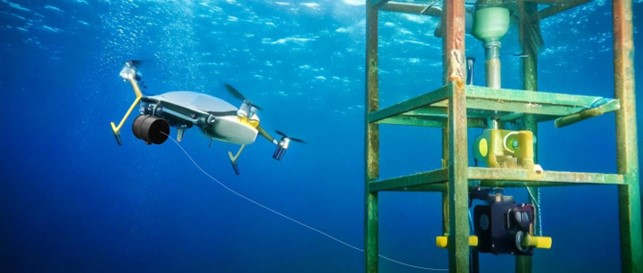
Disposable fiber-optic spools for hybrid Aerial and Underwater drones
 The RBOB-HAUV for amphibious drones and hybrid airborne and underwater applications is the latest addition to the range of airborne (UAV), land-based (UGV) and underwater (UUV) spools already offered by SEDI-ATI.
Drawing on its experience in the field of optical wire links on aerial and underwater UAVs, SEDI-ATI is offering a singleuse fiber-optic spool for amphibious UAVs: RBOB-HAUV. Ultra-compact and lightweight, it is mounted directly on the drone. It is designed for high-speed missions of up to 10 km, both in the air and deep water! It has been tested at 150 km/h in the air and 20 knots underwater.
It is particularly well suited to guiding an amphibious drone, and to transmitting huge data streams in real-time from on-board cameras and high-resolution sensors. Moreover, it's an EMI-insensitive solution, immune to Hertzian jamming. As a result, manoeuvres such as diving, getting out of the water, circling or even around obstacles are not a problem. It will be possible to access steep or hard-to-reach places. The fiber-optic cable is never a ‘leash’ on the drone and ensures permanent, real-time communication between the craft and the control station.
The spool is single use, so all you have to do is cut fiber at the end of the mission. There's no need to make the same journey back because the optical fiber is never a leash on the drone. Moreover, the fiber can be easily reconnected in the field using a simple connector kit.
The technical characteristics are the same as for the submarine reel: length from 500 meters to 10 kilometers, singlemode fiber 1310-1550 nm, ST connector, wide bandwidth for video and control transmissions.
Impact Subsea Launches the ISP360 Profiling Sonar together with IS3 Acoustic Signalling Standard
Impact Subsea, a leading manufacturer of underwater sensors, is proud to announce the launch of its newest sensor, the ISP360 Profiling Sonar with IS3 acoustic signalling technology.
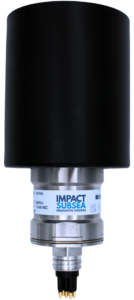
The ISP360 is a high-performance profiling sonar that sets a new standard in measurement precision and range capability.
A highly compact and power efficient 1° profiling sonar, with up to 80 meters range and a 0.35mm range accuracy. The ISP360 can be operated in profiling or imaging modes.
Acoustically the ISP360 can operate over the frequency range of 600kHz to 1,250kHz using Continuous Wave (CW), Compressed High Intensity Radar Pulse (CHIRP) or the Impact Subsea Signalling Standard (IS3). 
IS3 signalling uses advanced phase modulation and coding techniques to provide the range resolution benefits of CHIRP, but without the angular distortion inherent in CHIRP signalling. Critically IS3 also allows multiple ISP360 profilers to operate at the same frequency with significantly reduced interference. This removes the requirement for ‘ping syncing’ traditionally required for multiple mechanically scanned profilers – enabling much faster scanning capability when using multiple profilers and thus decreased survey times.
“We are excited to introduce the ISP360 Profiling Sonar to the market,” said Ben Grant, Managing Director of Impact Subsea. The ISP360 is a game-changer for underwater profiling and positioning.”
“With integrated IS3 signalling technology coupled with a highly sensitive broadband composite transducer, the ISP360 delivers unparalleled accuracy for sonar profiling with optional pitch and roll, all from a single device.”
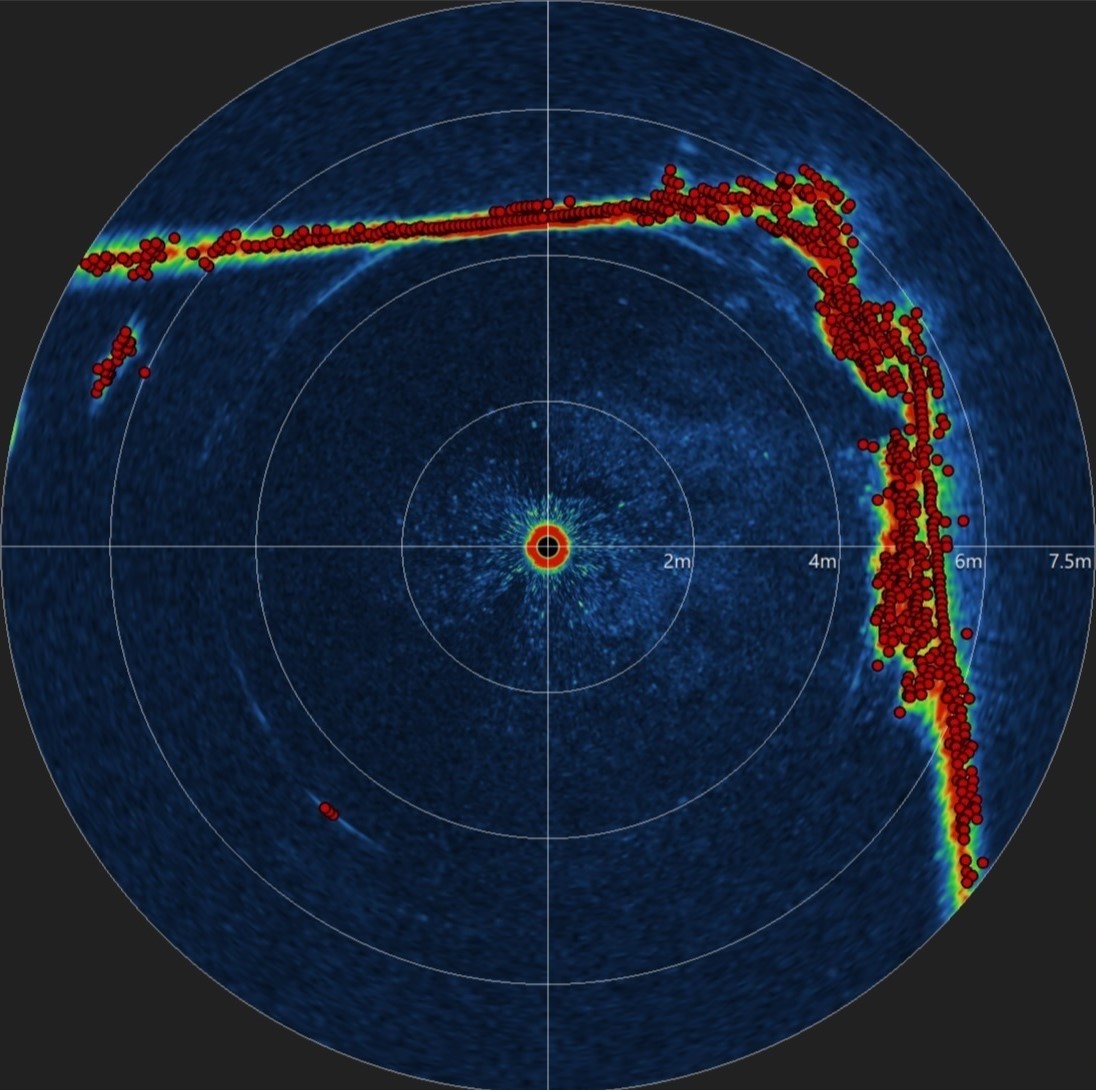
Below is example imagery and profiling data from the ISP360 Profiling Sonar:
The ISP360 offers a number of key features and benefits, including:
• 1° acoustic angular resolution
• 0.35mm range accuracy
• IS3 acoustic signalling for minimised noise between multiple profilers
• Optional integration of pitch and roll for even more flexibility and control
• Integration with seaView software for operation and data generation
• Software Development Kit for direct integration into third party systems
The ISP360 is perfect for a wide range of underwater applications, including:
• Pipeline profiling
• Trench profiling
• Positioning of a vehicle in a tank
• Internal pipe & tank profiling
• Asset positioning
• Bridge foundation survey
“The ISP360 is a valuable asset for anyone who needs to collect accurate and detailed data about the underwater environment,” said Ben Grant of Impact Subsea. “With its advanced features and versatility, we are confident that the ISP360 will quickly become the industry standard for mechanically scanned sonar profiling.”
If you're looking for a powerful, all-in-one solution for your sonar profiling needs, the ISP360 is the perfect choice.