
NOVACAVI supply Lan cable for underwater farming
NOVACAVI has recently supplied a special underwater Lan hybrid cable to be deployed on the farm experimental project called Nemo’s Garden.
This world’s first underwater cultivation system of terrestrial plants located off the coast of Noli, southwest of Genoa, Italy, consists of an array of suspended, transparent, dome-shaped greenhouses called biospheres, anchored to the bottom of the sea.
Since everything is monitored on land through cameras and sensors, this specific underwater cable will enhance this innovative system of exploring the benefits of the sea for farming.
This cable is part of the AQUANCABLE® range of special cable solutions provided by NOVACAVI to meet the most complex and various needs of marine and underwater technology activities.
Specialist in custom cable design & manufacturing for advanced technology since 1975, NOVACAVI develops any cable solutions with engineering expertise, comprehensive knowledge of materials and a high degree of manufacturing.

ACUA Ocean and HydroSurv announce intention to merge
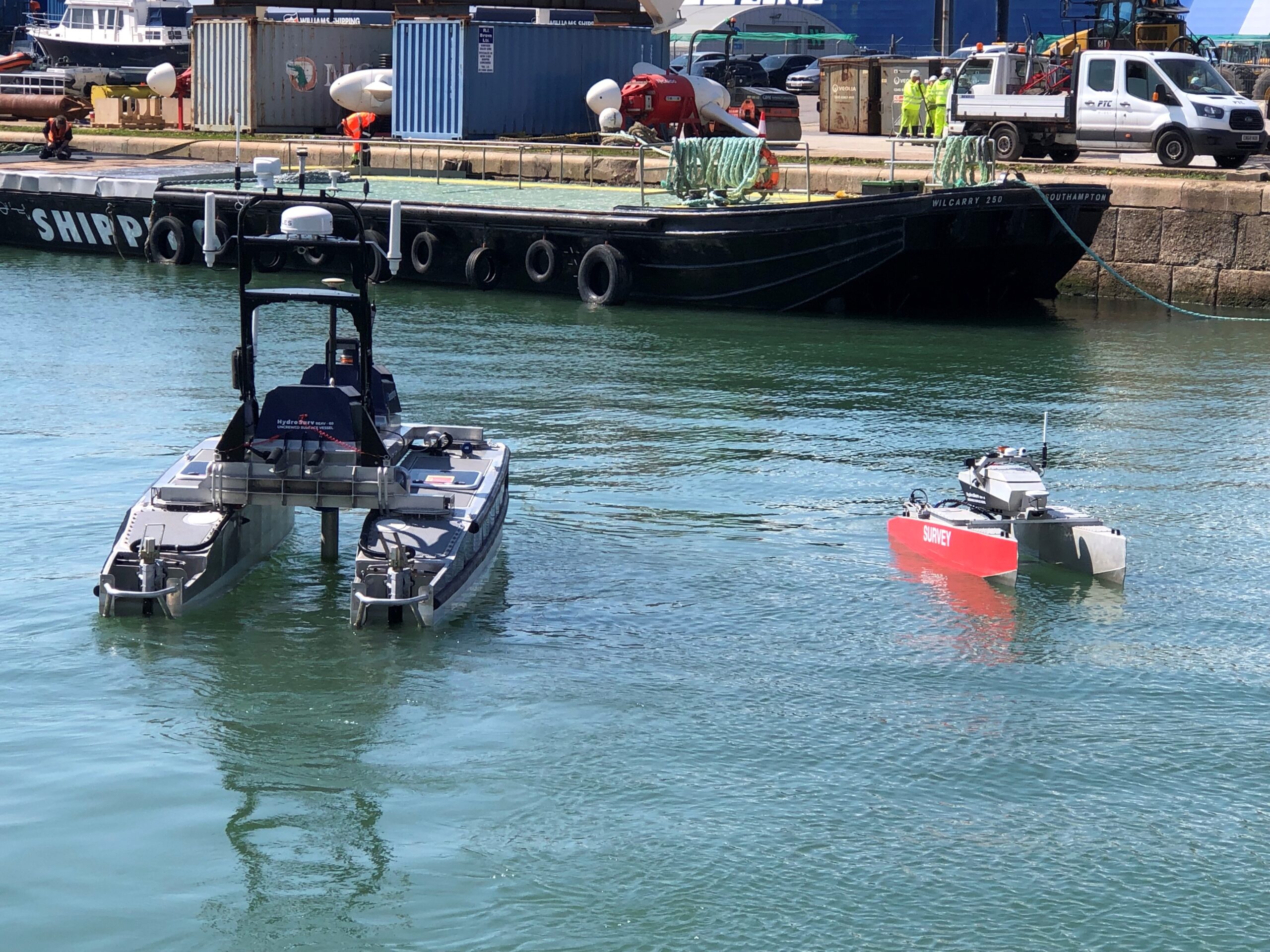
ACUA Ocean and HydroSurv, two UK-based companies specialising in maritime autonomous systems, have announced their intention to merge, combining extensive expertise in the development and operation of Uncrewed Surface Vessels (USVs) and associated technologies for marine surveying and surveillance.
The new company, to be named Blue Ocean Autonomy, will deliver turnkey solutions across a broad spectrum of capabilities, covering the inland, nearshore and offshore sectors.
David Hull, Founder and CEO of HydroSurv said: “In an evolving market, customer demand is shifting towards a comprehensive solution for trusted and certified USV systems. In response to this trend, we are excited to announce the intent to merge our two companies with a shared focus on accelerating the availability of these solutions for widespread commercial use, expanding our market presence and providing a better value offer to our customers.”
Blue Ocean Autonomy’s strategy will centre around low and zero-emission vessel operations with a strong focus on sustainability. It will leverage both companies’ technologies; HydroSurv’s commercially proven electric and battery-hybrid Rapid Environmental Assessment Vessels (REAV) and ACUA Ocean’s hydrogen-powered H-USV, being developed as part of the UK Department for Transport’s flagship Clean Maritime Demonstration Competition (CMDC) programme.
The merger will deliver a broad offering of both near-shore and long-endurance vessels, from 2.8m to 13.5m, for ocean data collection, hydrographic, geophysical and environmental survey and surveillance and monitoring of critical offshore infrastructure.
Neil Tinmouth, Founder and CEO of ACUA Ocean said: “Our emphasis has always been on what is best for our customers. This merger represents a natural progression of our vision and values with a company that is a strong cultural, as well as technological, fit. The new entity will undoubtedly be greater than the sum of its parts, establishing one of the most experienced and talented teams in marine autonomy.”
Commenting on the merger, Tom Chant MBE, CEO of the Society of Maritime Industries added: “In an increasingly competitive market, this merger represents a unique opportunity for UK SMEs to make their mark on the fast-growing autonomous vessel space. We look forward to supporting their progress through their membership of SMI and the MAS Working Group.”
MARTAC launches the Devil Ray T24, the newest Autonomous Surface Vehicle (ASV) system in their portfolio of Multi-Domain, High Performance ASVs
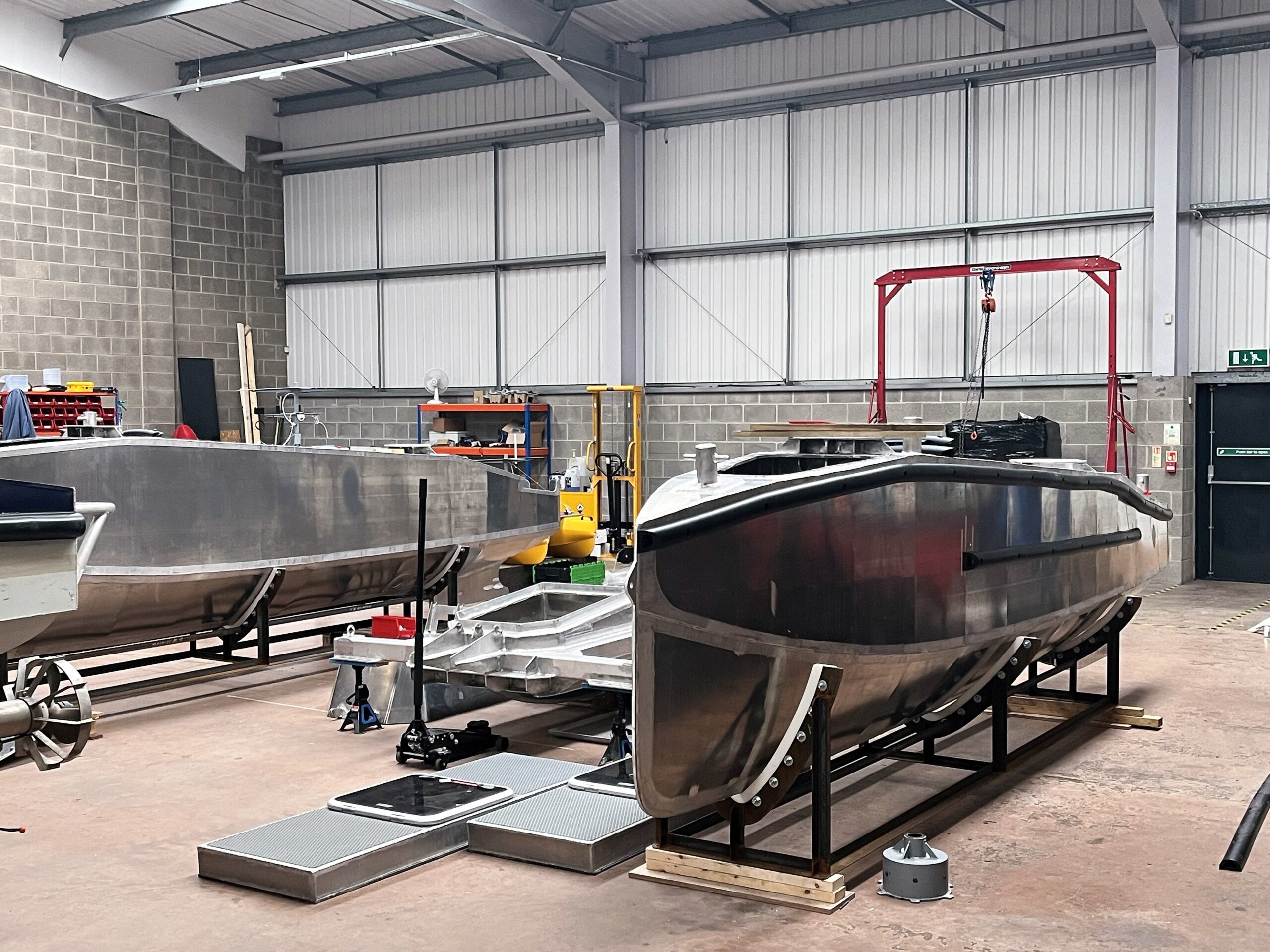
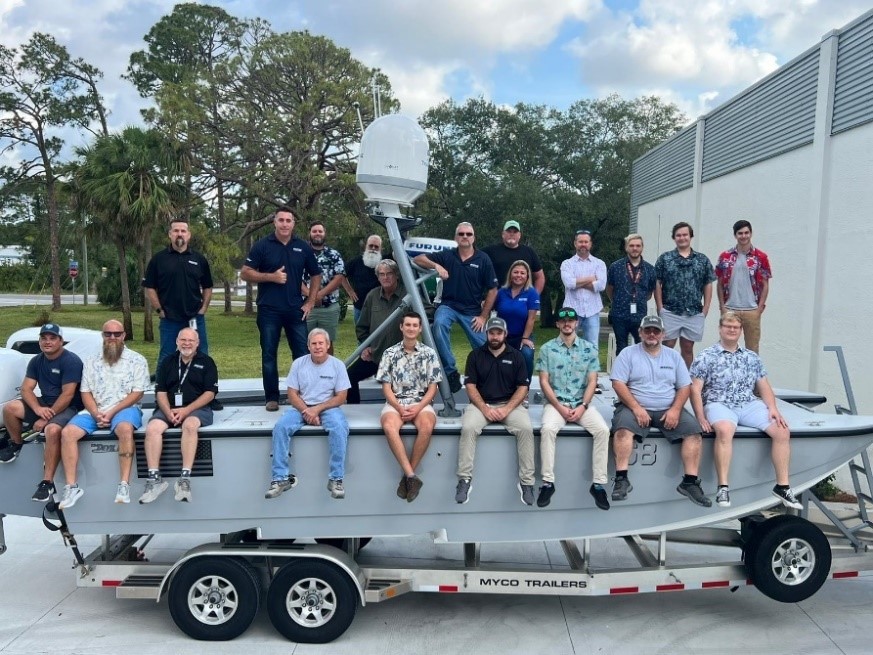
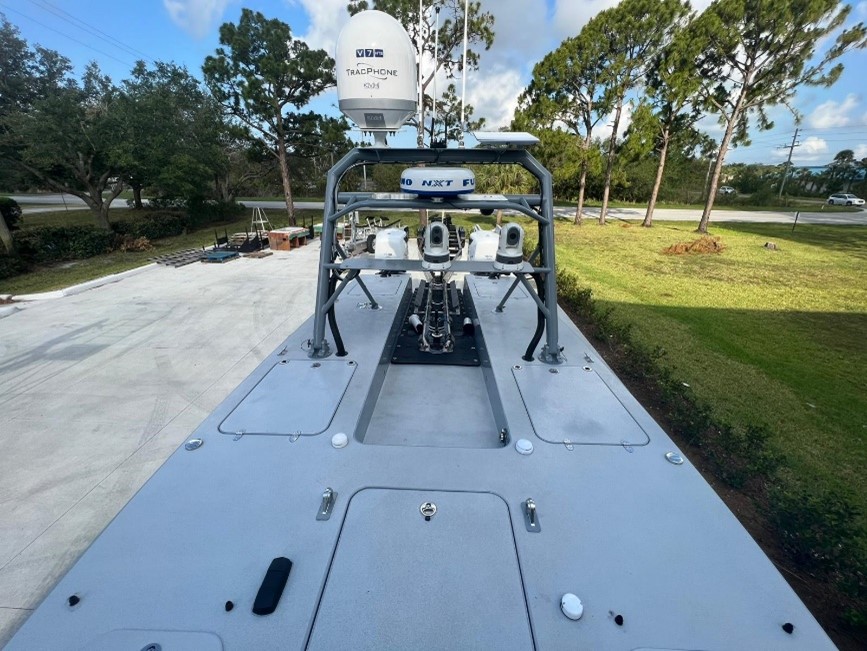
Maritime Tactical Systems, Inc. (MARTAC), an innovator in Maritime Autonomous Surface Vessels (ASVs), is proud to unveil its much-anticipated Devil Ray T24 (7m) ASV from its Devil Ray Production Facility. The base configuration Devil Ray T24 (T24) is designed as a high performance ASV capable of burst speeds up to 50 kts, open ocean cruising ranges up to 600 nautical miles, and a payload capacity up to 1,800 pounds. The T24 was designed and developed from concept to empower operators to execute missions with multiple advanced above and below-surface sensors over both line of sight and satellite datalinks. The T24’s use of advanced automation and Collision Avoidance Systems (CAS) provides the level of trust necessary to conduct missions with significantly reduced human intervention or oversight. In addition to its inherent autonomy, the T24 is built on an agile technology stack which is Interoperable and Interchangeable (I2I) allowing easy adoption of emerging Artificial Intelligence (AI) capabilities.
True to the company’s vision of designing and developing ASVs capable of operating “Beyond Human Capability” the Devil Ray T24’s rugged 10G rated high-speed hull and large deck area offers multi-domain system integration flexibility unmatched by any other unmanned platforms. The ability to easily integrate multiple payloads and communication packages complements the T24’s cross-domain capabilities. The T24 is the only ASV with native marsupial hosting capabilities with platforms such as MARTAC’s MANTAS T-series (T8/T12) ASVs, unmanned aerial vehicles (UAVs), unmanned underwater vehicles (UUVs), and remote operated vehicles (ROVs). The T24 is MARTAC’s commitment to providing its customers the finest in ruggedized, reliable, commercial-off-the-shelf (COTS) technology with interoperable architecture allowing for seamless integration of government, as well as commercial systems architectures.
Bruce Hanson, MARTAC’s CEO said “We are excited about the launch of our Devil Ray T24 with its ability to change how ASVs are utilized to augment operations and manned systems. This is our first Devil Ray ASV designed from the ground up to meet specific multi-role mission requirements. It is capable of autonomous operation at high speeds, and we will continue to advance our technology to address the needs of our military, scientific and commercial customers’ missions, and applications. MARTAC’s Devil Ray ASV series truly operate “Beyond Human Capability”.
See a short video of the Devil Ray T24 along with the Devil Ray T38 and MANTAS T12.
After exercises in Europe, MARTAC will be exhibiting the Devil Ray T24 in Kiel, Germany from June 14 – 16, 2023 leading up to the city’s annual Kiel Week festivities.
Maritime Tactical Systems Inc. is a key innovator in the development and manufacture of Autonomous Maritime Surface Vessels. MARTAC was founded in 2012 and offers a wide range of ASV solutions for the domestic and international military, scientific, and commercial markets.
The Devil Ray T24 is now available for purchase. To learn more information, please email MARTAC at [email protected]
KONGSBERG successfully completes autonomous operation of coastal cargo ship as part of EU’s AUTOSHIP project
Kongsberg Maritime has successfully demonstrated a range of remote and autonomous technologies on a cargo vessel operating off the coast of Norway.
The test cruise has been named one of the most complex autonomous journeys at sea so far.
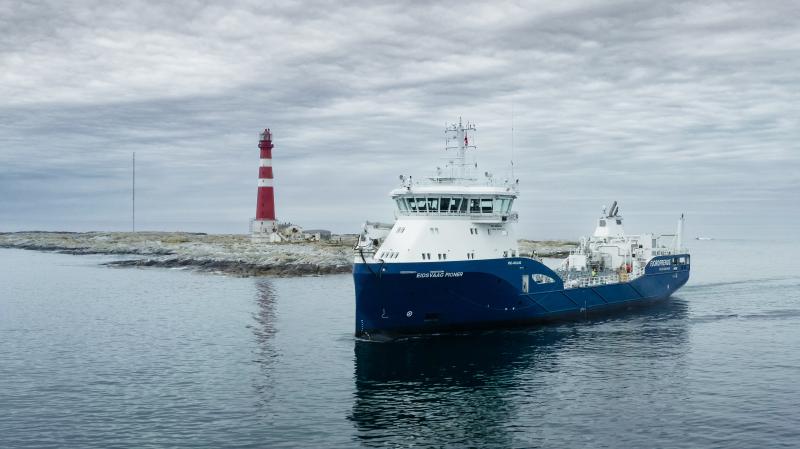
The Eidsvaag Pioner is one of the two vessels that are equipped for remote-operated and autonomous transport demonstrations for the AUTOSHIP project, which is part of Horizon 2020, an EU research programme.
Owned by the Eidsvaag shipping company, the Eidsvaag Pioner operates along the Norwegian coast and in fjord areas where it carries fish feed to ocean fish-farms.
The demonstration was carried out over 13 hours and involved the vessel completing a voyage outside the coast of Kristiansund on the northwest coast of Norway. The ship undocked from the port of Averøy, sailed to the world’s first ocean fish-farm and back to port again, a journey of about 160 nautical miles in total.
CEO of KONGSBERG, Geir Håøy, said: “This was an opportunity to show the world that remote and autonomous technologies can be successfully deployed on a general cargo vessel, carrying out a range of operational aspects of a typical voyage.
“There has been great collaboration between all partners in the AUTOSHIP project, and we have all been impressed with how the Eidsvaag Pioner performed under remote control and during autonomous sailing and docking.
“Today we have demonstrated a range of the key enabling technologies that will lead the way towards routine remote and autonomous operation in the years ahead.”
What was demonstrated
The demonstration was initiated, managed and monitored by the crew from the Kongsberg Remote Operating Centre (ROC) on land in Ålesund. It involved a mix of remote and autonomous operations during different stages of the voyage. For reasons of safety and current regulations, crew members have also been on board the ship during the test cruises.
The first part of the demonstration included automatic undocking from the quay at Averøy. The autonomous technology then took control to navigate and manoeuvre out of the harbour and further out to open sea. Here the ship navigated a route between several islands and avoided other sea traffic, before arriving at the offshore fish farm Ocean Farm 1, owned by Salmar.
Various manoeuvres were then carried out using the Dynamic Positioning (DP) system. The vessel next returned to port, again navigating open sea and congested seaways before it automatically docked again. The entire operation was monitored and occasionally controlled remotely by the shore-based captain and engineer.
During the demonstration, a number of established and new KONGSBERG technologies were deployed, and included Auto-undocking and Autodocking, Situational Awareness System, Autonomous Navigation System, Intelligent Machinery System, Connectivity & Cyber Security System, Remote Operations Centre and Dynamic Positioning. Cloud-based communication systems and advanced simulations have also been involved to test and ensure that the vessel operated safely and optimally.
About AUTOSHIP
AUTOSHIP is a four-year project that has received funding from the European Union’s Horizon 2020 research and innovation programme under Grant Agreement N°815012.
The demonstration in the North Sea has been a collaboration between a large team of people from KONGSBERG and the shipowner Eidsvaag AS, including also expertise from Norway's leading research organisation, SINTEF and the University of Strathclyde in the UK.
The AUTOSHIP project runs its demonstrations in important areas in Europe where the early use of remote control and autonomy is necessary to accelerate the transition from road to greener and safer sea transport.
The aim of the project is to test and further develop key technology linked to fully autonomous navigation systems, intelligent machinery systems, self-diagnostics, prognostics and operation scheduling, as well as communication technology enabling a prominent level of cyber security and integrating the vessels into upgraded e-infrastructure.
The second AUTOSHIP demonstration will take place on 1st June and involve a cargo barge navigating part of the inland waterway network in Wintam, Belgium.
Find out more information about the project.
SUT announces the new Mick Cook Marine Site Investigation Award
Four months ahead of the SUT’s 9th International OSIG Conference “Innovation Geotechnologies for Energy Transition” (12-14 September at Imperial College London) the Society for Underwater Technology is pleased to announce the new Mick Cook Award for Significant Contribution to Marine Site Investigation. The winner will receive a prize of £1000, a trophy and a certificate.
The SUT’s OSIG Committee (Offshore Site Investigation and Geotechnics) is one of its largest and most active committees with an impressive history of industry conferences, training, and networking events.
Mick Cook, a long-standing member and former Chair of the OSIG Committee, as well as being a Past Treasurer and Council Member of the SUT, explained the reasons behind the new SUT Award:
"From my own lengthy and rewarding career and involvement with SUT’s OSIG Committee I know the value and importance of peer-recognition of achievements and contributions through an International Award can make to both individuals and industry.
“I am delighted to be able to sponsor this Award and support all those who contribute to the field of geotechnics and geophysics from yesterday, today and tomorrow.”
The inaugural Mick Cook Award for Significant Contribution to Marine Site Investigation and Characterisation will be presented at the upcoming London conference in September 2023. The Award will be run annually with presentation at the SUT AGM between the running cycle for the Society’s International OSIG Conference.
Open to all working in the field of marine site investigations and characterisations globally, details of the full requirements for nominations or applications for the award are available online.
All applications/nominations to be received by 14 August 2023.
“The countdown for nominations from around the globe is on in earnest, the award will recognise significant contribution to geotechnics and geophysics and be open to everyone regardless of where they are in their career,” said SUT’s CEO, Cheryl Burgess. “The SUT and members of the OSIG Committee are excited by Mick’s generosity; which has been welcomed by some of the sector’s key stakeholders - Neil Morgan, Professor Richard Jardine, and Andy Hill.”
Announcing the Award, Neil Morgan, Chair SUT, OSIG Committee and Lloyd’s Register
Principal Geotechnical Engineer, Technical Support Office, Marine & Offshore said:
“The launch of this award is welcome news. It will encourage those working in the offshore geoscience industry to develop what will be needed in the future. The energy transition means we will see ever-increasing demands for marine site investigation and characterisation. This will be against a background of shortages of skilled resources and equipment to perform the work and interpret the results.
“The resource constraint means getting the maximum value from data will be essential and it will also be essential that the data acquired can be applied to large scale developments with rapid project timelines. Innovation and creativity will be needed to ensure the offshore geoscience community fulfils the future needs of offshore energy stakeholders in a reliable and cost-effective way.”
Richard Jardine FREng, FICE, FCGI, Professor of Geomechanics, College Proconsul,
Imperial College London explained
“The creation of a new SUT Award, funded by Mick Cook, to recognise each year a particularly Significant Contribution to Marine Site Investigation or Characterisation, covering the broad disciplines of Geophysics and Geotechnics represents a highly encouraging, positive and timely development.
“Mick has made his own important contributions through a long career in these fields, taking part in developments that are proving crucial in realising successfully the imperative international drive towards low cost, low carbon, energy.
“Mick’s unstinting work with the SUT Offshore Site Investigations and Geotechnics (OSIG) committee, their guidance notes, short courses and internationally leading conferences has been one of the factors behind the UK’s excellence and prominence in the practical, industrial, scientific and academic aspects of geotechnical engineering for sustainable offshore energy production.”
While Andy Hill, Marine Geohazards Technical Authority – S&ORA, BP America added
“News of this award is very timely as the importance in the delivery of efficient and effective Integrated Offshore Site Characterization has rarely been as important as it is now.
“Mick Cook has been directly involved in the development of offshore site investigation rationale over the past forty years in projects around the world. For much of this time he has been involved with the Offshore Site Investigation Committee of the SUT and a driving force behind a number of its outputs – most recently the Guideline Document for the Planning and Execution of Geophysical and Geotechnical Ground Investigations for Offshore Renewables which is an important resource in supporting the development of staff entering this sector.
“This award will go further in encouraging staff to make their mark in the industry over the next decade by continuing to push technology and technique forwards.”
Full details on the International OSIG Conference being held 12-14 September 2023 at Imperial College London. Further information of the SUT’s work globally and information on membership.

GeoAcoustics receives first ever King’s Award for Enterprise
GeoAcoustics Ltd, a manufacturer of hydroacoustic technology for commercial and scientific applications has been honoured with the first ever King’s Award for Enterprise for International Trade. The established supplier to the global subsea sector is one of 148 organisations in the UK to be recognised with a prestigious King’s Award for Enterprise. Award winners were announced on Friday 21 April, with GeoAcoustics Ltd selected for the International Trade category based on six years of continuous growth outside of the UK.
“We’re proud to receive such a prestigious award in reflection of our international business performance,” said Richard Dowdeswell, General Manager, GeoAcoustics Ltd. “The award reflects the skills and dedication of every member of the team here in Great Yarmouth as well as the commitment and professionalism we experience with more than 50 channel partners serving seventy countries. I would like to say a massive thank you to everyone for all the hard work that continues to deliver success on the international stage.”
The King’s Awards for Enterprise was previously known as The Queen’s Awards for Enterprise, and the new name reflects His Majesty The King’s desire to continue the legacy of HM Queen Elizabeth II’s by recognising outstanding UK businesses. The Award programme, now in its 57th year, is the most prestigious business award in the country, with successful businesses able to use the esteemed King’s Awards Emblem for the next five years. His Majesty The King personally approves the award recipients.
Employing 22 people, GeoAcoustics Ltd opened for business as ORE Ltd in 1978 as a research equipment supplier, and today is recognised as a leading technology manufacturer in the fields of Bathymetric Sonars, Sub-Bottom Profilers and Side Scan Sonars. GeoAcoustics products are used by marine surveying and engineering professionals globally to acquire high quality underwater data for applications including climate change research, search and rescue, seafloor mapping, dredging and underwater construction.
Job Advert: XOCEAN hiring Shallow Marine Geophysicist
XOCEAN is an ocean data company that's changing the way we collect and analyse data. XOCEAN developed a cutting-edge marine robotic system known as an Uncrewed Surface Vessel (USV) that's revolutionising the industry. And now, they are looking for a talented Shallow Marine Geophysicist to join the team.
As a Shallow Marine Geophysicist, you'll be responsible for geophysical data collection, processing on XOCEAN's cloud-based processing system cyberdrive to include the interpretation and reporting of many different datasets. You'll work with some of the most advanced technology available, including data from automatically towed Side-scan Sonar & magnetometer, and Shallow 2D Sub-bottom sensors. You'll use your expertise to support XOCEAN's Lead Geophysicist with survey planning, online surveying on projects in shifts, and the setup of survey systems before vessel mobilisation on a project.
XOCEAN are looking for someone with at least 3 years of marine survey experience and a degree in Geoscience or Geophysics. You should have experience with the processing software packages Chesapeake SonarWiz, DUG Insight and Oasis Montaj. You should also be familiar with sidescan sonar processing, including target ID and listing, and the creation and export of navigationally and gain corrected mosaics. Additionally, you should be able to process shallow 2D seismic data to include SEGy conversion, tidal reduction, band-pass and denoise filtering and, interpretation and export of subsurface horizons and contact hyperbolas.
XOCEAN are committed to creating an inclusive and collaborative workplace culture. They believe in supporting employees and helping them achieve their full potential. That's why they offer competitive salaries, opportunities for personal development, and a range of benefits, including healthcare contribution and a pension plan.
If you're passionate about marine geophysics and want to be part of an exciting and innovative company, apply today!
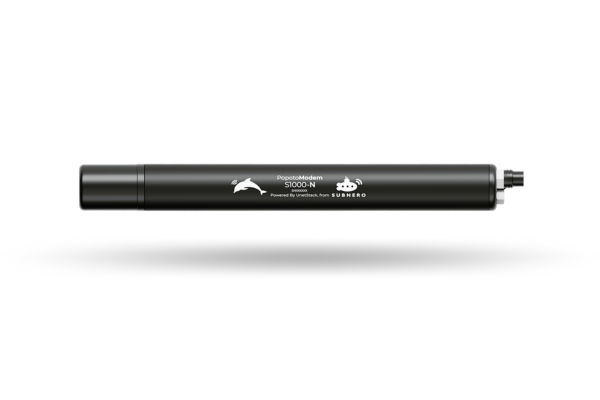
Subnero and Popoto modem partner to launch the S1000-N
Singapore-headquartered Subnero and US-based Popoto modem have joined forces to create a powerful new underwater acoustic modem, the S1000-N. This modem combines the best from both companies, bringing together the power of the Popoto’s S1000 series modems and Subnero’s underwater network stack (UnetStack) to enable you to build advanced underwater networks.
With the S1000-N, users can enjoy a data rate of up to 10240 bps over a range of 3+ km. Subnero’s technology integration allows users to take full advantage of UnetStack, an underwater networking stack with features such as multi-hop routing, fragmentation & reassembly, contention-free communication, and much more, providing users with a more reliable and efficient way to send data underwater. With a fully functioning network stack out of the box, the S1000-N offers users a powerful and affordable solution for underwater communications.
One of the key features of the S1000-N is its ability to operate at a low power draw, while still offering the benefits of a software defined modem. The S1000-N supports multiple computer languages for interfacing (e.g. Java, Python, Groovy, Julia, C, JavaScript), and allows for customization at various levels. These features provide users with the ability to build and customize their applications. The S1000-N provides the ability to transmit and record unique waveforms, allowing the unit to act as an acoustic data logger or general acoustic source. Overall, the S1000-N is an ideal solution for a variety of underwater applications, such as current and temperature measurement, pollution tracking, and other multi-node applications. The S1000-N is an exciting new product that combines the best of both Subnero and Popoto Modem. With its powerful features and affordable price, it is sure to resonate with users in a variety of different industries.
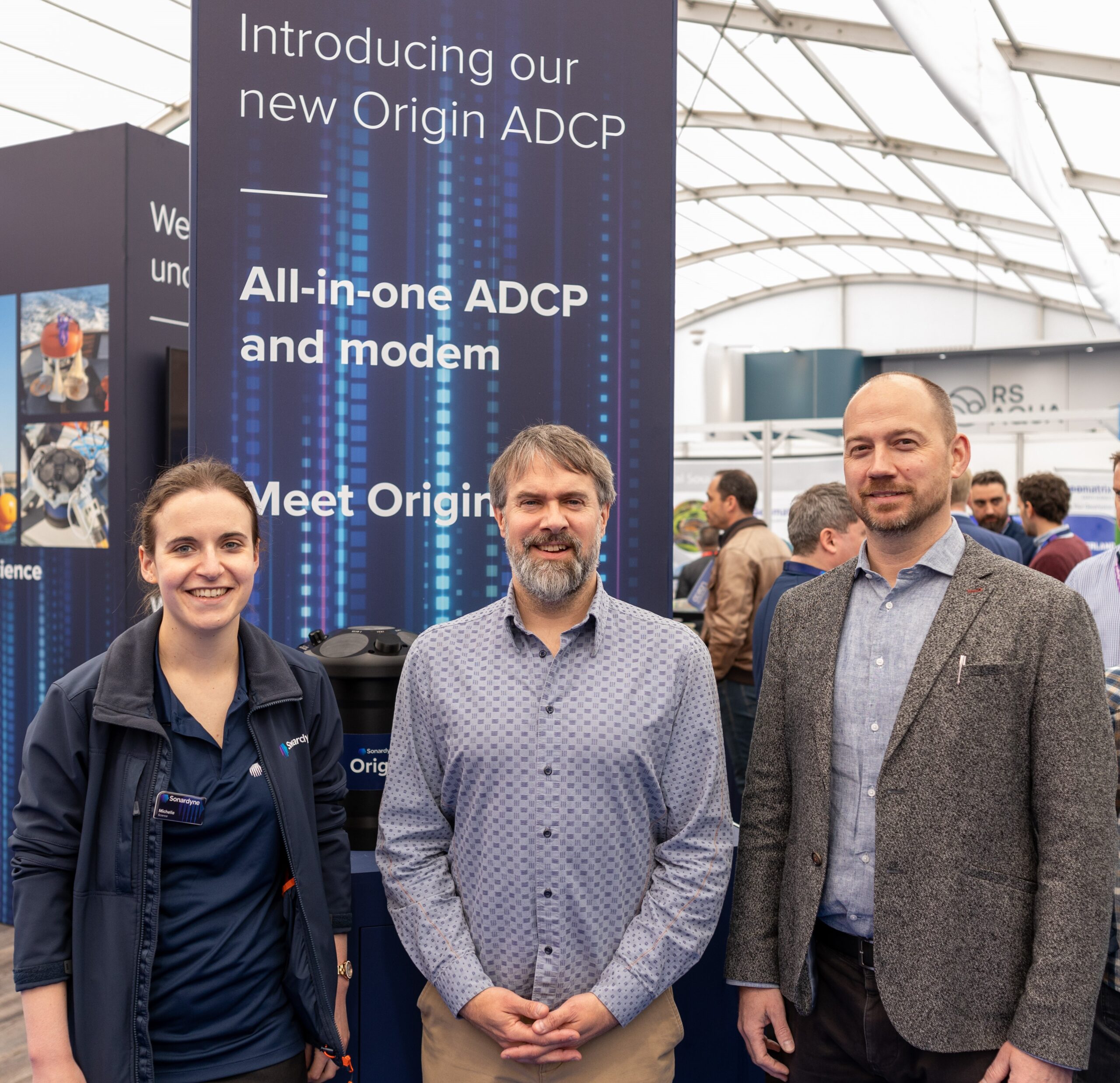
Sonardyne announces RS Aqua as UK reseller for leading-edge Origin 600 ADCP
Marine technology company, Sonardyne, launched its new Origin Acoustic Doppler Current Profilers (ADCPs) at Ocean Business in April. As part of this launch, RS Aqua have been appointed as the UK reseller for their new Origin 600 ADCP.
The Origin 600 sets new standards for intelligent ADCP data. It is the first ADCP to include an integrated acoustic modem and advanced onboard Edge processing – enabling remote access to all core features and giving high quality, intelligent data in near real-time.
It also delivers new and exclusive high-fidelity data formats, whilst its ability to link to other external sensors allows you to get the most out of a single device deployment and the data generated.
“The launch of the Origin 600 marks a huge step forward in ADCP technology, providing the user with expanded ADCP capability, whilst presenting a number of operational possibilities and advantages, including in-field flexibility and data assurance.” said Michelle Barnett, Ocean Science Business Development Manager at Sonardyne. “We welcome RS Aqua as the UK reseller of Origin 600 and know the product will benefit their customers and business portfolio for years to come.”
Portsmouth-based RS Aqua have supported the UK marine industry for over 40 years. Their depth of knowledge and experience of supporting customers across a variety of sectors makes them an ideal choice as a Sonardyne reseller.
“We are thrilled to have established a partnership with Sonardyne, one of the most respected engineering businesses in the industry. RS Aqua can now offer our clients access to the latest Origin ADCP technology, which we have carefully selected to be part of our product portfolio.” Said Martin Stemp, Managing Director of RS Aqua.
Martin further explains, “The Origin technologies are not only extremely high performing ADCPs, but they are also a central control and communication hub for subsea observatories, enabling two-way communication and configuration of instrumentation when deployed. We can’t wait to get these systems in the hands of our clients.”
Find out more information about the Origin 600 here.
Find out more about RS Aqua here.

BeWild: Using eDNA to measure biodiversity at offshore wind farms
The BeWild project, aimed at measuring biodiversity at offshore wind farms, was recently launched at Fugro's TechCenter in Nootdorp. Fugro, together with project partners, will focus on developing innovative methodologies and technologies for remotely collecting environmental DNA (eDNA) samples in the North Sea. The collected data will assess the impact of offshore wind farms on biodiversity and explore ways to adapt existing infrastructure to enhance marine habitats.
Fugro will develop remote marine eDNA collection, analysis, and interpretation capabilities as part of its remote inspection solutions. By also integrating the eDNA sampling into its uncrewed surface vessels (USVs) and remotely operated vehicles (ROVs), Fugro aims to not only inspect subsea assets but also the broader subsea environment.
Daniel Smith, Fugro’s Solution Owner Offshore Wind Farm Site Appraisal said “By integrating ecological monitoring with routine asset inspections, wind farm operators will not only reduce the risk of possible technical failures, but broader ecological failures such as habitat loss or habitat fragmentation. This is a crucial step in safeguarding our energy resources and our natural environment.”
Support will be provided by additional project partners:
• Wageningen University will focus on DNA sequencing methodology of marine eDNA, researching the governance of these new forms of automated data collection to provide guidance on the design principles for the expansion of nature inclusive wind energy infrastructures
• Stichting de Rijke Noordzee will explore how to integrate biodiversity monitoring with regular asset inspection
• Mecal – ATS will develop an improved scour protection system with the potential to enhance biodiversity
• Seekable will optimise cable burial monitoring solutions, and
• CrossWind will provide access to an operational wind farm for testing and investigations.
Developed with the MOOI (Mission-driven Research, Development and Innovation) subsidy from the Ministry of Economic Affairs and Climate, and implemented by the Netherlands Enterprise Agency (RVO), the BeWild project aims to drive innovation and foster partnerships among key stakeholders to advance the understanding of offshore wind farm biodiversity and contribute to sustainable offshore energy development.