
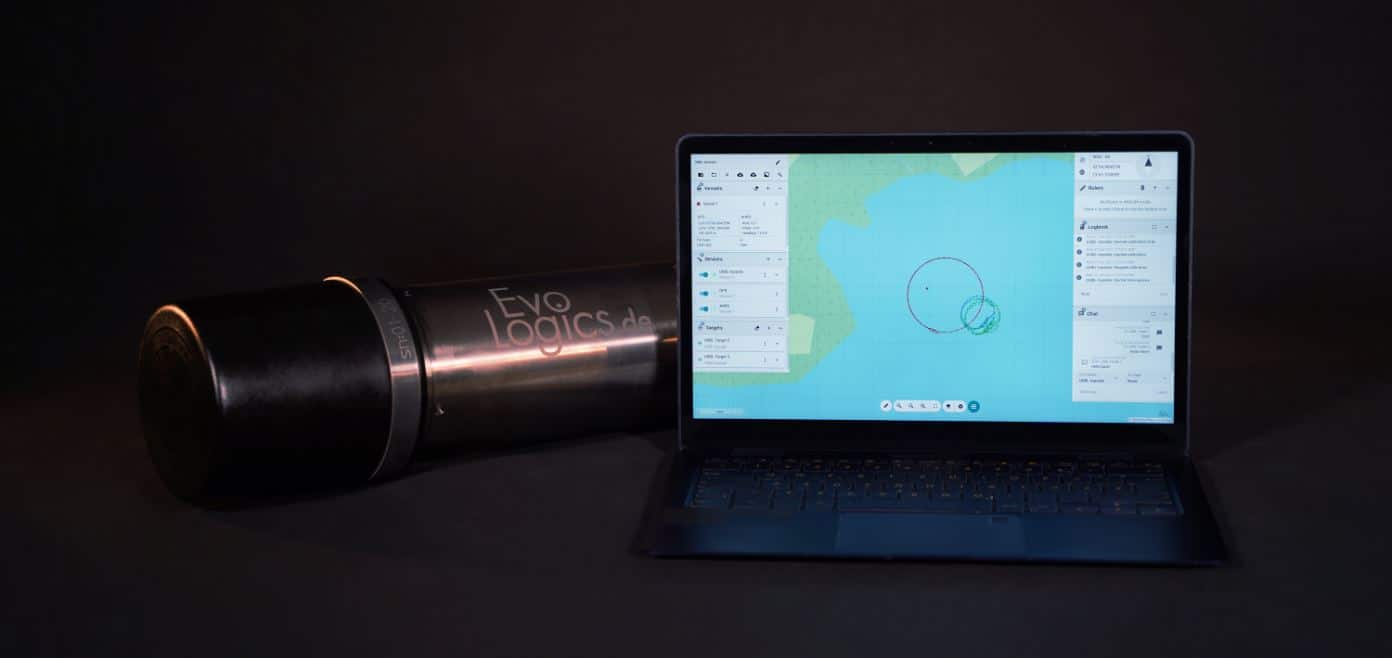
EvoLogics releases SiNAPS 2, the upgraded acoustic positioning software
EvoLogics team is excited to announce the release of SiNAPS 2, the newly upgraded underwater acoustic positioning software.
Rebuilt from scratch, it comes with a more powerful and efficient data engine with improved positioning accuracy. The updated user interface and intuitive workflows allow for easier onboarding and system integration.
SiNAPS 2 is both powerful and flexible - it supports USBL, LBL, and advanced hybrid positioning methods. The software is intuitive and fast to configure even for complex scenarios and comes with built-in system calibration tools. With SiNAPS, it is possible to manage multiple databases and maintain separate data sets. Automation options and advanced data fusion strategies are available for demanding application tasks.
Real-time multiple target tracking is combined with data input from multiple sensors. SiNAPS is capable of real-time output of positioning and sensor data for custom forwarding and processing.
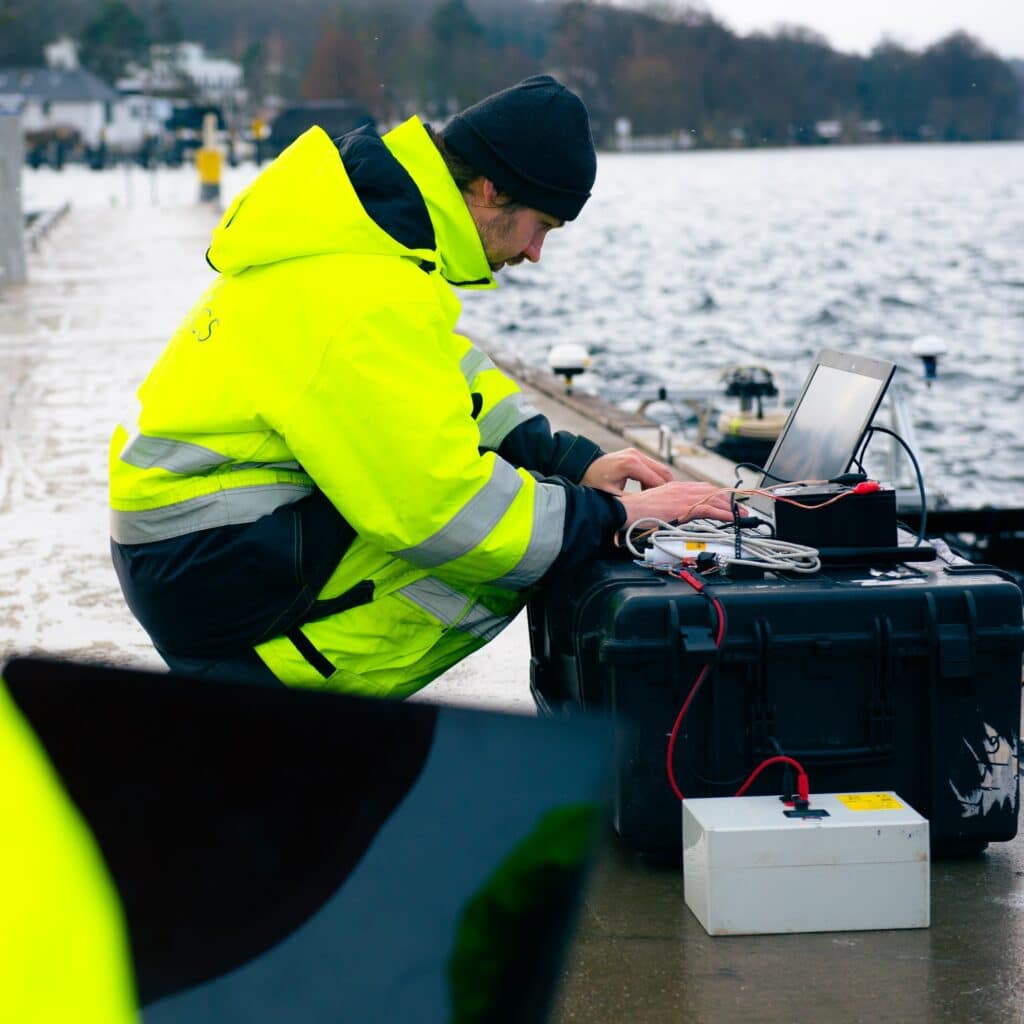
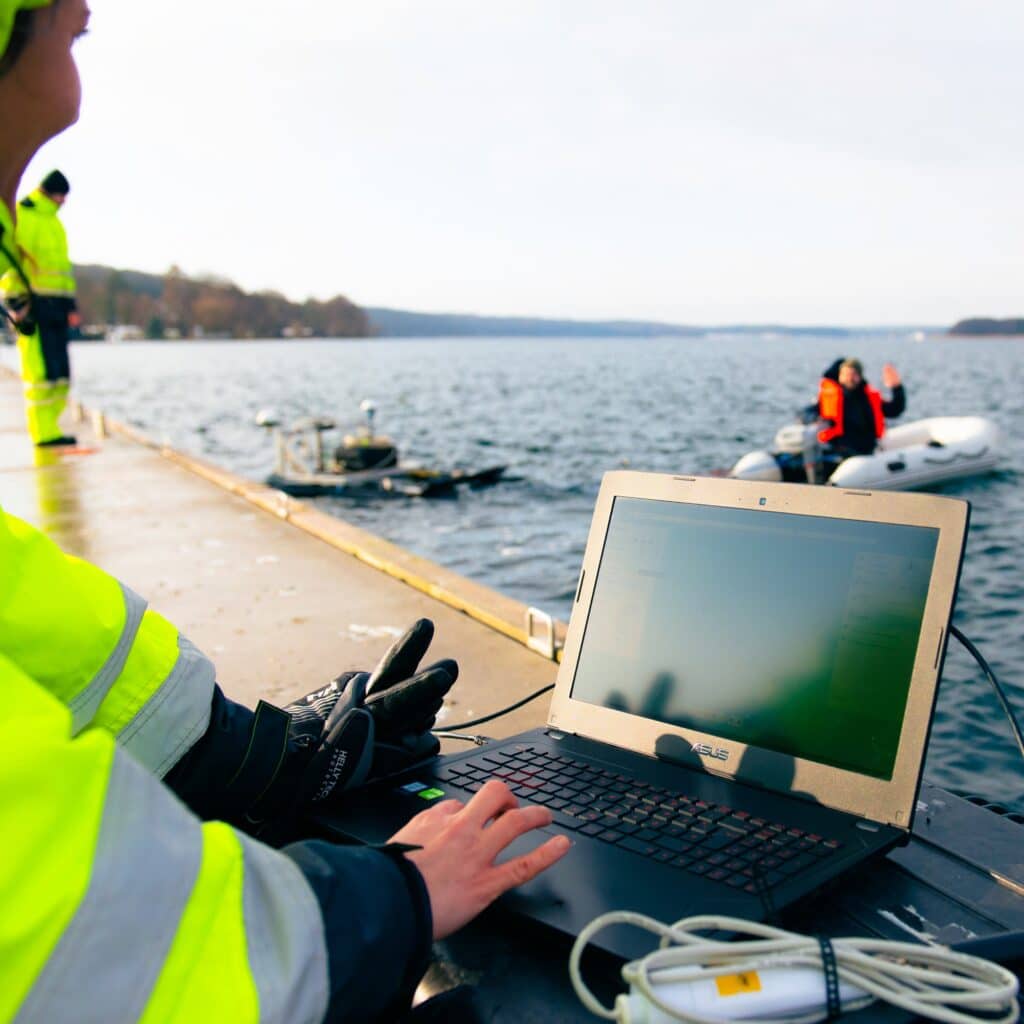
Its web-based user interface allows using SiNAPS on any device in the local computer network; the extensive display tools include the new option to visualize acoustic communication, as well as adding online and offline background maps.
SiNAPS 2 is fully compatible with the whole range of EvoLogics underwater acoustic modems and USBL devices that support simultaneous tracking and bidirectional communication. The software is available from EvoLogics starting February 1, 2021.
For more information visit: EvoLogics.de

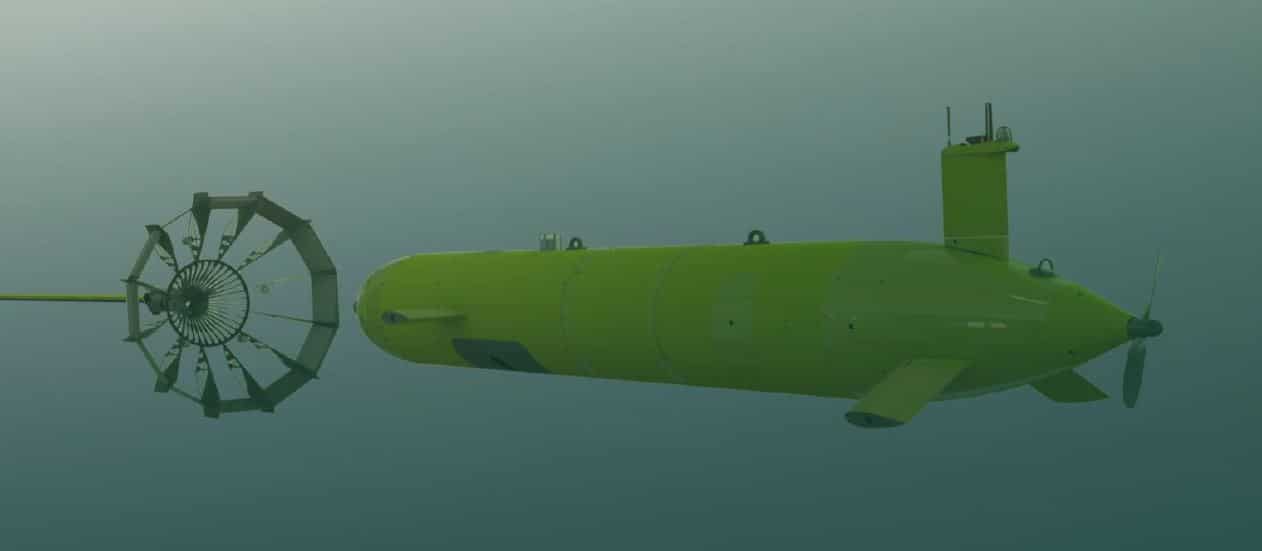
International Submarine Engineering (ISE) completes phase 1B of autonomous AUV docking testing
International Submarine Engineering Ltd. (ISE) has successfully completed the second stage in the autonomous dock prototype project. This project is a joint project between Dalhousie University and ISE with funding provided by Innovation for Defence Excellence and Security (IDEaS).
The dock provides a platform for an AUV to autonomously latch onto while remaining subsea. Once latched, the AUV can then charge its batteries and download the data for the operators. Then once that is complete, the AUV can unlatch and begin its next mission. This essentially eliminates the risks of launching and recovering during rough sea states as well as greatly reducing the amount of downtime between missions.
The purpose of phase 1b was to develop a prototype and prove the concept in a real-world subsea environment using the ISE Explorer AUV and the new dock prototype. At a distance up to 90 meters, the AUV uses multi-beam sonar to align itself with the dock and navigate towards the target. Once it is within a range of 10 meters, the AUV automatically switches to camera tracking and homes in on the light array on the dock. Over a period of 10 days the dock was put through extensive testing in highly turbid water and fully autonomous connections were being made between the AUV and the dock with resounding success.
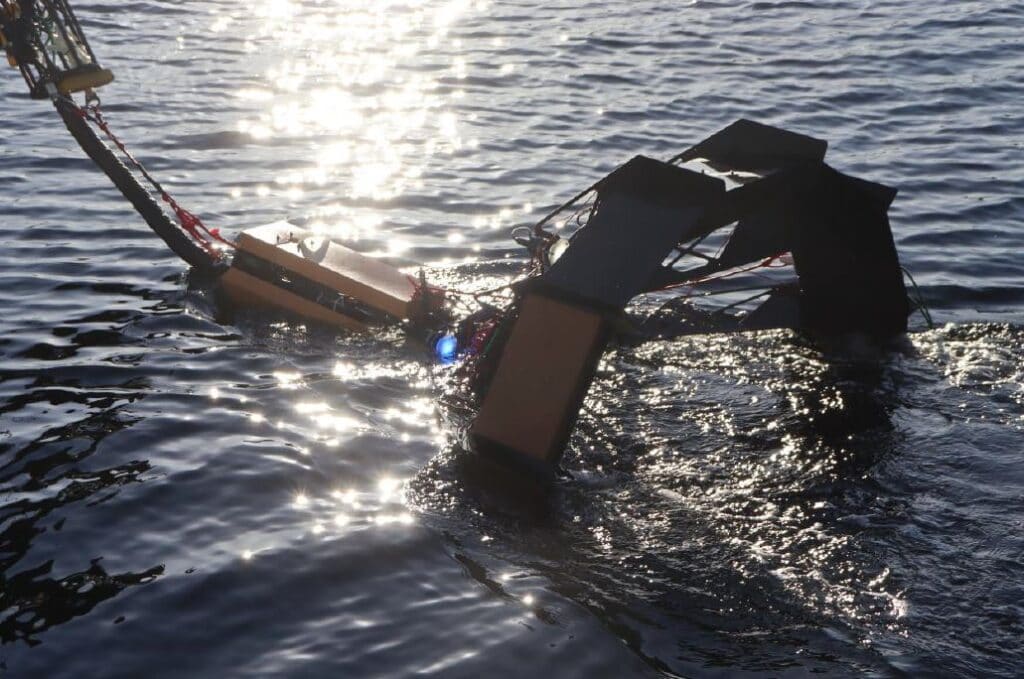
There are many options for the next stage of this project though the current focus is to include an un-crewed surface vessel to tow the dock with a towed listening array on the AUV as part of the persistent maritime surveillance scope. Adapting the dock to allow for launch and recovery opens a lot of possibilities for the technology in other applications.
The success of this project thus far highlights the experience and expertise ISE has acquired in over four decades of work in the subsea marine industry. ISE will be releasing updates to this project on its website, check the following webpage: www.ise.bc.ca/product/dock.

SITECH Gulf to Represent Teledyne Marine in the Middle East
Teledyne Marine is pleased to announce that they have contracted with SITECH Gulf to serve as their exclusive distributor in the U.A.E., Oman, Qatar, Bahrain, Kuwait, Saudi Arabia, Jordan and Egypt, and official distributor in select North African countries to represent their full line of marine products for civil engineering, offshore energy, and oceanographic applications. This agreement represents the first time that Teledyne Marine has appointed a single entity to represent their full spectrum of marine products spanning their instruments, imaging, vehicles, and interconnect technology verticals.
Mike Read, President, Teledyne Marine shared, “This agreement illustrates Teledyne Marine’s commitment to expanding our presence in this region and to advancing our leading-edge marine technology solutions across multiple markets.”
Ted Germann, Teledyne Marine’s Vice President of Emerging Markets adds, “Teledyne Marine enables SITECH Gulf to significantly expand their marine portfolio. As existing dealers for Trimble Marine Construction Software (TMC) and Trimble controls, the addition of Teledyne Marine will allow SITECH to now offer their customers and partners in the middle east and North Africa complete underwater packages, delivering “Eyes Above and Below the Water” with real-time Teledyne sonar verification.”
John Taylor, COO of SITECH GULF states, “We are extremely excited to have been chosen as the dealer of Teledyne Marine products in the Middle East and North Africa markets. The combination of Teledyne plus Trimble makes SITECH Gulf a one stop shop for technology unrivaled in the MEA region, and even worldwide, for the land and now marine. Building on our success in promoting technology on land and marine construction projects, this new cooperation with Teledyne is a perfect fit to expand that success to further offshore and to under the sea.
For more information visit: www.teledynemarine.com
Fugro achieves UK first with RAMMS bathymetric lidar technology
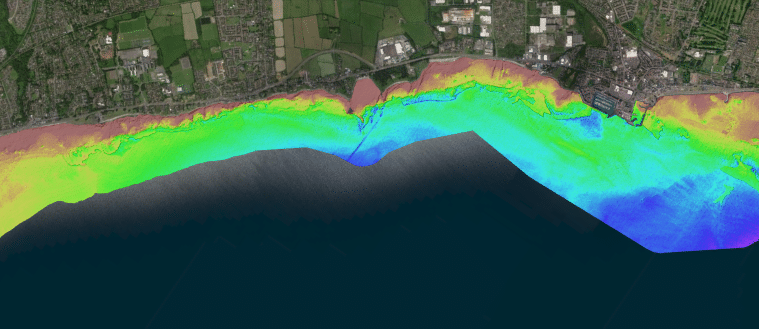
Fugro has won a contract to capture bathymetric lidar of Northern Ireland’s coastline as part of a project from the Department of Agriculture, Environment and Rural Affairs (DAERA) to create a detailed 3D elevation model of the coast. The nearshore survey will acquire satellite-derived bathymetry (SDB) data and, for the first time in the UK, Fugro will use their innovative Rapid Airborne Multibeam Mapping System (RAMMS) to collect lidar bathymetry data.
Coastal flooding is a global concern due to rising sea levels and an increase in extreme storm events. To identify areas most at risk of coastal erosion and marine flooding, and those that may be under future threat, DAERA has commissioned a baseline study of Northern Ireland’s 763 km of coastline. The resulting 3D model will help to inform policy makers, coastal managers, terrestrial planners, marine planners and other interested stakeholders.
Work on the project started this month and Fugro’s hydrographic experts are acquiring the SDB data in cooperation with EOMAP, the world’s leading company for optical remote sensing of aquatic environments, using their remote sensing technology to map the seabed along the entire coastline to a depth of approximately 10 m. They will also mobilise Fugro’s lightweight RAMMS sensor, which can be operated from small aircraft or an uncrewed aerial vehicle (UAV), to capture high-resolution data of a pilot area to depths of three times the visual water clarity. For nearshore projects, these technologies have many advantages over the multibeam echosounder systems used on traditional survey vessels, including faster rates of data capture, less time spent on site, and reduced technical and safety risks.
Huug Haasnoot, Fugro’s Director for Land Asset Integrity in Europe and Africa, said: “Our remote sensing solutions are ideal for mapping complex coastlines and will greatly add to DAERA’s understanding of coastal erosion and wave action in Northern Ireland. This project is also a great opportunity to utilise our RAMMS technology, already proven throughout North America and the Caribbean, for the first time in UK to capture high-resolution bathymetry data.”
For more information visit: www.fugro.com
ASL Environmental Sciences Presents ClearSignal Antifoulant Coating by Severn Marine Technologies
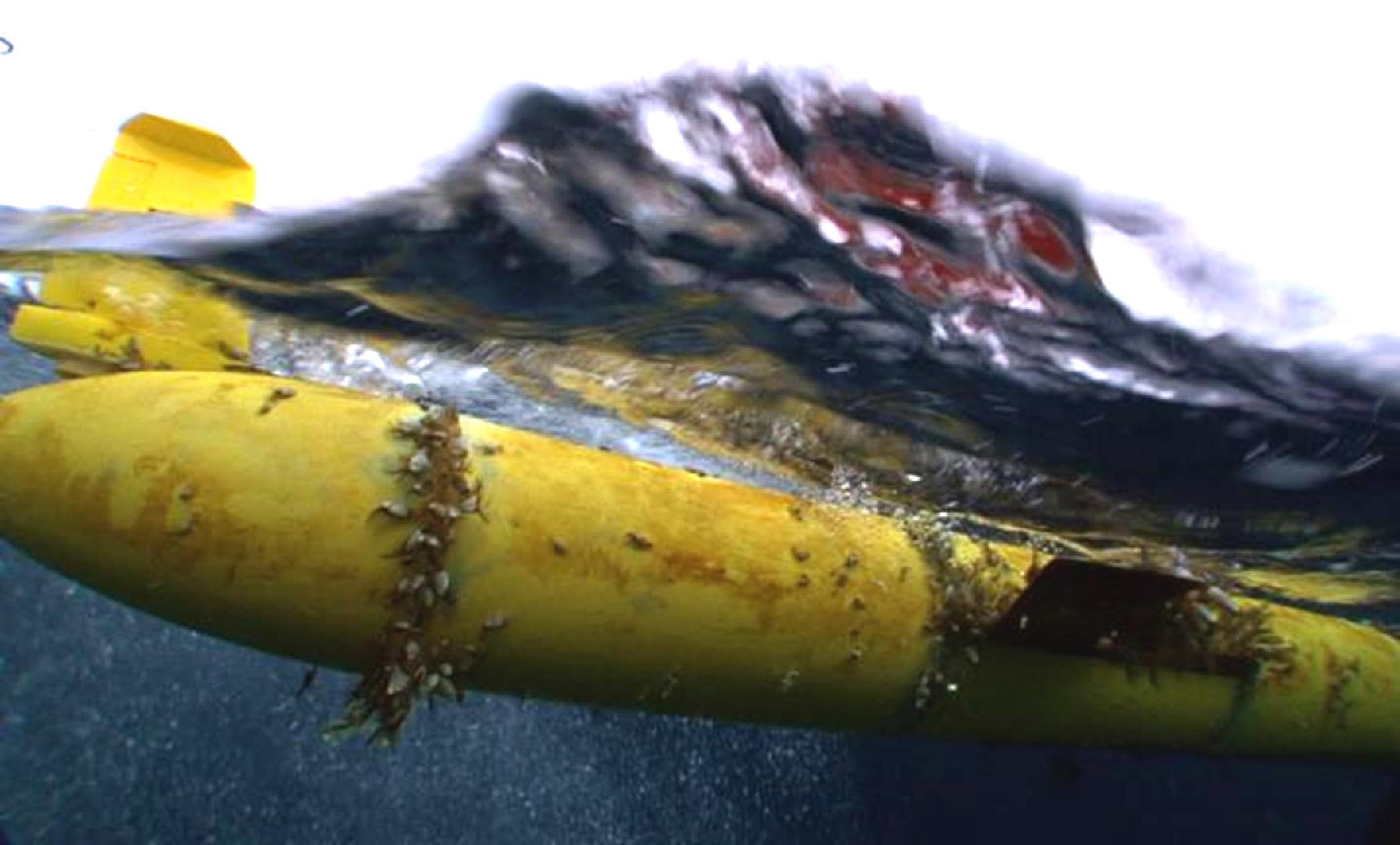
Biofouling in marine environments is one of the primary limiting factors that will determine the deployment duration of platforms and instrumentation and dictate the service schedule that is required. ClearSignal, manufactured by Severn Marine Technologies, is a clear, non-toxic coating, that resists biofouling. The product acts as a durable, permanent, foul-release coating that is designed to last the life of the equipment it is protecting. Its effectiveness is a result of the non-stick properties of the materials in the proprietary coating. Unlike traditional antifouling systems which rely on active biocides and whose effectiveness degrades with time, ClearSignal retains its effectiveness over time.
For over a decade, Severn has installed the ClearSignal coating on platforms and instruments deployed around the world from a large number of leading marine product manufacturers. ASL has used this product to coated several of our Acoustic Zooplankton and Fish Profiler (AZFPs) instruments on behalf of customers who anticipate deployment in waters known for significant biofouling. We have also been using ClearSignal for ten years of continued deployment on Teledyne RDI Horizontal ADCPs with great success in a challenging biofouling environment.
Through thorough testing, ASL and other manufacturers of underwater acoustic instruments have found that the ClearSignal coating does not significantly affect the signal strength of the device. Furthermore, the coating acts to protect the transducers from damage due to biofouling and extends the lifespan of the instrument. The use of antifoulants can increase deployment times and reduce the required frequency of service due to biofouling. It will also greatly reduce the effort and downtime that is required to clean the equipment and return it to service.
ASL has a long history with Severn Marine Technologies and is proud to act as the designated representative for the ClearSignal product across Canada.
For more information visit: www.aslenv.com

Protecting vulnerable assets with OSIL Oil spill monitoring systems
Potential exposure to, or discharge of, hydrocarbons is an increasingly prominent and crucial environmental and operational concern for many. Tighter controls on oil detection place a high demand on quality real-time data being immediately available at the click of a button. Innovative environmental monitoring systems manufacturers Ocean Scientific International Ltd (OSIL) produce a wide range of continuous monitoring systems for uninterrupted hydrocarbon detection, and have supplied these to facilities across the globe.
The low maintenance oil spill monitoring systems available from OSIL can be terrestrial or aquatic (using moored floating buoy platforms or fixed stations in shallow waters), and individual systems can be networked together to cover multiple locations, with a single secure login or shared webpage available to view all data. These systems can detect a variety of hydrocarbon-based substances, even under harsh weather conditions. The systems can also be equipped with additional sensors (for water quality parameters, current monitoring, meteorological conditions, etc.).
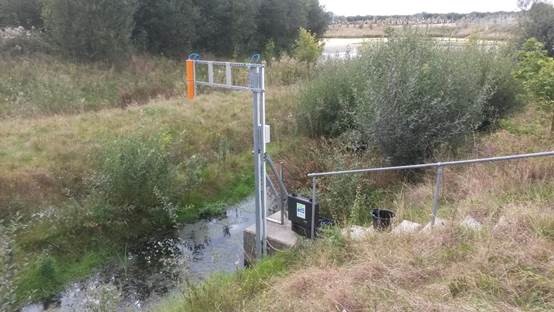
OSIL can provide data and alarms from the installed sensors directly to internet-enabled devices from any location with telemetry coverage. The secure data access portal has a customisable display with powerful visualisation tools, and scheduled reports can be shared securely over FTP or email, or live data can be accessed using a password protected direct URL link. A unified alarm system allows alerts to be sent via email and SMS, and the data portal will display the alert and the data that prompted the trigger on login. Alerts to issues with data collection and/or battery charging can also be incorporated into the appearance.
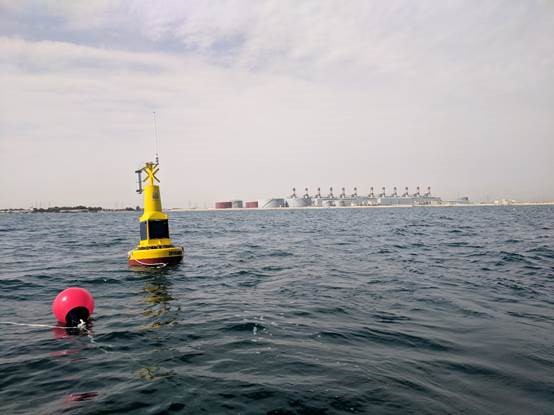
A multitude of oil spill monitoring systems have been now been deployed worldwide by OSIL, to protect a variety of sensitive assets including the intakes for sea water abstraction facilities, nuclear power plant cooling systems and industrial manufacturing facilities. OSIL engineers can provide customers with an installation service complete with full training in the operation and maintenance of the equipment and on-going system support.
For further information or sales enquiries please contact: [email protected] or call +44 (0) 2392 488 240

RS Aqua Appoints Malcolm Johnston as Senior Sales Manager in Maritime
Throughout the past year, RS Aqua has been working on expanding its markets across the UK and Ireland. As part of this expansion, RS Aqua has recently appointed its first Scotland-based member of the team - Malcolm Johnston. He is the company's new Senior Sales Manager in Maritime.
Prior to joining RS Aqua, Malcolm has mainly worked in the oil and gas industry and subsea engineering focused on robotics and sensor technologies. He has a long track record in sales and business development and is known for building and maintaining long-term relationships with customers. Some of Malcolm’s most notable work was with Forum Energy focused on ROVs, where he was able to build an extensive professional network.
“I am very pleased to be joining a company which supplies a variety of markets. I think this showcases the huge potential RS Aqua has.” - said Malcolm about his appointment.
Malcolm will be responsible for developing and converting business opportunities for new and existing RS Aqua product lines in the offshore energy, subsea engineering and defence sectors.
RS Aqua's Managing Director - Martin Stemp commented:
“I am delighted to be welcoming Malcolm to our team at this exciting time for RS Aqua. Malcolm brings a depth of experience and a positive track record in the robotics and subsea sectors, and he is highly regarded amongst his peers.
With Malcolm joining us at the start of 2021, this marks the first of several significant investments that we are making in the business to continue our growth and our impact across the Marine Science Technology sector.”
To learn more about RS Aqua’s career opportunities visit www.rsaqua.co.uk/careers.
Cable solution for eco-sustainable reuse of offshore platforms
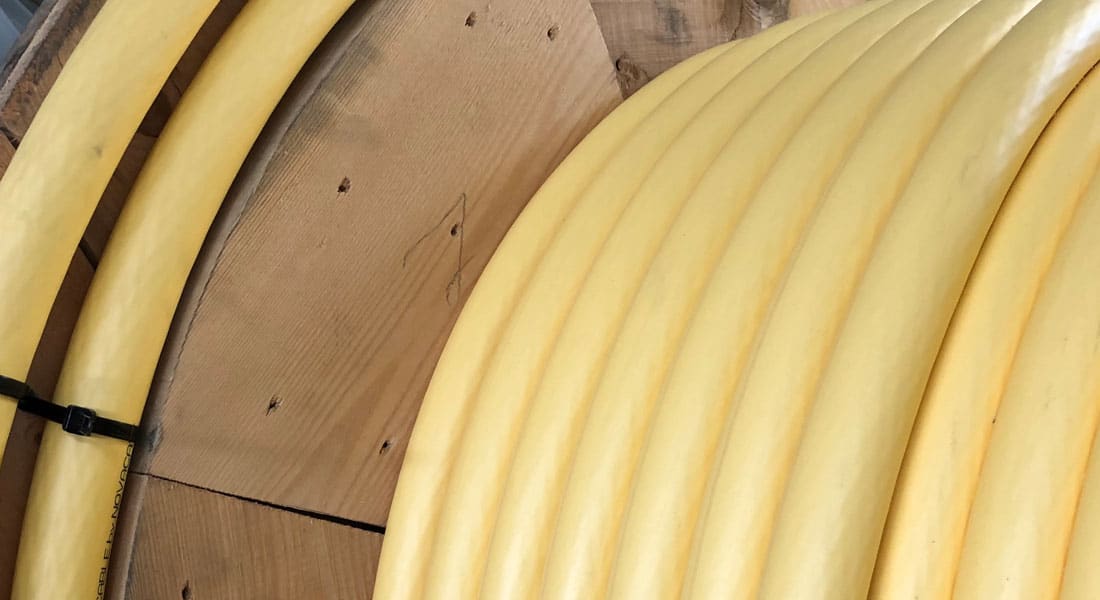
Novacavi has recently made its own technological-productive contribution to the mineral growth test started for the platform protection from corrosion and to favour colonization by marine organisms on the ENI "Viviana 1" platform, offshore Pineto (Abruzzo). For this specific activity within the PlaCE project (https://bluegrowth-place.eu) that involves the eco-sustainable reuse of offshore platforms, Novacavi has designed and provided an ad hoc solution to connect and make efficient the electrified growth structure submerged in the sea at a depth of about 20m. As integral part of this equipment, the 2XM518 water blocked low voltage underwater cable with high resistance to breakage and dynamic stresses due to constant immersion in water.
" Novacavi is pleased to have contributed to the development of innovative strategies and technologies for the decommissioning and possible reuse of offshore platforms, which combine industrial needs with the protection of the marine environment."
said Francesca Faverio, Business development Manager, Novacavi
For more details, please contact [email protected] or visit www.novacavi.it/news

Countdown on for new SUT Underwater Robotics Award nominations
With less than three weeks before the deadline for nominations for the new Gwyn Griffiths Underwater Robotics Award announced at The Society for Underwater Technology’s (SUT’s) AGM the countdown is on in earnest. Closing date for nominations is 14 February 2021.
 Cheryl Burgess, the SUT’S Chief Executive explained:
“The SUT’s International Panel on Underwater Robotics announced the creation of the Gwyn Griffiths Underwater Robotics Award (GGURA) at our AGM in mid-December. We are eager to have nominations from around the globe.
“The award will recognise people in the early to mid-stages of their career (and under 40 years old) who have made outstanding contributions to their field in underwater robotics. The range is wide, for the award may be for industry/commercial, research and/or creative activity in underwater robotics. The winner will receive £500, a certificate an engraved award and recognition throughout the SUT’s global membership.”
Nominations or applications for a GGURA must consist of the following documents.
- A letter of nomination or application that describes how the candidate meets the criteria.
- The letter should be no more than 2-pages in length. Supporter(s) of the nomination/ application may add their signature to this letter or supply an email that indicates their support for the candidate.
- A 100-word citation or appraisal of the candidate’s research describing their contributions in a way easily understandable to those outside the discipline.
- A curriculum vitae.
- All applications/nominations to be received by [email protected] by 14 February 2021.
Announcing the Award, Neil Bose, Chair of the SUT Panel on Underwater Robotics said:
"Members of the Panel on Underwater Robotics were excited by Professor Gwyn Griffiths’ generosity in supporting this award and were especially enthusiastic that it should be an early to mid-career award to encourage the up-and-coming generation of underwater robotics workers in their careers."
With Gwyn Griffiths MBE, a Past President of the SUT adding:
"As a vibrant, forward-looking learned Society the SUT is at the forefront of encouraging and facilitating international cooperation in Underwater Robotics. From my own career I know that peer-recognition of achievements through an international Award can make a substantial and lasting difference. These have been times for reflection, and by enabling this new Underwater Robotics Award I am delighted to support the innovators of today and tomorrow."
For furthre information visit: www.sut.org/gwyn-griffiths-underwater-robotics-award-ggura

Sequoia Scientific, Inc., Ocean Instruments, and Geometius Deliver Sediment Dredging Measurement System
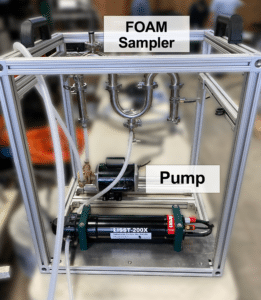
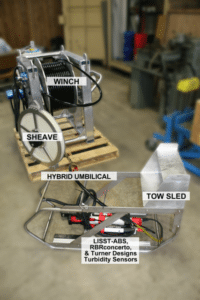 Ocean Instruments (Fall City, WA), and Sequoia’s Dutch distributor, Geometius, have delivered a Fast Oceanographic Automated Measurement (FOAM) system for dredge monitoring.
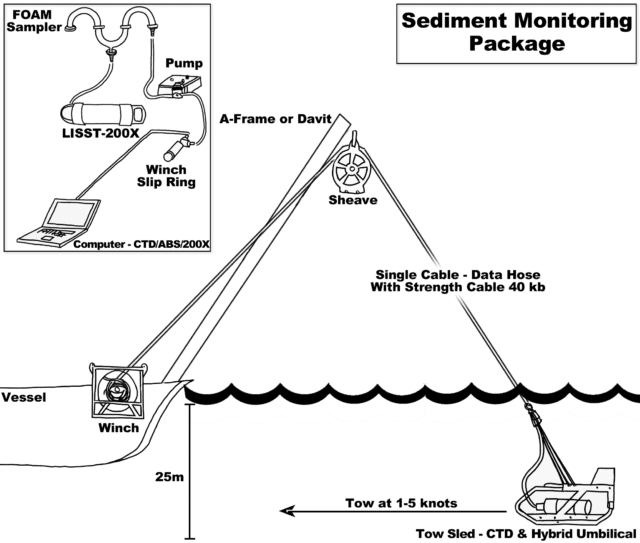
The FOAM system is composed of a pump and winch with a fluid rotary joint, 100 m hybrid cable with hose and conductors, a tow sled with an RBR CTD and a Sequoia LISST-ABS, and a topside mounted Sequoia LISST-200X running in flow-through mode.
The sled is towed through the dredge plume, while water is continuously pumped through the hybrid cable and winch to the topside LISST-200X. This unique setup delivers particle size, concentration (from laser as well as acoustic backscatter), and other pertinent parameters from the CTD in real-time as the sled is being towed and yo-yo’ed through the dredge plume from a vessel of opportunity. In addition to real-time measurements, this specialized system allows for co-located water samples to be collected on deck for ground-truthing sensor data.
The FOAM system itself was initially designed by Ocean Instruments for un-biased water sample collection and in-line measurements on an underway vessel. A number of systems have been delivered for moving vessel particle sampling. To name a few: Chlorophyll sampling for harmful algal blooms in the Puget Sound, suspended sediment monitoring in the Caspian Sea, and oil spill response studies in Mexico.
For the present system, Sequoia’s LISST-200X and LISST-ABS was integrated into the system and tested prior to delivery. The complete system: instrumentation, winch, hybrid cable and tow sled, together with spares, was delivered by Sequoia to Geometius. Installation, commissioning and training was originally planned on-site in Europe. However, due to the COVID-19 outbreak it was performed virtually by Ocean Instruments and Sequoia via a series of rapidly produced training videos and online training sessions.
For more information visit: www.sequoiasci.com