
Equinor selects MMT for Offshore Wind Cable Route Surveys
MMT has been awarded the 2021 export cable route surveys for the ‘Beacon Wind’ offshore wind farm. The project is led by the Company’s team based in Providence; MMT US Inc.
Having commenced in April to complete in July, MMT, the Ocean Infinity company, is conducting a combination of Geophysical, Geotechnical, Environmental and Benthic surveys along the export route of Beacon Wind sites 1 and 2.
This contract is in addition to the offshore survey work awarded to MMT in 2020 which completed in May 2021.
The Beacon Wind offshore wind farm is located 20 miles south of Massachusetts and 60 miles off the coast of New York. When complete, Beacon Wind 1 will provide 1,230 megawatts of offshore wind power to the State of New York.
Beacon Wind is being developed by Equinor and BP through their 50/50 strategic partnership in the U.S.
For more information, please visit: [email protected]


aae technologies Welcomes Paul Griffiths as Business Development Manager for Acoustic Positioning
aae technologies has welcomed Paul Griffiths to the company’s sales team as Business Development Manager. In his new role, Paul will focus on expanding the sales of applied acoustics range of USBL positioning and tracking systems. Paul has over 20 years’ experience within the industry, bringing a wealth of knowledge in subsea positioning across many industry sectors. As Business Development Manager, Paul will continue to drive the company’s success in existing markets, and increase the company’s profile in new and developing markets.
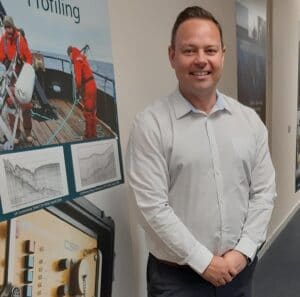
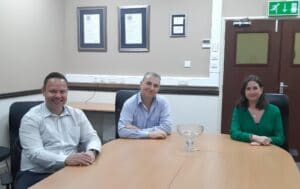
“We are very excited to welcome Paul to the team, during what is a very exciting time at aae technologies. Paul’s extensive experience, industry knowledge and contacts will further strengthen the team, and our position as subsea acoustic experts in the global market. “said Sales & Marketing Manager, Hollie Moran.
Paul commented, “I am delighted to join an already very strong team at aae technologies, and am looking forward to getting started meeting existing clients, and developing new relationships.”
aae technologies is a globally respected, independent manufacturer of marine related electronic-acoustic products that include underwater positioning and tracking systems, and a market leading range of subsea geological survey equipment. Established for more than 30 years, the award-winning company has an international client base spread across many ocean related industry sectors, and is supported by a global distributor network with locations on every continent.
For more information please visit aaetechnologiesgroup.com
Operation Ravenel: The search for the wreck has begun in Saint-Pierre-et-Miquelon
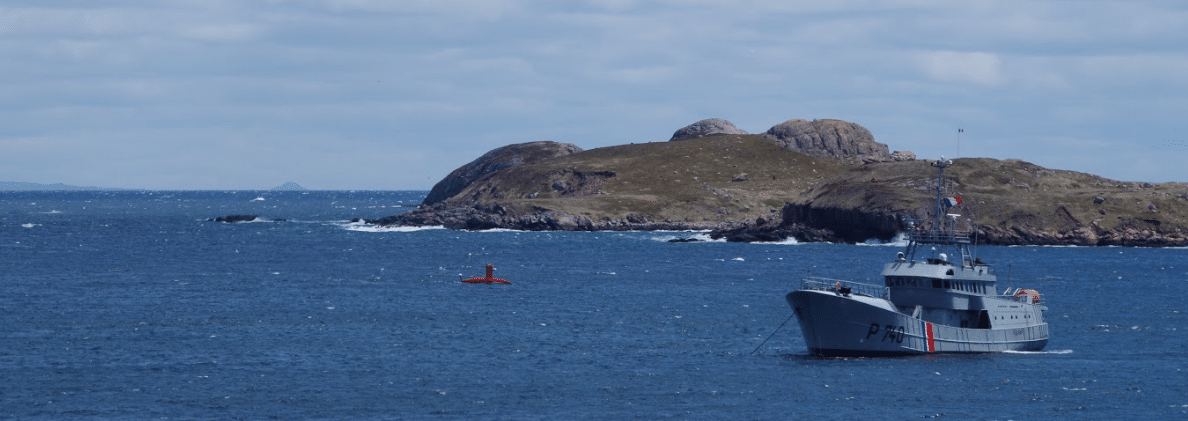
A research campaign aiming to find the wreck of the Ravenel fishing trawler, which disappeared back in January 1962 off the coast of Saint-Pierre-et-Miquelon (France), has begun on May 23, 2021. Despite several attempts over the past decades, the wreck remains unfound. Thanks to the use of DriX Unmanned Surface Vessel (USV), designed, developed and operated by iXblue, this new research campaign relies on unprecedented technological means to solve this mystery, that remains one of the most important shipwrecks in the history of French fishing.
The 15 sailors aboard the Ravenel left for sea in January 1962 and dramatically disappeared after 8 days of sailing. The wreck of the vessel has never been found since then. In April 2021, Annick GIRARDIN, France Minister for the Sea, announced the launch of a major research campaign, which aroused great interest from the local population. A search area of 439 km ² has been defined thanks to information and documentation collected by the two associations of descendants of the missing, "Ravenel" and "Ravenel Research", as well as by teams of Meteo France (France national meteorological service) and the Department of Underwater Archaeological Research (DRASSM).
Since May 23, iXblue DriX autonomous surface vessel has been mapping the seabed of this newly defined area, looking for clues about the location of the wreck of the Ravenel or components of its structure. Developed by iXblue, this drone is equipped with powerful means of localization and detection of obstacles, allowing it to perform these missions autonomously. It is in constant contact with the ground and an accompanying vessel. The DriX operates 24 hours a day and is supervised by three iXblue surveyors. To accompany the DriX, four government vessels take turns on the surface: the French Navy Fulmar patrol boat, the P'tit Saint-Pierre from the “Armement des Phares et Balises”, the Charente, a vessel from the “Service des affaires maritimes et portuaires (SAMP)” of the Préfecture de Saint-Pierre et Miquelon, and the SAO vessel from France Gendarmerie Nationale. The Canadian authorities issued their authorization for the prospecting in their international waters and offered their assistance in this research, that will last a total of one month.
For more information, please visit: www.ixblue.com
Sonardyne and SeeByte advance UMS navigation and autonomy in challenging environments
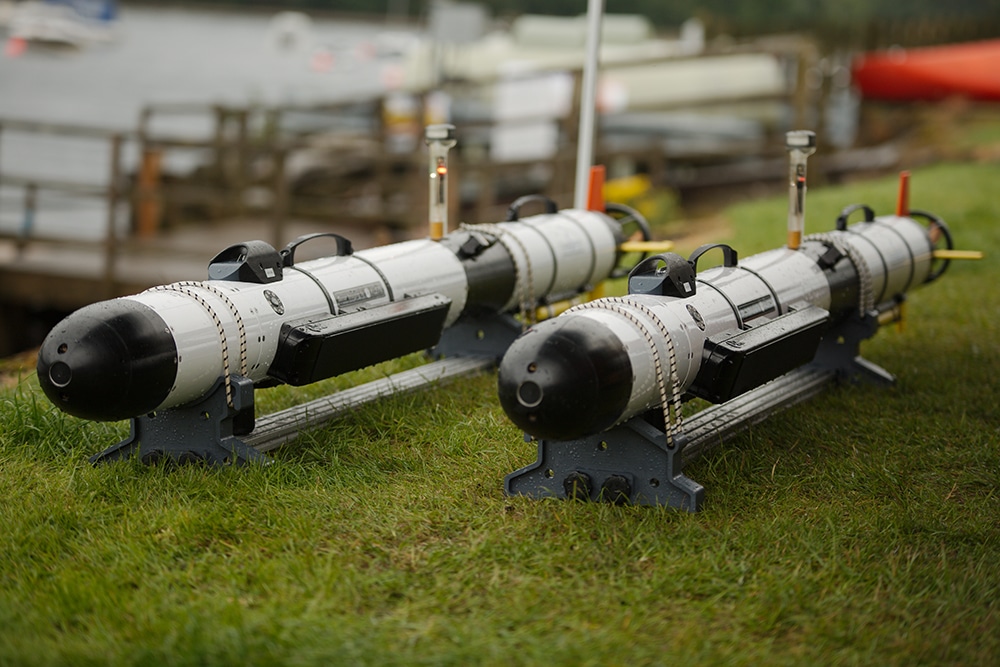
Maritime defence technology company Sonardyne and uncrewed maritime systems (UMS) software experts SeeByte have been awarded UK Defence Science and Technology Laboratory (Dstl) funding to enhance and extend the future operational capability of autonomous and remotely operated systems in challenging battlespace domains.
The collaboration is the second phase of the UK’s Defence and Security Accelerator (DASA)’s Autonomy in Challenging Environments competition and builds on the work both organisations undertook in Phase 1.
Sonardyne advanced underwater positioning system will be teamed with SeeByte’s adaptive, communication-aware, robotic behaviour developed for their autonomy system Neptune to allow the UMS to operate in highly complex, variable and communications-limited environments. Automatic target recognition imagery snippets will be transferred acoustically using SeeByte’s novel semantic compression software.
As part of the project, Sonardyne and SeeByte will be using surface and underwater assets from Project Wilton, a recently formed maritime autonomous systems (MAS) team based out of HM Naval Base Clyde. The collaboration will culminate in a series of in-water demonstrations at Project Wilton facilities in the UK.
Sonardyne will install a Mini-Ranger 2 underwater positioning system onboard Project Wilton’s ARCIMS uncrewed surface vessel (USV) and AvTrak 6 Nano telemetry and tracking transceivers to the team’s Iver 3 autonomous underwater vehicles (AUVs), which will be managed by SeeByte’s autonomous networked acoustic communications system.
In addition, Sonardyne’s SPRINT-Nav instrument will also be integrated with the ARCIMS USV to provide an independent navigation reference in GNSS-denied environments.
Teamed with SeeByte’s adaptive, communication-aware, robotic behaviour developed for their autonomy system Neptune, the UMS will be able to operate in highly complex, variable and communications-limited environments. Automatic target recognition imagery snippets will be transferred acoustically using SeeByte’s novel semantic compression software.
This project will enable optimal uncrewed underwater vehicle (UUV) distribution for improved subsea communications and navigation in a range of challenging environments.
Ioseba Tena, Head of Defence at Sonardyne said, “Collaborative autonomy is part of the maritime defence road map. We need to enable more robots and have fewer operators in the underwater battlespace. Working alongside leaders in autonomy development like SeeByte, to make that vision a reality, as part of the Autonomy in Challenging Environments competition, is a significant step towards that goal.”
Andrea Munafo, Technical Program Manager at SeeByte said, “UMS operate in challenging environments and they need to be robust against faltering communications and navigation. Partnering with Sonardyne makes it possible for our autonomous systems to consider both during real-time execution and hence to improve the effectiveness of future underwater missions.”
DASA’s Autonomy in Challenging Environments competition is funded through the UK Ministry of Defence’s Chief Scientific Adviser’s Research Programme’s Autonomy Incubator project. Awards are made by DASA on behalf of Dstl.
The Autonomy Incubator project aims to: Identify and develop underpinning research and technologies to support the development and fielding of unmanned systems across defence. This work can be matured through the wider Dstl Autonomy Programme and other research and development programmes.
Dstl delivers high-impact science and technology for the UK’s defence, security and prosperity. Dstl is an Executive Agency of the MOD with around 4,000 staff working across four sites; Porton Down, near Salisbury, Portsdown West, near Portsmouth, Fort Halstead, near Sevenoaks, and Alverstoke, near Gosport.
For more information, please visit: www.sonardyne.com
Teledyne Marine Announces Sale of Two SeaRaptor 6,000m AUVs to Argeo
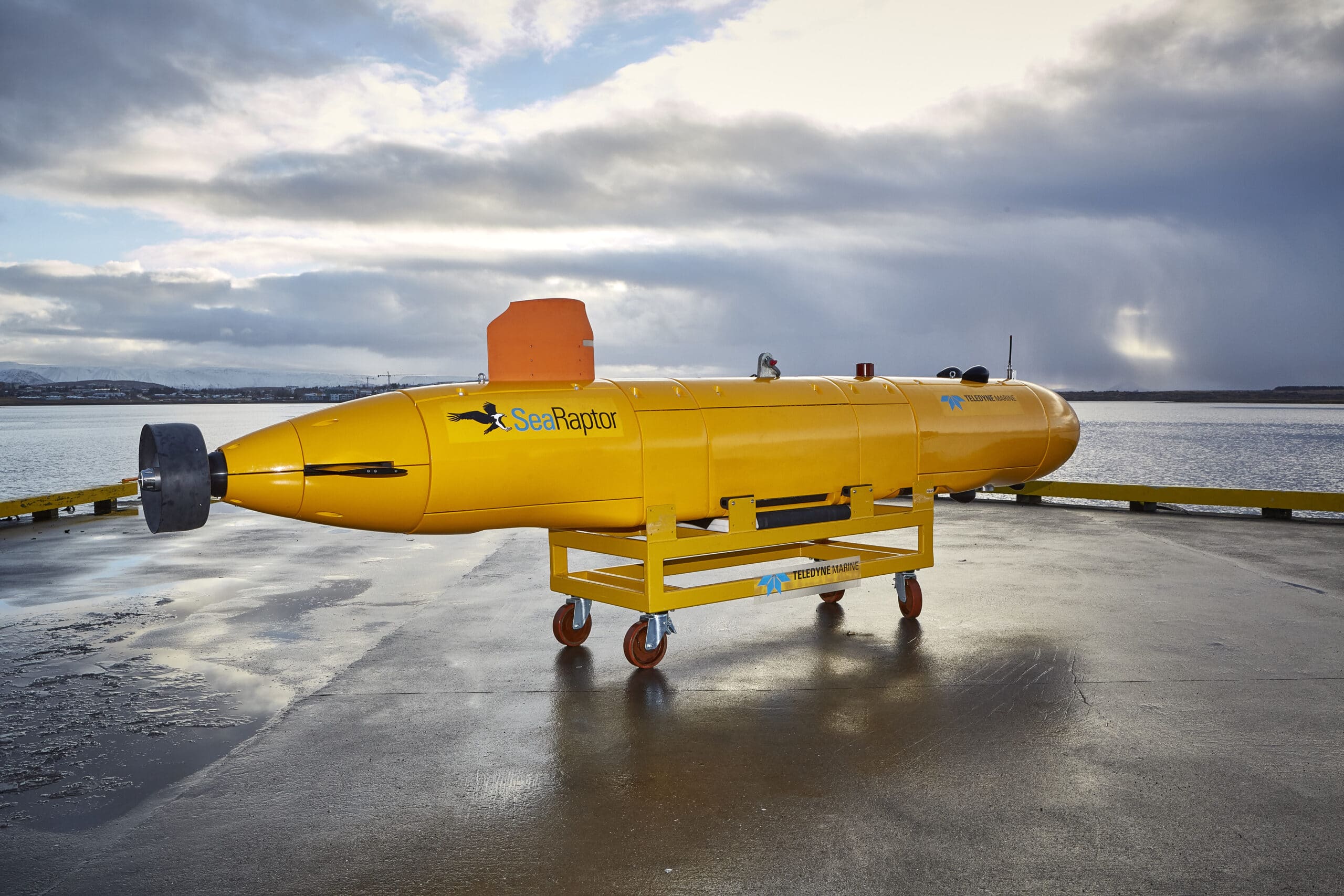
A global leader in the manufacture of Unmanned Maritime Systems, Teledyne Marine Vehicles, a business of Teledyne Technologies Incorporated (NYSE:TDY), today announced that Argeo of Norway, a newly listed company and growing subsea offshore service company, has procured two Teledyne Gavia SeaRaptor 6,000 meter rated Autonomous Underwater Vehicles (AUVs). The two SeaRaptor AUVs will contribute to Argeo’s growing fleet of AUVs and will enable deep-sea surveys to the benefit of marine industries including offshore wind, aquaculture, deepsea minerals, and offshore oil & gas.
The SeaRaptor 6000 AUVs will be equipped with the latest Kraken MinSAS 120 Synthetic Aperture Sonar (Kraken Robotics, Canada) providing large swath area coverage and high-resolution imagery and bathymetry data collection. The vehicles will also be fitted with Teledyne RESON T50-S Multi-Beam dual frequency 200/400 kHz Echo Sounders, Teledyne Benthos Chirp III Sub Bottom Profilers, iXblue PHINS 6000 INSs coupled to Teledyne RDI Tasman DVLs, and CathX Hunter Camera Systems. All data collected will be processed onboard using Teledyne CARIS OnBoard postprocessing and mosaicking software to allow quick turnaround during missions. The AUVs are also fitted with a large variety of scientific sensors from RBR which will take Conductivity, Temperature, Pressure, Turbidity, pH, Dissolved Oxygen, Redox, CH4 and Magnetic measurements to provide valuable water column data which will contribute to better ocean basin characterizations.
“Teledyne is very pleased to supply these unique deep water AUVs to Argeo. We see the strategic partnership forming between our companies as being beneficial, far into the future.” said Mike Read, President, Teledyne Marine.
Both vehicles will be supplied in 40 foot containers hosting their Launch and Recovery Systems, deck support and handling equipment and a spares set to offer the highest redundancy and availability of the systems. The vehicles are designed to be air transportable, including their Li-Ion batteries which offer over 40 hours of autonomy for long endurance missions.
Teledyne is excited to offer these systems to assist in bringing back new information as to the nature and composition of the deepest parts of the planet.
For more information, please visit: www.teledynemarine.com

Xeos Technologies Chosen by the NFSI to Supply Recovery Beacons for Major Refit
Xeos Technologies is excited to announce that it has been chosen by Canada’s National Facility for Seismic Imaging (NFSI), headquartered at Dalhousie University in Halifax, Nova Scotia, to help rebuild Canada’s ocean seismic capability. Xeos will be supplying 120 Apollo Mono GPS, Iridium and LED beacons along with 120 XMB RF recovery beacons to monitor, track and recover a network of Ocean Bottom Seismometers (OBS) deployed across the world’s oceans and inland seas. The system of beacons will provide precise location information to the deployment and recovery teams in real-time, while also providing a safeguard against any unplanned surfacing events.
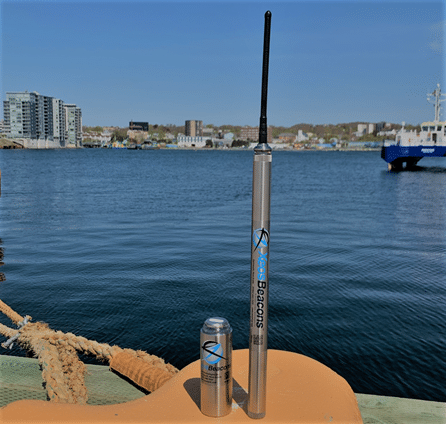
set chosen to monitor and track the NFSI BOBS fleet.
The beacons will be integrated with the Broadband Ocean Bottom Seismometers (BOBS) manufactured by Güralp Systems Ltd in the UK. Guralp’s BOBS systems use acoustic telemetry to deliver near real-time seismic data from the ocean floor to the surface without cables. The state-of-the-art BOBS network created for this project, designed to replace the previous system decommissioned in 2015, will support fundamental science discoveries. The goal is to generate a vast repository of core data that NFSI scientists can utilize to probe critically important questions related to earth structures, undersea earthquakes and tsunamis. The NFSI is a partnership of ten major universities from across Canada including Dalhousie University, University of Victoria, University of British Columbia, Simon Fraser University, University of Manitoba, University of Toronto, University of Ottawa, Université du Québec à Montréal, McGill University and Memorial University.
Xeos will work in close cooperation with Güralp and the NFSI project team to provide user training to ensure successful deployment and recovery missions. Geoff MacIntyre, Vice President at Xeos Technologies commented, “An enormous amount of time, energy and resources will be put into this project over the next couple of years and we are honoured to have been chosen to provide the technology responsible for safeguarding and recovering it all. The data that this system will produce over the next several years will be used to expand our understanding of the ocean bottom environment and support important scientific discoveries. We are looking forward to working with the project team and helping it all come together”.
Professor Mladen Nedimovic, NFSI Director, Department of Earth and Environmental Sciences, Dalhousie University said: “The NFSI is thrilled to have Xeos Technologies as a partner and supplier of 120 sets of recovery devices for our BOBS. We look forward to working together toward safe deployments and recoveries of our large fleet of BOBS with the goal to record data that will transform our understanding about critically important earth structures, particularly those offshore Canada that generate large earthquakes and tsunamis.”
For more information, please visit: xeostech.com

WEBINAR: Tidal Stream Supply Chain “Meet the Buyer”
Developers share project plans and opportunities across six UK and French sites
Two supply chain webinars events are planned on the 10th and 15th June where project and technology developers from tidal stream sites across the Channel in France and the UK will share the details of their forthcoming development and procurement plans. Both events will take place at 9.30 – 11:00 BST, (10.30 – 12:00 CET).
The events are part of the €45.4m Interreg funded Anglo-French Tidal Stream Industry Energiser (TIGER) project which aims to accelerate the commercialisation of the tidal stream industry in the Channel region by engaging regional supply chains and connecting them with leading tidal stream project and technology developers.
The 90-minute events will include introductory presentations from developers highlighting regional cross channel supply chain opportunities across the TIGER tidal stream sites. This includes a range of different site conditions and technologies with a range of different emerging needs. Participants are encouraged to sign up to both events which will be streamed simultaneously in French and English.
10th June French event:
Minesto & EDF on the Paimpol-Bréhat tidal test site in Brittany
Morbihan Hydro Energies SAS Tidal stream project in Golf de Morbihan, Southern Brittany
Normandie Hydroliennes and Hydroquest’s commercial tidal stream projects in Le Raz Blanchard, Normandy
15th June UK event:
Cambrian Offshore SW’s Ramsey Sound tidal test site in Pembrokeshire, Wales
QED Naval’s Community tidal test site outside of Yarmouth Harbour, Isle of Wight
Perpetuus Tidal Energy Centre (PTEC) supported by European Marine Energy Centre’s Tidal stream commercial demonstration site, Isle of Wight.
Why should you attend?
The presentations from developers will include details of project timelines, specifics as to the technologies deployed, and a variety of marine and onshore supply chain opportunities both current and future. These webinars are aimed at wide range of potential companies from small local suppliers providing for example craneage and transfer vessels up to and including large steel fabricators, marine operations and a wide range of civil engineering opportunities with varying scales of contract values.
Details of the projects at each site are available as site data packs on the Tiger project website.
The resources section of the website also holds videos and presentations from the technology specific supply chain events held in 2020.
Tidal stream turbines generate electricity from tidal currents using structures sometimes resembling underwater wind turbines (although there are still numerous different concepts - attend this even to find out more). Ocean Energy Europe’s ‘2030 Ocean Energy Vision’ predicts up to 2.4GW of Tidal stream energy capacity installed by 2030 and becoming cost competitive with fossil fuels. This means a sector with huge potential for market growth over the coming years with the potential to contribute to Government Net Zero targets.
To sign up to events, please visit: www.interregtiger.com/events
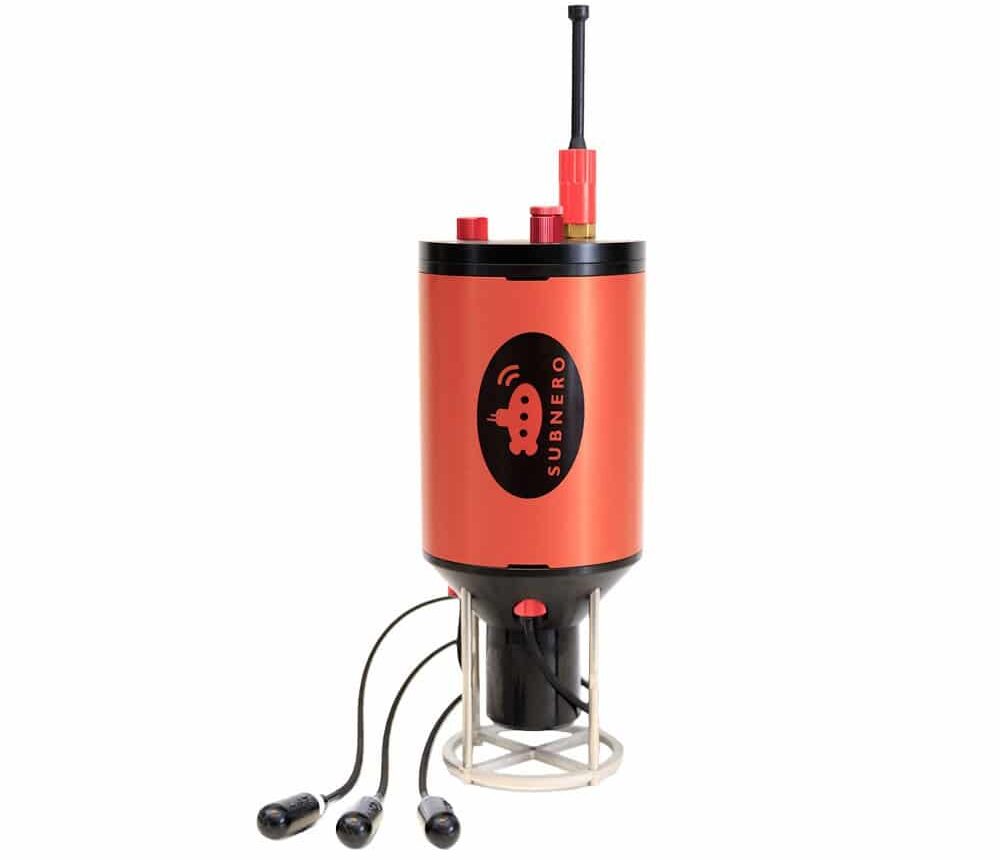
Introducing Subnero Multi-Channel Modems
Subnero modems running UnetStack software framework, are at the forefront of the underwater wireless communication technology. In addition to providing unparalleled communication and networking performance, they also provide the user with the ability to transmit and record arbitrary waveforms. Being software-defined, these devices provide the flexibility to you, the user, to develop or extend the capabilities using your own techniques. We, at Subnero, are constantly working to bring you new features to help you realize your vision of underwater communications and networking.
Now, imagine being able to use our modems to do things that were not possible previously, with a conventional acoustic modem. For example, let’s say you have a communication link, that stops working beyond a certain range. You upgrade your modem and you can extend your communication range beyond what was previously possible.
Or, say you want to monitor and record the underwater soundscape, but also send events of interest back to a control station in real-time, or allow control of the recording device from the surface. It would be nice to have a single device that can allow recording using multiple synchronized receiving channels, but also be able to communicate with that device directly, without the need to attach an external modem.
What if you have a single device that can do all of these functions in real-time? Today we are very excited to launch a new class of underwater acoustic modems, called the Subnero multi-channel modems. The multi-channel modems combine our silver edition M25M series modems, with a multi-channel acoustic recorder, thereby providing an acoustic modem with multiple synchronous receiving channels, without a significant change of the form factor. Configurable with up to 4 additional synchronous receiving channels, each channel can have a sampling rate of 128 or 256 kilo samples per second.
Out-of-the-box, you can use the multi-channel modems as a normal modem or a standalone acoustic recorder or both at the same time. The data collected from the additional receiving channels can be saved to the modem’s internal storage to be downloaded later. The recordings can be scheduled before deployment or triggered remotely using specific signals thereby making the multi-channel modems, ideal candidates for applications such as rapid environment assessment.
These devices use spatial diversity combining techniques to decode transmissions from remote modems, in real-time. This increases the effective communication range by acting as a spatial diversity receiver.
In addition to the extra receiving channels, the multi-channel modems are also equipped with sensors such as GPS, compass and a depth sensor, for underwater positioning and tracking applications. By combining techniques such as time or phase difference of arrival with the data from these sensors, three dimensional positioning and tracking is also available with the multi-channel modems.
Some of these features will be available as a software upgrade in the form of UnetStack premium agents.
For power users, the full potential of the device can be harnessed through the customizability of UnetStack. You can get direct access to raw data from all the channels in real-time, through UnetStack APIs. The out-of-the-box length of the hydrophone cables is 10 m from the housing, which allow you to decide the placement of these channels depending on your application. With such flexibility, users can develop their own array processing or spatial diversity combining techniques or positioning applications with the help of various developer tools provided by UnetStack. With native support for scientific computing languages such as Julia, or UnetStack gateway support with Python, these devices reduce the time to deployment of your algorithms, dramatically. In short, the kinds of applications you can develop using our multi-channel modem platform is only limited by your imagination.
We hope you find our multi-channel modems exciting.
We love to hear from you. Let us know your thoughts and comments through [email protected]

SWIG webinar: How can sensors protect our coastal waters?
HOW CAN SENSORS PROTECT OUR COASTAL WATERS?
JULY 14@ 1:00 PM - 4:00 PM
"This webinar will discuss the vital role of sensors in protecting our coastal waters. SWIG workshops are collaborative and engaging, please come along to learn and share your experience in areas such as:
- Why should we measure water quality in coastal waters?
- How is the measurement affected by seawater?
- How do we control pollution removal processes?
- How do we measure key contaminants?
- Why are sensors important to aquaculture, power plant outfalls and tourism, marine life and tourism?
This webinar is kindly sponsored by Xylem.
Visit www.swig.org.uk to book your ticket
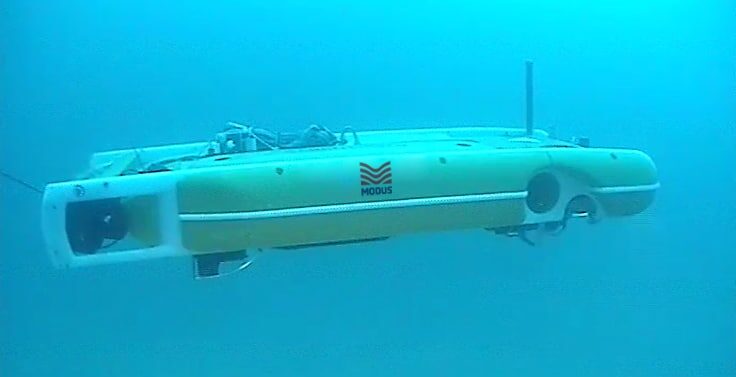
Hybrid AUV secures Statnett Survey Contract for Modus
Global subsea services company, Modus Subsea Services Ltd has been awarded a contract to perform survey services in connection with a new cable corridor requirement in Ofotfjorden, northern Norway. The campaign will use the Modus Hybrid AUV (HAUV) system which represents the very latest in merged ROV and AUV technology.
As part of the scope, Modus shall perform a desk top study, to identify further site information and support the preparation of the project. In Q2 2021, Modus shall mobilise HAUV-2 to collect geophysical seabed survey data, perform target inspection and an environmental survey across a 6km x 1km area. The HAUV will be operated as a high-speed ROV in tethered mode to provide real time data feedback and decision making. The scope will be performed from the M/V Elektron vessel in a water depth range of less than 10 metres to 500 metres.
To perform the scope of work the HAUV will house Multibeam Echosounder, Sidescan Sonar and Sub-Bottom Profiler. The speed in which the HAUV can collect data in high current and shallow water environments without compromising data quality, is expected to yield significant project efficiencies for Statnett.
"This is the first survey contract we have entered into with Modus and we are looking forward to the cooperation", says Karin Ryssdalsnes Project Manager at Statnett.
Guy Lainchbury, Commercial Manager for Modus said “Working for Statnett, the system operator of the Norwegian grid, is a great opportunity for Modus to demonstrate this class leading Hybrid AUV technology. The difficult environmental conditions that we will experience, along with the ability to collect multiple streams of data from varying sensor technology and at high speed, will be the defining factors of this project. Modus HAUV systems are now used globally, and we have achieved success in reducing overall project timelines and providing best in class reporting. Modus look forward to working with Statnett across their subsea network into the future with this disruptive technology.”
For more information, please visit: www.modus-ltd.com