
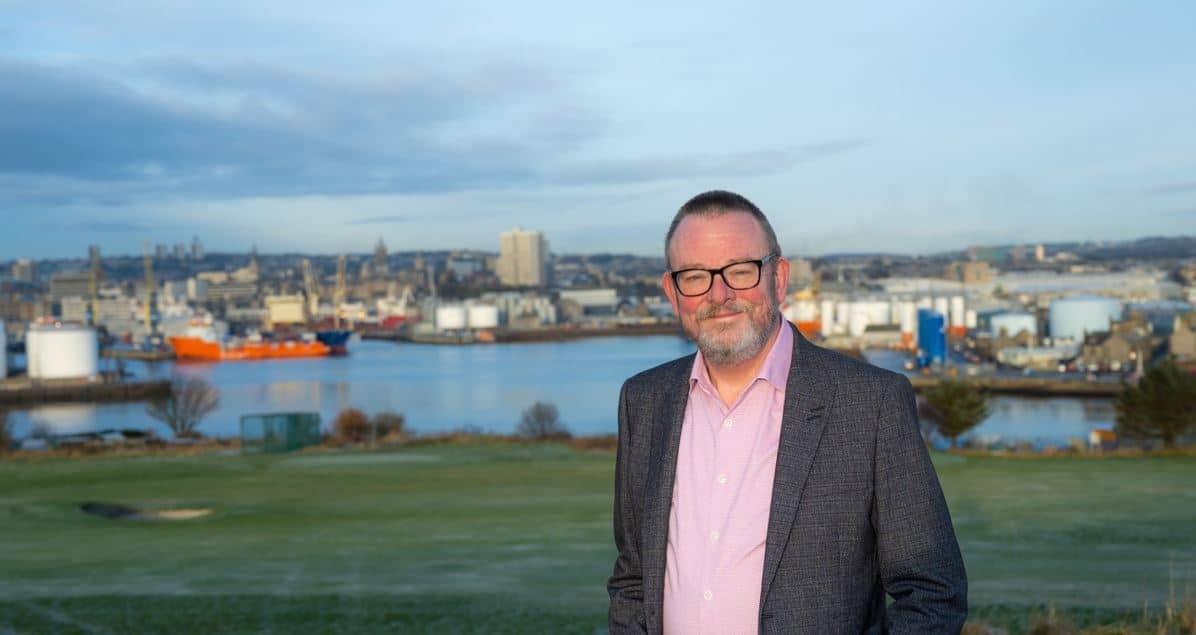
RS Aqua Appoints Malcolm Johnston as Senior Sales Manager in Maritime
Throughout the past year, RS Aqua has been working on expanding its markets across the UK and Ireland. As part of this expansion, RS Aqua has recently appointed its first Scotland-based member of the team - Malcolm Johnston. He is the company's new Senior Sales Manager in Maritime.
Prior to joining RS Aqua, Malcolm has mainly worked in the oil and gas industry and subsea engineering focused on robotics and sensor technologies. He has a long track record in sales and business development and is known for building and maintaining long-term relationships with customers. Some of Malcolm’s most notable work was with Forum Energy focused on ROVs, where he was able to build an extensive professional network.
“I am very pleased to be joining a company which supplies a variety of markets. I think this showcases the huge potential RS Aqua has.” - said Malcolm about his appointment.
Malcolm will be responsible for developing and converting business opportunities for new and existing RS Aqua product lines in the offshore energy, subsea engineering and defence sectors.
RS Aqua's Managing Director - Martin Stemp commented:
“I am delighted to be welcoming Malcolm to our team at this exciting time for RS Aqua. Malcolm brings a depth of experience and a positive track record in the robotics and subsea sectors, and he is highly regarded amongst his peers.
With Malcolm joining us at the start of 2021, this marks the first of several significant investments that we are making in the business to continue our growth and our impact across the Marine Science Technology sector.”
To learn more about RS Aqua’s career opportunities visit www.rsaqua.co.uk/careers.

Cable solution for eco-sustainable reuse of offshore platforms
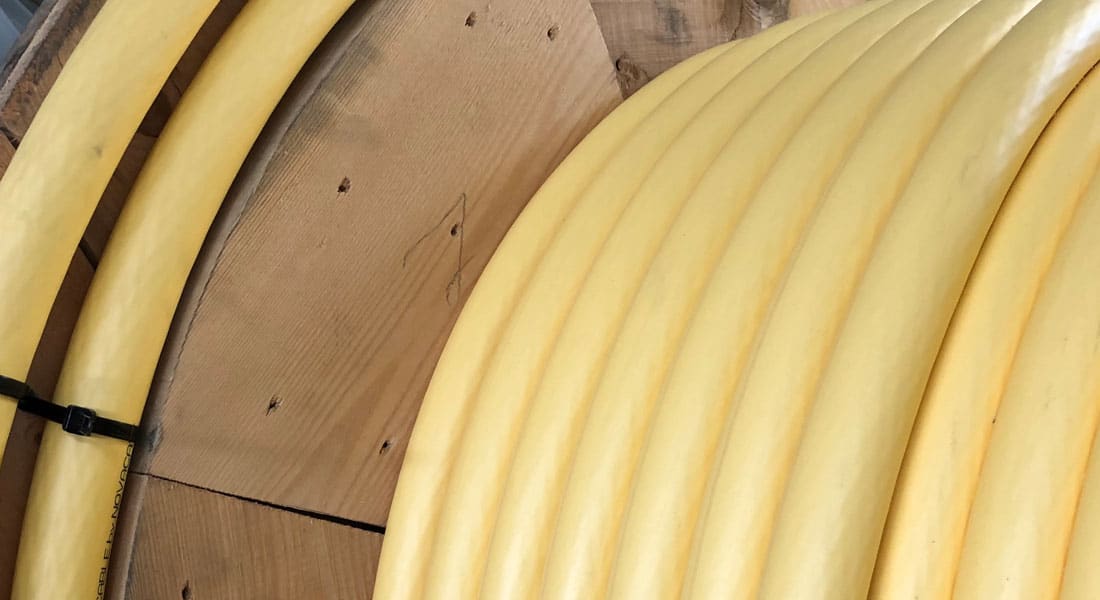
Novacavi has recently made its own technological-productive contribution to the mineral growth test started for the platform protection from corrosion and to favour colonization by marine organisms on the ENI "Viviana 1" platform, offshore Pineto (Abruzzo). For this specific activity within the PlaCE project (https://bluegrowth-place.eu) that involves the eco-sustainable reuse of offshore platforms, Novacavi has designed and provided an ad hoc solution to connect and make efficient the electrified growth structure submerged in the sea at a depth of about 20m. As integral part of this equipment, the 2XM518 water blocked low voltage underwater cable with high resistance to breakage and dynamic stresses due to constant immersion in water.
" Novacavi is pleased to have contributed to the development of innovative strategies and technologies for the decommissioning and possible reuse of offshore platforms, which combine industrial needs with the protection of the marine environment."
said Francesca Faverio, Business development Manager, Novacavi
For more details, please contact [email protected] or visit www.novacavi.it/news

Countdown on for new SUT Underwater Robotics Award nominations
With less than three weeks before the deadline for nominations for the new Gwyn Griffiths Underwater Robotics Award announced at The Society for Underwater Technology’s (SUT’s) AGM the countdown is on in earnest. Closing date for nominations is 14 February 2021.
 Cheryl Burgess, the SUT’S Chief Executive explained:
“The SUT’s International Panel on Underwater Robotics announced the creation of the Gwyn Griffiths Underwater Robotics Award (GGURA) at our AGM in mid-December. We are eager to have nominations from around the globe.
“The award will recognise people in the early to mid-stages of their career (and under 40 years old) who have made outstanding contributions to their field in underwater robotics. The range is wide, for the award may be for industry/commercial, research and/or creative activity in underwater robotics. The winner will receive £500, a certificate an engraved award and recognition throughout the SUT’s global membership.”
Nominations or applications for a GGURA must consist of the following documents.
- A letter of nomination or application that describes how the candidate meets the criteria.
- The letter should be no more than 2-pages in length. Supporter(s) of the nomination/ application may add their signature to this letter or supply an email that indicates their support for the candidate.
- A 100-word citation or appraisal of the candidate’s research describing their contributions in a way easily understandable to those outside the discipline.
- A curriculum vitae.
- All applications/nominations to be received by [email protected] by 14 February 2021.
Announcing the Award, Neil Bose, Chair of the SUT Panel on Underwater Robotics said:
"Members of the Panel on Underwater Robotics were excited by Professor Gwyn Griffiths’ generosity in supporting this award and were especially enthusiastic that it should be an early to mid-career award to encourage the up-and-coming generation of underwater robotics workers in their careers."
With Gwyn Griffiths MBE, a Past President of the SUT adding:
"As a vibrant, forward-looking learned Society the SUT is at the forefront of encouraging and facilitating international cooperation in Underwater Robotics. From my own career I know that peer-recognition of achievements through an international Award can make a substantial and lasting difference. These have been times for reflection, and by enabling this new Underwater Robotics Award I am delighted to support the innovators of today and tomorrow."
For furthre information visit: www.sut.org/gwyn-griffiths-underwater-robotics-award-ggura

Sequoia Scientific, Inc., Ocean Instruments, and Geometius Deliver Sediment Dredging Measurement System
 Ocean Instruments (Fall City, WA), and Sequoia’s Dutch distributor, Geometius, have delivered a Fast Oceanographic Automated Measurement (FOAM) system for dredge monitoring.
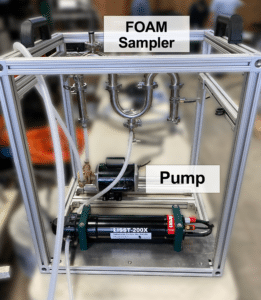
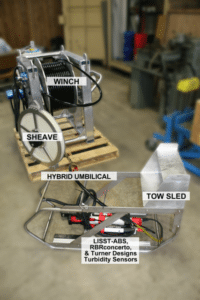
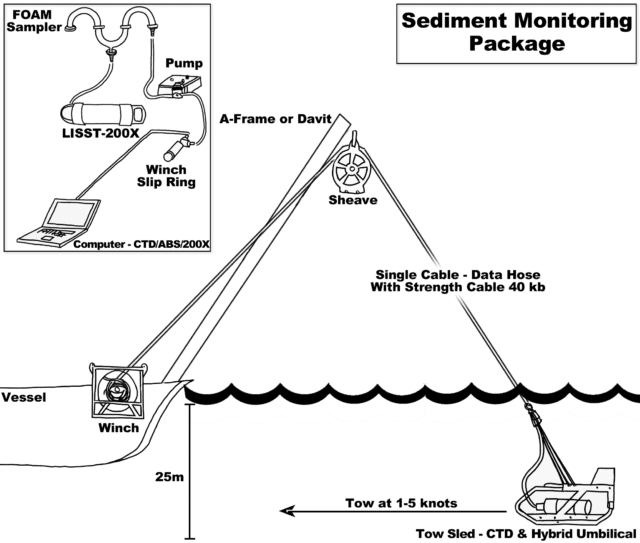
The FOAM system is composed of a pump and winch with a fluid rotary joint, 100 m hybrid cable with hose and conductors, a tow sled with an RBR CTD and a Sequoia LISST-ABS, and a topside mounted Sequoia LISST-200X running in flow-through mode.
The sled is towed through the dredge plume, while water is continuously pumped through the hybrid cable and winch to the topside LISST-200X. This unique setup delivers particle size, concentration (from laser as well as acoustic backscatter), and other pertinent parameters from the CTD in real-time as the sled is being towed and yo-yo’ed through the dredge plume from a vessel of opportunity. In addition to real-time measurements, this specialized system allows for co-located water samples to be collected on deck for ground-truthing sensor data.
The FOAM system itself was initially designed by Ocean Instruments for un-biased water sample collection and in-line measurements on an underway vessel. A number of systems have been delivered for moving vessel particle sampling. To name a few: Chlorophyll sampling for harmful algal blooms in the Puget Sound, suspended sediment monitoring in the Caspian Sea, and oil spill response studies in Mexico.
For the present system, Sequoia’s LISST-200X and LISST-ABS was integrated into the system and tested prior to delivery. The complete system: instrumentation, winch, hybrid cable and tow sled, together with spares, was delivered by Sequoia to Geometius. Installation, commissioning and training was originally planned on-site in Europe. However, due to the COVID-19 outbreak it was performed virtually by Ocean Instruments and Sequoia via a series of rapidly produced training videos and online training sessions.
For more information visit: www.sequoiasci.com
NEW version of European Bathymetry Digital Terrain Model out now!
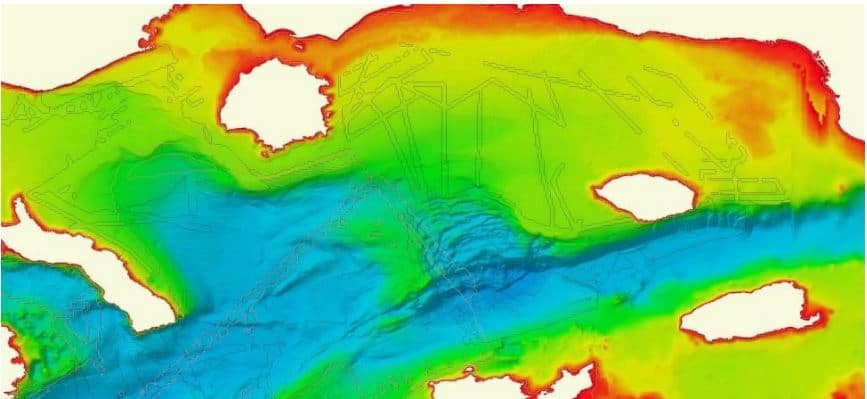
The European Marine Observation and Data Network (EMODnet) High Resolution Seabed Mapping Project, which has been running since 2009, has released an update of its Digital Terrain Model (DTM), which now includes greater coverage across European Seas and beyond.
“We are releasing the EMODnet Bathymetry 2020 DTM product, at the dawn of the United Nations Decade of Ocean Science for sustainable development, as a clear proof of the European contribution to the world seabed mapping effort. With this upgraded version of the EMODnet Bathymetry DTM, we allow users to have an easy and free access to high quality bathymetric data which can drastically improve their work.”, declared Thierry Schmitt from SHOM (Service Hydrographique et Océanographique de la Marine).
The EMODnet Bathymetry portal aims to provide a single access point to bathymetric products, Digital Terrain Models (DTM) and data (survey data sets and composite DTM).
OceanWise is a full partner in EMODnet and is proud to lead the UK contribution on this auspicious project. OceanWise’s role is to process large volumes of sometimes overlapping hydrographic survey data from a variety of sources and to create a seamless seabed or bathymetric surface, or DTM, of the whole of the UK Continental Shelf. A high-resolution version of the DTM is included in the OceanWise Marine Themes Marine Mapping data product and Web Map Tile Services (WMTS), while a sub-sampled lower resolution version is submitted to EMODnet for inclusion in the European Seas DTM which then also contributes to GEBCO and the Seabed 2030 project. Other partners in EMODnet adopt a similar approach. As well as the DTM, OceanWise processes and corrects large volumes of metadata and outputs this in a format compatible with the SeaDataNet project. The metadata is linked to the DTM, so the source or provenance of the data is always apparent and maintained.
For more information visit: www.oceanwise.eu/news.
Fugro selects Sonardyne for its uncrewed vessel operations
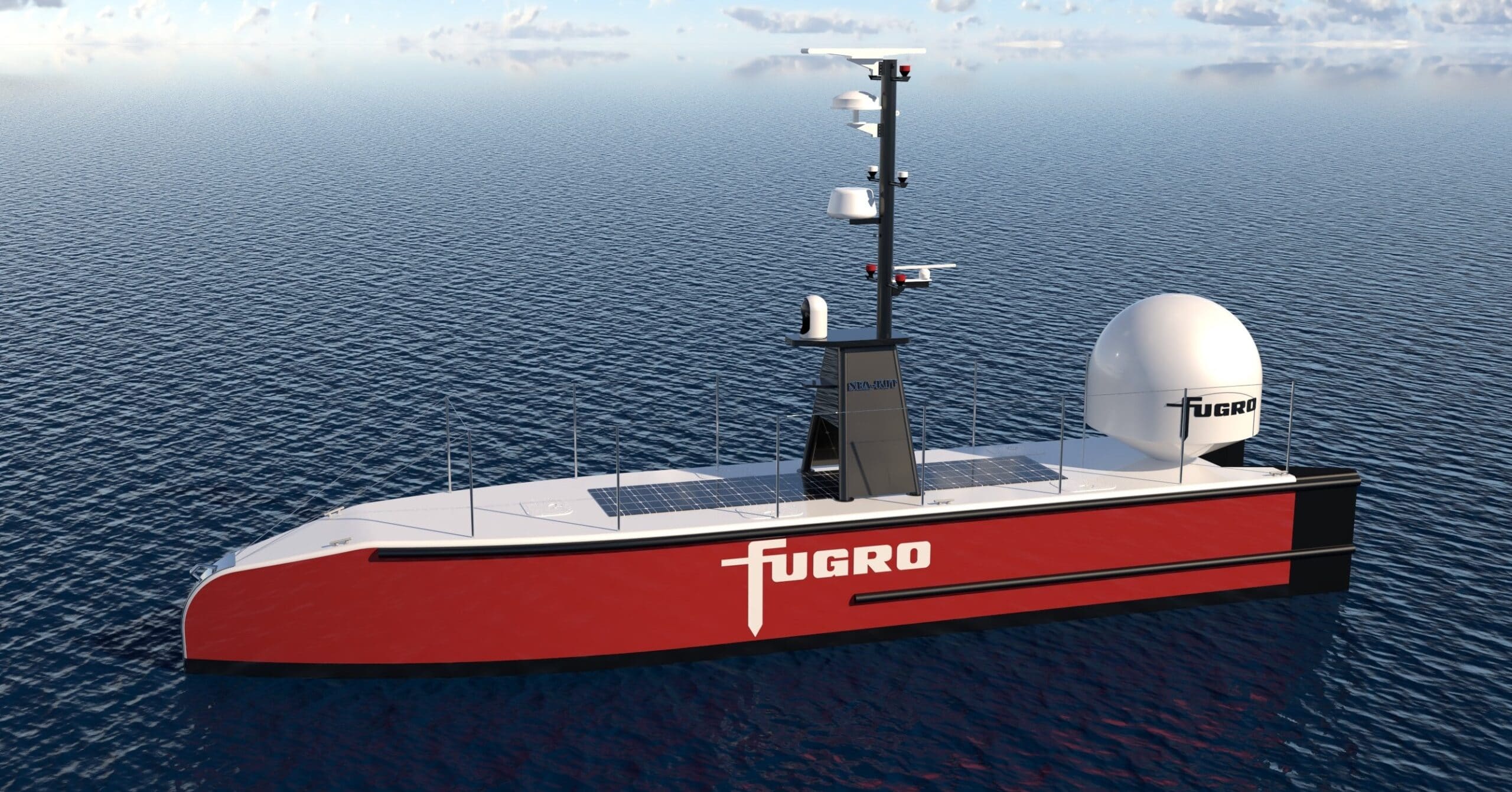
Leading geo-data specialist Fugro has chosen underwater positioning and communications technology from Sonardyne to support its global fleet of uncrewed surface vessels (USVs) and remotely operated vehicles (ROVs). Fugro will integrate Sonardyne’s Mini-Ranger 2 Ultra-Short BaseLine (USBL) positioning system, configured with the company’s Marine Robotics software extension pack, into its new 12 m-long Blue Essence USV, of which the first vessel will be delivered to Fugro’s base in Perth in February.
Mini-Ranger 2 with the enabled Marine Robotics pack will enable the Blue Essence to be used to deploy, track, command and control the Blue Volta electric remotely operated vehicles (eROVs) and autonomous underwater vehicles (AUVs) as part of inspection, survey and data harvesting projects, all controlled from Fugro’s onshore remote operations centres.
Mini-Ranger 2 is ideal for use from small vessels, including USVs, where survey-grade positioning performance is required. It can simultaneously track 10 targets at very fast update rates, is quick to install and has a standard operating range of 995 m, extendable to 4000 m. Sonardyne’s Marine Robotics software pack unlocks valuable additional capability when used with a compatible subsea vehicle mounted instrument such as AvTrak 6. This includes secure data exchange and remote control of multiple AUVs deployed in swarm scenarios.
For more information visit: www.sonardyne.com

GeoAcoustics Ltd expanded their dealer network for Canada and North America
GeoAcoustics Ltd, the UK based manufacturer of side-scan, bathymetry and sub-bottom profiling systems have recently expanded their dealer network for Canada and North America through the appointment of Canadian based Dasco Equipment Inc and US based Telestra Technologies.

Dasco Equipment Inc based in Charlottetown, Canada have a 30 year track record in the supply of hydrographic instrumentation and will be able to represent GeoAcoustics’ product from their bases in both East and West Canada.
Telestra Technologies based in Katy, Texas are an established marine solutions provider with 4 locations across the US.
For more information visit: www.geoacoustics.com
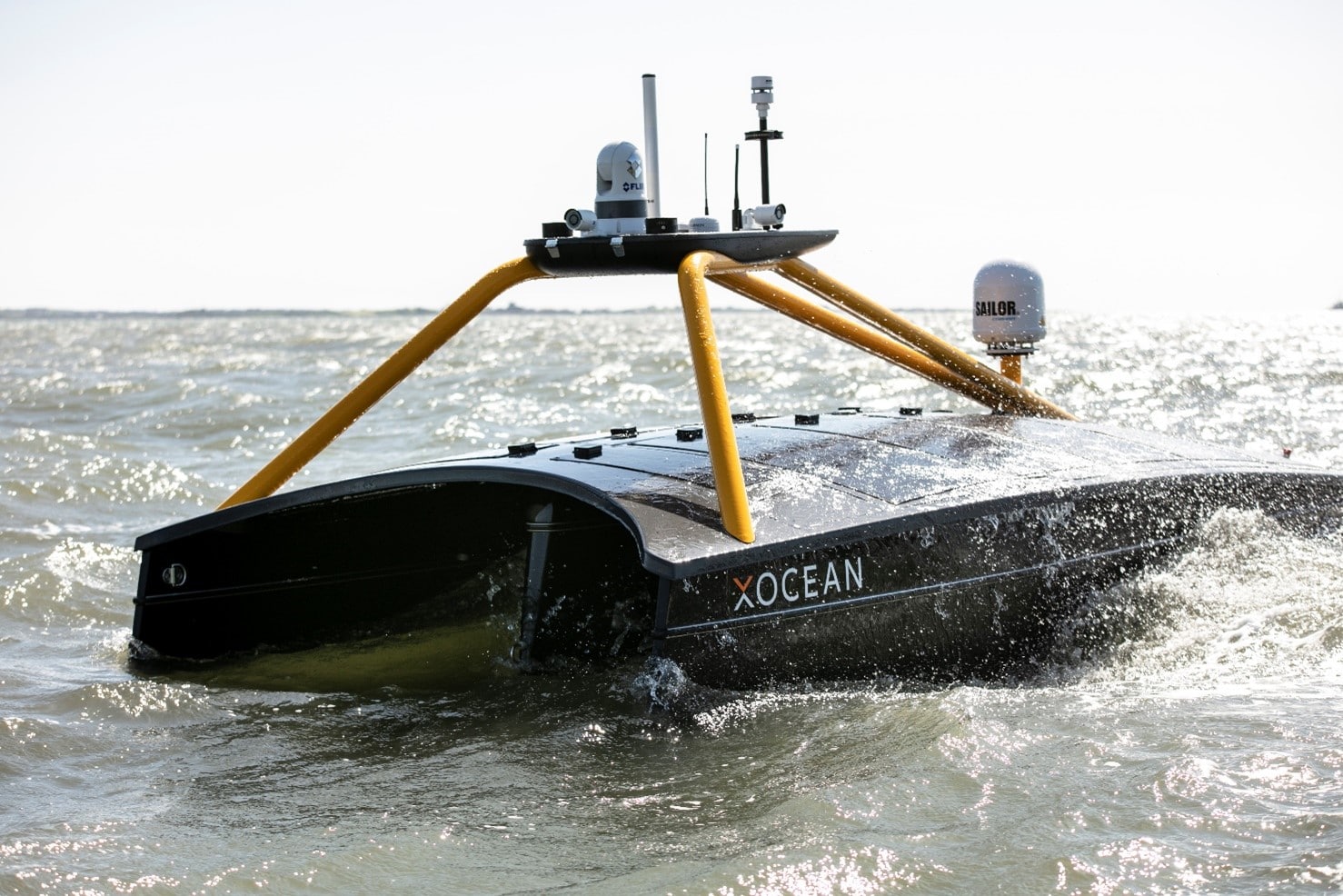
IIC Technologies and XOCEAN Deliver Ground-breaking Survey of Lake Superior Seabed for the Canadian Hydrographic Service
In a substantial move forward for the Canadian marine industry, two XOCEAN Uncrewed Surface Vessels (USVs), remotely controlled via satellite, took to Lake Superior this winter to undertake pioneering survey work for the Canadian Hydrographic Service (CHS) in partnership with IIC Technologies.
The project marks the first time that USV technology was used to gather bathymetry data in inland waters in Canada.
CHS contracted IIC Technologies to acquire a high-resolution seabed survey in water depths up to 200m, of over 800km2 off Thunder Bay, Ontario, using USV technology. IIC partnered with XOCEAN, who provided and remotely operated their XO-450 USVs from XOCEAN’s Control Centres in the UK and Ireland, while IIC provided the Party Chief, shore-based data processing, and logistical support.
The uncrewed vessels are around the size of an average car (4.5 metres) and half the weight (750kg) and are remotely monitored and controlled 24/7 via a satellite connection by a team that can be located anywhere in the world. XOCEAN’s USVs offer significant benefits including increased safety with operators remaining onshore, survey efficiency due to multiple-day mission 24/7 operations, drastically reduced local resourcing requirements, and carbon-neutral operations which together lead to significant economic savings.
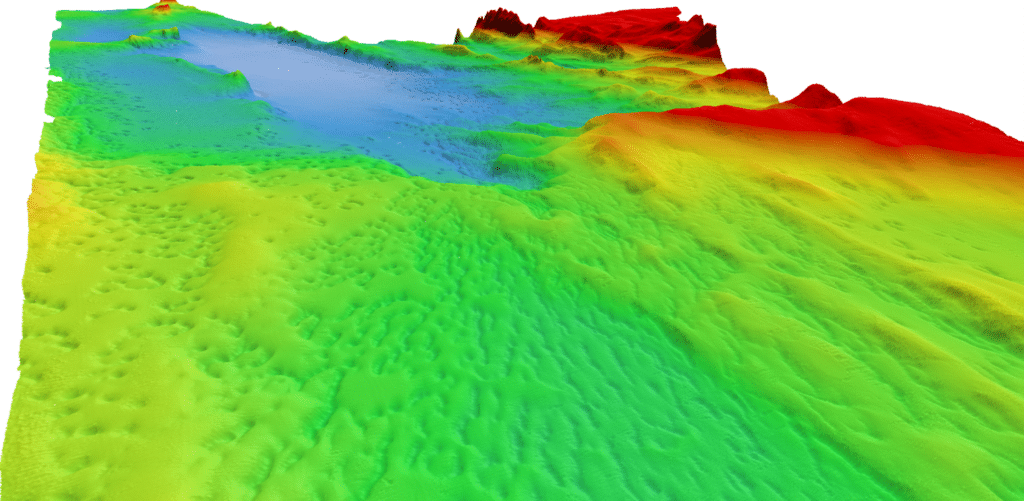
Throughout the mission, a team combining IIC Technologies Hydrographers and Data Processors and XOCEAN USV Pilots and Surveyors remotely monitored the USVs to ensure safe operation of the vessels and quality of data acquisition. The success of this project demonstrates the highly flexible and collaborative nature of this new technology, enabling industry experts to have direct access to real time data, from any location. Given ongoing COVID-19 restrictions, XOCEAN continues to prove the resiliency of its operations by partnering with experts, such as IIC Technologies, who also performed an active support role on site with the USVs while in Thunder Bay.
Dave Bazowsky, Engineering Project Supervisor, said: “CHS wanted to evaluate the operational readiness of a commercial off-the-shelf autonomous technology in a real working environment. The area chosen in northern Lake Superior lies within a Secondary Low Impact Shipping Corridor and the world’s largest freshwater National Marine Conservation Area. It was also selected to simulate an analogous working environment one may expect in the Canadian Arctic. The IHO S-44 Order 1A data collected in this area will be used to update navigational publications used to facilitate safe and efficient navigation and will also contribute to the Blue Economy in general.”
John Conyon, Director of Hydrographic Operations, said: “The cooperation and flexibility shown by XOCEAN and CHS were key to successfully performing this project in very challenging late fall conditions in northern Lake Superior. The XOCEAN ASV’s performed well through storms and sea ice, providing a stable platform that enabled the acquisition of high-quality bathymetric data that meets CHS stringent requirements”
Commenting on the project, James Ives, CEO of XOCEAN said: “Our USV platform has demonstrated itself to be a safe, reliable and carbon neutral solution for the collection of ocean data. We are delighted to be working with IIC Technologies on this ground-breaking project delivering data for the Canadian Hydrographic Service.”
For more information visit: www.xocean.com

Greensea Receives US NAVY Award to Advance Standoff Command and Control
Greensea's open architecture technology on Remotely Operated Vehicles furthered by Small Business Innovation Research Phase II grant
Greensea Systems, Inc. creator of OPENSEA®, the open architecture robotics platform for the marine industry, is pleased to announce the award of a Phase II Small Business Innovation Research (SBIR) ASAP grant totaling $1,100,000, with option for additional funding, for the continued development of Standoff Command and Control of Remotely Operated Vehicles (ROVs). This project has been funded in whole or in part with Federal funds from the Naval Air Warfare Center Aircraft Division, under Contract No. N6833521C0113.
The Phase II award will further the development of Greensea's long range standoff command and control system for ROVs towards providing the US Navy a capability of conducting water-borne Explosive Ordnance Disposal operations with marine robotics from a safe standoff distance. The standoff system is hardware, transmission, and vehicle agnostic and provides high levels of autonomy for the ROV as well as the coordination of launch and recovery, vehicle tether, and host USV platform. Greensea's long range standoff system leverages almost 15 years of developing supervised autonomy systems for ROVs and by virtue of being built on OPENSEA, is entirely open architecture. Commercial applications of this technology include operating highly integrated ROVs and robotic systems from Unmanned Surface Vessels by operators located anywhere in the world.
Ben Kinnaman, CEO of Greensea, is the Principal Investigator of this Phase II SBIR award. “The long range standoff command and control of ROVs is the single best solution to keep the warfighter safe by getting them as far as possible from a subsea threat,” notes Kinnaman. Peter Kerson, Program Manager for EOD Technologies at Greensea, adds “standoff command and control will dramatically increase flexibility and maneuverability of maritime expeditionary EOD forces, and that same flexibility will be invaluable to industry users who want to centralize ROV operations, reduce personnel who have to go to sea, and migrate to fully unmanned offshore services.”
While the technology is being developed for the military, Greensea is working with leading marine industry companies on commercialized variants of the technology. Greensea's technology will directly address the shortage of offshore personnel for ROV operations including near-term shortages associated with the COVID pandemic.
For more information visit www.greensea.com

HR Wallingford launches new virtual Dredging Management course
The HR Wallingford new virtual dredging management course will be delivered live over four days in February. This new online format has been developed from their successful two-day classroom course, and will provide an overview of the environmental aspects of dredging, the latest technology and equipment, and the management of dredged material and dredging projects.
The course is aimed at those who are responsible for commissioning and managing dredging contracts and those who regulate dredging. It has been designed by their industry experts and will deliver 16 hours of live lectures and exercises (via MS Teams) on 11, 12, 15 and 16 February. The three course tutors for this training have excellent technical and practical knowledge, 50 years of combined experience in the dredging market, and have been involved in many commercial and research projects of international significance.
Further details on the course content can be found at http://bit.ly/OnlineDredgingCourse, or you can contact HR Wallingford at [email protected].
Registration is now open at http://bit.ly/OnlineDredgingCourse.
The course fee per delegate is £395.00 (excluding VAT).