
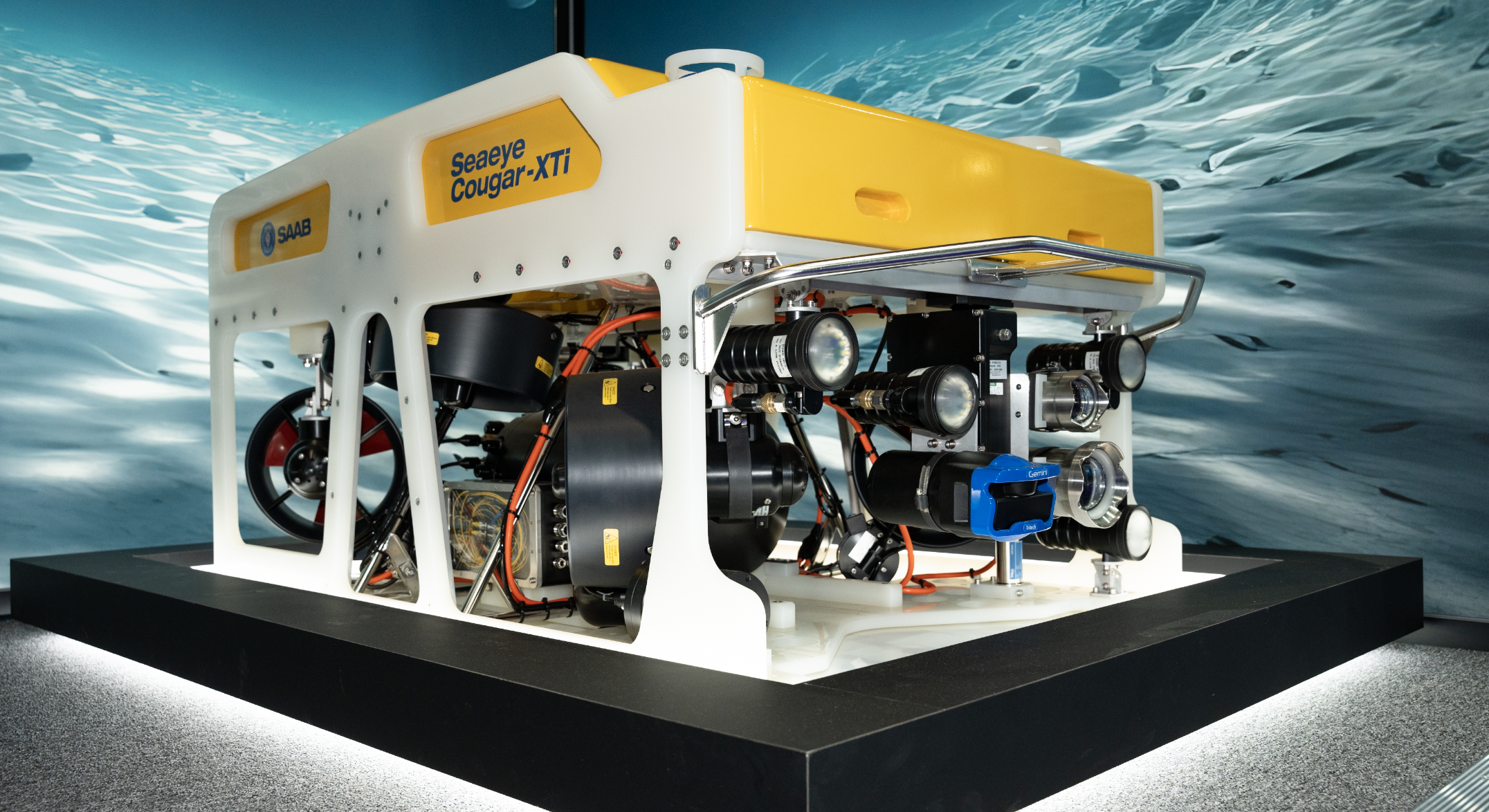
HBC Group, a leading provider of offshore inspection services, has recently purchased Saab’s Seaeye Cougar-XTi, a state-of-the-art remotely operated vehicle (ROV) known for its advanced capabilities
 Saab’s Seaeye Cougar-XTi stood out due to its remarkable carrying capacity, a crucial factor for HBC Group's operations. The Cougar-XTi is a highly flexible and extremely powerful electric ROV, depth rated to 2000m. The ROV is fitted with six 500 Volt, DC thrusters that provide exceptional thrust for stable vehicle operations in high current environments.
These features allow the transport of survey equipment that was previously too large for HBC Group’s existing ROVs, catering to the specific needs of clients, particularly those in offshore wind farms.
The versatility of the Cougar-XTi extends to carrying specialised tools for hydrographics and geophysical services. HBC Group utilises PMAC Group’s system for cathodic protection measurements, and the manipulator arms play a crucial role in non-destructive testing.
Christian Eilersen, CEO at HBC Group Said:
“We are thrilled to elevate our offshore inspection capabilities with the Seaeye Cougar-XTi. This advanced ROV enables us to meet the unique needs of our clients in offshore wind farms, and its addition to our fleet reflects our ongoing commitment to excellence and innovation in the field of offshore inspections.”
Looking ahead, HBC Group plans to deploy the Cougar-XTi for daily inspections, allowing them to bid on tenders that were previously inaccessible due to payload constraints. The order/capability is expected to open new avenues for the company in the offshore wind sector.
Jon Roberston, Managing Director at Saab Seaeye said:
“We're thrilled to empower HBC Group with the advanced Seaeye Cougar-XTi. This sale underscores our commitment to delivering top-tier equipment, redefining standards for efficiency and reliability in offshore operations.”
In addition to the Cougar-XTi, HBC Group highlighted the success of its previous ROV purchase with Saab, the Seaeye Tiger. The company noted its reliability and higher uptime compared to previous ROVs. The Tiger has played a crucial role in recent inspections on offshore wind farms in Denmark, the UK, and Germany, particularly in waveform inspections.
The addition of the Cougar-XTi to HBC Group's fleet signifies the company's commitment to staying at the forefront of technology in the offshore inspection services sector.

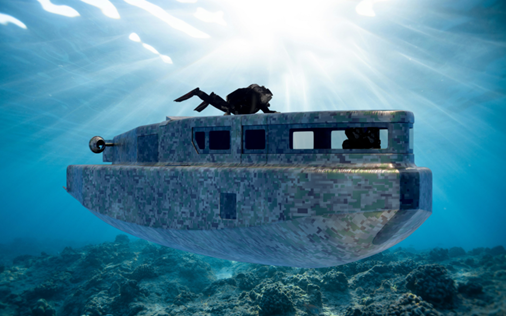
Robosys unveils first-in-class subsea AI-supported navigation and vessel control solution, following a significant contract win for a fleet of Advanced Swimmer Delivery Vehicles
The UK maritime innovator, Robosys Automation, has unveiled its new subsea advanced navigation and vessel control solution following its announcement that the business has
secured a significant contract with an undisclosed international customer for a fleet of Swimmer Delivery Vehicles.
The first-in-class Advanced Swimmer Delivery Vehicles (ASDVs) will feature Robosys’ Voyager AI-supported advanced navigation and vessel control systems, enabling critical navigational and enhanced decision-aided support to the crew.
The ASDVs will safely and comfortably enable dive units to be transported to and from remote and challenging locations. Operating in three modes, surface, semi-submerged and submerged, initially the ASDVs will be crewed, with decision-aided navigational support.
Following completion of their initial project, the ASDVs will be upgraded in a phased roll-out to feature an autonomous mode allowing autonomous self-navigation, a return to base and loiter facility whether operating on the surface or subsea.
Once the ASDVs are upgraded they will be able to be remotely operated and monitored from a mothership, Ground Control Centre (GCC), or from a Remote Operation Centre (ROC).
Voyager AI is a world-leading maritime artificial intelligence (AI) software both developed and supplied by Robosys Automation. Operators benefit from decision-aided autonomous operations with collision and obstacle avoidance as well as anti-grounding enabling safe passage, combined with AI reasoning, being crucial when operating in challenging subsea and surface waterborne environments.
Aditya Nawab, CEO of Robosys Automation, which is headquartered at the National Oceanography Centre in Southampton, UK comments, “We are delighted to unveil Robosys’ new
subsea autonomous navigation and vessel control solution. Robosys is already regarded as a leader in its advanced maritime autonomy provision to surface vessels of all types and sizes, therefore it was only natural to provide subsea solutions when further developing Voyager AI. It is an exciting time, whilst also reassuring to know that we are helping to support safer and smarter (and cleaner) seas.”
The new first-in-class fleet of Advanced Swimmer Delivery Vehicles will be launched in Spring
2025.
Discover more at www.robosysautomation.com
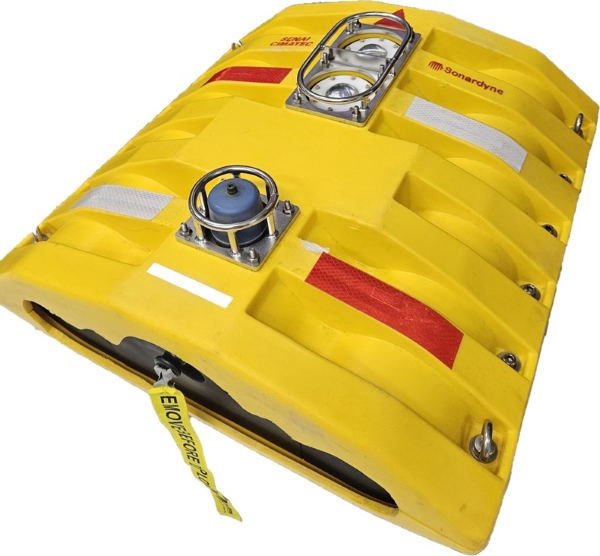
Sonardyne confirms next phase of On Demand Ocean Bottom Node project with Shell, Petrobras and SENAI CIMATEC in Brazil
Sonardyne is proud to announce the next phase of the pioneering On Demand Ocean Bottom Node (OD OBN) development project in Brazil. The project, which began in 2018, involves a collaboration between industry partners including Shell Brasil Petróleo Ltda, Petrobras and SENAI CIMATEC and is supported under the Research Development and Infrastructure funding clause of the Brazilian National Agency for Petroleum, Natural Gas and Biofuels (ANP).
These highly innovative nodes might lead to the next generation of geophysical monitoring systems in the offshore oil and gas industry. Using Sonardyne’s proprietary optical and acoustic communications technologies, and drawing on its extensive experience of seabed monitoring, OD OBN expects to provide a versatile, lower cost, more resilient solution for time-lapse seismic and subsidence monitoring of producing reservoirs with better data and the capacity to be placed on the ocean floor for up to five years without human intervention.
The idea is that data from these nodes can be extracted using Sonardyne’s through water optical communications system to a nearby Autonomous Underwater Vehicle such as ‘Flatfish’ which was developed by Saipem and SENAI CIMATEC under another ANP funded program sponsored by Shell and Petrobras.
This latest phase was confirmed by the signing of contracts between SENAI CIMATEC and Petrobras in August 2023 and between Shell, SENAI CIMATEC, and Sonardyne in April 2024, to produce a pilot array of 600 prototype nodes expected to be deployed towards the end of 2025 at a preselected field offshore Brazil.
This pilot array is planned to be manufactured at a newly created pilot plant facility constructed by SENAI CIMATEC at CIMATEC PARK, in an industrial region called Camaçari, close to the city of Salvador in Brazil. The pilot plant has a design capacity to produce 600 nodes per year, featuring state of the art facilities including specialist parts machining and metals treatment, surface mount electronics production, a large and flexible manufacturing area and various environmental and functional testing apparatus, all of which are required to turn raw materials into completed nodes.
Shaun Dunn, Projects Director, Sonardyne, welcomed this latest project phase and commented “We have been developing the enabling technologies for semi-permanent seabed seismic and subsidence monitoring nodes for over a decade and are therefore naturally delighted that they will soon be used in the world’s first large scale field wide test. Our sincere thanks go to our research partners in Shell, Petrobras and SENAI CIMATEC for supporting this program since its inception several years ago.”
Shell and Petrobras have been trialling OD OBN prototypes during conventional OBN seismic campaigns, including at Sapinhoá and Itapu, in over 2,000 metres of water off the coast of Brazil.
"It is a great milestone to see that this technology, made in Brazil, with the support from ANP and in collaboration with national, international, and the two leading offshore operators, is closer to being deployed to monitor the large Brazilian Pre-salt fields.", says Jorge Lopez, Shell Brazil Subsurface Technology Manager.
The involvement of Petrobras, the state-owned Petroleum company of Brazil, has played a key part in the development of OD OBN and they intend to take delivery of the pilot array on completion for deployment at a jointly operated offshore field in the pre-salt region to the south of Rio de Janeiro.
“The OD OBN technology will be important in the reduction of greenhouse gas emissions during our seismic acquisition operations offshore. Besides that, it will provide a higher level of automation in our seismic field activities which will lead Petrobras and partners to be more efficient in reservoir seismic monitoring processes in the Brazilian pre-salt area.”, says Alexandre Silva, Senior Geophysicist Advisor of the Research Centre of Petrobras (CENPES).
Production of the pilot array at CIMATEC PARK is expected to commence later in 2024 and to involve the employment of a new workforce that will be recruited mainly from the local area and trained in the specialist skills required for high-volume manufacturing and testing of nodes that will be deployed and used for prolonged periods in the harshest of marine environments.
“Our partnership with Shell, Petrobras and Sonardyne has successfully developed this innovative node from a simple proof of concept towards readiness for full commercial production at CIMATEC PARK. We are therefore very excited to be moving on to the next phase of this challenging programme that will create hundreds of nodes for the upcoming field scale deployment. We have invested significant capital and intellectual resources to ensure that this phase is successful.”, states Valter E. Beal, SENAI CIMATEC Innovation Projects Leader.

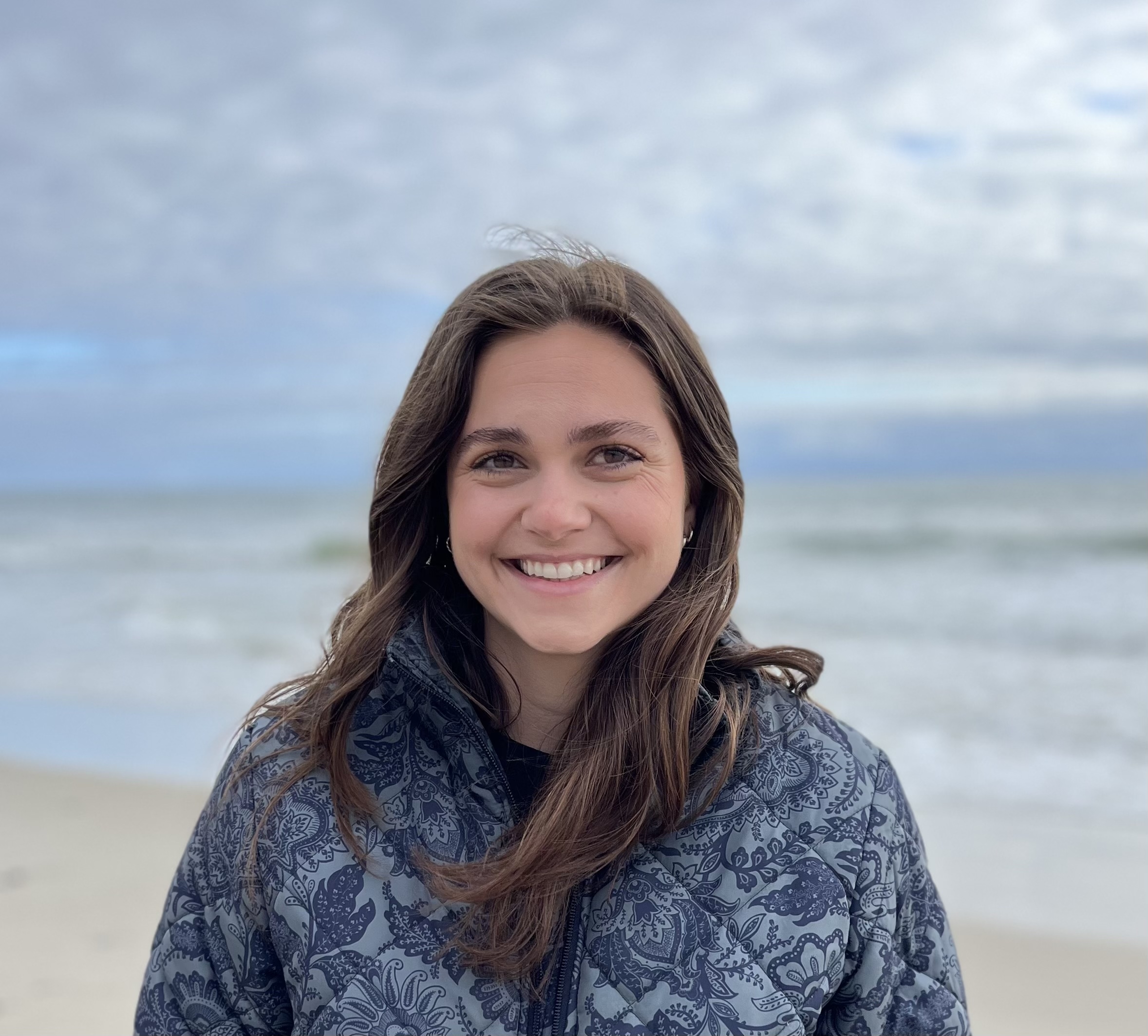
Dr. Sarah Ruth Merrigan Joins Teledyne RD Instruments
Teledyne RD Instruments (RDI) is pleased to announce the appointment of Dr. Sarah Ruth Merrigan as our new Technical Service and Support Engineer.
Sarah will be based out of RDI headquarters in Poway, CA. She joins Paul Chua, MMSci, and Chris Rockey on our field service team to enhance global support of Acoustic Doppler Current Profilers (ADCPs) and Doppler Velocity Logs (DVLs).
Sarah has a strong background in civil engineering, physical oceanography, water resources, and hydrology, with a BS and an MS from the University of Arizona and PhD from the University of California, Irvine. As a graduate research assistant, Sarah’s work focused on understanding the physical drivers of hypoxia in coral reef systems. She used analytical models and field observations to analyze the physical processes that affect the oxygen dynamics and water quality in these fragile ecosystems.
Grant Jennings, Product Line Director of RDI, commented on the appointment: “First off, I’d like to congratulate Sarah on her recently earned PhD from UC Irvine. And secondly, I’m delighted to welcome Sarah to the field service/support team at RDI. She brings a wealth of knowledge and experience in oceanographic data analysis, water resources, hydrology, and civil engineering. We look forward to her application of theoretical and practical knowledge to address our customers’ requirements."
Sarah adds, “I am excited to join the RDI team and look forward to leveraging my multi-faceted background to assist clientele with our products. This position combines my water resource background with my physical oceanography experience, including deploying and analyzing data from Teledyne RDI Workhorses, enabling me to help our customers problem-solve and collect robust observations in many settings.”
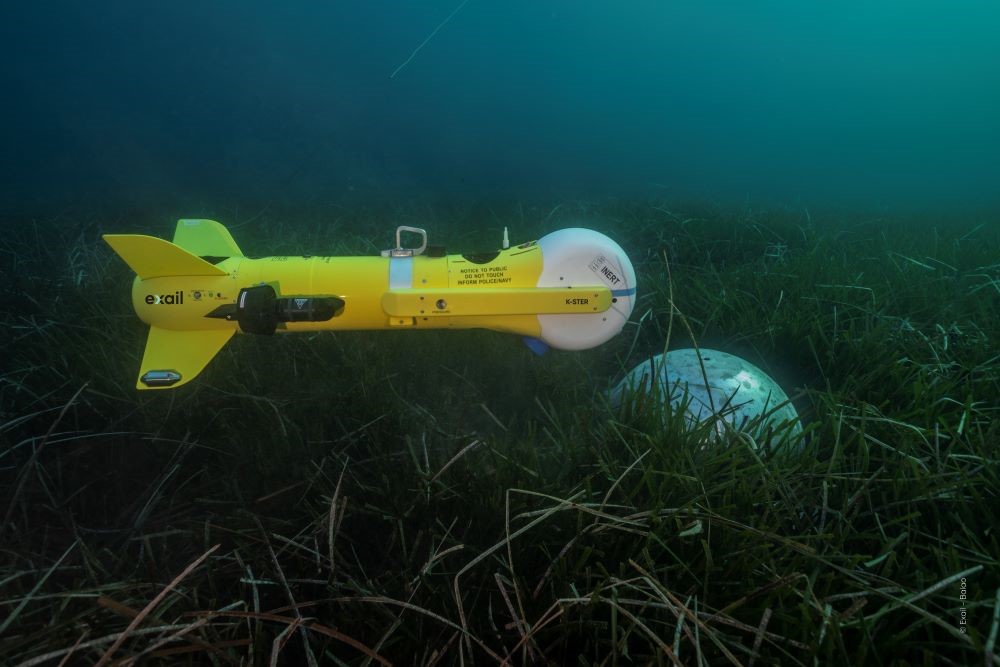
Exail selected by the European Commission to contribute to E-MCM Project
Exail, a world leader in robotics technologies, announces its selection to participate in the European Extended Mine Counter Measures (E=MCM) project. The objective of this consortium project, led by Naval Group Belgium, is to establish a future European sovereign capacity in mine warfare.
In response to the maritime mine threat and within the framework of the European Defense Fund, the European Commission is supporting European navies in enhancing their Mine Counter Measures capabilities. The primary aim of the E=MCM project is to integrate new functionalities into the next-generation toolbox (toolbox 2.0). These advancements are intended to effectively address the multifaceted threats posed by drifting, tethered, buried as well as the most modern mines.
Thanks to these new developments, the Toolbox 2.0 will go beyond the current new generation stand-off MCM Toolbox that Exail is developing and will be delivering as part of the replacement of the current MCM capabilities for the Belgian and Dutch navies. Leveraging scalable unmanned autonomous systems and intelligent platforms developed by Exail’s teams in both France and Belgium, the new functionalities and improvements will be smoothly integrated into Exail’s MCM ToolBox offer, enhancing operational efficiency and optimizing MCM operations.
“We are thrilled to have been selected as a key contributor to the E=MCM project. Exail brings extensive technological expertise to the forefront of the E=MCM project”, expressed Alain Fidani, Partnership and innovation funding Director. “Collaborating closely with Naval Group and other consortium partners, Exail will play a pivotal role in developing state-of-the-art technologies to counter maritime current and new mine threats effectively and deliver impactful solutions that strengthen Europe's defense.”
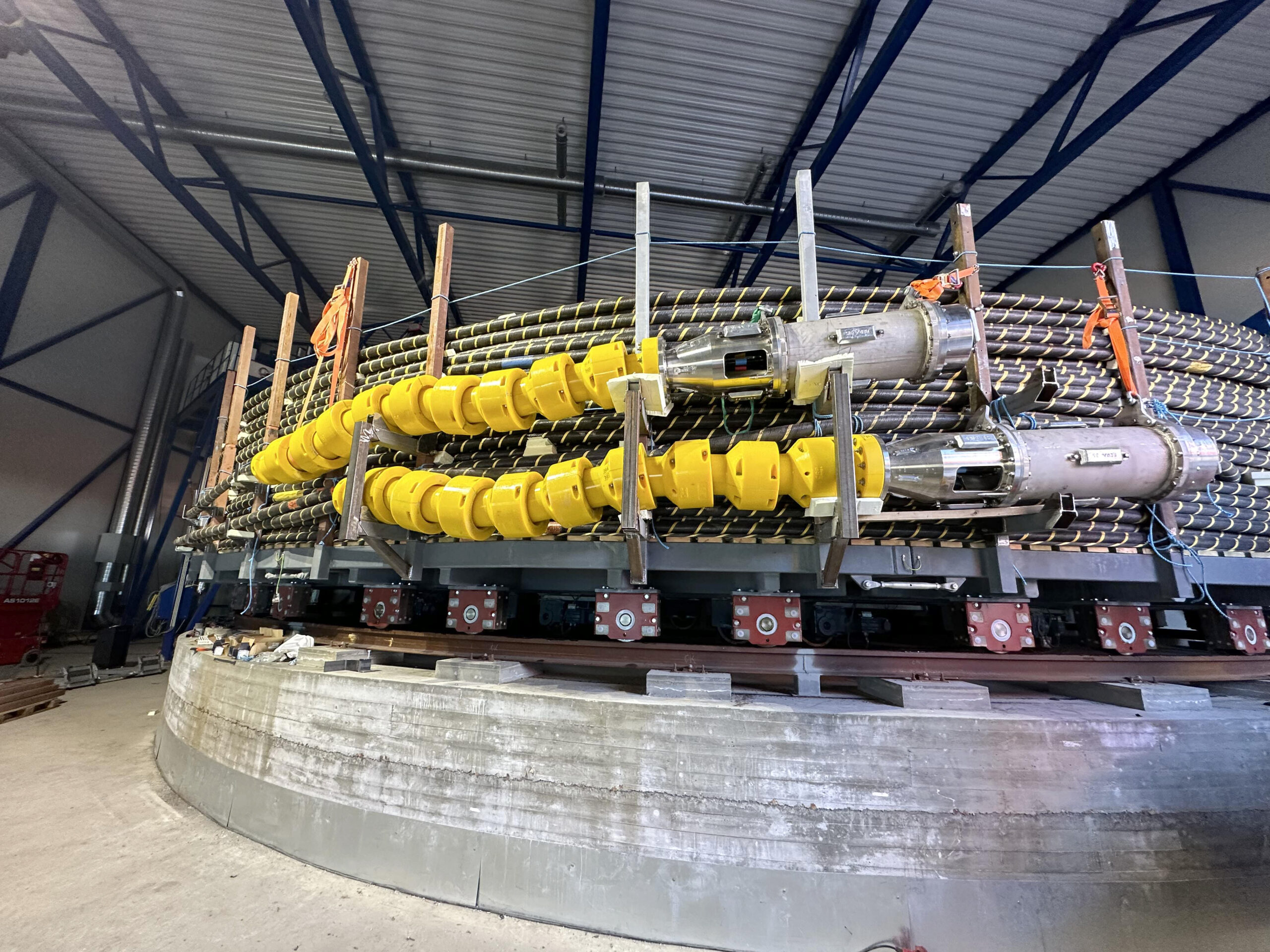
MacArtney's GreenLink enhances wave energy testing at world-class marine site
MacArtney's GreenLink terminations will connect innovative technology at PacWave South. This cutting-edge platform, run by Oregon State University, is for testing and optimising marine energy devices in open-ocean environments, driving the application of wave energy as a reliable power source.
Through PacWave South (PWS), a full-scale test facility featuring four offshore test berths, Oregon State University (OSU) provides the necessary infrastructure for U.S. and international wave energy innovators to feed the electricity grid with alternative power sources. The project received significant investment from the U.S. Department of Energy to support the development of carbon-free wave energy conversion (WEC) technologies. PWS covers an area of 2 square nautical miles and is licensed to support testing up to 20 commercial-scale WECs.
To ensure reliable grid connectivity from each berth to the shore-based facility, OSU and its selected prime marine contractor for the system manufacture, delivery and installation, RT Casey, collaborated with MacArtney to choose the proven GreenLink dry-mate solution. This will terminate the four dedicated PWS subsea power and fibre optic cables and connect client-supplied dynamic cables or umbilicals.
Scope of supply
MacArtney supplies five half GreenLink terminations for the four power transmission cables, including the termination work; four are allocated to the test site and one to mate and test them.
MacArtney technicians will help install and test the GreenLink terminations onsite at cable supplier NEXANS, Norway, a world leader in offshore control and high-voltage submarine cable systems. RT Casey will be overseeing the installation and testing of the GreenLink terminations onto the subsea cable in Norway at the cable factory, transportation of cable and connectors to Oregon, and the safe subsea installation of GreenLink from their cable installation vessel to the sea floor for future system connectivity.
Don Bryan, General Manager at MacArtney Inc., Pacific Northwest Operations, states: "We have a proven concept and a proven connector for harsh marine conditions already operative in global projects. Our end-to-end approach - from concept to installation - ensures we supply fit-for-purpose solutions based on years of research, development, and field deployment."
Advancing marine energy innovation
MacArtney's GreenLink range is designed for fast and flexible connectivity, making it ideal for the grid-connected PWS facility. The solution efficiently transfers its total potential power output of up to 20 megawatts (MW) from the berths back to the land-based electricity grid.
Furthermore, MacArtney's solution is scalable, making it attractive for both large commercial floating wind parks and small-scale systems. For instance, small islands and similar communities across North America, Alaska, and other regions currently relying on diesel for energy. This aligns with Oregon State University's goal of exploring the feasibility of wave energy as a reliable power source for remote communities.
Rewarding long-term relationship
MacArtney provided OSU with invaluable technical advice on connectivity solutions during the conceptual design phase of PWS, which started in 2012. Recognising that MacArtney had a proven connector that was well suited for the conditions, RT Casey opted for MacArtney's GreenLink solution for PWS, which includes MacArtney's extensive knowledge and expertise about the renewable energy sector compared to local suppliers who may need more experience in this specialised field.
“OSU sought expert advice from several companies during the design phase of PacWave South”, said Dan Hellin, PacWave’s Deputy Director. “MacArtney was consistently one of the most responsive and helpful. We were therefore delighted when our contractor selected MacArtney as the supplier of the dry-mate connectors for the PacWave test site.”
The PWS project underlines the power of connecting GreenLink to nature as a cutting-edge solution, reinforcing Oregon State University's leading role in WEC technology and power conversion infrastructure and advancing alternative energy as a key resource.
BioBase undergoes acquisition by independant investors
The automated cloud mapping platform for inland and coastal waterways, BioBase (biobasemaps.com), has recently undergone a change in ownership. Formerly under the Navico Group, a division of the Brunswick Corporation, BioBase has now been acquired by an independent group of investors and will now operate as BioBase LLC with operations in St. Paul, MN USA.
BioBase is a subscription-based mapping platform that processes sonar files from off-the-shelf marine electronic brands Lowrance® and Simrad® in the cloud, generating detailed bathymetric, seagrass or kelp, and bottom composition maps. Users can export maps and datasets in a variety of GIS formats.
"The team is enthusiastic about this new chapter and is eager to solidify BioBase as the premier solution for automated mapping derived from sonar files. Whether it's mapping depth, aquatic vegetation, or bottom composition, we're committed to delivering high value maps and datasets with minimal effort and cost. This allows aquatic and fisheries professionals to focus on the important work of aquatic management and conservation and not making a map" stated BioBase President and Product Expert, Ray Valley.


Making Waves in Westminster
Ocean scientists made waves in Westminster as they presented their work to a room of MPs and members of the House of Lords. On Tuesday 16 April, MPs and Peers were brought together by Sarah Champion MP and Sally-Ann Hart MP in a cross-party show of support for ocean conservation. Sarah and Sally-Ann chair the All-Party Groups for Zoos and Aquariums and the Ocean respectively.
Ocean wildlife face immense challenges:
- According to the IUCN coral reefs are among the most threatened ecosystems on Earth, largely due to climate change and local pressures.
- Since the 1930’s, up to 90% of seagrass beds have been lost, largely through physical disturbance, pollution, and disease. Seagrass is an essential habitat for species including seahorses and are a vital carbon sink.
- Scientists from ZSL have shown climate change is impacting strandings of whales and dolphins on beaches in the UK.
But the oceans are also sites of incredible conservation work:
- The Ocean Conservation Trust is cultivating seagrass within purpose-built labs at the National Marine Aquarium in Plymouth, and in Polytunnels in nearby Brixham. This new seagrass is then planted in suitable habitats in and around Plymouth. This method has currently restored 8 hectares of seagrass meadow and the learnings from are helping protect nearly 200 hectares of this much needed ecosystem.
- ZSL scientists helped protect corals through their research on resilience and recovery of corals from bleaching events in the Chagos Archipelago and is working with communities in the Philippines to protect reefs there from issues such as overfishing
- BIAZA aquariums are helping off-shore wind farms create positive impacts for local ocean wildlife, surveying sea horses on the UK’s south coast and native sharks in Wales.
- Scientists at the National Oceanography Centre undertake research to map, survey and monitor offshore Marine Protected Areas around the UK such as the Darwin Mounds MPA and the Canyons Marine Conservation Zone, both of which feature cold water coral gardens.
- Earlier this year the UK Government expanded marine protections by more than 166,000 square kilometres around the South Georgia Islands in the South Atlantic.
Mark Parry of the Ocean Conservation Trust presented on the organisation’s ‘Blue Meadows' seagrass protection and restoration project, Rachel Jones from the Zoological Society of London spoke about their incredible work with Chagos corals and Dr Tammy Horton from the National Oceanography Centre presented on their leading scientific research and work in open ocean conservation.
They joined a chorus of NGOs encouraging parliamentarians to hold a debate for World Ocean Day in June, where they can shine a light on the obstacles for marine conservation.
Sally-Ann Hart MP commented: “I am delighted the APPG for the Oceans and the APPG for Zoos and Aquariums could come together at this timely point. It is clear that here in the UK we are not short of passionate expert advocates for the ocean and I am sure government will draw upon that expertise. Ocean conservation is an important issue for biodiversity, coastal communities and for the future of the ocean, and it is integral we all come together to ensure it can be protected.”
Sarah Champion MP said: “The state of ocean ecosystems isn’t just a matter of supporting the animals that call the ocean their home, but it is also about supporting the millions of people in coastal communities all across the world that rely on the ocean for their livelihoods.”
Dr Tammy Horton from the National Oceanography Centre said: “We need ocean advocates at every level of Government, more than ever. It was a pleasure to present alongside experts from the Ocean Conservation Trust and the Zoological Society of London, I hope the MPs and Lords heard clearly the need to take action to support our critical marine environment.”
The event was organised by the APPG for the Ocean and Zoos and Aquariums APPG, and supported by the British and Irish Association of Zoos and Aquariums and the National Oceanography Centre, as part of the respective organisations ongoing work to support nature conservation through advocacy.
Smart Capital and VSL Club Cornerstone Investors in the listing of NextGeo on EGM with a maximum investment size of € 15m for a pre-money equity value of the company of € 250m
NextGeo, a leading international company in the field of marine geosciences and offshore construction support services mainly in the energy sector, with a focus on renewable energies, following the resolution - adopted by the Company's Assembly on March 29th, 2024 - approving the project for the admission to the listing of ordinary shares of Next Geo on the multilateral trading system Euronext Growth Milan, organised and managed by Borsa Italiana S.p.A. and dedicated to small and medium-sized enterprises with high growth potential ("EGM"), through a fully capital increase offer of approximately € 50 million, it communicates having signed on April 12, 2024, a cornerstone investment agreement with Smart Capital S.p.A. ("Smart Capital") and VSL Club S.p.A. ("VSL Club") preparatory to the listing on EGM.
In this agreement, Smart Capital and VSL Club, acting as Cornerstone Investors for the IPO on EGM, have committed - through a newly established company in which they are shareholders and subject to certain suspensive conditions - to subscribe, within the broader capital increase approved by the assembly on March 29th, 2024, up to a total amount of € 15 million (with a minimum subscription of € 10 million).
The pre-money Equity Value of the Company for the investment will be € 250 million. This investment, characterised among other things by the presence of 12-month lock-up commitments on the part of the investors and the appointment of an independent board member already identified in the person of Andrea Costantini (President and Managing Partner of Smart Capital and Executive Vice President of Agrati Group), expresses their willingness to support the Company over time in the implementation of an ambitious growth plan, both organically and through targeted acquisition operations, which could lead in the future, if the conditions are met, to a translisting on the Euronext Milan Market.
Smart Capital is a permanent capital holding company specialised in Private Equity and Private Investments in Public Equity; VSL is a holding company engaged in investment and advisory activities exclusively in the transportation, maritime services, and logistics sector, with a long-only permanent capital perspective.
Attilio Ievoli, President of NextGeo and CEO of Marnavi Group: “We are delighted to have reached this agreement, which encourages the participation of important holding companies to support NextGeo's development project. The entry of Smart Capital and VSL Club, the latter specialising precisely in investment operations in the maritime logistics sector, reinforces the decision to take this significant step towards listing on the stock exchange, confirming NextGeo's capabilities and potential in its reference sector".
Giovanni Ranieri, CEO of NextGeo, commented: "We are now moving into the heart of the listing process, a fundamental step that opens up important prospects for the future, and knowing that we can count on the support and experience of prestigious Cornerstone Investors further proves the growth strategy we want to outline, both internally and externally, which will allow us to consolidate NextGeo's national and international leadership in the marine geoscience and offshore construction support services sector, with a particular focus on renewable energy".
Andrea Costantini and Andrea Faraggiana, Co-Managing Partner of Smart Capital, commented as follows: “We are extremely pleased to announce this important agreement regarding the investment in the capital of Next Geosolutions alongside the Ievoli family's Marnavi with Attilio Ievoli, Giovanni Ranieri and Giuseppe Maffia. We believe that Next Gesolutions is an Italian company with unique characteristics and absolute excellence, also thanks to a first-class management team. Next Geosolutions now enjoys a distinctive positioning both nationally and internationally that will enable it, over the next few years, to ride the impetuous growth trend of its reference market driven also by the pipeline of offshore wind farm installations."
VSL Club partners Fabrizio Vettosi, Giorgio Drago and Ciro Russo added: "We are very excited to support Next Geosolutions in its ambitious strategic path. We know the Ievoli Family and the Management of Next Geosolutions very well and we appreciate their strategic vision and capabilities that fit perfectly into our mission, namely the enhancement of Italian excellence in the field of Maritime Logistics."
Next Geosolutions (NextGeo) is a leading international company in marine geosciences and offshore infrastructure construction support in the energy sector, with a particular focus on renewable energy. NextGeo closed 2023 with strong growth results that reflect the company's growing success in its industry. The value of production rose 121% to € 148.6 million thanks to effective commercial and business strategies that facilitated winning more and larger contracts. EBITDA stood at € 40.5 million, up 281% year-on-year with an EBITDA Margin of 27%, and EBIT more than quadrupled to € 35.3 million with an EBIT Margin of 24%. Net profit almost quadrupled to € 29.2 million.
As at February 28th 2024, the Backlog (understood as the Group's order book, including only the contractual value of projects already secured by the Group) amounted to approximately € 325 million, of which € 204 million refers to contracts scheduled for execution during 2024.
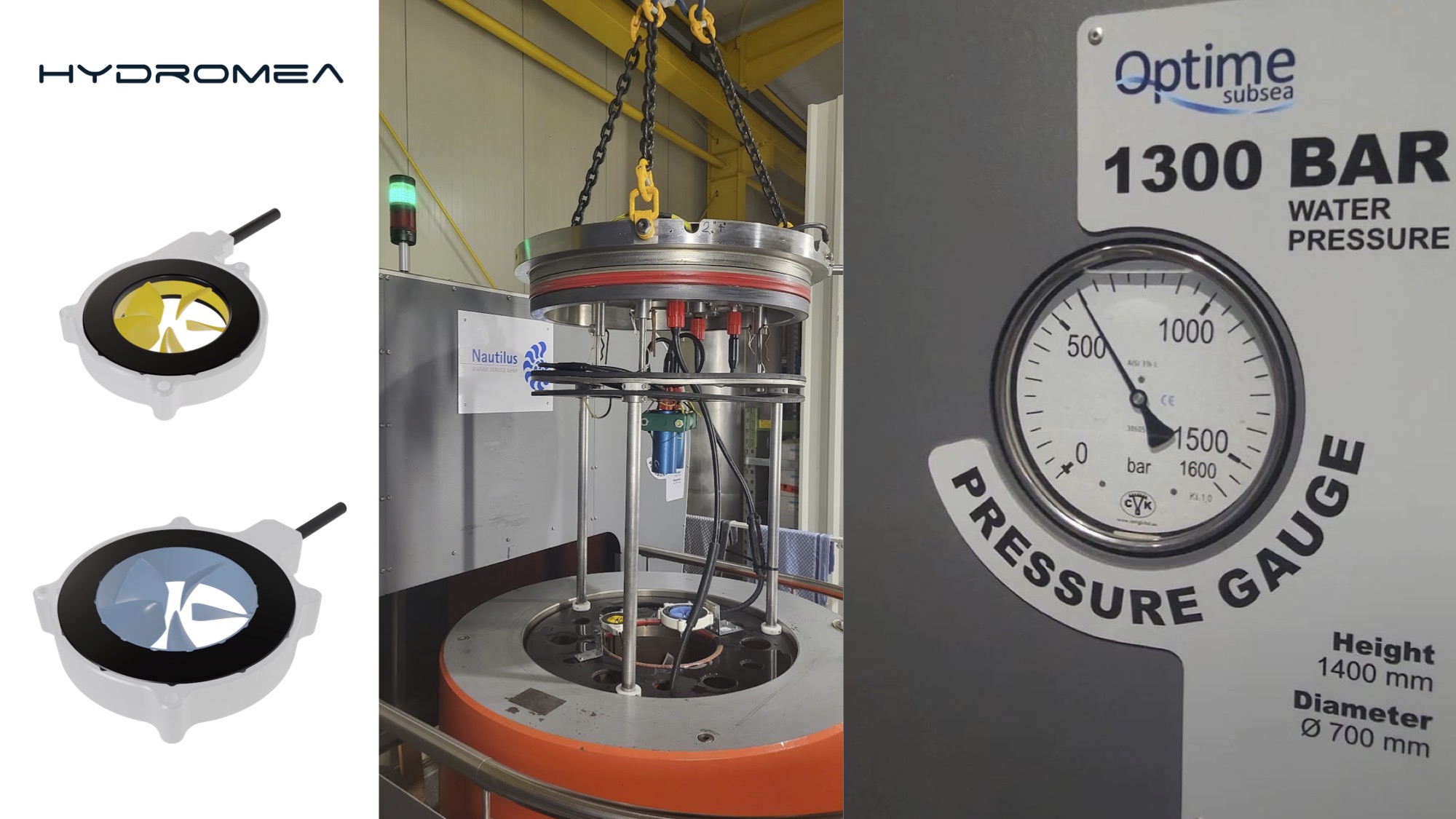
Hydromea's deep-rated DISKDRIVE thrusters excel in 600 bar bab test
Hydromea, a pioneering leader in subsea technology, proudly announces a significant advancement in underwater propulsion with the successful completion of a demanding pressure test on its deep-rated ultra-thin DISKDRIVE thrusters. This achievement signifies a monumental leap forward in the realm of underwater propulsion technology and solidifies Hydromea's position at the forefront of innovation in the marine industry.
Conducted at the German certification lab, Nautilus, the rigorous test subjected Hydromea's DISKDRIVE thrusters to extreme conditions, simulating depths reaching an astounding 6 kilometers beneath the ocean surface. Remarkably, the thrusters withstood pressures of up to
600 bar with exceptional performance, effortlessly navigating the "descend" phase. Notably, the thrusters demonstrated flawless operation, seamlessly initiating and halting every 50 bar increment, showcasing unparalleled reliability and precision.
This remarkable accomplishment places Hydromea's DISKDRIVE thrusters in an elite league of underwater propulsion systems capable of withstanding the immense pressures of the deep ocean. By surpassing this critical milestone, Hydromea further cements its reputation as a trailblazer in robust subsea technology, offering unparalleled solutions for underwater exploration, research, and industry applications.
"We are thrilled to announce the successful completion of the pressure test on our deep-rated DISKDRIVE thrusters," said Dr. Felix Schill, CSO of Hydromea. "This achievement underscores our unwavering commitment to pushing the boundaries of technological innovation in the marine industry with the focus on miniaturised and scalable products. The ability of our thrusters to operate flawlessly at depths of 6 kilometers opens up new affordable possibilities for makers of deep-water equipment, ultimately contributing to advancements in ocean science and sustainability efforts."
Hydromea's deep-rated DISKDRIVE thrusters offer a compact and efficient propulsion solution designed to meet the rigorous demands of deep-sea environments. Engineered with cutting-edge technology and precision craftsmanship, these thrusters deliver unmatched performance, reliability, and versatility for a wide range of underwater applications.